
Quick Answer
The best septic system treatment is regular pumping every 3–5 years combined with careful water use. Biological additives add live bacteria to your tank, but peer-reviewed research and EPA guidance show they don't reduce pumping frequency or reverse a failing system. Used correctly, some products offer modest support - but they're a supplement, never a substitute.
💡 Key Takeaways:
- Biological (bacterial/enzyme) additives are generally safe but not proven to reduce how often you need to pump your tank.
- Chemical additives - including solvents and acid-based products - can damage your drain field and kill the bacteria your system depends on.
- A healthy 1,000-gallon tank serving a 4-person household already contains over 1,000 species of naturally occurring bacteria.
- The EPA does not endorse any septic additive as a replacement for routine pumping.
- The single most effective "treatment" is pumping every 3–5 years and avoiding flushing anything that doesn't belong.
Does Rid-X Really Work for Septic Tanks?
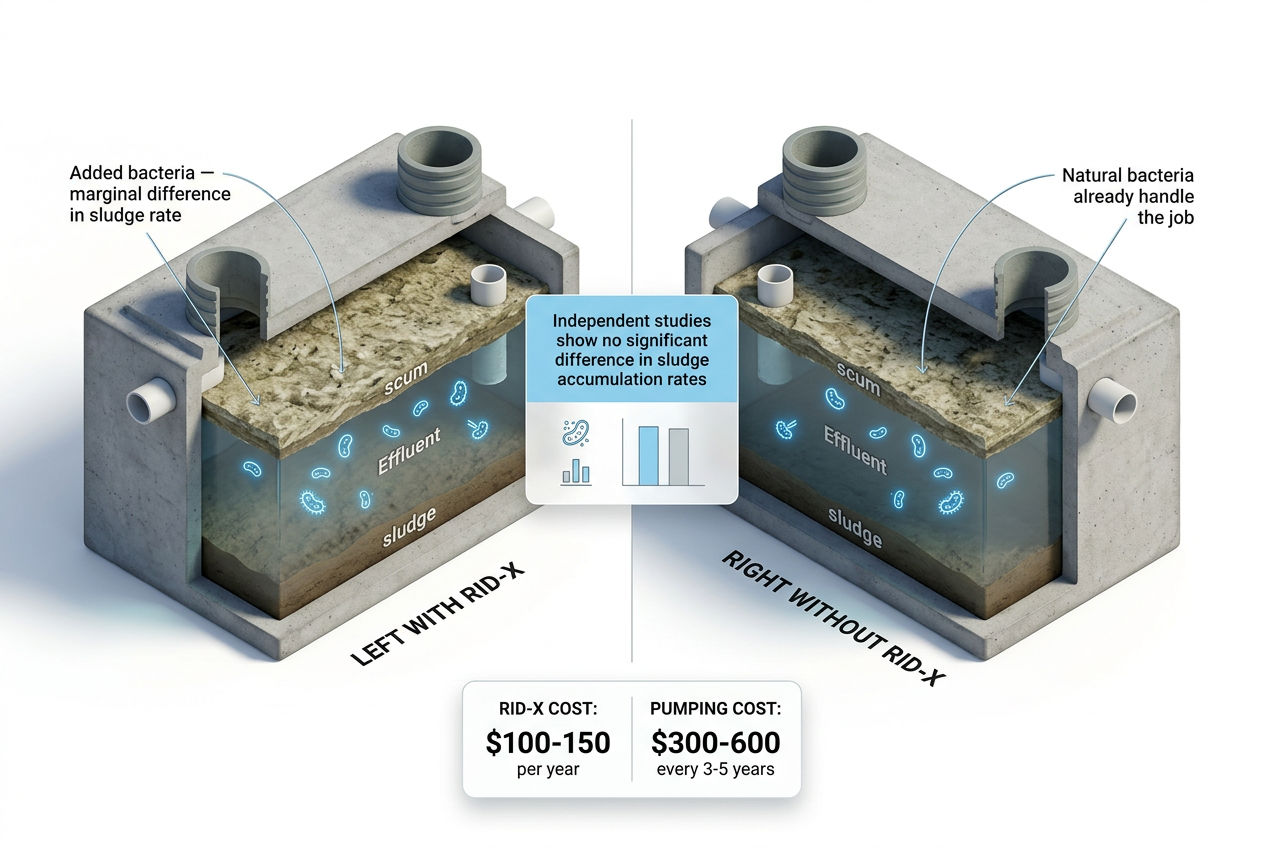
Rid-X adds live Bacillus bacteria and cellulase enzymes to your tank. The bacteria are real, and they do break down organic waste. But here's the honest answer: your septic tank is already full of bacteria - over 1,000 naturally occurring microbial species - and Rid-X hasn't been shown in controlled studies to meaningfully outperform a healthy, undisturbed system. For the full breakdown, see our dedicated Rid-X review.
A study frequently cited by Washington State Department of Health researchers reviewed multiple controlled trials of septic additives and found no consistent evidence that biological additives reduce sludge accumulation or extend pumping intervals. Rid-X's own marketing language is careful - it says the product "helps maintain" your system, not that it eliminates pumping.
✅ Pro Tip: If you've recently run bleach through your drains or used heavy antibacterial soaps, a monthly dose (the standard packet treats up to a 1,500-gallon tank) may help restore bacterial balance. Just don't expect it to rescue a neglected system.
How Does a Septic System Actually Work?
Before evaluating any treatment, you need to understand what you're treating. Your septic system is a living ecosystem, not just a buried box.
The Tank Process
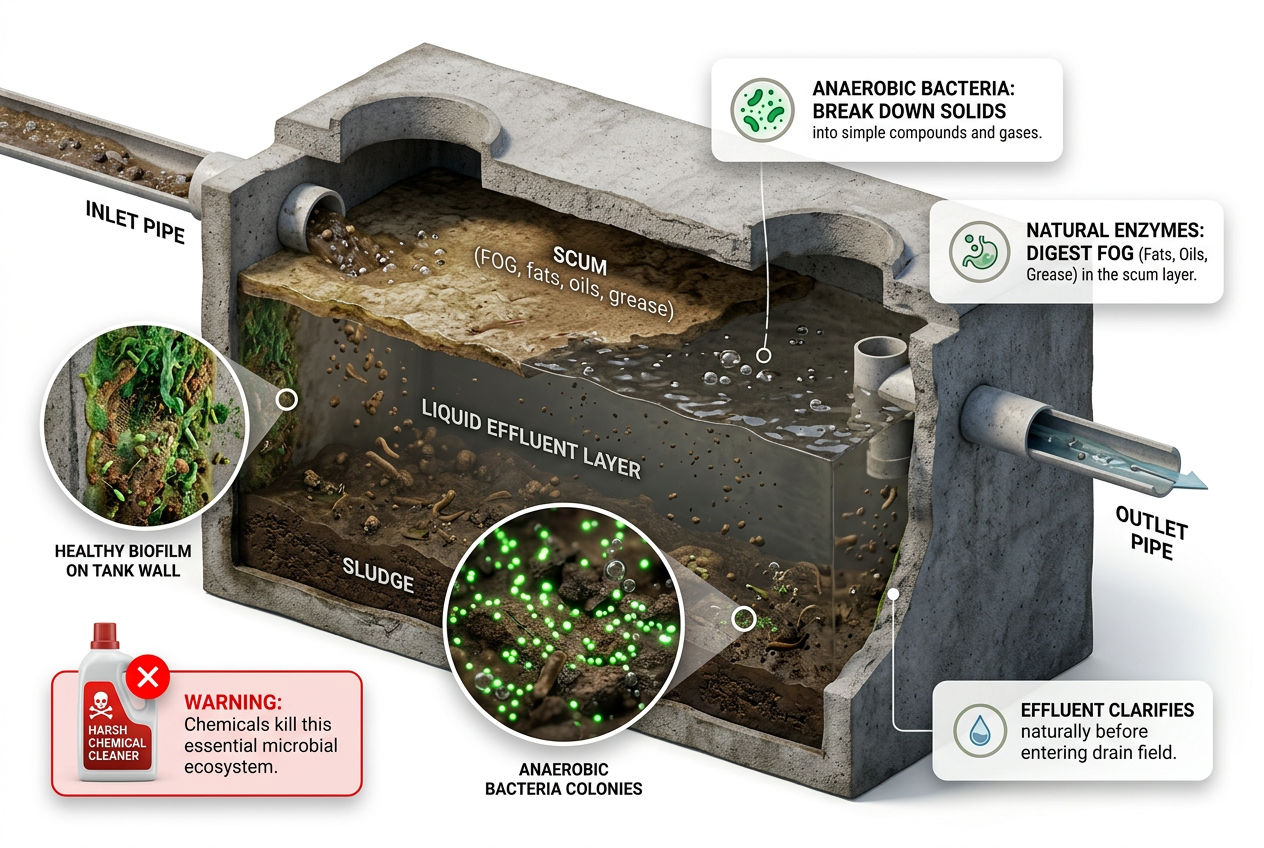
Wastewater from your home flows into the septic tank - typically 1,000 to 1,500 gallons for a 3–4 bedroom house. Inside, anaerobic bacteria (the kind that thrive without oxygen) break down organic solids.
The tank creates three distinct layers:
- Sludge layer (bottom): Heavy solids sink and accumulate
- Clarified effluent (middle): Liquid zone ready for drain field
- Scum layer (top): Grease and lighter materials float to the surface
The clarified liquid in the middle - called effluent - exits through the outlet baffle and flows into your drain field.
The Drain Field Process
The drain field (or leach field, if you're in the Northeast) distributes that effluent through perforated pipes into the soil, where aerobic bacteria finish the treatment process. A biomat layer - a thin film of organic material and microbes - naturally forms along the soil interface and actually helps filter effluent.
⚠️ Warning: Too much biomat from an overloaded system and you've got a failing drain field.
📊 Quick Fact: Optimal bacterial activity happens at a tank pH of 6.8–7.6 and temperatures above 50°F. In northern states like Minnesota or Maine, bacterial activity slows dramatically during winter - which is one reason cold-climate systems need more frequent inspection, not more additives.
What Are the Different Types of Septic Tank Treatments?
| Treatment Type | Active Ingredient | Typical Cost | Safe for System? | Proven Effective? |
|---|---|---|---|---|
| Biological – Bacterial | Live Bacillus strains | $10–$25/month | Yes | Inconclusive |
| Biological – Enzyme | Cellulase, lipase, protease | $15–$30/month | Yes | Inconclusive |
| Chemical – Solvent | Methylene chloride, TCE | $8–$20/month | No | No |
| Chemical – Acid/Base | Sulfuric acid, lye | $5–$15/month | No | No |
| Inorganic – Yeast | Active dry yeast | $1–$3/month | Generally yes | No |
Sources: EPA Septic Systems Overview (epa.gov/septic); Washington State Department of Health Additive Review; University of Arkansas Cooperative Extension
Biological Additives: Bacteria and Enzymes
Biological additives - the Rid-X category - use live bacterial cultures (measured in colony-forming units, or CFUs) and enzymes to supplement natural tank bacteria. A standard Rid-X packet delivers roughly 2.15 × 10⁹ CFU of bacteria.
📊 Quick Fact: Sounds impressive until you realize a healthy 1,000-gallon tank can contain trillions of native bacteria.
Best septic tank enzyme treatments focus on breaking down fats, oils, and cellulose (paper products) rather than adding live organisms. Products like Bio-Sol and GreenPig Solutions use lipase, cellulase, and protease blends. These enzymes can help with targeted waste breakdown but face the same limitation: no peer-reviewed study has demonstrated reduced sludge accumulation over a control group that received no treatment.
Chemical Additives: The Dangerous Category
Chemical solvents and acid-based products are a different story entirely - and not in a good way. These products may unclog a slow drain temporarily, but they:
- Destroy the bacterial colonies your system needs
- Damage concrete tank walls
- Leach toxic compounds into soil and groundwater
⚠️ Warning: Several states, including Massachusetts and Vermont, restrict or prohibit certain chemical septic additives. If a product burns through grease, it's burning through your system's ecosystem too. Avoid them.
What Does the Science Actually Say About Septic Tank Additives?
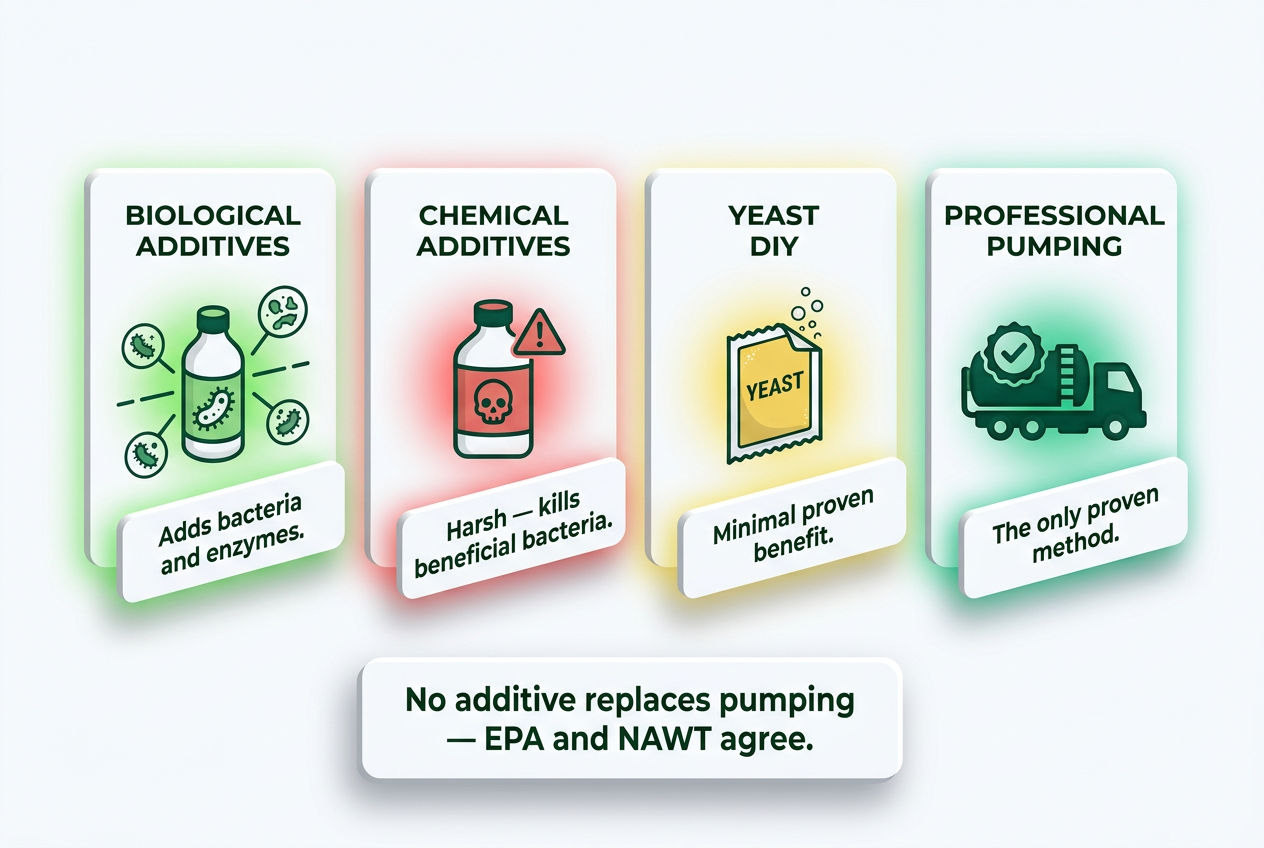
Short answer: the science is underwhelming for additives - and damning for chemical products.
EPA Position
The EPA's SepticSmart program (epa.gov/septic) explicitly states that biological additives have not been proven to improve septic system performance or eliminate the need for regular pumping. The agency does not endorse any additive product. For a deeper look at the question of whether do additives work, our companion article covers the full evidence.
University Research Findings
Penn State Extension reviewed independent studies on bacterial and enzyme additives and found that while biological additives caused no harm, test systems showed no statistically significant improvement in effluent quality or sludge reduction compared to control systems with no treatment.
Texas A&M AgriLife Extension reached similar conclusions, noting that a well-functioning septic tank generates its own robust bacterial population within 4–6 weeks of first use.
Long-Term Studies
The most cited independent research - conducted through the University of Arkansas Cooperative Extension - tracked septic systems over 24 months. Systems using monthly bacterial additives showed no measurable difference in sludge accumulation rates or drain field performance compared to systems that received only routine pumping.
💡 Key Takeaway: Here's a real-world scenario that puts it in perspective. Picture this: you've been faithfully adding Rid-X every month for five years. You call a pumper out, he drops a sludge judge into your 1,000-gallon tank, and pulls it out showing 14 inches of sludge. That's a 3-year tank for a 4-person household - right where it should be. The additive didn't hurt anything. It also didn't save you from needing a septic pump-out.
Can Septic Tank Additives Harm Your System?
Biological additives? Probably not. Chemical ones? Absolutely.
Biological Additive Risks (Minimal)
The National Association of Wastewater Technicians (NAWT) at nawt.org maintains that biological additives pose minimal risk to properly functioning systems. The main concern with overusing enzyme-heavy products is that they can break down solids into smaller particles that pass through to the drain field before fully decomposing - potentially contributing to biomat buildup in leach laterals.
Chemical Additive Dangers (Severe)
Chemical additives are the real danger:
- Methylene chloride (found in some older solvent-based products) is a known carcinogen
- Sulfuric acid products strip bacterial colonies from tank walls
- pH crashes below the 6.8–7.6 optimal range
- Concrete corrosion in precast tanks over time
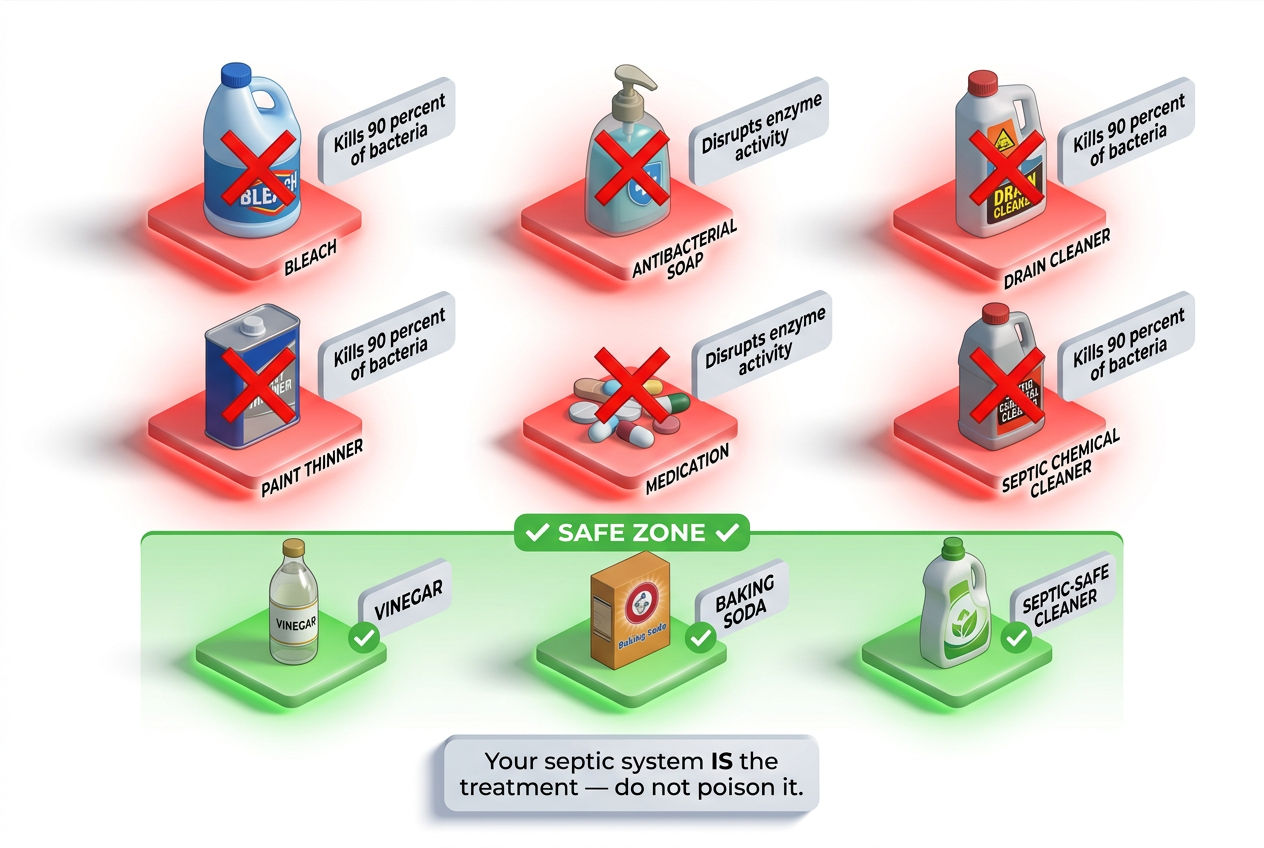
⚠️ Warning: If any product promises to "dissolve" buildup or "chemically clean" your tank, put it back on the shelf.
Regional Considerations
Coastal area homeowners - Florida, the Carolinas, the Pacific Northwest - need to be especially careful. High water tables mean a compromised tank can leach contaminants into groundwater faster than in drier inland regions. Florida's Department of Health enforces strict standards around what homeowners can introduce into onsite sewage treatment and disposal systems (OSTDSs), which is the state's term for septic systems.
When Might a Septic Treatment Actually Help?
There are two scenarios where a biological additive makes some practical sense.
1. New Systems
A brand-new septic tank hasn't had time to build its bacterial population. The natural colonization process takes 4–6 weeks. Adding a high-CFU bacterial product during the first month can give the system a head start. This is one of the few cases where professionals sometimes recommend a one-time biological boost.
2. After a Bacterial Wipeout
If you've experienced any of these scenarios, your bacterial population may be temporarily suppressed:
- Heavy use of bleach-based cleaners
- Multiple loads with heavy-duty antibacterial detergent
- Course of antibiotics in a 2-person household with a small tank
- Plumbing emergency requiring chemical drain cleaners
✅ Pro Tip: A biological additive can help reintroduce beneficial bacteria. Your first call should be to stop using those products permanently. Check out our guide to septic-safe products for better alternatives.
What Additives Won't Do
Additives cannot:
- Fix a failing drain field
- Dissolve a compacted sludge layer that's overdue for pumping
- Prevent the need for a septic inspection when buying or selling a home
What Do Septic Professionals Actually Recommend?
Ask a licensed pumper what they think of Rid-X and most will give you the same look they give a homeowner who asks if he can pump his own tank with a shop vac.
Professional Consensus
Informal surveys of NAWT-certified technicians consistently show that fewer than 20% of working septic professionals recommend monthly additive use. The majority say their most important recommendation is simple: pump on schedule and watch what goes down the drain.
What Professionals See in the Field
The reality check comes from actual tank inspections:
- Over-additive, under-pumped tanks: Faithfully dosed with additives for years but never pumped - packed with sludge past the outlet baffle and halfway to a drain field collapse
- Zero-additive, properly maintained tanks: Haven't seen an additive in 20 years but get pumped every 3 years - clean, functional, and serving the household without drama
The Economics Don't Add Up
The math is straightforward:
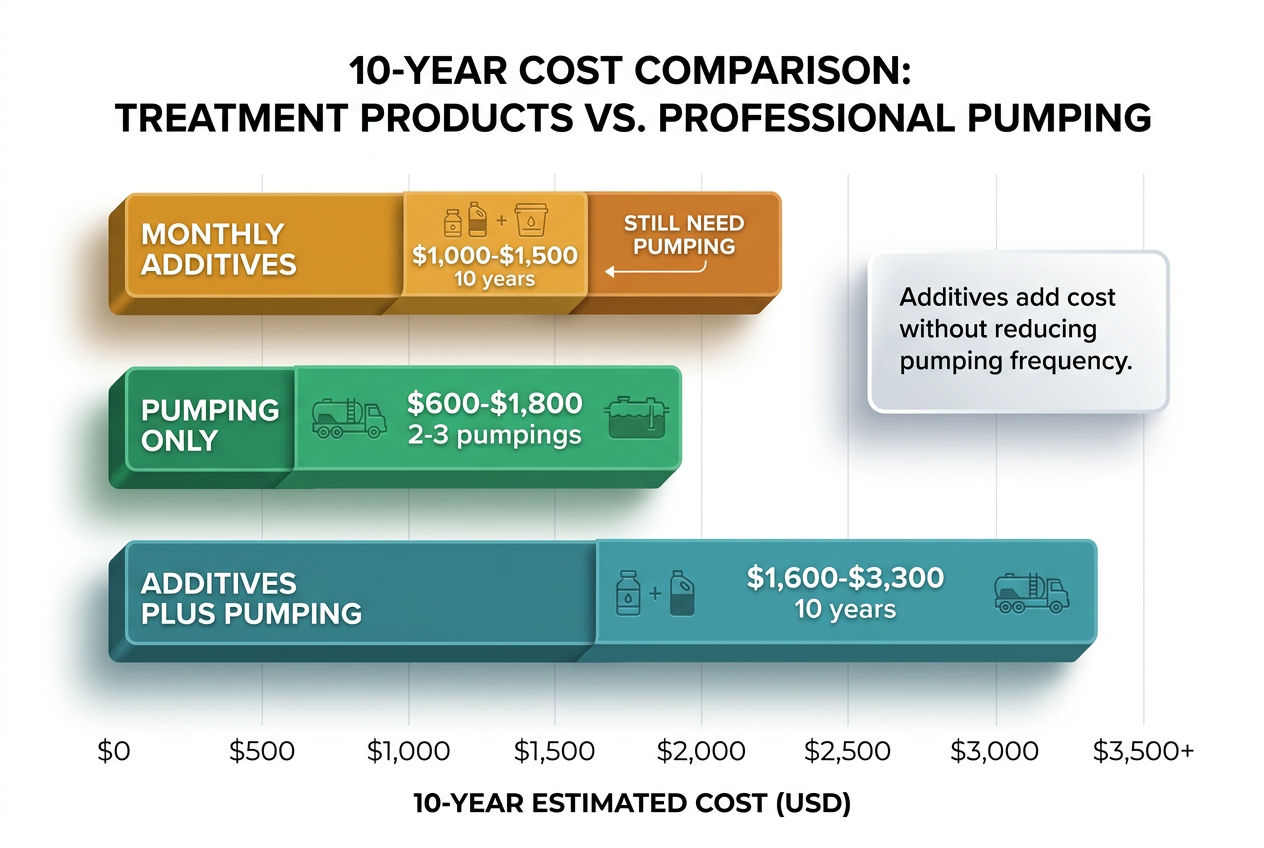
- Septic pump-out (1,000-gallon tank): $275–$450 in most of the country
- Drain field replacement: $5,000–$20,000 depending on system type and soil conditions
- Monthly additive costs: $10–$30
💡 Key Takeaway: None of those additive dollars buy you any insurance against the consequences of skipping pumping.
For a complete picture of evidence-based septic care, our septic tank maintenance guide covers the full schedule and what to watch for between pump-outs.
What Are Better Alternatives to Septic Additives?
The most effective septic system treatment has nothing to do with a bottle from the hardware store.
1. Pump on Schedule
A 1,000-gallon tank serving 4 people needs pumping every 3–4 years. A 1,500-gallon tank serving 2 people may go 5–6 years.
⚠️ Warning: Add a garbage disposal and cut those intervals nearly in half - garbage disposals send substantially more solid waste into your tank than a tank's bacterial population can handle efficiently.
2. Watch Your Water Use
Pushing 300+ gallons per day through a 1,000-gallon tank doesn't give solids time to settle. Simple changes make a measurable difference:
- High-efficiency toilets: 1.28 GPF vs. the old 3.5 GPF standard
- Stagger laundry loads: Spread them over the week instead of marathon wash days
- Result: Improved effluent quality and reduced drain field stress
3. Stop Flushing the Wrong Things
Never flush these items down your drains:
- Wipes (even "flushable" ones don't break down)
- Feminine hygiene products
- Paper towels
- Medications
📊 Quick Fact: Everything non-biodegradable that enters your tank either adds to the sludge layer or passes into your drain field intact. Our guide on what you can flush with a septic system has the complete list.
4. Use Septic-Safe Household Cleaners
Bleach in small quantities (one load of laundry) is manageable for most systems. Daily use of bleach-based cleaners or antibacterial dish soap, though, suppresses the bacterial population your tank depends on.
Better choices: Switching to enzyme-based or oxygen-bleach cleaners makes more difference than any additive you can add through the toilet. And yes, Drano is a problem for septic systems - there are safer alternatives.
5. Install an Effluent Filter
A Polylok PL-122 or Zabel A1800 effluent filter on your outlet baffle keeps larger particles from migrating into your drain field.
The payoff: This is a one-time hardware investment (typically $50–$150 installed) that delivers real, measurable protection - more than years of additive purchases. For more on alternatives, read about cleaning your septic tank without pumping.
Should You Use Septic Tank Treatments?
Here's a fair verdict: biological additives are harmless and occasionally useful in specific situations. They're not a maintenance strategy. Chemical additives are worth avoiding entirely.
The Reasonable Use Case
If you want to spend $12 on a box of Rid-X after a week of heavy antibacterial cleaning, that's a reasonable call.
The False Hope Scenario
If you're buying it because you've been putting off a pump-out for six years and hoping it buys you another year, it won't. You need a pumper, not a product.
💡 Key Takeaway: The septic industry isn't hiding some secret miracle additive. The systems that last 30+ years without a drain field replacement belong to homeowners who pump on schedule, mind what they flush, and call a pro when something's off - not homeowners who found the best bottle on the shelf at the hardware store.
What Actually Works
Use the tools that actually work:
- Scheduled pumping
- Proper flushing habits
- Water conservation
- The right septic-safe toilet paper and household products
Everything else is supplemental at best.
Need professional maintenance? Find a septic company near you on SepticTankHub.
Learn more about our septic pumping services.
Related reading: how often pump septic tank.
Related: comparing Rid-X formulas
Related: the maintenance products worth buying
New Guides in This Series
- Aerobic Septic System Diagram: How Each Part Works
- Are Septic Tank Treatments Necessary?
- Best Septic Tank Treatment for Slow Drains
- Bio-Clean Septic Treatment Review: Does It Work?
- Cabin Obsession Septic Tank Treatment Review
- Camco Septic Tank Treatment Review
- Green Gobbler Septic Treatment Review: Pods, Packets & Results
- How Often Should You Use Rid-X? Directions, Dosing & Timing
- How to Handle How Often to Use Septic Tank Treatment: Step by Step
- Is Rid-X Safe for Septic Tanks, Toilets & Pipes?
- Is Septic Tank Smell Dangerous? Gases, Risks & When to Worry
- The Best Rid-X Alternatives
- Does Rid-X Unclog Drains or Toilets?
- Can You Use Rid-X in an RV Black Tank? What to Know First
- What's Actually in Rid-X? Ingredients Explained
- Rid-X vs. Green Gobbler: Which Septic Treatment Wins?
- Septic Tank Smell After Pumping? Causes & How to Fix It
- Septic Smell From Roof Vent? Causes & How to Fix It
- Septic Smell From Shower Drain? Causes & How to Fix It
- Septic Smell Coming From Toilet? Causes & How to Fix It
- Septic Smell When It Rains? Why It Happens & How to Fix It
- Septic System Diagram With a Pump
- Septic Tank Cross-Section Diagram: Every Part Labeled
- Septic Tank Diagram With Dimensions
- Yeast, Baking Soda & Milk in Your Septic Tank: Myths Tested
- Septic Tank Plumbing Diagram: From House to Drain Field
- The Best Septic Tank Smell Removers
- Septic Tank Treatments at Walmart vs. Home Depot vs. Online
- Septic Treatment Tablets vs. Powder vs. Liquid: Which Is Best?
- Where to Buy SeptiFix
- Rid-X Platinum Review: Is the Upgrade Worth It?
- Zep Septic Defense Review: Does It Beat Rid-X?
- The Best Septic Tank Sludge Dissolvers
- The Best Septic Treatment for Toilet Paper Breakdown
- Instant Power Septic Shock Review: Does It Work?
Sources & Methodology
EPA SepticSmart Program: Primary reference for regulatory guidance on additive use, pumping frequency recommendations, and system performance standards.
Washington State Department of Health, Septic System Additive Review - Independent review of peer-reviewed studies on biological and chemical additive effectiveness; cited for scientific consensus findings.
Penn State Extension, Onsite Sewage Disposal - University extension research on bacterial colonization timelines and effluent quality studies; referenced for bacterial population data.
National Association of Wastewater Technicians (NAWT): Industry organization representing licensed pumpers and inspectors; referenced for professional consensus data.
University of Arkansas Cooperative Extension, Septic System Studies - 24-month controlled trial data on sludge accumulation with and without monthly biological additive use.
Research for this article was conducted in May–June 2026. Product costs reflect national averages and may vary by region. Always consult a licensed septic professional for system-specific recommendations.
Need help with your septic system? See our complete guide to septic pumping costs for current pricing. Browse local septic companies in Georgia or North Carolina.
Free download
Not ready for the Handbook? Start with the free Fridge Card.
The Do / Don’t card the whole family can see, plus the Survival Kit: emergency flowchart, warning-sign decoder and pump-schedule card. One printable PDF.
Was this article helpful?
Frequently Asked Questions
Recommended Resources
📖 Related Articles
- What Is a Septic System? How It Works (Visual Guide)
- What Is a Drain Field? (And How Does It Work?)
- Septic-Safe Products: What to Use (and What to Avoid)
- The Complete Septic Tank Maintenance Guide
- Can You Use a Garbage Disposal with a Septic System?
- What Can You Flush with a Septic System? (Tampons, Wipes & More)
- Can You Use Drano with a Septic System?
- What's the Best Toilet Paper for Septic Systems?
- Do Septic Tank Additives Actually Work? (The Science)
- Rid-X for Septic Tanks: Does It Help or Hurt?
💰 Cost Guides
Find Septic Professionals Near You
Compare licensed, verified septic companies by area — top county markets and cities below, or browse all 50 states.
County markets
Popular cities
