
Quick Answer
Septic tank treatments are generally not necessary for a properly maintained system. According to the EPA, the natural bacteria introduced through normal household waste are sufficient to break down solids. Regular pumping every 3–5 years and responsible water use are far more effective than any additive on the market.
Key Takeaways
- The EPA states that biological septic tank additives are generally unnecessary for a functioning system
- Chemical additives—solvents, strong acids, hydrogen peroxide—can damage your drain field and contaminate groundwater
- No additive eliminates the need for pumping; the EPA explicitly refutes that claim
- Multiple university studies found no significant benefit from biological additives in properly maintained systems
- Washington State and several other states have regulated or banned certain septic additives outright
Last spring, I watched a neighbor drop a bacteria pod into his toilet every single month for three years. His tank still backed up. The pump-out technician who came out told him what the EPA's own guidance says plainly: those pods weren't doing anything his tank wasn't already doing on its own—and they definitely weren't replacing the pumping he'd skipped since 2019.
That's the core tension in a $500 million market. Shelves at every hardware store are stacked with products promising to "restore natural balance," "eliminate pumping," and "prevent costly failures." The question isn't whether those products are safe. Most of them are. The question is whether septic tank treatment products are actually worth your money—or whether you're solving a problem that doesn't exist.
What Does the EPA Say About Septic Tank Additives?
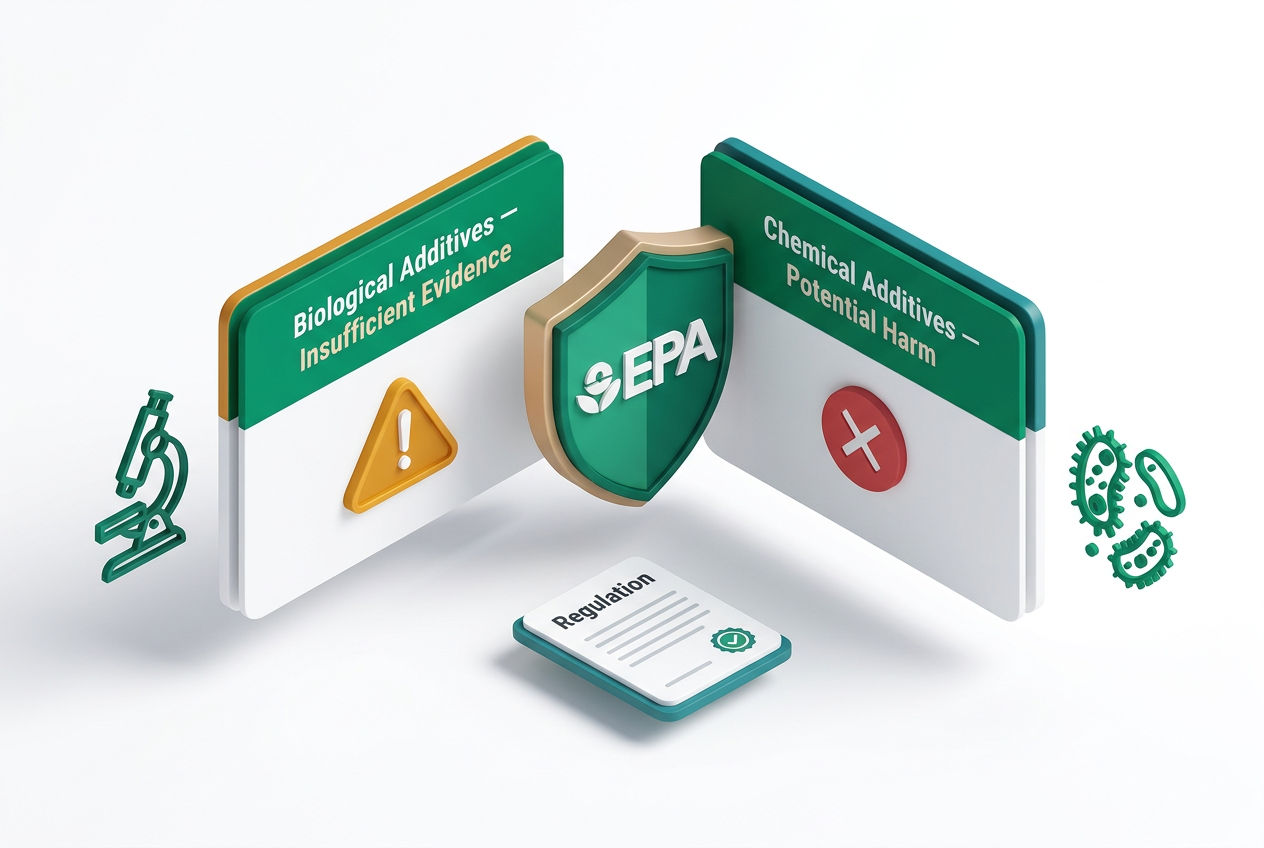
The EPA's position is clear and it hasn't changed. According to the agency's A Homeowner's Guide to Septic Systems and their Septic Systems Fact Sheet, biological additives are generally unnecessary because human waste already introduces sufficient bacteria into the tank. The microbes your system needs arrive naturally—every time someone flushes a toilet.
The EPA goes further in their Voluntary National Guidelines for Management of Onsite and Clustered (Decentralized) Wastewater Treatment Systems (2003), where they outline three categories of septic additives and warn that chemical additives—including organic solvents, strong acids, and alkalis—can damage the drain field and contaminate groundwater. The agency also explicitly states that claims additives "eliminate the need for pumping" are false. That's not a consumer advocacy group saying it. That's the EPA.
To be fair, the EPA doesn't say biological additives will harm your system. They say they're simply not necessary. There's a meaningful difference between "not harmful" and "worth paying for"—and that distinction matters when you're deciding whether to spend $15/month on treatment products.
You can review the EPA's full guidance on septic systems at https://www.epa.gov/septic.
Are Septic Tank Treatments Necessary for a Healthy System?
For a properly functioning system with a regular pumping schedule, no—septic tank treatments are not necessary. The bacterial ecosystem inside your tank self-populates and self-regulates without any help from a bottle or tablet.
A healthy 1,000-gallon septic tank serving a family of four contains trillions of anaerobic bacteria already working to break down incoming waste. These microbes colonize naturally from the moment your system goes live. The independent research question was simple: does adding more bacteria on top of an already-thriving colony actually improve anything measurable?
Multiple studies say no:
- Researchers at the University of Arkansas found no significant difference in sludge accumulation rates between tanks receiving monthly biological additive treatments and control tanks receiving none. (University of Arkansas Cooperative Extension Service, publication FSA-2158.)
- A review conducted through Washington State University Extension found similar results—tanks with additives performed no better than untreated tanks in standard residential use.
- The University of Minnesota Extension program, which supports one of the nation's largest concentrations of septic-dependent homes, does not recommend additives as part of any standard maintenance strategy.
These findings align directly with the EPA's guidance. Adding more bacteria to a tank that already has trillions is roughly like dumping a bucket into a full swimming pool and expecting it to change the water chemistry—the ecosystem has no mechanism to benefit from the surplus.
That said, there are specific situations where bacterial additives might make practical sense. Those are covered below.
What Are the Three Types of Septic Tank Treatments?
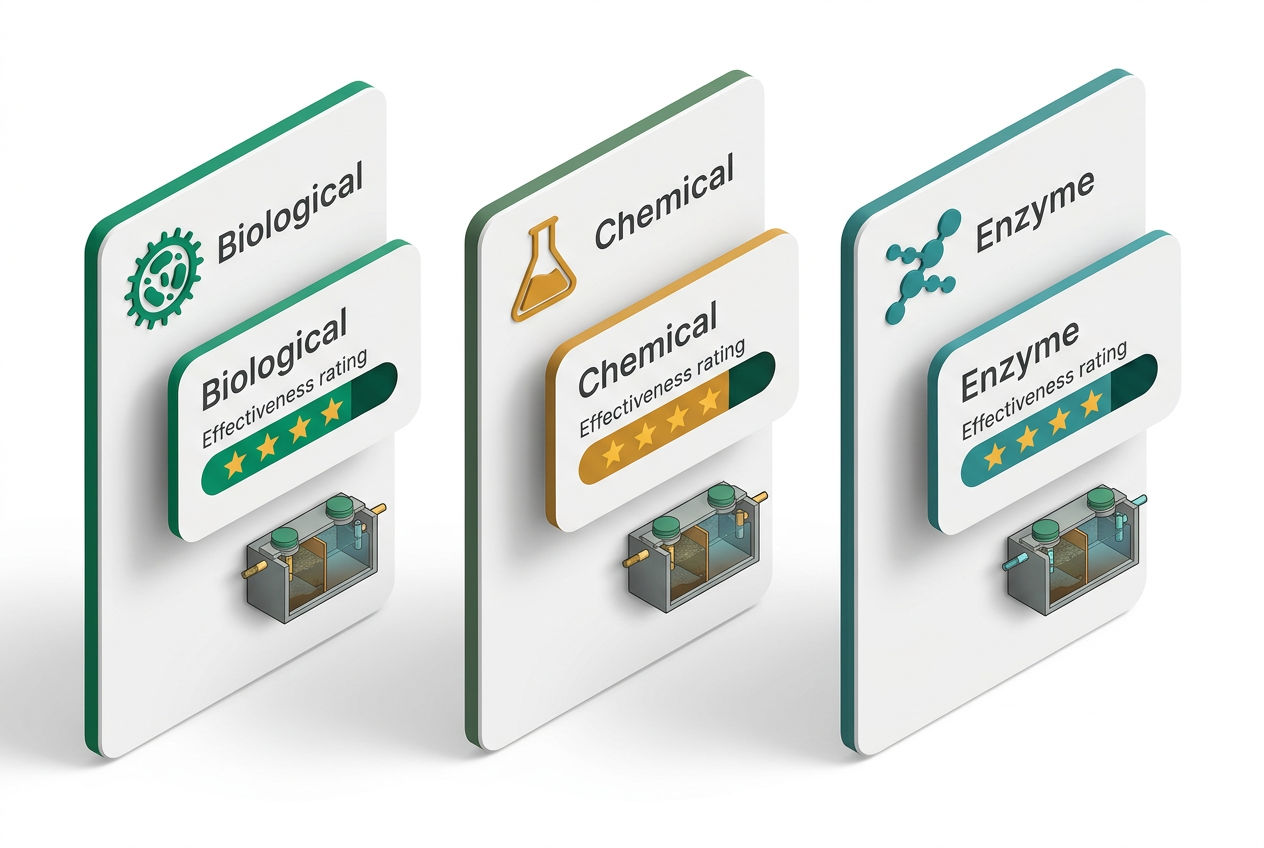
Not all septic tank additives are created equal. The EPA classifies them into three categories, and understanding the difference matters when evaluating whether any product is worth using.
| Additive Type | Examples | EPA Assessment | Risk Level |
|---|---|---|---|
| Biological — Bacteria | Septifix, Rid-X powder | Generally unnecessary | Low |
| Biological — Enzymes | Enzyme-based liquid treatments | Generally unnecessary | Low to moderate |
| Inorganic Chemical | Lye, acid-based cleaners | May damage components | High |
| Organic Chemical (Solvents) | Methylene chloride, trichloroethylene | Groundwater contamination risk | Very High |
| "Natural" Compounds | Yeast, baking soda | No documented benefit | Low |
Source: EPA Septic Systems Fact Sheet; EPA Voluntary National Guidelines for Decentralized Wastewater Treatment Systems (2003)
Biological additives carry the lowest risk. Products containing live bacteria strains or digestive enzymes won't typically hurt a healthy system—they just won't do much for it either. The dangerous category is organic chemical solvents, which have been marketed as "drain openers" and septic "cleaners." These compounds dissolve solids, yes—but they pass right through into your drain field and groundwater.
For a deeper look at how enzymes specifically work (and where they fall short), see our guide on septic tank enzymes.
Do Septic Tank Bacteria Treatments Actually Work?
The honest answer: rarely, in a properly maintained system. But "do they work?" depends on what you're measuring.
If you're measuring whether bacterial additives change effluent quality, sludge accumulation rates, or drain field performance in a healthy tank—the university studies cited above say no. The tank's existing colony handles the load. A well-functioning residential system doesn't have a bacteria shortage.
If you're measuring whether they cause harm—biological products generally don't. That's why the EPA's language is "generally unnecessary" rather than "avoid." Enzyme-based products carry slightly more risk than straight bacterial supplements; high concentrations of certain enzymes can temporarily disrupt the sludge-scum-effluent layer balance, allowing partially broken-down solids to migrate toward the drain field before they should.
Chemical additives are a different situation entirely. Organic solvents like methylene chloride were common in older septic "cleaners" and can:
- Liquefy solids that then wash into drain field laterals
- Clog the biomat layer in the soil absorption zone
- Leach into groundwater, contaminating drinking wells
Some states have responded with regulation. Washington State has some of the strictest additive rules in the country, requiring certain products to be registered and banning others that contain hazardous compounds. Oregon and Florida have similar registration and restriction frameworks. Under Washington Administrative Code (WAC 246-272A-0110), products must demonstrate they cause no harm to system components or receiving environments before sale. If you're in one of these states—or anywhere with a high water table and sandy soils—using an unregulated chemical additive carries real environmental risk.
Are Septic Additives Worth It? When Treatment Actually Makes Sense
Most of the time, no. But the EPA's "generally unnecessary" phrasing is careful for a reason—there are edge cases where biological additives make practical sense.
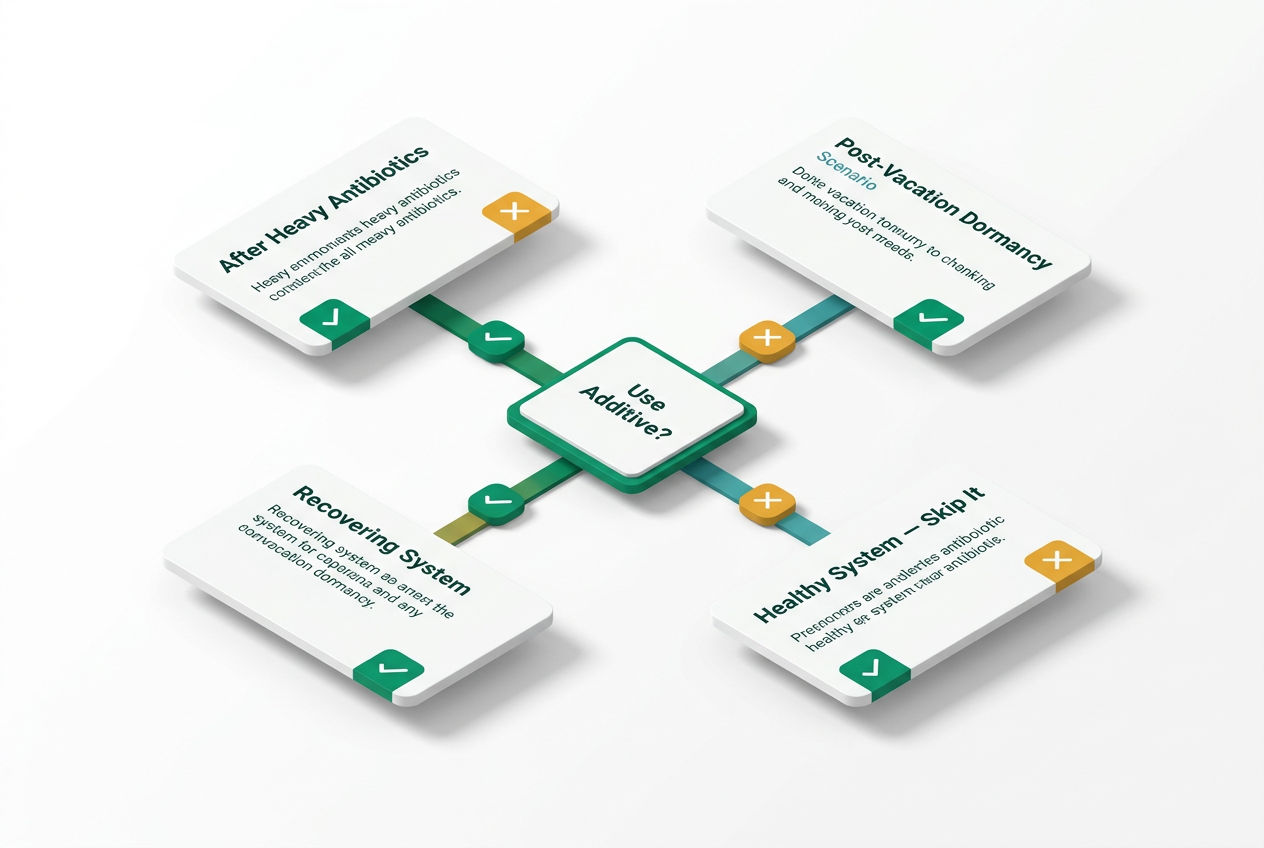
After heavy antibiotic use. Antibiotics pass through the body and into your tank, where they can temporarily reduce the bacterial population. A biological additive during or immediately after a prolonged antibiotic course may help restore colonies faster. This isn't proven by large-scale trials, but the mechanism is logical and the risk is low.
After system restart. A 1,500-gallon tank that's been sitting dormant—at a seasonal cabin, for example—may benefit from a bacterial jumpstart when put back into service. Without active use, the biological ecosystem degrades. A starter dose gives it a head start.
After pumping. Some licensed pumpers recommend a single bacterial dose immediately after a pump-out, since tank volume drops dramatically and bacterial populations are lower. The evidence is anecdotal, but the cost is minimal and the downside is negligible.
For RV holding tanks and remote systems. These see interrupted use patterns that differ significantly from residential septic tanks, and bacterial supplements can help maintain biological activity between uses.
A simple way to decide if this applies to you: if your tank has experienced a disruption—antibiotics, dormancy, pump-out, or a chemical spill—a one-time bacterial dose is reasonable. If none of those apply and your system is working normally, save the money.
Our article on how to add bacteria to a septic tank covers the specifics of timing and dosing if you decide to go this route.
If You're Going to Use a Septic Tank Treatment, Use This One
If your situation fits one of the scenarios above, and you've decided a biological additive is worth trying, the product matters. Not all bacterial supplements are formulated the same way.
Our pick: Septifix
Septifix is an oxygen-releasing tablet containing 14 strains of live aerobic bacteria at approximately 10 billion CFU per tablet. The tablet mechanism matters: as it dissolves, it releases oxygen directly into the tank, which targets odor and accelerates sludge breakdown. Most competing products—including Rid-X—deliver bacteria without the oxygen component, which limits how effectively the bacteria can establish in the tank environment.
Practical details:
- Dosing: One tablet flushed down the toilet—no measuring, no mixing
- Formulation: Made in the USA, non-toxic, safe for all septic system components
- Cost: Approximately $3–$4 per treatment
- Guarantee: 60-day money-back guarantee from the manufacturer
Septifix won't reverse a clogged drain field, rescue a system that's years overdue for pumping, or replace the maintenance schedule the EPA recommends. No additive can do those things. What it offers is a well-formulated bacterial supplement for the situations where one actually makes sense—at a lower per-treatment cost than most hardware store alternatives.
For a side-by-side breakdown of formulation differences, see Rid-X vs. Septifix.
What Is the Best Way to Maintain a Septic System Without Additives?
The EPA's recommended maintenance framework doesn't include a single bottle of bacteria pods. Here's what the agency actually recommends—and what licensed septic professionals reinforce every day:
1. Pump on schedule. For a 1,000-gallon tank serving a 4-person household, the EPA recommends pumping every 3–4 years. A 1,500-gallon tank may stretch to 5 years. Add a garbage disposal and you should drop to every 2 years—the food solids load increases dramatically.
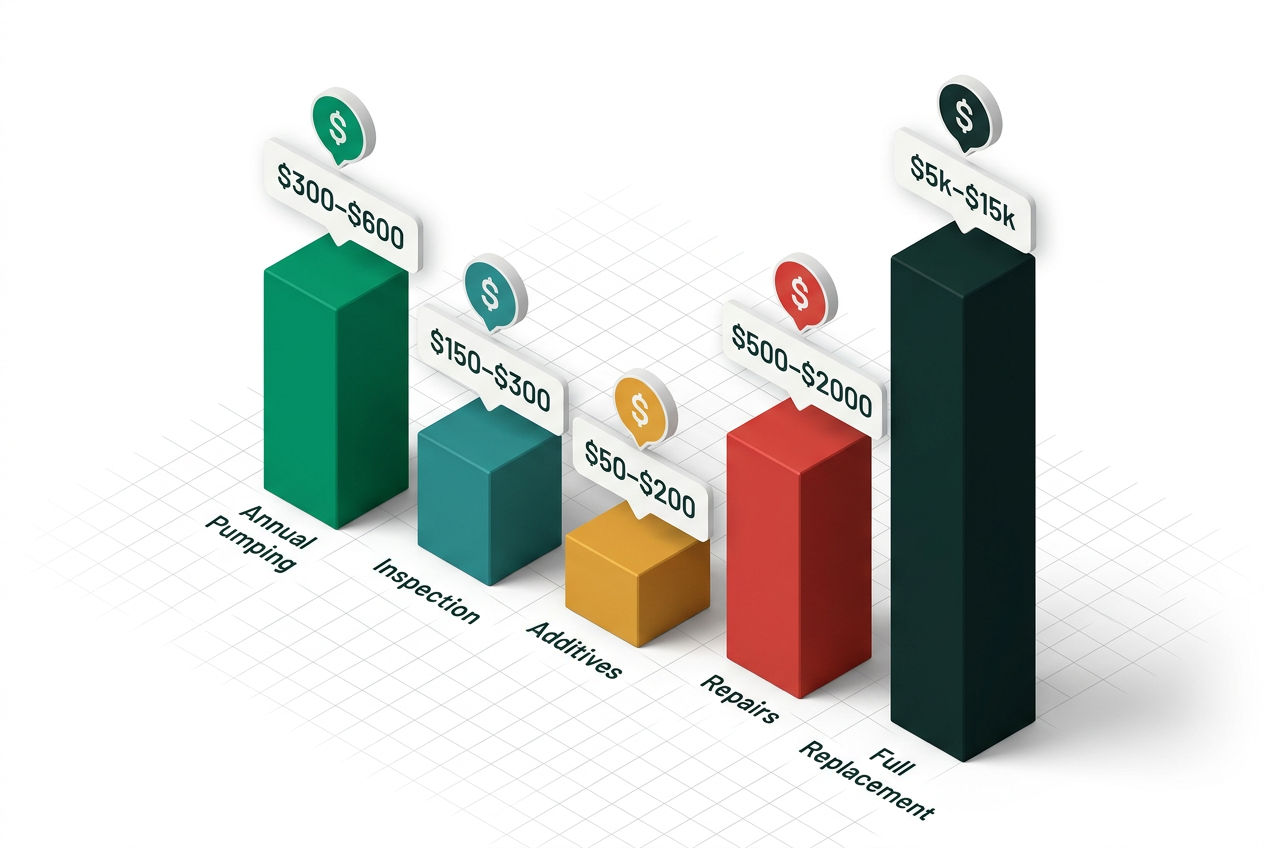
Pumping costs $250–$600 nationally, with regional variation. A standard pump-out in Central Florida runs $275–$375; rural Minnesota can reach $400–$500 due to longer travel times and seasonal access. See our full breakdown at septic pumping cost. That's a fraction of the $15,000–$30,000+ you'll spend on a full system replacement if neglect catches up with you. For current repair cost ranges, see septic repair cost.
2. Watch what goes down the drain. Antibacterial soaps, bleach, drain cleaners, and non-septic-safe wipes can all disrupt bacterial balance far more than the absence of a treatment product. Our guide on what kills septic bacteria lists the specific culprits to avoid.
3. Protect your drain field. Don't park vehicles over it. Don't plant trees or shrubs nearby—roots crack laterals and infiltrate distribution boxes. Don't route roof runoff or sump pump discharge toward it. A saturated drain field can fail within months of consistent overloading.
4. Manage water load. High-efficiency toilets, staggered laundry cycles, and fixing slow leaks all reduce the hydraulic load on your system. A running toilet can add 200+ gallons per day to your tank—enough to push partially treated effluent into the drain field before solids settle.
5. Get inspected on the same cycle as pumping. A licensed inspector can identify effluent filter issues (a Polylok PL-122 is a common residential model that costs $30–$50 to replace), distribution box settling, and early drain field stress before they become $20,000 problems. See how to find a licensed pro through our septic pumping and cleaning service directory.
For a complete maintenance framework, see the septic tank maintenance guide and our detailed guide on how often to pump a septic tank.
How Much Does Proper Septic Maintenance Cost?
Here's a worked example for a 1,000-gallon tank serving a family of four on a standard 3-year pumping cycle:
| Service | Frequency | Cost (national avg.) | 10-Year Cost |
|---|---|---|---|
| Pump-out | Every 3 years | $350 | ~$1,167 |
| Inspection | Every 3 years | $150 | ~$500 |
| Effluent filter replacement | Every 3–5 years | $40 | ~$80 |
| Bacterial additive (optional) | Monthly | $4 | ~$480 |
| Total (with additive) | ~$2,227 | ||
| Total (without additive) | ~$1,747 |
Over ten years, the additive adds roughly $480 in cost. That's not catastrophic—but it's $480 spent on something university research says won't measurably improve your system's performance if it's already functioning correctly.
The comparison that matters is maintenance cost vs. failure cost. A drain field replacement runs $5,000–$20,000 depending on soil type, system size, and local labor rates. A full system replacement in poor soil conditions can exceed $30,000. The septic repair cost guide covers the full range by repair type.
Pumping on schedule is the single highest-value thing you can do. No additive comes close to that return.
Septic Treatments and Well Water: What Homeowners Should Know
One consideration that doesn't get enough attention: if your home uses a private well, the stakes around chemical septic additives are higher than they are for homeowners on municipal water.
Organic solvents and inorganic chemical additives that pass through your drain field don't stop at your property line. They migrate through soil toward groundwater—which, if you're on a private well, is your drinking water supply. The EPA's groundwater contamination warning isn't abstract for well-dependent households. It's a direct health concern.
This is one reason well water testing is recommended annually for households with both a private well and a septic system on the same property. Baseline testing establishes what's normal; subsequent tests catch contamination early. For more on how septic systems interact with private well water quality, see our guide to well water and septic system risks.
If you are in this situation and still want to use a monthly treatment—to manage odor, support bacterial activity, or slow sludge accumulation between pump-outs—the formulation matters. Septifix is the treatment we recommend for well-dependent households because it works through oxygen release and 14 strains of live aerobic bacteria rather than the chemical solvents and surfactants that pose groundwater risk. It's non-toxic, septic-safe, and flushes down the toilet without any measuring. That said, no additive replaces scheduled pumping, and the EPA's position that a healthy system does not require additives still stands. Use it as a supplement to proper maintenance, not a shortcut around it.
States with the most restrictive additive regulations—Washington, Oregon, Florida—tend to be states with high concentrations of well-dependent rural households. That's not a coincidence.
Sources & Methodology
- U.S. Environmental Protection Agency. A Homeowner's Guide to Septic Systems. EPA 832-B-02-005. https://www.epa.gov/septic
- U.S. Environmental Protection Agency. Voluntary National Guidelines for Management of Onsite and Clustered (Decentralized) Wastewater Treatment Systems. 2003.
- University of Arkansas Cooperative Extension Service. Septic Tank Additives. Publication FSA-2158.
- University of Minnesota Extension. Additives for Septic Systems. extension.umn.edu.
- Washington State Department of Health. Onsite Sewage System Regulations. WAC 246-272A-0110.
Related Rid-X & Septic Treatment Guides
- The Best Rid-X Alternatives
- The Best Septic Tank Smell Removers
- Septic Smell When It Rains? Why It Happens & How to Fix It
- Can You Use Rid-X in an RV Black Tank? What to Know First
- Is Rid-X Safe for Septic Tanks, Toilets & Pipes?
- How Often Should You Use Rid-X? Directions, Dosing & Timing
- What's Actually in Rid-X? Ingredients Explained
- Does Rid-X Unclog Drains or Toilets?
- Rid-X vs. Green Gobbler: Which Septic Treatment Wins?
- Green Gobbler Septic Treatment Review: Pods, Packets & Results
- Where to Buy SeptiFix
- Bio-Clean Septic Treatment Review: Does It Work?
- Cabin Obsession Septic Tank Treatment Review
- Camco Septic Tank Treatment Review
- Septic Tank Treatments at Walmart vs. Home Depot vs. Online
- Septic Smell Coming From Toilet? Causes & How to Fix It
- Septic Smell From Shower Drain? Causes & How to Fix It
- Septic Tank Smell After Pumping? Causes & How to Fix It
- Septic Smell From Roof Vent? Causes & How to Fix It
- Is Septic Tank Smell Dangerous? Gases, Risks & When to Worry
- Septic Tank Diagram With Dimensions
- Septic Tank Cross-Section Diagram: Every Part Labeled
- Septic System Diagram With a Pump
- Septic Tank Plumbing Diagram: From House to Drain Field
- Aerobic Septic System Diagram: How Each Part Works
- How to Handle How Often to Use Septic Tank Treatment: Step by Step
- Septic Treatment Tablets vs. Powder vs. Liquid: Which Is Best?
- Best Septic Tank Treatment for Slow Drains
- Yeast, Baking Soda & Milk in Your Septic Tank: Myths Tested
Frequently Asked Questions
Are septic tank treatments necessary if I pump regularly?
No. If you're pumping your tank on the EPA-recommended schedule—every 3 to 5 years for most households—septic tank treatments are not necessary. Your tank already contains trillions of anaerobic bacteria introduced naturally through normal household waste. According to the EPA's Septic Systems Fact Sheet, these naturally occurring microbes are sufficient to break down solids in a properly maintained system. Researchers at the University of Arkansas found no measurable difference in sludge accumulation rates between tanks receiving monthly biological additive treatments and tanks receiving none. The money spent on monthly treatment products—typically $40–$60 per year—would be better directed toward your pumping fund. The one exception: if your system has experienced a specific disruption (prolonged antibiotic use, extended dormancy, or a recent pump-out), a one-time bacterial dose has a more logical rationale. But for a healthy, regularly serviced tank, treatments are an optional expense with no proven benefit.
Are septic additives worth it compared to just pumping?
For most homeowners, no—septic additives are not worth it as a replacement for or supplement to a regular pumping schedule. The EPA is explicit that no additive eliminates the need for pumping, and university studies from Arkansas, Washington State, and Minnesota have all found that tanks receiving regular biological additive treatments performed no better than untreated control tanks. Over a ten-year period, monthly additive use adds roughly $480 in costs with no documented improvement in system performance. By contrast, a missed pump-out can lead to drain field failure costing $5,000–$20,000 to repair. If you're choosing between spending money on additives and spending it on your pumping schedule, pump. That said, biological additives are low-risk, and in specific edge cases—post-antibiotic recovery, system restart after dormancy—a one-time dose is a reasonable, low-cost option. The issue isn't safety. It's whether the spending is justified by the evidence.
What is the best septic tank treatment if I decide to use one?
If you've determined that a bacterial additive is appropriate for your situation, the best septic tank treatment we've found is Septifix. Unlike most competing products, Septifix uses an oxygen-releasing tablet that delivers 14 strains of live aerobic bacteria at approximately 10 billion CFU per tablet. The oxygen component matters: it creates a more favorable environment for bacterial colonization inside the tank, targeting odor and sludge more effectively than bacteria-only formulations. Dosing is simple—one tablet flushed down the toilet, no measuring required. It's made in the USA, certified non-toxic, and runs approximately $3–$4 per treatment, which is competitive with Rid-X and similar hardware store products. The manufacturer offers a 60-day money-back guarantee. It won't repair a damaged drain field or replace overdue pumping, but as biological additives go, it's the most transparently formulated option we've evaluated. See Rid-X vs. Septifix for a full comparison.
Do septic tank bacteria treatments work after pumping?
This is the scenario where a bacterial treatment has the most defensible rationale, though the evidence is still largely anecdotal. When a tank is pumped, the volume drops dramatically and the existing bacterial population is significantly reduced along with the sludge and liquid. Some licensed pumpers recommend adding a single bacterial dose immediately after a pump-out to help re-establish colonies faster. The logic is sound—you're starting from a lower bacterial baseline than a tank mid-cycle—but no large-scale study has confirmed this produces measurably faster recovery than natural re-colonization through normal household use. If you want to add a treatment after pumping, a single dose of a biological product like Septifix costs roughly $3–$4 and carries no meaningful risk. Ongoing monthly dosing after that point is where the cost-benefit math breaks down. One-time, post-disruption use is the most reasonable application for any bacterial additive.
Can septic treatments damage my system or the environment?
It depends entirely on the type. Biological treatments—bacteria and enzyme products—are unlikely to damage a healthy system, and the EPA classifies them as low risk. The exception is high concentrations of certain enzyme products, which can temporarily disrupt the layered balance inside your tank and push partially broken-down solids toward the drain field prematurely. Chemical additives are a different matter. Organic solvents like methylene chloride, once common in septic "cleaners," liquefy solids that then wash into drain field laterals, clog the biomat layer in the soil absorption zone, and can leach into groundwater. For households on private wells, this is a direct drinking water risk, not an abstract concern. Washington State has addressed this through WAC 246-272A-0110, which requires additive registration and bans hazardous compounds. Oregon and Florida have similar frameworks. Before adding any product to your system, check your state's regulations and avoid anything in the inorganic chemical or organic solvent categories regardless of marketing claims.
What does the EPA actually recommend for septic tank maintenance?
The EPA does not recommend any septic tank additive as part of standard maintenance. Their guidance, detailed in A Homeowner's Guide to Septic Systems (EPA 832-B-02-005), centers on four practices: pump your tank every 3–5 years depending on household size and tank volume; use water efficiently to avoid hydraulic overload; avoid disposing of harmful materials—antibacterial soaps, bleach, non-septic-safe wipes, chemical drain cleaners—through the system; and protect the drain field from physical damage and excess water. The EPA explicitly states that claims any additive can eliminate the need for pumping are false. For a 1,000-gallon tank serving four people, pumping every 3–4 years at a national average cost of $350 per service is the single most cost-effective maintenance action available. Inspections on the same cycle catch early problems—effluent filter clogging, distribution box settling, early drain field stress—before they become five-figure repairs. No product on any hardware store shelf substitutes for that schedule.
Free download
Not ready for the Handbook? Start with the free Fridge Card.
The Do / Don’t card the whole family can see, plus the Survival Kit: emergency flowchart, warning-sign decoder and pump-schedule card. One printable PDF.
Was this article helpful?
Frequently Asked Questions
Recommended Resources
📖 Related Articles
💰 Cost Guides
🔧 Services
Find Septic Professionals Near You
Compare licensed, verified septic companies by area — top county markets and cities below, or browse all 50 states.
County markets
Popular cities
