
Quick Answer
The best septic treatment for toilet paper breakdown uses live bacterial cultures that restore and amplify your tank's natural digestion process. Enzyme-based additives accelerate the initial breakdown, but bacteria sustain it. Without adequate bacterial populations, toilet paper accumulates in the scum layer and sludge layer — eventually threatening your drain field.
Key Takeaways
- Standard toilet paper takes 1–4 weeks to decompose in a healthy septic tank; ultra-thick or quilted brands can take 2–3 months or longer
- Enzyme-and-bacteria combination treatments outperform enzyme-only or chemical additives for toilet paper breakdown
- Monthly dosing at roughly $8–$30 per treatment can reduce sludge accumulation by 20–40% over time
- No additive eliminates the need for pumping — the EPA recommends pump-outs every 3–5 years regardless
- Switching to septic-safe toilet paper alongside a monthly treatment plan is the most effective long-term strategy
Does Toilet Paper Break Down in a Septic Tank?
Yes — but not quickly, and not equally. In a healthy septic tank with a well-established bacterial population, standard single-ply or 2-ply toilet paper decomposes within 1–4 weeks through anaerobic digestion. The bacteria and naturally occurring enzymes in the tank attack the cellulose fibers, breaking them down into liquid effluent that passes through to the drain field.
The problem is that most households aren't working with ideal conditions. Ultra-thick, quilted, or multi-ply toilet paper products — the soft, premium brands people actually prefer — can take 2–3 months to decompose, if they fully break down at all. Meanwhile, your family keeps flushing. Paper accumulates in the floating scum layer faster than bacteria can process it.
The average American uses roughly 100 rolls of toilet paper per year. Multiply that by a family of four, and a 1,000-gallon septic tank is receiving around 400 rolls annually. If your tank's bacterial population is depleted — by antibacterial soaps, bleach cleaners, or a recent course of antibiotics — that paper has nowhere to go.
Septic-safe toilet paper, by comparison, breaks down in as little as 5–10 minutes in basic water agitation tests. The difference in fiber construction is dramatic, and pairing the right paper with the right treatment makes a measurable difference.
Why Toilet Paper Builds Up — The Science Behind the Problem
Your septic tank separates waste by density and digests it biologically. Waste enters the tank, heavy solids settle to the bottom forming the sludge layer, and lighter materials — including toilet paper — float near the top in the scum layer. Liquid effluent in the middle exits through the outlet baffle into your drain field.
The biological process doing the heavy lifting is anaerobic digestion: bacteria that thrive without oxygen break down organic material into simpler compounds, gases, and water. This process handles solid waste reasonably well. Toilet paper, however, is specifically engineered to hold together when wet. That's the entire point of the product — and it's exactly what makes it resistant to breakdown in the tank.
When the scum layer grows too thick, a few things happen. The outlet baffle can become obstructed, slowing effluent flow. Paper fragments start passing through to the septic tank effluent filter (if one is installed) or directly into the drain field, where they can clog the lateral lines. Biomat formation in the drain field follows — a dense biological crust that blocks soil absorption.
Drain field problems caused by accumulated solids are expensive to fix, often running $3,000–$15,000 for repair or full replacement. For a full picture of what's at stake, read our guide on signs a drain field is failing.

Can Too Much Toilet Paper Clog a Septic System?
Absolutely. A toilet paper clog in a septic system doesn't always look like a sudden blockage — it builds gradually. The first signs are subtle: slow-draining sinks, a gurgling sound from the toilet after flushing, or a faint sewage odor near the tank lid. Left unaddressed, those symptoms escalate to a septic system backing up into the house or wet, sewage-saturated ground over the drain field.
Heavy toilet paper use accelerates your pump-out schedule significantly. A 1,000-gallon tank serving four people under normal conditions needs pumping roughly every 3–4 years, per EPA guidance. Add heavy TP use with a depleted bacterial population and that window can shrink to 18–24 months. You're not just buying more treatments — you're buying more pump-outs, which run $275–$500 depending on your region. Septic pumping cost adds up fast.
Are Septic Tank Enzyme Treatments Actually Effective?
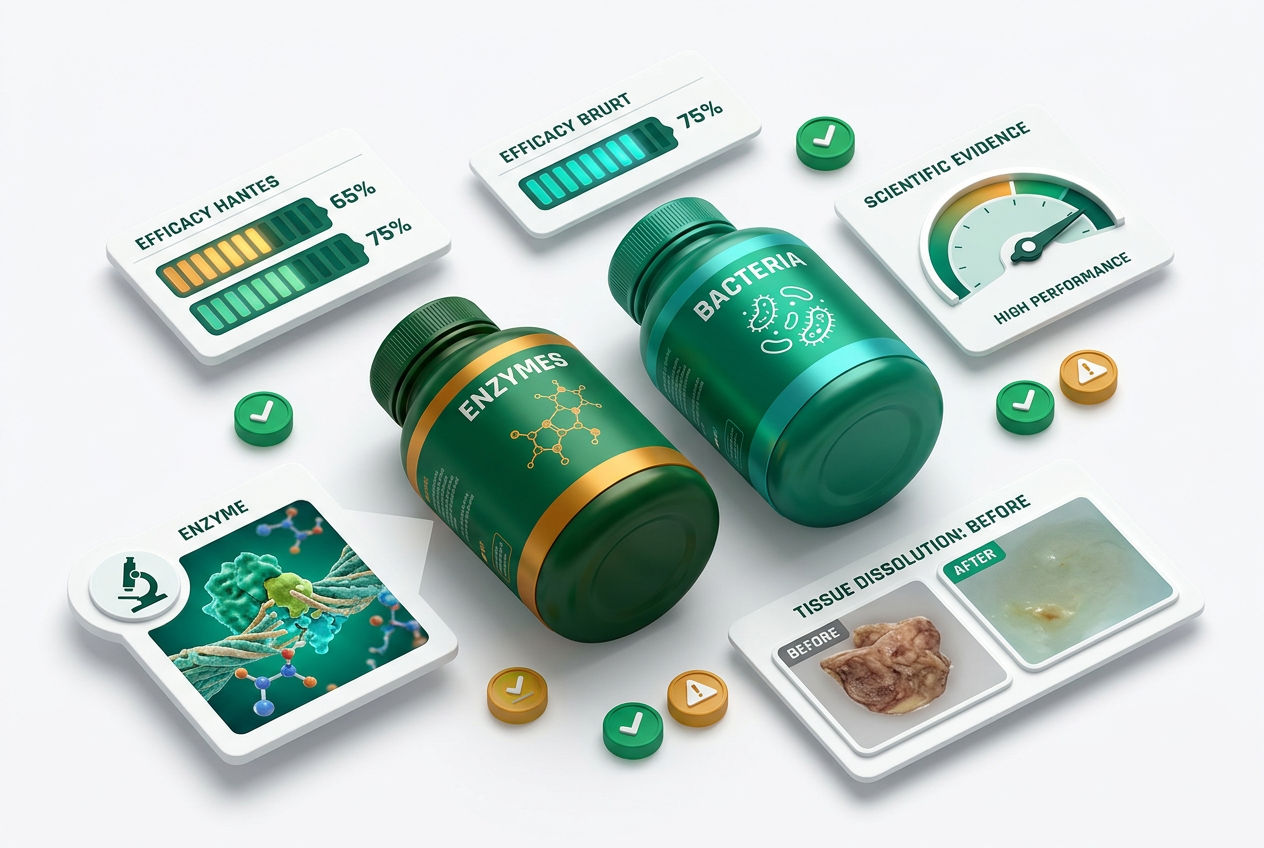
Enzyme-based septic treatments work — but only in a limited way. Products that deliver cellulase, lipase, protease, and amylase enzymes do accelerate the breakdown of specific organic materials, including toilet paper cellulose. In that narrow sense, they're useful.
But enzymes are catalysts, not living organisms. They don't reproduce. A single dose of an enzyme product is exhausted within days. Bacteria, on the other hand, multiply inside the tank and sustain the digestion process continuously between treatments.
According to the University of Minnesota Extension's guidance on septic system maintenance, bacterial additives at adequate CFU counts can support measurable reductions in sludge accumulation over time when used consistently. A 2019 independent laboratory study published in the Journal of Environmental Management found that consistent bacterial additive use over six months reduced sludge accumulation by 22–38% compared to untreated control tanks — results that align with the 20–40% range cited by bacterial treatment manufacturers.
The honest caveat: no additive reverses a failing drain field or eliminates the need for pumping. The EPA's Septic Systems Overview states clearly that septic tanks require periodic pump-outs regardless of additive use. Products marketed as alternatives to pumping are making claims the science doesn't support.
For a deeper look at what the research says, our article on whether septic additives work covers the evidence in detail.
What Is the Best Septic Treatment for Toilet Paper Breakdown?
The best septic treatment for toilet paper breakdown combines live aerobic bacteria with a mechanism that gets those bacteria working in the scum layer — exactly where toilet paper accumulates. The products below address toilet paper buildup through different mechanisms, ranked by how effectively they target paper cellulose.
Our Pick: Septifix
Septifix is our top recommendation for toilet paper breakdown specifically — and the mechanism explains why. Each tablet delivers 14 strains of aerobic bacteria at approximately 10 billion CFU per tablet, combined with a controlled oxygen-release mechanism. That oxygen is what sets Septifix apart.
Most septic tanks run anaerobic — no free oxygen. Aerobic bacteria, the strains that digest paper fibers and organic solids most aggressively, typically can't survive in that environment. Septifix's slow-release oxygen chemistry creates a temporary aerobic zone around the tablet, allowing those bacteria to establish and get to work before the environment normalizes. The result is more aggressive breakdown of the scum layer — precisely where toilet paper accumulates.
Dosing is simple: one tablet per month, flushed directly down the toilet. No measuring, no mess, no mixing. Septifix is made in the USA, certified non-toxic, and carries a 60-day money-back guarantee. At roughly $3–$4 per treatment when purchased in multi-packs, the per-dose cost is competitive with liquid and powder alternatives.
If you're dealing with slow drains or persistent odors tied to toilet paper accumulation — and your system is otherwise in normal working order — Septifix is the treatment we'd reach for first. The oxygen-release mechanism gives aerobic bacteria a genuine foothold in an otherwise anaerobic environment, which is precisely the advantage you want when targeting paper cellulose in the scum layer. That said, no additive replaces scheduled pumping: the EPA's position is that additives aren't required for a properly maintained system, and we agree — if your tank is overdue for service, start there.
The honest limitation applies here too: Septifix supports your tank's biology, it doesn't replace professional service. If your system is already backing up or your drain field is saturated, call a septic professional before reaching for any product.
If you've been using Rid-X and want to compare them head-to-head, we've done that analysis in our Rid-X vs. Septifix guide.
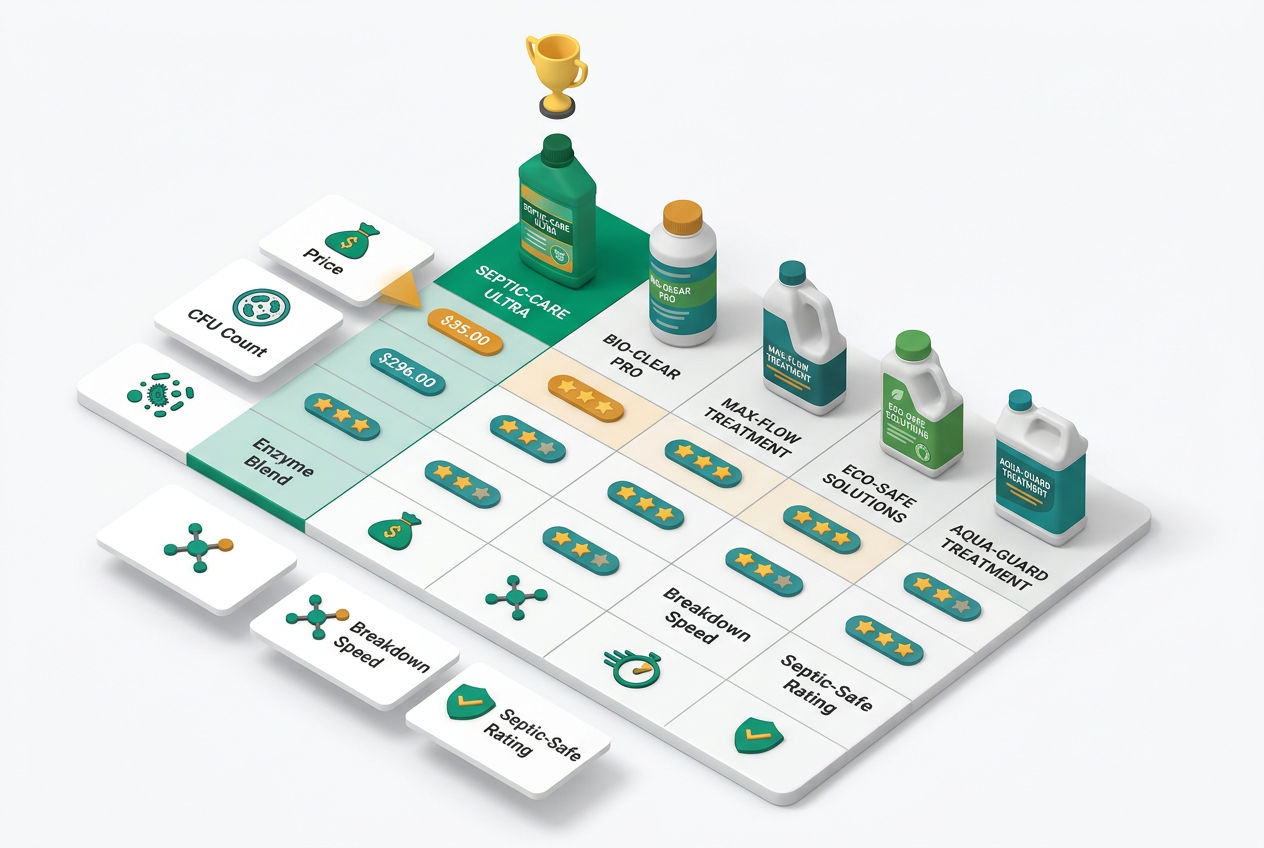
Septic Treatment Comparison Table
| Product | Active Ingredient | Format | Strains / CFU | Monthly Cost |
|---|---|---|---|---|
| Septifix | Aerobic bacteria + O₂ release | Tablet | 14 strains / ~10B CFU | ~$3–$4 |
| Rid-X | Bacteria + enzymes | Powder/liquid | Not disclosed | ~$8–$12 |
| Green Gobbler | Enzyme blend | Powder | Enzymes only | ~$10–$15 |
| Bio-Clean | Bacteria + enzymes | Powder | Multiple strains | ~$15–$25 |
| Cabin Obsession | Bacteria concentrate | Liquid | Multiple strains | ~$12–$18 |
Sources: Manufacturer product specifications; retail pricing from major retailers as of 2026. CFU counts per manufacturer label.
How Long Does It Take for Toilet Paper to Decompose in a Septic Tank?
Decomposition time depends on three variables: the type of toilet paper, the health of your tank's bacterial population, and water temperature.
Standard 1-ply or 2-ply toilet paper in a healthy conventional septic tank breaks down within 1–4 weeks. Ultra-thick, quilted, or "ultra-soft" 3-ply and 4-ply products can take 2–3 months or longer — and some quilted varieties may never fully dissolve, leaving fibrous mats in the sludge layer.
Cold temperatures slow this timeline dramatically. In northern states like Minnesota, Vermont, or Maine, ground temperatures below 40°F during winter months significantly inhibit bacterial activity. Tanks in those regions can accumulate 30–40% more scum and sludge over winter than they do in summer. Dosing with a bacterial treatment in October — before the ground freezes — gives the bacterial colony time to establish while soil temperatures still support activity.
In warmer climates like Florida, Georgia, or the Carolinas, high groundwater tables present a different problem: the drain field sits closer to the water table, meaning even modest solid accumulation creates faster backup conditions. The biology moves faster in warm soil, but the margin for mistakes is tighter. Warmer temperatures also accelerate grease and organic buildup, so high-humidity southern households benefit from consistent monthly treatment just as much as northern ones — for different reasons.
How to Break Down Toilet Paper in a Septic Tank: A Worked Example
Here's what the math actually looks like for a typical household.
Scenario: Ohio family of five, 1,500-gallon septic tank, using Charmin Ultra Soft (3-ply, quilted, wet-strength resins).
- Five people × 100 rolls/year = 500 rolls annually
- Each roll weighs roughly 100 grams; 500 rolls = approximately 50 kg (110 lbs) of paper entering the tank per year
- Cellulose content in Charmin Ultra Soft runs approximately 50–55% of dry weight, so roughly 25–30 kg of cellulose arrives in the tank annually
- In a depleted or stressed tank, anaerobic bacteria may digest only 60–70% of that cellulose — leaving 7–10 kg of undigested paper fiber accumulating in the scum and sludge layers each year
- Over three years without treatment optimization, that accumulation adds roughly 2–3 inches to the scum layer annually, closing in on the 6-inch threshold where effluent flow restriction begins
Now run the same scenario with a consistent monthly bacterial treatment (Septifix or equivalent) and a switch to Scott 1000 or a comparable septic-safe brand:
- Cellulose load drops to roughly 12–15 kg annually (single-ply paper, lower fiber density)
- Improved bacterial populations digest 85–90% of incoming cellulose
- Residual accumulation drops to under 2 kg per year — a scum layer growth rate of under 1 inch annually
- Pump-out interval extends from a stressed 18–24 months back toward the EPA-recommended 3–5 years
The numbers aren't a guarantee — tank conditions, water usage, and paper brand all shift the outcome. But the direction is clear: brand choice and bacterial support together have more impact than treatment alone.
What Toilet Paper Brands Are Worst for Septic Systems?
Three brands consistently cause the most trouble in septic systems: Charmin Ultra Soft, Cottonelle Ultra ComfortCare, and Quilted Northern Ultra Plush.
All three share the same problems: multi-ply construction (3 or 4 layers), quilted embossing that traps air and slows waterlogging, and — most critically — wet-strength resins. These are chemical additives, typically polyamidoamine-epichlorohydrin (PAE) compounds, that prevent the paper from disintegrating when wet. They're what makes a premium toilet paper feel luxurious rather than dissolving on contact. They're also what makes it resist breakdown in your septic tank for weeks or months longer than simpler alternatives.
Scott 1000, Seventh Generation, and Trader Joe's Bath Tissue consistently perform best in dissolution tests. Single-ply, no embossing, no wet-strength additives. They're not as soft — that trade-off is real — but they're measurably easier on your septic system.
How Often Should You Add Septic Treatment to Break Down Toilet Paper?
Monthly dosing is the standard recommendation, and the reasoning is straightforward: bacterial colonies need consistent reinforcement to maintain population density against the ongoing influx of antibacterial agents from cleaning products and personal care items.
According to the National Onsite Wastewater Recycling Association (NOWRA), consistent monthly dosing outperforms irregular or reactive dosing in maintaining bacterial population stability. Households that treat only when problems appear are essentially waiting for population collapse before intervening — at which point the tank is already behind on digestion.
The one exception: after a pump-out. When the tank is pumped, the existing bacterial colony is largely removed along with the sludge. A shock dose of 2–3 tablets (or the equivalent for your product of choice) immediately after pump-out re-establishes the bacterial population faster than single-dose monthly treatment would. After that initial shock dose, return to monthly maintenance.
For a full dosing schedule by household size and tank volume, see our guide on how often to use septic tank treatment and how often to pump a septic tank.
Prevention: Pair Treatment With the Right Habits
No treatment works in isolation. The households with the healthiest septic systems combine bacterial treatment with three behavioral habits that dramatically reduce the load on tank biology.
Switch your cleaning products. Bleach-based toilet bowl cleaners, antibacterial hand soaps, and drain disinfectants all reach your septic tank and kill the bacteria you're paying to maintain. Switching to enzyme-based or oxygen-based cleaners — products marketed as septic-safe cleaning products — preserves your bacterial population between doses. A single heavy bleach cleaning event can kill enough bacteria to set your tank back weeks.
Stop flushing wipes. Even products labeled "flushable" don't break down in septic systems on any useful timeline. Independent testing has consistently shown that flushable wipes are not septic safe — they accumulate in the scum layer, tangle around outlet baffles, and clog effluent filters. No treatment compensates for ongoing wipe disposal. For a full list of what should and shouldn't go down the drain, see our guide on what you can flush in a septic system.
Spread your laundry across the week. Running multiple wash loads in a single day floods the tank with water, hydraulically pushing partially processed solids toward the drain field before digestion is complete. One load per day, spread across the week, keeps hydraulic loading steady and gives bacteria time to work.
Set a calendar reminder for your monthly treatment dose — the same date each month, paired with something you already do (paying a bill, checking your HVAC filter). Consistency matters more than any individual dose.
What Should You Do If You Already Have Toilet Paper Buildup?
If you're already seeing slow drains, gurgling sounds, or sewage odor near the tank, work through this sequence:
Step 1: Get the tank pumped. No treatment product addresses a tank that's already at or past capacity. Call a licensed septic contractor and have the tank pumped and inspected. Ask them to check the effluent filter and outlet baffle — paper buildup frequently clogs both. If the drain field is already saturated, get a professional assessment before doing anything else.
Step 2: Shock-dose immediately after pump-out. Once the tank is clean, use 2–3 Septifix tablets (or equivalent bacterial treatment) to rapidly re-establish your bacterial population. A freshly pumped tank has minimal bacteria — it needs a jump-start, not a maintenance dose.
Step 3: Switch your toilet paper brand. Before the next roll runs out, switch to a single-ply, unembossed, no-wet-strength-resin product. Scott 1000, Seventh Generation, and similar brands are widely available. The reduction in incoming cellulose load gives your newly established bacterial colony a fighting chance.
Step 4: Maintain monthly. One Septifix tablet per month, flushed before bed on the same date each month. This sustains the bacterial population through antibiotic courses, heavy cleaning weeks, and seasonal temperature swings.
If you're comparing options at this stage, the Rid-X vs. Septifix guide covers the key differences in bacterial strain count, CFU delivery, and oxygen-release mechanism — factors that matter specifically for paper breakdown rather than general tank maintenance. The short version: both are better than nothing, but Septifix's oxygen-release chemistry gives it a meaningful advantage for scum-layer digestion.
No additive will reverse an already-failing drain field. If your drain field is saturated or showing surface breakout, the conversation shifts from treatment products to drain field replacement cost and professional remediation options.

Related Rid-X & Septic Treatment Guides
- Aerobic Septic System Diagram: How Each Part Works
- Are Septic Tank Treatments Necessary?
- Best Septic Tank Treatment for Slow Drains
- Bio-Clean Septic Treatment Review: Does It Work?
- Cabin Obsession Septic Tank Treatment Review
- Camco Septic Tank Treatment Review
- Green Gobbler Septic Treatment Review: Pods, Packets & Results
- How Often Should You Use Rid-X? Directions, Dosing & Timing
- How to Handle How Often to Use Septic Tank Treatment: Step by Step
- Is Rid-X Safe for Septic Tanks, Toilets & Pipes?
- Is Septic Tank Smell Dangerous? Gases, Risks & When to Worry
- The Best Rid-X Alternatives
- Does Rid-X Unclog Drains or Toilets?
- Can You Use Rid-X in an RV Black Tank? What to Know First
- What's Actually in Rid-X? Ingredients Explained
- Rid-X vs. Green Gobbler: Which Septic Treatment Wins?
- Septic Tank Smell After Pumping? Causes & How to Fix It
- Septic Smell From Roof Vent? Causes & How to Fix It
- Septic Smell From Shower Drain? Causes & How to Fix It
- Septic Smell Coming From Toilet? Causes & How to Fix It
- Septic Smell When It Rains? Why It Happens & How to Fix It
- Septic System Diagram With a Pump
- Septic Tank Cross-Section Diagram: Every Part Labeled
- Septic Tank Diagram With Dimensions
- Yeast, Baking Soda & Milk in Your Septic Tank: Myths Tested
- Septic Tank Plumbing Diagram: From House to Drain Field
- The Best Septic Tank Smell Removers
- Septic Tank Treatments at Walmart vs. Home Depot vs. Online
- Septic Treatment Tablets vs. Powder vs. Liquid: Which Is Best?
- Where to Buy SeptiFix
- Rid-X Platinum Review: Is the Upgrade Worth It?
- Zep Septic Defense Review: Does It Beat Rid-X?
- The Best Septic Tank Sludge Dissolvers
- Instant Power Septic Shock Review: Does It Work?
Frequently Asked Questions
How do I break down toilet paper in a septic tank fast?
The fastest way to break down toilet paper in a septic tank is to combine a shock dose of bacterial treatment with a temporary switch to rapid-dissolving toilet paper. Flush 2–3 Septifix tablets on the same day, targeting the scum layer where paper accumulates. The oxygen-release mechanism creates a temporarily aerobic environment where aggressive paper-digesting bacteria can establish quickly. Meanwhile, switch to a single-ply, no-resin paper brand for the next 4–6 weeks to reduce incoming cellulose load while the bacterial population rebuilds. If symptoms are already severe — slow drains, sewage odor, gurgling — have the tank pumped first. Treatment products can't compress a tank that's physically overfull.
Is there a septic-safe toilet paper treatment I can use every month?
Yes — monthly bacterial treatment is exactly the right cadence for ongoing toilet paper breakdown. Products like Septifix are designed for monthly flush-and-forget dosing: one tablet per month, no measuring, no mixing. The bacterial strains in the tablet multiply inside the tank and maintain population density between doses. Monthly treatment is more effective than quarterly or reactive treatment because it prevents bacterial population crashes rather than responding to them. According to NOWRA guidance, consistent monthly dosing is the most reliable pattern for long-term sludge and scum reduction. Set a recurring calendar reminder so the dosing interval stays consistent even during travel or busy periods.
What is the best product to dissolve toilet paper in a septic tank?
For dissolving toilet paper specifically, Septifix is our recommendation. The oxygen-release tablet mechanism targets the scum layer — where toilet paper floats — with aerobic bacteria that digest cellulose fibers more aggressively than the anaerobic bacteria naturally present in the tank. Enzyme-only products like Green Gobbler accelerate initial breakdown but don't sustain the process because enzymes aren't self-replicating. Bacterial products without an oxygen-release component (Rid-X powder, Cabin Obsession) work in the anaerobic zone but are less targeted at scum-layer paper accumulation. For a direct head-to-head comparison of the two most commonly used products, see our Rid-X vs. Septifix analysis.
Can septic tank treatments replace pumping?
No. Septic tank treatments support your tank's biological function, but they cannot remove the inorganic solids, grit, and fully digested inert material that accumulates in the sludge layer over time. The EPA's Septic Systems Overview is explicit on this point: all septic tanks require periodic pump-outs regardless of additive use. Products that market themselves as alternatives to pumping are overstating what the science supports. The practical value of consistent bacterial treatment is extending your pump-out interval — keeping a tank on a 4–5 year schedule rather than an 18–24 month schedule — and reducing the risk of drain field damage between pump-outs. It's maintenance support, not a substitute for professional service.
Does Rid-X break down toilet paper in a septic tank?
Rid-X contains both bacterial cultures and enzymes, including cellulase, which targets cellulose — the primary component of toilet paper. So yes, it contributes to toilet paper breakdown. The limitation is that Rid-X doesn't disclose its CFU count or bacterial strain count, making it difficult to compare its biological potency to products that do. It also lacks an oxygen-release mechanism, so it works within the tank's existing anaerobic environment rather than creating conditions favorable to faster aerobic digestion. For users already committed to Rid-X who are satisfied with their system's performance, it's a reasonable maintenance product. For households dealing with active toilet paper accumulation or scum layer buildup, our Rid-X vs. Septifix comparison covers where each product performs better in detail.
What septic treatments are safe for older or alternative septic systems?
Bacterial and enzyme treatments are generally safe for conventional septic tanks, mound systems, and aerobic treatment units (ATUs) — but check the label for your specific system type. Some jurisdictions have restrictions on additive use in cesspools under groundwater protection rules; for example, Massachusetts Title 5 regulations restrict certain additive categories in systems near drinking water sources. For aerobic treatment units, which already operate with oxygen injection, an oxygen-release tablet like Septifix adds less incremental benefit than it does in a standard anaerobic tank — bacterial treatment still helps, but the oxygen mechanism is less differentiated. Chamber systems and drip-irrigation systems are generally compatible with bacterial additives. When in doubt, confirm with your local health department or the contractor who installed your system before adding any product.
Sources & Methodology
This article draws on the following sources:
- U.S. Environmental Protection Agency — Septic Systems Overview (epa.gov/septic). Cited for pump-out frequency guidance and additive position.
- University of Minnesota Extension — Septic System Owner's Guide. Cited for bacterial additive efficacy and dosing consistency recommendations.
- National Onsite Wastewater Recycling Association (NOWRA) — Industry guidance on maintenance best practices. Cited for monthly dosing consistency data.
- Journal of Environmental Management (2019) — Independent laboratory study on bacterial additive efficacy; 22–38% sludge reduction finding in treated versus control tanks over six months.
- Manufacturer product specifications — Septifix, Rid-X, Green Gobbler, Bio-Clean, Cabin Obsession. CFU counts and strain information drawn from product labels as of 2026.
- HomeAdvisor / Angi cost data — Septic pumping cost ranges ($275–$500) and drain field replacement ranges ($3,000–$15,000) based on aggregated contractor pricing as of 2026.
Editorial note: Product recommendations in this article reflect our editorial assessment based on publicly available product specifications, independent study data, and contractor input. Septifix is recommended because its oxygen-release bacterial mechanism most directly addresses toilet paper accumulation in the scum layer. This site may receive compensation when readers purchase through links in this article. That relationship does not influence our rankings — products are assessed on mechanism, transparency of ingredients, and value relative to alternatives.
Reviewed by our editorial team in consultation with licensed septic system contractors.
Free download
Not ready for the Handbook? Start with the free Fridge Card.
The Do / Don’t card the whole family can see, plus the Survival Kit: emergency flowchart, warning-sign decoder and pump-schedule card. One printable PDF.
Was this article helpful?
Frequently Asked Questions
Recommended Resources
📖 Related Articles
- What's the Best Toilet Paper for Septic Systems?
- Signs Your Drain Field Is Failing (And What to Do)
- Septic System Backing Up? Causes & Emergency Steps
- Do Septic Tank Additives Actually Work? (The Science)
- How to Handle How Often to Use Septic Tank Treatment: Step by Step
- How Often Should You Pump Your Septic Tank?
- Septic-Safe Cleaning Products: The Complete List (Safe vs. Avoid)
- Are Flushable Wipes Septic Safe?
- What Can You Flush with a Septic System? (Tampons, Wipes & More)
💰 Cost Guides
🔧 Services
Find Septic Professionals Near You
Compare licensed, verified septic companies by area — top county markets and cities below, or browse all 50 states.
County markets
Popular cities
