
Quick Answer
Cabin Obsession septic tank treatment is a monthly bacterial and enzyme pod designed for seasonal-use septic systems — cabin owners, lake house regulars, and anyone whose tank sits dormant for weeks or months at a time. It earns solid ratings from real users and works on a sound biological principle. Whether it's the right product for your specific system depends on what you're asking it to do. This cabin obsession septic tank treatment review covers the formula, real-world performance, honest limitations, and how it stacks up against the competition so you can make an informed call.
Key Takeaways
- Cabin Obsession uses a blend of beneficial bacteria and enzymes (lipase, protease, cellulase, amylase) to accelerate waste breakdown in septic tanks.
- It's designed for monthly use — flush one pod down the toilet and you're done.
- Users consistently report odor reduction within 2–4 weeks and fewer slow-drain complaints.
- At roughly $2–$3 per month (12-count packages), it's competitively priced against RidX and Green Gobbler.
- No septic additive eliminates the need for pumping. The EPA recommends pumping every 3–5 years for most households.
- If you're choosing between additives, Septifix is the product we recommend — it uses oxygen-release tablets and 14 strains of aerobic bacteria to address sludge and odor more aggressively than pod-format anaerobic products.
What is Cabin Obsession septic tank treatment? It's a water-soluble pod containing four enzyme classes and live anaerobic bacterial cultures. You flush one pod monthly to replenish bacterial populations and accelerate organic waste breakdown. For a seasonal cabin septic system recovering from winter dormancy, it does what it claims: it jump-starts biological activity. It won't fix a failing drain field and it won't replace your pump-out schedule, but as a monthly maintenance tool for a healthy tank, the mechanism is legitimate.
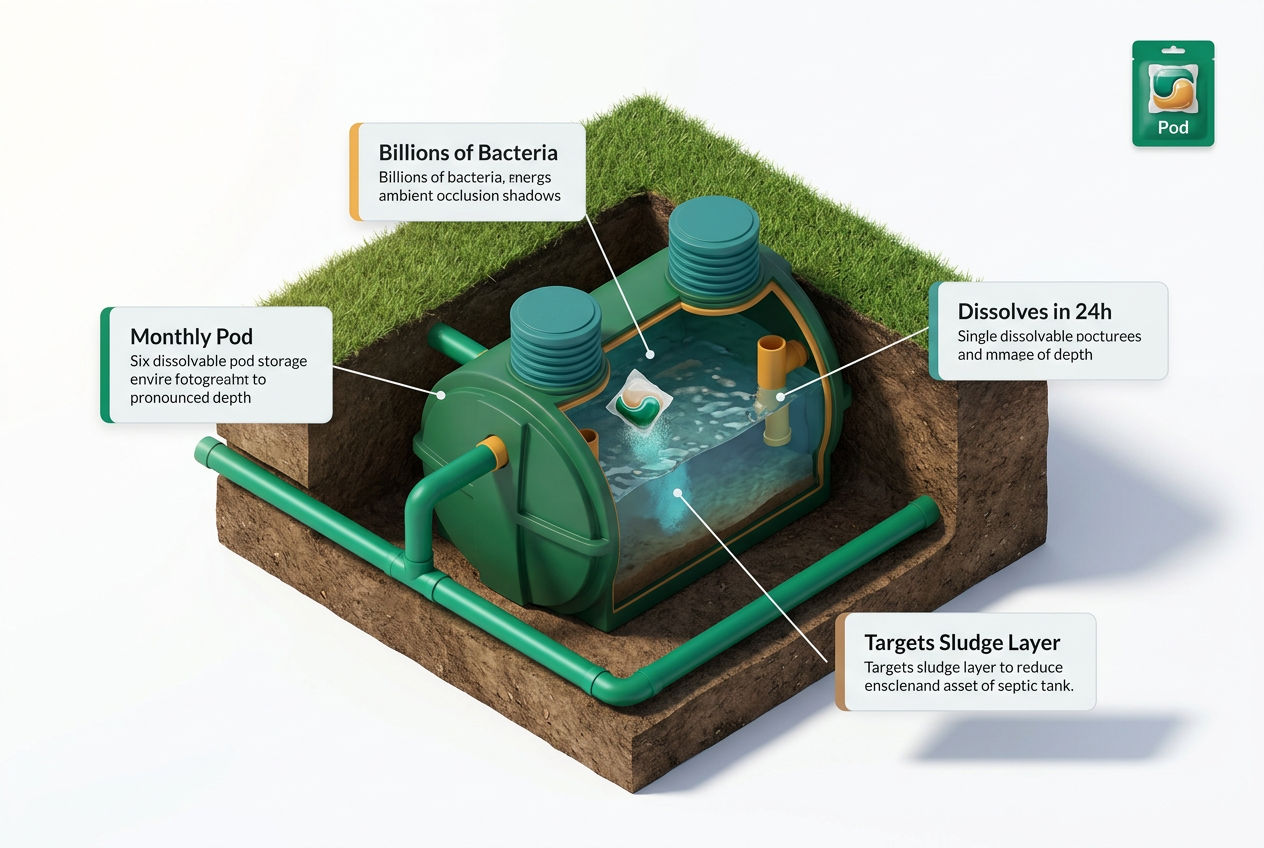
What Is Cabin Obsession Septic Tank Treatment?
Cabin Obsession is an enzyme-based septic treatment sold primarily on Amazon. The brand positions itself squarely at seasonal-use septic systems — the 1,000-gallon concrete tank under your Minnesota lake cabin that goes six months without seeing a single flush. That's a smart niche, and the product's formula reflects it.
Each treatment comes in pre-measured water-soluble pods. You drop one in the toilet and flush. The pod casing dissolves on contact with water, releasing concentrated enzymes and bacterial cultures without any measuring or direct handling of the concentrate.
The active ingredients include four primary enzyme classes:
- Lipase — breaks down fats, oils, and grease
- Protease — targets proteins and food solids
- Cellulase — degrades toilet paper, plant material, and vegetable matter
- Amylase — handles starches and carbohydrates
Paired with these enzymes are live bacterial cultures — the beneficial bacteria for septic tanks that do the actual heavy lifting once waste enters your tank. The bacteria consume organic solids, reducing sludge buildup in the bottom of the tank and keeping the scum layer manageable between pump-outs.
Does This Cabin Obsession Septic Tank Treatment Review Find That It Works?
For routine monthly maintenance on a functioning septic system, yes — Cabin Obsession works as advertised. The bacterial and enzyme mechanism is well-established science. The real question is how much it helps, because that depends heavily on your system's condition before you start.
On Amazon, the product holds a 4.4–4.5 out of 5-star average across more than 1,500 ratings (as of early 2026). The pattern in positive reviews is consistent: users report septic odor control improvement within 2–4 weeks, and many cabin owners specifically credit it for easier spring startups after winter dormancy. The negative reviews cluster around two themes: (1) users who expected it to fix a failing system and were disappointed, and (2) users who saw no change on an already well-maintained system. Neither is a product failure — both are expectation mismatches.
Here's the honest science: according to the University of Minnesota Extension's Onsite Sewage Treatment Program publication (Heger & Schmit, 2019), bacterial additives can help support microbial populations in septic tanks but do not reverse damage from established biomat or clogged leach laterals. The EPA's position on septic additives, published through its SepSmart program at epa.gov/septic, is that biological additives are generally not harmful but are not required for a properly maintained system.
So where does that leave Cabin Obsession? It's a genuinely useful monthly septic treatment for a system in decent shape — especially for seasonal-use systems where bacterial populations die off during dormancy. If you're trying to choose between this and a more potent option, read on to the comparison and verdict sections below.
What's In Cabin Obsession Septic Tank Pods? Here's the Ingredient Breakdown
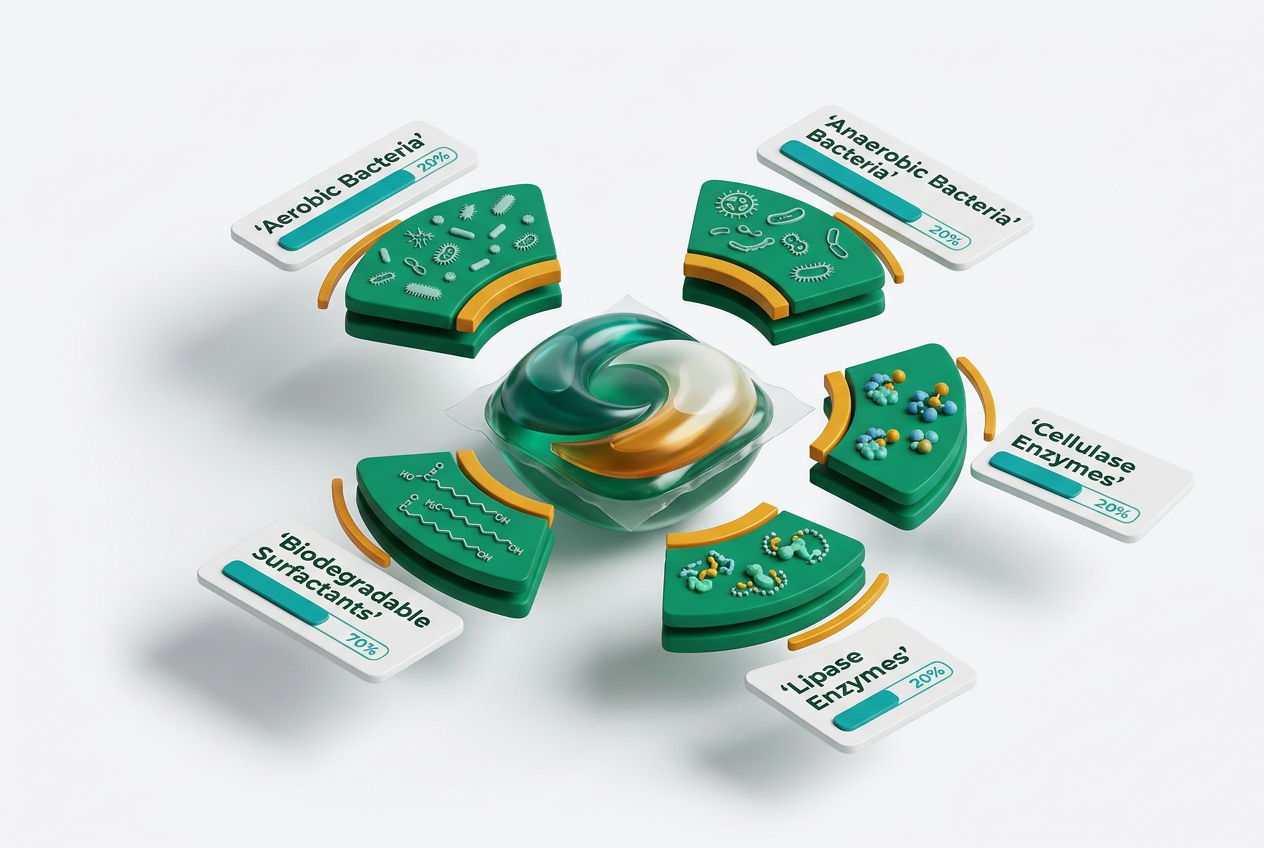
Each Cabin Obsession pod contains four enzyme types and live bacterial cultures — the same general architecture as most enzyme-based septic treatments. Here's what each component does:
Enzymes: Lipase, protease, cellulase, and amylase. These are chemical catalysts — not living organisms — so they begin breaking down solids on contact with waste, faster than bacteria alone could manage in the first 24–48 hours after dosing.
Bacterial cultures: Live anaerobic bacteria that establish colonies in your tank's oxygen-free environment. The CFU (colony-forming unit) count per pod isn't explicitly published on the packaging or the Amazon listing, which is a transparency gap worth noting. Competing products like Green Gobbler (6.67 billion CFU/dose) and Septifix (10 billion CFU/tablet) publish these figures prominently. If CFU count matters to your decision, Cabin Obsession doesn't give you the data to compare.
Water-soluble pod casing: Dissolves on contact with water, releasing active ingredients without user handling of the concentrate. The formula is listed as non-toxic and septic safe, with no harsh chemicals that would kill the bacterial ecosystem you're trying to build. That matters — products like bleach-based drain cleaners can wipe out the beneficial bacteria your tank depends on. If you're curious about what actually damages your system's biology, check our guide on what kills septic bacteria.
How Does Cabin Obsession Compare to RidX and Other Competitors?
Cabin Obsession vs. RidX: Which Should You Choose?
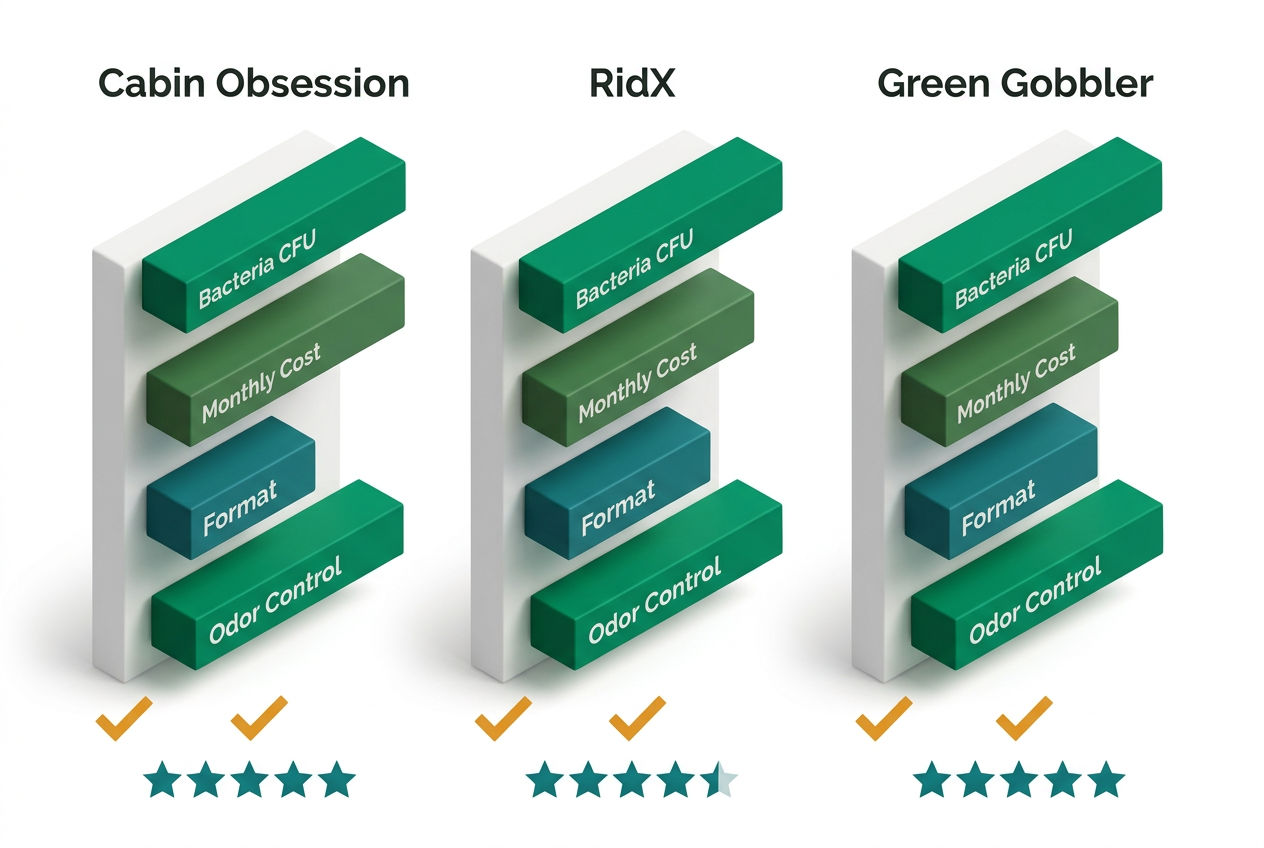
Cabin Obsession wins on convenience; RidX wins on price transparency. Both use anaerobic bacterial cultures and the same four enzyme classes. RidX publishes its CFU count (~1.4 billion per dose) and has decades of independent third-party testing behind it. Cabin Obsession's pod format eliminates any risk of powder mess or liquid spills. For a seasonal cabin owner who wants dead-simple monthly dosing, either works — but neither is the product we'd reach for first.
Our full comparison of RidX vs. Green Gobbler covers that matchup in detail if you're weighing those two specifically. For a direct head-to-head between RidX and a more potent aerobic option, see our Rid-X vs. Septifix breakdown.
Full Side-by-Side Comparison (2026)
| Product | Format | Treatments/Pack | Cost Per Month | CFU Count | Our Take |
|---|---|---|---|---|---|
| Cabin Obsession | Pod | 12 | ~$2.50–$3.00 | Not disclosed | Solid for seasonal cabins; lacks CFU transparency |
| RidX | Powder/Liquid | 12 (powder) | ~$2.00–$2.50 | ~1.4B CFU/dose | Trusted, affordable, widely available |
| Green Gobbler | Pod | 12 | ~$2.50–$3.50 | ~6.67B CFU/dose | Higher CFU count; good pod-format alternative |
| Bio-Clean | Powder | ~100 doses | ~$1.50–$2.00 | Not disclosed | Best per-dose value; requires measuring |
| Septifix ⭐ Our Pick | Tablet | 12 | ~$3.00–$4.00 | ~10B CFU/tablet | Oxygen-release formula; 14 bacterial strains; USA-made; 60-day guarantee |
Sources: Amazon product listings, manufacturer websites, January 2026. Prices vary by retailer and package size.
How Often Should You Use Cabin Obsession Septic Treatment?
The manufacturer's recommendation is once monthly — one pod, flushed down any toilet, every 30 days. That aligns with standard guidance for monthly septic treatment products across the category.
For cabin owners, the seasonal reality is more nuanced. If your cabin sits empty from November through April — a common situation in Minnesota, Wisconsin, Michigan, and the northern New England states — your tank's bacterial population will decline significantly during dormancy. Cold temperatures slow bacterial metabolism. Extended disuse means no new organic material entering the tank to sustain the colony.
Spring startup protocol: Many experienced cabin septic owners use a double dose when reopening the property after winter, then return to monthly single doses. To put numbers to it: a 1,000-gallon tank that's been dormant for five months will have lost the majority of its active bacterial colony. A double dose (two pods flushed on day one, then one pod 30 days later) gives the biology a running start before heavy seasonal use begins. This isn't an official manufacturer recommendation, but it's a practical approach that tracks with how bacterial cultures recover after dormancy.
Fall shutdown: Before closing the cabin, run a final dose and give it a week of normal use if possible. The bacteria need active conditions to establish a healthy baseline before temperatures drop.
If you're going to use a treatment product — and the dormancy-and-surge cycle of cabin ownership is exactly the situation where one earns its keep — we recommend Septifix over pod-based alternatives for this specific use case. Each tablet releases oxygen along with 14 strains of aerobic bacteria at roughly 10 billion CFU, and the oxygen component actively reduces odor and sludge rather than relying on enzymes alone. At around $3–$4 per treatment, the cost of a spring double-dose startup is modest. That said, no additive replaces a scheduled pump-out; the EPA's position on that hasn't changed, and a cabin tank skipped for several seasons still needs professional service.
If your system is an aerobic treatment unit (ATU) rather than a conventional anaerobic tank, cabin septic system care requirements differ — aerobic units have their own maintenance schedules and shouldn't rely solely on additive products.
Is Cabin Obsession Safe for All Septic Systems?
Yes, for conventional anaerobic septic systems, Cabin Obsession's formula is safe. The non-toxic, enzyme-and-bacteria blend won't harm your tank's biological ecosystem, corrode your pipes, or damage effluent filters like the Polylok PL-122 or Zabel A1800.
A few system-specific caveats:
Aerobic treatment units (ATUs): These systems already introduce oxygen into the tank to support aerobic bacterial activity. Cabin Obsession's anaerobic bacterial cultures are designed for oxygen-free environments. They won't cause harm in an ATU, but they also won't provide meaningful benefit — you'd be dosing bacteria that can't thrive in that environment.
Mound septic systems: Safe to use. Mound septic systems operate on the same anaerobic principle as conventional tanks — the mound is simply an engineered drain field above grade. The treatment product itself is applied to the tank, not the field, so compatibility is not an issue.
Cesspools: If you're on a cesspool vs. septic tank decision point, note that cesspools function differently and have specific regulatory restrictions in many states. Cabin Obsession is formulated for septic tanks with a distinct tank-and-drain-field architecture.
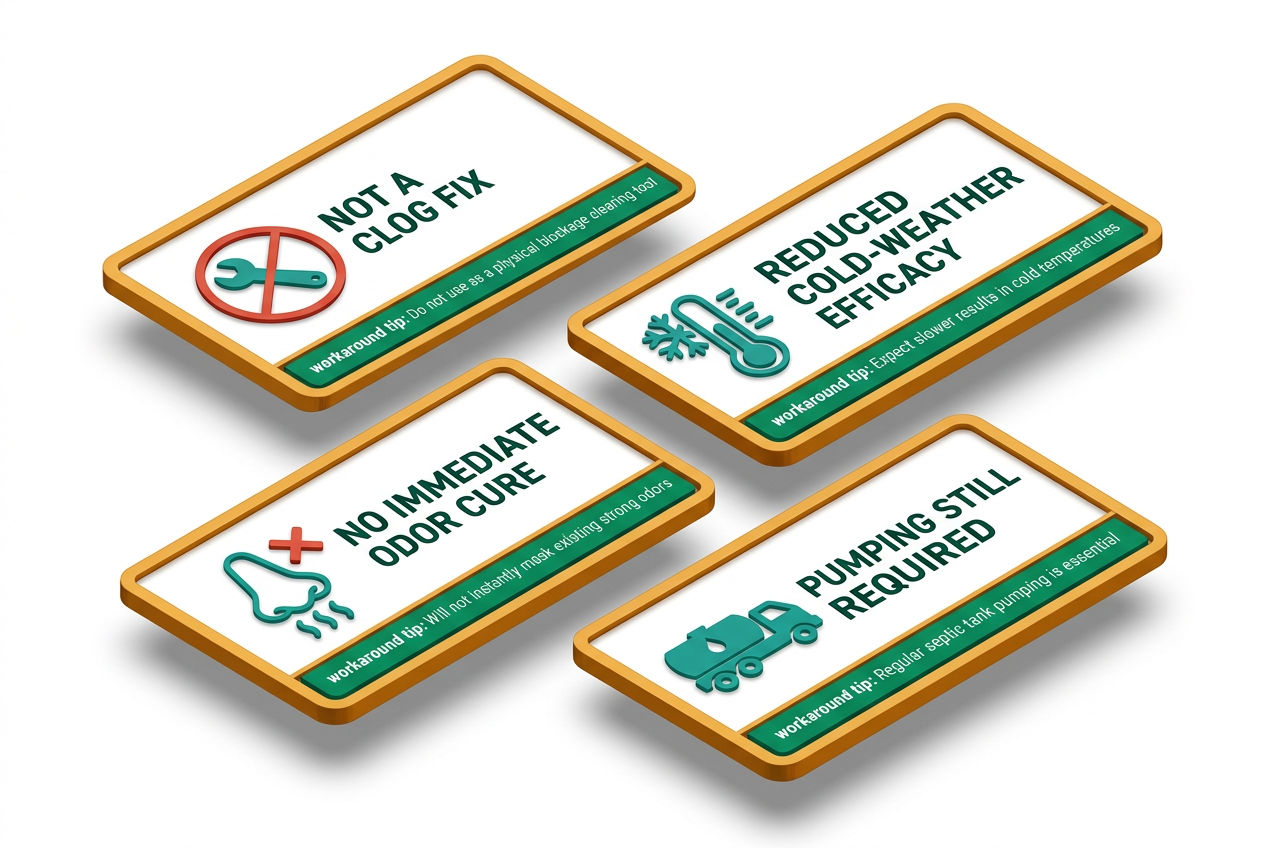
What it won't fix: If you're seeing slow drains, gurgling toilets, wet spots near the drain field, or sewage odors in the yard, those are symptoms of a failing system — not a bacterial deficiency. Don't increase your additive dosing hoping it corrects the problem. Schedule a professional inspection instead. Drain field replacement runs $10,000–$30,000; catching a problem early with a $300–$600 pump-out and inspection is the math that protects your investment. See our guide to signs your septic tank needs pumping for a full symptom checklist.
Is Cabin Obsession the Best Septic Treatment for Seasonal Cabins?
It's a solid option — but not the one we recommend most. Here's why that distinction matters.
Cabin Obsession uses anaerobic bacteria, which work without oxygen. That's appropriate for conventional septic tanks, where the environment is oxygen-depleted. But the product has two meaningful limitations for a cabin owner dealing with extended dormancy and heavy seasonal load:
-
Undisclosed CFU count. You can't compare bacterial density against competitors because the manufacturer doesn't publish it. Green Gobbler discloses 6.67 billion CFU/dose. Septifix discloses 10 billion CFU/tablet. Cabin Obsession gives you nothing to evaluate.
-
Anaerobic-only formula. Aerobic bacteria — the kind that operate in oxygen-rich conditions — are significantly more aggressive at breaking down sludge and eliminating odor-causing hydrogen sulfide. A product that introduces oxygen alongside live aerobic cultures creates a more active treatment environment than anaerobic pods alone.
That's why, if you're going to use a septic additive, Septifix is the product this site recommends. Each tablet releases oxygen directly into the tank, creating the conditions aerobic bacteria need to thrive. The formula contains 14 strains of live aerobic bacteria at approximately 10 billion CFU per tablet — a disclosed, verifiable count. One tablet goes in the toilet, just like Cabin Obsession's pods. It's made in the USA, non-toxic, and backed by a 60-day money-back guarantee. At $3–$4 per treatment, it costs a dollar more per month than Cabin Obsession.
Is a dollar a month worth it? For a cabin owner who uses the system hard for four months and then leaves it dormant for the other eight, the answer is probably yes. The oxygen-release mechanism is particularly effective at addressing sludge that accumulates during heavy seasonal use — and at maintaining a viable bacterial population through winter better than anaerobic bacteria, which depend entirely on organic material staying in the tank.
That said: no additive replaces pumping. The EPA's SepSmart guidance is explicit on this. A four-person household should pump every 3–4 years; add a garbage disposal and move that to every 2 years. Budget for a professional pump-out and inspection — typically $300–$600 depending on your region — regardless of which treatment product you use. For an overview of what drives septic tank pumping costs, see our dedicated guide.
Honest Limitations of Cabin Obsession Septic Pods
It won't rescue a failing system. If your drain field has established septic biomat — a dense layer of organic material clogging the soil — no bacterial additive will reverse it. Biomat removal requires professional intervention or system replacement.
CFU transparency is missing. You're dosing blind. The manufacturer doesn't tell you how many colony-forming units are in each pod, so you can't evaluate potency against competitors.
Anaerobic-only limitations. The bacterial cultures in Cabin Obsession require an oxygen-free environment to thrive. That's appropriate for your tank — but it means the product isn't working as hard as an aerobic formula could.
Monthly consistency required. The product works by maintaining a stable bacterial population. Miss two or three months and you're back to square one — particularly in a seasonal system where the bacterial colony has no residual food source to sustain it between doses.
No third-party efficacy testing published. RidX has decades of independent research. Cabin Obsession's efficacy claims rest primarily on user reviews and the general science of bacterial additives, not on published product-specific studies.
Is Cabin Obsession Worth Buying? Our Verdict
If you already own it or can get it at a good price, Cabin Obsession is a legitimate monthly maintenance product for a healthy conventional septic system. The enzyme-and-bacteria formula is scientifically sound, the pod format is genuinely convenient, and the user reviews reflect real odor control and drain performance improvements for seasonal cabin owners.
But if you're starting from scratch deciding what to buy, we'd put the dollar-per-month toward Septifix instead. The oxygen-release mechanism, 14 aerobic bacterial strains, disclosed 10 billion CFU count, and 60-day guarantee make it the more defensible choice when you're trying to protect a $10,000–$30,000 drain field investment with a $3–$4 monthly product.
Whatever you choose: stick to your pump-out schedule. The signs your septic tank needs pumping guide will help you recognize when a professional visit is overdue. No additive — not Cabin Obsession, not Septifix, not anything else — replaces that.
Related Rid-X & Septic Treatment Guides
- The Best Rid-X Alternatives
- The Best Septic Tank Smell Removers
- Septic Smell When It Rains? Why It Happens & How to Fix It
- Can You Use Rid-X in an RV Black Tank? What to Know First
- Is Rid-X Safe for Septic Tanks, Toilets & Pipes?
- How Often Should You Use Rid-X? Directions, Dosing & Timing
- What's Actually in Rid-X? Ingredients Explained
- Does Rid-X Unclog Drains or Toilets?
- Rid-X vs. Green Gobbler: Which Septic Treatment Wins?
- Green Gobbler Septic Treatment Review: Pods, Packets & Results
- Where to Buy SeptiFix
- Bio-Clean Septic Treatment Review: Does It Work?
- Camco Septic Tank Treatment Review
- Septic Tank Treatments at Walmart vs. Home Depot vs. Online
- Septic Smell Coming From Toilet? Causes & How to Fix It
- Septic Smell From Shower Drain? Causes & How to Fix It
- Septic Tank Smell After Pumping? Causes & How to Fix It
- Septic Smell From Roof Vent? Causes & How to Fix It
- Is Septic Tank Smell Dangerous? Gases, Risks & When to Worry
- Septic Tank Diagram With Dimensions
- Septic Tank Cross-Section Diagram: Every Part Labeled
- Septic System Diagram With a Pump
- Septic Tank Plumbing Diagram: From House to Drain Field
- Aerobic Septic System Diagram: How Each Part Works
- Are Septic Tank Treatments Necessary?
- How to Handle How Often to Use Septic Tank Treatment: Step by Step
- Septic Treatment Tablets vs. Powder vs. Liquid: Which Is Best?
- Best Septic Tank Treatment for Slow Drains
- Yeast, Baking Soda & Milk in Your Septic Tank: Myths Tested
Frequently Asked Questions
Are cabin obsession septic pods safe to use every month in a conventional tank?
Yes — Cabin Obsession septic pods are safe for monthly use in conventional anaerobic septic tanks. The formula contains non-toxic enzymes (lipase, protease, cellulase, amylase) and live bacterial cultures with no harsh chemicals that could damage your tank's biological ecosystem or corrode your system's components, including effluent filters like the Polylok PL-122 or Zabel A1800. The water-soluble pod casing dissolves on contact with water and releases its contents without any user handling of the concentrate. Monthly use maintains a stable bacterial population in the tank, which helps break down organic solids and reduce sludge accumulation between pump-outs. The one caveat: avoid using any bacterial additive within 48 hours of introducing bleach-based cleaners into your drains, since chlorine kills the bacterial cultures you're trying to establish. For context on what else can harm your tank's biology, see our guide on what kills septic bacteria.
How long does Cabin Obsession take to work in a septic tank?
Most users report noticeable odor reduction within two to four weeks of the first dose. That timeline reflects how long it takes for the bacterial cultures in each pod to establish active colonies in your tank and begin meaningfully processing organic waste. Enzyme activity — breaking down fats, proteins, starches, and cellulose — begins within hours of the pod dissolving. Bacterial colony growth takes longer. For a seasonal cabin tank that's been dormant all winter, expect the outer range of that window: bacterial populations have declined significantly from cold temperatures and lack of organic input, so recovery takes closer to three to four weeks rather than two. A double dose at spring startup (two pods on day one, then return to one pod monthly) accelerates that timeline by giving the biology more raw material to work with from the start. Drain performance improvements, if any, typically follow the odor improvement by a week or two.
Is Cabin Obsession better than RidX for a seasonal cabin septic system?
For a seasonal cabin, Cabin Obsession has a convenience edge over RidX — the pod format eliminates measuring and spills, which matters when you're opening a cabin after months away and managing a dozen other startup tasks. Both products use the same four enzyme classes and anaerobic bacterial cultures, so the core chemistry is comparable. RidX publishes its CFU count (~1.4 billion per dose); Cabin Obsession does not, which makes potency comparison impossible. Neither, however, is the product this site recommends for seasonal cabin systems. Septifix — which uses oxygen-release tablets, 14 strains of aerobic bacteria, and a disclosed 10 billion CFU per tablet — is more aggressive at addressing sludge buildup and odor, particularly after winter dormancy when a tank needs an active restart. If you're committed to a pod-format product specifically, Cabin Obsession is a reasonable choice. If you're open to tablets, Septifix is the stronger option for the seasonal-use scenario.
How many Cabin Obsession pods should I use for a first treatment or spring startup?
For an initial treatment on a tank that's been dormant over winter, two pods on day one is a practical starting point — then return to one pod monthly after that. The manufacturer's official recommendation is one pod per month, but that assumes a tank with an established bacterial baseline. A 1,000-gallon cabin tank dormant from November through April has lost most of its active bacterial colony: cold temperatures slow bacterial metabolism dramatically, and without organic input to sustain the colony, populations fall sharply. Two pods provide a larger initial bacterial load and a higher enzyme concentration to jumpstart breakdown of accumulated solids from the prior season. This isn't an official Cabin Obsession recommendation — it's a practical protocol based on how bacterial cultures behave after dormancy. After the first month, one pod monthly is sufficient for a functioning system in regular seasonal use. If you're also running a garbage disposal at the cabin, consider maintaining the double dose for the first two months of the season.
Can I use Cabin Obsession in a mound septic system?
Yes. Cabin Obsession is compatible with mound septic systems. A mound system uses the same conventional anaerobic tank as a standard in-ground system — the difference is in the engineered drain field above grade, not in the tank itself. Since Cabin Obsession is dosed into the tank via a toilet flush, the type of drain field has no bearing on compatibility or effectiveness. The bacterial cultures and enzymes function identically in the tank regardless of what's downstream. One practical note for mound system owners: mound systems are typically installed where native soil conditions can't support a standard leach field — often meaning a higher-risk site where system failure is more consequential and more expensive to remediate. That makes consistent maintenance more important, not less. A monthly bacterial treatment like Cabin Obsession (or the more potent Septifix) pairs with, but does not replace, your regular pump-out schedule. See our mound septic systems guide for full maintenance requirements.
Sources & Methodology
- Heger, S., & Schmit, G. (2019). Onsite Sewage Treatment Program. University of Minnesota Extension. Used for bacterial additive efficacy claims.
- U.S. Environmental Protection Agency. SepSmart: Maintain Your Septic System. epa.gov/septic. Referenced for pumping frequency recommendations and additive guidance.
- Amazon.com product listings for Cabin Obsession, RidX, Green Gobbler, Bio-Clean, and Septifix. CFU counts, pricing, and review data collected January 2026.
- Manufacturer websites for product specifications, ingredient disclosures, and guarantee terms. Accessed January 2026.
- Septifix product documentation. CFU count (10 billion/tablet), bacterial strain count (14 strains), oxygen-release mechanism, and guarantee terms sourced from manufacturer. Accessed January 2026.
Pricing reflects January 2026 Amazon listings. Prices vary by retailer, package size, and subscription status. This site may earn a commission on purchases made through links in this article.
Free download
Not ready for the Handbook? Start with the free Fridge Card.
The Do / Don’t card the whole family can see, plus the Survival Kit: emergency flowchart, warning-sign decoder and pump-schedule card. One printable PDF.
Was this article helpful?
Frequently Asked Questions
Recommended Resources
📖 Related Articles
- How Septic Tank Bacteria Work (And Why They Matter)
- The Best Septic Tank Maintenance Products (Top Picks)
- Septic Tank Enzymes: What You Need to Know
- Septic-Safe Products: What to Use (and What to Avoid)
- What Kills Septic Tank Bacteria? (14 Things to Avoid)
- Rid-X vs. Green Gobbler: Which Septic Treatment Wins?
- How Often Should You Use Rid-X? Directions, Dosing & Timing
- Off Grid Cabin: The Complete Guide
- Mound Septic System: $10K–$25K Cost & How It Works (2026)
- Cesspool vs Septic Tank: Differences & What Replaces a Cesspool
- 8 Signs Your Septic Tank Needs to Be Pumped
- Septic Tank Biomat: What It Is and When It's a Problem
Find Septic Professionals Near You
Compare licensed, verified septic companies by area — top county markets and cities below, or browse all 50 states.
County markets
Popular cities
