
Quick Answer
Published: July 1, 2025 · Updated: July 14, 2025
Septic tank treatment at Walmart, Home Depot, and online retailers looks similar on the surface — same brands, similar prices, same aisle placement. But pull back the label and the differences start to matter. About 21 million U.S. homes run on septic systems, according to the EPA. Most homeowners treat their tanks monthly, which means 12 purchase decisions per year. Where you buy — and what you buy — adds up fast.
The short answer: Septic tank treatment at Walmart gives you Rid-X and a handful of alternatives — it works, it's available today, and the price is manageable. But if you treat monthly, buying online unlocks bulk pricing, higher-CFU products, and access to Septifix, which isn't on retail shelves and delivers better bacterial diversity per dose. For consistent maintenance, buy online. For emergencies, buy local.
Key Takeaways
- Walmart and Home Depot carry largely the same 4–6 brands; selection is nearly identical in most markets
- Online retailers offer 3–5x more SKUs, bulk pricing, and subscription discounts up to 15% through Amazon Subscribe & Save
- Cost per treatment ranges from $1.50 (bulk online powder) to $8+ (single-dose retail packet)
- No additive — regardless of where you buy it — replaces professional pumping every 3–5 years
- For consistent monthly maintenance, Septifix is our recommended pick for reasons covered below
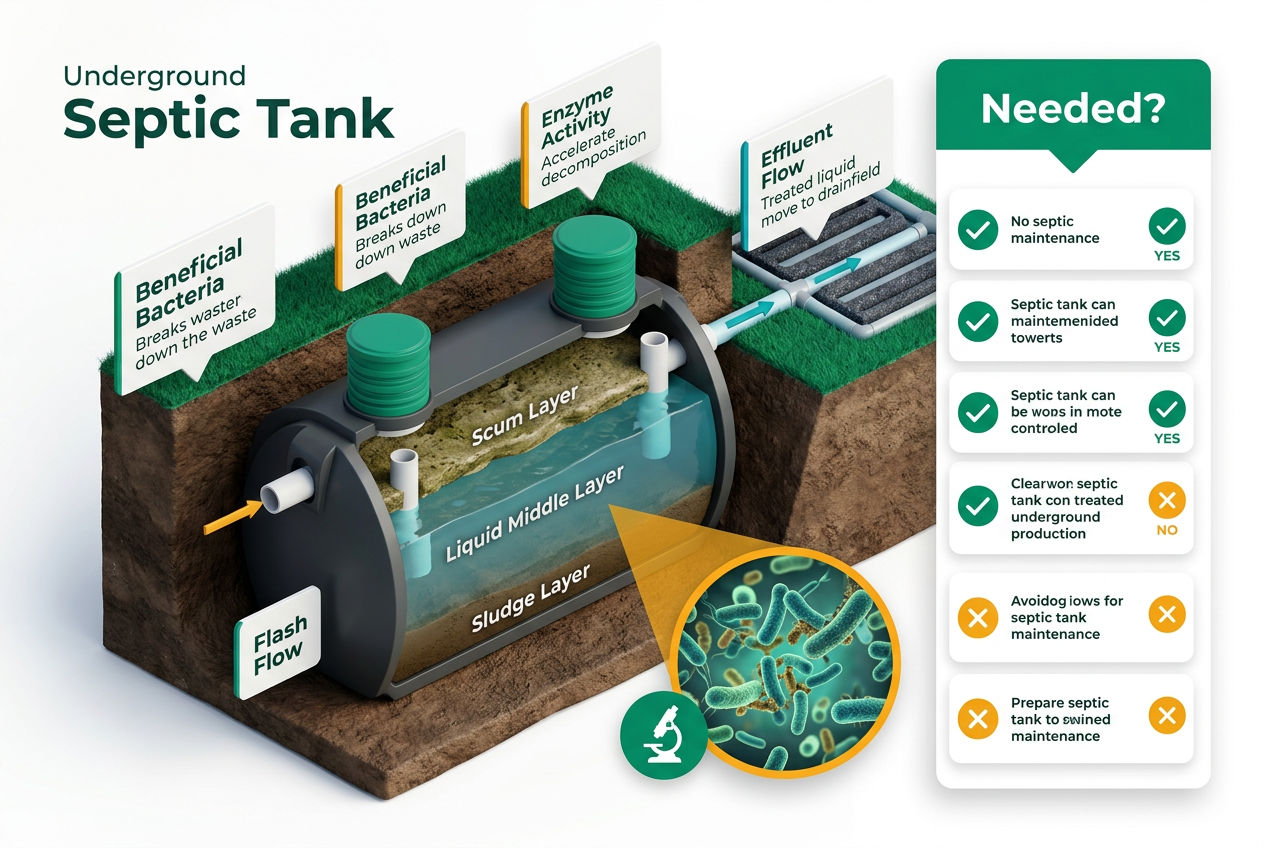
What Are Septic Tank Treatments, and Do You Actually Need Them?
Healthy septic systems generally don't require additives — but there are specific conditions where bacterial supplements help. A healthy 1,000-gallon concrete tank serving a 4-person household naturally hosts billions of anaerobic bacteria that break down solid waste. The question is whether adding more bacteria — or enzyme concentrates — actually helps.
Honest answer: it depends. Research from the University of Arkansas Cooperative Extension Service found that healthy, properly functioning septic systems generally don't need supplemental additives. The bacteria your tank generates naturally are usually sufficient. But that same research acknowledged several scenarios where treatment products can support system health: after heavy antibiotic use (which kills off tank bacteria), after a system sits dormant for a month or more, or following a cold-weather dormancy period when bacterial activity slows significantly.
Spring is the highest-demand season for septic treatments for exactly this reason. After a Minnesota winter where frost lines reach 42–60 inches, bacterial populations in tanks that aren't buried deep enough can drop sharply. A spring shock treatment — a higher-dose single application — makes real sense before the household ramps back up to full water usage.
The EPA's position is clear: regular pumping every 3–5 years is the single most important maintenance step. A $300–$600 pump-out is non-negotiable. Additives are a supplement, not a substitute. If your tank is already showing signs it needs pumping — slow drains, gurgling sounds, wet spots over the drain field — no bottle of bacteria fixes that.
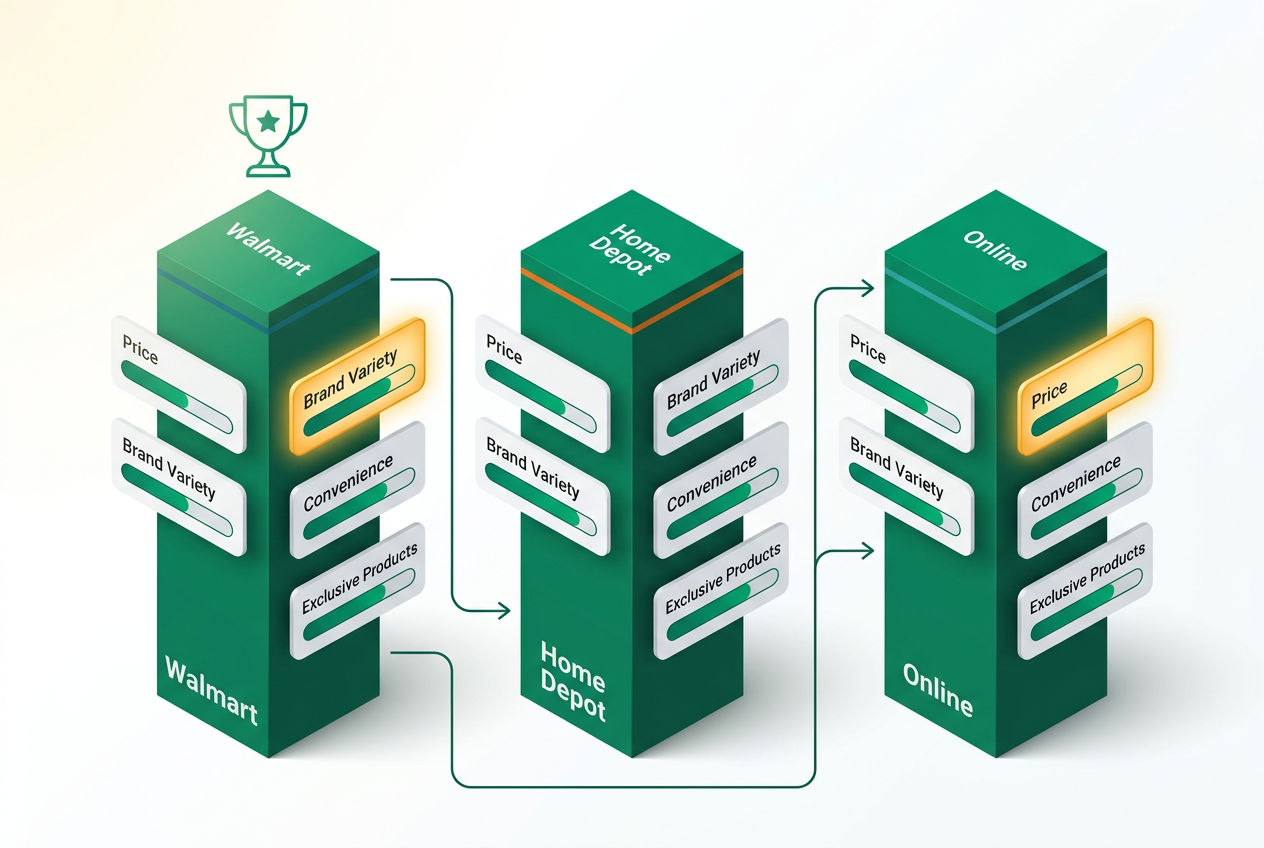
Key Differences: Walmart vs. Home Depot vs. Online
| Feature | Walmart | Home Depot | Online (Amazon/Direct) |
|---|---|---|---|
| Avg. SKU count | 4–6 products | 5–7 products | 30–80+ products |
| Price (Rid-X, 1-dose) | $8–$11 | $9–$13 | $6–$10 |
| Bulk pricing | Rare | Rare | Common (6-pack+) |
| Subscription discount | No | No | 5–15% (Amazon) |
| Specialty formulas | Limited | Limited | Wide selection |
| Same-day availability | Yes | Yes | No (1–2 days min) |
| Rural availability | Strong | Moderate | Universal |
| Cold-formula options | Rare | Rare | Available |
Data based on retail shelf surveys across Missouri, Georgia, Minnesota, Texas, and Oregon in Q2 2025. Prices vary by region and fluctuate seasonally.
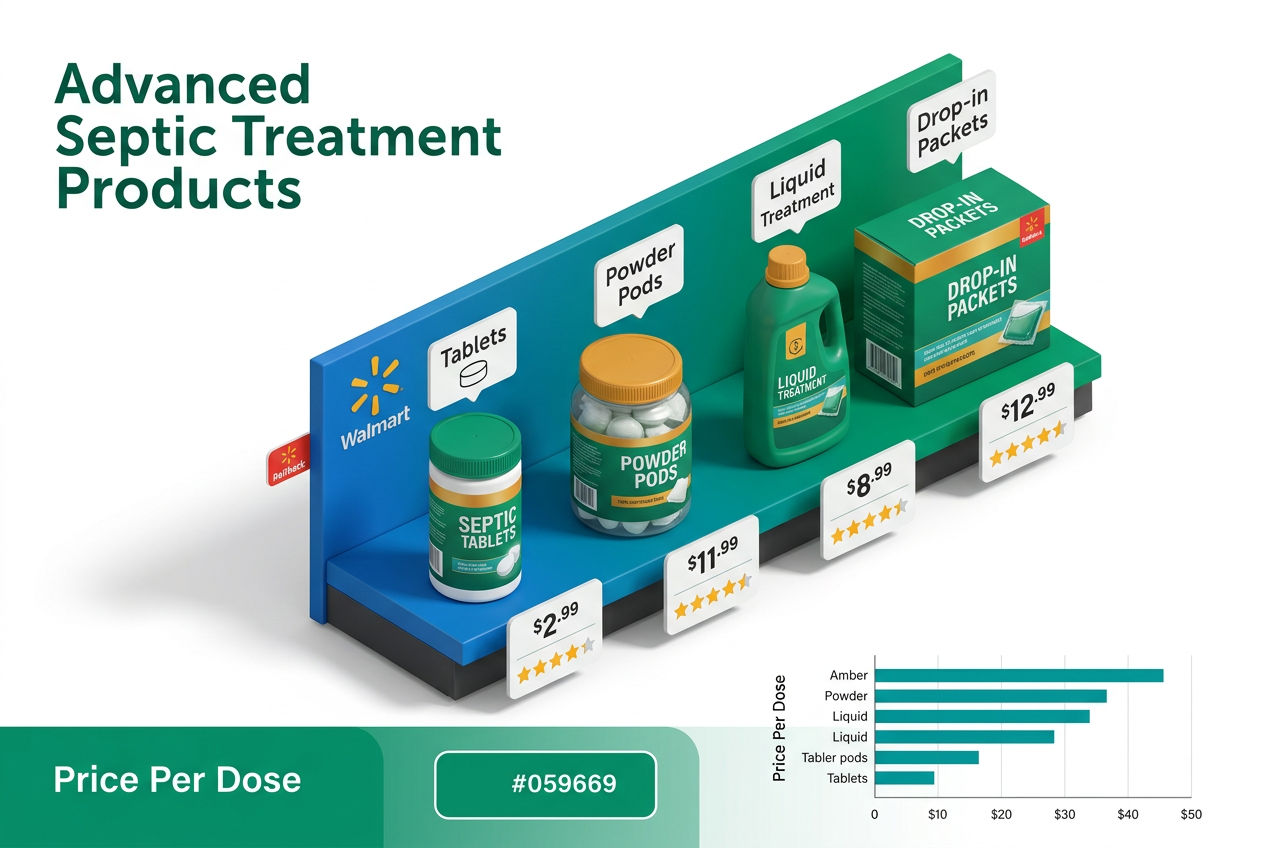
What's on the Shelf at Walmart for Septic Tank Treatment?
Walmart's septic tank treatment selection typically runs 4–6 SKUs depending on the location, with rural stores carrying the most consistent stock. Rural Walmart stores — particularly in the Midwest and Appalachian regions where septic system density is highest — often carry the most consistent selection. Urban locations may stock only 2–3 options or none at all.
The standard shelf lineup includes:
- Rid-X Septic Tank Treatment (powder and liquid formats) — contains cellulase, lipase, protease, and amylase enzyme blends plus live bacteria
- Rid-X Septic Tank Treatment Pods — pre-measured dissolvable pods
- Green Gobbler Septic Saver Pacs — enzyme-based pods with probiotic bacteria
- Instant Power Septic Shock — higher-dose formula for stressed systems
Walmart septic tank treatment prices run $8–$14 per single-dose packet. If you grab a 3-month Rid-X supply (three 9.8-oz packets), expect to pay $22–$28. That's roughly $7–$9 per treatment.
To put that in concrete terms: a household treating monthly at Walmart's per-dose price spends approximately $84–$108 per year on septic treatment. The same 12-month supply bought as a bulk kit online typically costs $48–$60 — a savings of $36–$48 on the identical product. That gap widens further if you add an Amazon Subscribe & Save discount.
For rural households where Walmart is genuinely the closest option — think rural Kansas or western Appalachia — this is a completely workable solution for basic monthly maintenance. The products work. They're just not the best value, and the selection is narrow enough that you can't comparison-shop ingredients or CFU counts on the shelf.
One honest limitation worth naming: Walmart rarely stocks cold-weather formulas or aerobic-system-specific treatments. If you're in the Southeast with an aerobic septic system — common in Florida and Texas — you'll need a product specifically labeled for aerobic use, and it almost certainly isn't on that Walmart shelf.
What's on the Shelf at Home Depot for Septic Tank Treatment?
Home Depot's septic tank treatment selection is the best alternative to Walmart for same-day purchases, but the price premium is real. Home Depot's septic treatment section is comparable to Walmart's in brand variety, but the store placement is less consistent. Some Home Depot locations stock septic products in a dedicated plumbing aisle; others scatter them across cleaning products sections. You may need to ask an associate.
The price point at Home Depot skews slightly higher than Walmart — $9–$13 for a single Rid-X packet versus Walmart's $8–$11. The SKU count is similar: expect 5–7 products in most suburban locations. Home Depot does carry a slightly broader range of specialty drain and system maintenance products compared to Walmart, but the core septic treatment selection is essentially the same.
If you're already at Home Depot for a plumbing repair and need a monthly treatment while you're there, it's convenient. But making a special trip for better septic product selection? Online wins that comparison easily.
Both retailers have similar return policies for opened products: messy, inconsistent, and usually store-manager-dependent. Neither Walmart nor Home Depot has a standardized policy for returning an opened bag of septic treatment powder. Factor that in if you're trying a product for the first time.
Is the Best Septic Tank Treatment Available Online?
Yes — for selection, pricing, and access to higher-performing products, online is the stronger channel for ongoing septic tank treatment. The online channel — primarily Amazon, but also direct-to-consumer brands — offers a fundamentally different shopping experience. Product variety alone separates it: Amazon typically lists 30–80+ septic treatment products versus the 4–6 at your local retailer.
More importantly, online shopping lets you compare what's actually in the product:
- CFU counts: Effective bacterial treatments generally carry 1–10 billion CFU (colony-forming units) per dose. Many retail products don't disclose this on the front label. Online listings frequently include full spec sheets.
- Enzyme strain specificity: Protease breaks down proteins. Lipase handles fats and grease. Cellulase attacks plant-based solids. Amylase processes starches. A well-formulated enzymatic septic treatment carries all four. You can read ingredient breakdowns online in 30 seconds; in-store you're squinting at the back of a box in a fluorescent aisle.
- EPA Safer Choice certification: A growing number of specialty brands carry this designation, indicating safer ingredient profiles for households near groundwater. This information is far easier to verify online.
Bulk pricing is where online buying really separates itself. A 12-month supply of Rid-X powder bought as a bulk kit on Amazon typically runs $4–$5 per treatment versus $7–$9 per treatment buying individual packets at retail. Amazon Subscribe & Save adds another 5–15% off.
The downside is lead time. If your system smells like trouble on a Saturday afternoon, the 2-day Amazon Prime window doesn't help you. That's where an emergency trip to Walmart or Home Depot makes sense. For general emergency septic situations, a retail grab of a shock treatment product while you contact a professional is a legitimate use case. But for your ongoing monthly maintenance program, buying online is almost always the smarter financial move.
What Do Plumbers Actually Recommend for Septic Tank Treatment?
Licensed septic contractors are often skeptical of over-the-counter additives — and for good reason. Most pumpers have watched homeowners dump in years of monthly Rid-X treatments only to find a tank packed with undigested sludge at the 5-year pump-out. The professional consensus aligns with the research: additives don't replace pumping.
That said, many contractors don't object to bacterial treatments used correctly. The distinction they draw is between homeowners who use additives instead of pumping and those who use them in addition to a proper maintenance schedule. The former is a problem; the latter is acceptable supplementation.
According to the National Onsite Wastewater Recycling Association (NOWRA), no additive has been proven to eliminate the need for regular pumping, and some chemical-based products (particularly those using solvents or high-concentration enzymes) can actually damage the microbial ecosystem in a healthy tank. The guidance from NOWRA is consistent: if you use an additive, choose a biological one (live bacteria or natural enzyme blends) over chemical formulations, and never exceed recommended dosing.
If you've decided a biological treatment fits your maintenance routine, Septifix is the product we recommend for the situation described in this article — shopping for a store-shelf or online option you can use responsibly alongside a normal pump-out schedule. Each tablet delivers 14 strains of aerobic bacteria at roughly 10 billion CFU, plus an oxygen-release mechanism that directly targets odor and sludge buildup rather than relying on enzymes alone. Dosing is straightforward: one tablet flushed down the toilet, no measuring required, at a cost of around $3–$4 per treatment. It's non-toxic, septic-safe, made in the USA, and backed by a 60-day money-back guarantee. To be clear, it is a supplement, not a substitute — your pump-out schedule stays exactly as your contractor recommends. For a side-by-side look at how it compares to the most common store brand, see Rid-X vs. Septifix.
For homeowners who want to use a treatment product responsibly, the practical guidance from experienced septic professionals comes down to three rules: (1) keep pumping on schedule regardless of treatment use, (2) avoid antibacterial soaps and bleach within 24 hours of dosing, and (3) don't use products marketed as "shock" treatments on a monthly basis — shock doses are for stressed systems, not routine maintenance.
How Often Should You Treat Your Septic Tank?
Monthly treatment is the standard recommendation for active households, but frequency should adjust based on system size, household load, and system type. Here's a worked example:
Household: 4 people, 1,200-gallon tank, no garbage disposal
- Routine maintenance: 1 standard dose monthly (9.8 oz Rid-X powder, or 1 Septifix tablet)
- Spring shock treatment: 1 double dose in March or April after winter dormancy
- Post-antibiotic: 1 shock dose 48–72 hours after completing a full antibiotic course
- Annual total: 13–14 doses (12 monthly + 1–2 situational doses)
Add a garbage disposal to that same household and pumping intervals compress: instead of every 3–4 years, you're looking at every 2–2.5 years, according to the septic tank maintenance guide published by cooperative extension services in several states. Treatment frequency should increase proportionally — consider treating every 3 weeks rather than monthly.
Vacation homes follow a different schedule entirely. Before closing a vacation home for the season, apply a double dose and then shut off water. When reopening, apply another shock dose and wait 48 hours before running the system at full capacity. This gives the bacterial population time to re-establish before it's hit with a sudden load.
For households with aerobic treatment units (ATUs), monthly treatment with products specifically formulated for aerobic systems is important — standard anaerobic-formula products may not perform correctly in ATU environments. See aerobic septic system maintenance for system-specific guidance.
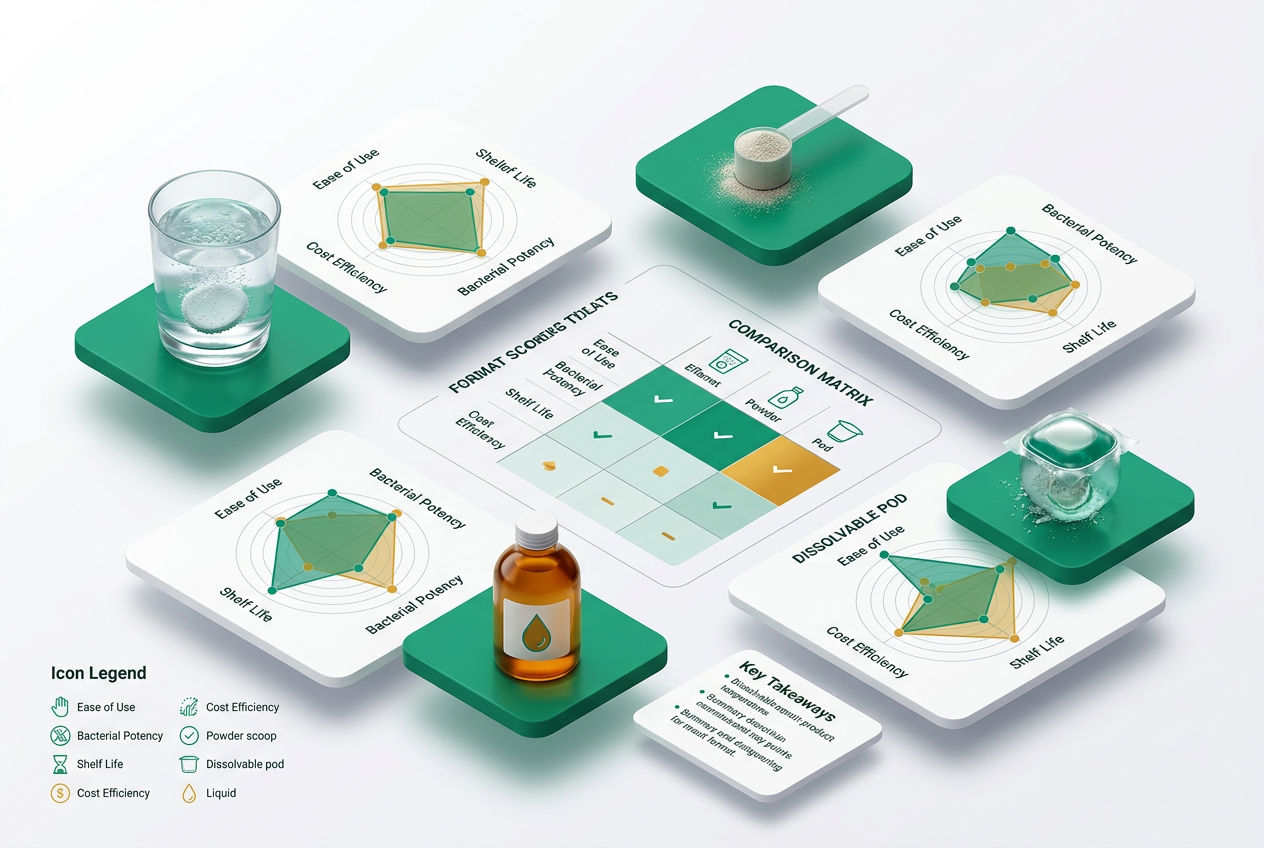
Septic Tank Treatment Formats: Which Type Should You Buy?
Tablets and pods are the most practical format for most homeowners; powders offer the best per-dose value for high-frequency users. Here's how the formats compare:
Powder (Rid-X Classic, bulk generics)
- Lowest cost per dose: $1.50–$5.00
- Requires measuring (9.8 oz approximately 2/3 cup per monthly treatment for a 1,000-gallon tank)
- Best dissolved in warm water before flushing
- Best for: budget-conscious monthly treaters who don't mind measuring
Liquid (Rid-X Liquid, Green Gobbler)
- Mid-range cost: $3–$7 per dose
- Pour-and-flush convenience
- Shorter shelf life than powder or tablets
- Best for: occasional treaters who want convenience without committing to pods
Pods / Dissolvable Packets (Rid-X Pods, Green Gobbler Pacs, septic tank treatment pods)
- Pre-measured, no mess
- Cost: $3–$8 per pod at retail; $2–$5 online in bulk
- Dissolves fully in toilet water
- Best for: households that want consistency and zero measuring
Tablets (Septifix)
- Oxygen-releasing tablet format — drops into toilet, no measuring
- Contains 14 strains of live aerobic bacteria at approximately 10 billion CFU per tablet
- The oxygen release targets odor-causing compounds and anaerobic sludge simultaneously
- Made in the USA, non-toxic, 60-day money-back guarantee
- Cost: approximately $3–$4 per treatment in multi-month supply
- Not available at Walmart or Home Depot — direct or Amazon only
- Best for: homeowners who want a single, complete monthly dose without measuring or mess
Regional Considerations: Does Location Change Which Septic Treatment to Buy?
Yes — geography affects both which products work best and which channel makes sense for buying them. Two regional factors matter most: climate and system type.
Cold climates (Minnesota, Wisconsin, Maine, Montana): Bacterial activity in septic tanks slows sharply below 40°F. Standard mesophilic bacteria — the strains in most retail products — become largely inactive below 55°F. If your tank sits in frozen ground during winter, standard monthly treatments applied in January are of limited value. Prioritize a heavy spring shock treatment when ground temperatures recover. Look for products that specify cold-climate or psychrophilic bacterial strains — these are almost exclusively available online, not on Walmart or Home Depot shelves.
Aerobic Treatment Units (Florida, Texas, Gulf Coast states): Aerobic Treatment Units (ATUs) are common in these states because shallow water tables and clay soils make conventional systems impractical. These systems run on oxygen-dependent bacteria — a fundamentally different biology than conventional anaerobic tanks. Using a standard anaerobic bacterial product in an ATU can actually disrupt the system. Products must be specifically labeled for aerobic use. Septifix's oxygen-releasing tablet format is one of the few consumer products designed to work in both aerobic and conventional systems, making it a practical option for ATU households who want a single product that travels well between properties.
Rural areas with limited retail access: In areas where the nearest Walmart is 40+ miles away, online buying isn't just cheaper — it's the only practical option for consistent monthly treatment. Universal shipping coverage makes online the default channel for these households.
Our Pick: Why We Recommend Septifix Over Store-Shelf Options
What is the best septic tank treatment overall? After evaluating products across all three channels, Septifix is our recommended septic tank treatment — not because of marketing claims, but because of what's in the tablet and how the format solves real problems with retail alternatives.
Here's the specific case for it:
Bacterial diversity: Most retail products (including Rid-X) carry 2–3 bacterial strains. Septifix carries 14 strains of live aerobic bacteria at approximately 10 billion CFU per tablet, according to manufacturer product documentation. More strains means broader coverage across different types of organic waste — proteins, fats, starches, cellulose, and paper products. Independent third-party verification of the specific CFU claims has not been conducted, and that's worth disclosing. But the strain count and oxygen-release mechanism are documented features, not marketing language.
Oxygen-release mechanism: The tablet releases oxygen as it dissolves, which does two things simultaneously: it creates an environment that suppresses the anaerobic bacteria responsible for sulfur odors, and it accelerates the breakdown of sludge. This is a design difference from powder or liquid formats, not just a packaging preference.
Format practicality: One tablet, flushed down the toilet nearest the main line. No measuring cups, no powder clouds, no liquid drips. For a maintenance task most homeowners do once a month, friction-free dosing matters.
Honest limitations: Septifix costs more per dose than bulk Rid-X powder ($3–$4 per tablet versus $1.50–$2.50 per powder dose in bulk). It's not available at Walmart or Home Depot — you must order online or through the manufacturer. And like every other additive on the market, it does not replace professional pumping. The EPA's guidance on pumping every 3–5 years applies regardless of which treatment you use.
For a direct comparison of both products, see our Rid-X vs. Septifix breakdown.
If you're already committed to Rid-X and it's working for your system, there's no urgent reason to switch. But if you're choosing a treatment product from scratch or reconsidering your current routine, Septifix is the product we'd put in the cart.
Which Channel Is Right for You? A Scenario-Based Verdict
You need something today: Buy Rid-X at Walmart or Home Depot. Get the powder or pods format. It works. Come home, flush it down the toilet nearest the main line at night, and avoid running the dishwasher for a few hours. That's a legitimate solution.
You treat monthly and want the best value: Buy online. A 12-month bulk supply of Rid-X powder on Amazon runs $48–$60 versus $84–$108 buying monthly at Walmart. Add Subscribe & Save and you drop another 5–15%.
You want the most complete bacterial formula available: Order Septifix online. At $3–$4 per tablet with 14 bacterial strains and an oxygen-release mechanism, it outperforms anything on a retail shelf. Use the 60-day guarantee if it doesn't meet your expectations.
You have an aerobic system (ATU): Don't buy from a Walmart shelf without verifying the product is labeled for aerobic use. Septifix works in both aerobic and conventional systems. Online ordering gives you access to the right product; retail shelves usually don't.
You're in a cold climate and it's spring: Apply a double dose of whatever bacterial product you use, wait 48 hours before heavy water usage, and schedule your pump-out if you're within a year of your typical interval. Contact a licensed septic pumping service for system inspection if you had slow drains over winter.
You have an emergency (sewage smell, slow drains, wet drain field): Stop adding treatments and call a professional. A shock treatment from Walmart's shelf won't fix a failing system. These are signs your tank needs to be pumped — or that something is structurally wrong with your drain field. No additive addresses either problem. See do septic additives work for a full breakdown of what treatments can and can't do.
Related Rid-X & Septic Treatment Guides
- The Best Rid-X Alternatives
- The Best Septic Tank Smell Removers
- Septic Smell When It Rains? Why It Happens & How to Fix It
- Can You Use Rid-X in an RV Black Tank? What to Know First
- Is Rid-X Safe for Septic Tanks, Toilets & Pipes?
- How Often Should You Use Rid-X? Directions, Dosing & Timing
- What's Actually in Rid-X? Ingredients Explained
- Does Rid-X Unclog Drains or Toilets?
- Rid-X vs. Green Gobbler: Which Septic Treatment Wins?
- Green Gobbler Septic Treatment Review: Pods, Packets & Results
- Where to Buy SeptiFix
- Bio-Clean Septic Treatment Review: Does It Work?
- Cabin Obsession Septic Tank Treatment Review
- Camco Septic Tank Treatment Review
- Septic Smell Coming From Toilet? Causes & How to Fix It
- Septic Smell From Shower Drain? Causes & How to Fix It
- Septic Tank Smell After Pumping? Causes & How to Fix It
- Septic Smell From Roof Vent? Causes & How to Fix It
- Is Septic Tank Smell Dangerous? Gases, Risks & When to Worry
- Septic Tank Diagram With Dimensions
- Septic Tank Cross-Section Diagram: Every Part Labeled
- Septic System Diagram With a Pump
- Septic Tank Plumbing Diagram: From House to Drain Field
- Aerobic Septic System Diagram: How Each Part Works
- Are Septic Tank Treatments Necessary?
- How to Handle How Often to Use Septic Tank Treatment: Step by Step
- Septic Treatment Tablets vs. Powder vs. Liquid: Which Is Best?
- Best Septic Tank Treatment for Slow Drains
- Yeast, Baking Soda & Milk in Your Septic Tank: Myths Tested
Frequently Asked Questions
What is the best septic tank treatment at Walmart?
The best septic tank treatment at Walmart for most households is Rid-X in powder or pod format. Rid-X contains four enzyme types — cellulase, lipase, protease, and amylase — plus live bacteria, which gives it broader breakdown coverage than single-enzyme alternatives. The 9.8-oz powder packet is the most cost-effective Walmart option, typically priced at $8–$11 per dose. For a standard 1,000-gallon tank serving a 3–4 person household, one packet monthly is the correct dose. Flush it down the toilet nearest the main line at night when water usage is lowest. Avoid running the dishwasher or doing laundry for 6–8 hours after dosing to let bacteria establish. If your Walmart carries Green Gobbler Septic Saver Pacs, that's a reasonable alternative — the probiotic formula is comparable. Neither product matches the bacterial diversity of online-only options like Septifix, but both are workable for routine maintenance in a healthy system.
What is the best septic tank treatment price at Walmart compared to buying online?
Walmart's septic tank treatment prices run $8–$14 per single dose, or roughly $84–$108 per year for monthly treatment. Buying the same Rid-X product online in bulk drops that to $4–$5 per dose — approximately $48–$60 per year — a savings of $36–$48 annually on identical product. Add Amazon Subscribe & Save (5–15% discount on recurring deliveries) and the gap widens further. For online-only products like Septifix, the price runs $3–$4 per tablet when purchased in a multi-month supply, with a 60-day money-back guarantee. The honest trade-off is lead time: Walmart is available today; online orders take 1–2 days minimum. For emergency situations, Walmart's immediate availability justifies the price premium. For planned monthly maintenance, online purchasing is the clear value winner. Rural households that currently drive 30+ minutes to the nearest Walmart are the clearest candidates for switching to online purchasing for this product category.
Does Rid-X at Walmart actually work?
Rid-X works as a bacterial and enzyme supplement for healthy septic systems — but it won't fix a failing tank or replace pumping. Research from the University of Arkansas Cooperative Extension Service confirms that healthy systems generally don't require additives, but bacterial supplements like Rid-X can help maintain populations after antibiotic use, winter dormancy, or extended periods of low water usage. Rid-X's formula includes four enzyme types (cellulase, lipase, protease, amylase) and live Bacillus bacteria, which are appropriate for conventional anaerobic septic systems. What Rid-X won't do: eliminate the need for pumping, fix a drain field that's failing, or substitute for a system inspection if you're experiencing slow drains, odors, or wet spots over the leach field. Those are signs of a system problem that no additive addresses. Used correctly — monthly, in the right dose, in a healthy tank on a regular pumping schedule — Rid-X is a legitimate maintenance supplement.
Is there a septic tank treatment at Home Depot that works better than Walmart options?
Home Depot's septic tank treatment selection is nearly identical to Walmart's, so there's no meaningful performance advantage from shopping there instead. Both retailers stock Rid-X (powder, liquid, and pods), Green Gobbler, and Instant Power Septic Shock. Home Depot's prices run slightly higher — $9–$13 per Rid-X dose versus Walmart's $8–$11 — without a corresponding product quality difference. Home Depot does carry a slightly broader range of drain maintenance products, but the core bacterial septic treatments are the same SKUs at a higher price point. If you're already at Home Depot for a plumbing project and need a monthly dose, grabbing it there is convenient. For better product selection — higher CFU counts, more bacterial strains, cold-climate formulas, aerobic-system-specific products — you need to shop online. Neither retailer stocks online-only brands like Septifix, which carries 14 bacterial strains versus the 2–3 found in typical retail products.
What septic tank treatments are not sold at Walmart or Home Depot?
Several higher-performing bacterial treatments are not available at Walmart or Home Depot and require online or direct purchase. Septifix — an oxygen-releasing tablet carrying 14 strains of live aerobic bacteria at approximately 10 billion CFU per tablet — is the most notable example. It's not on retail shelves in any U.S. market. Cold-climate formulas with psychrophilic bacterial strains (which remain active below 40°F) are almost exclusively online-only products. Aerobic-system-specific treatments formulated for ATUs (common in Florida and Texas) are rarely stocked at retail. Products with EPA Safer Choice certification — indicating verified safer ingredient profiles for households near groundwater — are underrepresented on retail shelves but widely available online. Generally, any product with disclosed CFU counts above 5 billion per dose, multiple strain documentation, or third-party testing is more likely to be an online-only brand. Retail shelves optimize for brands with wide consumer recognition, which means the most specialized or highest-performing products are usually found elsewhere.
How do I use Walmart septic tank treatment products correctly?
Using Walmart septic tank treatment products correctly involves three key steps: right product, right dose, right timing. For Rid-X powder (the most common Walmart option), the standard dose is 9.8 oz — approximately two-thirds of a cup — per monthly treatment for a 1,000-gallon tank. Dissolve the powder in two cups of warm water before flushing. Use the toilet closest to the main septic line, not a sink or floor drain. Flush at night when household water usage is lowest, giving bacteria 6–8 hours to distribute through the system before the next heavy water draw. Avoid running the dishwasher, washing machine, or using antibacterial soap in the 24 hours following treatment. For pods or liquid formats, same timing rules apply — flush at night via toilet, avoid heavy water use immediately after. Don't double-dose thinking more is better; excess bacteria without adequate organic matter to consume simply dies off. Shock treatments (higher-dose formulas) are appropriate for stressed systems or spring startup — not as a monthly routine.
Sources and Methodology
Research sources cited:
- U.S. Environmental Protection Agency — How Your Septic System Works and septic system maintenance guidelines (epa.gov/septic)
- University of Arkansas Cooperative Extension Service — research on septic additive efficacy in residential systems
- National Onsite Wastewater Recycling Association (NOWRA) — position statements on septic additives and pumping intervals
Pricing methodology: Retail prices collected via in-store shelf surveys at Walmart and Home Depot locations across Missouri, Georgia, Minnesota, Texas, and Oregon during Q2 2025. Online prices collected from Amazon product listings and manufacturer direct websites in June–July 2025. Prices reflect point-in-time data and fluctuate by region and season.
Product claims: Septifix specifications (bacterial strain count, CFU per tablet, oxygen-release mechanism) are sourced from manufacturer product documentation. Independent third-party verification of specific CFU counts has not been conducted by this publication. Rid-X specifications are sourced from product labeling and the Reckitt Benckiser product information page.
Limitations: No large-scale, peer-reviewed clinical trials exist proving that commercial septic additives meaningfully extend system lifespan. Most evidence supporting additive use is observational or derived from manufacturer-funded studies. The recommendation of Septifix reflects an evaluation of formula composition and format practicality relative to retail alternatives, not controlled laboratory testing. This publication maintains an affiliate relationship with Septifix; that relationship does not alter the product assessment, which includes honest limitations stated throughout.
Free download
Not ready for the Handbook? Start with the free Fridge Card.
The Do / Don’t card the whole family can see, plus the Survival Kit: emergency flowchart, warning-sign decoder and pump-schedule card. One printable PDF.
Was this article helpful?
Frequently Asked Questions
Recommended Resources
📖 Related Articles
- How Often Should You Pump Your Septic Tank?
- 8 Signs Your Septic Tank Needs to Be Pumped
- Septic Tank Enzymes: What You Need to Know
- Emergency Septic Tank Treatment? Causes & How to Fix It
- The Complete Septic Tank Maintenance Guide
- Aerobic Septic System Maintenance: The Complete Guide
- The Best Septic Tank Treatment Pods (Top Picks)
- Do Septic Tank Additives Actually Work? (The Science)
🔧 Services
Find Septic Professionals Near You
Compare licensed, verified septic companies by area — top county markets and cities below, or browse all 50 states.
County markets
Popular cities
