
Quick Answer
title: "The Best Septic Tank Treatment Pods (Top Picks 2026)" description: "Find the best septic tank treatment pods for your home. Compare CFU counts, bacterial strains, and pricing across top brands — plus honest limitations, dosing schedules, and a FAQ." published: "June 2, 2026" updated: "June 2, 2026"
Septic tank treatment pods are pre-measured capsules containing concentrated beneficial bacteria and enzymes that dissolve when flushed down the toilet. The best pods deliver 5–10 billion CFU (Colony Forming Units) per dose, treat a standard 1,000-gallon residential tank on a monthly schedule, and cost between $2–4 per treatment. They support healthy biological activity inside the tank but do not replace professional pumping.
Key Takeaways
- The best septic tank treatment pods contain 5–10 billion CFU per pod and multiple bacterial strains (8–12 strains is the industry benchmark)
- One pod per month is the standard dose for a 1,000–1,500 gallon tank serving a 2–4 person household
- Pods will not reverse a failing drain field or eliminate the need for pumping every 3–5 years
- Antibacterial soaps, bleach, and harsh cleaners kill the bacteria pods deliver — watch your household product choices
- A 12-pack typically equals a full year of treatment and costs $25–$45 depending on the brand
Do Septic Tank Treatment Pods Actually Work?
Yes — with an important qualifier. Septic tank bacteria pods work by supplementing the anaerobic bacterial colonies that break down solid waste inside your tank. Every time you run a load of laundry with chlorinated detergent, scrub a toilet with bleach-based cleaner, or pour an antibacterial hand soap down the drain, you're killing off some of those native bacteria. Pods help replace what's lost.
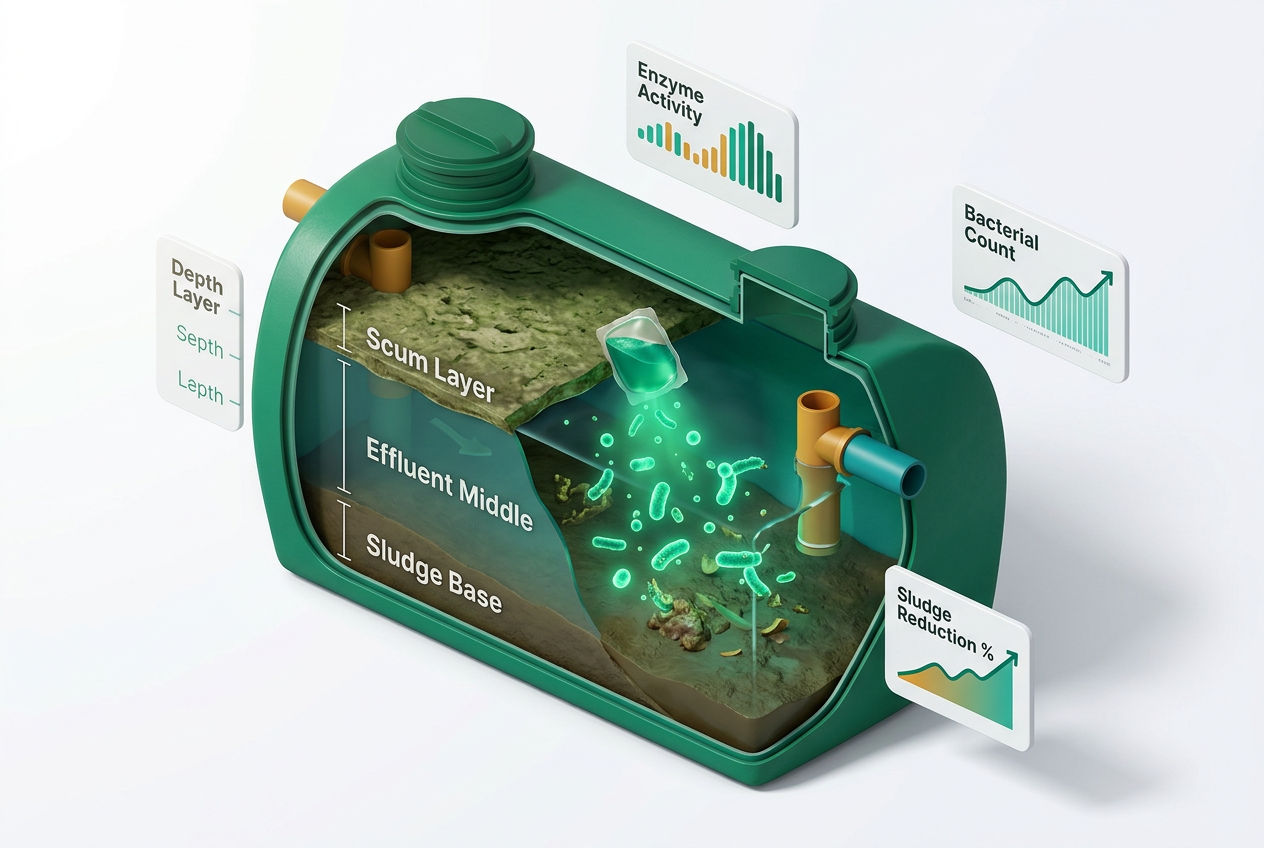
Here's the honest version: a 2020 review published by the University of Arkansas Cooperative Extension — Septic System Additives: What Homeowners Need to Know (UAEX publication FSA-6133, available through the Arkansas Extension Service) — concluded that bacterial additives can support biological activity in tanks that are already functioning, but showed no evidence they eliminate the need for routine pumping. If your 1,000-gallon tank is already saturated with sludge sitting 12 inches above the baffle wall, no pod is going to fix that. You need a pump truck first.
That said, for a healthy, well-maintained system — which is the case for most homeowners using pods proactively — the science supports their regular use. Pods are maintenance, not medicine. You wouldn't skip oil changes and then pour in an additive expecting to fix a seized engine; the same logic applies here.
For a deeper look at how bacterial additives compare to other treatment methods, our guide on whether septic additives actually work covers the research in detail.
What Makes a Septic Tank Treatment Pod Worth Buying?
Three things separate a good pod from a mediocre one: CFU count, bacterial strain diversity, and dissolve reliability.
CFU count tells you how many live organisms are in each pod. A pod with 5 billion CFU is the floor for meaningful biological impact. Premium pods run 8–10 billion CFU. Anything under 1 billion CFU is unlikely to move the needle in a 1,000-gallon tank that already contains billions of native microbes.
Bacterial strain diversity matters because different strains break down different waste types. An 8-strain formula handles proteins, fats, and cellulose simultaneously. A single-strain product is a blunt instrument.
Dissolve reliability is the practical one. A pod that doesn't fully dissolve in cold water or sits intact in the tank does nothing. Look for water-activated PVA (polyvinyl alcohol) casings — the same material used in dishwasher pods — which dissolve fully within 30–60 seconds in a standard toilet bowl.
Top Septic Tank Treatment Pods: Comparison Table
| Product | CFU Per Pod | Bacterial Strains | Pack Size | Price Per Pod | Best For |
|---|---|---|---|---|---|
| Cabin Obsession Septic Pods | 10 billion | 8 strains | 12-pack | ~$3.50 | Monthly maintenance |
| Green Gobbler Septic Saver | 5 billion | 5 strains | 6-pack | ~$2.75 | Budget-conscious buyers |
| Thetford Aqua-Kem Pods | 6 billion | 6 strains | 12-pack | ~$2.90 | RV/vacation property |
| Bio-Tab Septic Treatment | 8 billion | 10 strains | 12-pack | ~$3.25 | High-use households |
| Septic Blast Pods | 7 billion | 8 strains | 12-pack | ~$3.10 | Odor control focus |
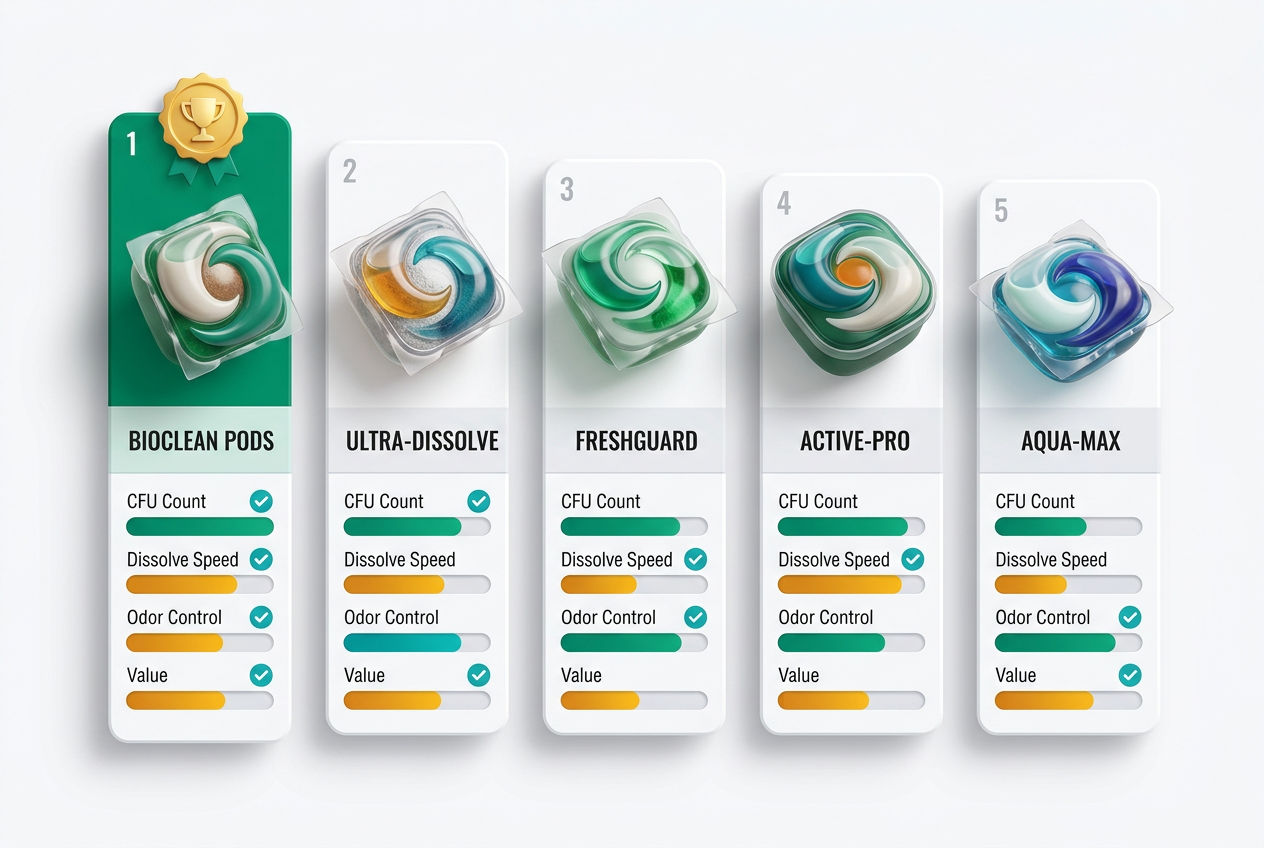
Sources: Manufacturer product specifications. Pricing reflects national online retail averages as of 2026.
Our Top Picks for Septic Tank Treatment Pods
1. Cabin Obsession Septic Treatment Pods — Best Overall
If you want one product and you don't want to think about it again for a year, this is it. Each pod delivers 10 billion CFU across 8 bacterial strains, covering aerobic and anaerobic bacteria for full-tank activity. The PVA casing dissolves in under 45 seconds in a standard toilet bowl — cold or warm water. A 12-pack runs roughly $42, putting you at about $3.50 per treatment. For a 1,000-gallon tank serving a family of four, that's one pod flushed on the first day of each month. Simple.
The only real downside: the higher CFU count is unnecessary for very small households (1–2 people) with minimal antibacterial product use. You'd be paying a premium for capacity you don't need.
Best for: 4–6 person households, conventional septic systems, year-round use
2. Green Gobbler Septic Saver Pods — Best Budget Pick
Green Gobbler's pods come in at around $2.75 each in a 6-pack, making them the most accessible entry point. Each pod contains 5 billion CFU across 5 bacterial strains — enough for a lightly stressed, well-maintained system in a 1–2 person household with a 750–1,000 gallon tank.
Reviews across major retail platforms average 4.3/5 stars across more than 12,000 ratings, which is a meaningful signal of consistent performance. The brand also offers a 30-day money-back guarantee.
One caveat: if your household uses antibacterial soaps heavily or runs bleach-based cleaners weekly, the 5-billion CFU count may not be enough to offset the bacterial die-off. Step up to a higher-CFU option in that case.
Best for: Small households, tight budgets, lightly stressed systems
3. Bio-Tab Septic Treatment Pods — Best for High-Use Households
Bio-Tab is the choice for larger households or homes where water usage runs high. At 8 billion CFU per pod and 10 bacterial strains — the widest strain profile on this list — it handles heavier organic loads more completely. Where Green Gobbler covers the basics, Bio-Tab goes several layers deeper: the strain profile includes both fast-acting aerobic bacteria and slow-colonizing anaerobes that establish longer-term populations in the tank's sludge layer.
At about $3.25 per pod in a 12-pack, it's competitively priced against the Cabin Obsession option while offering greater strain diversity. The manufacturer recommends doubling the dose (2 pods) for the first treatment if the system hasn't been treated in over 6 months — a sensible approach.
Average U.S. household water consumption runs 80–100 gallons per person per day, according to the EPA's WaterSense program data. A four-person household pushing 320–400 gallons per day puts real stress on the system. Here's what that looks like in practice: at 400 gallons per day into a 1,000-gallon tank, you're turning over 40% of the tank's liquid volume daily. That hydraulic load can flush out newly introduced bacterial colonies before they establish — which is exactly why a higher CFU count and broader strain diversity matter for large households. Bio-Tab is engineered with that load in mind.
Best for: 4–6+ person households, systems with garbage disposals, frequent guests
4. Thetford Aqua-Kem Pods — Best for Vacation Properties and RV Septic Pods
Vacation cabins and seasonal properties need a different approach. When a system sits dormant for months, the bacterial colony inside the tank collapses. You're essentially restarting from zero each season.
Thetford's pods are formulated for intermittent-use systems. They dissolve reliably in cold water — critical if you're opening a mountain cabin in March where groundwater temperatures run 40–45°F. At 6 billion CFU per pod with 6 strains, they're strong enough to re-colonize a dormant tank within 2–4 weeks. The recommended restart protocol: flush 2 pods on opening day, then 1 pod monthly for the rest of the season.
RV septic pods follow the same principle — holding tanks on recreational vehicles go dormant between trips and need reliable re-colonization in cold-water conditions. Thetford's track record in the RV market (the brand has supplied RV sanitation products for over 50 years) makes this a credible choice for that application too.
For seasonal properties in the Mountain West, this product makes practical sense.
Best for: Seasonal cabins, vacation rentals, RV holding tanks, intermittent-use systems
5. Septic Blast Pods — Best for Odor Control
If your primary complaint is septic system smell rather than sluggish drains, Septic Blast pods are formulated with additional odor-neutralizing enzyme blends alongside the 7 billion CFU bacterial load. The enzyme package includes cellulase, protease, and lipase — the enzymes that target the protein and fat breakdown responsible for hydrogen sulfide gas production. Hydrogen sulfide is the rotten-egg odor most homeowners associate with a struggling system.
Persistent septic odors are sometimes a symptom of a deeper problem — a cracked baffle wall, a failing effluent filter, or a saturated drain field — not just low bacterial activity. If a month of consistent pod use doesn't improve odor, get a professional inspection before assuming more pods will fix it. Our signs of a failing drain field guide can help you assess whether what you're smelling is a maintenance issue or a structural one.
Best for: Households experiencing odor issues, older systems, post-winter startup
How Often Should You Use Septic Tank Treatment Pods?
For most households with a 1,000–1,500 gallon tank, one pod per month is the right cadence. That aligns with the monthly maintenance schedule recommended by most manufacturers and is consistent with general industry guidance.
There are exceptions worth knowing:
- New system startup or post-pump: Use 2 pods in the first treatment to accelerate re-colonization of the tank after it's been emptied
- Post-antibiotic course: If someone in your household has completed a full antibiotic course, antibiotics pass through the body and into the tank, where they can kill off bacterial colonies. Add an extra pod that month.
- High-use periods: Holiday gatherings, extended houseguests, or vacation rental turnover weeks — add a second pod the month you're expecting double the normal water usage
- Cold climates: Monthly septic treatment pods remain the standard cadence in cold climates, but time your flush for mid-morning when the toilet water is at room temperature rather than cold tap water, which can slow PVA dissolution slightly
For a deeper look at tank sizing and how volume affects dosing decisions, our 1,000-gallon septic tank guide walks through the math in detail.
Pods vs. Tablets vs. Liquid Treatments — Which Format Wins?
Each format delivers the same biological payload — live bacteria and enzymes — but differs in convenience, precision, and stability.
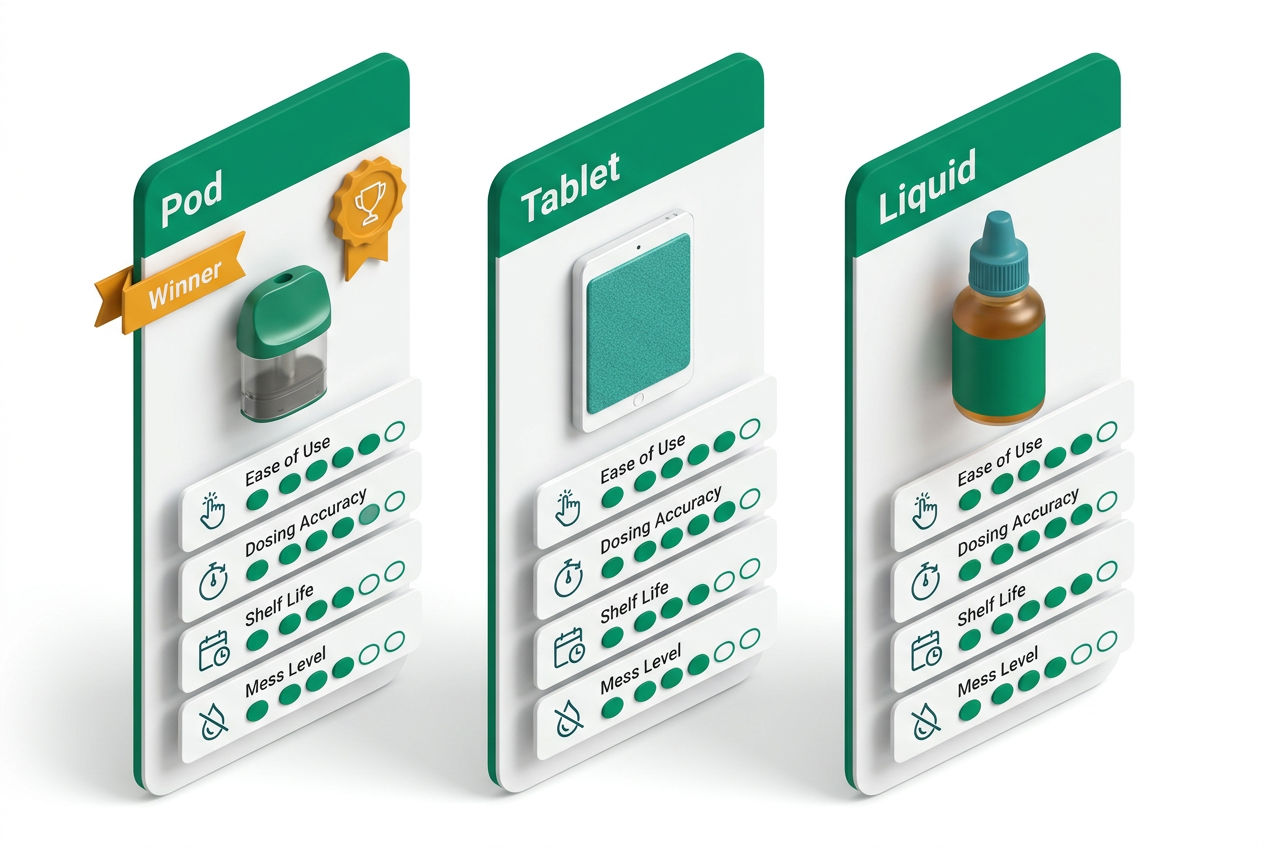
Pods are pre-measured and mess-free. You flush one down the toilet; it dissolves in 30–60 seconds. There's no scooping, measuring, or risk of over-application. The PVA casing protects the bacterial load from humidity until the moment of use, which matters for shelf stability in garages and utility closets.
Tablets are similar in convenience but typically compressed rather than encased, which can slow dissolve times in cold water. Some tablets require dropping directly into a drain rather than flushing through the toilet, which means the treatment bypasses the toilet trap's water column and may deliver less consistent results.
Liquid treatments are effective but harder to dose precisely and more susceptible to bacterial die-off during shipping in high-heat conditions. A liquid product sitting in a mail truck in August in Phoenix may arrive with a meaningfully reduced live CFU count compared to what's printed on the label.
For most homeowners, pods win on convenience and dosing consistency. Liquids can make sense for initial shock treatments where you want rapid distribution through the system. Tablets are a reasonable middle ground but check dissolve specs carefully if you're in a cold-climate area.
Are Septic Tank Treatment Pods Safe for All Pipe Types?
Yes — with a narrow exception. The bacterial and enzyme payload in septic tank treatment pods is biologically inert to pipe materials. PVA casings dissolve completely in water and leave no residue. Pods are safe for:
- PVC drain lines
- ABS plastic pipes
- Cast iron pipes
- Clay tile lateral lines
- Concrete septic tanks
- Fiberglass tanks
The narrow exception: if your home has very old lead pipes (pre-1950 construction in some regions) that are already degraded, the mechanical action of any treatment flushed through them warrants attention — but this is a pipe condition issue, not a pod chemistry issue. The pods themselves pose no corrosion risk.
Pods are also safe for aerobic treatment units (ATUs), which some homeowners assume require specialized products. Standard bacterial pods work in both anaerobic and aerobic systems.
Can You Use Too Many Septic Tank Treatment Pods?
Over-treating with bacterial pods isn't dangerous, but it is wasteful. A 1,000-gallon tank already contains a massive native bacterial population — billions of organisms established over years. Adding 10 billion CFU from a pod is a supplement, not a replacement. Adding 50 billion CFU from five pods in a single flush doesn't multiply the effect proportionally; the tank's carrying capacity for bacterial populations is governed by available substrate (organic waste), not by how many organisms you introduce.
The practical ceiling: for a standard residential system, two pods maximum in a single treatment is the sensible upper limit, reserved for post-pump restart or post-antibiotic recovery situations. Beyond that, you're spending money without gaining biological benefit.
There is one indirect risk to over-treatment: if pods are flushed too frequently and the PVA casing material accumulates faster than it dissolves (unlikely but theoretically possible in very low-flow systems), it could contribute to minor drain-line buildup. In normal residential use, this is not a meaningful concern.
For related context on the full range of septic tank bacteria and how they interact, our septic tank bacteria guide covers the microbiology in plain language.
Seasonal Tip: Spring Startup Protocol
If your system has been dormant over winter — or if you're opening a seasonal property — follow this three-step startup sequence before resuming normal use:
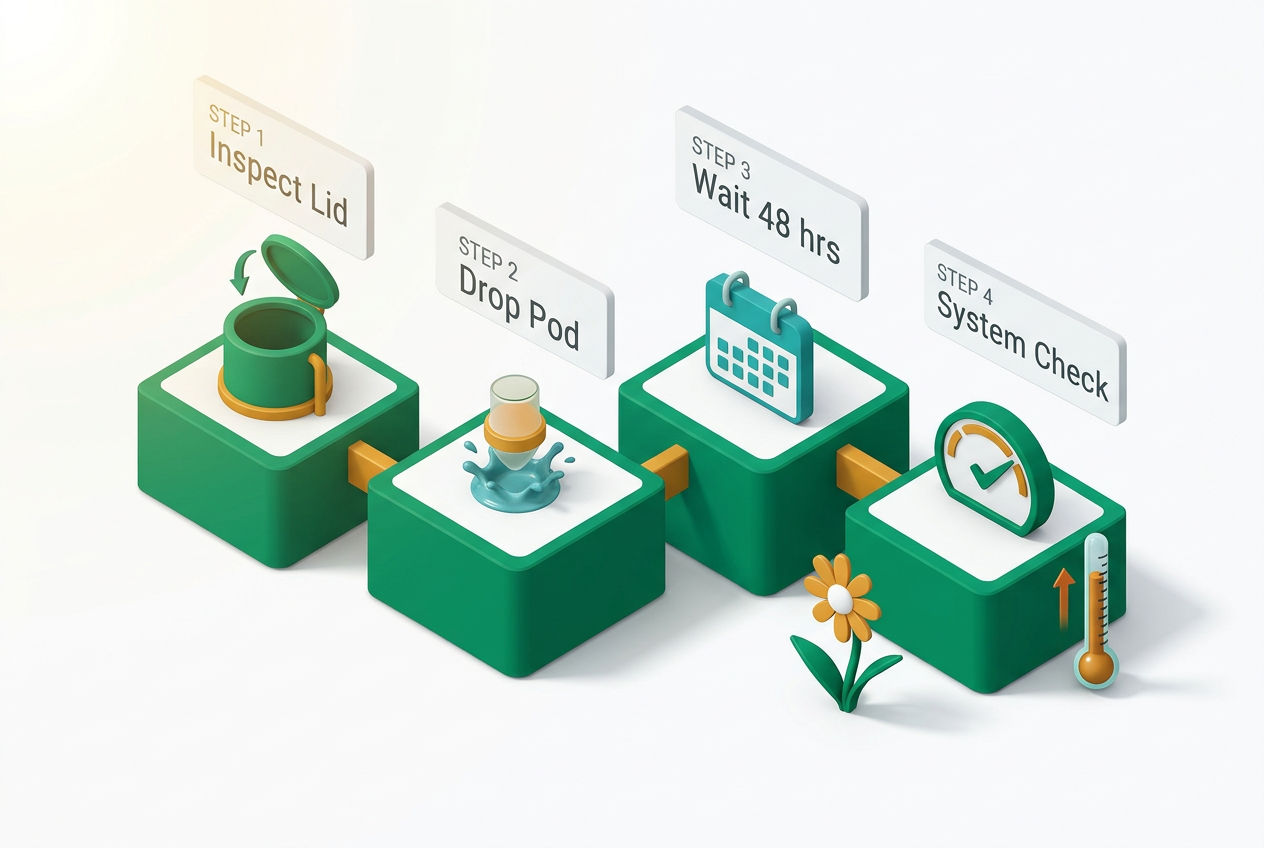
- Opening day: Flush 2 pods back-to-back before anyone showers or runs laundry. This puts maximum bacterial load into the tank while water volume is lowest, giving the organisms time to establish before the hydraulic load hits.
- Week three: Flush one additional pod. This reinforces the colony before it's fully self-sustaining.
- Month two onward: Return to the standard one-pod-per-month schedule.
This protocol is adapted from restart guidance used by licensed installers in cold-climate states, where dormant-season tank conditions are a common service issue every spring.
What the Research Actually Says: An Honest Limitation Statement
Before you order a year's supply of any septic pod, it's worth being direct about what the evidence does and doesn't support.
What the research supports: Bacterial additives can help maintain biological activity in functioning tanks, particularly in systems stressed by antibacterial household products. The University of Arkansas Cooperative Extension review (FSA-6133) found that additives showed measurable benefit in already-healthy systems under specific conditions.
What the research does not support: No peer-reviewed study has demonstrated that bacterial additives can restore a failing drain field, reduce pump-out frequency below the 3–5 year industry standard, or substitute for professional inspection. The National Onsite Wastewater Recycling Association (NOWRA) has stated explicitly that additive products should not be marketed as alternatives to routine maintenance.
The honest bottom line: Pods are a reasonable, low-cost maintenance tool for a functioning system. They are not a repair product. If your system is backing up, emitting persistent odors after a month of treatment, or showing wet spots above the drain field, stop adding pods and call a licensed inspector. Our septic pumping cost guide can help you understand what professional service will run in your area.
Sources & Methodology
- University of Arkansas Cooperative Extension. Septic System Additives: What Homeowners Need to Know. Publication FSA-6133. Available through the Arkansas Extension Service.
- U.S. Environmental Protection Agency. WaterSense Program — Residential Water Use Statistics. EPA WaterSense, 2023.
- National Onsite Wastewater Recycling Association (NOWRA). Position statement on septic system additives. NOWRA.org.
- Oregon Department of Environmental Quality (DEQ). Onsite Wastewater Management Program — approved product guidance. Oregon DEQ, 2024.
- Washington State Department of Ecology (DOE). Sewage System Maintenance and Additive Use Guidelines. Publication 24-10-042. Washington DOE, 2024.
Product CFU counts, strain counts, and pricing sourced from manufacturer product pages and national retail listings as of June 2026. Pricing reflects averages and will vary by retailer and region.
Frequently Asked Questions
What are monthly septic treatment pods and do they actually replace pumping?
Monthly septic treatment pods are pre-measured, water-soluble capsules you flush down the toilet once per month to replenish the bacterial colony inside your septic tank. Each pod delivers a concentrated dose of live bacteria — typically 5–10 billion CFU — that break down solid organic waste in the tank's liquid layer. Used consistently, they help offset the bacterial die-off caused by antibacterial soaps, bleach-based cleaners, and chlorinated detergents entering the system through normal household use. However, they do not replace pumping. Solid sludge accumulates in the bottom of every tank regardless of bacterial supplementation, and the EPA and most state health departments recommend professional pump-out every 3–5 years depending on household size and tank volume. The University of Arkansas Cooperative Extension (FSA-6133) found no evidence that additives reduce pump-out frequency. Use pods as a monthly maintenance supplement, not as an alternative to the pump truck.
How do RV septic pods differ from residential septic tank treatment pods?
RV septic pods serve the same biological function as residential pods — delivering live bacteria and enzymes to break down waste — but they're formulated for the distinct conditions of RV holding tanks. Holding tanks are much smaller (typically 20–50 gallons versus 1,000+ gallons residential), go dormant between trips, and are exposed to a wider range of temperatures during transport and storage. RV-specific pods like Thetford Aqua-Kem are engineered to dissolve quickly in cold water and re-colonize a dormant tank rapidly — important when you're pulling into a campsite and need biological activity established within hours, not days. Residential pods can technically work in RV tanks, but dosing becomes tricky: a pod calibrated for a 1,000-gallon system will overdose a 30-gallon holding tank. Use RV-specific products sized for holding tank volumes and consult the manufacturer's dosing chart for your tank capacity.
What is septic pod treatment and how does the dissolving process work?
Septic pod treatment refers to the practice of using water-soluble capsules to deliver bacterial and enzyme doses directly into the septic system via the toilet. The dissolving process relies on a PVA (polyvinyl alcohol) casing — the same material used in dishwasher and laundry pods — that breaks down on contact with water. In a standard toilet bowl at room temperature, a quality pod should fully dissolve within 30–60 seconds. Once dissolved, the bacterial payload travels through the drain line and into the tank, where organisms begin establishing colonies in the liquid effluent layer. Cold water slows PVA dissolution: at 40°F, some pods may take 90–120 seconds to fully break down. If you're in a cold-climate home or opening a seasonal property in early spring, flush the pod mid-morning when toilet water is at room temperature rather than straight from a cold supply line. Pods that don't fully dissolve before entering the drain line may partially re-solidify and reduce treatment effectiveness.
Is septic pod treatment safe to use alongside other septic system products?
Yes, with a few exceptions. Septic pod treatment is biologically compatible with most septic-safe household products. You can use pods alongside enzyme drain cleaners, septic-safe toilet paper, and biodegradable dish soaps without conflict. The exceptions are products that actively kill bacteria: bleach-based toilet bowl cleaners, chlorinated in-tank toilet tablets, and high-concentration antibacterial soaps will reduce or eliminate the bacterial load a pod delivers. If you use an in-tank bleach tablet continuously, you're essentially dosing your tank with a bactericide every flush, which counteracts the pod's purpose. The practical solution is to choose hydrogen peroxide-based or citric acid-based toilet bowl cleaners rather than chlorine bleach formulas. For households where antibacterial product use is unavoidable — medical equipment cleaning, for instance — step up to a higher-CFU pod (8–10 billion) to compensate for the increased bacterial die-off rate. Pods are also compatible with aerobic treatment units (ATUs) and do not interfere with ATU blower or timer mechanisms.
How do I choose the best septic tank treatment pods for a large household?
For a household of four or more people, prioritize CFU count and bacterial strain diversity over price per pod. The EPA's WaterSense data puts average household water use at 80–100 gallons per person per day — a four-person household can push 320–400 gallons daily through a 1,000-gallon tank, turning over 40% of the tank's liquid volume every 24 hours. That hydraulic load flushes out newly introduced bacterial colonies before they can fully establish, which means a low-CFU pod may not deliver meaningful supplementation. Look for pods with at least 8 billion CFU and 8 or more bacterial strains. Bio-Tab (8 billion CFU, 10 strains) and Cabin Obsession (10 billion CFU, 8 strains) are the best septic tank treatment pods for high-use households based on those criteria. The manufacturer's double-dose recommendation for the first treatment after a pump-out is also sound practice for large households: two pods in month one, then one pod monthly afterward. Budget an extra $3–5 for that first month.
Can I use septic tank treatment pods if my system has an effluent filter?
Yes — septic tank treatment pods are compatible with effluent filters and do not clog or damage filter media. An effluent filter sits at the outlet baffle of the tank and screens solids before treated liquid (effluent) moves into the drain field. The PVA casing material from a pod dissolves completely before reaching the filter, and the bacterial payload passes through filter media without obstruction. Where the two interact: if your effluent filter is overdue for cleaning, a partially blocked filter can slow liquid flow through the tank, creating anaerobic conditions that actually benefit the bacteria pods introduce. However, a severely blocked filter can cause effluent to back up into the tank and eventually into the home — that's a maintenance issue that pods won't solve. Clean your effluent filter every 1–3 years depending on household size, and treat it as a separate maintenance task from your monthly pod schedule. If you're unsure whether your system has an effluent filter, a licensed inspector can confirm during your next pump-out. Find a qualified professional through our septic pumping and cleaning service directory.
Free download
Not ready for the Handbook? Start with the free Fridge Card.
The Do / Don’t card the whole family can see, plus the Survival Kit: emergency flowchart, warning-sign decoder and pump-schedule card. One printable PDF.
Was this article helpful?
Frequently Asked Questions
Recommended Resources
📖 Related Articles
💰 Cost Guides
🔧 Services
Find Septic Professionals Near You
Compare licensed, verified septic companies by area — top county markets and cities below, or browse all 50 states.
County markets
Popular cities
