
Quick Answer
A septic system smell is caused by hydrogen sulfide, methane, and other decomposition gases escaping your system through a full tank, blocked vent pipe, dry drain trap, or damaged drain field. Faint odors near the tank lid are sometimes normal. Persistent indoor smell or a yard that reeks after rain is never normal-and can be a health hazard.
💡 Key Takeaways
- A full septic tank causes an estimated 40–50% of odor complaints-pumping every 3–5 years (EPA recommendation) prevents most of them.
- Hydrogen sulfide becomes dangerous above 10 ppm. You can smell it at just 0.5 ppm, but olfactory fatigue kicks in around 100 ppm-the point where it's truly dangerous.
- Dry P-traps are the #1 cause of indoor septic smell and take 30 seconds to fix: just run the water.
- Blocked plumbing vent stacks and cracked tank lids are common culprits homeowners overlook for years.
- Drain field failure is the most expensive problem-replacement runs $5,000–$20,000+-so early diagnosis matters.
Is It Normal for a Septic System to Smell?
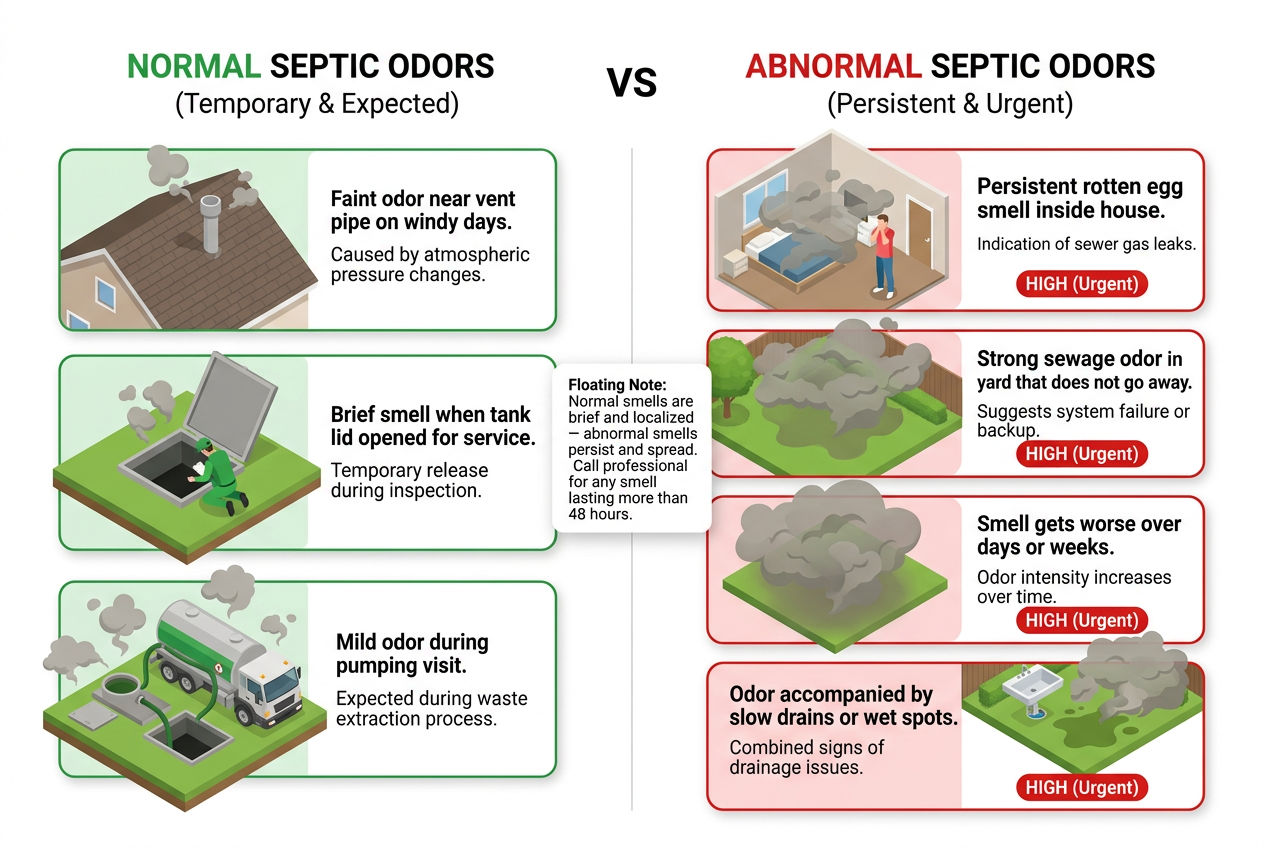
A faint, occasional odor right at the tank lid or near the access risers can be normal, especially on hot days or right after heavy water use. What's not normal: a smell that drifts across your yard, seeps into your house, or hits you every time it rains. Those are signs your system is venting gases somewhere it shouldn't be.
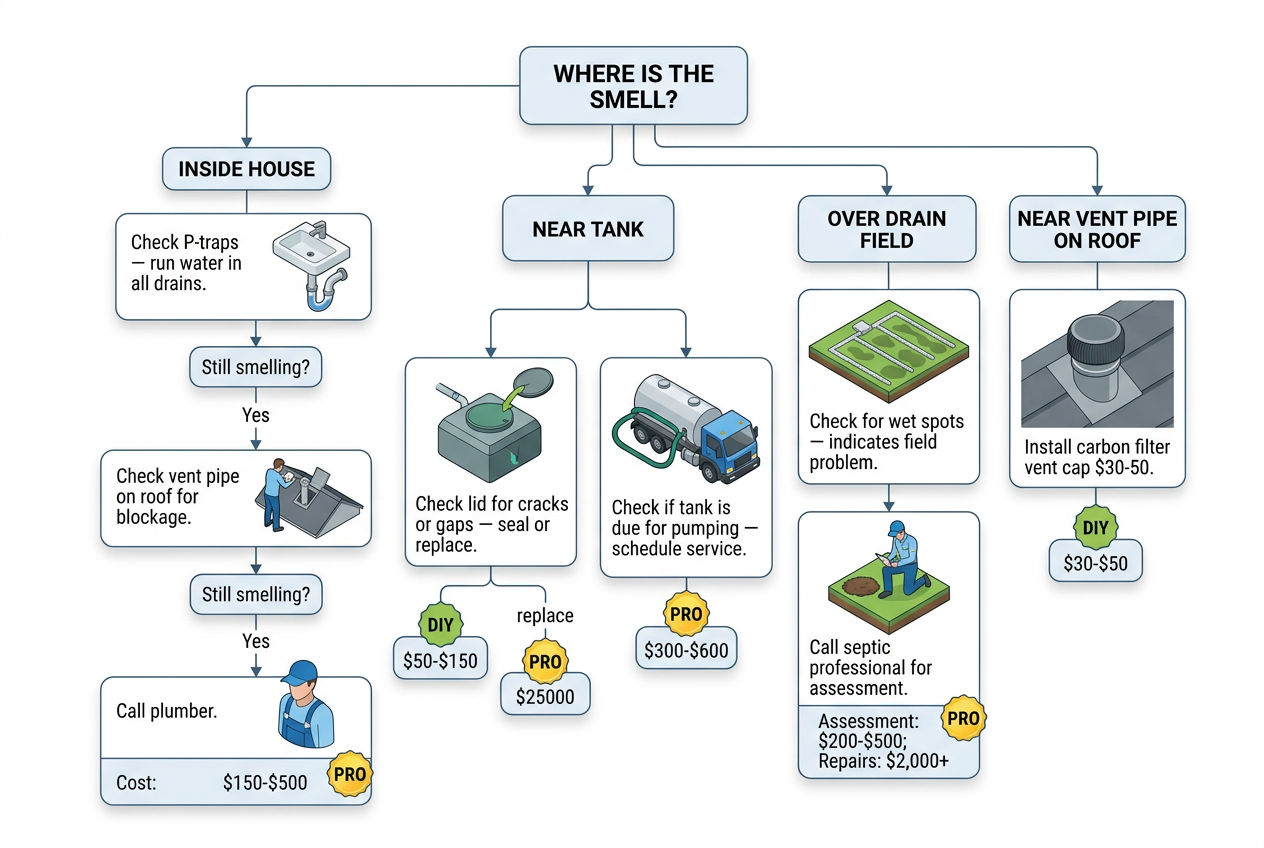
The culprit behind nearly all septic odors is hydrogen sulfide (H₂S)-the compound responsible for that distinctive rotten egg smell. Your system also produces methane, carbon dioxide, and ammonia as organic waste breaks down. Under normal conditions, your plumbing vent stack carries these gases up through the roof and disperses them into outdoor air. When that pathway gets interrupted-or when the tank is too full to hold any more gas-you end up smelling what you're supposed to be flushing.
What Are the Most Common Causes of Septic Tank Smell?
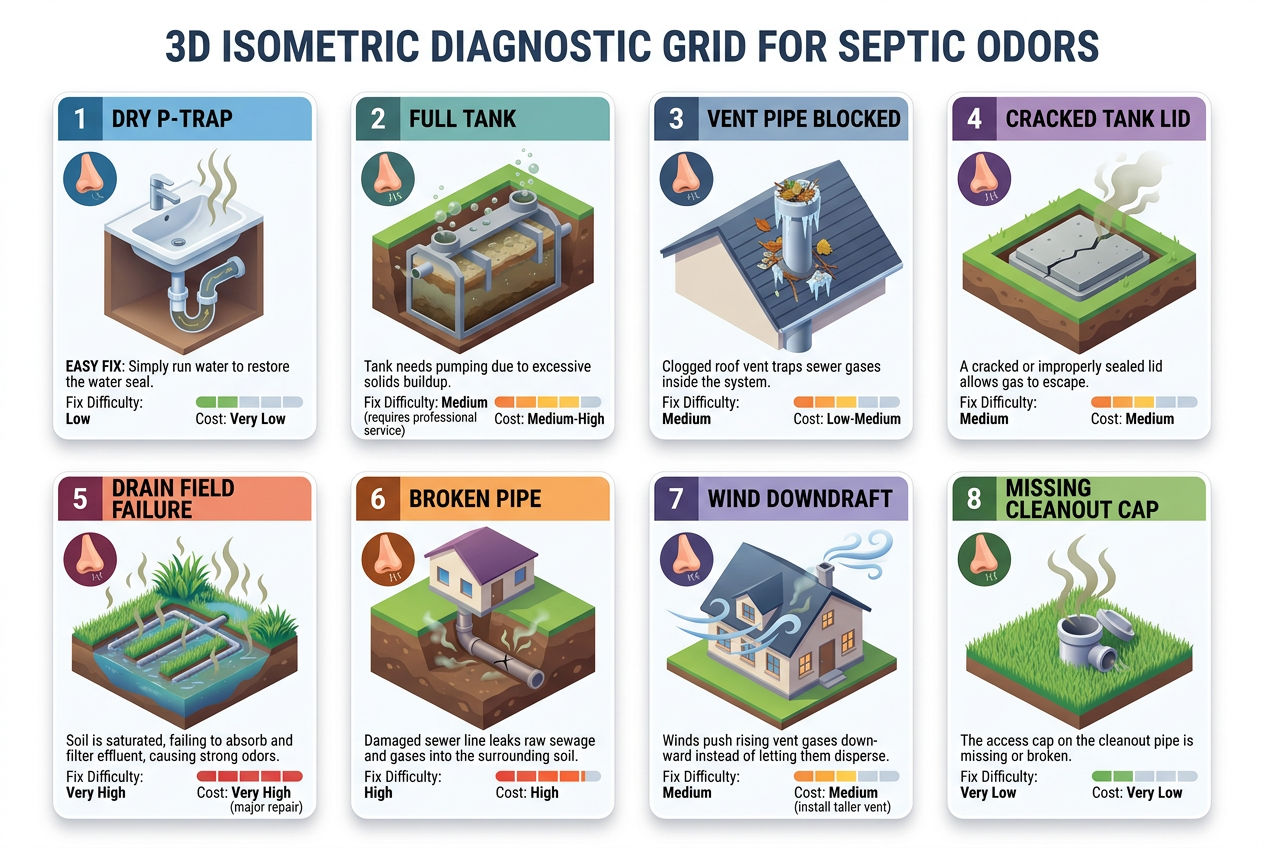
Here's a quick-reference breakdown before we get into the details:
| Cause | Location | DIY Fix? | Urgency |
|---|---|---|---|
| Full septic tank | Indoors & outdoors | No - pump it | High |
| Dry P-trap | Indoors only | Yes - run water | Low |
| Blocked vent stack | Indoors, worsens in winter | Sometimes | Medium |
| Cracked tank lid or bad gasket | Near tank outside | Partial | Medium |
| Drain field failure | Outside, yard-wide | No | High |
| Damaged inlet/outlet baffle | Indoors & outdoors | No | High |
Source: Industry service data compiled from NAWT member pumpers; EPA SepticSmart program guidance.
Can a Full Septic Tank Cause a Smell in the House?
Yes-and it's the single most common reason your system smells. Industry service data puts full tanks behind 40–50% of odor complaints. When your tank reaches capacity, there's nowhere for decomposition gases to go except back the way they came: up through your drains.
Why Full Tanks Smell Worse Than You'd Expect
The EPA recommends pumping every 3–5 years for most households. For a family of four using a 1,000-gallon tank, that's closer to every 2.5–3 years under normal conditions. Add a garbage disposal and the timeline shrinks to roughly every 2 years-the extra food solids accelerate sludge buildup faster than people expect.
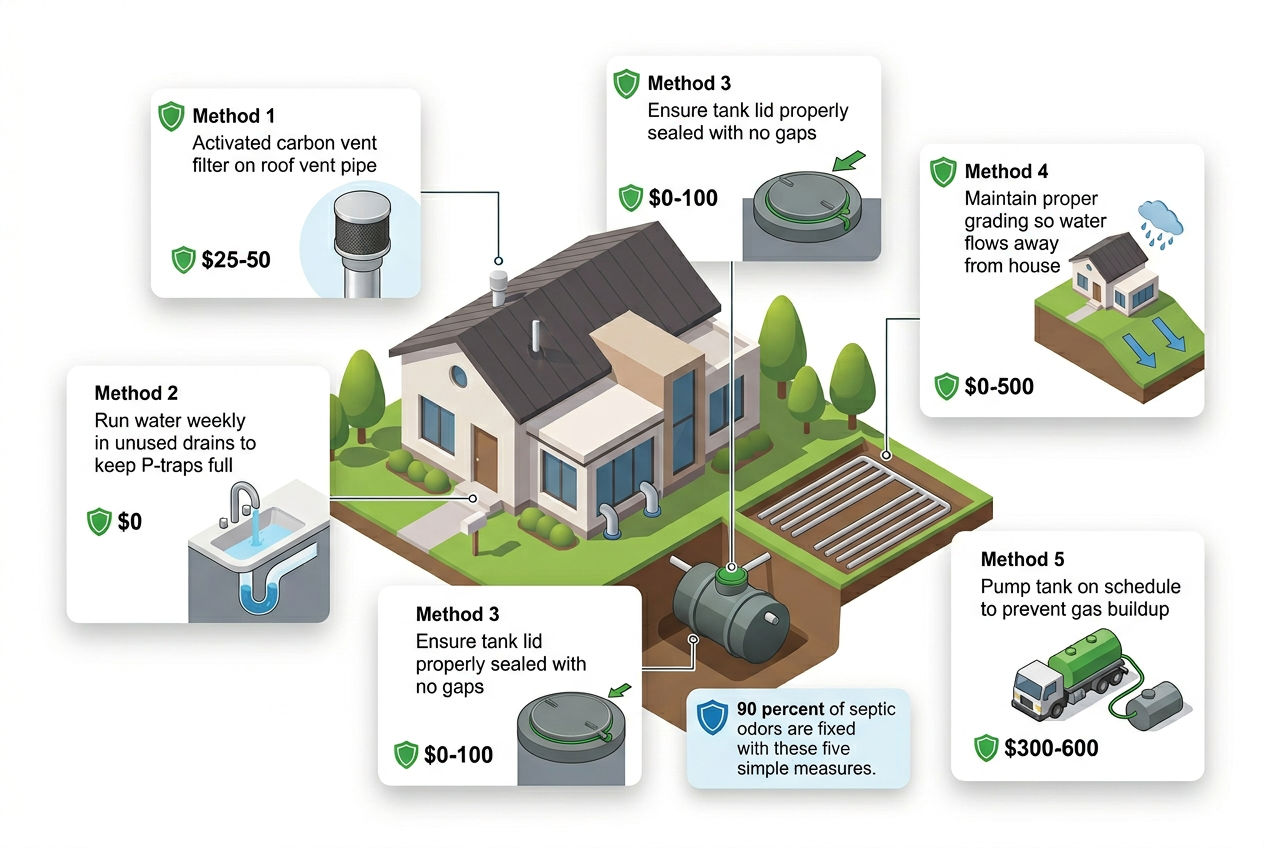
📊 Quick Fact: A standard pump-out for a 1,000-gallon tank runs $300–$600 nationally. It's a predictable, manageable expense. Ignoring it until your system backs up into the house or the drain field fails? That's a $5,000–$20,000+ problem.
You can check our septic pumping cost guide to see what to expect in your region, or learn how often to pump your septic tank based on your household size and tank capacity.
⚠️ Warning: If you notice slow drains, gurgling sounds, or wet spots in the yard alongside the smell, check our article on signs your septic system is backing up-those symptoms together usually mean the tank is past due.
Fix: Schedule a pump-out with a licensed septic contractor. Don't wait to see if the smell goes away on its own. Find a septic pumping service near you.
Why Is There a Septic Smell Inside My House?
Dry Drain Traps
This is the most overlooked and easiest-to-fix cause of indoor septic smell. Every drain in your home-sink, tub, floor drain, utility sink-has a P-trap: a U-shaped pipe that holds a small amount of water. That water plug physically blocks sewer gas from rising up through the drain.
Common dry trap culprits:
- Guest bathrooms used twice a year
- Basement floor drains
- Laundry sinks that rarely get water
- Utility room fixtures
Heat accelerates evaporation, which is why the problem peaks in summer and in dry southwestern climates like Arizona and New Mexico.
✅ Pro Tip: Run water for 30 seconds through every drain in the house. Problem solved-if this was the cause.
Blocked or Frozen Vent Stacks
Your home's plumbing vent stack is a 3–4 inch diameter pipe that runs from your drain system up through the roof. It equalizes air pressure and lets septic gases escape safely. When it's blocked, gases have nowhere to go but down-into your living space.
Vent blockages come from several sources:
- Bird nests - a surprisingly common summer problem
- Leaves - piling up over the opening in fall
- Ice caps - forming over the pipe in winter (Minnesota, Wisconsin, Maine)
A frozen vent stack is one of the most common causes of winter septic smell complaints in the Upper Midwest and Northeast.
Fix: Clearing a leaf or debris blockage from a vent stack is a DIY job if you're comfortable on a roof. Frozen vents can sometimes be cleared by pouring hot water down from the roofline-but if you're not sure, a plumber can scope it quickly.
Damaged Inlet or Outlet Baffles
Inside your septic tank, concrete or plastic baffle walls direct flow and prevent the floating scum layer from escaping into the drain field. When an inlet baffle cracks or deteriorates-a common problem in older concrete tanks after 15–20 years-gases travel backward up the inlet pipe directly into your home's drain system.
⚠️ Warning: This isn't a DIY repair. It requires a professional to open the tank, inspect the baffles (some contractors use a sludge judge or camera to assess without full excavation), and replace them. Polylok and Zabel manufacture replacement plastic baffles that last far longer than the original concrete versions.
Why Does My Septic Smell Outside?
What's Causing Septic Smell in My Yard or Near the Tank?
Strong outdoor odor near the tank lid usually means one of three things: the tank is full (see above), the lid seal has failed, or you're getting surface seepage near the access risers.
Concrete tank lids develop cracks over time. The rubber gaskets on modern plastic riser lids typically degrade after 15–20 years. A cracked lid or failed gasket vents gases directly into your yard at ground level rather than routing them up through the vent stack.
Fix: A licensed technician can reseal or replace a lid during the same visit as a pump-out. Replacement riser lids run $50–$200 in parts-cheap insurance against persistent odor and against curious kids or pets accessing an open tank.
Drain Field Smell - What It Means When Your Whole Yard Smells
A smell that spreads across a wide area of your lawn points to drain field problems. This is the serious one.
Warning signs of drain field issues:
- Soggy ground over the leach field
- Unusually green grass in isolated patches
- Standing water after rain
- Persistent sewage odor across the yard
Your drain field (also called a leach field) is where partially treated effluent filters through the soil. When the drain field is saturated-from high water tables, heavy rain, or years of overtaxing the system with too much water-effluent can surface before it's properly treated. That's what you're smelling.
📊 Quick Fact: In the Southeast, particularly Florida, Georgia, and the Carolinas, high water tables and frequent heavy rain make drain field saturation a recurring problem rather than a one-time event.
Saturation vs. Failure: Know the Difference
Leach field failure is different from saturation. Failure means the soil's absorption capacity is permanently compromised, often from biomat buildup (a layer of organic material that seals the soil). A failing drain field can't be fixed with additives or bacterial treatments-it needs to be repaired or replaced. Replacement runs $5,000–$20,000+ depending on soil conditions, system type, and local labor costs.
Learn more about drain field problems and solutions to understand what you're dealing with before you call for quotes, and check our drain field replacement cost guide to budget accordingly.
Why Does My House Smell Like Septic When It Rains?
Rain affects your system in two ways. First, heavy rain saturates the soil around your drain field, reducing its ability to absorb effluent and pushing existing gases toward the surface. Second, changes in atmospheric pressure during storm systems can draw gases up through weak points in your plumbing-particularly dry P-traps and deteriorating wax seals around toilets.
Diagnosing Rain-Related Odors
If the smell reliably appears during or right after rain and then fades, start by running water through all your drains to refill any dry traps. If the smell is coming from outside and the area over your drain field is wet or spongy after rain, you likely have a saturation or capacity issue worth having inspected. A septic system inspection can determine whether you're dealing with a design limitation or something more serious.
✅ Pro Tip: Spring snowmelt causes similar issues in colder climates. In states like Wisconsin and Michigan, ground saturation from weeks of melt can overwhelm drain fields that handled winter loads without issue. If this happens every spring, it's worth discussing a seasonal maintenance plan with a local provider.
Why Does My Septic Smell Worse in Summer?
Heat accelerates bacterial decomposition inside the tank, which means more gas production. A 1,000-gallon tank that's running close to capacity will smell noticeably worse in July than in January. Summer also brings increased household water use-guests visiting, kids home from school, more laundry, lawn irrigation-all of which stresses the system.
Dry summer conditions compound the problem by evaporating P-trap water faster than usual. In arid climates like Arizona and New Mexico, a bathroom used infrequently can develop a dry trap within a few weeks of last use.
✅ Pro Tip - Summer Maintenance Checklist:
- Check that all floor drains and infrequently used fixtures have water in their traps
- Run a quick check of the tank lid for visible cracks
- If you're hosting a large gathering, consider having the tank inspected first-a 1,000-gallon tank serving four people normally is suddenly handling twice the load for a long weekend
Is Septic Tank Smell Dangerous?
It can be. Hydrogen sulfide becomes hazardous above 10 ppm. At 0.5 ppm, most people can detect it by smell. The dangerous zone is around 100 ppm-where olfactory fatigue sets in and you can no longer smell it, even as concentrations keep rising. At those levels, H₂S causes rapid respiratory distress and loss of consciousness.
Understanding the Two Major Septic Gases
| Gas | Detection Level | Hazard Level | Primary Risk |
|---|---|---|---|
| Hydrogen Sulfide (H₂S) | 0.5 ppm (detectable smell) | 10+ ppm (health hazard) | Respiratory distress, olfactory fatigue at 100 ppm |
| Methane (CH₄) | Odorless | 5–15% concentration in air | Flammable, explosion risk |
Septic tanks are considered confined spaces precisely because of this risk. Never lean over an open tank and never attempt to enter one.
⚠️ Warning: For typical household odor issues, you're unlikely to reach dangerous concentrations in a well-ventilated home. But persistent indoor sewer gas smell warrants quick action. The EPA's indoor air quality guidance links prolonged sewer gas exposure to headaches, nausea, and respiratory irritation even at sub-dangerous levels.
If the smell is strong and constant, open windows, avoid using open flames or ignition sources near affected drains, and call a professional.
Will Adding Bacteria to My Septic Tank Help With Smell?
Bacterial additives like Rid-X introduce beneficial microbes that support organic waste breakdown. They can help restore biological balance after something has killed off your tank's natural bacteria-a heavy round of antibiotics flushed through the system, excessive bleach or antibacterial cleaner use, or a single "drain cleaner bomb" application.
The Honest Truth About Septic Additives
But here's the honest answer: peer-reviewed research, including a study from the University of Arkansas Extension Service, has found no evidence that commercial septic additives eliminate or meaningfully extend the pumping cycle.
If your tank is full, a baffle is broken, or your drain field is failing, no amount of biological additive will fix the mechanical problem.
✅ Pro Tip: Use septic-safe products throughout your home. Avoid antibacterial soaps, excessive bleach, and any product labeled as a drain opener-these kill the septic tank bacteria your system depends on and can turn a minor odor problem into a major repair.
It's also worth reading our guide on septic tank maintenance to understand which products are genuinely safe for your system and which ones cause long-term damage.
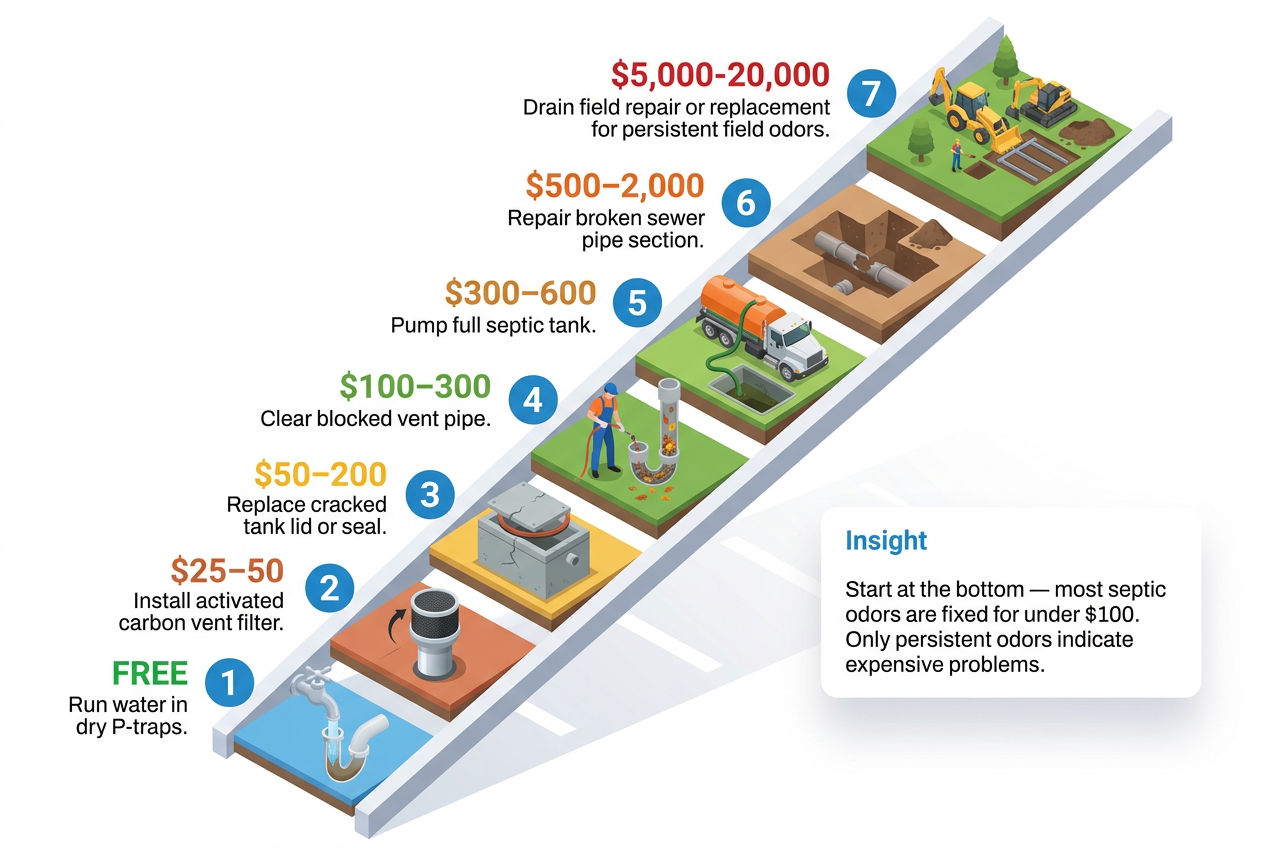
How Do You Get Rid of Septic Smell? A Fix-by-Fix Summary
Match the fix to the cause:
- Full tank: Pump it. No shortcut exists. Find licensed pumpers in your area.
- Dry P-trap: Run water for 30 seconds through each drain.
- Blocked vent stack: Clear debris or ice from the roof vent opening. Call a plumber if it's frozen solid or you're not comfortable on the roof.
- Cracked lid or bad gasket: Replace or reseal during next service visit.
- Damaged baffles: Professional repair only-requires opening the tank.
- Drain field saturation: Reduce water use, reroute surface drainage away from the field, and have a professional assess the field.
- Drain field failure: Professional repair or replacement is the only path forward.
When Should You Call a Professional?
Call a licensed septic technician if:
- The indoor smell persists after you've refilled all P-traps
- You see wet or unusually lush areas over your drain field
- Drains are gurgling or backing up alongside the smell
- Your tank hasn't been pumped in more than five years
- You smell sewage near the tank lid even on cool days
- The smell is sudden, strong, and getting worse
💡 Key Takeaway: A septic system inspection typically costs $150–$450 and can identify the exact source of your odor before you spend money on the wrong fix. That's money well spent compared to guessing.
Find a qualified inspector through SepticTankHub's directory.
If you're dealing with a repair situation, our septic repair cost guide breaks down what different fixes typically cost so you can evaluate quotes with confidence.
Strong sewage odors warrant calling emergency septic services immediately.
Learn more about our septic repair services.
Related reading: septic system installation process.
Sources & Methodology
-
U.S. Environmental Protection Agency - Septic Systems Overview: Primary source for pumping frequency recommendations and household statistics. EPA's SepticSmart program guidelines were used for maintenance intervals.
-
National Association of Wastewater Technicians (NAWT): Industry inspection standards and service frequency data referenced for cause-frequency estimates.
-
National Onsite Wastewater Recycling Association (NOWRA): Referenced for drain field lifespan data and regional soil condition guidance.
-
University of Arkansas Cooperative Extension Service: Cited for peer-reviewed research on the efficacy (and limitations) of commercial bacterial septic additives.
-
Hydrogen Sulfide - OSHA and EPA Hazard Data: H₂S threshold values (0.5 ppm detection, 10 ppm hazard, 100 ppm olfactory fatigue) sourced from occupational safety and environmental health literature.
Cost ranges reflect 2024–2025 national contractor data aggregated from SepticTankHub.com directory providers. Regional costs vary; always obtain at least two local quotes.
Published: March 3, 2026 · Updated: April 16, 2026
Need help with your septic system? Browse local septic companies in Colorado or Minnesota.
Free download
Not ready for the Handbook? Start with the free Fridge Card.
The Do / Don’t card the whole family can see, plus the Survival Kit: emergency flowchart, warning-sign decoder and pump-schedule card. One printable PDF.
Was this article helpful?
Frequently Asked Questions
Recommended Resources
📖 Related Articles
💰 Cost Guides
Find Septic Professionals Near You
Compare licensed, verified septic companies by area — top county markets and cities below, or browse all 50 states.
County markets
Popular cities
