
Quick Answer
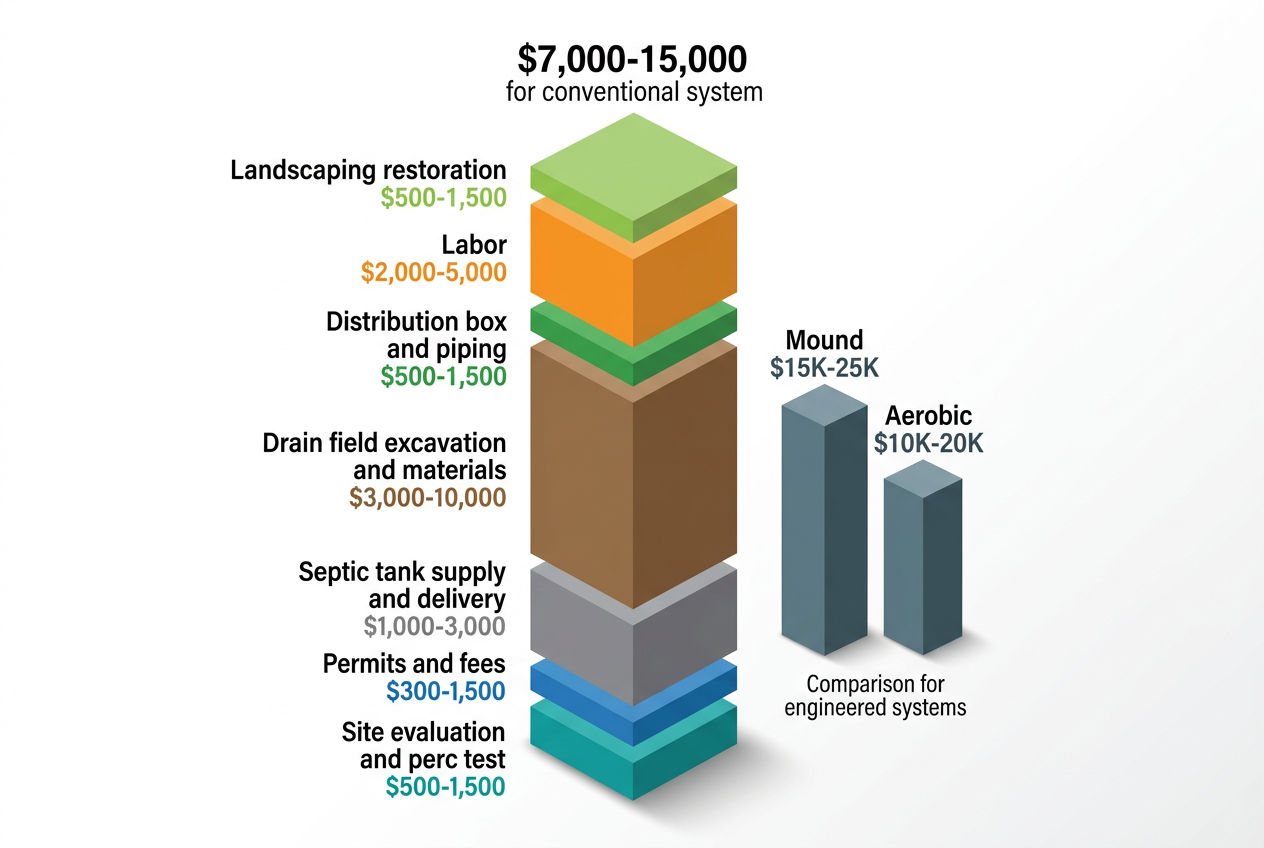
Having a septic system installed costs $3,500–$10,000 for a conventional gravity-fed system on suitable soil. Alternative and engineered systems - mound, aerobic treatment units, sand filters - typically run $10,000–$25,000 or more. Your final number depends on soil conditions, system type, tank size, local permit fees, and where you live.
💡 Key Takeaways
- Conventional septic installation costs $3,500–$10,000. Engineered systems can exceed $25,000.
- The full process - perc test, permit, excavation, install, inspection - takes 2–6 weeks on average.
- Soil type is the single biggest variable. Bad perc rates force costlier alternative systems.
- Permit fees add $200–$1,000+, and skipping them creates serious legal and resale problems.
- Fall is often the smartest time to schedule - good weather, lower contractor demand, faster scheduling.
New to septic systems entirely? Start with what a septic system is and how it works before reading this guide.
How Much Does It Cost to Have a Septic System Installed?
Most homeowners pay between $3,500 and $10,000 for a conventional septic system installation. That range covers excavation, a concrete or poly tank, drain field materials, labor, and permits on a standard residential lot with decent soil. If your soil fails the percolation test or your lot has a high water table, expect to spend $10,000–$25,000 or more on an engineered alternative.
Major Cost Components
Your total installation bill breaks down into several distinct line items:
- Perc test / soil evaluation: $250–$1,000 (required before any permit is issued)
- Permit fees: $200–$1,000+ depending on county and state
- Excavation: $1,200–$4,500 depending on soil hardness and site access
- Septic tank (unit cost): Concrete $700–$2,000 · Plastic/poly $500–$2,500 · Fiberglass $1,200–$2,000
- Drain field / leach field installation: $2,000–$10,000 depending on soil, size, and system type
📊 Quick Fact: A practical example: A 3-bedroom home in central Ohio on clay-loam soil might need a 1,250-gallon concrete tank, a standard distribution box, and a 600-square-foot leach field. Total installed cost in that scenario typically runs $6,500–$8,500. The same house on a sandy coastal lot in Florida - where a high water table requires a mound system - could easily hit $14,000–$18,000.
For a deeper look at what drives the final number, see our full septic installation cost guide.
Septic System Types and What Each One Costs
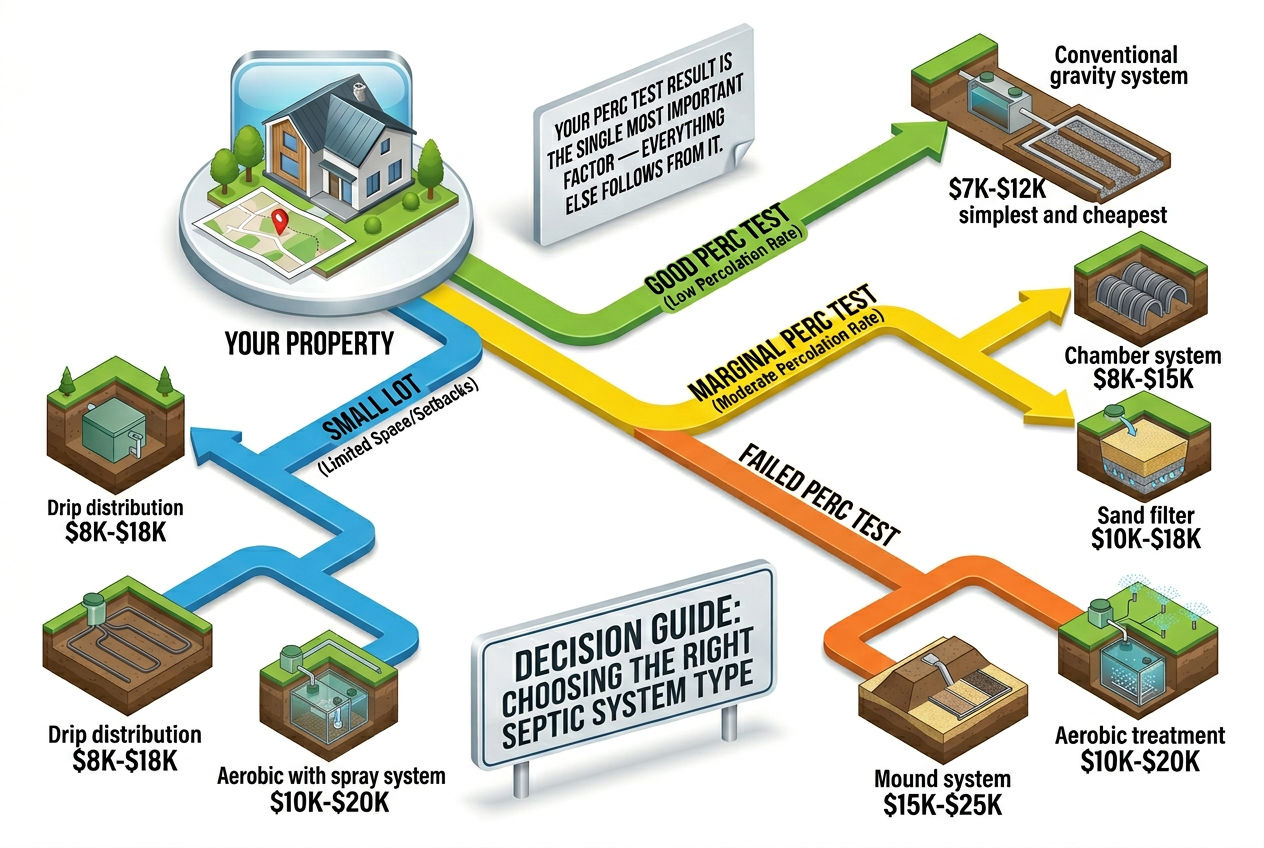
Not every lot qualifies for the same system. Your soil's percolation rate, the depth to groundwater, lot size, and local code all determine which system type is even legal to install.
| System Type | Average Install Cost | Best Application | Typical Lifespan |
|---|---|---|---|
| Conventional (gravity) | $3,500–$8,000 | Good soil, flat terrain | 25–30 years |
| Chamber system | $5,000–$12,000 | High water table areas | 25+ years |
| Aerobic treatment unit (ATU) | $10,000–$20,000 | Poor soil, small lots | 15–25 years |
| Mound system | $10,000–$20,000+ | Shallow bedrock, wet soil | 20–30 years |
| Sand filter | $7,000–$18,000 | Poor percolation | 20+ years |
Source: USDA Rural Development, HomeAdvisor national installer survey data, NOWRA member cost reports.
Conventional Gravity Systems
A conventional gravity system is the cheapest septic system to install and the most common. Wastewater flows by gravity from your house to the tank, then to a distribution box, then out through perforated pipes in a gravel-filled leach field. No pumps, no compressors, no moving parts beyond your toilets.
Aerobic Treatment Units (ATUs)
An aerobic treatment unit (ATU) works more like a small wastewater treatment plant. It injects air into the tank to accelerate bacterial breakdown, producing cleaner effluent. They're required in many areas with poor soil or proximity to water bodies - but they also come with ongoing maintenance costs ($100–$300/year) and mechanical components that need servicing. Learn more about how different septic system types compare.
What Are the Steps in the Septic System Install Process?
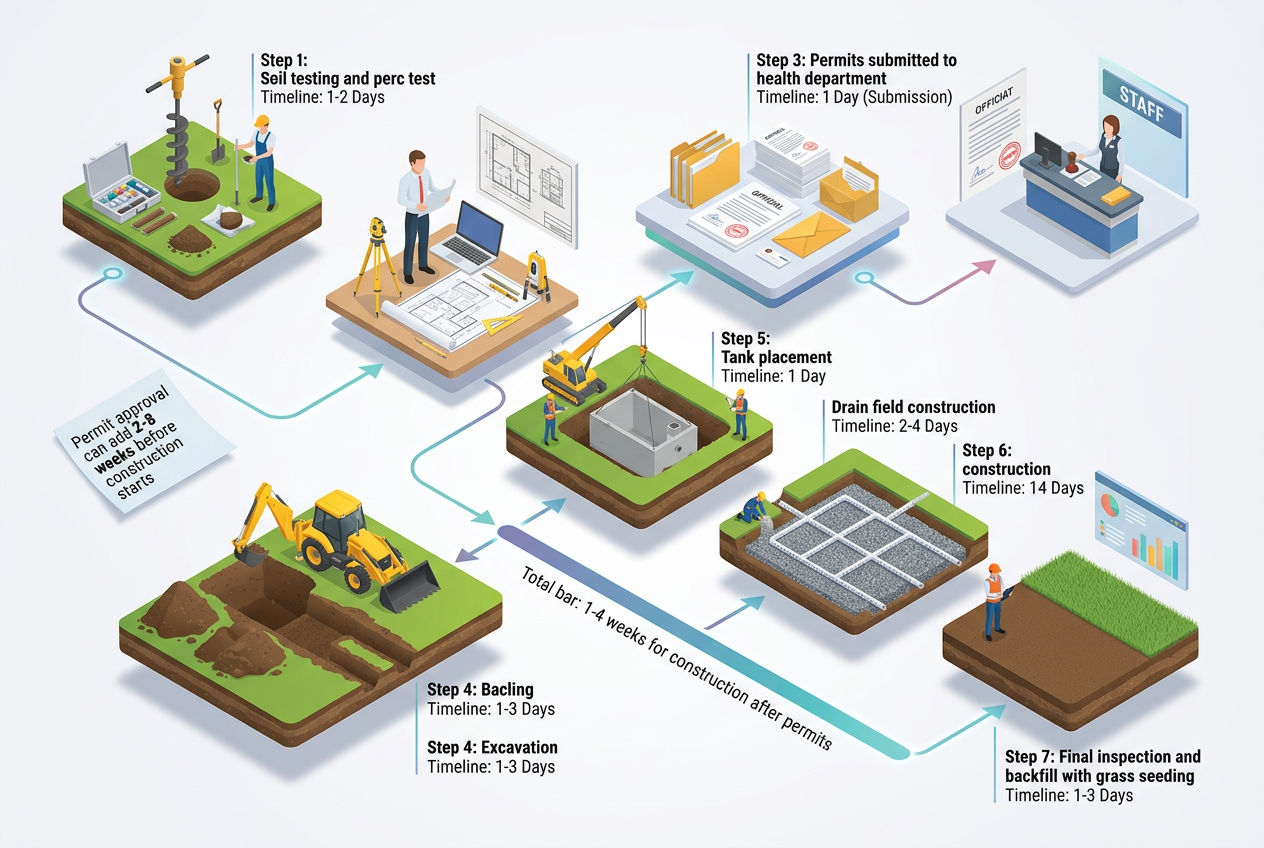
The septic system install process follows a fixed sequence. Skipping steps - or letting a contractor cut corners on any of them - creates problems that surface years later, often right when you're trying to sell your home.

DIY Septic Blueprint
Thinking about building it yourself?
The complete, plain-English plan to size, permit and install your own septic system — designed for homeowners, not contractors. Skip the $15,000–$25,000 quotes and do it right the first time.
Get the DIY Blueprint — $67 →Instant download · 8 modules + 3 bonus guides · 60-day money-back guaranteeStep 1: Soil Evaluation and Perc Test
Before a permit gets issued, a licensed soil scientist or county health official evaluates your property. They dig test holes - typically 3–6 feet deep - and run a percolation test to measure how fast water absorbs into the soil.
The result is expressed in minutes per inch (MPI):
- 1–30 MPI: Typically qualifies for a conventional drain field
- 30–60 MPI: May require modified drain field design
- Slower than 60 MPI: Often requires alternative systems
The perc test costs $250–$1,000 and is the foundation for every design decision that follows.
⚠️ Warning: Don't skip this step or try to do it yourself. Most states require it to be conducted by a licensed evaluator. The Virginia Department of Health, for example, requires a certified professional soil scientist to certify all septic site evaluations before permit approval.
Step 2: System Design and Permitting
Once soil results come in, a licensed designer (often the same contractor or a civil engineer) draws up a site plan. That plan specifies tank size, drain field dimensions, setback distances from wells, property lines, and waterways - all dictated by state and county code.
Do You Need a Permit to Install a Septic System?
Yes - in every U.S. state. No exceptions. Permit fees run $200–$1,000+ depending on jurisdiction. Approval timelines range from one week in rural counties to two or three months in tightly regulated states like Massachusetts, Connecticut, and New Jersey.
📊 Quick Fact: Massachusetts Title 5 regulations require engineered plans stamped by a licensed PE for many lot configurations. That alone adds $500–$2,000 to the project before a shovel hits the ground.
For projects that also involve installing a private well, the permitting and setback requirements get significantly more complex - see our well and septic cost guide for details.
Step 3: Excavation
Once the permit is in hand, excavation begins. A track excavator digs the hole for the tank (typically 4–8 feet deep) and trenches for the drain field laterals. Excavation for a conventional system usually takes one full day.
Septic tanks are typically buried 4–8 inches to 3 feet below the surface, with the inlet and outlet baffles located near the top of the tank. In cold climates, contractors make sure the tank sits below the frost line - 42–60 inches in Minnesota, for example - to prevent freezing.
💡 Pro Tip: Rocky soil in mountain states like Colorado or Montana can spike excavation costs significantly. What costs $1,500 in flat Indiana farmland can run $4,000+ when you're blasting through granite shelf in the Rockies.
Step 4: Tank Placement
The tank - most commonly a 1,000-gallon or 1,500-gallon precast concrete unit - gets lowered into position by crane or excavator. A concrete tank weighing 8,000–12,000 pounds doesn't move without heavy equipment.
Tank Sizing by Bedroom Count
Tank sizing is based on daily wastewater flow, which correlates to bedroom count:
- 2-bedroom home: 1,000-gallon tank minimum
- 3-bedroom home: 1,000–1,250-gallon tank
- 4-bedroom home: 1,250–1,500-gallon tank
⚠️ Warning: The EPA and most state health departments use bedroom count as the sizing proxy because it predicts maximum occupancy - not actual current occupants. Undersizing your tank is one of the most common mistakes on budget installations.
Not sure what size you actually need? Our septic system sizing guide walks through the calculation.
After placement, the contractor installs inlet and outlet baffles (or an effluent filter, such as a Polylok PL-122) to prevent solids from escaping the tank into the drain field. This is a small component - costs $30–$100 - that dramatically extends drain field life. Ask your contractor specifically about it.
Step 5: Drain Field Installation
The drain field (also called the leach field) is where treated effluent disperses into the soil. This is the most land-intensive part of the system and often the most expensive component. For a detailed breakdown of this piece alone, see what a drain field is and how it works.
For a conventional gravity system, the installer lays perforated pipes in gravel-filled trenches. A distribution box - a small concrete or plastic manifold - splits flow evenly between multiple laterals. Infiltrator Water Technologies chamber systems are increasingly used as a gravel-free alternative; they're faster to install and perform well in many soil types.
Drain Field Sizing Calculation
Drain field sizing is calculated from the perc rate and estimated daily wastewater flow. A household generating 300 gallons per day with a perc rate of 20 MPI needs roughly 600 square feet of drain field. Run the numbers wrong and you've got a failing system inside five years.
✅ Pro Tip: Adding a septic tank riser during this phase - while everything is open - costs $100–$400 and saves significant labor cost on every future pumping and inspection. Learn why septic tank risers are worth installing before the contractor backfills.
Step 6: Final Inspection and Backfill
Before the contractor covers anything, the county health inspector visits the site to verify the installation matches the permitted design. This is non-negotiable. They check tank placement, baffle installation, pipe pitch, drain field dimensions, and setback distances.
If the inspection passes, the contractor backfills and grades the site. For a standard conventional system, the entire installation - from first dig to final backfill - typically takes one to three days of on-site work.
How Long Does Septic Installation Take from Start to Finish?
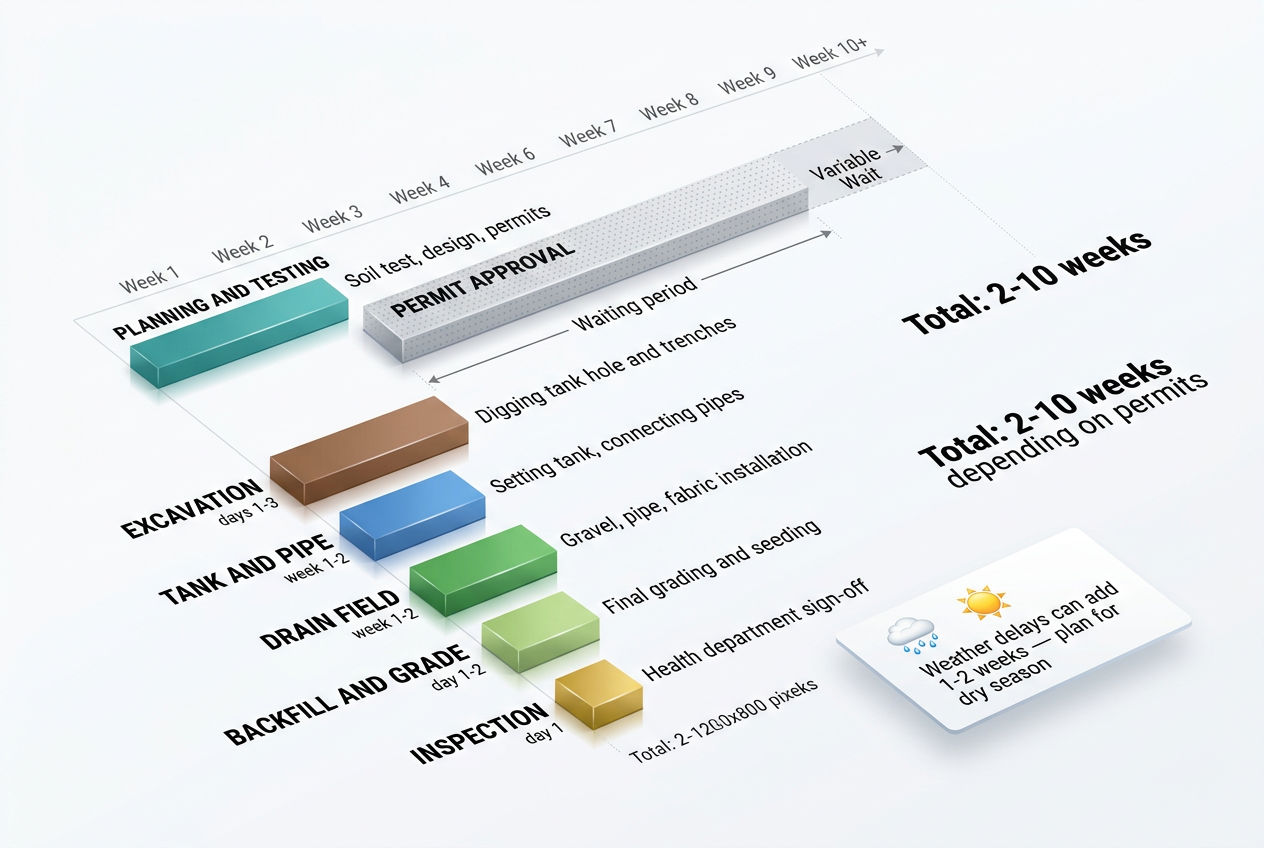
The actual digging and installation takes 1–3 days for a conventional system and up to 1–2 weeks for an engineered alternative. But the full project timeline - accounting for the perc test, permit approval, contractor scheduling, and final inspection - typically runs 2–6 weeks.
Where the Delays Happen
The bottleneck is almost always the permit:
- Rural counties: Approvals in 1–2 weeks
- Densely regulated states: You may wait 2–3 months
Plan around this, especially if you're building a new home and need the septic system in before a certificate of occupancy.
Best Season for Installation
Weather adds its own delays. Spring soil is often too saturated for clean excavation. Winter installation is impossible in frozen-ground states.
✅ Pro Tip: Fall - September through November in most of the country - offers dry soil, mild temperatures, and contractors who aren't slammed with summer backlog. If you have flexibility on timing, fall is the smart call.
Can I Install My Own Septic System?
Legally, in most states, no - not without a licensed contractor. Most jurisdictions require the installer to hold a state-issued septic contractor license, and the permit is typically pulled in that contractor's name. Installing without a permit creates title issues that can block a home sale, and the liability for a failed system falls entirely on you.
A handful of rural states allow owner-installed systems on your own property with proper permits, but the permit requirements are still substantial. Our DIY septic installation guide covers where it's allowed and what's actually involved.
💡 Key Takeaway: For most homeowners, the real question isn't "can I do it myself?" but "how do I find a qualified contractor and not overpay?" That starts with getting multiple quotes - find licensed septic installers near you through the SepticTankHub directory.
What Happens After Installation? Maintenance, Inspections, and Lifespan
A properly installed conventional septic system lasts 25–40 years. An aerobic treatment unit has a shorter lifespan - 15–25 years - because of its mechanical components.
Recommended Maintenance Schedule
What you do after installation determines which end of that range you hit:
- Inspection frequency: Every 1–3 years (EPA recommendation)
- Pumping frequency: Every 3–5 years for most households
- 1,000-gallon tank serving family of four: Pumping every 3–4 years
- With garbage disposal: Shorten to every 2 years
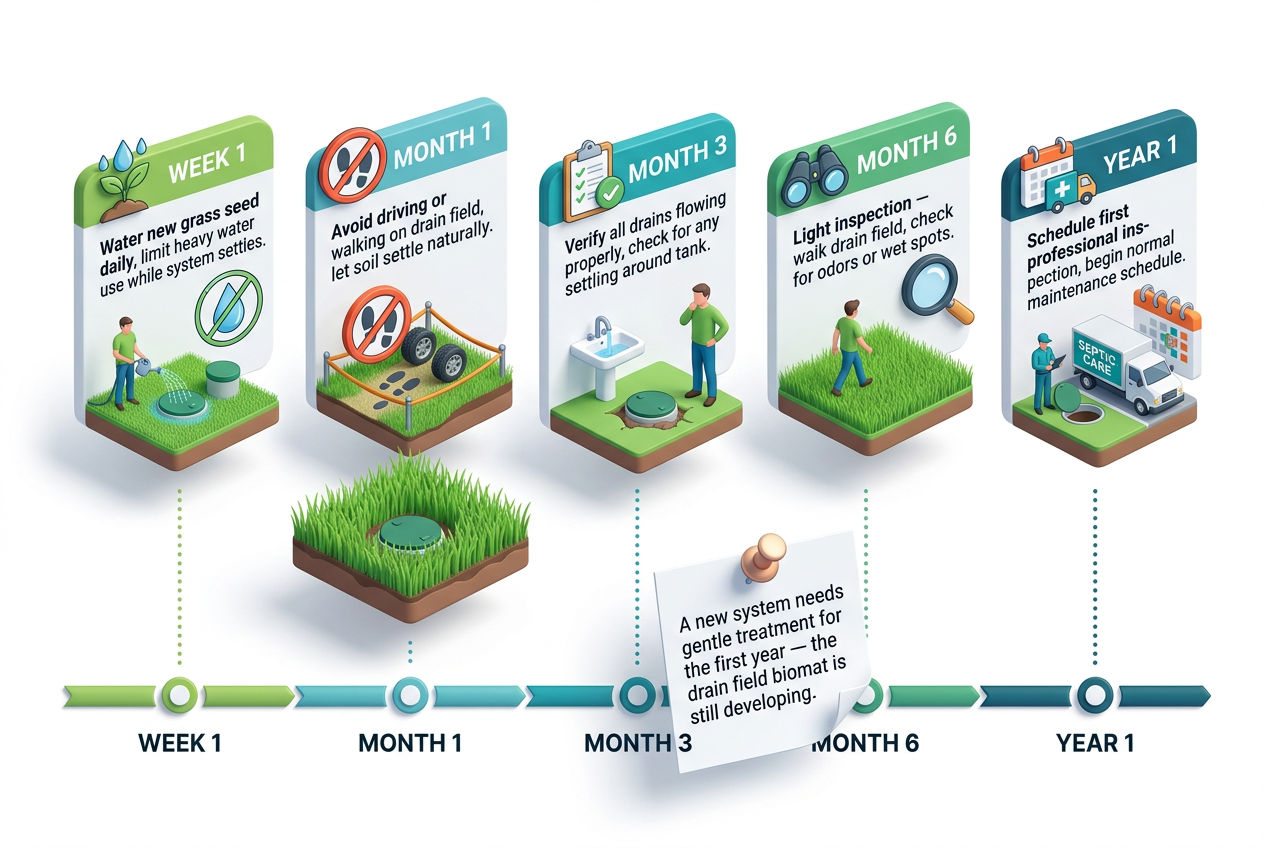
✅ Pro Tip: During the installation itself, ask your contractor about scheduling a professional septic inspection once the system has been in service for a year. That first-year check catches installation issues - improper pipe pitch, a distribution box that isn't level - before they cause drain field damage.
For ongoing cost expectations, our septic pumping cost guide breaks down what you'll pay per service visit by region. And for the full picture of keeping your system healthy long-term, the septic tank maintenance guide covers everything from what not to flush to enzyme treatments.
Does Location Affect Septic Installation Cost?
Significantly. Geography affects soil type, required system type, excavation difficulty, contractor labor rates, and regulatory complexity - all at once.
Regional Cost Variations
| Region | Key Cost Factors | Typical Premium vs. National Average |
|---|---|---|
| Northeast (MA, CT, NJ) | Strict regulations, rocky soil, complex permitting (e.g., Massachusetts Title 5 engineering requirements) | +20–40% |
| Southeast (FL, GA, SC) | High water tables in coastal areas, sandy soil percolation issues | Variable (often requires mound/ATU systems) |
| Midwest (OH, IN, MN) | Clay-heavy soil, frozen ground Dec–Mar installation shutdown | Near national average |
| Mountain West (CO, MT, ID) | Rocky terrain, thin soil layers, high altitude requirements | Well above average |
| Southwest (AZ, NM, TX) | Hard-packed caliche soil, county-level regulation variability | Moderate premium |
📊 Quick Fact: Massachusetts Title 5 engineering requirements alone add $500–$2,000 to most projects. Texas delegates septic regulation to county-level Designated Representatives, so requirements vary significantly by county.
Learn more about our septic installation services.
Related reading: septic inspection process.
Sources & Methodology
- U.S. Environmental Protection Agency: Septic system guidance, pumping frequency recommendations, and system sizing standards.
- USDA Rural Development: Rural septic cost benchmarks and financing program data.
- National Onsite Wastewater Recycling Association (NOWRA): Industry cost surveys, contractor licensing standards, and system type definitions.
- State health departments: Permitting requirements, licensed contractor databases, and Title 5 / equivalent regulations referenced by state (Virginia DOH, Massachusetts DEP, Florida DOH).
- Contractor cost data: Installation cost ranges validated against Angi, HomeAdvisor, and Fixr national installer survey data; cross-referenced with regional contractor quotes compiled by SepticTankHub.
Related: mobile home septic installation — worth reading if this applies to your situation.
Need help with your septic system? Browse local septic companies in Michigan or Pennsylvania.
Free download
Not ready for the Blueprint? Start free.
Grab the free DIY Septic Planning Kit — the permit-first checklist, perc-test cheat sheet, and sizing tables that keep your build from getting red-tagged.
Was this article helpful?
Frequently Asked Questions
Recommended Resources
📖 Related Articles
- What Is a Septic System? How It Works (Visual Guide)
- How Much Does a Well and Septic System Cost?
- What Size Septic System Do I Need?
- What Is a Drain Field? (And How Does It Work?)
- How to Install Septic Tank Risers (and Why You Should)
- Can You Install a Septic System Yourself?
- The Complete Septic Tank Maintenance Guide
💰 Cost Guides
🔧 Services
Find Septic Professionals Near You
Compare licensed, verified septic companies by area — top county markets and cities below, or browse all 50 states.
County markets
Popular cities
