
Quick Answer
Installing a septic system yourself is legal in some states - Texas and several rural Western states explicitly allow it on owner-occupied property - but most jurisdictions require a licensed installer, a licensed engineer's design, or both. Even where DIY septic installation is permitted, you'll need permits, a passed percolation test, and a health department inspection before backfilling an inch of dirt.
💡 Key Takeaways
- DIY septic installation is legal in some states but outright prohibited in others - always check your county health department before buying a single pipe fitting.
- Permits are required almost everywhere. Installing without one risks fines of $1,000–$25,000+ and can destroy your home's resale value.
- DIY materials cost $1,500–$5,000 for a conventional system, but you still pay for a perc test ($250–$1,000), engineering design ($500–$2,000), and equipment rental ($200–$600/day).
- Improperly installed systems fail in 2–5 years. A system installed correctly lasts 20–30 years.
- Alternative systems - aerobic, mound, drip irrigation - are not realistic DIY projects for most homeowners.
Can You Legally Install a Septic System Yourself?
The short answer: it depends entirely on where you live. There is no federal law governing who can install a residential septic system. The EPA sets broad environmental guidelines, but actual regulation happens at the state level - and sometimes at the county level within a state.
Some states hand this power to individual counties, which means the rules in Harris County, Texas can differ meaningfully from the rules in Travis County, 160 miles away.
⚠️ Warning: Before you rent an excavator or buy a 1,000-gallon concrete tank, call your county health department and ask two questions: "Does my county allow homeowner-installed septic systems?" and "What permits and inspections are required?" That single phone call could save you $10,000 in fines and a forced removal order.
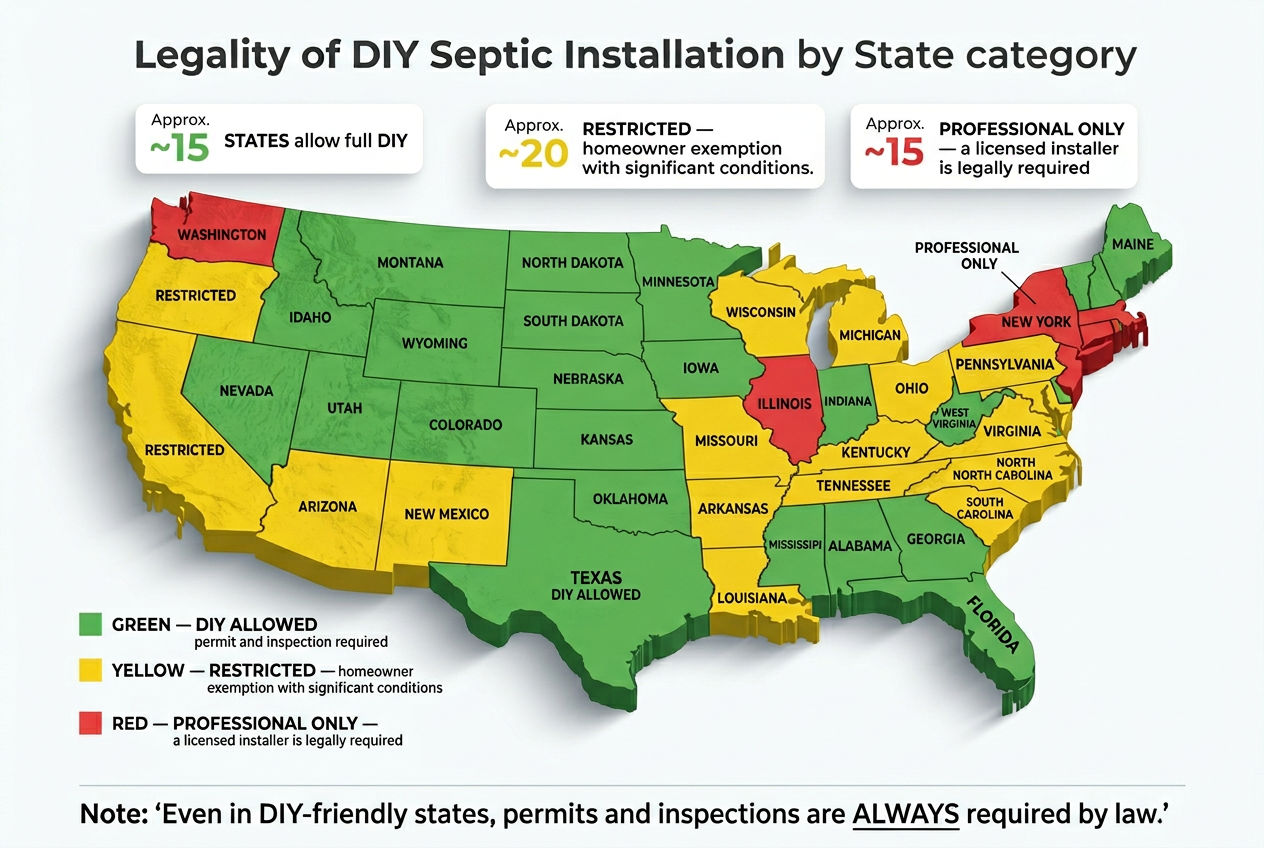
State-by-State Septic Installation Regulations
The table below gives you a starting framework. These are general tendencies - your county may be stricter or more permissive. Treat this as a first check, not a final answer.
| State | Homeowner DIY Allowed? | Key Requirement |
|---|---|---|
| Texas | Generally yes (owner-occupied) | County permit; licensed engineer design often required |
| Florida | Usually no | Licensed RSTC contractor required by DOH |
| North Carolina | No | State-certified authorized installer required |
| Alaska | Often yes | Borough permit; conditions vary widely by borough |
| Montana | Often yes (rural areas) | County permit; licensed designer for complex sites |
| Ohio | Varies by county | County Board of Health approval; some require licensed contractor |
| Michigan | Varies by county | County health department permit; some allow homeowner installs |
| Pennsylvania | Varies by county | County sewage enforcement officer (SEO) approval required |
| New York | Generally no | Licensed contractor required in most counties |
| California | Generally no | Licensed C-42 sanitation contractor required |
Source: State health department regulations, NOWRA (nowra.org), county-level health department guidance. Verify with your local authority having jurisdiction (AHJ) before proceeding.
State-Specific Regulations Worth Knowing
Florida specifics: The Florida Department of Health requires all septic work be performed by a Registered Septic Tank Contractor (RSTC). This is non-negotiable in most counties, regardless of property ownership.
Texas specifics: Texas delegates authority to county-level Authorized Agents. On owner-occupied property, a homeowner can often do the physical installation work - but the system design typically still requires a licensed professional engineer or site evaluator.
Rural Western states: Alaska, Montana, Idaho, and Wyoming tend to be the most permissive, but "permissive" doesn't mean "no requirements." It means the process is less bureaucratic, not absent.
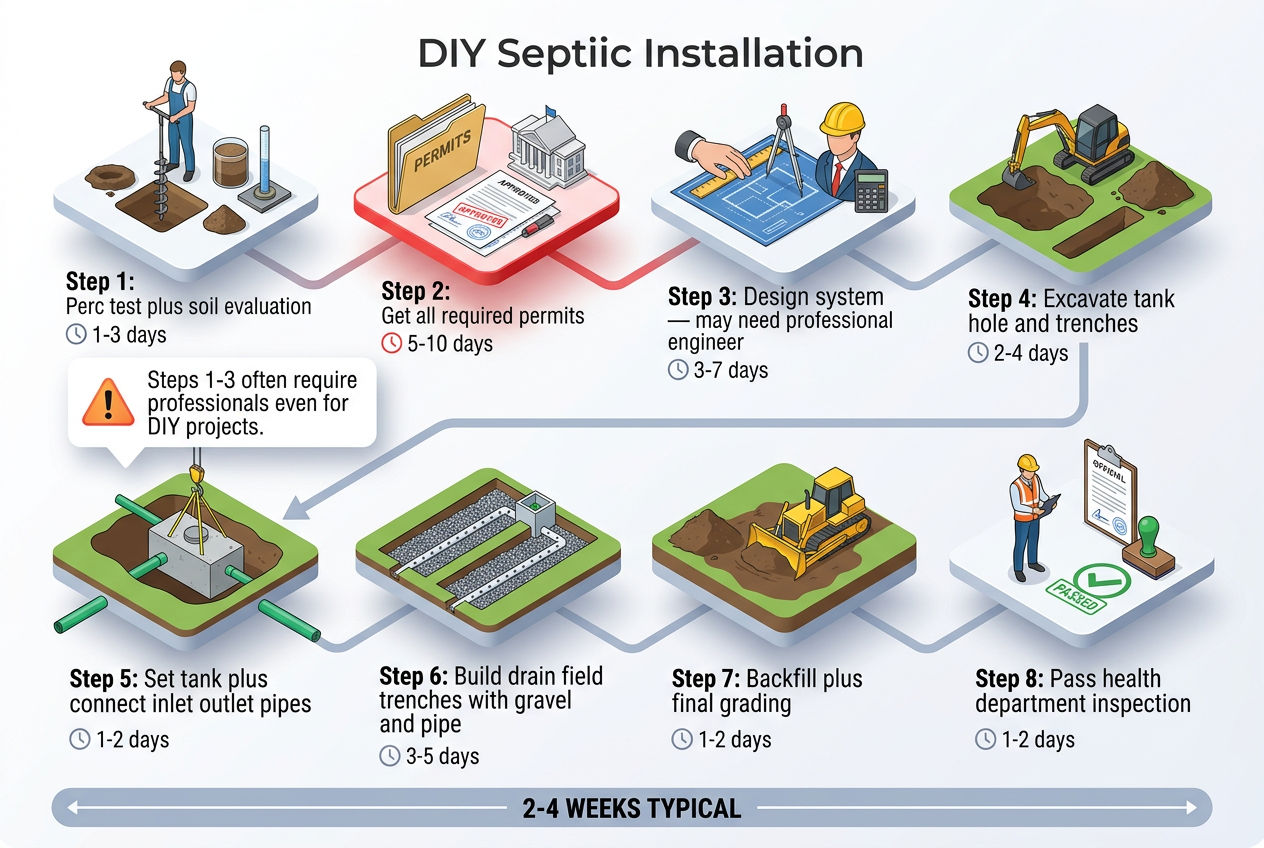
What Does DIY Septic Installation Actually Involve?
Picture this: you've got a rural property in east Texas, your county allows homeowner installs, and you're ready to save some money. Here's what you're actually signing up for.
Step 1: Site Evaluation and Perc Test
Before any design work begins, your soil has to prove it can handle effluent. A percolation test (perc test) measures how fast water drains through your soil. Sandy soils drain fast. Clay soils drain slow - sometimes too slow for a conventional system.
- Cost range: $250–$1,000 depending on location and number of test holes required
- Who performs it: Licensed soil scientist or sanitarian in most jurisdictions (not you)
- What it determines: System type and drain field size requirements
📊 Quick Fact: If your soil fails a perc test, you're looking at an alternative system - typically $5,000–$15,000 more expensive than conventional gravity systems.
Step 2: System Design
A conventional septic system consists of four core components:
- The septic tank
- The outlet baffle or effluent filter
- The distribution box
- The drain field (also called a leach field)
Designing this correctly - sizing the tank, calculating drain field square footage, setting proper setbacks - requires either engineering experience or a licensed designer.
Tank sizing by bedroom count:
- 3-bedroom home: 1,000 gallons minimum (most states)
- 4-bedroom home: 1,250–1,500 gallons typically required
- Drain field size: calculated from perc test results + daily wastewater output (75–100 gallons per person per day)
Required setbacks matter:
- At least 50–100 feet from any well (varies by state)
- At least 5–10 feet from property lines
- At least 10–20 feet from structures
✅ Pro Tip: A septic system design from a licensed engineer or designer runs $500–$2,000. In states where homeowners can install, a professional design is often still required before the county will issue a permit.
For a deeper look at sizing, see our guide to how big a septic system you need.
Step 3: Permits
You cannot legally backfill a septic system without a permit in virtually any jurisdiction.
- Permit fees: $300–$1,500 depending on county
- Processing time: 2 weeks to 3+ months (longer in fast-growth areas)
- Non-compliance consequences: Fines, removal orders, resale problems
Step 4: Excavation
This is where "DIY" gets real. You're digging:
- A hole large enough for a 1,000–1,500 gallon tank (typically 5–6 feet deep, 8–10 feet long)
- Trenches for drain field laterals at 18–36 inches depth
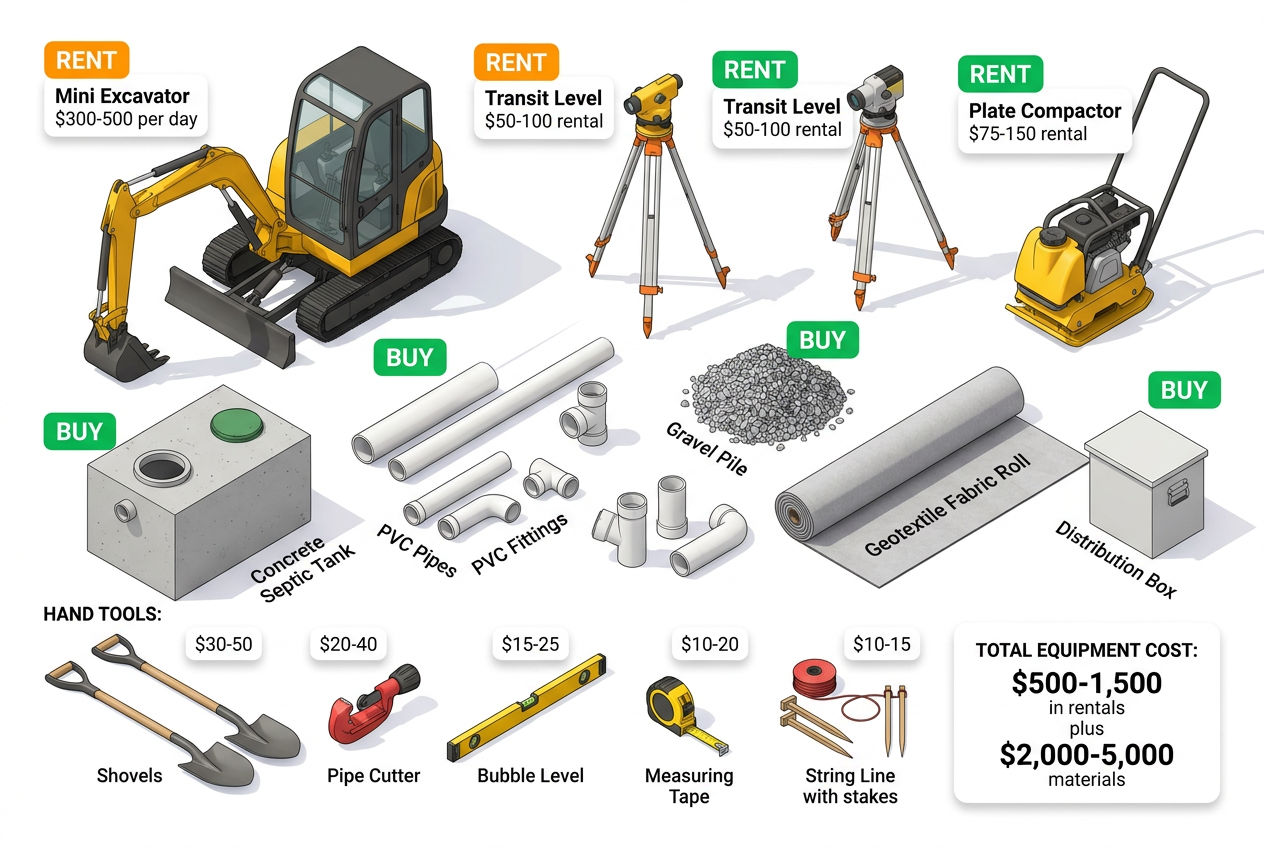
Equipment reality check:
- Excavator rental: $200–$600 per day
- Experience required: Operating heavy equipment safely
- Safety risks: Trench collapse, utility line strikes
⚠️ Warning: An unshored trench can collapse. Hitting a utility line is a medical emergency. If you've never operated excavation equipment, factor in a steep learning curve.
Step 5: Tank Placement and Plumbing
A 1,000-gallon concrete septic tank weighs roughly 8,000–9,000 pounds. You're not lowering that in by hand. The delivery truck uses a crane arm, but you still need to coordinate:
- Proper grade and bedding material
- Inlet and outlet elevations
- Burial depth (inlet typically 4 inches to 4 feet below finish grade)
- Inlet pipe slope (¼ inch per foot minimum)
✅ Pro Tip: At the outlet, a properly installed effluent filter - like a Polylok PL-122 - keeps solids from migrating into the drain field and extends its life significantly. Many DIY installs skip this. That's a mistake.
Step 6: Drain Field Installation
Drain field installation means:
- Laying perforated pipe in gravel-filled trenches (or chamber systems like Infiltrator Quick4 chambers)
- Maintaining precise grades so effluent distributes evenly
- Installing a level distribution box
An uneven distribution box means some laterals get overloaded and others sit dry - the overloaded ones fail first.
The full septic system installation process involves more steps than most homeowners anticipate.
Step 7: Inspection and Health Department Approval
You cannot cover any part of the system until the county inspector signs off on the installation. This is not optional.
Typical inspection requirements:
- Pre-backfill inspection: Verifies proper installation, grades, setbacks, tank positioning, pipe connections, drain field construction
- Post-installation inspection: Confirms final grading and system readiness
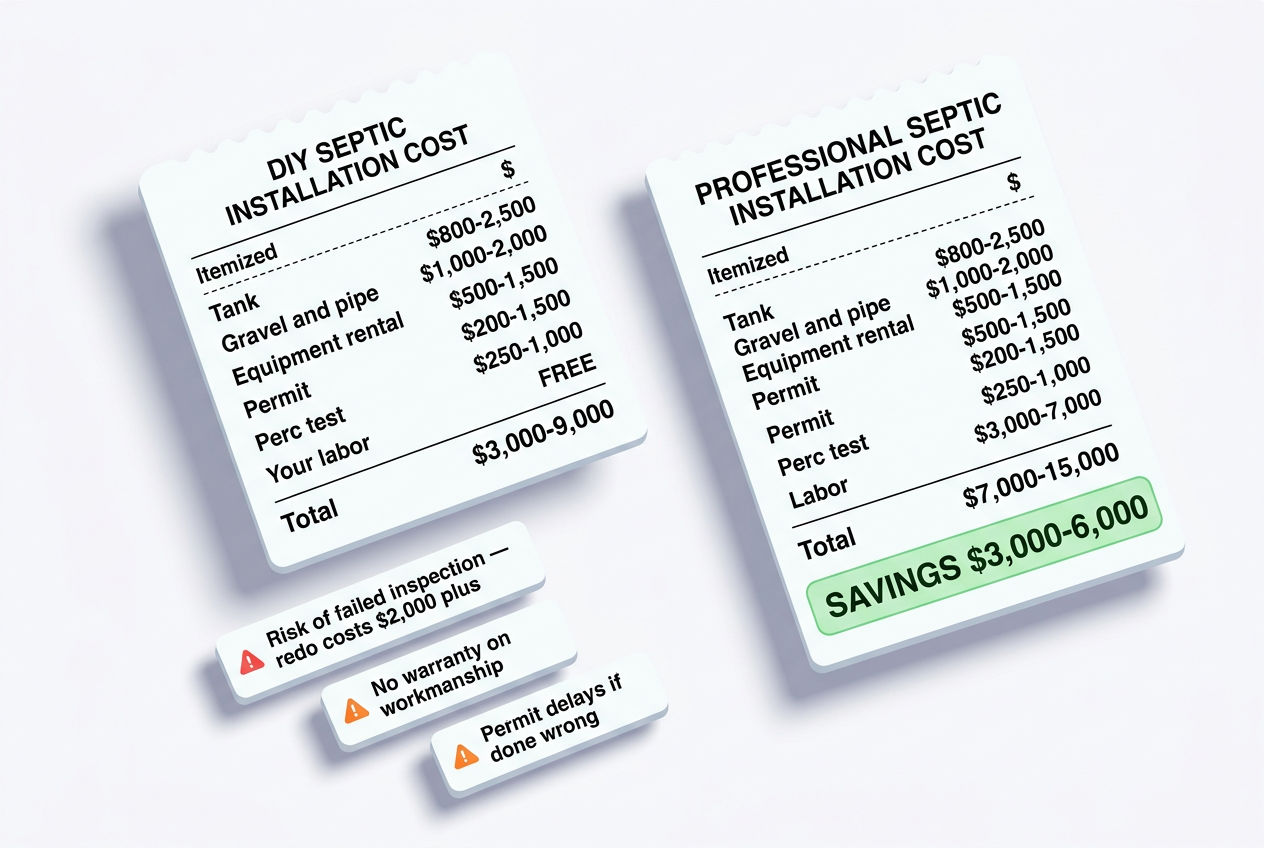
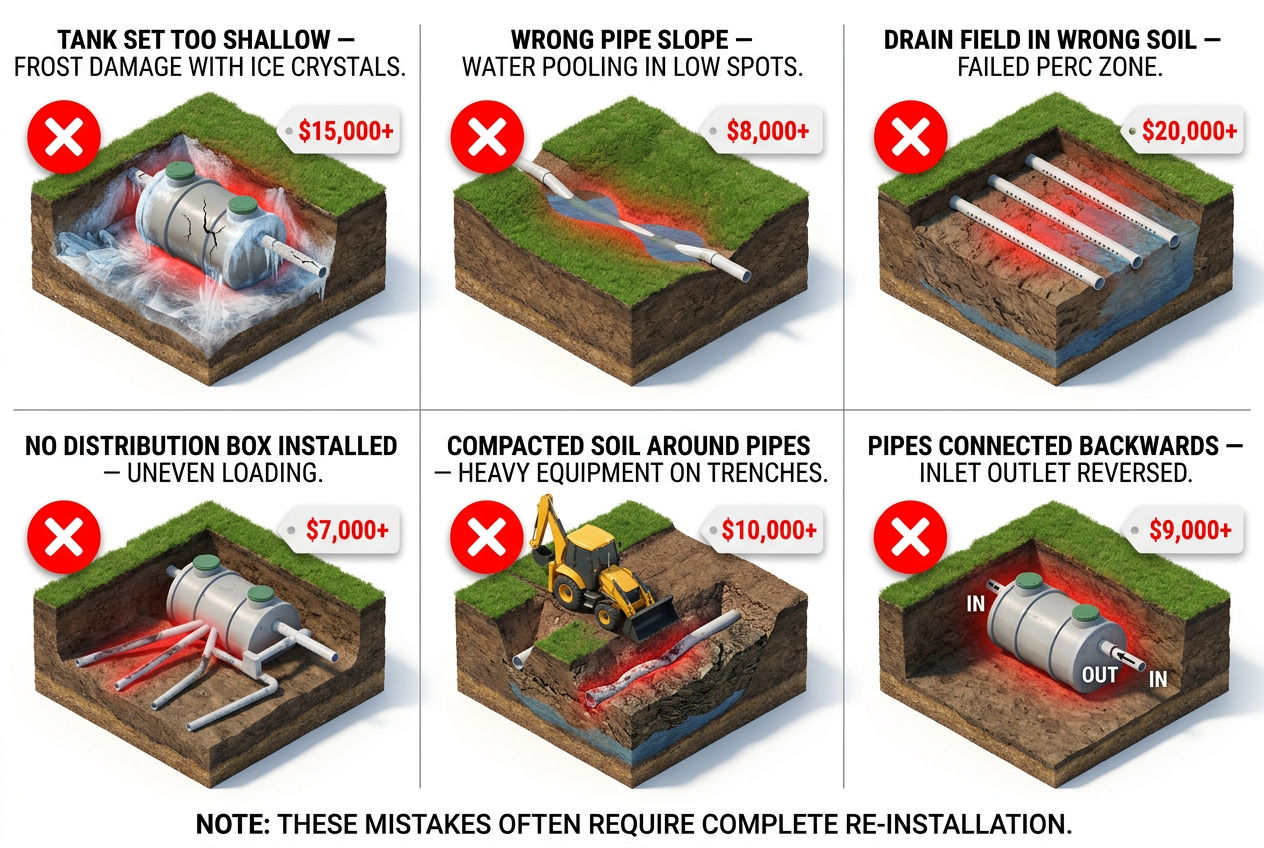
How Much Does It Cost to Install a Septic System Yourself vs. Hiring a Pro?
Here's an honest side-by-side on a conventional gravity system for a 3-bedroom home:
| Cost Category | DIY Cost | Professional Cost |
|---|---|---|
| Perc test | $250–$1,000 | Included or $250–$1,000 |
| Engineering/design | $500–$2,000 | Included or separate |
| Permit fees | $300–$1,500 | Often included |
| 1,000-gallon concrete tank (delivered) | $600–$1,200 | Included |
| Pipe, distribution box, fittings, gravel | $800–$1,500 | Included |
| Excavator rental (3–5 days) | $600–$3,000 | Included (own equipment) |
| Miscellaneous (bedding, filter, risers) | $300–$600 | Included |
| Labor & warranty | $0 (your time) | Included |
| TOTAL COST | $3,350–$10,800 | $7,000–$11,000 |
📊 Quick Fact: When you run those numbers, the DIY savings range from minimal to essentially zero once you factor in equipment rental and required professional services (design, perc test). The cases where DIY saves real money are narrow: owner-operators who already own excavation equipment, have construction experience, and live in permissive jurisdictions with favorable soil.
For advanced systems:
- Aerobic treatment units (ATUs)
- Mound systems
- Drip irrigation systems
- Professional installation: $12,000–$25,000+
- DIY feasibility: Not realistic for most homeowners
These systems involve electrical components, pressure-dosed laterals, and sophisticated controls.
See our full septic installation cost guide for a complete regional breakdown.
What Are the Risks of DIY Septic Installation?
Fines and Legal Liability
Installing a septic system without a permit - or outside the boundaries of what your permit allows - can result in:
- Fines ranging from $1,000 to $25,000+ depending on jurisdiction
- Excavation and removal orders (at your expense)
- Civil liability for environmental contamination
Resale Problems
Picture this: you're selling your home and the buyer's inspector flags your septic system as unpermitted or improperly installed.
What happens next:
- The deal falls through
- You're forced to escrow $15,000 to remediate before closing
- Title and financing become a nightmare
⚠️ Warning: Unpermitted systems are a title and financing nightmare that can destroy a real estate transaction.
Early System Failure
| Properly Installed System | Improperly Installed System |
|---|---|
| Lasts 20–30 years (EPA estimate) | Often fails within 2–5 years |
| Normal maintenance costs | Replacement cost: $5,000–$15,000+ |
| Return on investment | Wipes out any savings |
Common DIY installation mistakes that cause early failure:
- Wrong grade on drain field laterals
- Undersized septic tank
- Inadequate drain field square footage
- Poor compaction causing settling
- Improper pipe connections
Environmental Contamination
A failing system doesn't just back up into your house. It leaches:
- Nitrates
- Fecal coliform bacteria
- Pharmaceuticals
- Pathogens
Into groundwater - potentially contaminating your neighbors' wells.
⚠️ Warning: If your neighbors draw from the same aquifer you're contaminating, you may face civil liability that makes the original permit fine look trivial.
For more on what can go wrong, see our guide to what a drain field is and the warning signs it's failing.
When Does DIY Septic Installation Actually Make Sense?
Be honest with yourself about this checklist before proceeding:
- ✅ Your state and county explicitly allow homeowner installation on owner-occupied property
- ✅ Your site passed a perc test and qualifies for a simple conventional gravity system
- ✅ You have or can rent excavation equipment AND know how to operate it safely
- ✅ You have plumbing and grading experience - this is not a first construction project
- ✅ You can commit 1–3 weeks to the physical installation (vs. 3–7 days for a professional crew)
- ✅ You've calculated the true cost and confirmed you'll save at least $2,000–$3,000 after all required professional services
💡 Key Takeaway: If you can check every box above, a self-installed conventional system on a straightforward rural site may be a viable project. If any box is unchecked - especially the legal permission or soil evaluation - stop and find a licensed septic installer near you before spending a dollar on materials.
Alternative systems are off this list entirely. An aerobic treatment unit requires:
- Electrical panel connection
- Hiblow HP-80 or similar aerator compressor
- Pump chamber with float switches
- Ongoing maintenance contracts (required in most states)
These are not weekend projects.

DIY Septic Blueprint
Thinking about building it yourself?
The complete, plain-English plan to size, permit and install your own septic system — designed for homeowners, not contractors. Skip the $15,000–$25,000 quotes and do it right the first time.
Get the DIY Blueprint — $67 →Instant download · 8 modules + 3 bonus guides · 60-day money-back guaranteeHow to Find a Qualified Septic Installer
If you've worked through this and concluded that hiring a pro is the right call - that's not a defeat. It's math. A licensed installer brings their own equipment, knows your county's inspectors by name, and warranties their work.
Questions to Ask When Comparing Installers
Licensing & permits:
- Are you licensed in this state/county?
- Do you pull the permit, or does that fall on me?
Scope & pricing:
- What does your quote include - design, perc test, inspection fees?
- Do you install effluent filters and risers as standard?
Timeline & warranty:
- What's your typical installation timeline?
- What warranty do you provide on workmanship?
✅ Pro Tip: SepticTankHub connects homeowners with vetted septic installation professionals across the country. Enter your zip code to see licensed installers in your area.
New to septic? Start with what a septic system is and how it works.
After installation, you'll need a septic inspection for approval.
Advanced systems cost more - see our drain field replacement cost guide.
Find a licensed septic installer near you on SepticTankHub.
Sources & Methodology
1. U.S. Environmental Protection Agency - Septic Systems EPA's SepticSmart program (epa.gov/septic) provided baseline statistics on septic system prevalence (21+ million systems, approximately 20% of U.S. homes) and general maintenance guidance used throughout this article.
2. National Onsite Wastewater Recycling Association (NOWRA) NOWRA (nowra.org) provided state-level regulatory framework references and professional licensing standards cited in the state comparison table.
3. State Health Department Regulations Florida Department of Health, Texas Commission on Environmental Quality (TCEQ), North Carolina DEQ, and Alaska Department of Environmental Conservation regulations were reviewed for state-specific legal requirements.
4. National Association of Wastewater Technicians (NAWT) NAWT (nawt.org) guidelines on system inspection and maintenance standards informed the post-installation compliance section.
Related: illegal septic system pitfalls — worth reading if this applies to your situation.
5. University Extension Programs Penn State Extension and Ohio State University Extension resources on soil evaluation, perc testing methodology, and drain field sizing calculations informed the technical specifications throughout this article.
Need help with your septic system? Browse local septic companies in Wisconsin or Oregon.
Free download
Not ready for the Blueprint? Start free.
Grab the free DIY Septic Planning Kit — the permit-first checklist, perc-test cheat sheet, and sizing tables that keep your build from getting red-tagged.
Was this article helpful?
Frequently Asked Questions
Recommended Resources
📖 Related Articles
🔧 Services
Find Septic Professionals Near You
Compare licensed, verified septic companies by area — top county markets and cities below, or browse all 50 states.
County markets
Popular cities
