
Quick Answer
A septic system is an underground, self-contained wastewater treatment system that collects, partially treats, and disperses household wastewater on your property. Homes that use septic systems have no connection to a municipal sewer line - the system handles everything from toilet flushes to dishwasher drains on-site.
About 21 million U.S. homes rely on septic systems - roughly one in five households, according to the EPA. If you just bought a home with one, or you're trying to understand what's buried in your backyard, you're in the right place.
💡 Key Takeaways
- A conventional septic system has three main components: the septic tank, the distribution box, and the drain field.
- Anaerobic bacteria inside the tank break down solids into sludge, scum, and liquid effluent.
- The EPA recommends pumping your tank every 3–5 years to prevent sludge buildup from reaching the drain field.
- The average residential tank holds 1,000–1,500 gallons and sits 4–6 feet underground.
- System lifespan runs 25–30 years with proper maintenance; the concrete tank itself can last 40+ years.
What Are the Main Components of a Septic System?
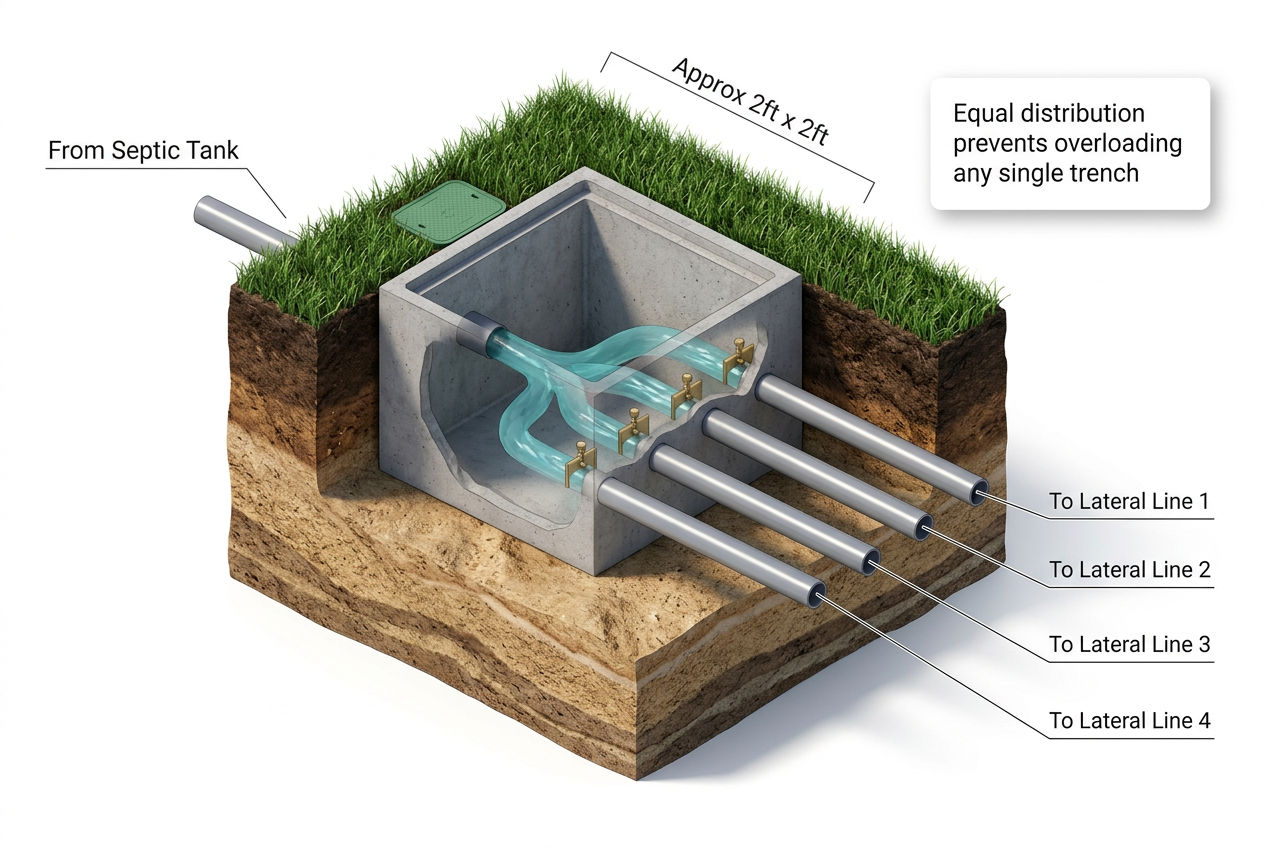
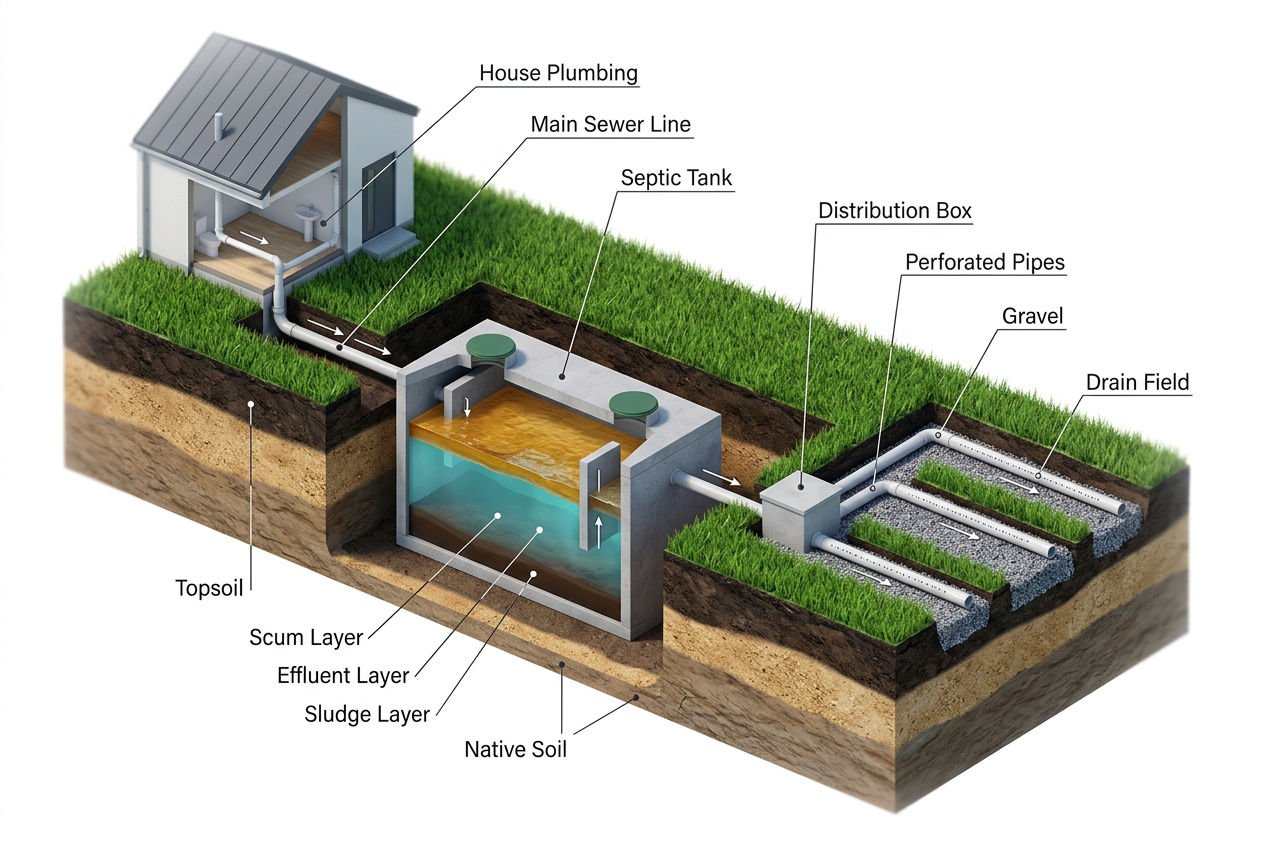
A conventional septic system has three core components working in sequence: the septic tank, the distribution box (D-box), and the drain field (also called the leach field). The soil beneath the drain field acts as a fourth, silent treatment stage.
Each component plays a distinct role. Remove one and the system fails - sometimes dramatically, sometimes slowly, always expensively.
Component Overview
| Component | Function | Typical Size / Spec |
|---|---|---|
| Septic Tank | Holds and separates wastewater | 1,000–1,500 gallons |
| Distribution Box (D-box) | Splits effluent evenly to drain field | 6–12 outlet ports |
| Drain Field | Disperses effluent into soil | 450–1,200+ sq ft |
| Soil (Treatment Zone) | Filters and neutralizes effluent | 2–4 ft unsaturated depth |
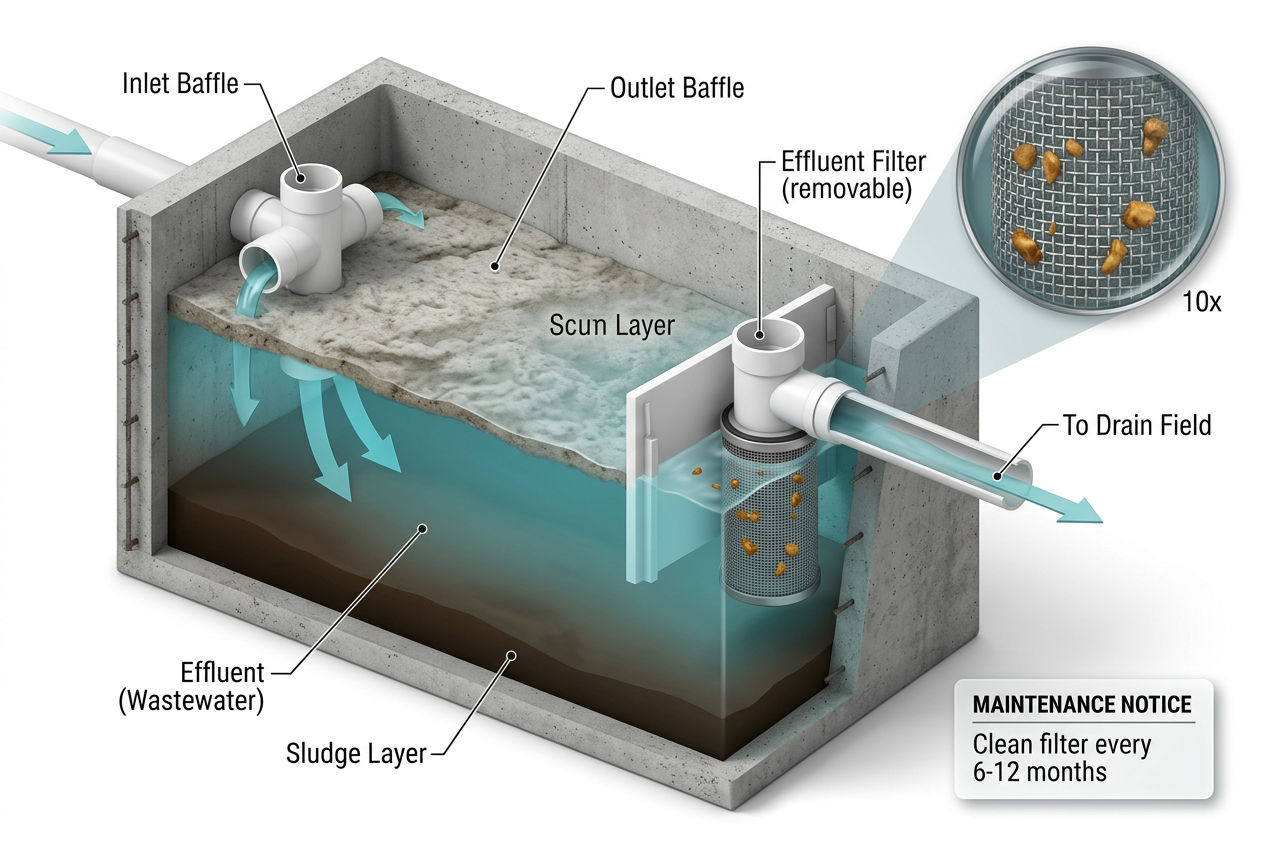
| Inlet/Outlet Baffles | Controls flow inside tank | Concrete or PVC tee |
Source: EPA SepticSmart program; Infiltrator Water Technologies installation specifications
How Does a Septic System Work, Step by Step?
A conventional septic system works through a gravity-driven, four-stage process that moves wastewater from your house to clean groundwater. Each stage does a specific job - and skipping maintenance at any stage creates a cascading failure.
Stage 1: Wastewater Leaves Your Home
Every drain in your house flows into a single main sewer line - toilets, sinks, showers, dishwasher, washing machine - that exits through your foundation. That line runs downhill (gravity-fed, typically at a 1/4-inch-per-foot slope) to the inlet of your septic tank.
📊 Quick Fact: The average household generates about 70 gallons of wastewater per person per day, according to EPA and USGS data. A family of four is pushing roughly 280 gallons into the system daily.
Stage 2: The Septic Tank Separates Solids from Liquid
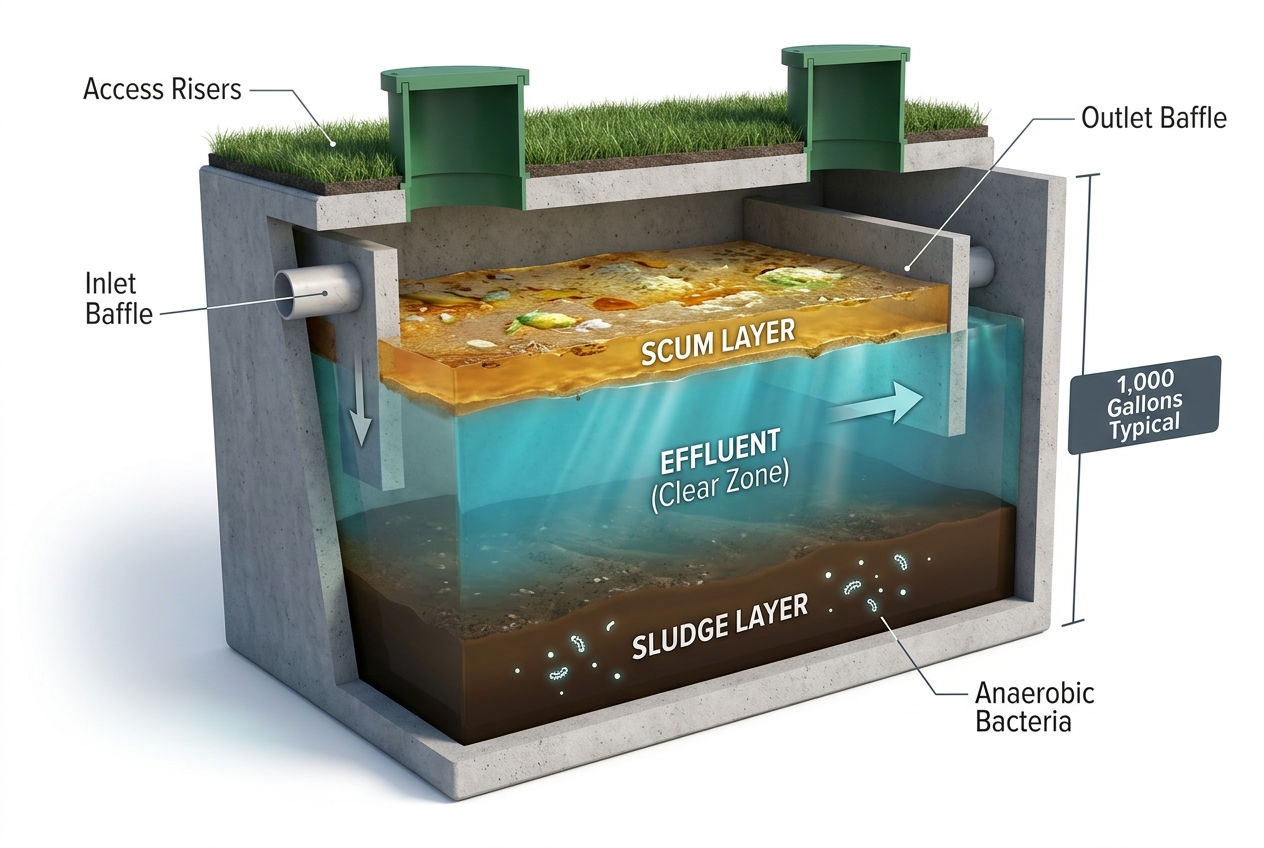
The septic tank is where the real separation happens. Picture a buried concrete or fiberglass vault - typically 1,000 to 1,500 gallons for a 3- to 4-bedroom home - holding a few days' worth of wastewater at any given time.
Inside the Tank: Three Distinct Layers
Wastewater naturally separates into three zones:
- Scum layer (top): Fats, oils, grease, and lightweight solids float to the surface
- Effluent layer (middle): The clarified liquid - called effluent - sits between the two solid layers and exits the tank
- Sludge layer (bottom): Heavy solids, mostly organic waste, sink and accumulate as sludge
Anaerobic bacteria - microorganisms that thrive without oxygen - live in the tank and break down organic solids in both the sludge and scum layers. They don't eliminate these layers; they slow the accumulation rate.
⚠️ Warning: When the combined sludge and scum layers occupy roughly one-third of the tank's volume, it's time to pump - otherwise solids escape into the drain field and cause serious damage. The EPA cites this one-third threshold as the standard trigger point.
The inlet and outlet of the tank are fitted with baffle walls (or PVC tee baffles) that force incoming wastewater to drop below the scum layer and prevent floating debris from escaping with the effluent.
Free download
Free: the Septic Fridge Card — what to flush, what never to.
The Do / Don’t card the whole family can see, plus the Survival Kit: emergency flowchart, warning-sign decoder and pump-schedule card. One printable PDF.
Stage 3: Effluent Travels to the Distribution Box
Clear effluent exits the tank through the outlet baffle and flows by gravity to a distribution box - a small concrete or plastic junction box buried between the tank and the drain field. The D-box has multiple outlet ports, usually 6 to 12, and its job is to divide effluent evenly among the drain field's lateral lines.
✅ Pro Tip: If a D-box gets cracked, tilted, or clogged, effluent floods one section of the drain field while the others starve. That uneven loading is a common cause of premature drain field failure.
Some systems skip the D-box and use a serial distribution arrangement instead, where laterals connect in sequence - but most conventional systems use a D-box.
Stage 4: The Drain Field Disperses and Filters Effluent
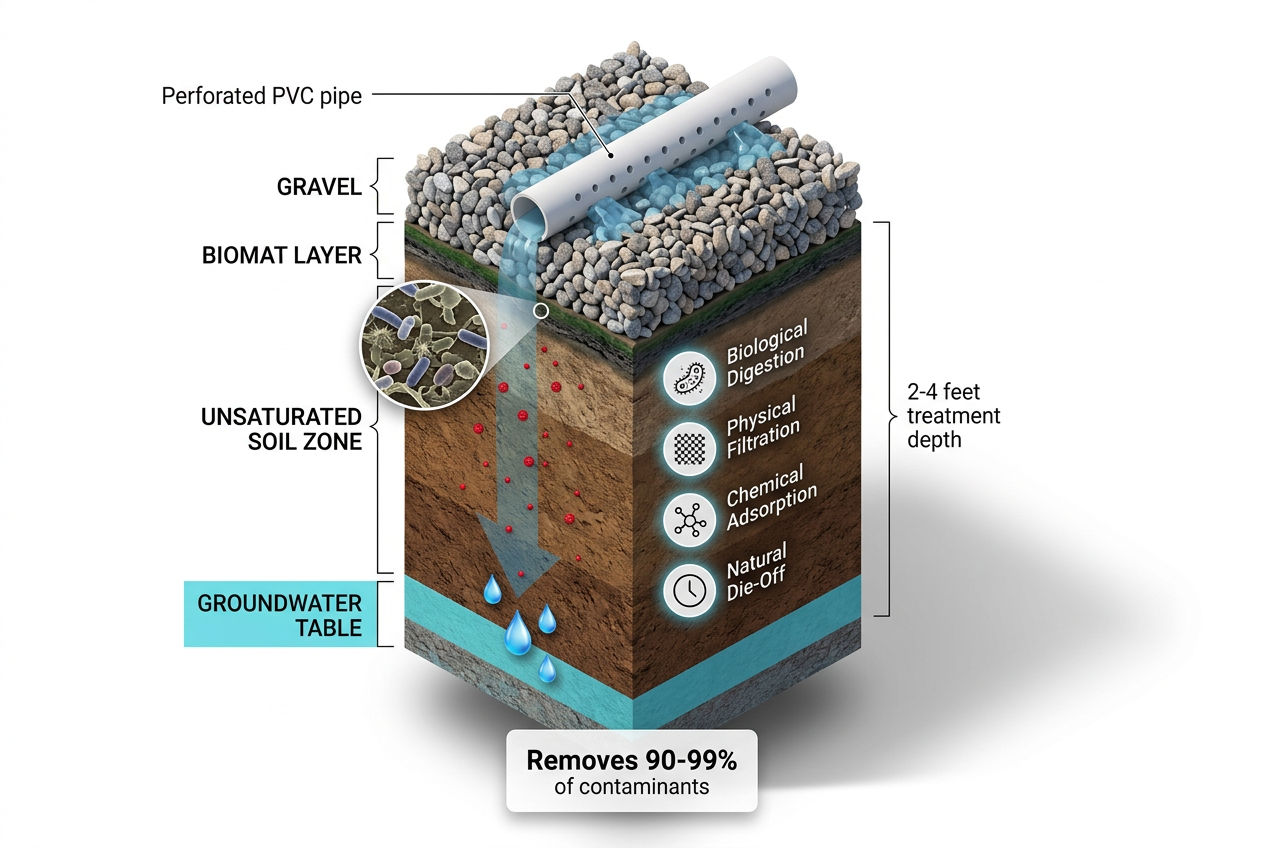
The drain field is a network of perforated pipes laid in gravel-filled trenches beneath your yard. Effluent seeps out through those perforations into the surrounding soil.
Sizing Factors
Drain field size depends on two factors:
- Daily flow volume - how much wastewater the home generates
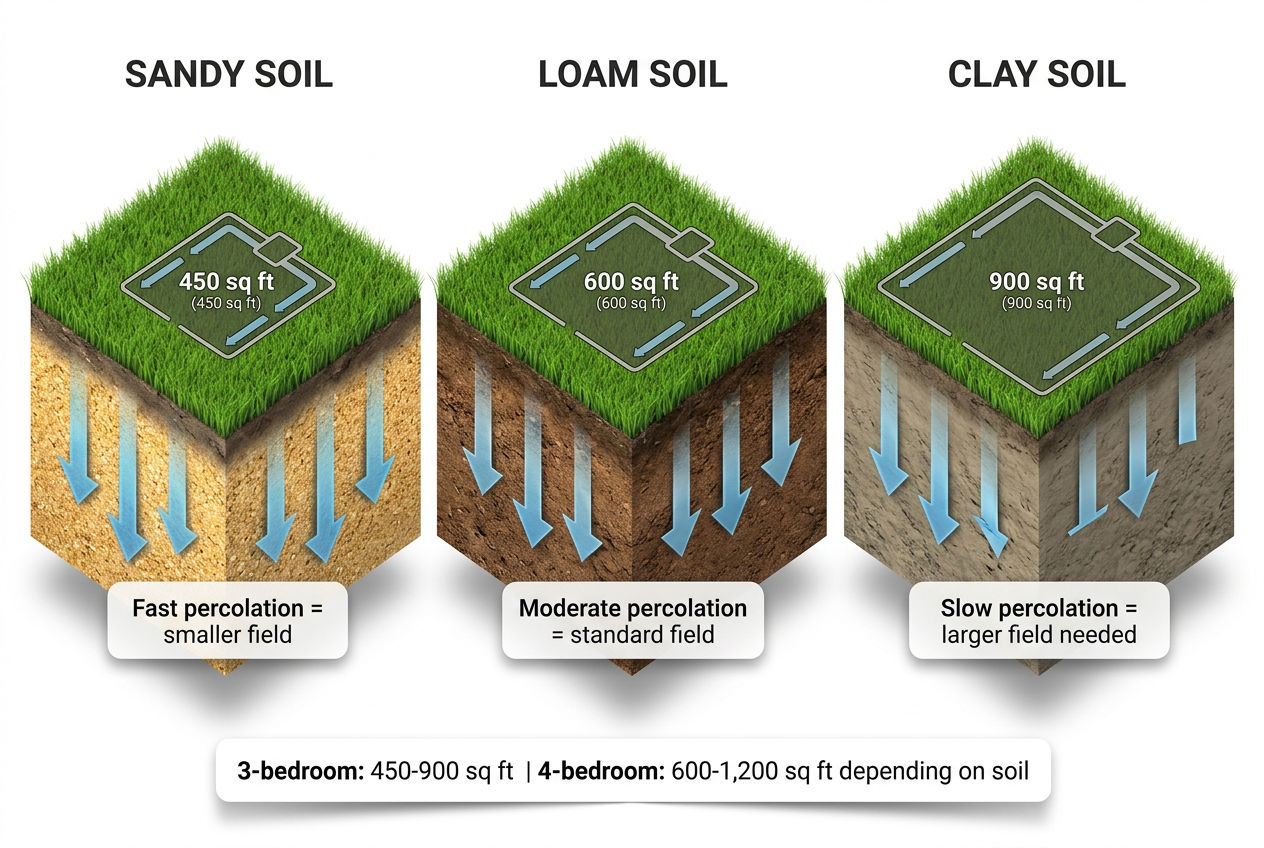
- Soil absorption rate - how fast the local soil absorbs liquid
A soil percolation test (perc test) measures absorption rate before a system is designed. Sandy soils drain fast; clay soils drain slowly and may require a larger field or an alternative system altogether. Typical residential drain fields range from 450 to 1,200+ square feet.
💡 Key Takeaway: Once effluent enters the soil, aerobic bacteria and physical filtration remove pathogens, nutrients, and remaining organic matter. The soil is the final treatment stage. By the time water reaches groundwater depth - ideally 2 to 4 feet below the trench bottom - it's been neutralized.
That's why drain field depth and separation from groundwater are regulated by local health departments.
For a deeper look at how leach fields work and what causes them to fail, read our complete guide to what is a drain field.
What Are the 3 Main Components of a Septic System?
The three main components of a septic system are the septic tank, the drain field, and the soil. The septic tank separates solids from liquid waste. The drain field distributes the clarified liquid across a large underground area. The soil performs final biological and physical filtration before wastewater rejoins the groundwater supply.
Some sources list only the tank and drain field, but the soil is the most critical treatment stage - and the one that fails permanently when the system isn't maintained.
⚠️ Warning: You can replace a tank. You can sometimes repair a drain field. But you cannot replace your soil's natural filtration capacity once it's clogged with biomat (the dense layer of microbial growth that forms when solids reach the field). That's when a full drain field replacement enters the conversation - typically a $5,000–$20,000 event.
What's the Difference Between a Septic System and a Sewer System?
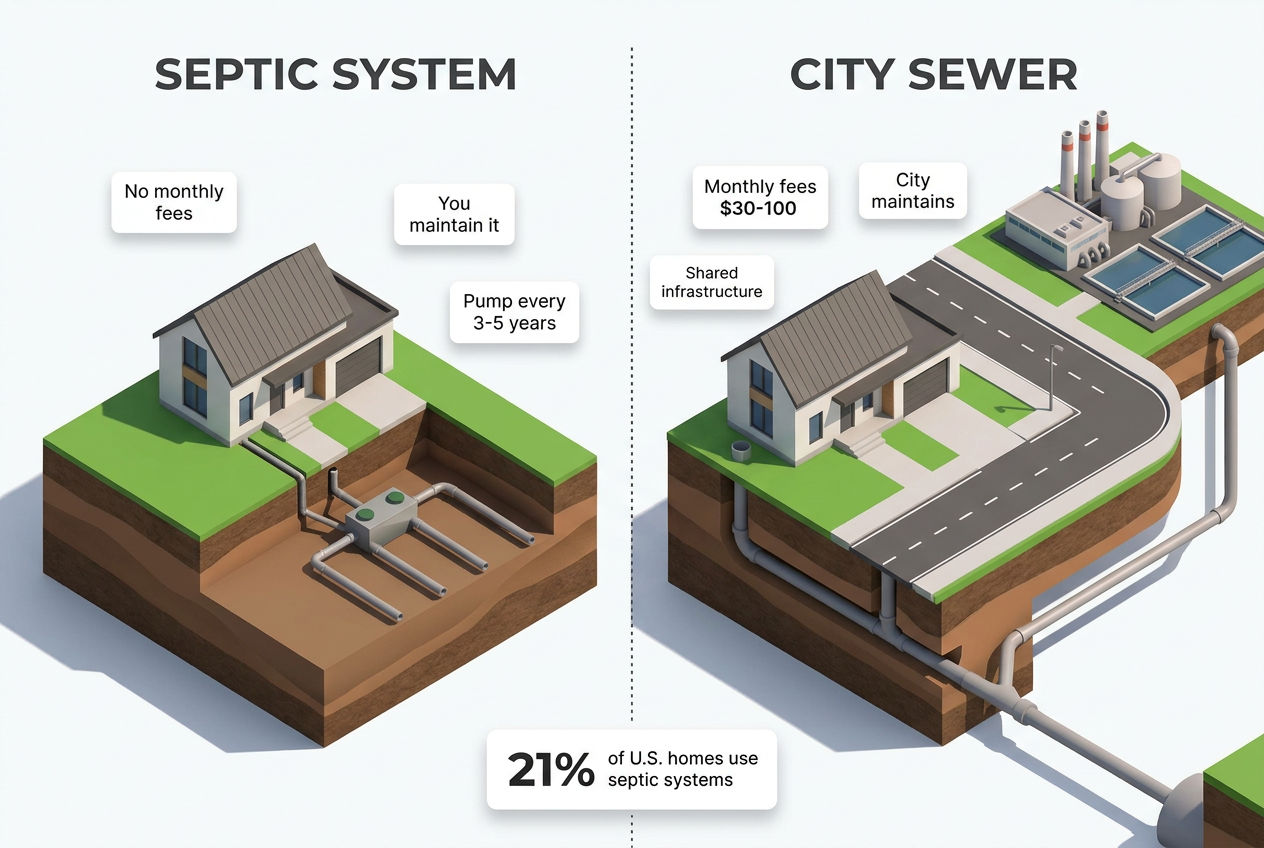
A sewer system carries wastewater off your property to a centralized municipal treatment plant. A septic system treats wastewater entirely on your property. That's the core difference.
Practical Comparison
| Factor | Septic System | Sewer System |
|---|---|---|
| Cost Structure | $3,000–$20,000+ upfront installation; no monthly fee | Monthly utility bill; no installation cost |
| Maintenance | Owner responsible for all pumping and repairs | Municipality handles all treatment and maintenance |
| Environmental Impact | Returns filtered water to local aquifers when maintained | Centralized treatment; depends on plant condition |
| Location | Typically rural and suburban fringe areas | Urban and developed suburban areas |
✅ Pro Tip: About 33% of new homes in some regions are built on septic, according to Census Bureau data - typically in areas where municipal sewer lines don't reach.
If you're buying a home with a septic system, budget for a professional septic inspection before closing. A failing system that passes a visual check but flunks a hydraulic load test could cost you $15,000 to fix the day after you take ownership.
What Types of Septic Systems Are There?
A conventional septic system - the gravity-fed tank-and-drain-field setup described above - is the most common type in the U.S. But soil conditions, lot size, water table depth, and local regulations force many homeowners into alternative designs.
Common System Types
Conventional System
Standard gravity-fed system. Works best in soils with good drainage and adequate depth to groundwater. Most affordable to install and maintain.
Mound System
Used when the water table is too high or soil is too shallow. An engineered sand mound is built above grade, and effluent is pumped up into it. More complex and more expensive - typically $10,000–$20,000+ to install. Common in Wisconsin, Minnesota, and coastal areas. See our mound septic system guide for details.
Aerobic Treatment Unit (ATU)
Injects air into the treatment process, dramatically improving effluent quality. Required in some environmentally sensitive areas (common in Texas Hill Country and coastal Florida). These systems include aerator compressors - often a Hiblow HP-80 or similar unit - that require annual servicing. Learn more in our aerobic vs. anaerobic septic comparison.
Chamber System
Uses plastic leaching chambers (Infiltrator Water Technologies is the dominant manufacturer) instead of gravel-filled trenches. More flexible for sites with space constraints. Good performance in a variety of soil conditions.
Engineered Systems
When none of the standard designs fit - unusual lot shapes, high bedrock, extreme water tables - a licensed engineer designs a site-specific solution. See our article on engineered septic systems for what that process looks like.
For a complete side-by-side comparison of all system types, including installation costs, visit our types of septic systems guide.
How Often Does a Septic Tank Need to Be Pumped?
The EPA recommends septic tank pumping every 3 to 5 years for most households. But that's a general guideline - actual pumping frequency depends on tank size, household size, and what goes down your drains.
Pumping Frequency by Household
- 1,000-gallon tank, 4-person household: Every 3–4 years
- 1,000-gallon tank with garbage disposal: Every 2–3 years (disposals dramatically increase solids load)
- 1,500-gallon tank, 2-person household: Every 6–8 years
📊 Quick Fact: A licensed pumper uses a sludge judge - a calibrated clear tube lowered into the tank - to measure sludge depth at the bottom and estimate scum thickness at the top. When combined sludge and scum occupy about one-third of the tank's working volume, it's time to pump regardless of the calendar.
What Does Pumping Cost?
Nationally, a standard residential pump-out runs $300–$600:
- Suburban Orlando: $275–$375
- Rural northern Minnesota: $400–$550 (longer drive times and limited service windows during winter when frozen ground makes lid access difficult)
For a full breakdown of costs by region and tank size, see our septic pumping cost guide.
To schedule service with a licensed professional in your area, find a septic pumping company near you.
How Long Does a Septic System Last?
A properly maintained conventional septic system lasts 25 to 30 years. The concrete tank itself can exceed 40 years if it isn't structurally compromised by ground movement, corrosion, or root intrusion. The drain field is typically the weak link - and the most expensive component to replace.
What Kills Drain Fields Prematurely
- Solids overflow from an unpumped tank - the #1 cause. Sludge escapes the tank and clogs the soil absorption zone
- Hydraulic overload - flushing too much water too fast (think a full family visiting for a week) saturates the field before it can recover
- Non-flushable materials - wipes, feminine hygiene products, and paper towels don't break down and physically block the system
- Root intrusion - trees planted near the drain field eventually send roots into perforated pipes
- Compaction - parking vehicles or placing heavy structures over the drain field crushes the gravel bed and pipes
Geographic Factors
Massachusetts: Title 5 regulations require a full system inspection before any property sale - and many older systems fail that inspection.
Florida: High water tables (sometimes just 18–24 inches below surface in coastal areas) put constant pressure on drain fields.
Pacific Northwest: Heavy winter rainfall saturates drain fields seasonally, forcing systems to work harder and recover less.
Our septic tank maintenance guide covers everything you need to do year-round to get the maximum life out of your system. For a complete cost breakdown for septic owners, see our 30-year ownership cost infographic showing exactly what maintenance costs vs. what neglect costs.
Can You Have a Septic System Anywhere?
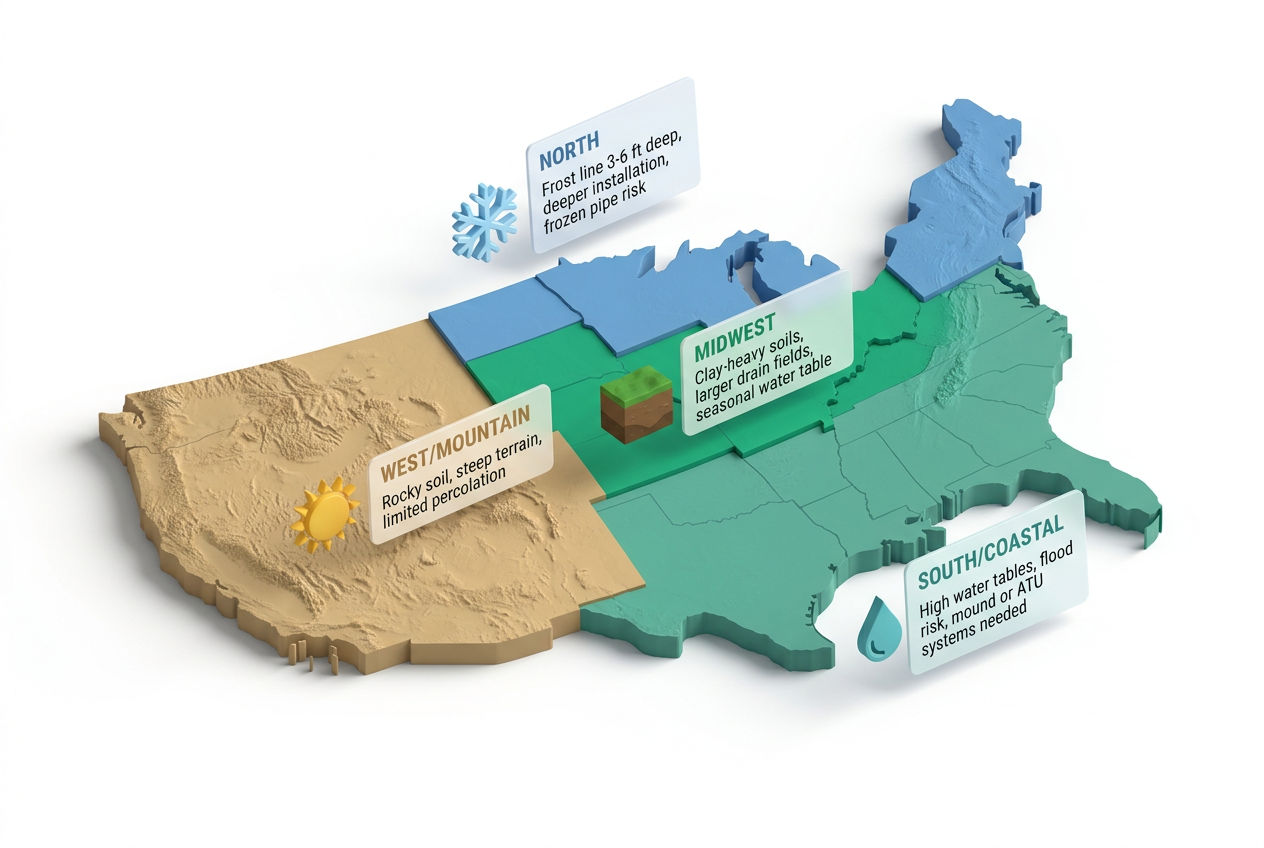
Not everywhere is suitable for a conventional septic system. Soil type, lot size, water table depth, and proximity to surface water all factor into whether - and what kind of - septic system a property can support.
Required Pre-Installation Tests
Before a new system can be installed, your local health department requires:
- A percolation test (perc test): Measures how fast water drains through your soil. Too fast (sandy gravel) or too slow (heavy clay) and you'll need a modified design.
- A soil profile evaluation: A licensed soil scientist or engineer digs test holes to evaluate soil layers and locate the seasonal high water table.
- A setback survey: Septic systems must maintain minimum distances from wells, property lines, surface water, and structures. Setbacks vary by state - Florida requires 75 feet from a potable well; Texas setbacks are set at the county level.
⚠️ Warning: Some lots simply cannot support any type of septic system and cannot be developed as year-round residences. This matters enormously if you're buying rural land and planning to build.
State Regulatory Examples
- North Carolina: All system designs must be approved by a licensed soil scientist and county health official
- Ohio: Mandates licensed installers and final inspection before backfill
- Florida: All work must be performed by a contractor holding a Registered Septic Tank Contractor (RSTC) license through the Florida Department of Health
If you're planning a new installation, use our septic installation cost guide to budget realistically, then find a licensed installer near you.
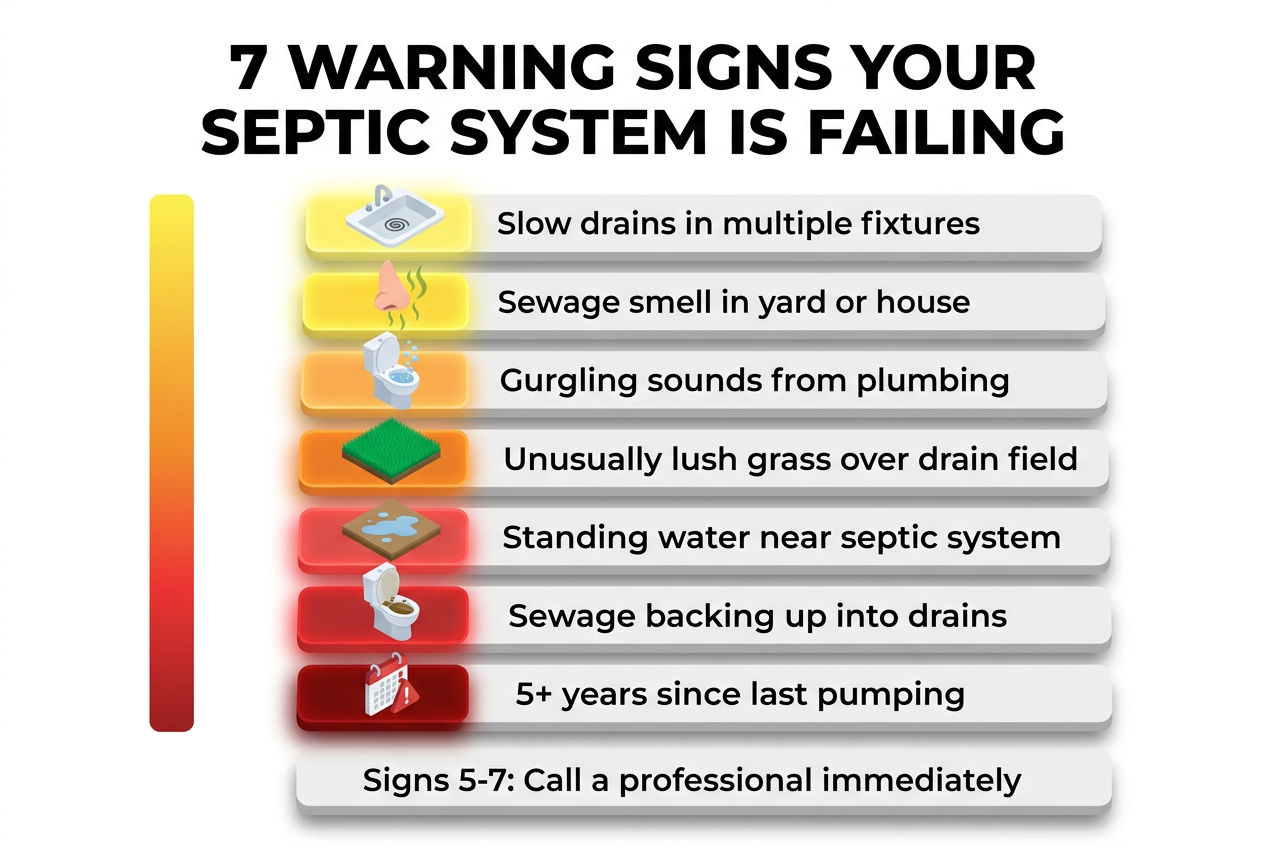
What Are the Signs of a Failing Septic System?
A healthy septic system is invisible and odorless. When something goes wrong, the system finds ways to tell you - usually unpleasant ones.
Warning Signs to Watch For
- Slow drains throughout the house - not just one fixture, but all of them. That points downstream
- Sewage odors inside or outside - a properly functioning system contains odors. Smelling sewage near your tank or drain field is a red flag
- Lush, bright green grass over the drain field - especially in dry weather. Effluent is fertilizing your yard because it's not going where it should
- Wet, soggy, or spongy ground over the drain field - effluent is surfacing instead of absorbing
- Sewage backing up into drains - the system is overwhelmed or blocked
⚠️ Warning: Picture this: you're selling your home and the buyer's inspector says your drain field is failing. The deal doesn't die instantly, but you're now negotiating a $7,000–$15,000 credit or repair on a compressed timeline with a motivated seller's disadvantage. A $400 pump-out three years earlier might have prevented the whole situation.
If any of these signs sound familiar, don't wait. See our detailed breakdown of septic system warning signs and repair options and connect with a licensed professional quickly. Early intervention is always cheaper than full system replacement. For repair cost estimates, visit our septic repair cost guide.
Sources & Methodology
The data, statistics, and recommendations in this article are drawn from the following primary sources:
- U.S. Environmental Protection Agency - SepticSmart Program: Source for the 21 million household statistic, pumping frequency guidelines, and the one-third tank volume threshold for pumping.
- EPA / USGS Water Use Data: Source for the approximately 70 gallons per person per day wastewater generation figure.
- Infiltrator Water Technologies: Product specifications for chamber-based leach field systems and installation sizing guidelines.
- National Onsite Wastewater Recycling Association (NOWRA): Industry standards for system component terminology and maintenance protocols.
Related: septic system glossary — worth reading if this applies to your situation.
- State Health Department Regulations: Florida Department of Health (RSTC licensing), Massachusetts Title 5 (property transfer inspection requirements), and North Carolina DHHS (design approval requirements) referenced for regional regulatory context.
- HomeAdvisor / Angi national cost data: Basis for installation and pumping cost ranges, cross-referenced with regional service provider pricing.
Related reading: septic system installation process.
Related: does every house have a septic tank
About This Guide
This article was written by the editorial team at SepticTankHub.com, a national directory connecting homeowners with licensed septic service professionals. Our content is reviewed for technical accuracy against EPA guidelines and current industry standards. We update our guides when regulations, cost data, or best practices change.
Was this article helpful?
Frequently Asked Questions
Recommended Resources
📖 Related Articles
💰 Cost Guides
Find Septic Professionals Near You
Compare licensed, verified septic companies by area — top county markets and cities below, or browse all 50 states.
County markets
Popular cities
