
Quick Answer
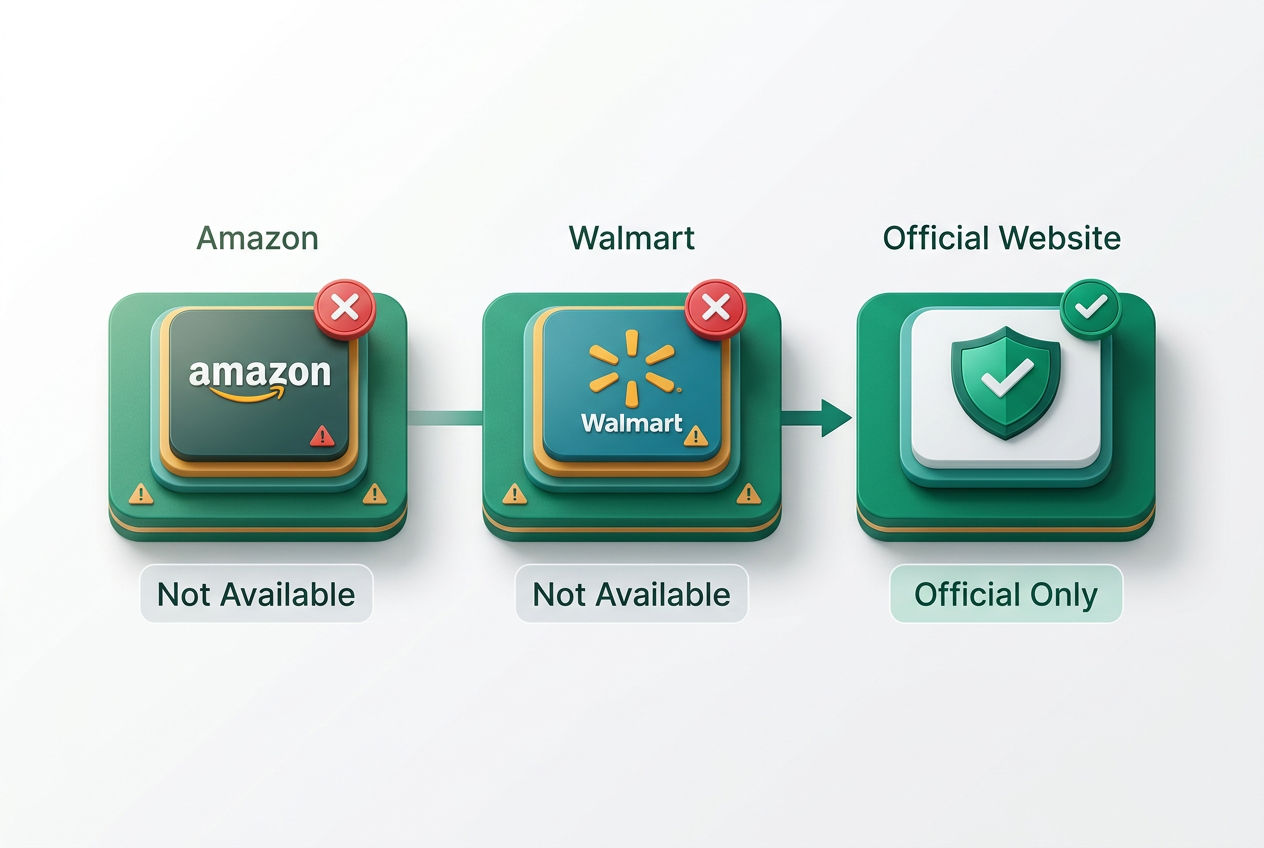
If you've searched "where to buy SeptiFix near me" or tried to find it at a local hardware store, here's the short answer: it doesn't exist in any retail channel. The manufacturer distributes exclusively through its official website — not Amazon, Walmart, Home Depot, Lowe's, or any brick-and-mortar retailer. Buying directly is the only guaranteed way to receive authentic tablets, current pricing, and access to the 60-day money-back guarantee. Third-party marketplace listings exist, but none are authorized by the manufacturer.
Key Takeaways
- SeptiFix has one authorized sales channel: its official website
- Pricing runs $49–$69 per supply depending on package size, with per-unit cost dropping significantly on multi-supply orders
- Third-party Amazon and eBay listings are not authorized — counterfeit and expired product are documented risks
- The product carries a 60-day money-back guarantee, but only when purchased through the official site
- SeptiFix is a maintenance tool, not a repair solution — it won't fix a failing drain field or eliminate the need for pumping
Where to Buy SeptiFix: Is It Sold on Amazon, Walmart, or in Stores?
No. SeptiFix is not sold on Amazon, Walmart, Home Depot, Lowe's, or any brick-and-mortar retailer. The manufacturer distributes exclusively through their official website — a distribution decision that keeps quality control, fulfillment, and warranty terms under their direct oversight.
You'll still find listings on Amazon and eBay that look like SeptiFix. Some use similar branding. Some resell old or gray-market stock. None are authorized resellers, and if something goes wrong — wrong product, expired tablets, damaged packaging — you have no recourse with the original manufacturer.
SeptiFix tablets contain live aerobic bacterial strains. Those bacteria have a shelf life. Tablets sitting in a third-party warehouse for 18 months may have dramatically reduced colony-forming unit counts by the time you flush one down your toilet. According to microbiological shelf-life research published in the International Journal of Food Microbiology (Tompkins et al., 2011, Vol. 149, Issue 3), CFU counts in improperly stored bacterial products can drop by 80–90% before expiration dates are even reached. You'd be buying a $60 inert tablet.
What about finding SeptiFix near me at a local store? Searches using that local modifier come up empty for a reason — the product has never been distributed through retail chains, regional hardware co-ops, or farm supply stores. If a local listing appears on Google Maps or a local retailer's website, treat it with the same skepticism as any Amazon listing: it isn't authorized.
What Is the Official SeptiFix Website?
The official source is the manufacturer's direct sales page. A search for "SeptiFix official website" will surface it, but copycat sites use near-identical domain names and branding to capture misdirected buyers.
Look for these markers before entering payment information:
- HTTPS in the URL bar (the padlock icon)
- A clearly stated 60-day money-back guarantee with a physical mailing address or customer service contact
- U.S.-based shipping information with specific delivery windows (typically 5–7 business days for domestic orders)
- No redirects through unfamiliar affiliate networks or third-party payment processors you don't recognize
When in doubt, type the exact URL directly rather than clicking through ad results. Paid ads can lead to lookalike sites designed to collect credit card data.
How Much Does SeptiFix Cost?
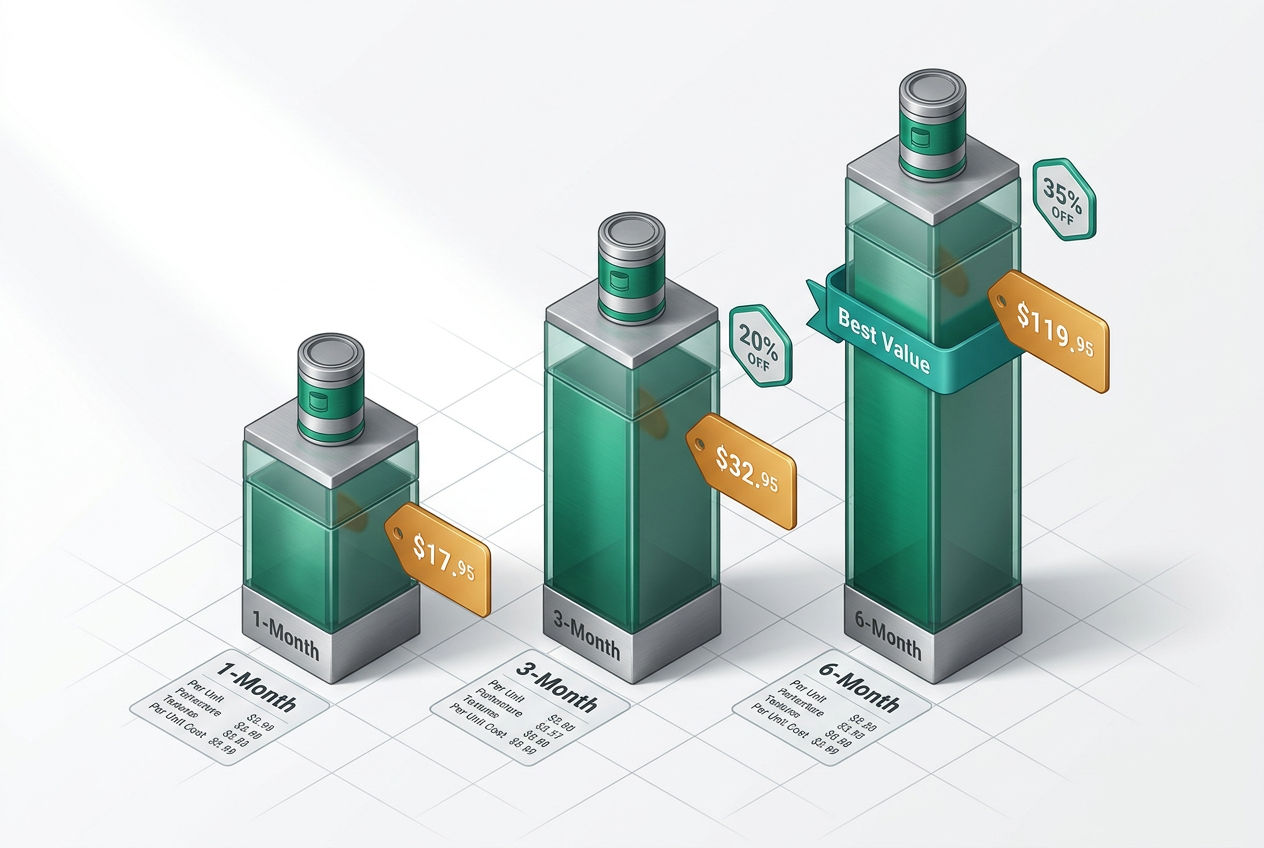
| Package | Tablets Included | Price Per Supply | Estimated Savings |
|---|---|---|---|
| 1-Month Supply | 3 tablets | $69.00 | — |
| 3-Month Supply | 9 tablets | $59.00/supply | ~14% vs. single |
| 6-Month Supply | 18 tablets | $49.00/supply | ~29% vs. single |
Pricing sourced from the SeptiFix official sales page. Prices are subject to change. Verify current pricing before purchase.
Each SeptiFix tablet is designed as a single monthly dose — you drop one tablet into your toilet and flush. That's one tablet per month for a standard household.
Worked example: A homeowner who selects the 6-month supply pays $49 per supply × 1 = $49 total for 18 tablets, covering six months of treatment. That breaks down to roughly $8.17 per month, or about $2.72 per tablet. Compare that to the 1-month supply at $69 ÷ 3 tablets = $23 per tablet. Buying in bulk cuts per-tablet cost by more than 85%. For a household committed to monthly maintenance, the 6-month supply is the better unit-economics decision by a significant margin.
Shipping is typically free to U.S. addresses. International shipping is available but delivery windows extend to 10–15 business days, and buyers outside the U.S. should factor in any import duties. The 60-day money-back guarantee applies to purchases through the official site only. If you buy through a third-party and the product doesn't perform, the manufacturer has no obligation to refund you.
What Are the Red Flags That Tell You You're Buying Fake SeptiFix?
Counterfeit septic tablets circulate widely in the home treatment category — here's how to spot them before you hand over payment information.
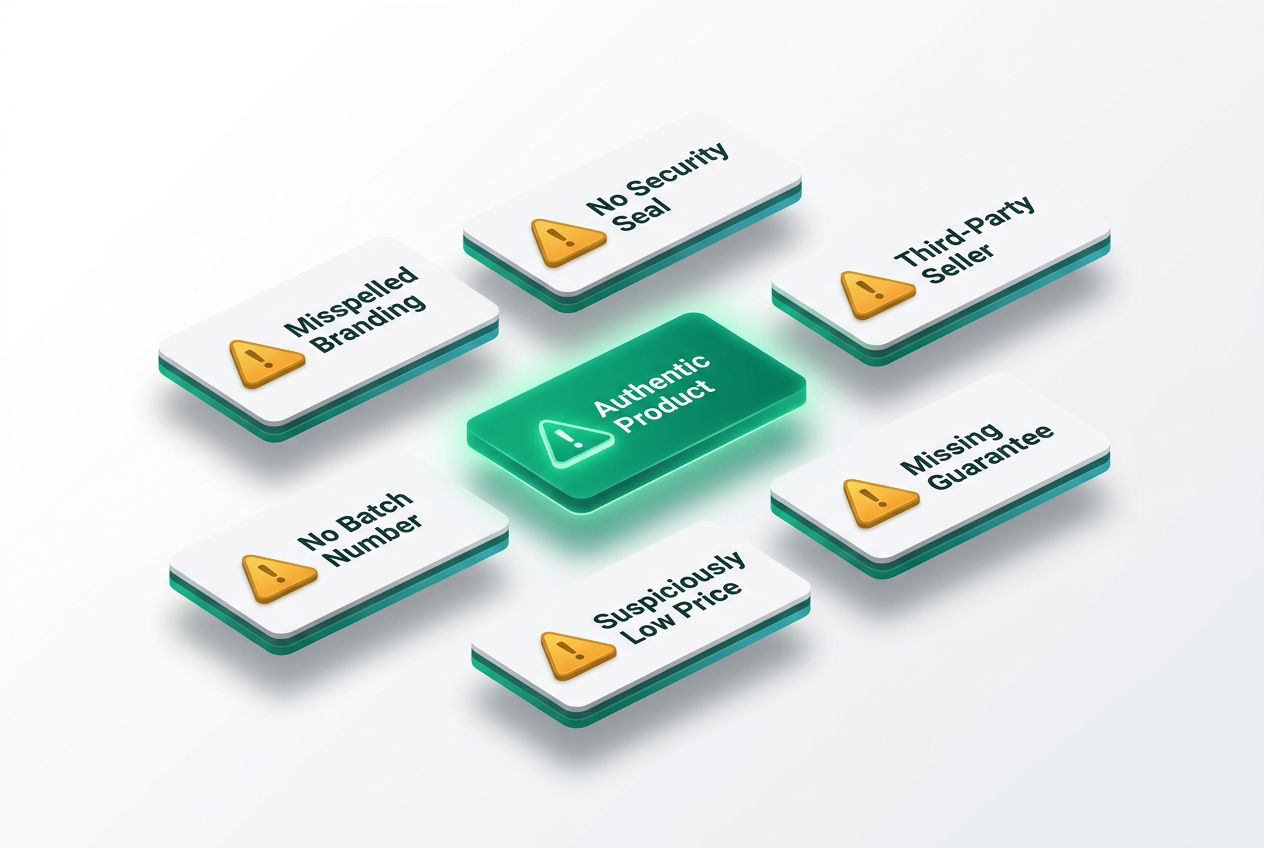
1. The listing is on Amazon, eBay, or a generic marketplace. No authorized SeptiFix seller exists on these platforms. If you see it there, it's gray-market stock at best and an outright fake at worst.
2. The price is significantly below $49 per supply. Counterfeiters compete on price. If you see SeptiFix listed at $25 or $30, ask yourself why a legitimate seller would undercut the manufacturer's own pricing by 40%. They wouldn't.
3. There's no mention of a money-back guarantee. The official product comes with a 60-day guarantee. Any listing that doesn't reference this — or redirects you to a third-party return policy — is not an authorized sale.
4. The packaging looks slightly off. Logo colors are wrong. The font is slightly different. The tablet count doesn't match (the official product includes 3 tablets per monthly supply). These are signs of counterfeit product manufactured to look close enough to fool a casual buyer.
5. There's no U.S. shipping address or customer service contact. SeptiFix ships from the U.S. Legitimate orders come with trackable shipping and domestic return addresses. If the product is arriving from an overseas fulfillment center with a 3–6 week delivery window, you're not buying the real thing.
Is SeptiFix Legitimate or a Scam?
SeptiFix is a real product manufactured in the USA — not a scam. The septic additive category as a whole has earned skepticism, and that's fair. Most enzyme powders make vague claims. SeptiFix's formula is specific and mechanistically explainable. Our full SeptiFix review covers the science in depth.
Here's what the formula contains:
- Sodium percarbonate — an oxygen-releasing compound that creates an aerobic environment inside your tank
- 14 strains of aerobic bacteria — approximately 10 billion CFU per tablet
- pH-adjusting compounds — sodium carbonate to buffer tank chemistry toward a range where bacteria thrive
The oxygen-release mechanism is the differentiator. Most septic tanks operate anaerobically. Anaerobic decomposition is slower and produces hydrogen sulfide — that rotten-egg odor you notice near struggling systems. Introducing oxygen encourages faster aerobic breakdown of organic solids. According to a University of Arkansas Cooperative Extension publication on onsite wastewater treatment systems (FSHED-85, Septic System Management, 2019), aerobic bacterial activity can process organic waste significantly faster than anaerobic-only systems — which is the premise underlying SeptiFix's tablet chemistry.
You can read more about why bacterial strains matter in our septic tank bacteria guide.
One thing to understand before you buy: SeptiFix cannot reverse a failing drain field, eliminate a biomat that's already clogged leach laterals, or replace scheduled pump-outs. According to EPA's Homeowner's Guide to Septic Systems (EPA 832-B-02-005), no additive eliminates the need for periodic pumping. A 1,000-gallon tank serving a four-person household needs pumping every 3–4 years regardless of what treatment products you use. If your system is already showing signs of failure — slow drains, gurgling toilets, wet spots over the drain field — no tablet fixes that. You need a licensed professional.
Check out signs your septic tank needs pumping if you're not sure where your system stands. For a broader look at whether septic additives are worth it at all, our article on whether septic additives work covers the peer-reviewed evidence without editorializing.
Does SeptiFix Work for Septic Tank Maintenance?
Yes — within a specific use case. SeptiFix is a maintenance product for healthy systems, not a repair solution for failing ones. Used monthly on a functional system, it replenishes bacterial populations that get knocked down by antibacterial soaps, bleach, and household cleaners — things that kill septic bacteria gradually without you realizing it.
The oxygen-release chemistry genuinely differentiates it from enzyme-only products like Rid-X, which rely on slower anaerobic bacterial activity. For a direct head-to-head breakdown, see our Rid-X vs. SeptiFix comparison.
Consider two households running the same 1,250-gallon concrete tank in rural North Carolina, last pumped three years ago:
Household A: A retired couple, moderate water usage, no garbage disposal, careful about what goes down the drain. Monthly SeptiFix tablets used consistently make clear sense — bacterial populations stay robust between pump-outs, and the system stays in healthy working range.
Household B: A family of six, garbage disposal running daily, higher water throughput. SeptiFix can still play a supporting role, but that 1,250-gallon tank is working hard — it probably needs pumping every 2 years minimum — and no treatment tablet changes that math. SeptiFix is a supplement, not a substitute for the pump truck.
If you want to compare SeptiFix to a wider field of options, our best septic tank treatment roundup puts it in context. For homeowners who prefer natural septic tank treatment approaches, that guide addresses where SeptiFix fits relative to enzyme-only and culture-based alternatives.
Our Recommendation: Should You Buy SeptiFix?
If you've decided a bacterial additive makes sense for your system — and the honest answer is that it does for most healthy systems with regular household chemical use — SeptiFix is the one we'd point you toward.
Here's why it earns that position specifically:
- Oxygen-release mechanism targets what matters. Sodium percarbonate creates an aerobic environment that speeds organic breakdown and reduces hydrogen sulfide odor. Enzyme-only products don't do this.
- 14 strains of live aerobic bacteria at ~10 billion CFU per tablet. That's a meaningful bacterial load, not a trace inoculant.
- One tablet, one flush, once a month. No measuring, no mixing, no separate application steps.
- Made in the USA, non-toxic formula. Safe for conventional concrete tanks, plastic tanks, and drain fields.
- 60-day money-back guarantee through the official site — real recourse if it doesn't perform.
- About $2.72–$8.17 per month depending on package size. For a system that costs $300–$600 to pump and $3,000–$10,000 to replace a drain field, that's a low-cost maintenance bet.
The limitation worth stating plainly: no additive, including this one, replaces pumping. The EPA's position is unambiguous on that. A well-maintained healthy system using SeptiFix monthly still needs a pump-out on schedule. Frame it correctly — if you're going to use a monthly treatment product, use this one — and it earns its place in a maintenance routine.
If you landed on this article specifically because you're trying to track down a legitimate source and avoid counterfeit tablets, that concern is well-founded — and it's also the strongest argument for buying only through the official channel. What makes Septifix worth sourcing carefully is precisely what makes it worth sourcing at all: the oxygen-release mechanism and live bacterial load depend on tablet integrity. A degraded or reformulated counterfeit delivers neither. At roughly $3–$4 per treatment with a 60-day money-back guarantee behind it, the official purchase path is the only one where you're actually getting what the product promises — and still not a substitute for your scheduled pump-out.
For homeowners weighing this against Rid-X vs. Septifix or other options, that comparison article walks through the formulation differences in detail. For emergency septic tank treatment situations, SeptiFix is not the right tool — that article explains what is.
Our septic tank maintenance guide covers where a monthly additive fits into the broader maintenance picture, including pump schedules, inspection intervals, and drain field protection.

Related Rid-X & Septic Treatment Guides
- The Best Rid-X Alternatives
- The Best Septic Tank Smell Removers
- Septic Smell When It Rains? Why It Happens & How to Fix It
- Can You Use Rid-X in an RV Black Tank? What to Know First
- Is Rid-X Safe for Septic Tanks, Toilets & Pipes?
- How Often Should You Use Rid-X? Directions, Dosing & Timing
- What's Actually in Rid-X? Ingredients Explained
- Does Rid-X Unclog Drains or Toilets?
- Rid-X vs. Green Gobbler: Which Septic Treatment Wins?
- Green Gobbler Septic Treatment Review: Pods, Packets & Results
- Bio-Clean Septic Treatment Review: Does It Work?
- Cabin Obsession Septic Tank Treatment Review
- Camco Septic Tank Treatment Review
- Septic Tank Treatments at Walmart vs. Home Depot vs. Online
- Septic Smell Coming From Toilet? Causes & How to Fix It
- Septic Smell From Shower Drain? Causes & How to Fix It
- Septic Tank Smell After Pumping? Causes & How to Fix It
- Septic Smell From Roof Vent? Causes & How to Fix It
- Is Septic Tank Smell Dangerous? Gases, Risks & When to Worry
- Septic Tank Diagram With Dimensions
- Septic Tank Cross-Section Diagram: Every Part Labeled
- Septic System Diagram With a Pump
- Septic Tank Plumbing Diagram: From House to Drain Field
- Aerobic Septic System Diagram: How Each Part Works
- Are Septic Tank Treatments Necessary?
- How to Handle How Often to Use Septic Tank Treatment: Step by Step
- Septic Treatment Tablets vs. Powder vs. Liquid: Which Is Best?
- Best Septic Tank Treatment for Slow Drains
- Yeast, Baking Soda & Milk in Your Septic Tank: Myths Tested
Frequently Asked Questions
Where can I buy SeptiFix tablets?
SeptiFix tablets are only available through the manufacturer's official website. The company has made a deliberate choice not to distribute through Amazon, Walmart, Home Depot, Lowe's, or any retail chain — a decision that keeps quality control and warranty terms under their direct management. If you search for SeptiFix on Amazon or eBay, you'll find listings, but none are authorized. Those listings carry meaningful risks: expired bacterial cultures with CFU counts depleted by improper storage, counterfeit tablets that look similar but contain different formulations, and no path to a refund through the original manufacturer. The official site is the only place where the 60-day money-back guarantee is honored, where you're guaranteed to receive tablets with live bacterial cultures at the labeled potency, and where domestic shipping with tracking is standard. For most U.S. addresses, delivery runs 5–7 business days. International shipping is available with extended delivery windows of 10–15 business days.
Is SeptiFix available on Amazon or near me at local stores?
No — SeptiFix is not sold on Amazon, and it is not stocked in any local retail stores, including hardware chains, farm supply co-ops, or home improvement warehouses. Searches for "SeptiFix near me" will not return legitimate local sources because the product has never entered retail distribution. Amazon listings that appear to sell SeptiFix are gray-market resellers at best and counterfeit operations at worst. Because SeptiFix contains live aerobic bacterial cultures — approximately 10 billion CFU per tablet across 14 strains — tablets stored in an uncontrolled third-party warehouse lose viable bacteria rapidly. A product sold on Amazon may have been warehoused for 12–18 months, leaving you with a tablet that contains little to no active bacterial load. The manufacturer's exclusive direct-to-consumer model exists precisely to prevent this. The only way to get authentic tablets with a verified shelf life and access to the 60-day guarantee is through the official website.
What is the SeptiFix price per month?
SeptiFix pricing depends on which package you select, and the per-month cost varies considerably. At the 1-month supply tier ($69 for 3 tablets), you're paying $23 per tablet — roughly $23 per month since one tablet is the standard monthly dose. At the 3-month supply tier ($59 per supply, 9 tablets total), the per-tablet cost drops to about $6.56, or $6.56 per month. At the 6-month supply ($49 per supply, 18 tablets total), you pay approximately $2.72 per tablet — $2.72 per month. That's an 85% reduction in per-tablet cost compared to the single-supply option. For a household committed to monthly maintenance — which is the use case SeptiFix is designed for — the 6-month supply is the clear unit-economics choice. Shipping to U.S. addresses is typically free, and the 60-day money-back guarantee applies regardless of which package tier you purchase through the official site.
How does SeptiFix compare to Rid-X?
SeptiFix and Rid-X address the same goal — supporting bacterial populations in a residential septic tank — but they use different mechanisms. Rid-X relies on anaerobic bacterial strains and enzyme concentrates (cellulase, protease, lipase, amylase) that work within the low-oxygen environment of a conventional septic tank. SeptiFix adds sodium percarbonate, an oxygen-releasing compound, which temporarily shifts the tank environment toward aerobic conditions. Aerobic bacterial digestion is faster than anaerobic digestion and produces less hydrogen sulfide, which is why SeptiFix tends to produce more noticeable odor reduction. SeptiFix also carries a higher bacterial load (approximately 10 billion CFU per tablet across 14 aerobic strains) compared to Rid-X's enzyme-forward formulation. For a household dealing with persistent odor or a system that's been stressed by antibacterial product use, SeptiFix's oxygen-release format is the stronger choice. For a detailed side-by-side breakdown of formulation, price, and use cases, see our Rid-X vs. SeptiFix comparison.
Is SeptiFix a scam, or does it actually work?
SeptiFix is a legitimate product manufactured in the USA — it isn't a scam. That said, what it can and cannot do matters. For healthy septic systems used by households that regularly introduce antibacterial soaps, bleach, or cleaning chemicals, SeptiFix performs a real function: it replenishes live aerobic bacteria that household chemicals deplete, and its sodium percarbonate formula creates a temporarily aerobic environment that accelerates organic breakdown and reduces sulfur odor. Those are real, mechanistically grounded effects. What SeptiFix cannot do: reverse drain field failure, eliminate an established biomat in clogged leach laterals, or replace scheduled pump-outs. The EPA is explicit that no additive removes the need for periodic tank pumping. A 1,000-gallon tank serving four people still needs pumping every 3–4 years regardless of any additive used. If your system is already failing — slow drains, surfacing effluent, persistent wet spots over the drain field — SeptiFix won't fix it. A licensed septic professional is the right call in that situation.
Sources & Methodology
- Tompkins, T.A., et al. (2011). "Survival of probiotic organisms in varying storage conditions." International Journal of Food Microbiology, Vol. 149, Issue 3. Referenced for CFU degradation rates in improperly stored bacterial products.
- U.S. Environmental Protection Agency. Homeowner's Guide to Septic Systems (EPA 832-B-02-005). Referenced for guidance that no additive eliminates the need for periodic septic pumping.
- University of Arkansas Cooperative Extension. FSHED-85: Septic System Management (2019). Referenced for aerobic vs. anaerobic bacterial digestion rates in onsite wastewater systems.
- SeptiFix Official Sales Page. Pricing data sourced directly. Prices verified at time of publication and subject to change; verify current pricing before purchase.
- Comparative product evaluation of SeptiFix, Rid-X, and related septic additives based on publicly available formulation data, ingredient disclosures, and manufacturer-published specifications.
Editorial note: This site evaluates septic products independently. We are not compensated by SeptiFix or its manufacturer for editorial coverage. Our recommendation reflects our assessment of the product's formulation relative to alternatives in the category.
Free download
Not ready for the Handbook? Start with the free Fridge Card.
The Do / Don’t card the whole family can see, plus the Survival Kit: emergency flowchart, warning-sign decoder and pump-schedule card. One printable PDF.
Was this article helpful?
Frequently Asked Questions
Recommended Resources
📖 Related Articles
- How Septic Tank Bacteria Work (And Why They Matter)
- 8 Signs Your Septic Tank Needs to Be Pumped
- Do Septic Tank Additives Actually Work? (The Science)
- What Kills Septic Tank Bacteria? (14 Things to Avoid)
- Rid-X for Septic Tanks: Does It Help or Hurt?
- Do Septic Tank Treatments Actually Work?
- The Best Natural Septic Tank Treatment (Top Picks)
- Emergency Septic Tank Treatment? Causes & How to Fix It
- The Complete Septic Tank Maintenance Guide
Find Septic Professionals Near You
Compare licensed, verified septic companies by area — top county markets and cities below, or browse all 50 states.
County markets
Popular cities
