
Quick Answer
Bio-Clean is a powdered bacterial and enzyme treatment sold through plumbers and online retailers for septic tank and drain maintenance. Based on university extension research, EPA guidance, and the product's own published dosing data, Bio-Clean is safe for healthy systems but unlikely to produce measurable results in a functioning tank — and it cannot fix structural failures, biomat buildup, or an overfull tank. If you want to use a septic additive at all, there are better-formulated options available. This bio-clean septic review explains exactly where the product falls short, where it might help, and what we recommend instead.
Key Takeaways
- Bio-Clean contains multiple bacterial strains and enzymes that activate within 30 minutes of water contact
- A 2 lb container costs $58–$70 and handles roughly 100 drain treatments or 12+ months of septic maintenance
- University extension research and EPA guidance both indicate biological additives are "not necessary" in a healthy system — but they're generally harmless
- Bio-Clean cannot unclog a failing drain field or compensate for an overfull tank
- If you want to use a bacterial treatment, there are more effective options — more on that below
What Is Bio-Clean, and How Does It Work?
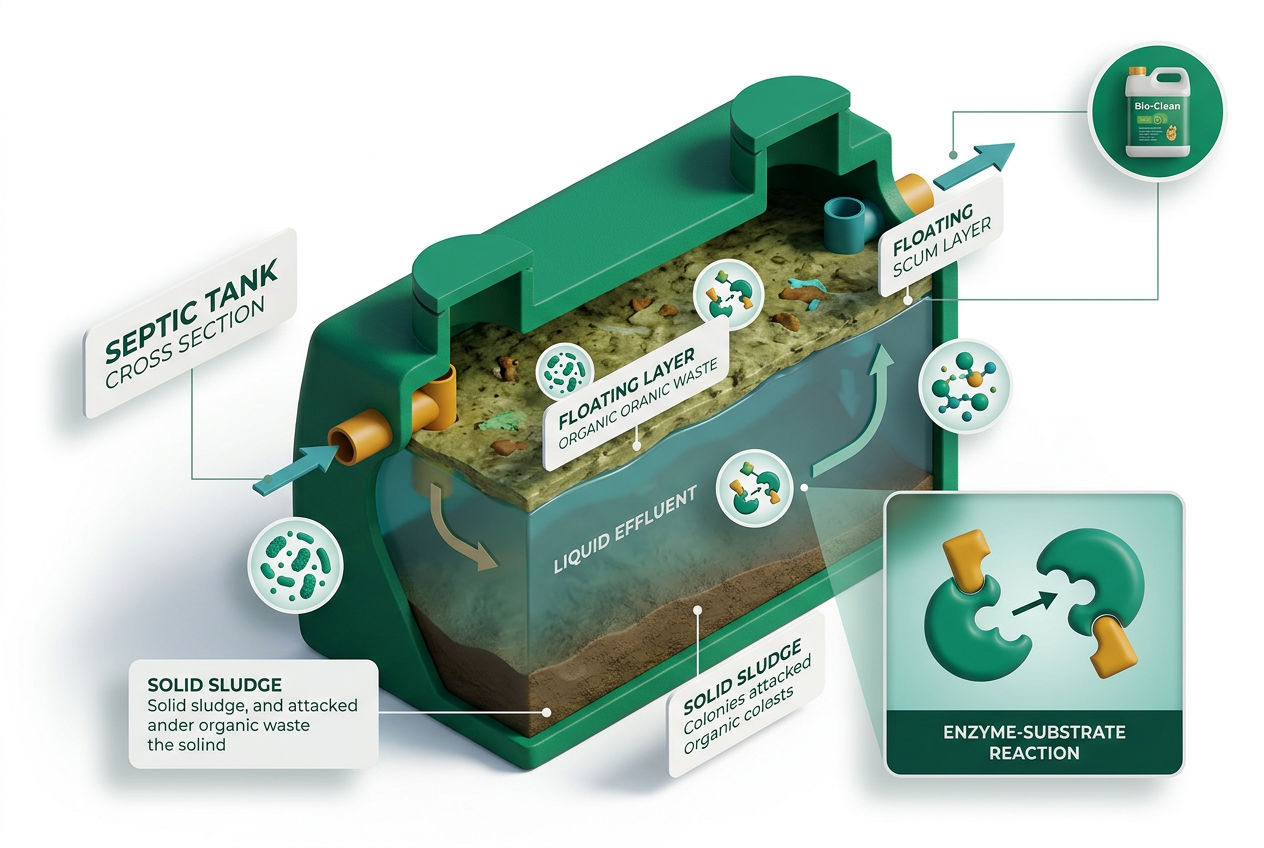
Bio-Clean is a powdered blend of beneficial bacteria for septic systems and enzymes designed to accelerate organic waste breakdown inside your tank. The manufacturer markets it as a bio clean drain cleaner as well — meaning it's sold for both household drains and full septic system use.
Here's the basic biology: your septic tank already relies on naturally occurring anaerobic bacteria to digest solids. Those bacteria break down fats, proteins, carbohydrates, and paper-based materials so the liquid effluent that exits into your drain field is relatively clear. Bio-Clean's pitch is that adding concentrated bacterial cultures and enzymes speeds that process up.
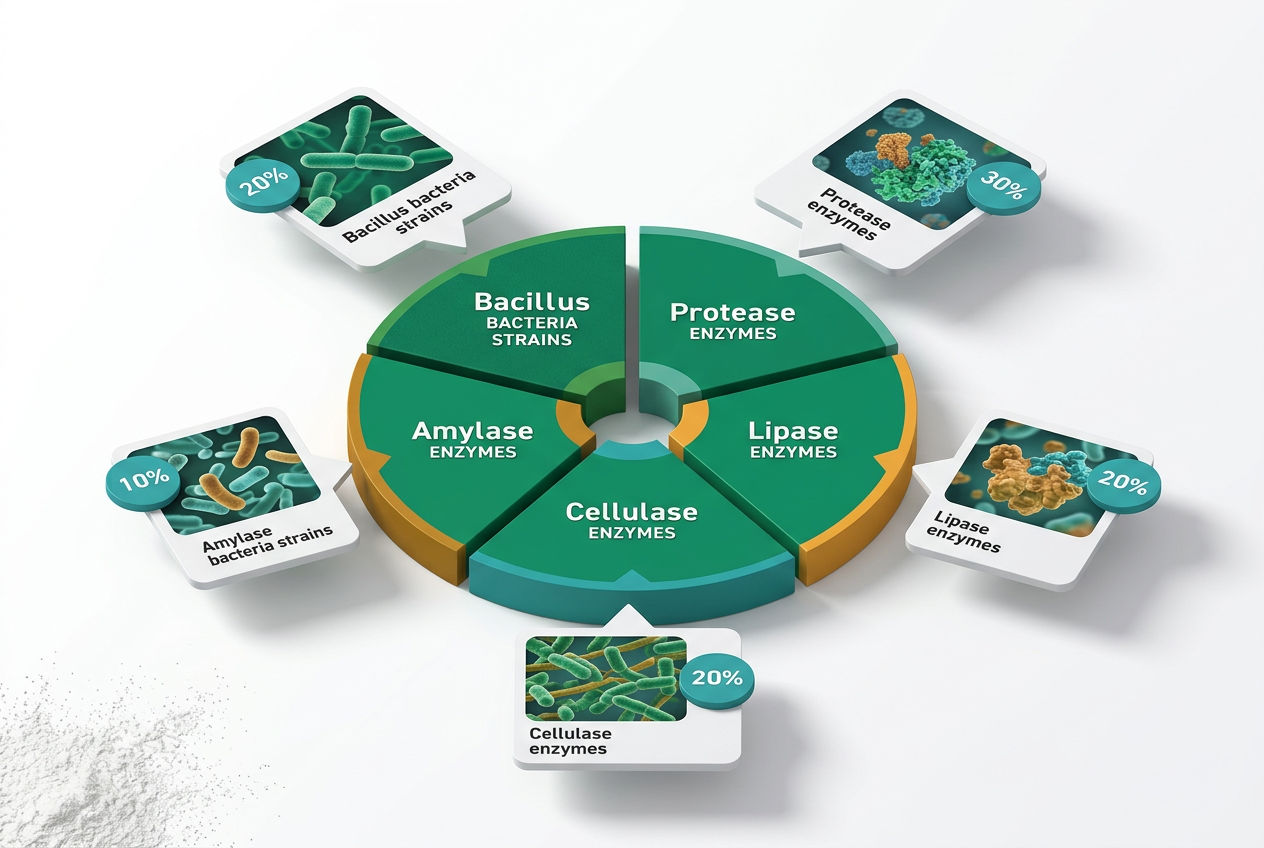
The product contains a proprietary blend targeting six waste categories:
- Fats and oils (lipase enzymes + lipid-digesting bacteria)
- Proteins (protease enzymes)
- Carbohydrates (amylase enzymes)
- Paper and cellulose (cellulase enzymes)
- Starches
- Vegetable matter
Bacteria in the dry powder remain dormant until they contact water. According to the manufacturer, they activate within approximately 30 minutes of water exposure. Each dose delivers billions of bacteria — the exact strain count and CFU (colony-forming units) per gram aren't fully disclosed in Bio-Clean's public literature, but the multi-strain formula is positioned to handle a broader range of organic waste than single-enzyme products.
The shelf life is effectively unlimited in dry form. Store the container in a cool, dry location and it stays viable for years.
What Are the Bio-Clean Ingredients?
Bio-Clean's formula is listed as a blend of natural bacteria and enzymes — the company does not publish a complete strain-by-strain ingredient list publicly. This is common across the septic tank additive industry and frustrates buyers looking for full transparency.
What's known:
- No chemicals, surfactants, or solvents — it's positioned as a natural septic tank treatment
- Enzyme classes include protease, lipase, amylase, and cellulase
- Bacterial strains are aerobic and facultative anaerobic types suited to septic environments
- No caustic ingredients that would kill existing tank bacteria
This is an important distinction from chemical drain cleaners. Products like Drano use sodium hydroxide or sulfuric acid — genuinely harmful to your tank's bacterial population. Bio-Clean's septic safe drain cleaner positioning is legitimate on that front: it won't damage your system's existing biology.
Does Bio-Clean Really Work for Septic Tanks?
For a healthy, regularly pumped system, Bio-Clean is unlikely to make a measurable difference. Your tank already contains billions of naturally occurring bacteria handling digestion without any help. Supplementing a process that doesn't need supplementing rarely produces visible results — and that's not cynicism, it's what the data shows.
The University of Minnesota Extension, which has studied septic additives extensively, concludes that biological additives are "not necessary for a properly functioning septic system." Washington State's Department of Ecology has reached similar conclusions, and the EPA has not endorsed any specific septic additive for routine maintenance. (Source: EPA Septic Systems overview at epa.gov/septic)
That said, "not necessary" is different from "harmful." Biological additives like Bio-Clean don't appear to damage healthy systems. Some septic professionals report they may provide a modest boost after specific system stressors:
- Extended antibiotic use by household members (antibiotics kill beneficial gut and tank bacteria)
- Heavy use of antibacterial soaps or bleach-based cleaners
- After a system has sat unused for weeks or months (vacation home, rental property)
- After a particularly harsh winter that slowed bacterial activity — a real concern in Minnesota, Wisconsin, Maine, and other cold-climate states where soil temps drop dramatically
In those scenarios, Bio-Clean may help replenish bacterial populations faster than natural recovery. Think of it like a probiotic course after a round of antibiotics — targeted and time-limited, not a permanent fixture.
Where it absolutely will not work:
- A drain field with a biomat or soil clogging issue
- A tank that's physically overfull and needs pumping
- A broken baffle wall or collapsed distribution box
- Any structural failure in your drain field system
If you're seeing sewage backup, wet spots in your yard, or gurgling drains, stop reading product reviews and find a septic professional near you immediately. No additive reverses those problems.
How Long Does It Take for Bio-Clean to Work?
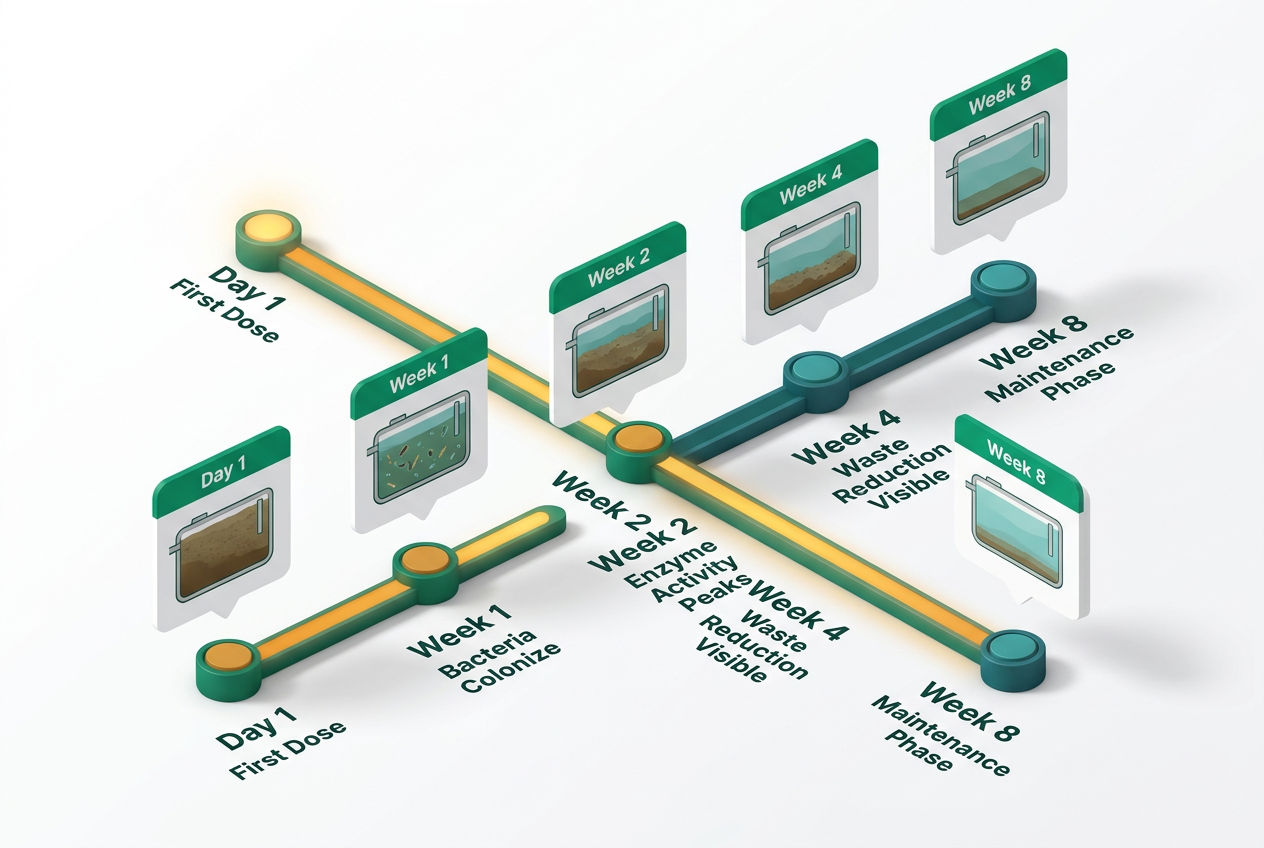
The manufacturer recommends an initial 5-day treatment protocol when you first start using the product. You add a larger dose each morning for five consecutive days, which is designed to establish a concentrated bacterial colony in your tank. After that, monthly maintenance doses keep the population topped up.
Bacteria become active within 30 minutes of water contact. Measurable changes in waste breakdown can occur within days to a few weeks of the initial treatment, though you won't see a dramatic before-and-after in a functioning system. The effects are subtle — modest reductions in scum layer accumulation over time, potentially less odor in some cases.
If you're expecting slow drains to clear up, Bio-Clean won't deliver that. Slow drains caused by a full tank or drain field issues require professional service, not an additive.
How Much Does Bio-Clean Cost?
A 2 lb container runs $58–$70 depending on the retailer. That container covers approximately 100 drain treatments or 12+ months of septic maintenance dosing.
Breaking that down: roughly $5–$6 per month for ongoing septic use.
Compare that to the cost of a septic pump-out, which runs $300–$600 nationally for a standard 1,000–1,500 gallon tank. Bio-Clean's value proposition is clear on paper — a fraction of the cost of servicing. But that comparison only holds if you're using it alongside regular pumping, not instead of it.
A worked example: A 4-person household with a 1,000-gallon tank should pump every 3–4 years regardless of additive use. At $400 per pump-out, that's roughly $100–$133 per year in pumping costs. Add Bio-Clean at $70/year and your total maintenance budget is approximately $170–$200 annually. If Bio-Clean genuinely extended that pump interval by even six months — which the research does not confirm it does — you'd save roughly $50–$67 over that cycle. That's a marginal case at best. Add a garbage disposal and the pump schedule tightens to every 2 years, making the additive's cost-benefit case even thinner.
The additive does not meaningfully change your pump-out schedule. Don't use it as a substitute for knowing when to pump your septic tank.
Bio-Clean Comparison: Key Facts at a Glance
| Feature | Bio-Clean | RID-X | Septifix |
|---|---|---|---|
| Form | Powder | Powder / Liquid / Pod | Tablet |
| Bacteria type | Anaerobic/facultative blend | Bacterial + enzyme blend | 14-strain aerobic blend |
| CFU per dose | Billions (undisclosed) | Listed on packaging | ~10 billion CFU/tablet |
| Cost per month | ~$5–$6 | ~$4–$7 | ~$3–$4 |
| Dosing | Measure & mix | Measure or flush | Flush one tablet |
| Sold through | Plumbers, Amazon | Mass retail | Direct online |
| Addresses odor actively? | Indirectly | Indirectly | Yes (oxygen-release) |
| CFU transparency | ❌ Not disclosed | ✅ Label-listed | ✅ Stated per tablet |
| Money-back guarantee | ❌ No | ❌ No | ✅ 60 days |
Source: Manufacturer product data, Amazon listings; prices as of January 2026.
Is Bio-Clean Better Than RID-X?
This is one of the most common questions homeowners ask when researching septic tank treatment reviews.
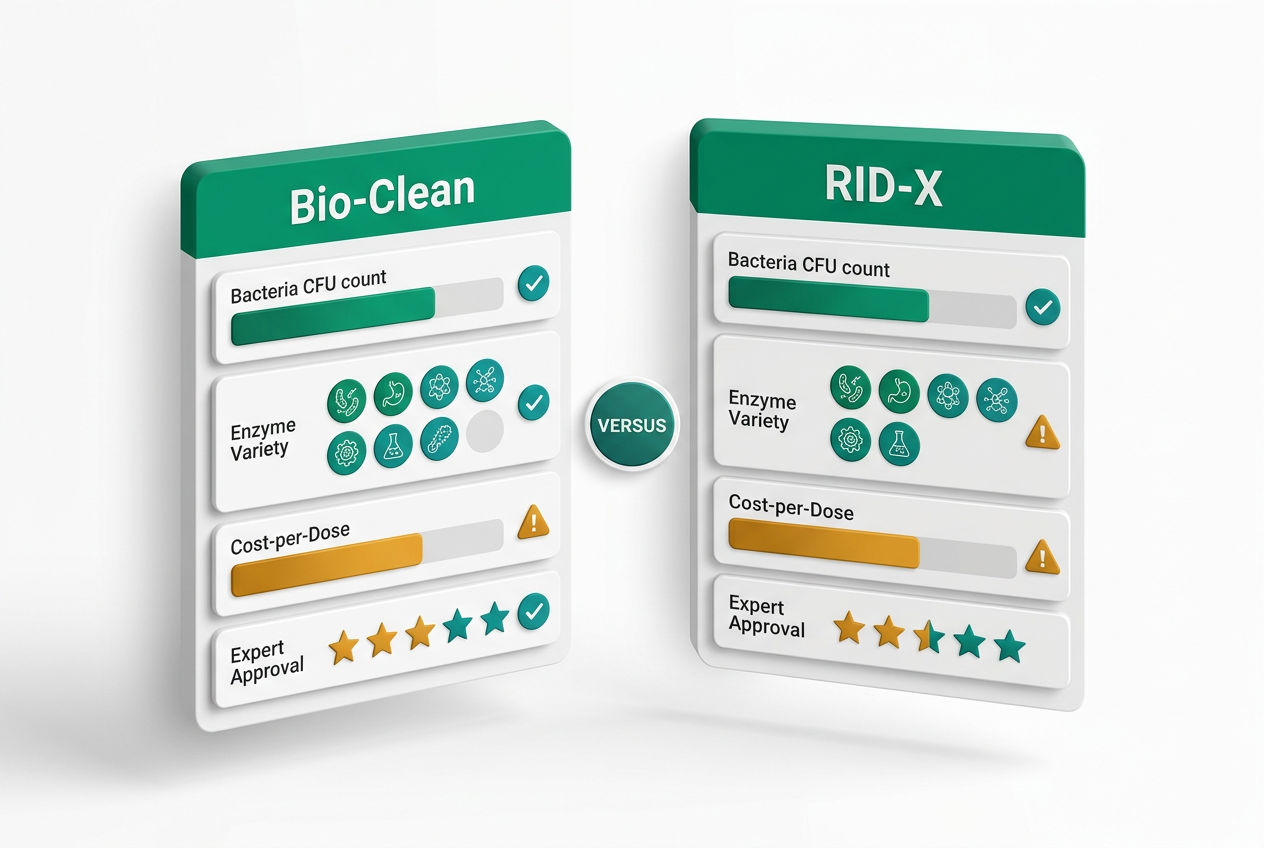
RID-X uses a well-documented blend of cellulase, lipase, protease, and amylase enzymes combined with bacterial cultures. It's available at virtually every hardware and grocery store, and it's cheaper per unit at retail. Our detailed RID-X septic review covers its performance thoroughly.
Bio-Clean is harder to find (often requires ordering through a plumber or Amazon), costs more upfront, and doesn't publish full ingredient transparency. Its primary advantage over RID-X is the multi-strain bacterial formula and the professional distribution model — plumbers who carry it tend to have confidence in it.
Neither product has peer-reviewed clinical data proving superior septic tank performance over the other. Both are in the same category of septic system biological additives that research describes as "neutral-to-mildly-helpful" at best for healthy systems.
If you're comparing both products and looking for a third option that outperforms on specific dimensions, see our Rid-X vs. Septifix breakdown — Septifix addresses odor and sludge through oxygen-release chemistry that Bio-Clean and RID-X simply don't replicate.
Are Septic Tank Additives Recommended by Experts?
Most aren't actively recommended — but they're not universally condemned either. The distinction comes down to system condition and context.
The National Onsite Wastewater Recycling Association (NOWRA) advises homeowners to focus on pump schedules and water conservation over additive use. The EPA's Homeowner's Guide to Septic Systems similarly does not endorse additives for routine use. Massachusetts has gone further, requiring that additive marketing claims meet evidence standards — a sign that regulators are watching the space closely.
What experts tend to agree on: additives are not harmful to healthy systems, they don't replace pumping, and they're most justifiable after a documented system disruption (antibiotic courses, heavy chemical use, extended inactivity).
If you've experienced one of those disruptions and want to support bacterial recovery, Septifix is the treatment we'd point you toward. Rather than relying on enzymes alone, each tablet releases oxygen alongside 14 strains of aerobic bacteria — roughly 10 billion CFU per dose — which targets odor and sludge more directly than most competing products. Dosing is straightforward: one tablet flushed down the toilet, at around $3–$4 per treatment. It's non-toxic, made in the USA, and backed by a 60-day money-back guarantee. That said, no additive substitutes for a proper pump schedule, and the EPA's guidance on that point still stands.
Can Bio-Clean Unclog a Septic Drain Field?
No — and this is the most important thing to understand before buying any bacterial additive.
Drain field failure involves physical soil clogging, biomat formation, or structural damage to distribution lines. Bacteria and enzymes cannot dissolve compacted soil, reverse hydraulic overload, or repair a crushed lateral line. If your drain field is showing signs of failure, the repair options range from aerobic treatment upgrades to full drain field replacement — and the cost difference between catching it early versus late is significant.
Bio-Clean used on a failing drain field wastes money and delays necessary professional evaluation. Treat it as what it is: a maintenance supplement for healthy systems, not a repair tool.
How to Use Bio-Clean in a Septic Tank
If you've decided to use Bio-Clean, the manufacturer's protocol is specific:
Initial 5-day loading dose:
- Mix 2 heaping tablespoons in a cup of warm (not hot) water
- Pour down your toilet or main drain before bed each night for 5 consecutive days
- Avoid using bleach, antibacterial cleaners, or antibiotics during this window — they'll kill the bacteria you're trying to establish
Ongoing monthly maintenance:
- 1 tablespoon monthly dissolved in warm water, added to the toilet before bed
- Consistency matters more than dose size — missing a month occasionally is fine
Important limitations of this protocol:
- Bio-Clean's dosing instructions are based on manufacturer guidance, not independent clinical trials
- A licensed septic professional can use a sludge judge — a simple tube device — to measure actual sludge and scum layer depths in your tank before you spend money on any additive. If your sludge layer exceeds 12 inches or your scum layer exceeds 6 inches, you need a pump-out, not a product.
Seasonal Considerations for Septic Additive Use
Cold-climate homeowners have a legitimate reason to think about bacterial populations seasonally. In states like Minnesota, Wisconsin, Vermont, and Maine, soil temperatures can drop below 40°F from December through February or later. At those temperatures, bacterial metabolism slows significantly — which is why some septic professionals recommend a spring (March/April) recharge dose after a hard winter, even for systems that don't use additives regularly.
Conversely, summer stress is real too. An 8-person household during a week of summer guests — doubled water use, extra food waste, more fats and proteins entering the tank — creates the kind of organic load spike that might benefit from a post-stress bacterial boost.
These are the specific, bounded cases where a biological additive makes a defensible argument. Routine monthly use in a properly functioning system with no disruptions is harder to justify from a cost-benefit standpoint.
Check out our full guide to septic tank maintenance products for a broader look at what's worth buying and what isn't.
What Should You Use Instead? Our Recommendation
If you want to use a septic additive, we recommend Septifix over Bio-Clean.
Here's the specific reason: Septifix uses 14 strains of live aerobic bacteria delivering approximately 10 billion CFU per tablet, combined with an oxygen-release mechanism that addresses odor and sludge through a fundamentally different process than powder-based anaerobic treatments. Bio-Clean and RID-X work by introducing facultative anaerobes into an already-anaerobic environment — which is fine, but not differentiated from your tank's existing biology. Septifix's oxygen-release chemistry creates a localized aerobic zone that actively breaks down hydrogen sulfide (the compound responsible for septic odor) and accelerates sludge digestion in ways that anaerobic products can't replicate.
Practically speaking: one tablet, flush it, done. No measuring, no mixing, no warm water protocol. At roughly $3–$4 per treatment, it costs less per month than Bio-Clean. It's made in the USA, non-toxic, and backed by a 60-day money-back guarantee — something neither Bio-Clean nor RID-X offers.
To be clear: no additive replaces pumping. The EPA's position is unambiguous on this, and we agree. Septifix is not a cure, not a pump-out substitute, and not going to fix a failing drain field. If you use a treatment, use this one — but use it alongside a proper pump schedule, not instead of one.
For a full side-by-side, see our Rid-X vs. Septifix comparison.
Verdict: Is Bio-Clean Worth It?
Bio-Clean is a safe, professionally distributed biological additive with a legitimate (if modest) use case. It won't harm your system. Its enzyme profile is well-matched to the organic compounds found in septic tanks. The professional distribution channel gives it more credibility than most mass-retail products.
But it has real weaknesses this bio-clean septic review won't paper over: CFU counts aren't disclosed, the upfront cost is higher than competitors, independent comparative performance data doesn't exist, and the scenario where it makes a meaningful difference — a healthy tank that's been disrupted — is one that describes a minority of homeowners.
If you're buying it hoping to extend your pump schedule, reduce odors, or clear slow drains, you'll likely be disappointed. The research doesn't support those outcomes.
Our call: Skip Bio-Clean. Use Septifix if you want a bacterial additive — it's more transparent about its formulation, easier to dose, costs less per month, and addresses odor through a mechanism that anaerobic products can't match. Pump your tank on schedule. Call a professional if anything looks wrong. That's the actual maintenance plan that works.
Sources & Methodology
- U.S. Environmental Protection Agency. "Septic Systems Overview." epa.gov/septic. Accessed January 2026.
- University of Minnesota Extension. "Septic System Additives." extension.umn.edu. Biological additives described as "not necessary for a properly functioning septic system."
- Washington State Department of Ecology. Additive marketing claim evaluations. ecology.wa.gov. Accessed January 2026.
- National Onsite Wastewater Recycling Association (NOWRA). Position on septic system additives and maintenance best practices. nowra.org.
- Bio-Clean manufacturer product data and dosing instructions. bio-clean.com and authorized distributor listings. Prices verified via Amazon January 2026.
- Septifix product specifications. Strain count, CFU per tablet, and guarantee terms per manufacturer documentation. January 2026.
Related Rid-X & Septic Treatment Guides
- The Best Rid-X Alternatives
- The Best Septic Tank Smell Removers
- Septic Smell When It Rains? Why It Happens & How to Fix It
- Can You Use Rid-X in an RV Black Tank? What to Know First
- Is Rid-X Safe for Septic Tanks, Toilets & Pipes?
- How Often Should You Use Rid-X? Directions, Dosing & Timing
- What's Actually in Rid-X? Ingredients Explained
- Does Rid-X Unclog Drains or Toilets?
- Rid-X vs. Green Gobbler: Which Septic Treatment Wins?
- Green Gobbler Septic Treatment Review: Pods, Packets & Results
- Where to Buy SeptiFix
- Cabin Obsession Septic Tank Treatment Review
- Camco Septic Tank Treatment Review
- Septic Tank Treatments at Walmart vs. Home Depot vs. Online
- Septic Smell Coming From Toilet? Causes & How to Fix It
- Septic Smell From Shower Drain? Causes & How to Fix It
- Septic Tank Smell After Pumping? Causes & How to Fix It
- Septic Smell From Roof Vent? Causes & How to Fix It
- Is Septic Tank Smell Dangerous? Gases, Risks & When to Worry
- Septic Tank Diagram With Dimensions
- Septic Tank Cross-Section Diagram: Every Part Labeled
- Septic System Diagram With a Pump
- Septic Tank Plumbing Diagram: From House to Drain Field
- Aerobic Septic System Diagram: How Each Part Works
- Are Septic Tank Treatments Necessary?
- How to Handle How Often to Use Septic Tank Treatment: Step by Step
- Septic Treatment Tablets vs. Powder vs. Liquid: Which Is Best?
- Best Septic Tank Treatment for Slow Drains
- Yeast, Baking Soda & Milk in Your Septic Tank: Myths Tested
Frequently Asked Questions
Is Bio-Clean safe for all septic systems?
Bio-Clean is safe for conventional anaerobic septic systems — it contains no caustic chemicals, surfactants, or solvents that could harm your tank's existing bacterial population. It's also safe for standard plumbing pipes and drain components. However, it is not specifically tested or approved for aerobic treatment units (ATUs), which use a different biological process involving injected oxygen. If you have an ATU, mound system, or drip irrigation system, check with your system's service provider before adding any biological treatment product. Additionally, Bio-Clean should not be used as a substitute for professional service in systems showing signs of failure — wet spots in the yard, sewage odors indoors, or slow drains across multiple fixtures all indicate a problem no additive can resolve. In those cases, consult a licensed septic professional before spending money on any natural septic tank treatment.
How long does a 2 lb container of Bio-Clean last for septic use?
A 2 lb container of Bio-Clean is designed to last over 12 months for a standard residential septic system. The manufacturer's protocol calls for a 5-day initial loading dose — approximately 2 heaping tablespoons per day — followed by a 1-tablespoon monthly maintenance dose. At that rate, the 2 lb container provides roughly 100 total drain applications or about 12–14 months of septic maintenance. Cost works out to approximately $5–$6 per month based on a $58–$70 purchase price. By comparison, Septifix tablets cost roughly $3–$4 per month with simpler dosing — one tablet flushed monthly, no measuring required. For households using Bio-Clean in both drains and the septic tank simultaneously, the container will deplete faster, so account for drain use if that's part of your routine.
Can I use Bio-Clean with a garbage disposal?
You can use Bio-Clean in a home with a garbage disposal, but be aware that garbage disposals meaningfully increase the organic load entering your tank. Ground food solids — especially fats, fibrous vegetables, and starches — add to the scum and sludge layers faster than waste from toilet use alone. According to guidance from multiple state extension programs, households with garbage disposals should shorten their pump-out interval to every 2 years rather than the standard 3–5 years for a 4-person household. Bio-Clean's enzyme profile does target fats, starches, and vegetable matter — the same categories that garbage disposals introduce in higher volumes — so there's a logical fit. But no additive compensates for the accelerated accumulation a disposal causes. Use Bio-Clean if you choose, but don't let it give you false confidence about skipping pump-outs. The how often to pump your septic tank guide covers disposal-adjusted schedules in detail.
Does Bio-Clean work as a drain cleaner for household clogs?
Bio-Clean is marketed as a bio clean drain cleaner for household use as well as septic treatment, but its mechanism is slow and enzymatic — not fast and chemical. It works by digesting the organic buildup (soap scum, grease, hair-adjacent residue) that accumulates inside drain pipes over time. It is not a substitute for a drain snake or a plunger on an actively clogged drain. For a slow drain that's partially restricted by organic buildup, a consistent Bio-Clean treatment over several weeks may improve flow — but expect days to weeks, not hours. For drains that are fully blocked, you need mechanical clearing first. The product's value as a drain cleaner is in prevention and maintenance, not active clog removal. If you're using it for drains, factor that dosing into your container's lifespan — combined drain and septic use will deplete a 2 lb container faster than the 12-month estimate for septic-only use.
How does Bio-Clean compare to Septifix?
Bio-Clean and Septifix are both biological septic treatments, but they work through meaningfully different mechanisms. Bio-Clean introduces a blend of anaerobic and facultative anaerobic bacteria along with digestive enzymes — supplementing the same type of biological activity your tank already uses. Septifix uses 14 strains of aerobic bacteria delivering approximately 10 billion CFU per tablet, combined with a sodium percarbonate oxygen-release compound. That oxygen-release creates a localized aerobic zone inside your tank that breaks down hydrogen sulfide — the source of septic odor — more directly than anaerobic products can. Septifix also discloses its CFU count and strain count publicly; Bio-Clean does not. On cost, Septifix runs roughly $3–$4 per month versus $5–$6 for Bio-Clean. Dosing is simpler with Septifix — one tablet flushed monthly, no measuring. Septifix also offers a 60-day money-back guarantee. For a full breakdown, see our Septifix review and the Rid-X vs. Septifix comparison.
Is Bio-Clean worth the money compared to doing nothing?
For a healthy, regularly pumped septic system, the honest answer is: probably not. University extension research and EPA guidance both describe biological additives as unnecessary in properly functioning systems — and your tank's naturally occurring bacteria are already doing the work Bio-Clean's bacteria would be doing. Spending $58–$70 per year on an additive your system doesn't need is a low-stakes but real cost with minimal documented return. The scenarios where Bio-Clean makes a defensible case — after antibiotic courses, after extended system inactivity, after a harsh winter in cold-climate states — are specific and limited. If none of those apply to you, the money is better spent confirming your pump schedule is on track. A licensed septic professional can measure your tank's sludge and scum layers with a sludge judge tool for a fraction of the annual additive cost, giving you actual data about your system's condition rather than a supplement you're taking on faith.
Free download
Not ready for the Handbook? Start with the free Fridge Card.
The Do / Don’t card the whole family can see, plus the Survival Kit: emergency flowchart, warning-sign decoder and pump-schedule card. One printable PDF.
Was this article helpful?
Frequently Asked Questions
Recommended Resources
📖 Related Articles
- How Septic Tank Bacteria Work (And Why They Matter)
- Septic Tank Enzymes: What You Need to Know
- What Is a Drain Field? (And How Does It Work?)
- Do Septic Tank Additives Actually Work? (The Science)
- The Best Septic-Safe Drain Cleaners (and What to Never Pour In)
- Septic Tank Biomat: What It Is and When It's a Problem
- How Often Should You Pump Your Septic Tank?
- Do Septic Tank Treatments Actually Work?
- Rid-X for Septic Tanks: Does It Help or Hurt?
- How to Fix a Saturated Drain Field
- The Best Septic Tank Maintenance Products (Top Picks)
💰 Cost Guides
🔧 Services
Find Septic Professionals Near You
Compare licensed, verified septic companies by area — top county markets and cities below, or browse all 50 states.
County markets
Popular cities
