
Quick Answer
Septic safe cleaning products are biodegradable, phosphate-free formulas that break down in your tank without killing the bacterial colonies your system depends on. The wrong products don't just create a smelly yard problem-they can accelerate drain field failure and turn a $400 pump-out into a $25,000 system replacement.
💡 Key Takeaways
- A healthy septic tank contains billions of bacteria per gallon. One incompatible laundry load can wipe out 50–90% of that population within 48 hours.
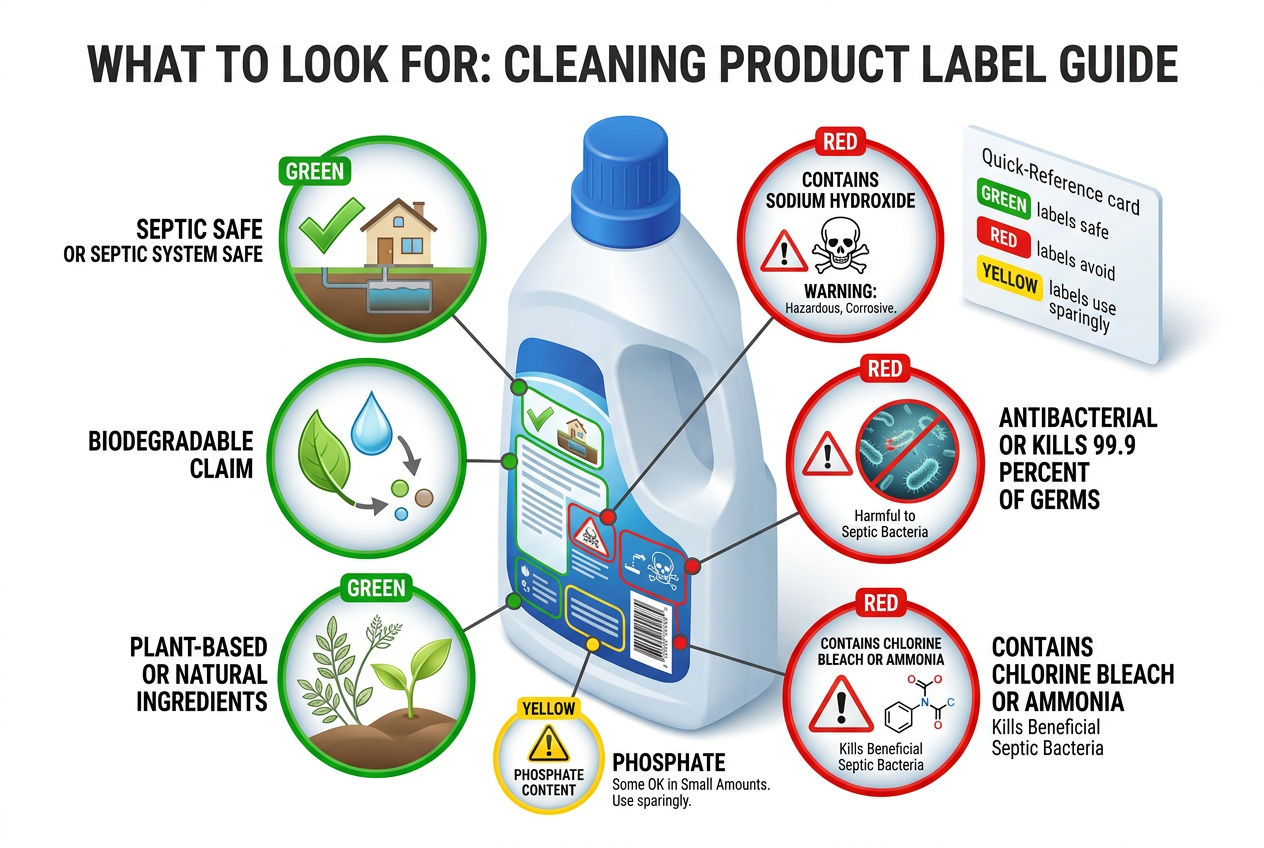
- Look for the EPA Safer Choice label, Green Seal, or USDA BioPreferred certification-"septic safe" on the label is a marketing claim with no legal definition.
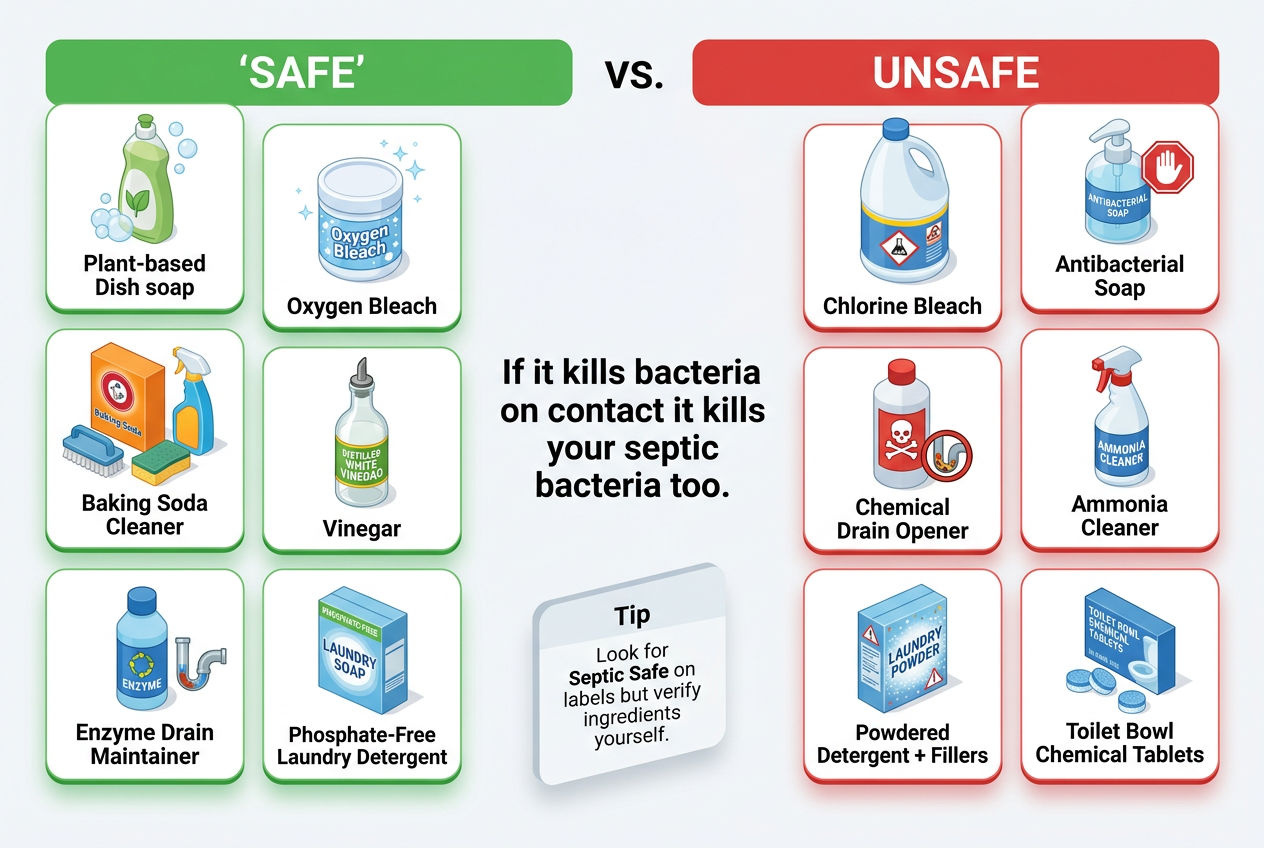
- Never pour chemical drain openers (lye- or sulfuric acid-based), full-strength bleach, or products containing triclosan down any drain connected to a septic system.
- Liquid detergents are almost always safer than powders, which contain clay fillers that clog effluent filters and drainfield laterals.
- Product choice is one piece of the maintenance puzzle. See the full septic system maintenance guide for the complete picture.
Why Does Any of This Actually Matter?
Picture this: you've owned your home for six years. The system has never given you trouble. Then you do a deep spring clean-bleach-based bathroom spray, antibacterial dish soap, a toilet bowl tablet, and a few loads of laundry with a name-brand powder detergent. Three months later, the yard smells, the toilets drain slowly, and a licensed septic contractor is standing in your backyard quoting you $6,800 for a partial drainfield repair.
That's not a horror story. That's a pattern experienced septic professionals see every spring.
The Biology Behind the Breakdown
Your septic tank is not a passive holding tank. It's an active biological system. According to the EPA's SepticSmart program, a properly functioning tank maintains a living ecosystem-billions of anaerobic bacteria per gallon-that digests solid waste, separates solids from effluent, and passes clarified liquid through to the drainfield. Those bacteria keep your system running. Kill them, and solid waste passes untreated into your drainfield's soil matrix, clogging the leach laterals and eventually causing system failure.
📊 Quick Fact: Healthy tank pH runs between 6.5 and 7.5. Introduce enough chlorine, ammonia, or caustic chemicals to push that outside range, and bacterial die-off begins within hours. Recovery takes 48 hours to two weeks under ideal conditions-longer in winter, when cold soil temperatures slow bacterial reproduction.
The Financial Reality
The math on why this matters:
- Repairs on a conventional system: $3,000–$7,000
- Full replacement (new tank, new drainfield, permits, inspection): $15,000–$30,000
- High-risk markets (coastal Florida, New England): even higher
What Household Chemicals Should You Never Put in a Septic System?
Certain chemicals are simply incompatible with a healthy septic system. No amount of "flushing with water" neutralizes the damage.
The Never-Ever List
Never put these down a drain connected to your septic system:
-
Chemical drain openers - Products like Drano Max Gel and Liquid-Plumr use sodium hydroxide (lye) or sulfuric acid. A single application can push tank pH below 5 or above 9, devastating bacterial populations. If you have a clog, enzyme-based alternatives exist. Read our full breakdown of Drano and septic systems before you reach for that bottle.
-
Products containing triclosan - This antibacterial compound-once common in hand soaps and dish soaps-doesn't distinguish between harmful pathogens and the beneficial bacteria in your tank. The FDA banned it from consumer hand soaps in 2016, but it still appears in some formulations.
-
Quaternary ammonium compounds (quats) - Found in many disinfecting sprays and wipes (check labels for "benzalkonium chloride" or "alkyl dimethyl ammonium chloride"). Highly effective disinfectants. Too effective-they persist in the tank and suppress bacterial activity.
-
Solvents and petroleum-based products - Paint thinner, acetone, motor oil, and similar products don't break down in a septic system. They also create serious groundwater contamination risk. State health departments in Maryland, Wisconsin, and Florida explicitly prohibit disposal via septic.
-
Formaldehyde and methylene chloride - Found in some older or industrial cleaning products. Acutely toxic to tank bacteria.
-
High-phosphate products - Phosphates bind to soil particles in your drainfield, destroying the soil's absorption capacity over time. Many states banned phosphate detergents starting in the 1970s; a near-national ban on residential dishwasher detergents took effect in 2010. They still appear in some commercial and specialty products.
Can You Use Bleach If You Have a Septic System?
Small, occasional amounts of bleach won't crash your system. Regular, heavy use will.
The University of Minnesota Extension-which has published extensively on onsite septic management-notes that approximately ¾ cup of chlorine bleach per laundry load, used occasionally, is generally tolerable because the volume dilutes significantly by the time it reaches the tank. The bacteria population can absorb that level of disruption.
When Bleach Becomes a Problem
The problems start with accumulation. Running multiple bleach loads per week, using a bleach-based toilet bowl cleaner daily, and spraying bleach bathroom cleaner on every surface adds up fast. The tank receives a steady chemical load, never gets recovery time, and bacterial populations decline over weeks and months-often with no obvious warning sign until the drainfield is already compromised.
✅ Pro Tip: Two practical rules for bleach use:
- If you use bleach, use it sparingly and space it out
- Never pour undiluted bleach directly down any drain
⚠️ Warning: Toilet tank drop-in tablets that continuously release chlorine into every flush are one of the most consistently damaging products a septic homeowner can use.
What Laundry Detergent Is Best for Septic Systems?
The best laundry detergent for a septic system is liquid, concentrated, phosphate-free, and free of optical brighteners and heavy synthetic fragrances.
Why Liquid Beats Powder
Powdered detergents use clay-based fillers (sodium sulfate is common) that don't fully dissolve, especially in cold-water cycles. Those particles pass through the tank and clog the pores in drainfield soil. Over time, this contributes to biomat formation-the gray-black layer of organic material that suffocates a drainfield. The drain field replacement cost typically runs $5,000–$20,000. A switch to liquid detergent costs nothing.
Recommended Brands
Products that septic professionals commonly recommend:
| Brand | Key Features | Availability |
|---|---|---|
| ECOS Laundry Detergent | EPA Safer Choice certified, plant-based surfactants | Most grocery stores |
| Seventh Generation Free & Clear | Phosphate-free, no optical brighteners | Widely available |
| Arm & Hammer Clean Burst | Phosphate-free, low-suds (liquid formulas only) | National retail chains |
⚠️ Warning: Even a septic-safe detergent causes problems if you overdose it. Too much detergent means excess surfactants entering the tank, which suppress bacterial activity and foam in the effluent. Use the manufacturer's recommended amount-or slightly less for small loads.
Is Dish Soap Safe for Septic Tanks?
Most standard dish soaps are fine in normal quantities. The two categories to avoid are antibacterial formulations and "ultra-concentrated" degreasing formulas used well above recommended dilution.
What to Avoid
Antibacterial dish soaps (those labeled "kills 99.9% of bacteria") typically use triclosan or quats as their active ingredients. As covered above, those compounds damage your tank's bacterial ecosystem. Dawn Antibacterial, for example, should be avoided. Regular Dawn Original is generally considered compatible-it uses plant-derived surfactants and no antibacterial agents.
Safe Plant-Based Options
- Dr. Bronner's Pure-Castile Soap - Effective, biodegradable, and certified by multiple third-party organizations. Note that some essential-oil concentrations (peppermint, tea tree) are naturally antimicrobial; use diluted.
- Seventh Generation Dish Liquid - Phosphate-free, no triclosan, EPA Safer Choice certified
- ECOS Dish Soap - Meets EPA Safer Choice standards
What Toilet Cleaners and Bathroom Cleaners Are Safe for Septic?
This is the category where homeowners do the most unintentional damage.
Products to Avoid Completely
-
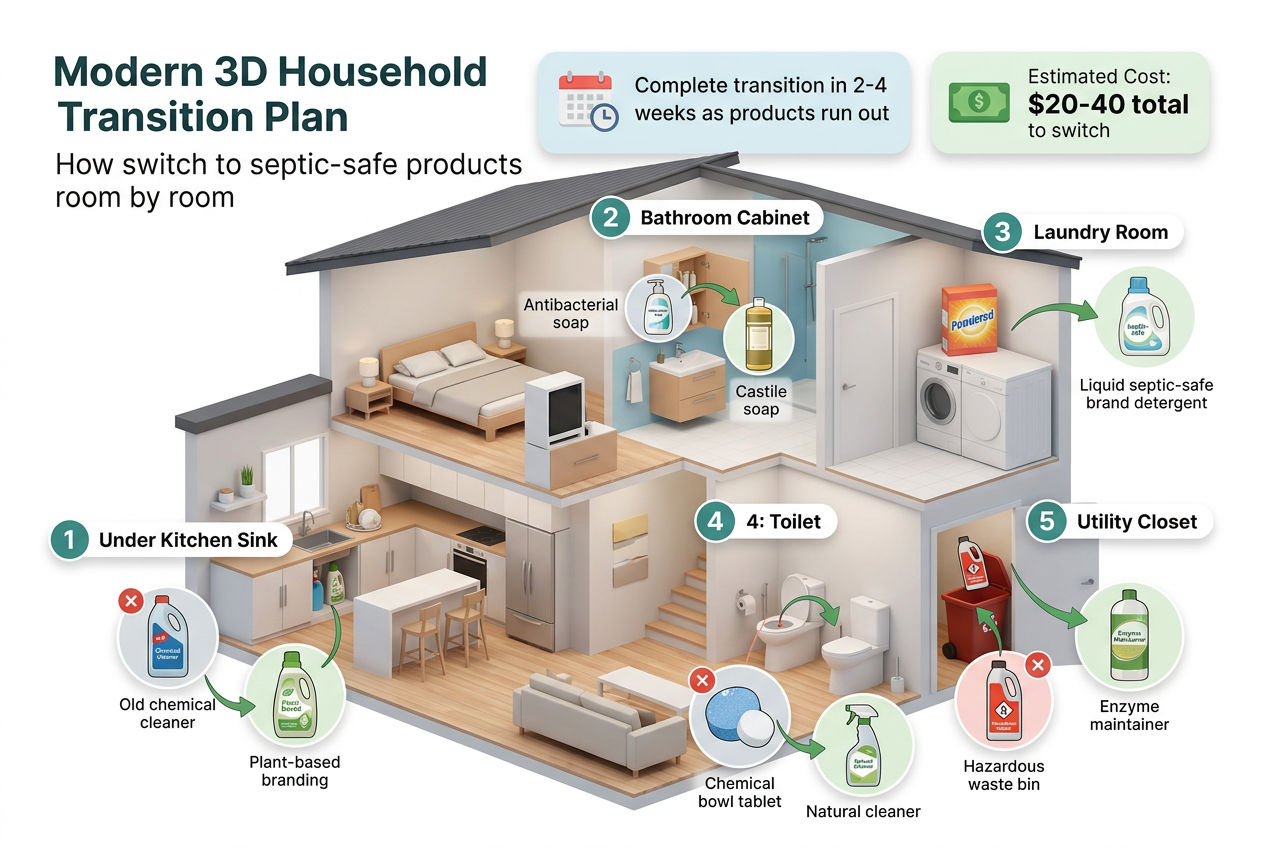
In-tank chlorine tablets - These release bleach with every flush, creating a continuous low-level chemical assault on your tank bacteria. One popular brand (2000 Flushes Blue Plus Bleach) can deliver roughly 35,000 flushes of chlorinated water over its lifetime. That's not occasional exposure.
-
Standard Clorox Toilet Bowl Cleaner - High chlorine concentration, applied directly to the bowl and flushed into the system
-
Heavy bleach-based bathroom sprays used in volume (e.g., spraying the entire shower stall, floor, and sink with Clorox Clean-Up and rinsing it all into the drain)
Safer Alternatives That Actually Work
- Enzyme-based toilet bowl cleaners - Products like Ecover Toilet Bowl Cleaner use citric acid and plant-based surfactants; no chlorine
- Seventh Generation Toilet Bowl Cleaner - Biodegradable, no chlorine bleach
- Baking soda and white vinegar - The classic DIY combo. Mildly acidic (vinegar, pH ~2.5) but used in small quantities, it dilutes quickly. Effective for routine cleaning without any bacterial risk
- Hydrogen peroxide-based cleaners - Break down into water and oxygen; much less damaging than chlorine
✅ Pro Tip: For your broader bathroom routine, the same logic applies: diluted, plant-based all-purpose sprays used in normal quantities are fine. The risk comes from heavy repeated use of disinfecting sprays containing quats or bleach.
Septic-Safe Products at a Glance
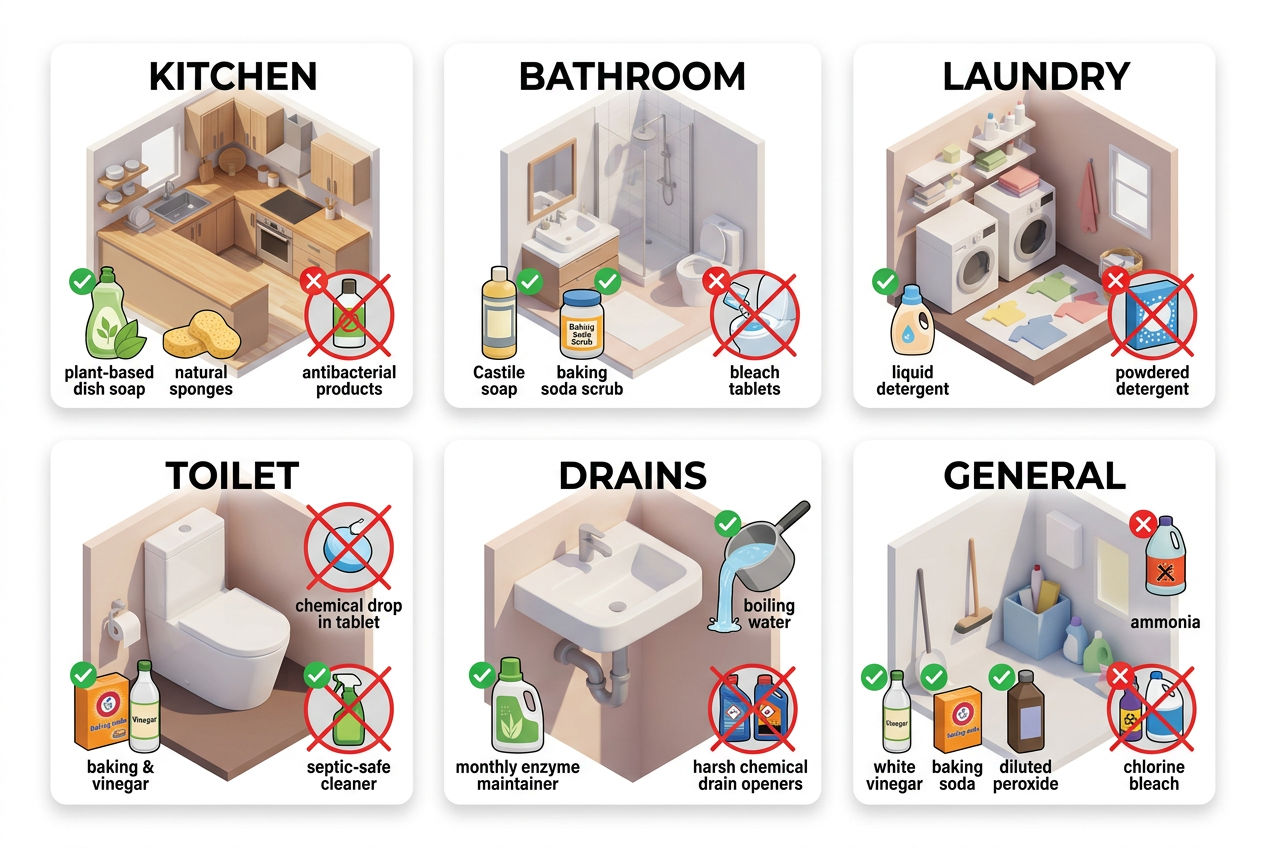
| Product Category | ✅ Use This | ❌ Avoid This |
|---|---|---|
| Laundry Detergent | Liquid, phosphate-free, low-suds (ECOS, Seventh Generation) | Powdered with fillers, high-phosphate formulas |
| Dish Soap | Plant-based, biodegradable (Dr. Bronner's, regular Dawn) | Antibacterial formulas with triclosan or quats |
| Toilet Cleaner | Enzyme-based, citric acid (Ecover, Seventh Generation) | In-tank chlorine tablets, bleach-based bowl cleaners |
| Drain Cleaner | Enzyme/bacterial-based (Bio-Clean, Green Gobbler Enzyme) | Chemical openers (Drano, Liquid-Plumr) |
| All-Purpose Cleaner | Plant-based sprays, diluted properly (Method, Mrs. Meyer's) | Ammonia-heavy, quat-based disinfecting sprays |
| Bathroom Cleaner | Baking soda/vinegar, hydrogen peroxide, enzyme sprays | Heavy bleach sprays used at volume |
Sources: EPA Safer Choice Program; University of Minnesota Extension; manufacturer ingredient disclosures
What About Septic-Safe Drain Cleaners?
Most homeowners reach for a chemical drain opener the moment a sink drains slowly. If you're on septic, that reflex is expensive.
How Enzyme-Based Cleaners Work Differently
Enzyme-based and bacterial drain cleaners work differently. Instead of burning through the clog with lye or sulfuric acid, they introduce concentrated enzymes or beneficial bacteria that digest organic material-hair, grease, soap scum-over several hours. They're slower, but they don't harm your tank.
Products Worth Knowing
- Bio-Clean - A bacterial/enzyme blend that professionals often recommend; available at plumbing supply stores
- Green Gobbler Enzyme Drain Cleaner - Widely available retail option; no caustic chemicals
- Instant Power Enzyme Drain Maintainer - Good for monthly preventive treatment in slow drains
💡 Key Takeaway: A word of honesty: these products work well for organic clogs (grease, hair, soap). They won't clear a hard obstruction-a toy, a buildup of non-biodegradable wipes, or a collapsed pipe section. If enzymatic treatment doesn't move the clog in 8–12 hours, call a plumber. Don't compound the problem by adding a chemical opener on top.
What About Water Softeners and Septic Systems?
If you live in a hard-water region-the Midwest, Texas, Arizona, or anywhere pulling from limestone aquifers-you may run a water softener. The salt-brine backwash that periodic regeneration cycles discharge is a legitimate concern for septic owners.
Understanding the Sodium Risk
High sodium concentrations can disrupt the soil structure in your drainfield, reducing permeability over time. The National Sanitation Foundation and several University of Wisconsin Extension publications note that demand-initiated softeners (which regenerate only when needed, not on a fixed timer) produce significantly less brine discharge and are a better choice for septic households.
⚠️ Warning: If you're in the Chesapeake Bay watershed, the Florida Keys, or coastal Wisconsin, check with your county health department-some jurisdictions restrict or regulate water softener discharge to septic systems specifically because of groundwater and surface water contamination concerns.
Does "Septic Safe" on the Label Actually Mean Anything?
No-not legally.
The phrase "septic safe" is an unregulated marketing claim. Any manufacturer can print it on any product regardless of formulation. There's no federal standard, no testing requirement, and no enforcement mechanism.
Certifications That Actually Matter
The certifications that DO mean something:
- EPA Safer Choice - Requires ingredient-level review; safer for aquatic environments and biological systems
- USDA BioPreferred - Biobased content certification; not a complete safety guarantee but indicates plant-derived ingredients
- Green Seal GS-37 - Third-party certification for industrial and institutional cleaners; high standard
- Biodegradable Products Institute (BPI) - Relevant for compostable products; indicates organic breakdown
✅ Pro Tip: When you see these seals, the product has been independently evaluated. When you see only "septic safe" in a marketing font on the front of the bottle, flip it over and read the ingredient list.
A Note on Seasonal Risk
Spring is the highest-risk period for septic systems, and not just because of spring cleaning. The combination of heavy product use, increased water volume, and soil that's just thawing out (in northern climates) creates conditions where bacterial die-off is most likely and slowest to recover.
Cold-Weather Reality
In Minnesota, Wisconsin, and Michigan, septic tank bacteria operate at reduced efficiency throughout winter. Soil temperatures below 40°F measurably slow bacterial metabolism and reproduction. If you expose your tank to a significant chemical load in February or March, recovery may not happen until May or June-four months during which your system is processing waste with a compromised bacterial population.
💡 Key Takeaway: Be MORE careful in cold months, not less. And if you've been inadvertently using harmful products, spring is a good time to transition-and to schedule a septic inspection to get a baseline on your system's health.
Do Septic Tank Additives Make Up for Using Bad Products?
This comes up constantly. The short answer: no.
Bacterial additives like Rid-X introduce supplemental microbes into your tank. There's a reasonable argument that they help maintain bacterial populations between pump-outs. However, peer-reviewed research-including work cited by the University of Arkansas Cooperative Extension-consistently shows that commercial additives do not eliminate the need for regular pumping and cannot reverse drainfield clogging caused by surfactant buildup, biomat formation, or phosphate loading.
📊 Quick Fact: Think of it this way: taking a probiotic supplement doesn't give you license to eat nothing but fast food. The supplement helps at the margins. It doesn't compensate for systematic abuse.
If you've been using harmful products and you're wondering whether an additive can fix it, the honest answer is: it might help marginally with bacterial recovery, but it won't address physical clogging in the soil. Learn more about whether septic tank treatments actually work before spending money on them.
Even with safe products, regular pumping matters - learn how often to pump your septic tank.
Understanding how your septic system works explains why product choice matters.
Using the wrong products can lead to costly repairs - see our septic repair cost guide.
Beyond products, know what you can and can't flush with a septic system.
Find a septic professional near you on SepticTankHub.
For pricing details, see our septic pumping cost guide.
Learn more about our septic pumping services.
Sources & Methodology
1. U.S. Environmental Protection Agency - SepticSmart Program EPA's consumer-facing septic guidance, including product use recommendations and the SepticSmart homeowner guidelines. epa.gov/septic
2. University of Minnesota Extension - Septic Systems and the Environment Research-based guidance on household chemicals and their effects on onsite wastewater treatment systems, including bacterial impact data.
3. EPA Safer Choice Program Ingredient-level certification program for cleaning products; the standard referenced for product certifications throughout this article. epa.gov
4. National Onsite Wastewater Recycling Association (NOWRA) Industry organization publishing professional standards and consumer guidance for onsite wastewater systems. nowra.org
5. University of Arkansas Cooperative Extension - Home Septic Systems Peer-reviewed data on septic tank additives and their measured effectiveness relative to proper maintenance practices.
Need help with your septic system? Browse local septic companies in Colorado or Minnesota.
Free download
Not ready for the Handbook? Start with the free Fridge Card.
The Do / Don’t card the whole family can see, plus the Survival Kit: emergency flowchart, warning-sign decoder and pump-schedule card. One printable PDF.
Was this article helpful?
Frequently Asked Questions
Recommended Resources
Find Septic Professionals Near You
Compare licensed, verified septic companies by area — top county markets and cities below, or browse all 50 states.
County markets
Popular cities
