
Quick Answer
Flushing a tampon with a septic system is not safe. Tampons are made from cotton and rayon fibers designed to hold their shape under moisture - exactly the opposite of what a septic tank needs. They won't break down, they can clog baffles and outlet screens, and they accumulate in the sludge layer until your next pump-out reveals a very unpleasant surprise. The same goes for "flushable" wipes, cotton rounds, and a long list of items that seem harmless.
If you're new to septic life, just moved into a rural home, or have been flushing things you now suspect you shouldn't - this guide gives you the straight answers.
💡 Key Takeaways
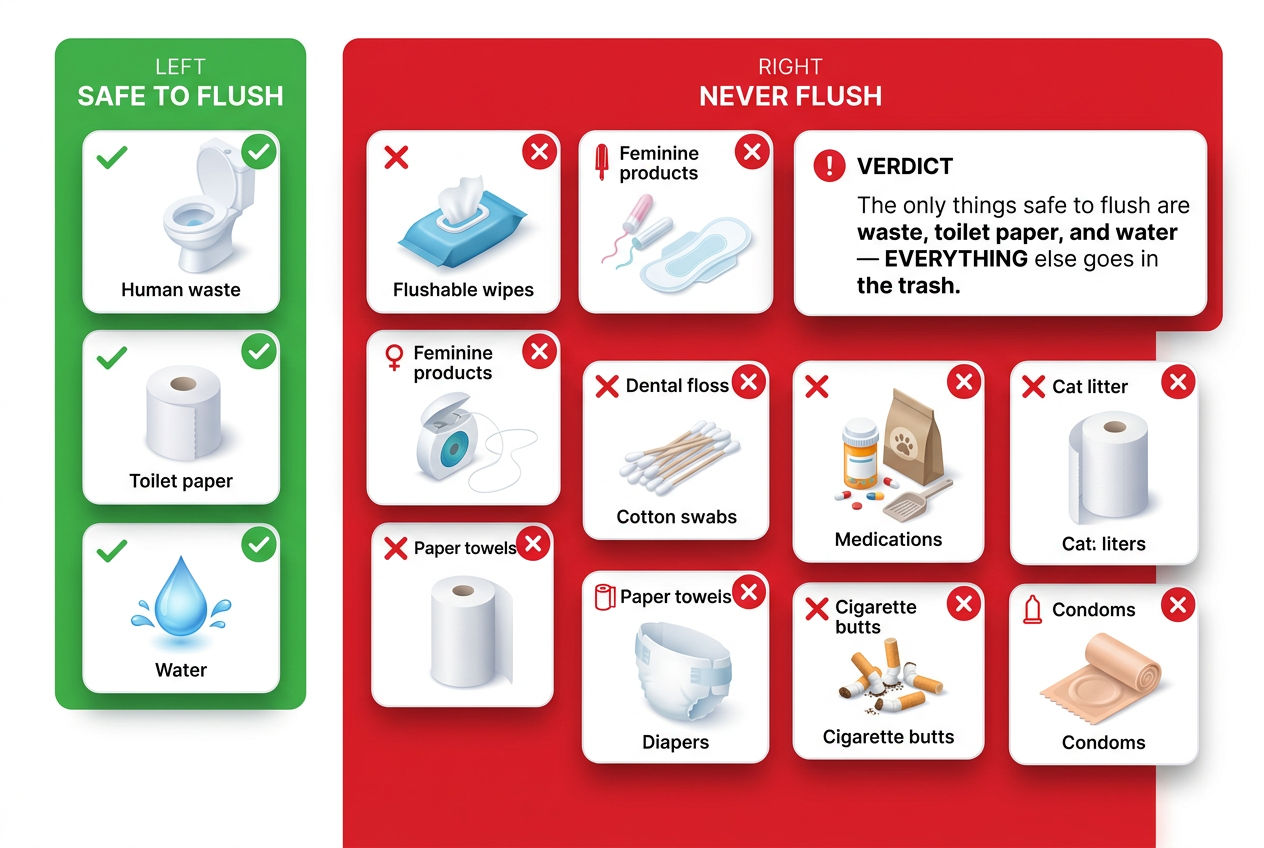
- The only things you should flush are human waste and septic-safe toilet paper.
- Tampons do not biodegrade in a septic tank and can expand up to 10× their original size when wet.
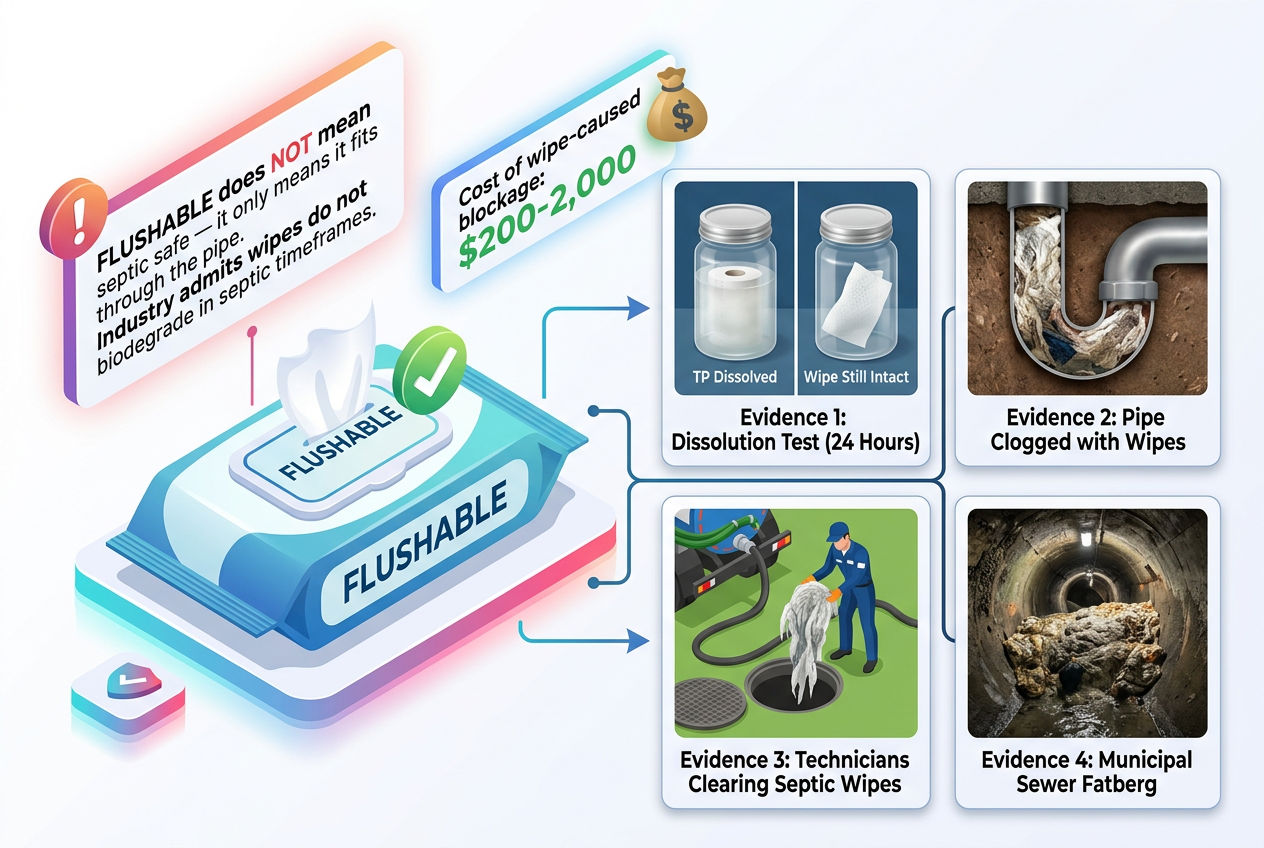
- "Flushable" wipes retain 75–95% of their tensile strength after standard disintegration tests - they are not safe for septic systems.
- A single drain field repair costs $5,000–$20,000+. Flushing the wrong items accelerates that failure.
- The EPA recommends pumping every 3–5 years, but bad flushing habits can cut that window significantly shorter.
Can You Flush a Tampon with a Septic System?
No. A tampon flushed into a septic system will not break down the way toilet paper does. Septic-safe toilet paper dissolves in roughly 8 seconds during standard agitation testing. A tampon? It can take six months or longer - and may never fully decompose inside a septic environment at all.
Why Tampons Are a Septic System Disaster
Here's why that matters: your septic tank separates waste into three layers:
- Sludge layer (bottom): Solid waste that sinks
- Scum layer (top): Grease and floating materials
- Effluent (middle): Partially treated liquid that flows to your drain field
The inlet and outlet baffles - usually concrete T-baffles or PVC baffles - direct flow and block solids from escaping into the drain field. Tampons don't dissolve. They accumulate on those baffles, in the inlet zone, and in the outlet tee screen. Over time, they reduce the effective volume of your tank and can physically block flow.
📊 Quick Fact: A single tampon can expand up to 10 times its dry size once saturated. In a 1,000-gallon tank, that's still small. But a year's worth of tampons? That's a different story - and it shows up as a mat of fibrous solids your pumper has to physically break apart.
The answer is firm: no tampon, ever, regardless of whether it's cotton, organic, or marketed as "biodegradable."
Are "Flushable" Wipes Actually Safe for Septic Systems?
No - and the marketing is genuinely misleading. This is the question that generates the most household arguments, and the data lands decisively on one side.
The Science Behind the "Flushable" Lie
A 2019 study by Ryerson University (now Toronto Metropolitan University), conducted in partnership with the municipal wastewater industry, tested 101 wipe products labeled "flushable." The results were damning:
- Wipes retained 75–95% of their original tensile strength after standard agitation in disintegration testing
- Septic-safe toilet paper disintegrates in under 10 seconds during the same protocol
- No wipe product tested met true flushability standards
The Federal Trade Commission has taken action over these claims. In 2015, the FTC issued a consent order against Nice-Pak Products for falsely marketing wipes as flushable - one of several enforcement actions that put the industry on notice. Yet the labeling largely persists.
What Happens to Wipes in Your System
In a septic system, a wipe that doesn't break down behaves like a small piece of cloth. It can:
- Tangle around pump impellers in aerobic treatment units
- Accumulate on effluent filters (like a Polylok PL-122 or Zabel A1800) until flow is reduced to a trickle
- Carry through a damaged baffle and clog distribution boxes or leach laterals in your drain field
⚠️ Warning: One wipe won't destroy your system. A household using two or three wipes per toilet visit, every day, for three years? That's a different calculation - and one that shortens your pump-out interval from every 4 years to every 2.
The Mason Jar Test
The test you can do at home: Fill a mason jar with water. Drop in a "flushable" wipe, a regular wipe, and a piece of septic-safe toilet paper. Shake it 20 times. The toilet paper will be nearly gone. Both wipes will be completely intact. That's what's happening inside your tank.
This applies equally to:
- Baby wipes
- Makeup wipes
- Facial cleansing cloths
- Antibacterial wipes
No wipe category is safe for septic systems. Dispose of them in the trash.
What CAN You Flush with a Septic Tank?
Two things. That's the complete list.
- Human waste (urine and feces)
- Septic-safe toilet paper
That's it. Every other item on your bathroom shelf belongs in a waste bin.
Choosing the Right Toilet Paper
Septic-safe toilet paper breaks down rapidly because it uses shorter fiber lengths and lower wet strength. Brands like Scott Rapid-Dissolving, Seventh Generation, and Cottonelle Ultra CleanCare all perform well in disintegration tests. If you want to confirm your current brand, the mason jar test above works as a quick check. You can also browse detailed product testing at our septic-safe toilet paper guide.
What About Septic Additives?
Some homeowners ask about septic additives - bacterial products like Rid-X that claim to boost the microbial ecosystem in your tank. A University of Arkansas study found these products add beneficial bacteria but do not eliminate the need for pumping and cannot reverse drain field clogging once it's started.
✅ Pro Tip: Additives are a supplement to good habits, not a substitute. See our best septic tank treatment guide for a realistic breakdown of what additives can and can't do.
What Not to Flush: Septic System Do's and Don'ts
| Item | Safe to Flush? | Why |
|---|---|---|
| Septic-safe toilet paper | ✅ Yes | Dissolves in seconds; won't clog baffles |
| Human waste | ✅ Yes | What the system is designed for |
| Tampons / applicators | ❌ No | Cotton/rayon; won't biodegrade; expands 10× |
| "Flushable" wipes | ❌ No | Retains 75–95% tensile strength; clogs filters |
| Pads / panty liners | ❌ No | Plastic backing + absorbent core = permanent solids |
| Condoms | ❌ No | Latex doesn't degrade; wraps around baffles |
| Cotton balls / swabs | ❌ No | Cotton fibers accumulate; don't break down |
| Cat litter (any type) | ❌ No | Clay clogs pipes; "flushable" types swell in water |
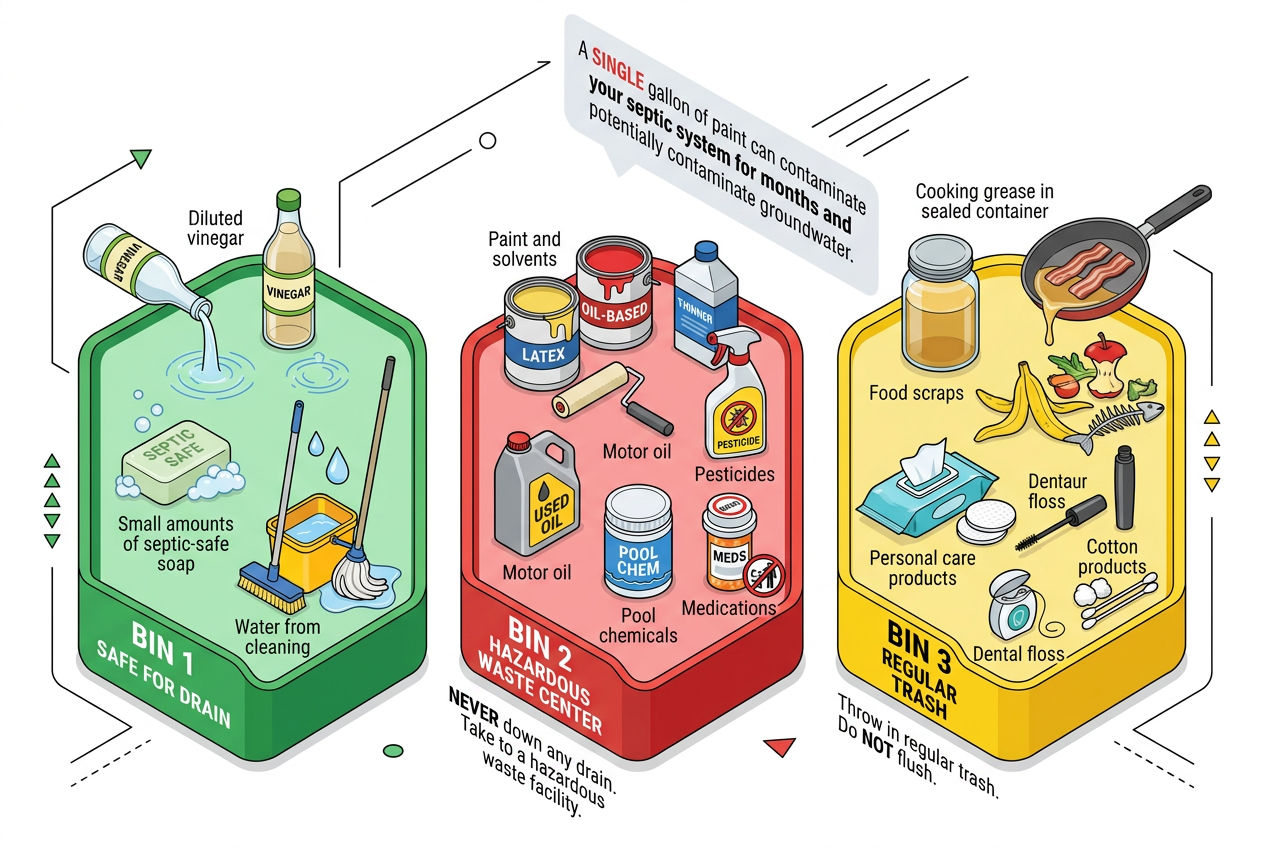
| Medications / pills | ❌ No | Disrupts tank bacteria; contaminates groundwater |
| Paper towels | ❌ No | Designed NOT to dissolve - unlike toilet paper |
| Dental floss | ❌ No | Tangles pump components; acts like fishing line |
| Hair | ❌ No | Binds with other solids; doesn't break down |
Sources: U.S. EPA Septic Systems guidance (epa.gov/septic); NOWRA (nowra.org); NAWT (nawt.org)
Special Warning: Feminine Hygiene Products
Feminine hygiene products as a category deserve special mention. Pads have a polyethylene or polypropylene backing designed to be waterproof - meaning they will never biodegrade in your tank. Applicators (whether plastic or cardboard) don't break down reliably either. All of it goes in the trash.
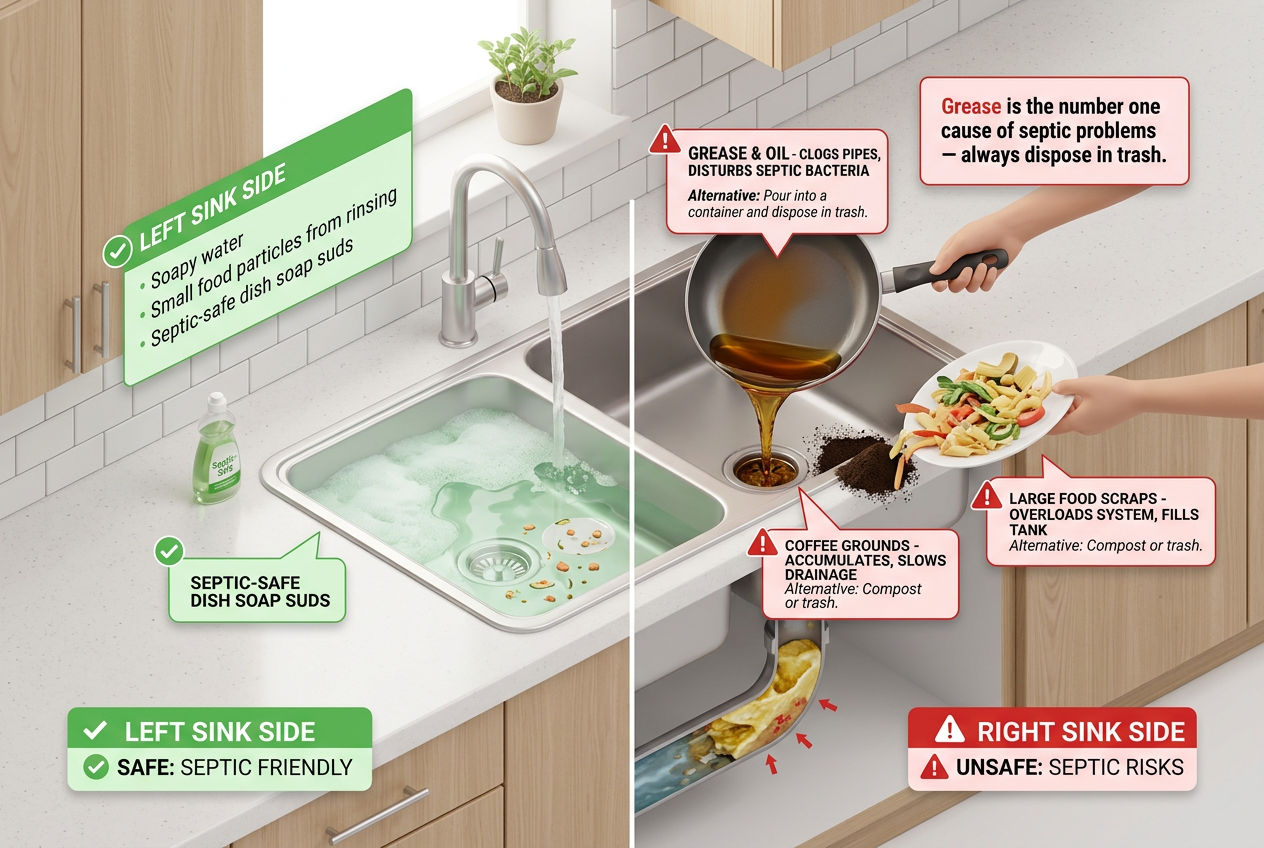
For a deeper look at everything that goes into your home's drains - including the kitchen - see our septic system maintenance guide.
What Happens If You Accidentally Flush a Tampon?
One tampon is unlikely to cause an immediate emergency. But it's not doing your system any favors, and you should know what's actually happening downstream.
The Journey of a Flushed Tampon
After flushing, the tampon travels through your drain line (typically 4-inch PVC or ABS pipe) and enters the inlet zone of your septic tank. It sinks to the sludge layer or catches on the inlet baffle. From there, it stays. It doesn't decompose. It doesn't pass through to the drain field - at least not until it's displaced by enough sludge pressure to reach the outlet side, at which point it becomes a much more serious problem.
When to Schedule an Inspection
If you've been flushing tampons regularly for months or years, schedule an inspection. A qualified technician can probe the sludge layer with a sludge judge (a transparent tube used to measure solids depth) and tell you whether your tank is approaching the pump-out threshold sooner than expected. You can find licensed inspectors through our septic inspection service page.
The Real Cost of Bad Flushing Habits
The EPA recommends pumping every 3–5 years for a typical household. A 1,000-gallon tank serving four people normally sits comfortably in that range. Add years of non-biodegradable waste and that window compresses - sometimes to every 18–24 months.
💡 The Math That Makes Behavior Change Easy:
- Standard pump-out: $300–$600 nationally
- Drain field replacement: $5,000–$20,000+ depending on soil conditions, system type, and your state's permit requirements
See our drain field replacement cost guide for regional breakdowns.
How Do You Know If Your Septic Tank Has Been Damaged by the Wrong Items?
Your system will usually tell you before it completely fails - if you know what to listen for.
Early Warning Signs
- Slow drains throughout the house (not just one fixture)
- Gurgling sounds from toilets after flushing
- Sewage odors near the tank lid or in the yard
- Unusually green or spongy grass over the drain field (effluent surfacing)
- Toilet paper or waste backing up into your lowest-level fixtures
⚠️ Critical Warning: These symptoms point to a tank that's either overdue for pumping or has an outlet obstruction - sometimes a blocked effluent filter, sometimes a baffle wall clogged with accumulated solids.
What to Check First
A Polylok PL-122 or similar effluent filter should be cleaned every 1–3 years as part of routine maintenance. If yours is caked with wipe fibers, that's your answer.
If you're seeing soggy yard patches over the drain field, don't wait. That's effluent surfacing, which is both a health hazard and a sign that your leach laterals may already be compromised. Check our signs your septic tank is full for a complete symptom checklist, and get a professional out quickly. Find a septic professional near you through our directory.
Regional and Seasonal Notes Worth Knowing
Search volume for "what can you flush with a septic system" spikes in two distinct windows:
- Spring (March–May): When homeowners schedule annual inspections after the ground thaws
- Late November through January: When holiday guests unfamiliar with septic rules use the bathroom without a second thought
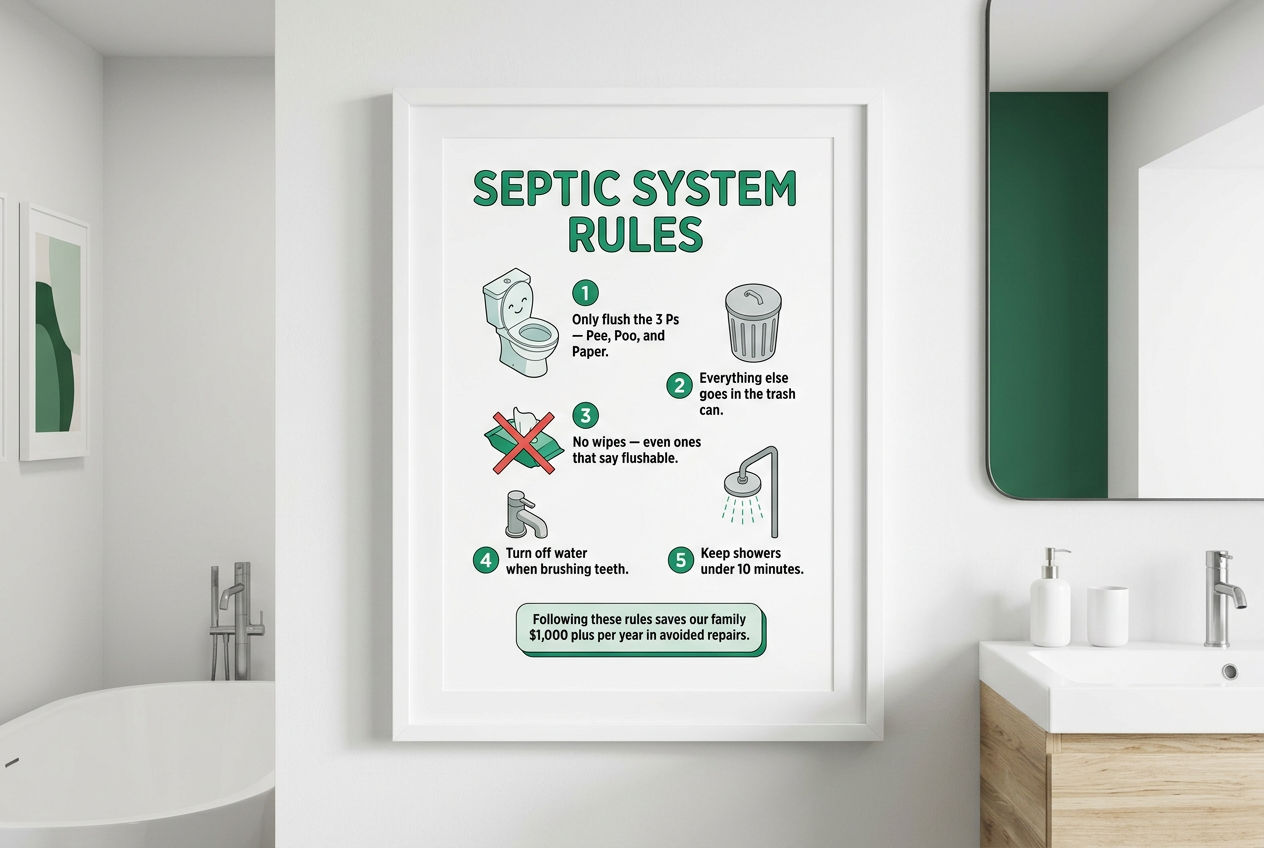
✅ Pro Tip: If you're hosting guests, a small laminated card near the toilet - "Septic system: toilet paper only, please" - prevents a lot of expensive misunderstandings.
Geographic Septic Concentration
About 21% of U.S. homes (roughly 60 million people) rely on septic systems, according to the EPA. The highest concentrations are in:
- Vermont: ~55% of homes
- Maine: ~50% of homes
- New Hampshire: ~45% of homes
- Rural areas: North Carolina, Alabama, Indiana, Pennsylvania
Florida and the Chesapeake Bay watershed states (Maryland, Virginia) have some of the stricter inspection and maintenance regulations:
- Florida's Department of Health requires licensed contractors to adhere to specific standards
- Maryland's Bay Restoration Fund has funded thousands of septic upgrades under strict nutrient-reduction requirements
Soil Type Matters
In clay-heavy soils common to the Midwest and Southeast, drain field clogging from non-biodegradable solids is especially damaging. Clay already limits percolation rates - compounding that with wipe fibers or tampon material accelerates hydraulic failure faster than in sandy, well-draining soils.
Related: hot tub drainage and septic tanks — worth reading if this applies to your situation.
For pricing details, see our septic pumping cost guide.
Learn more about our septic pumping services.
Related reading: how often pump septic tank.
Related: which garbage disposals are septic-safe
Sources & Methodology
- U.S. Environmental Protection Agency - Septic Systems: Used for pump frequency recommendations, system prevalence statistics, and general maintenance guidance.
- Ryerson University / INDA Flushability Study (2019): Referenced for tensile strength retention data on wipes labeled "flushable."
- Federal Trade Commission - Nice-Pak Consent Order (2015): Referenced for regulatory action on misleading flushable labeling claims.
- National Association of Wastewater Technicians (NAWT): Referenced for pump-out interval guidance and inspection standards.
- National Onsite Wastewater Recycling Association (NOWRA): Referenced for general system maintenance and best practices.
Product cost data reflects 2024–2025 contractor pricing aggregated from HomeAdvisor/Angi and corroborated with regional pumper quotes. Regional prevalence data sourced from U.S. Census Bureau American Housing Survey.
Written by the editorial team at SepticTankHub.com - a national directory connecting homeowners with licensed septic professionals.
Need help with your septic system? Browse local septic companies in California or Ohio.
Free download
Not ready for the Handbook? Start with the free Fridge Card.
The Do / Don’t card the whole family can see, plus the Survival Kit: emergency flowchart, warning-sign decoder and pump-schedule card. One printable PDF.
Was this article helpful?
Frequently Asked Questions
Recommended Resources
📖 Related Articles
💰 Cost Guides
Find Septic Professionals Near You
Compare licensed, verified septic companies by area — top county markets and cities below, or browse all 50 states.
County markets
Popular cities
