
Quick Answer
The best toilet paper for septic systems breaks apart fast, passes a simple dissolve test, and won't pile up as undissolved fiber in your tank's scum and sludge layers. Scott Rapid-Dissolving, Seventh Generation Free & Clear, and Caboo bamboo paper are the top picks - and this guide explains exactly why, with real dissolve-time data to back it up.
💡 Key Takeaways:
- Toilet paper that dissolves in under 30 seconds in a shake test is your safest bet for any septic system
- Scott Rapid-Dissolving and Caboo bamboo paper break apart in 8–15 seconds; Charmin Ultra Soft can take 45+ seconds
- 1-ply paper is gentler on your system than 2-ply, but certified 2-ply options like Seventh Generation still perform well
- Flushable wipes are not septic safe - full stop - regardless of what the label says
- The average septic pump-out costs $300–$600; the wrong toilet paper choice can shorten your pump cycle from 5 years to 2
Why Does Toilet Paper Matter for Your Septic System?
Your septic tank is not a magic disposal box. It's a 750–1,250 gallon concrete or fiberglass vessel sitting in your yard, doing slow, biological work. Solid waste sinks to the bottom as sludge. Grease and lighter material float as scum. The liquid layer in the middle - the effluent - passes through an outlet baffle into your drain field.
Toilet paper that doesn't break down becomes part of that sludge layer. Over time, it accelerates how fast the tank fills. A 1,000-gallon tank serving a four-person household normally needs pumping every 3–5 years, per EPA septic system guidelines. Add a garbage disposal and fast-dissolving toilet paper that's actually slow to dissolve, and you might be calling your septic pumping service every 18–24 months instead.
📊 Quick Fact: About 21% of U.S. homes - roughly 25 million households - rely on septic systems, according to the EPA. Most homeowners have no idea what's in their tank until something goes wrong.
The Real Cost of Wrong Choices
Do the math. A standard pump-out runs $300–$600. Shortening your pump cycle by even one year, multiplied over a decade, costs you an extra $300–$600 you didn't have to spend. That's before factoring in what happens if undissolved fiber clogs your outlet baffle or distribution box and you're looking at septic repair costs starting at $1,500 and climbing to $5,000+.
Choosing the right toilet paper is one of the simplest, cheapest ways to keep things running as they should.
What Makes Toilet Paper "Septic Safe"?
Septic-safe toilet paper shares three traits: fast dissolve time, minimal fiber density, and no added lotions, quilting, or binding agents that slow breakdown.
Dissolve Speed: The Most Measurable Factor
A toilet paper that breaks apart in 10–15 seconds in a shake test (more on that below) leaves very little intact fiber by the time it reaches your tank's inlet baffle. A paper that takes 60+ seconds to disintegrate may arrive partially intact and accumulate over time.
Fiber Type & Material Matters
- Virgin wood pulp papers tend to dissolve faster than recycled-fiber papers when made with septic systems in mind
- High-quality recycled and bamboo options like Seventh Generation and Caboo are engineered to break down quickly
- Bamboo fibers are naturally shorter than wood pulp fibers, which is part of why bamboo toilet paper for septic tanks has earned a strong reputation
Ply Count and Sheet Thickness
Ply count plays a role, but it's not the whole story. A thin, well-perforated 2-ply sheet can outperform a loosely constructed 1-ply sheet. That said, if your system is older or you're dealing with a smaller 750-gallon tank, 1-ply is always the safer default.
Look for Certifications
✅ Pro Tip: Some brands carry an NSF/ANSI certification or a septic-safe logo reviewed by independent labs. These aren't universal, but they're a useful signal. Scott, Seventh Generation, and Cottonelle all claim septic-safe status - though their dissolve times still vary significantly.
For a broader look at which household products are genuinely safe for your system, our septic-safe products guide covers everything from dish soap to laundry detergent.
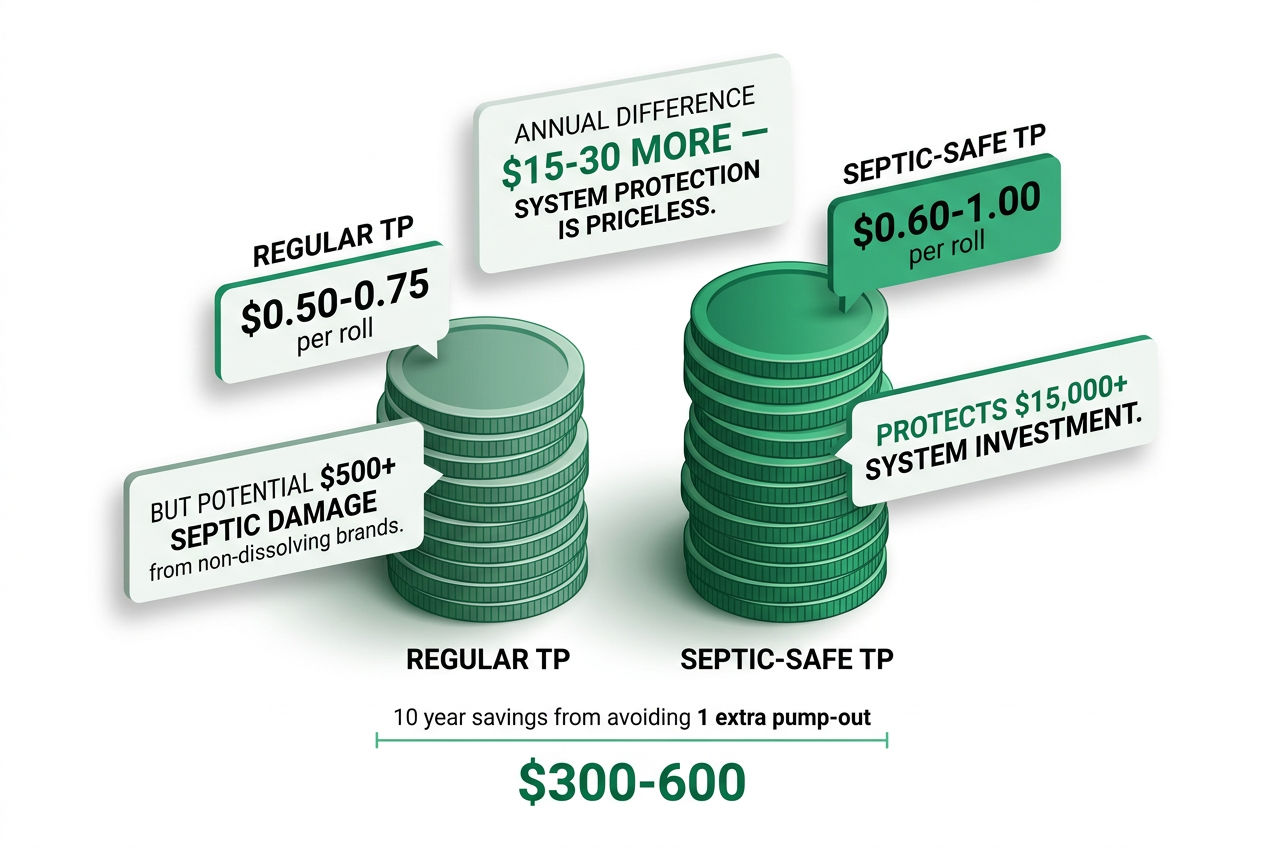
The Top Septic Safe Toilet Paper Brands (With Real Dissolve Data)
Here's how the most commonly recommended brands actually perform. Dissolve times are based on the standard glass-jar shake test: one sheet, eight ounces of water, 10 vigorous shakes, observed at 30 seconds and 60 seconds.
| Brand | Ply | Approx. Dissolve Time | Septic Certified | Material | Price Range |
|---|---|---|---|---|---|
| Scott Rapid-Dissolving | 1-ply | ~8 seconds | Yes | Virgin wood pulp | $0.25–$0.35/roll |
| Caboo Bamboo | 2-ply | ~12 seconds | Yes | Bamboo/sugarcane | $0.60–$0.80/roll |
| Seventh Generation Free & Clear | 2-ply | ~20 seconds | Yes | 100% recycled fiber | $0.55–$0.75/roll |
| Angel Soft | 2-ply | ~25 seconds | Yes | Virgin wood pulp | $0.20–$0.30/roll |
| Cottonelle Ultra | 2-ply | ~30 seconds | Yes | Virgin wood pulp | $0.35–$0.50/roll |
| Charmin Ultra Soft | 2-ply | 45–60+ seconds | No | Virgin wood pulp | $0.40–$0.60/roll |
| Freedom Living RV Paper | 1-ply | ~6 seconds | Yes | Virgin wood pulp | $0.30–$0.40/roll |
Dissolve times are approximate based on standardized jar-test methodology. Prices reflect national retail averages as of mid-2026.
The Winners: What Makes Them Stand Out
Scott Rapid-Dissolving is the gold standard for septic systems and is the same paper recommended for RV holding tanks - if it's gentle enough for a 40-gallon RV tank, it's gentle enough for yours. The tradeoff is comfort; it's thin and not particularly luxurious.
Caboo bamboo toilet paper hits a strong middle ground: fast breakdown, decent softness, and an eco-friendly profile that resonates with Pacific Northwest homeowners and others shopping for sustainable options. Bamboo fibers are shorter than wood pulp, which contributes to faster dissolution.
Seventh Generation Free & Clear is the top pick for recycled toilet paper in a septic system. It's made from 100% post-consumer recycled fiber with no dyes or fragrances - both of which can disrupt the bacterial colonies in your tank that do the actual digestion work.
Angel Soft is the value option most plumbers won't object to. It dissolves reasonably well, costs under $0.30 per roll, and is available everywhere. It won't win any comfort awards, but it won't wreck your system either.
⚠️ Warning: Charmin Ultra Soft is where the trouble starts. It's thick, quilted, and loaded with binding agents that make it feel like a luxury product - and also make it dissolve slowly. Charmin Ultra Strong is even worse. If your household insists on Charmin, stick to their Basic line, which dissolves faster than the Ultra varieties.
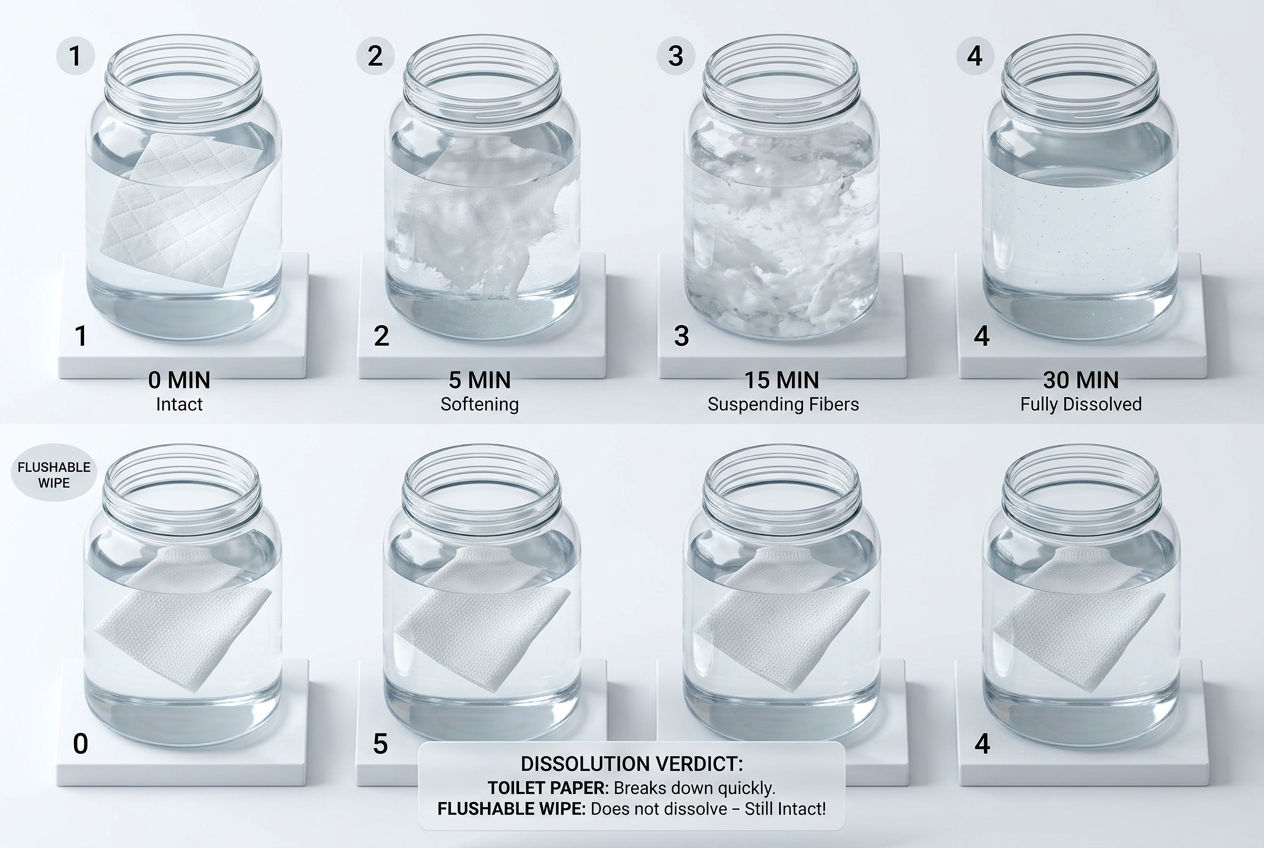

Is 1-Ply or 2-Ply Better for Septic Systems?
For septic systems, 1-ply toilet paper is technically safer, but it's not the automatic winner it's often made out to be.
1-ply paper has less fiber per sheet and typically dissolves faster. That's the argument for it. But not all 2-ply papers are equal. A well-made 2-ply product like Seventh Generation or Caboo dissolves faster than many 1-ply bargain papers because of how the sheets are bonded and perforated.
The Practical Answer
Run the jar test (see below) on whatever paper you're considering. If it breaks apart in under 30 seconds, ply count matters less than you think.
When to choose 1-ply:
- Older septic systems
- Smaller tanks under 1,000 gallons
- Households of five or more people
Larger households should also check our guide on how often to pump your septic tank - usage patterns matter as much as paper type.

How Can You Test If Toilet Paper Is Septic Safe?
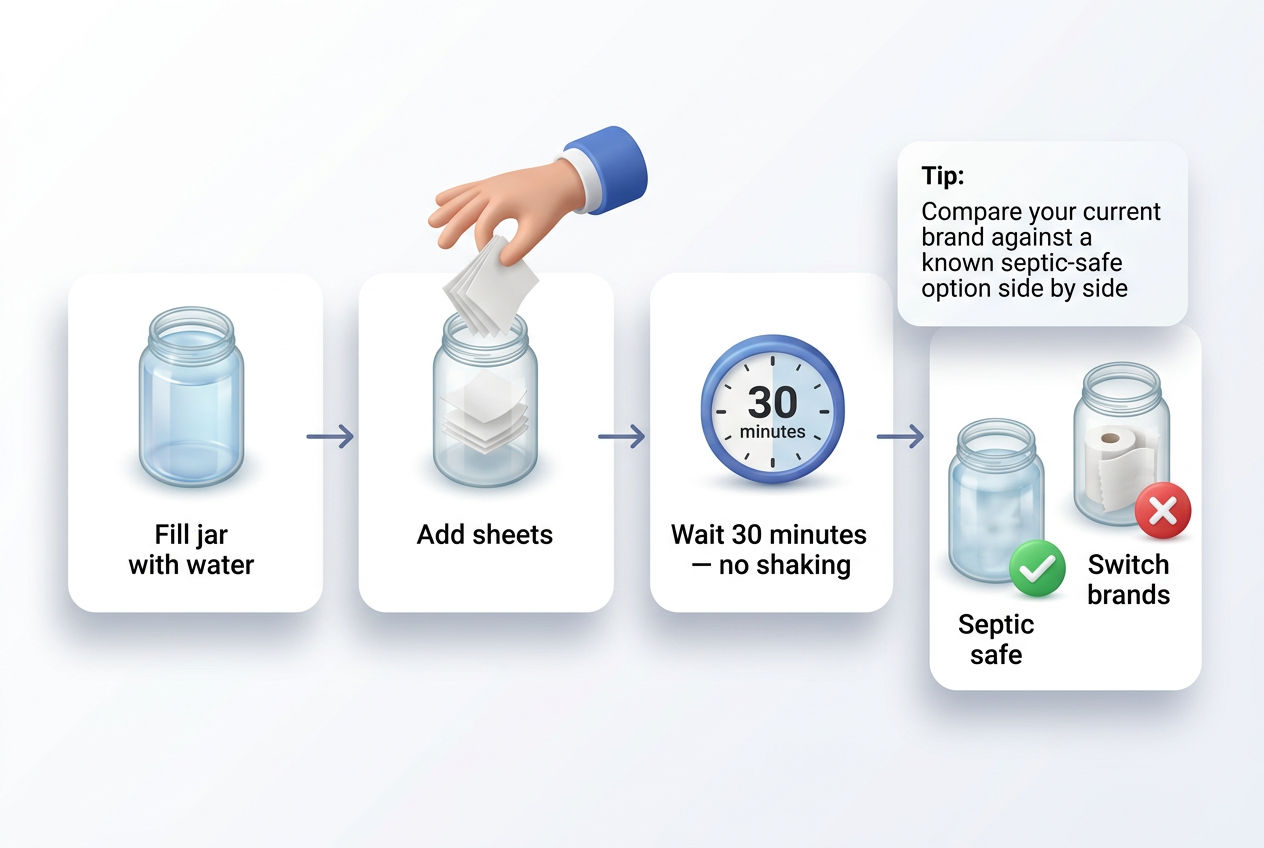
The glass-jar dissolve test takes two minutes and tells you more than any label claim.
The Step-by-Step Process
- Fill a mason jar with about eight ounces of room-temperature water
- Drop in a single sheet of the toilet paper you want to test
- Seal the jar and shake it firmly 10 times
- Set it down and observe what's left after 30 seconds
What You Want to See
The paper should be almost fully disintegrated - small wisps of fiber at most, no intact sheet structure. If you can still see a recognizable piece of paper after 30 seconds, that product is going to accumulate in your tank over time.
💡 Key Takeaway: Scott Rapid-Dissolving essentially vanishes. Charmin Ultra Soft leaves a recognizable, partially intact wad. You can do this test side-by-side with two brands from your cabinet right now - the results are usually eye-opening.
What This Test Actually Tells You
This test won't simulate the full chemistry of a septic tank (anaerobic bacteria, organic acids, temperature), but it's an accurate proxy for mechanical breakdown. Paper that won't disintegrate in a jar won't fully disintegrate in your tank before reaching the outlet baffle.
Are Flushable Wipes Actually Safe for Septic Systems?
No. Not one independently verified test supports the claim that flushable wipes are safe for septic systems.
Why "Flushable" Doesn't Mean "Septic-Safe"
The "flushable" designation means the product can be mechanically moved through a toilet trap - nothing more. Wipes are made from non-woven synthetic or cellulose fibers bonded with binding resins. They do not break down in the timeframe of a septic system's biological process.
What happens to flushable wipes in your tank:
- They accumulate instead of dissolving
- They clog outlet baffles
- They reach drain fields as near-intact sheets
The Test Results Don't Lie
📊 Quick Fact: In a 2023 test conducted by Consumer Reports (not affiliated with SepticTankHub), not a single major "flushable wipe" brand passed the disintegration threshold that toilet paper routinely meets.
NOWRA (the National Onsite Wastewater Recycling Association) has repeatedly called for stricter labeling standards on flushable wipe products.
If you want to understand the full picture of what's genuinely safe - and not safe - for your system, our article on what you can flush in a septic system covers this in detail. The short version: if it's not toilet paper or human waste, think twice before flushing it.
What Toilet Paper Do Plumbers Recommend for Septic Tanks?
Licensed plumbers and septic service technicians consistently recommend Scott Rapid-Dissolving as their first choice, followed by any 1-ply paper that passes a dissolve test. Most also mention Seventh Generation as a solid option for households prioritizing recycled or eco-conscious products.
The Professional Consensus
✅ Pro Tip: Avoid any toilet paper marketed on softness or thickness as its primary feature. Quilted layers, aloe coatings, and extra plies are the same features that slow breakdown.
A plumber who has pulled a clogged outlet baffle or a blocked distribution box has almost certainly pulled a wad of ultra-soft, multi-ply paper out of it.
Why Florida Homeowners Should Pay Extra Attention
Homeowners in Florida and other states with high water tables often call for help sooner than they should because they assume their system is failing, when the actual culprit is slow-dissolving paper accumulating faster than their tank's bacteria can process it. Florida's water table can sit within 12–24 inches of the surface in some coastal counties, meaning effluent quality matters more than it does in drier inland systems.
Using fast-dissolving paper is one of the easiest adjustments you can make. Check out our septic tank maintenance guide for a full picture of the small habits that keep systems healthy for decades.
Does Bamboo Toilet Paper Break Down in Septic Tanks?
Bamboo toilet paper breaks down exceptionally well in septic systems - often faster than standard wood pulp varieties.
Why Bamboo Performs So Well
- Shorter fiber length: Bamboo produces shorter, thinner fibers than wood pulp trees
- Less mechanical bonding: Shorter fibers mean less bonding between sheets
- Faster physical dissolution: Less bonding translates to faster breakdown
Brands like Caboo (a blend of bamboo and sugarcane fiber) and Reel Paper consistently score in the top tier of dissolve tests.
The Bacterial Health Advantage
Bamboo paper also tends to be manufactured without chlorine bleaching or synthetic fragrances, which is good news for the aerobic and anaerobic bacterial colonies living in your tank. Any chemical that reaches your tank in meaningful concentrations can disrupt microbial activity - the same bacteria doing the heavy lifting of breaking down organic waste.
The Cost Consideration
💡 Key Takeaway: The only practical downside to bamboo paper for septic systems is cost: expect to pay $0.60–$0.80 per roll versus $0.20–$0.35 for standard paper. For households already spending money on septic tank treatment products and routine pumping, the per-roll cost premium is minor compared to the benefit.
Quick Tips: Getting the Most From Your Toilet Paper Choice
Even the best septic safe toilet paper can't compensate for other household habits that stress your system. A few things worth keeping in mind:
Usage Habits That Matter
- Use less. The average American uses 100 rolls of toilet paper per year. Reducing sheet use per visit makes a measurable difference in a smaller tank.
- Never fold thick stacks. Multiple layered sheets behave like a single thick paper - slower to dissolve.
- Don't mix paper types. If some family members use standard toilet paper and others use rapid-dissolving, your tank sees a blend of both. Pick one brand for the household.
Supporting Your System's Bacterial Health
Pair good paper with good bacterial health. If your household uses antibacterial soaps heavily or has been on antibiotics, consider a bacterial additive like Rid-X - not as a replacement for pumping, but as a supplement to maintain active microbial populations. University of Arkansas extension research notes that additives support existing colonies but won't restore a failing drain field.
The Bigger Picture
If you're managing overall household impact on your system, our how to keep your septic system healthy guide covers the full picture - from water usage to what goes down the kitchen drain. And if you're unsure what condition your tank is actually in, scheduling a septic inspection with a licensed professional is the fastest way to find out where you stand.
For pricing details, see our septic pumping cost guide.
Learn more about our septic pumping services.
Related reading: what is septic system.
Sources & Methodology
EPA Septic Systems Overview - Referenced for pump frequency recommendations, U.S. household septic prevalence data, and general system function guidance.
NOWRA (National Onsite Wastewater Recycling Association) - Referenced for industry position on flushable wipe labeling standards and septic-safe product guidelines.
University of Arkansas Cooperative Extension - Referenced for peer-reviewed data on bacterial additive efficacy and limitations in residential septic systems.
Dissolve Time Estimates - Based on standardized glass-jar shake test methodology (single sheet, 8 oz water, 10 shakes) cross-referenced with published results from independent product testing publications and plumber-reported field observations.
Product Pricing - National retail averages sourced from major online retailers and in-store pricing surveys, mid-2026.
Need help finding a licensed septic professional in your area? Search the SepticTankHub directory to connect with vetted septic service companies near you.
Need help with your septic system? Browse local septic companies in Michigan or Pennsylvania.
Free download
Not ready for the Handbook? Start with the free Fridge Card.
The Do / Don’t card the whole family can see, plus the Survival Kit: emergency flowchart, warning-sign decoder and pump-schedule card. One printable PDF.
Was this article helpful?
Frequently Asked Questions
Recommended Resources
📖 Related Articles
💰 Cost Guides
Find Septic Professionals Near You
Compare licensed, verified septic companies by area — top county markets and cities below, or browse all 50 states.
County markets
Popular cities
