
Quick Answer
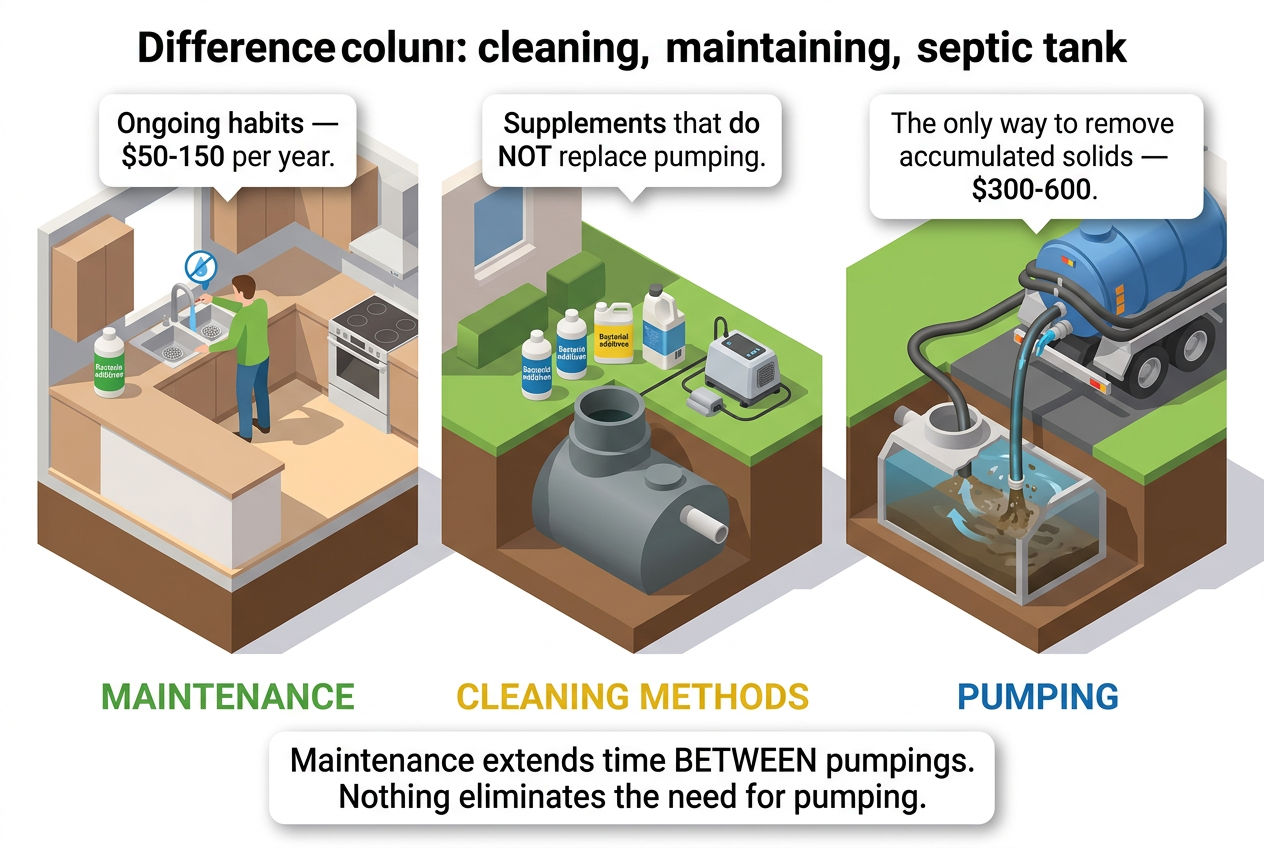
The short answer: Cleaning a septic tank without pumping is possible as a maintenance strategy - biological additives, enzyme treatments, and water conservation can slow sludge accumulation by 10–20%. But no method fully replaces mechanical pumping. The EPA recommends pumping every 3–5 years for most households regardless of additives used.
💡 Key Takeaways
- Biological additives and enzymes can reduce sludge buildup, but peer-reviewed studies show they cut accumulation by only 10–20% at best
- The EPA recommends pumping every 3–5 years - no additive satisfies a legal pumping requirement in states like Maryland, Washington, or Ohio
- Average household adds 70–80 gallons of sludge per person per year; a 4-person household fills a 1,000-gallon tank to the danger threshold faster than most people expect
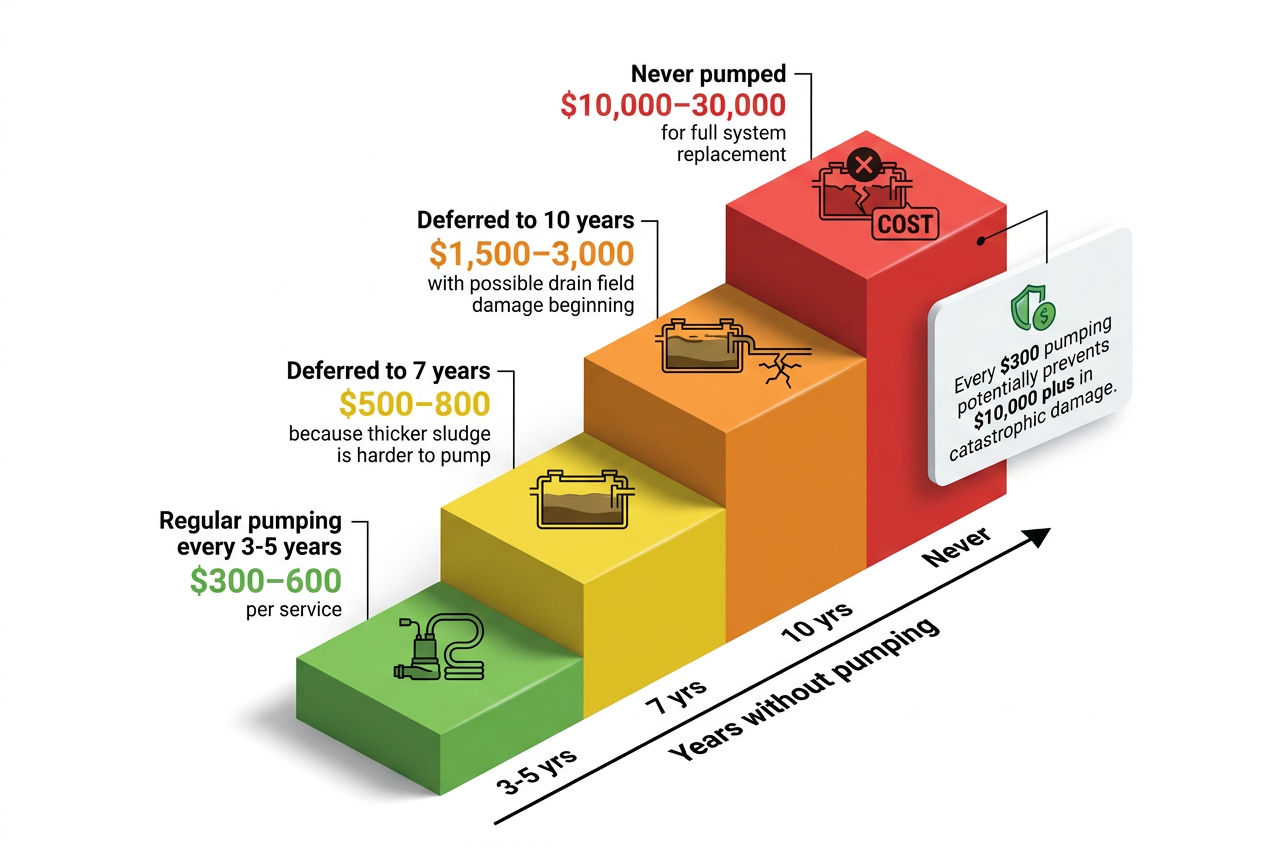
- Skipping pumping entirely risks drain field failure - a $5,000–$20,000 repair that additives cannot reverse
- The smartest approach: use biological maintenance between pumpings, not instead of them
You've probably seen the products at the hardware store - pouches of bacteria, enzyme tablets, monthly "treatments" that promise to keep your septic system humming along without a pump truck visit. The marketing is convincing. The price ($10–$30/month) is certainly easier to swallow than a $400 pump-out bill.
So what's the honest answer? Can you actually keep a septic tank clean without pumping it?
Short answer: sort of - but probably not in the way you're hoping.
This article covers every legitimate method for reducing sludge buildup, what the science actually says, and exactly when skipping the pump truck stops being frugal and starts being expensive.
Why Do People Want to Avoid Pumping in the First Place?
Understanding the motivation matters, because the right solution depends on why you're searching for alternatives.
Cost is the biggest driver. A standard pump-out for a 1,000-gallon tank runs $300–$600 nationally, though rural homeowners in areas with fewer service providers sometimes pay $700–$1,000+. You can compare current rates by tank size in our septic tank pumping cost guide.
Access is the second issue. If your tank lid is buried 18 inches underground and nobody installed risers when the system was put in, getting a pump truck out feels like an excavation project before the actual service even starts. (The fix for that is a set of septic tank risers - a one-time investment that makes every future service call faster and cheaper.)
Remote location plays a role too. If you're on a rural property in eastern Tennessee or central Montana, the nearest licensed pumper might be an hour away. The service charge alone reflects that distance.
✅ Pro Tip: Whatever your reason, the desire to extend time between pumpings is completely reasonable. The question is how to do it safely.

What Actually Builds Up Inside a Septic Tank?
Before evaluating cleaning methods, you need to understand what you're actually dealing with.
The Three-Layer System
A healthy conventional septic tank has three distinct layers:
- Scum layer - fats, oils, and grease that float to the top
- Effluent layer - the relatively clear liquid in the middle that flows out to the drain field
- Sludge layer - heavy solids and inorganic material that sink to the bottom
The natural bacteria in your tank break down organic material in the effluent and sludge layers continuously. That's the system working as designed. But certain solids - particularly inorganic particles, heavy grease, and fibrous material - don't break down. They accumulate on the bottom.
How Fast Does Sludge Accumulate?
The average household adds roughly 70–80 gallons of sludge per person per year. For a 4-person household with a standard 1,000-gallon tank, that's 280–320 gallons of new sludge annually.
Pumping is recommended before the combined sludge and scum layers occupy more than one-third of total tank capacity. Do the math:
- 1,000-gallon tank hits the danger threshold in roughly 3–4 years
- 5-person household can get there in under 2 years
Learn more about sizing and frequency in our guide to how often you should pump your septic tank.
What Can I Put in My Septic Tank to Break Down Solids?
There are four main categories of products marketed for septic tank cleaning without pumping. Here's an honest breakdown of each.
Biological Additives (Bacteria Treatments)
Products like Rid-X, Green Gobbler, and various store-brand septic treatments work by introducing concentrated colonies of Bacillus bacteria into your tank. The idea is that more bacteria means faster breakdown of organic solids.
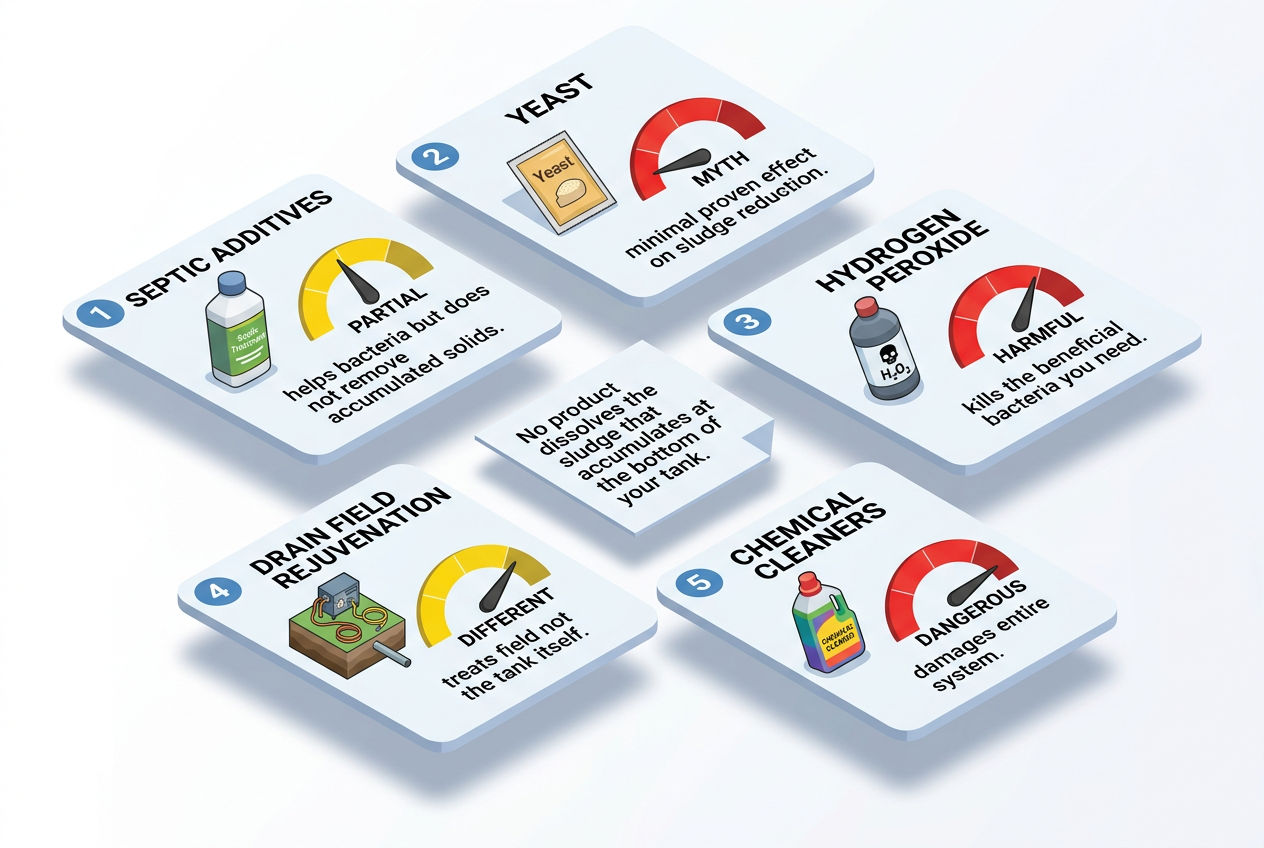
Do they work? Partially. The University of Arkansas and Penn State Extension have both reviewed biological additive research, and the consistent finding is that these products do not eliminate the need for pumping. At best, they may reduce sludge accumulation by 10–20% compared to an untreated tank.
That's not nothing. But it's not the substitute the marketing implies either.
⚠️ Warning: If your tank already has a functioning bacterial population - which a healthy, properly used system will - you're essentially adding more workers to a site that isn't understaffed. The benefit is marginal.
Cost reality: Biological additives cost $10–$30/month ($120–$360/year). Over the 3–5 years between pumpings, that's $360–$1,800 spent on a treatment that may delay pumping by a matter of months, not years.
Enzyme Treatments
Enzyme-based products use biochemical compounds (typically cellulase, lipase, and protease enzymes) to break down specific waste types:
- Cellulase - breaks down paper
- Lipase - breaks down fats
- Protease - breaks down proteins
Unlike bacteria, enzymes aren't living organisms; they're catalysts that accelerate decomposition.
They share the same limitation: they can help break down organic material that's already partially decomposable, but they do nothing for inorganic solids, grit, or accumulated mineral deposits. They don't replace pumping. They may extend your interval slightly.
Yeast for Septic Tanks
Baking a loaf of bread and flushing the extra yeast down the toilet is a genuine folk remedy you'll find on homesteading forums. Active dry yeast (Saccharomyces cerevisiae) does produce enzymes that help break down starches and organic material.
The honest verdict: it's cheap, it's harmless, and it might provide a modest benefit in a system that's been stressed by antibacterial soap overuse or a round of antibiotics that killed off tank bacteria. But it's not a cleaning method. It's a mild supplement at best.
Baking Soda and Vinegar
This one gets recommended online constantly. The appeal is obvious - both are natural, non-toxic, and already in your pantry.
The problem: baking soda and vinegar neutralize each other on contact, producing water and carbon dioxide. Neither the sodium bicarbonate nor the acetic acid survives the reaction in meaningful concentrations. And even if they did reach your tank, they don't break down sludge or digest solids.
They might mildly disrupt biofilm in your pipes, but there's no evidence they reduce sludge levels in a septic tank. Skip this one.
Methods Comparison: Septic Tank Cleaning Without Pumping
| Method | Estimated Cost | Sludge Reduction | Replaces Pumping? |
|---|---|---|---|
| Biological additives (monthly) | $120–$360/yr | 10–20% | No |
| Enzyme treatments (monthly) | $80–$240/yr | 5–15% | No |
| Active dry yeast | Under $10/yr | Minimal | No |
| Baking soda & vinegar | Under $5/yr | None | No |
| Mechanical pump-out | $300–$600 per service | 100% | Yes |
Sources: EPA Septic Systems Program; University of Arkansas Extension; Penn State Extension; national contractor pricing data
Do Septic Tank Additives Really Work?
This is worth addressing directly because the products are heavily marketed and the question comes up constantly.
The EPA's official position: The Homeowner's Guide to Septic Systems states plainly that biological and chemical additives are not necessary for a properly functioning septic system and that the agency does not recommend their use as a substitute for regular pumping. Washington State Extension and Penn State Extension have reached similar conclusions in their own research reviews.
Some states go further. Massachusetts has specifically prohibited the sale of certain chemical additives that were found to mobilize sludge into the drain field - which creates a worse problem than the one they were solving.
📊 Quick Fact: No additive has ever passed peer review as a genuine replacement for mechanical pumping.
The honest takeaway: biological additives from reputable brands (Rid-X, Septic Drainer, etc.) are unlikely to harm a healthy system, and they may provide modest benefit in systems recovering from bacterial disruption. But they are a supplement, not a solution.
What Are the Signs Your Septic Tank Needs Pumping Right Now?
No additive schedule matters if your tank is already at or past capacity. Watch for these warning signs:
- Slow drains throughout the house - not just one fixture, but multiple
- Gurgling sounds in toilets or drains after flushing
- Sewage odors indoors or near the tank and drain field
- Wet or unusually green patches of grass over the drain field area
- Sewage backup in the lowest fixtures in your home
⚠️ Warning: Any of these signals means the system needs professional attention immediately - not another bag of bacterial additive.
Read the full list of warning signs in our guide to signs your septic tank needs pumping.
If you're in Florida, pay extra attention. High water tables across much of the state mean drain fields have less margin for error. A tank that's operating even slightly over capacity can push effluent to the surface faster than it would in, say, the red clay soils of Georgia.
Is It Bad to Never Pump Your Septic Tank?
Yes - and the consequences are expensive.
Picture this: you've been running Rid-X monthly for six years, confident the system is handling itself. Then you notice the grass over your drain field is soggy in July when it hasn't rained in two weeks. A licensed pumper comes out and finds your tank's sludge layer has migrated into the distribution box and is clogging the leach laterals. The tank itself needed pumping three years ago.
The repair estimate: $8,000–$15,000 for partial drain field replacement.
The prevention cost: A pump-out every 3–4 years at $400 a visit would have cost $1,200 over that same period.
The Real Costs of Skipping Pumping
- Drain field replacement: $5,000–$20,000+ depending on soil conditions, system size, and whether your county requires a new perc test before installation
- Emergency repairs: typically 2–3x the cost of scheduled maintenance
- Property value impact: a failing septic system can tank a home sale
You can see a full breakdown of what drain field repairs actually cost at our drain field replacement cost guide.
Legal Requirements in Some States
Beyond cost, several states have legal pumping requirements:
- Maryland: documented pumping every 3–5 years required by county health code
- Washington: regular pumping intervals mandated for certain system types
- Parts of Ohio: periodic inspection and pumping required
📊 Quick Fact: No additive, regardless of what the label says, satisfies legal pumping requirements in states with mandatory schedules.
The Smart Approach: A Hybrid Maintenance Plan
The goal isn't to choose between additives and pumping - it's to use both strategically.
Monthly Maintenance
Use a biological additive if:
- Your system has experienced antibiotic use
- You've been using harsh cleaning products
- You have heavy garbage disposal use
Otherwise, a healthy system generally doesn't need monthly dosing. If you want to use one, quarterly dosing is sufficient.
Every 1–2 Years
Have the tank's sludge level measured with a sludge judge - a clear tube that lets a technician measure exact sludge depth without a full pump-out. Many septic companies offer this as a $50–$100 service call.
Pumping Schedule by Household Size
- 2 people: Every 3 years
- 4 people: Every 2–3 years
- 6+ people: Every 1–2 years
See the EPA's household sizing guidelines and our guide on how often to pump your septic tank for your specific situation.
One-Time Upgrades That Extend System Life
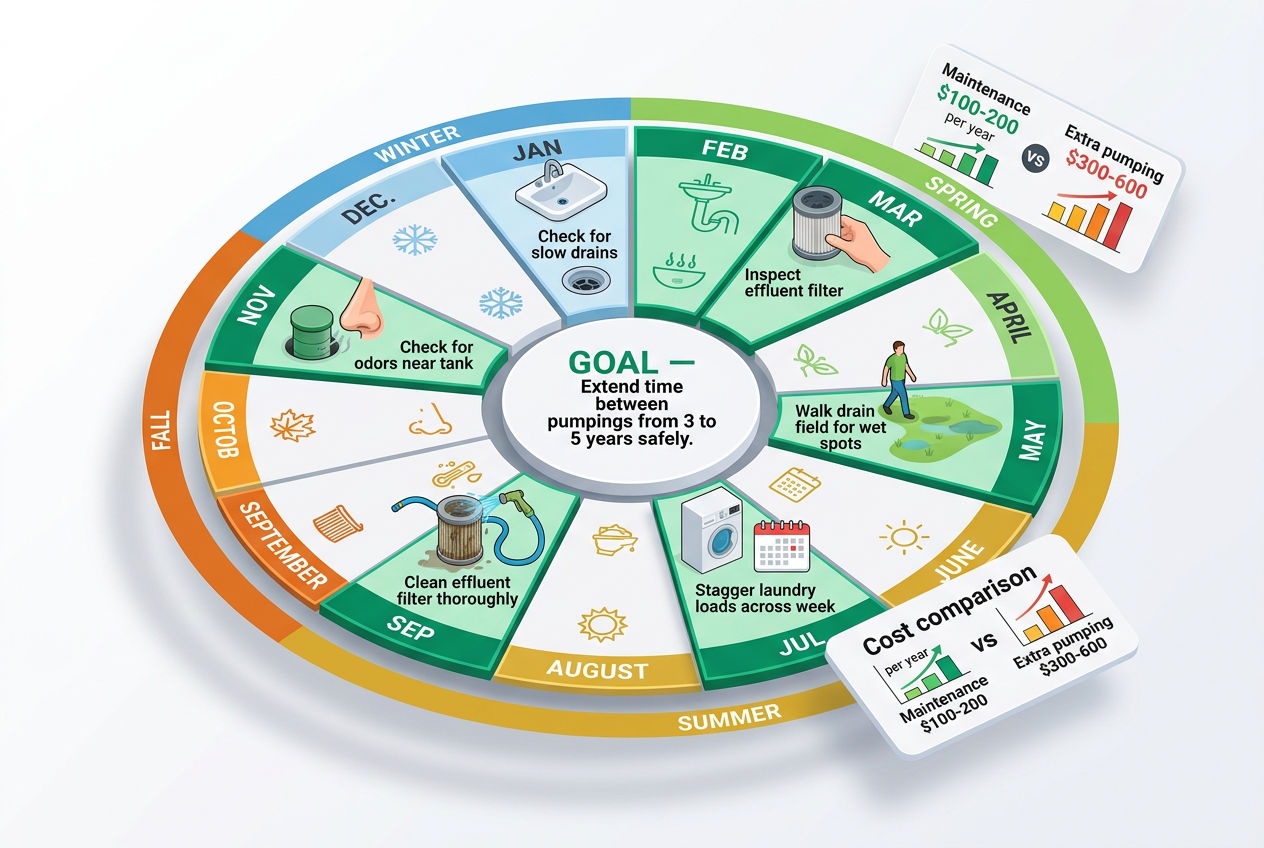
- Install a Polylok PL-122 effluent filter on the outlet baffle - catches suspended solids before they reach the drain field and can be cleaned at each pumping
- Add septic risers to bring the lid to grade - eliminates excavation costs at every service call
- Reduce water loading by fixing leaky toilets and spacing out laundry loads across the week (one 60-gallon load per day rather than six loads on Saturday)
For more ongoing maintenance strategies, our septic tank maintenance guide covers everything from water usage habits to what never to flush.
Seasonal Considerations: When Additives Work Less
If you're in Minnesota, Wisconsin, or anywhere with a hard winter, know this: biological additives are significantly less effective when tank temperatures drop. Bacterial activity slows substantially below 50°F. If your tank is shallow and your ground freezes hard, a winter bacterial dose may accomplish very little.
Conversely, spring is actually the best time to dose with a biological additive - bacterial populations are naturally stressed after winter slowdown, and a boost in March or April helps the system gear back up before summer entertaining season puts peak demand on the system.
For everything you need to know about cold-weather maintenance, see our guide on septic tank pumping in winter.
Ready to Schedule a Pump-Out?
If you've been on the fence, consider this: a pump-out every 3–5 years costs less than a single repair call for a backed-up system. And far less than drain field replacement.
Find a licensed septic pumping company near you through the SepticTankHub directory - all listed contractors are vetted, licensed, and reviewed by homeowners in your area.
Ready to schedule? Find a licensed septic pumper near you on SepticTankHub.
Learn more about our septic pumping services.
Related reading: septic system smell.
Sources & Methodology
-
U.S. Environmental Protection Agency - Septic Systems Program: Primary source for pumping frequency guidelines, system design standards, and additive efficacy position statements.
-
Penn State Extension - Septic System Management: Reviewed for research summaries on biological additive efficacy and household sludge accumulation rates.
-
University of Arkansas Cooperative Extension Service: Referenced for independent findings on bacterial additive performance in residential septic systems.
-
National Association of Wastewater Technicians (NAWT): Source for inspection standards, sludge judge methodology, and technician training guidelines.
-
National Onsite Wastewater Recycling Association (NOWRA): Referenced for industry best practices and state regulatory variation data.
Pricing data reflects national contractor surveys and regional market reporting as of 2025. Cost ranges vary by tank size, region, and access conditions.
Need help with your septic system? Browse local septic companies in Arizona or Washington.
Free download
Not ready for the Handbook? Start with the free Fridge Card.
The Do / Don’t card the whole family can see, plus the Survival Kit: emergency flowchart, warning-sign decoder and pump-schedule card. One printable PDF.
Was this article helpful?
Frequently Asked Questions
Recommended Resources
📖 Related Articles
💰 Cost Guides
🔧 Services
Find Septic Professionals Near You
Compare licensed, verified septic companies by area — top county markets and cities below, or browse all 50 states.
County markets
Popular cities
