
Quick Answer
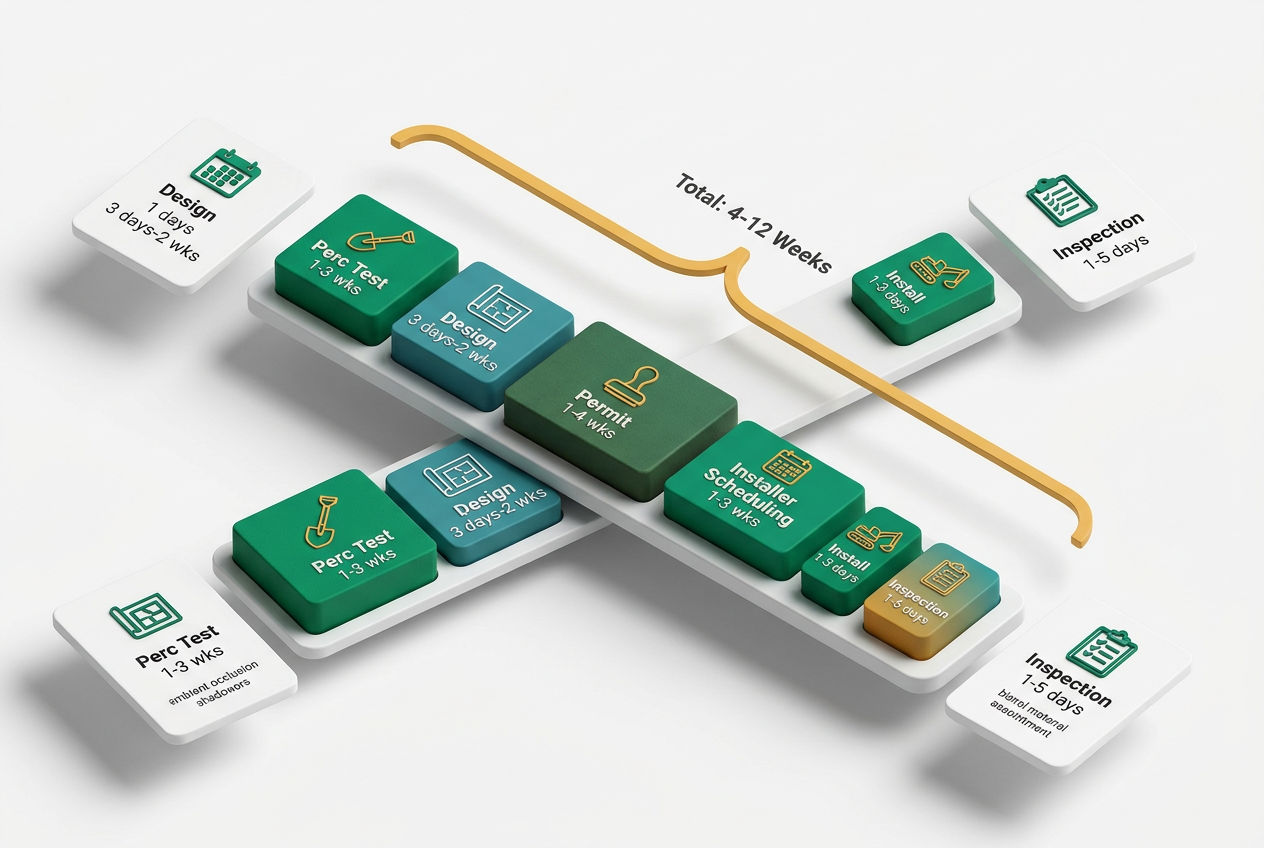
How long it takes to install a septic system is usually 4 to 12 weeks, counting from the first soil test to the final inspection. The digging and setting only take 1 to 3 days for a conventional gravity system. Most of the wait comes from perc test scheduling, design work, permit review and installer backlogs.
Key Takeaways
- Plan on 4-12 weeks total for a conventional system. Busy counties and engineered designs can push it to 3-6 months.
- On-site work is short: 1-3 days for a gravity system, 3-10 days for a mound or aerobic unit.
- The permit is the biggest variable. Rural counties may approve in 1-2 weeks; strict states can take 2-3 months.
- Spring is the slowest season. Late summer and early fall usually move fastest.
- A failed perc test can add weeks, because the system has to be redesigned.
How Long Does It Take to Install a Septic System, Start to Finish?
A typical septic installation timeline runs 4 to 12 weeks from site evaluation to final sign-off. Six steps happen in order: soil testing, design, permit review, installer scheduling, installation and inspection. Each step waits on the one before it, so a two-week delay at the permit desk becomes a two-week delay for the whole project.
Here's how the time usually breaks down for a conventional system on a buildable lot:
| Phase | Typical Time | Spring Peak Time |
|---|---|---|
| Site eval and perc test | 1-3 weeks | 3-6 weeks |
| System design | 3 days-2 weeks | 1-3 weeks |
| Permit review | 1-4 weeks | 3-8 weeks |
| Installer scheduling | 1-3 weeks | 3-6+ weeks |
| Installation | 1-3 days | 1-3 days |
| Inspection and backfill | 1-5 days | 3-10 days |
Source: ranges drawn from published county health department permit guidance, EPA's homeowner septic resources (epa.gov/septic), and typical installer lead times. Your county's numbers may differ.
Notice that the actual installation row barely changes by season. The paperwork and the waiting lists are what stretch. If you're building the whole system yourself, the same permit steps still apply. Our DIY septic system guide covers which parts a homeowner can legally do.
How Long Does the Perc Test and Site Evaluation Take?
A perc test usually takes 1 to 2 days on site, and the written report follows in about 1 to 3 weeks. The longer wait is often getting on the calendar. In spring, soil evaluators and county staff who must witness the test can be booked 3 to 6 weeks out.
The process is simple but slow. A backhoe digs one or more test pits, often 4 to 6 feet deep, so the evaluator can read the soil layers and look for signs of a seasonal high water table. Many counties also want percolation holes that are pre-soaked overnight before the water drop is timed in minutes per inch. That overnight soak is why the test rarely finishes in a single morning.
Some regions add their own calendar. Parts of the Pacific Northwest and New England want the seasonal high water table confirmed in the wet months, which can push your test into a specific window. In Massachusetts, Title 5 soil tests are witnessed by the local board of health, so you're working around their schedule too.
If your soil drains too fast or too slow, you don't start over from scratch, but you do lose time. A redesign for a mound or other alternative can add 2 to 6 weeks. Our guide to failed perc test options walks through what happens next.
How Long Does It Take to Get a Septic Permit?
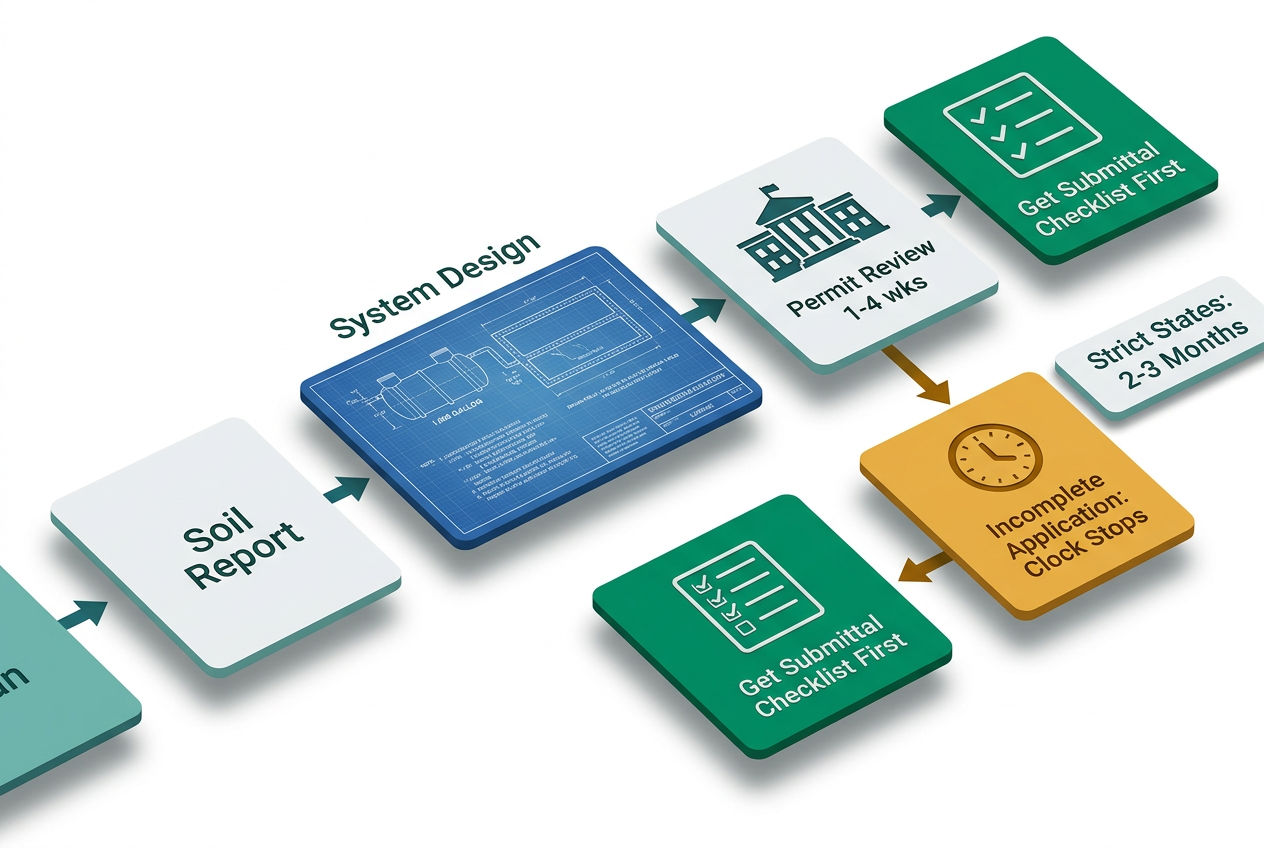
Getting a septic permit usually takes 1 to 4 weeks after you submit a complete application. In fast-growing rural counties and strict states like Massachusetts, Connecticut and New Jersey, review can take 2 to 3 months. Incomplete applications are the most common reason a permit sits in the queue. A complete septic site plan is the easiest way to avoid a resubmission.
Before the permit, someone has to draw the plan. A licensed designer or engineer turns the soil report into a septic system design showing tank size, drain field layout and setbacks from wells, property lines and buildings. A standard 3-bedroom plan with a 1,000-gallon tank can be done in a few days. An engineered mound or drip design often takes 1 to 3 weeks.
Then the plan goes to whoever regulates septic systems where you live. In Texas, that's usually a county or other local authorized agent working under TCEQ rules. In many other states, it's the county health department. Reviewers check sizing, setbacks and soil data. If anything is missing, the clock often stops until you resubmit.
Want to avoid that? Ask the county for its submittal checklist before your designer starts. Our breakdown of septic system permit requirements lists the documents most counties ask for.
How Long Does the Actual Septic Installation Take?
The physical installation of a conventional gravity septic system usually takes 1 to 3 days on an open, accessible lot. Day one is excavation and setting the tank. Day two is trenching and laying the drain field. Inspection and backfill often happen on day two or three, weather allowing. If you plan to do the work yourself, first check whether your state allows a homeowner install.
Here's what a typical three-day install looks like:
- Day 1: The crew digs the tank hole, sets a precast concrete or plastic tank, and runs the inlet pipe from the house. A 1,000-gallon concrete tank weighs roughly 4 to 5 tons, so it arrives on a boom truck.
- Day 2: They dig the drain field trenches, lay gravel and perforated pipe or plastic chambers, and set the distribution box so effluent splits evenly between the laterals.
- Day 3: The inspector checks the open system. Once it passes, the crew backfills, grades the site and installs risers so the lids sit at ground level.
Rock, tree stumps, a tight lot or a long run from the house can each add a day. For a closer look at each step, see our walkthrough of the septic system installation process.
Which Septic Systems Take Longer to Install?
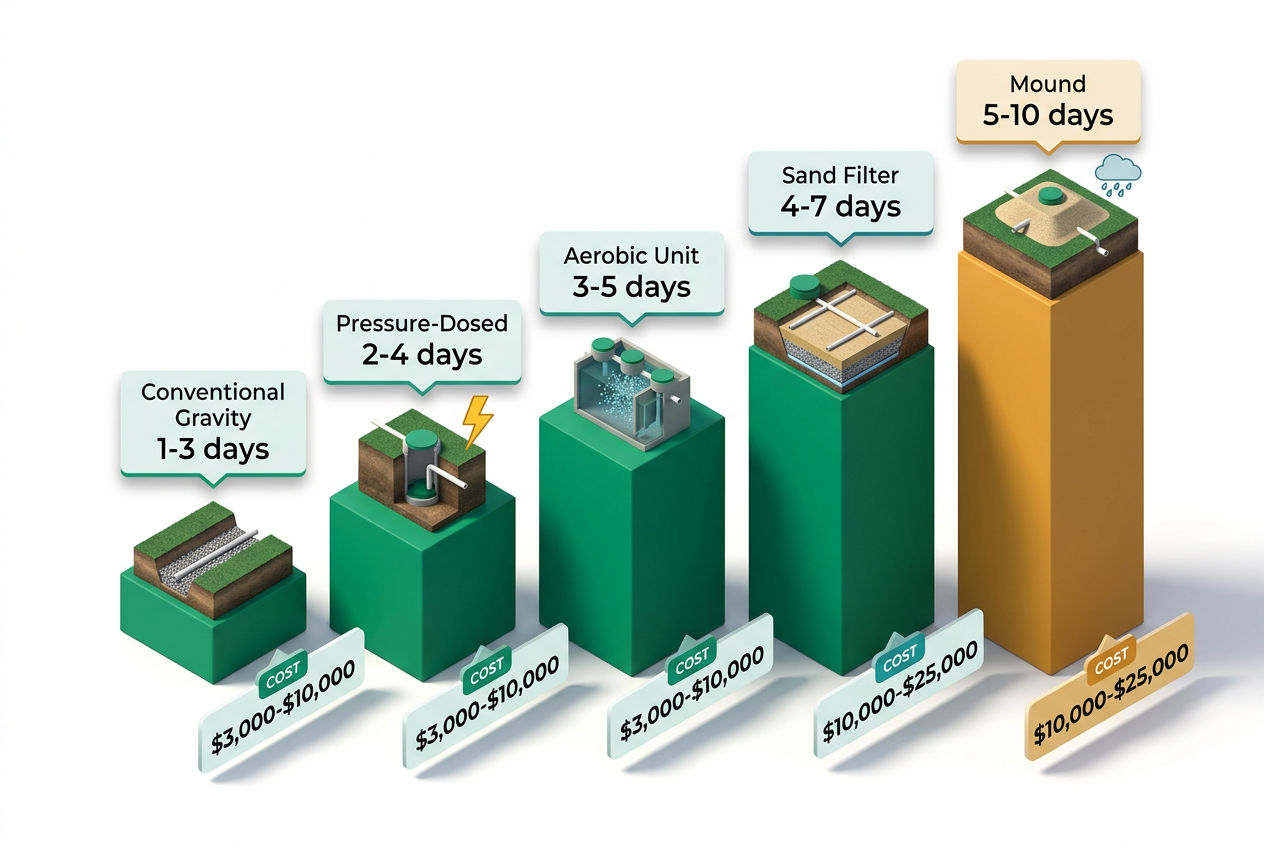
Alternative septic systems take longer to install than conventional ones because they have more parts and more inspections. A gravity system goes in within 1 to 3 days. A mound, sand filter or aerobic treatment unit typically takes 3 to 10 days on site, and their design and permit stages run longer too.
Typical on-site install times by system type:
- Conventional gravity (gravel or chamber): 1-3 days. Chamber systems are often a little faster because there's no gravel to haul and spread.
- Pressure-dosed or pump system: 2-4 days, plus time for an electrician to wire the pump and alarm panel.
- Aerobic treatment unit (ATU): 3-5 days, plus electrical work. Texas requires an initial two-year maintenance contract for aerobic units before the system can be approved.
- Sand filter: 4-7 days, since the filter bed has to be built and inspected in layers.
- Mound system: 5-10 days. The fill sand has to be placed and shaped in stages, and wet weather stops work entirely.
Mounds are common where soil is shallow or the water table sits high. Our guide to mound septic systems explains why they need so much extra fill and time. Longer installs also cost more. A conventional system often runs $3,000 to $10,000, while mounds and ATUs often land between $10,000 and $25,000. Our septic installation cost guide breaks down prices by system type.
How Long Does a Septic Replacement Take?
A septic system replacement often moves faster than new construction, usually 1 to 4 weeks. Many counties fast-track repair permits when a failing system is a health risk. The soil may already be on file, and the crew knows where the old tank and field are. A full drain field replacement can still take a month.
Picture this: you notice soggy grass and sewage smell over the leach field in late April. The pumper confirms the field has failed. You can't wait two months for a new system, and you shouldn't have to. Call the county right away and ask whether it offers an emergency or repair permit. Some issue them within days.
While you wait, you can keep using the house if you have the tank pumped often and cut water use hard. Some families rent a portable toilet for a week or two. If you're not sure your field is actually done, check the signs a drain field is failing before you commit to a full replacement.
Does the Season or Your State Change the Septic Installation Timeline?

DIY Septic Blueprint
Thinking about building it yourself?
The complete, plain-English plan to size, permit and install your own septic system — designed for homeowners, not contractors. Skip the $15,000–$25,000 quotes and do it right the first time.
Get the DIY Blueprint — $67 →Instant download · 8 modules + 3 bonus guides · 60-day money-back guaranteeYes. Season and location can double how long it takes to install a septic system. Spring brings saturated soil and the longest waiting lists for testers, inspectors and installers. Winter frost stops excavation in northern states. Late summer and early fall are usually the fastest months to get a system in.
A few regional patterns to plan around:
- Upper Midwest (MN, WI, MI): Once frost goes deep, usually by December, many installers stop trenching until spring. Then spring road weight limits can delay delivery of a heavy concrete tank.
- Florida and the Gulf Coast: High water tables often require mound or elevated systems, which add design and permit time. Our guide to septic on a high water table covers the options.
- Texas Hill Country and the Southwest: Year-round digging is possible, but limestone, caliche and rock can slow excavation from one day to three.
- Pacific Northwest: Wet-season soil testing rules can lock you into a testing window months before you build.
What Delays a Septic Installation, and How Do You Speed It Up?
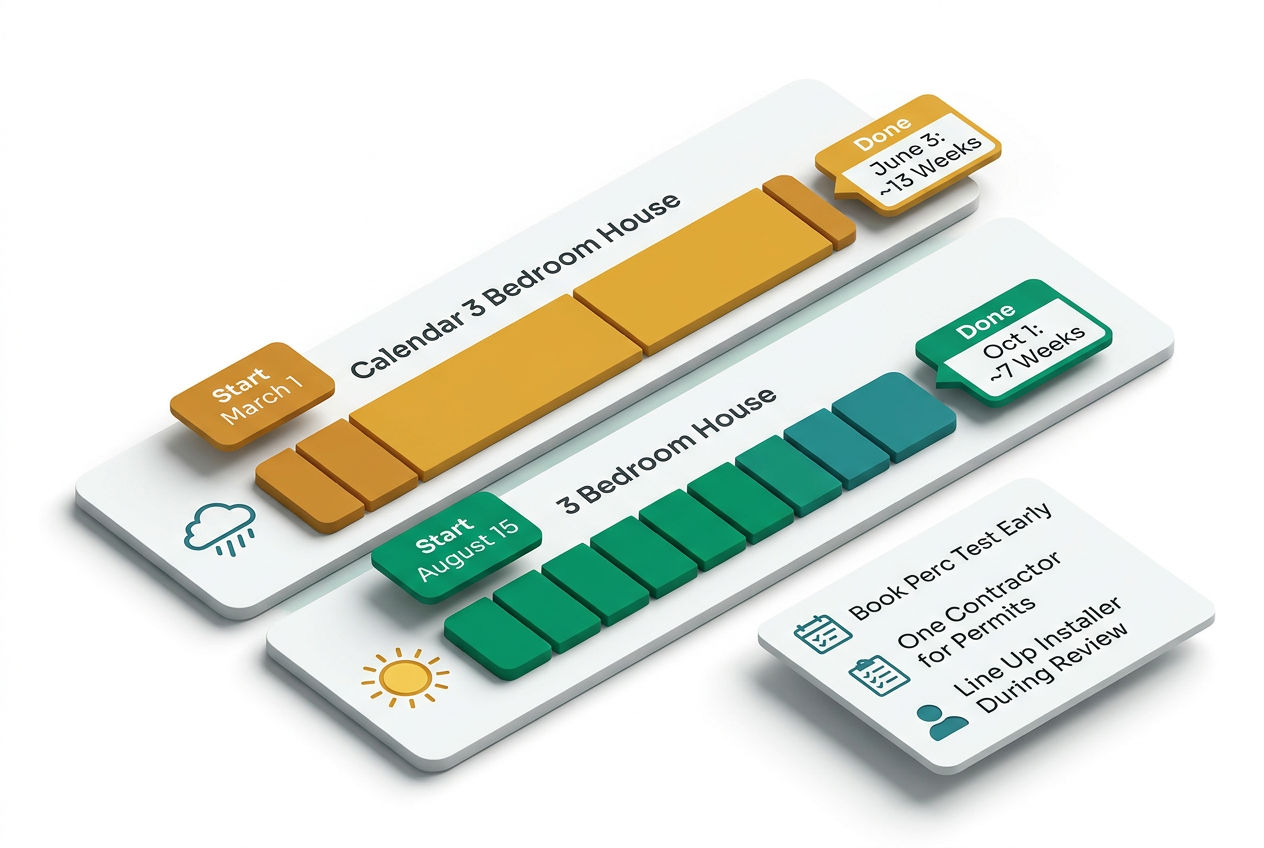
The biggest delays come from incomplete permit applications, failed perc tests, rain and installer backlogs. You can shorten the timeline by booking soil testing early, choosing an installer who handles permits, and scheduling outside spring. Starting in late summer can cut a 12-week project to about 7 weeks.
Here's a worked example for a hypothetical 3-bedroom build with a conventional system:
- Starting March 1 (spring): soil test booked for March 22, report April 5, design April 12, permit approved May 10, installer free May 31, install and inspection done June 3. That's about 13 weeks.
- Starting August 15 (late summer): soil test August 25, report September 2, design September 8, permit approved September 22, install September 29 to October 1. That's about 7 weeks.
Same house, same soil, six weeks apart. A few habits help no matter when you start:
- Book the perc test before you close on the land, or as soon as you own it.
- Hire one contractor who handles testing, design and permitting, so nothing falls between people.
- Ask the county how long reviews are running right now, not what the website says.
- Line up your installer while the permit is in review, not after.
Ready to get on a calendar? You can compare local septic installers and ask each one about current lead times.
How Soon Can You Use a New Septic System?
You can usually start using a new septic system as soon as it passes final inspection and the plumbing is connected. No break-in period is needed, and you don't need a starter additive. Normal household waste brings in the bacteria the tank needs within a few weeks.
The yard is a different story. Fresh backfill settles over the first few months, so expect to top off low spots with soil. Seed or sod the drain field area, keep vehicles off it, and don't plant trees nearby. For new construction, the final approval is often what the building department needs before it issues your certificate of occupancy, so get a copy of the as-built drawing for your records.
If you haven't started yet, the first step is finding a licensed pro near you. Search the SepticTankHub directory by city to find installers who work in your county.
Sources & Methodology
U.S. EPA Septic Systems (epa.gov/septic): Homeowner guidance on how septic systems work, permitting, and system types, including alternative systems.
Texas Commission on Environmental Quality (tceq.texas.gov): On-site sewage facility rules, authorized agent permitting, and maintenance contract requirements for aerobic treatment units.
Massachusetts Department of Environmental Protection (mass.gov): Title 5 rules for soil evaluation, witnessed percolation testing, and local board of health review.
University extension services (University of Minnesota Onsite Sewage Treatment Program): Guidance on soil evaluation, cold-climate installation, and mound system construction.
Methodology: Phase durations are ranges, not guarantees. They combine published county permit guidance with typical installer scheduling. Your county health department is the final word on review times in your area.
Primary sources to read: Texas TCEQ: OSSF permits · MassDEP: Title 5 new construction · University of Minnesota Onsite Sewage Treatment Program · EPA: types of septic systems
More Septic Design & Install Guides
- Septic system design: the complete guide
- How to draw a septic site plan
- How to do a perc test
- Septic tank excavation
- What septic system design costs
- Leach field design and sizing
- Can you install your own septic system? Rules by state
Frequently Asked Questions
How long does it take to get a septic permit?
Getting a septic permit usually takes 1 to 4 weeks after you submit a complete application. That clock starts after the perc test and design are done, which can add another 2 to 5 weeks before you even apply. Rural counties with few applications sometimes approve in under two weeks. Fast-growing counties and strict states like Massachusetts, Connecticut and New Jersey can take 2 to 3 months, especially in spring. The most common delay is a missing document, such as a site plan without well setbacks or a soil report without a signature. Many counties stop the review clock until you resubmit. To keep things moving, ask your county for its submittal checklist before the designer starts, and call after two weeks to confirm your file is complete.
How long to install a septic system once the permit is approved?
Once your permit is approved, a conventional septic system can be installed in 1 to 3 days. The real wait is usually the installer's schedule. In spring and early summer, good installers are often booked 3 to 6 weeks out. In late summer and fall, you may get a crew within a week or two. Alternative systems take longer on site. An aerobic treatment unit typically takes 3 to 5 days plus electrical work, and a mound system can take 5 to 10 days because the fill has to be placed in stages. After the crew finishes, the inspector has to approve the open system before backfill. Most counties want 24 to 48 hours' notice, so ask your installer to book the inspection when they book your install date.
What is a typical septic installation timeline for new construction?
A typical septic installation timeline for new construction is 6 to 12 weeks, and up to 6 months where permits are backlogged or an engineered system is needed. The order rarely changes. First comes the site evaluation and perc test, then the system design, then the permit review. After that you wait for an installer, the crew puts the system in over 1 to 3 days, and the county does its final inspection. On a new home, the septic approval is often required before the building department issues your certificate of occupancy. That means a septic delay can hold up your move-in date or a construction loan draw. Builders who plan well order the perc test before they finalize the house plans, because the soil results can change where the house fits on the lot.
How long does a perc test take?
A perc test usually takes 1 to 2 days on site, and the written results follow in 1 to 3 weeks. Most tests involve digging test pits with a backhoe, reading the soil layers, and timing how fast water drops in pre-soaked holes. The overnight soak is why many tests run into a second day. Scheduling is the slow part. In spring, soil evaluators and the county staff who witness the test can be booked 3 to 6 weeks ahead. Some areas in the Pacific Northwest and New England require testing during the wet season so the seasonal high water table can be confirmed. If the soil fails, expect another 2 to 6 weeks for a redesign. Book your perc test before you buy land, or as early as you can after closing.
Can you install a septic system in winter?
You can install a septic system in winter in most southern and coastal states, and sometimes in the north, but it's harder and slower. In Minnesota, Wisconsin and Michigan, frost often goes several feet deep by midwinter, and many installers stop trenching until spring. Frozen backfill is also a problem. Frozen clumps leave air pockets that settle later, and many inspectors won't approve drain field work done in frozen soil. Some contractors use ground thaw blankets or work during mild spells, but that adds cost. In Texas, Georgia or Florida, winter can be a good time to build because installers are less busy. If you're in a cold climate, aim to finish soil testing in fall and have your permit ready, so you can install as soon as the ground thaws.
Free download
Not ready for the Blueprint? Start free.
Grab the free DIY Septic Planning Kit — the permit-first checklist, perc-test cheat sheet, and sizing tables that keep your build from getting red-tagged.
Was this article helpful?
Frequently Asked Questions
Recommended Resources
📖 Related Articles
- DIY Septic System: How to Build Your Own (Step-by-Step)
- Land Failed the Perc Test? Here Are Your Options
- Septic System Design: Layouts, Drawings & Requirements
- Septic System Permit Cost & State Requirements (2026 Guide)
- What to Expect During Septic System Installation
- Mound Septic System: $10K–$25K Cost & How It Works (2026)
- Signs Your Drain Field Is Failing (And What to Do)
- High Water Table and Septic Systems: What You Need to Know
🔧 Services
Find Septic Professionals Near You
Compare licensed, verified septic companies by area — top county markets and cities below, or browse all 50 states.
County markets
Popular cities
