
Quick Answer
Learning how to build a septic system means navigating soil science, county health codes, licensed contractors, and a permit process that varies by jurisdiction. The short version: a conventional system costs $3,000–$15,000, takes 4–16 weeks from perc test to final inspection, and requires a licensed installer in most U.S. states. Alternative systems — mound, aerobic, sand filter — run $15,000–$30,000+ and involve additional design steps. Every phase is inspected before the next one begins.
About 21 million U.S. homes rely on private septic systems, according to the EPA — and every one of them went through this same process to get there. Whether you're putting in a system on raw land, replacing a failing one, or trying to understand what a contractor is going to do on your property, this guide walks through each phase with real costs, timelines, and installer-level detail.
Key Takeaways
- A conventional septic system installation costs $3,000–$15,000; alternative systems (mound, aerobic) run $15,000–$30,000+
- The full timeline — from perc test to inspection sign-off — typically runs 4–16 weeks
- Most states require a licensed septic contractor for installation; DIY is restricted or prohibited in the majority of jurisdictions
- A percolation test and soil evaluation must happen before any design or permit work begins
- Regulations are set at the county level, not just the state level — your neighbor's system design may not be legal on your lot
Can I Install My Own Septic System?
In most states, the answer is no — or at least not without significant restrictions. The majority of U.S. states require a licensed septic installer to pull the permit and oversee or perform the installation. Some states allow homeowners to install on their own property with a permit, but even then, the system must pass a licensed inspector's review before it can be used.
A failed installation isn't just expensive to fix — it's a public health issue. Improperly installed systems contaminate groundwater, violate health codes, and can trigger mandatory removal orders from the county. If you sell the home later, an unpermitted system is a major liability. Buyers' inspectors find these things.
Florida, for example, requires all septic contractors to hold a Registered Septic Tank Contractor (RSTC) license through the Florida Department of Health. Texas delegates licensing to county-level Designated Representatives, but the permit process is still non-negotiable. If you're seriously considering the DIY septic system route, read the regulations for your specific county before you do anything else.
Understanding the full build process makes you a better-informed buyer when hiring out. You'll know what each phase costs, what shortcuts look like, and whether your contractor's quote is reasonable.
How Do You Build a Septic System Step by Step?
Building a septic system follows a fixed sequence: soil testing, permit and design, tank selection, drain field installation, excavation, and final inspection. Skipping or rushing any phase creates problems that are expensive to diagnose and even more expensive to fix. Here's what each step actually involves.
Step 1: Soil Evaluation and Percolation Test
The first step in how to install a septic system is a soil evaluation and percolation test — not digging, not buying a tank. Before a single shovel breaks ground, your soil has to pass a test. The percolation test (perc test) measures how fast water moves through the soil in your drain field area. The result — expressed in minutes per inch (MPI) — determines whether a conventional system will work or whether you'll need an alternative design.
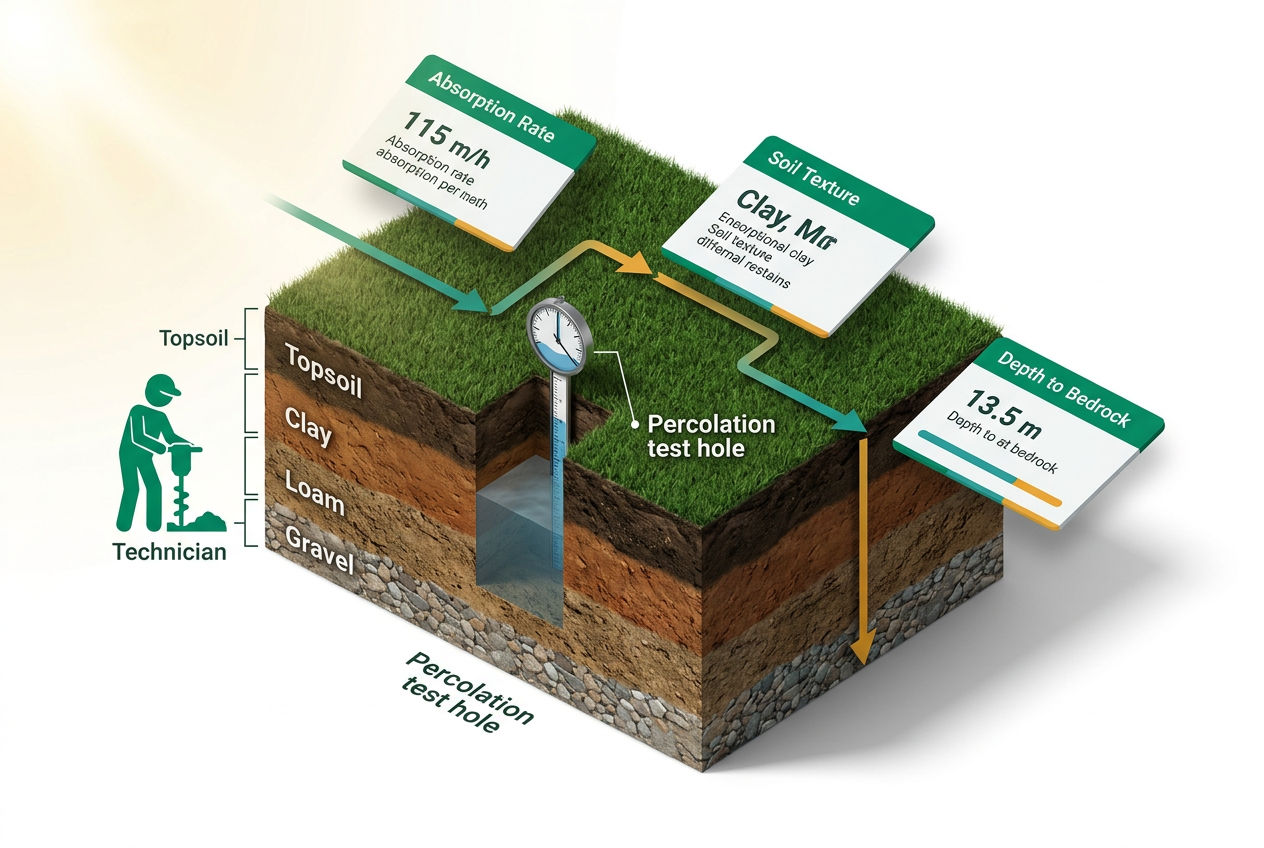
The sweet spot for conventional drain fields is 1–60 MPI. Soil that drains faster than 1 MPI (think coarse gravel) won't adequately treat effluent before it reaches groundwater. Soil slower than 60 MPI — dense clay, for example — won't accept wastewater at all. Either extreme pushes you toward an alternative septic system like a mound system, sand filter, or aerobic treatment unit.
Perc tests typically run $250–$1,000 depending on your region and how many test holes are required. Many counties also require a licensed soil scientist or engineer to evaluate the results. Scheduling the test through your county health department can take 2–8 weeks, especially in rural areas with a backlog of permit requests.
One regional note: in the Pacific Northwest and Northeast, many counties require perc tests to be conducted during the wet season — when soil is at its most saturated — to get the most conservative and realistic reading. If you're planning a spring installation, schedule your test the previous fall.
Learn more about what the perc test process involves before you schedule one.
Step 2: Permits and Septic System Design
Once your soil passes, a licensed engineer or designer draws up the system plan. This septic system design specifies tank size, drain field layout, pipe depths, setback distances, and materials. Design fees range from $500–$2,500 depending on lot complexity and whether an engineered solution is required.
That design goes to the county health department with your permit application. Permit fees vary widely — expect $200–$1,500+ depending on your county. Some jurisdictions process permits in two weeks. Others take two months. Spring is the worst time to apply in most regions; contractors get slammed and county offices get backed up simultaneously.
Setback requirements are non-negotiable. Typical minimums include:
- 50–100 feet from a private well (varies by state)
- 5–10 feet from property lines
- 10–25 feet from the foundation
- 50–100 feet from surface water (streams, ponds)
For a full breakdown of how these rules apply in your state, see our guide on septic system permit requirements.
Step 3: Choosing the Right Septic Tank
Tank selection depends on three things: household size, local code requirements, and soil conditions. Most states set a minimum of 1,000 gallons for a 1–3 bedroom home. A 4-bedroom house typically needs a 1,250–1,500-gallon tank. The average person generates 50–100 gallons of wastewater per day, so a family of four maxes out around 400 gallons daily — meaning even a 1,000-gallon tank provides roughly 2–3 days of buffer capacity.
The two most common materials are concrete and fiberglass. Here's how they compare:
| Feature | Concrete | Fiberglass |
|---|---|---|
| Typical cost | $700–$2,000 | $1,000–$2,500 |
| Weight | 8,000–12,000 lbs | 300–600 lbs |
| Crack risk | Moderate (age) | Low |
| Root intrusion | Possible at joints | Rare |
| Lifespan | 30–40 years | 30–40 years |
| Buoyancy risk | Very low | Moderate (high water table) |
Source: Infiltrator Water Technologies product specifications; NAWT installer guidance
Plastic tanks exist too — lighter and cheaper — but they're not approved in all states. A 1,000-gallon concrete tank is still the most commonly installed residential option across most of the country. For a detailed size comparison, the septic tank size chart is worth reviewing before you talk to a contractor.
How deep does the tank get buried? Most installations sit with the tank lid 12–24 inches below grade, though some installations go deeper depending on the inlet pipe elevation from the house. Deep burial requires septic tank risers — extensions that bring the access lid to ground level for easier future pumping.
Step 4: Drain Field Installation
The drain field — also called a leach field — is where treated effluent from the tank disperses into the soil. This is the most land-intensive part of the build, and it's where most installation problems originate.
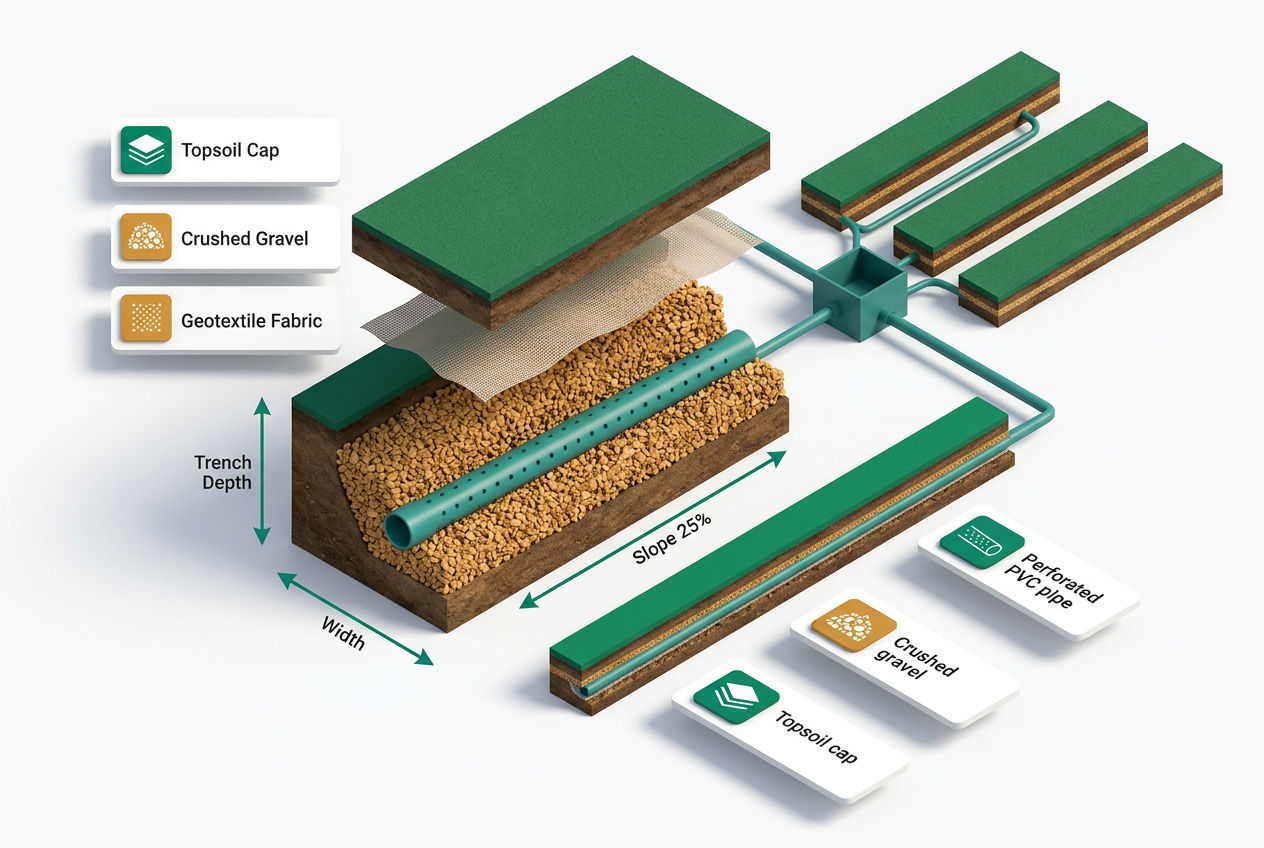
A conventional drain field consists of perforated pipe laid in gravel-filled trenches, typically 18–36 inches deep and spaced 6–10 feet apart. Effluent exits the septic tank through the outlet baffle, travels to a distribution box that splits flow evenly across the lateral lines, and slowly percolates down through the gravel and into the native soil.
In clay-heavy Midwest soils or high-water-table areas like coastal Florida and Georgia, a conventional trench system won't work. You're looking at a mound septic system — where imported sand fill raises the drain field above the native soil — or an aerobic treatment unit (ATU) that uses a Hiblow HP-80 aerator compressor to inject oxygen and accelerate bacterial digestion before discharge.
Modern installations often use Infiltrator chamber systems instead of traditional perforated pipe and gravel. These plastic arch-shaped chambers sit directly in the trench, eliminate the gravel layer, and typically require 40–50% less drain field area than conventional systems, according to Infiltrator Water Technologies installation data. They're code-approved in most states and are becoming the industry standard.
Field size depends on your perc rate and daily flow estimates. A 4-bedroom home generating 480 gallons per day in soil with a 30 MPI perc rate needs roughly 900–1,200 square feet of drain field area. Your engineer calculates this during the design phase — it's not a guess.
For a deeper look at how drain field installation works, including trench spacing and pipe specifications, we have a full guide.
Step 5: Excavation and Installation Day
Once permits are approved and materials are staged, the actual digging and installation moves fast. A conventional system takes 1–3 days for an experienced crew. Here's the sequence:
- Excavate the tank pit and trench lines
- Set the septic tank (concrete tanks are craned in; fiberglass tanks are lifted by hand or small equipment)
- Connect the inlet pipe from the house
- Install the outlet baffle and effluent filter (typically a Polylok PL-122 or Zabel A1800 filter)
- Set the distribution box and level it precisely — even a quarter-inch of tilt causes uneven flow across lateral lines
- Lay drain field pipe or Infiltrator chambers
- Install inspection ports at the end of each lateral line
- Backfill — but only after the inspector signs off on the open system
That last point matters more than homeowners realize. Many counties require a pre-backfill inspection, where a county health official physically walks the open trench and verifies pipe depth, slope, and setback compliance before any soil goes back in. Don't let a contractor skip this step. Once the system is buried, proving a violation requires excavation — and that cost falls on you.
For a complete walkthrough of what happens during the septic system installation process, including what to watch for on installation day, see our detailed guide.
How Much Does It Cost to Build a Septic System?

DIY Septic Blueprint
Thinking about building it yourself?
The complete, plain-English plan to size, permit and install your own septic system — designed for homeowners, not contractors. Skip the $15,000–$25,000 quotes and do it right the first time.
Get the DIY Blueprint — $67 →Instant download · 8 modules + 3 bonus guides · 60-day money-back guaranteeSeptic system cost depends on system type, lot conditions, local permit fees, and labor rates. Here's a realistic breakdown:
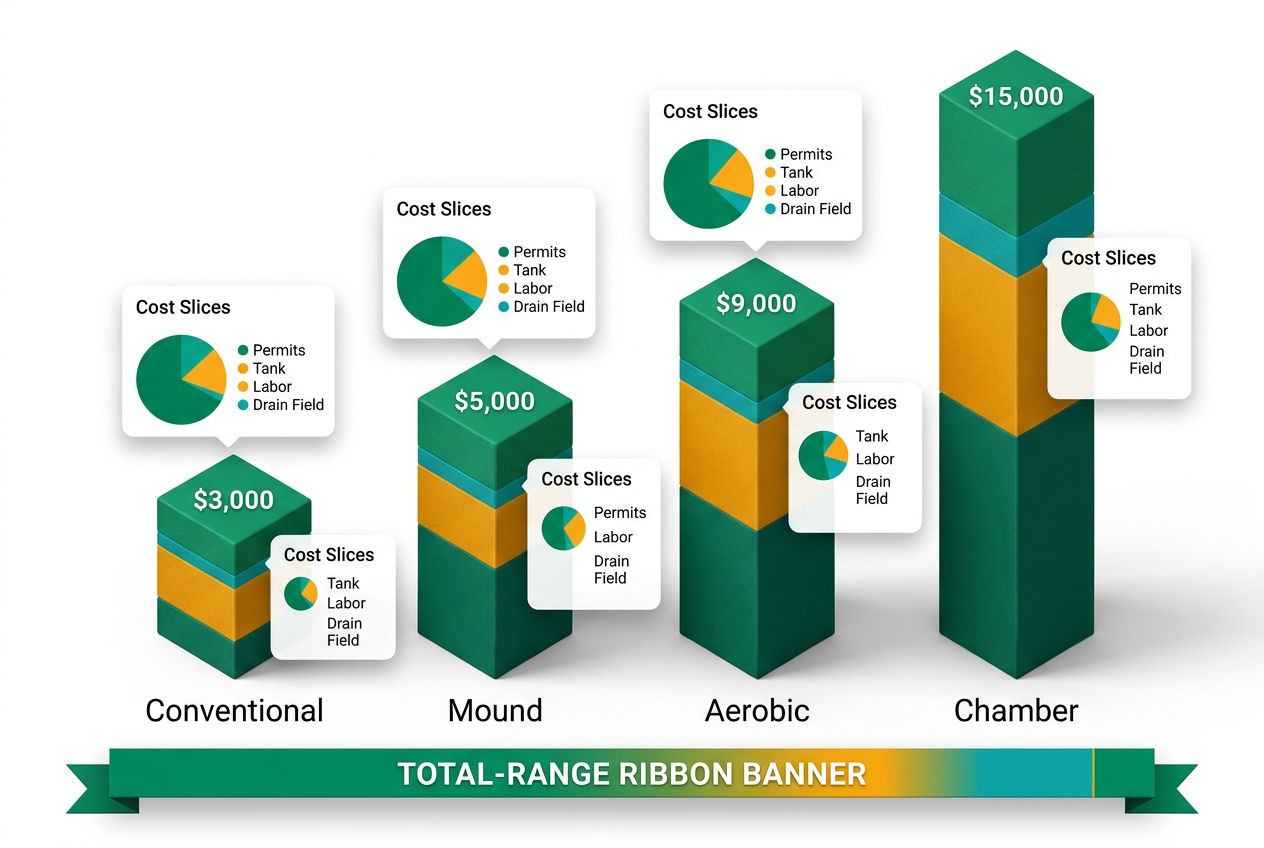
| System Type | Typical Total Cost |
|---|---|
| Conventional (gravity-fed) | $3,000–$15,000 |
| Mound system | $10,000–$25,000 |
| Aerobic treatment unit (ATU) | $15,000–$30,000+ |
| Sand filter system | $8,000–$18,000 |
| Drip irrigation system | $12,000–$25,000 |
The wide range within each category comes from regional labor rates, soil conditions that require more excavation, lot access issues, and whether the county requires an engineered design vs. a standard layout.
Worked example: A 3-bedroom home in rural Tennessee on a half-acre lot with a 20 MPI perc rate installs a conventional gravity-fed system: 1,000-gallon concrete tank ($900), distribution box ($150), 800 sq ft of Infiltrator chamber drain field ($2,800), excavation and labor ($3,500), permit ($350), perc test ($400). Total: approximately $8,100. Add an engineer's stamp for a complex lot and that climbs to $9,500–$10,500.
For a well and septic combination on raw land, see our well and septic cost guide — the two systems are often installed together and some contractors bundle the quote.
A detailed breakdown by region and system type lives in our septic installation cost guide.
How Long Does It Take to Install a Septic System?
The actual digging and installation takes 1–3 days. Getting to that point takes considerably longer.
| Phase | Typical Duration |
|---|---|
| Perc test scheduling | 2–8 weeks |
| Perc test and soil evaluation | 1 day |
| System design | 1–3 weeks |
| Permit review and approval | 2–8 weeks |
| Contractor scheduling | 1–4 weeks |
| Installation | 1–3 days |
| Final inspection | 3–10 days after installation |
Total realistic timeline: 6–16 weeks from first contact with the county to a system you can use. In high-demand rural counties, 20 weeks isn't unusual if you start the process in spring.
The single biggest delay point is permit review. Submit your application in late summer or early fall to get ahead of the spring rush. If your system requires an engineered design — which alternative systems do — add 2–4 weeks for engineering turnaround before you can even file the permit.
Should You DIY or Hire a Licensed Septic Installer?
Hire a licensed contractor. For most homeowners, that's the right answer — and it's not a close call.
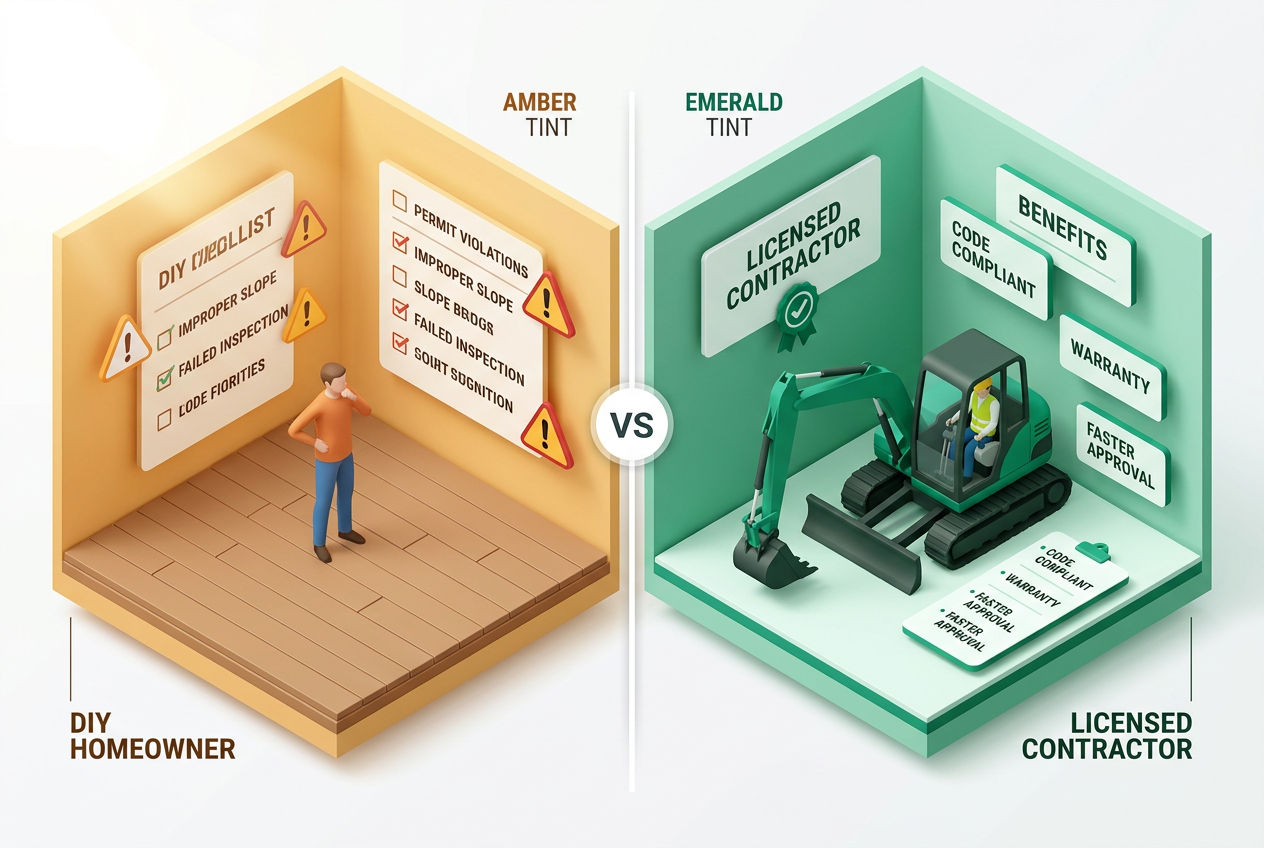
Here's the realistic picture on DIY septic system installation: in states that allow it (Montana, Wyoming, and a handful of others permit owner-installed systems with proper permits), you're still responsible for passing the same inspections a licensed contractor would pass. That means correct pipe slope, proper tank depth, accurate setback compliance, and a pre-backfill inspection with a county official present.
The errors that happen in DIY installations are almost never obvious ones. They're distribution box leveling errors that cause two of four lateral lines to carry 80% of the load. They're inlet pipe slopes that are off by half a percent, causing solids to back up rather than flow into the tank. These aren't cosmetic problems — they're system failures that cost more to fix than the labor you would have saved.
For a side-by-side comparison of costs and risks, see DIY vs. professional septic installation. For states that do allow owner installation, DIY septic system install requirements by state breaks down what each jurisdiction actually allows.
What's the Cheapest Way to Install a Septic System?
The cheapest septic system that meets code is almost always a conventional gravity-fed system with a concrete tank, a simple distribution box, and a standard perforated-pipe drain field — no pump, no aerator, no engineered mound.
Getting there requires soil that passes at 1–60 MPI, a lot with enough usable area for the drain field, and setbacks that don't complicate the design. If your soil or lot forces an alternative system, there's no budget workaround — the county won't approve an undersized or incorrectly typed system.
Ways to legitimately reduce cost:
- Use Infiltrator chambers instead of gravel-and-pipe — less excavation, less material hauling, lower labor hours
- Get three contractor quotes — labor rates for the same system can vary 30–40% within the same county
- Time your permit application for fall — faster review times mean less contractor idle time billed to you
- Check if your county has a plastic septic tank approval — plastic tanks run $300–$800 vs. $700–$2,000 for concrete, though they're not permitted everywhere
What you cannot cut: the perc test, the permit, the pre-backfill inspection, or the licensed installer requirement if your state mandates one. These aren't bureaucratic extras — they're what separates a 30-year system from a 5-year remediation project.
Septic System Lifespan and Maintenance
A properly installed and maintained conventional septic system lasts 25–40 years. The tank itself — particularly concrete — often outlives the drain field by a decade or more.
Drain fields fail for a predictable reason: biomat buildup. The biomat is a layer of biological material — bacterial slime and organic solids — that forms naturally around the leach lines. In a functioning system, it slows effluent flow just enough to improve treatment. When it gets too dense, it blocks absorption entirely. At that point, effluent backs up toward the tank, then toward the house.
The factors that accelerate biomat failure:
- Hydraulic overload — running more water per day than the system was sized for
- Chemical damage — bleach, antibacterial soaps, and drain cleaners kill the bacterial population that keeps the biomat controlled
- Solids carryover — a neglected tank that hasn't been pumped lets solids escape into the drain field, clogging pores that can't be unclogged
The standard maintenance schedule: pump every 3–5 years, inspect the outlet baffle and effluent filter annually, and avoid putting anything down the drain that isn't human waste or toilet paper.
For a full maintenance schedule and what to watch for at each service interval, see our septic tank maintenance guide.
Frequently Asked Questions About How to Build a Septic System
How do I install a septic system on my property?
Installing a septic system starts with a percolation test to determine whether your soil can support a conventional design. Once the test passes, a licensed designer draws up a site-specific plan — tank size, drain field dimensions, setback distances — and you submit that plan with a permit application to your county health department. After permit approval, a licensed contractor (required in most states) excavates the tank pit and drain field trenches, sets the tank, connects the inlet and outlet pipes, installs the distribution box and lateral lines, and requests a pre-backfill inspection before covering anything. The county inspector walks the open trench to verify slope, depth, and compliance. Only after sign-off does backfill proceed. Final inspection confirms the completed system. Total timeline from perc test to usable system runs 6–16 weeks depending on county processing speed and contractor availability.
How much does it cost to install a septic system?
Septic system installation cost ranges from $3,000–$15,000 for a conventional gravity-fed system and $15,000–$30,000 or more for alternative systems like mound or aerobic treatment units. A worked example: a 3-bedroom home in rural Tennessee with a passing perc test and a standard lot pays roughly $8,100 total — about $900 for a 1,000-gallon concrete tank, $2,800 for Infiltrator chamber drain field materials, $3,500 for excavation and labor, and $750 in permit and testing fees. Regional labor rates, soil conditions requiring extra excavation, engineered design requirements, and system type all affect the final number significantly. The cheapest legitimate system is a conventional gravity-fed design on soil that passes at 1–60 MPI. If your lot forces a mound or aerobic system, there's no way to bring costs down to conventional pricing. Get at least three contractor quotes — rates vary 30–40% within the same county.
What are the steps to build a septic system?
Building a septic system follows six steps in a fixed sequence. First, a percolation test determines soil absorption rate and system type eligibility. Second, a licensed designer creates a site plan specifying tank size, drain field layout, and setback distances. Third, the permit application — including the design — goes to the county health department for review and approval. Fourth, the contractor selects and orders the correct tank size based on bedroom count and local code minimums. Fifth, excavation and installation happen over 1–3 days: tank pit dug, tank set, inlet and outlet connections made, distribution box leveled precisely, lateral lines or Infiltrator chambers laid. Sixth, the county conducts a pre-backfill inspection before soil is replaced, and a final inspection after installation is complete. Each step must be completed and approved before the next begins — there's no legitimate way to compress the sequence.
Do I need a permit to install a septic system?
Yes — a permit is required in every U.S. state to install a septic system, and operating without one creates serious legal and financial exposure. Permit applications require a completed system design, perc test results, and site plan showing setback distances from wells, property lines, foundations, and surface water. Permit fees range from $200 to $1,500+ depending on the county. Review times range from two weeks to two months, with spring being the slowest period in most jurisdictions. An unpermitted system discovered during a home sale — which inspectors routinely check for — can kill the transaction or require mandatory removal at the seller's expense. If your state requires a licensed installer (most do), the contractor typically pulls the permit on your behalf as part of the installation contract. Confirm this before signing any agreement.
Can I build my own septic system without a contractor?
A small number of states — including Montana, Wyoming, and parts of other rural western states — allow property owners to install septic systems on their own land with a permit. Most states prohibit it or require that a licensed installer oversee and sign off on the work even if the homeowner performs some tasks. Even in permissive states, the system must pass the same inspections a licensed contractor's work would face: correct pipe slope, accurate setbacks, proper tank depth, and a pre-backfill inspection with a county official present. The errors that typically occur in owner-installed systems aren't obvious ones — they're distribution box leveling mistakes that overload two of four lateral lines, or inlet slopes that cause solids to back up. These failures cost more to diagnose and fix than the labor saved. Check your specific county's regulations before beginning any work.
What type of septic system is best for my property?
The best septic system for your property is determined by your soil's percolation rate, lot size, water table depth, and local code — not personal preference. Soil testing at 1–60 MPI with adequate drain field area qualifies for a conventional gravity-fed system, which is the least expensive option at $3,000–$15,000. Soil slower than 60 MPI, a high water table (common in coastal Florida, Georgia, and the upper Midwest), or a small lot typically requires an alternative system. Mound systems — which raise the drain field above native soil using imported sand — cost $10,000–$25,000. Aerobic treatment units, which use a compressor like the Hiblow HP-80 to aerate effluent before dispersal, run $15,000–$30,000 and require ongoing maintenance contracts in many states. Your county health department, through the permitting process, makes the final determination on what system type is approved for your lot.
Sources & Methodology
-
U.S. Environmental Protection Agency (EPA) — Septic Systems Overview. epa.gov/septic. Cited for 21 million U.S. homes statistic and general system type guidance.
-
Infiltrator Water Technologies — Chamber System Installation Manual and product specifications. Cited for 40–50% drain field area reduction figure and material cost data.
-
National Association of Wastewater Technicians (NAWT) — Installer training standards and tank material guidance. Cited in tank comparison table.
-
National Onsite Wastewater Recycling Association (NOWRA) — Soil evaluation standards and perc test methodology. Referenced for MPI threshold ranges and wet-season testing requirements.
-
Florida Department of Health — Registered Septic Tank Contractor (RSTC) licensing requirements. floridahealth.gov. Cited for Florida-specific licensing details.
Free download
Not ready for the Blueprint? Start free.
Grab the free DIY Septic Planning Kit — the permit-first checklist, perc-test cheat sheet, and sizing tables that keep your build from getting red-tagged.
Was this article helpful?
Frequently Asked Questions
Recommended Resources
📖 Related Articles
- DIY Septic System: How to Build Your Own (Step-by-Step)
- Alternative Septic Systems: Options When a Standard System Won't Work
- Perc Test (Percolation Test): What It Is & How It Works
- Septic System Permit Cost & State Requirements (2026 Guide)
- 1000-Gallon Septic Tank: Dimensions, Cost & Concrete vs Plastic
- Septic Tank Sizes & Dimensions Chart (by Bedrooms)
- How to Install Septic Tank Risers (and Why You Should)
- What Is a Distribution Box in a Septic System?
- Mound Septic System: $10K–$25K Cost & How It Works (2026)
- How to Install a Septic Drain Field
- What to Expect During Septic System Installation
- How Much Does a Well and Septic System Cost?
- Can You Install a Septic System Yourself?
- What Is the Cheapest Septic System? (Ranked by Total Cost)
- Plastic Septic Tanks: Sizes, Prices, Pros & Cons
- The Complete Septic Tank Maintenance Guide
Find Septic Professionals Near You
Compare licensed, verified septic companies by area — top county markets and cities below, or browse all 50 states.
County markets
Popular cities
