
Quick Answer
A septic system parts list is the full set of components that collect, treat and disperse household wastewater. It includes the building sewer pipe, a septic tank with inlet and outlet tees, an effluent filter, risers and lids, a distribution box or pump tank, 4-inch perforated pipe, washed gravel or chambers, geotextile fabric, and backfill.
Key Takeaways
- Every conventional system has four zones: the sewer line, the tank, distribution, and the drainfield.
- A 1,000-gallon tank costs about $1,000–$1,500, but a full conventional install runs $3,500–$8,500 (HomeGuide).
- Codes size tanks by bedroom count. Minnesota, for example, requires 1,000 gallons for up to 3 bedrooms; Florida's minimum for a typical 3-bedroom home is 900 gallons.
- Mound, aerobic and drip systems add pumps, alarms and controls, which means more parts and more upkeep.
- Get the design approved before you buy anything. Who may install the system varies by state.
A septic quote can arrive with line items like "D-box," "outlet tee" and "geotextile," and no explanation. Each one is a real part with a specific job. The sections below follow the order wastewater moves through the system. A checklist at the end lets you compare a quote against a complete septic system materials list.
For the big picture on how systems work, how long they last and what maintenance costs, start with our complete septic system guide. If you're weighing a DIY build, read our DIY septic system guide first, because states differ on who can do this work.
What Are the Main Parts of a Septic System?
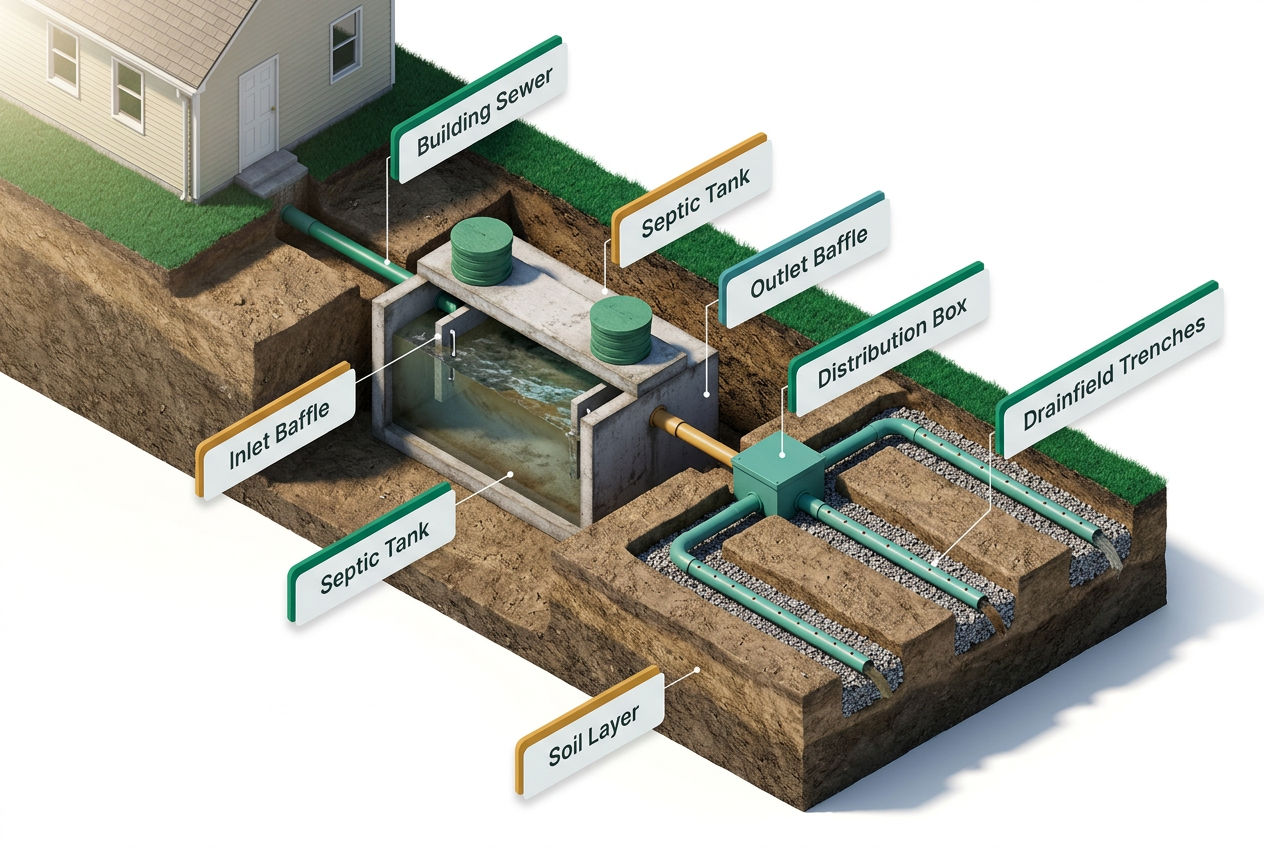
The main parts of a septic system are the pipe from your house, the septic tank, the drainfield, and the soil beneath it. The EPA's How Septic Systems Work page describes all household water leaving through one main drainage pipe into the tank, then flowing to a drainfield where the soil accepts, treats and disperses it. Every other item on a materials list supports one of those jobs.
The University of Georgia Extension simplifies it to three: the tank, the drain lines, and the soil treatment area (UGA's Beginner's Guide).
You can't buy soil, but it does the final treatment. A failed perc test can therefore change your whole parts list. The EPA lists mound systems as an option where soil is shallow, groundwater is high or bedrock is shallow, and those need a pump instead of a simple gravity layout. If you're still shopping for a lot, our guide to buying land for a house explains why a perc test should come before closing.
What Parts Make Up the Building Sewer?
The building sewer is the solid pipe that carries wastewater from your house to the tank. It includes solid PVC pipe, fittings, at least one cleanout, and bedding material. A sag or a bad slope here can cause backups that look like a tank problem.
Parts to buy:
- Solid PVC sewer pipe. Options include Schedule 40 and SDR-35. Your local code decides the diameter and grade.
- Long-sweep fittings. Gentle bends give solids a smoother path than sharp 90-degree elbows.
- Cleanout. A capped access point lets a plumber snake the line without digging.
- Bedding sand or fine gravel under the pipe so it doesn't settle and sag.
The pipe needs a steady downhill pitch, set by your code. Our septic pipe slope guide covers the numbers.
In cold climates, a shallow sewer line can freeze. Bury it deeper or insulate it where it leaves the foundation.
What Septic Tank Parts Do You Need?
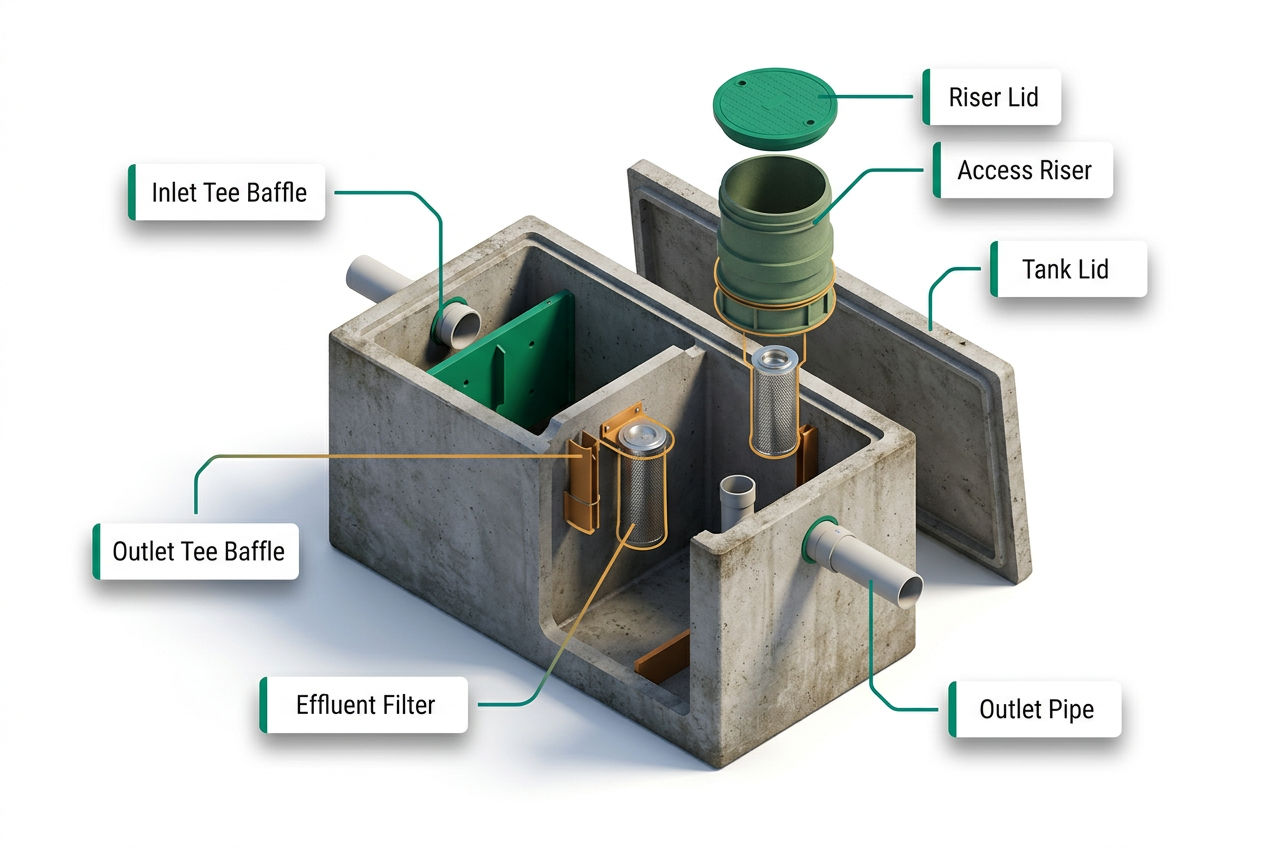
The core septic tank parts are the tank itself, inlet and outlet baffles or tees, an effluent filter, risers with secure lids, and inspection ports. The tank holds wastewater long enough for solids to sink and grease to float. The other parts keep that separated material from escaping into your drainfield.
The Tank
The EPA describes the septic tank as a buried, watertight container, usually made of concrete, fiberglass or polyethylene. Each material has tradeoffs, as summarized in HomeGuide's septic system cost guide:
- Concrete: The most common material, according to HomeGuide. It's heavy, so it needs heavy equipment to transport and set, but that weight also keeps it from floating when the water table is high.
- Polyethylene (plastic): Lightweight and easy to handle on tight sites and hard-to-reach lots. Because it's light, it can float upward when the water table is near the tank, so it must be installed to the manufacturer's spec.
- Fiberglass: Rustproof and stronger than plastic, per HomeGuide. It can also shift or float near a high water table.
Our concrete vs. plastic septic tank comparison goes deeper.
Sizing. Codes size tanks by bedrooms, not by how many people live there. Bedroom count is a proxy for how many people a home could house over its life. HomeGuide's tank price table pairs these sizes with home sizes:
- 750 gallons for 1–2 bedrooms
- 1,000 gallons for 3 bedrooms
- 1,250 gallons for 4 bedrooms
- 1,500 gallons for 5 bedrooms
Codes set their own minimums. Minnesota Rules 7080.1930 require 1,000 gallons for 3 or fewer bedrooms and 1,500 gallons for 4 or 5, and at least 50% more if a garbage disposal is installed or planned. Florida's rule, 62-6.008 of the Florida Administrative Code (formerly 64E-6.008), sizes tanks by estimated daily flow based on bedrooms and building area; a 3-bedroom home of 1,201 to 2,250 square feet needs at least 900 gallons. Confirm with your health department, or check our septic tank size chart.
Baffles and Tees
The inlet tee slows incoming water so it doesn't stir up the sludge. The outlet tee draws liquid from the middle layer, below the floating scum and above the settled sludge. According to the EPA's homeowner guide, the T-shaped outlet prevents sludge and scum from leaving the tank and traveling to the drainfield. A missing outlet baffle lets those solids flow into the drainfield, where they can clog it.
Effluent Filter
An effluent filter slides into the outlet tee and catches small solids before they leave the tank. One common residential model, the Polylok PL-122, was listed at $90 at SepticSolutions.com in November 2026. That is a small cost next to a drainfield worth thousands.
The filter has a limitation: it only works if someone cleans it. A clogged filter backs water up into the house. Plan to hose it off at every pumping. Our effluent filter guide shows how.
Risers, Lids and Inspection Ports
Risers bring the tank's access openings up to ground level. They let you find, inspect and pump the tank without digging. The EPA notes that an access riser, often a black or green disc, is one visible sign that a home has a septic system.
Get lids that lock or screw down so kids and pets can't open them. In cold climates, insulated lids help. See our septic tank risers guide for heights and materials.
Do You Need a Distribution Box or a Pump Tank?
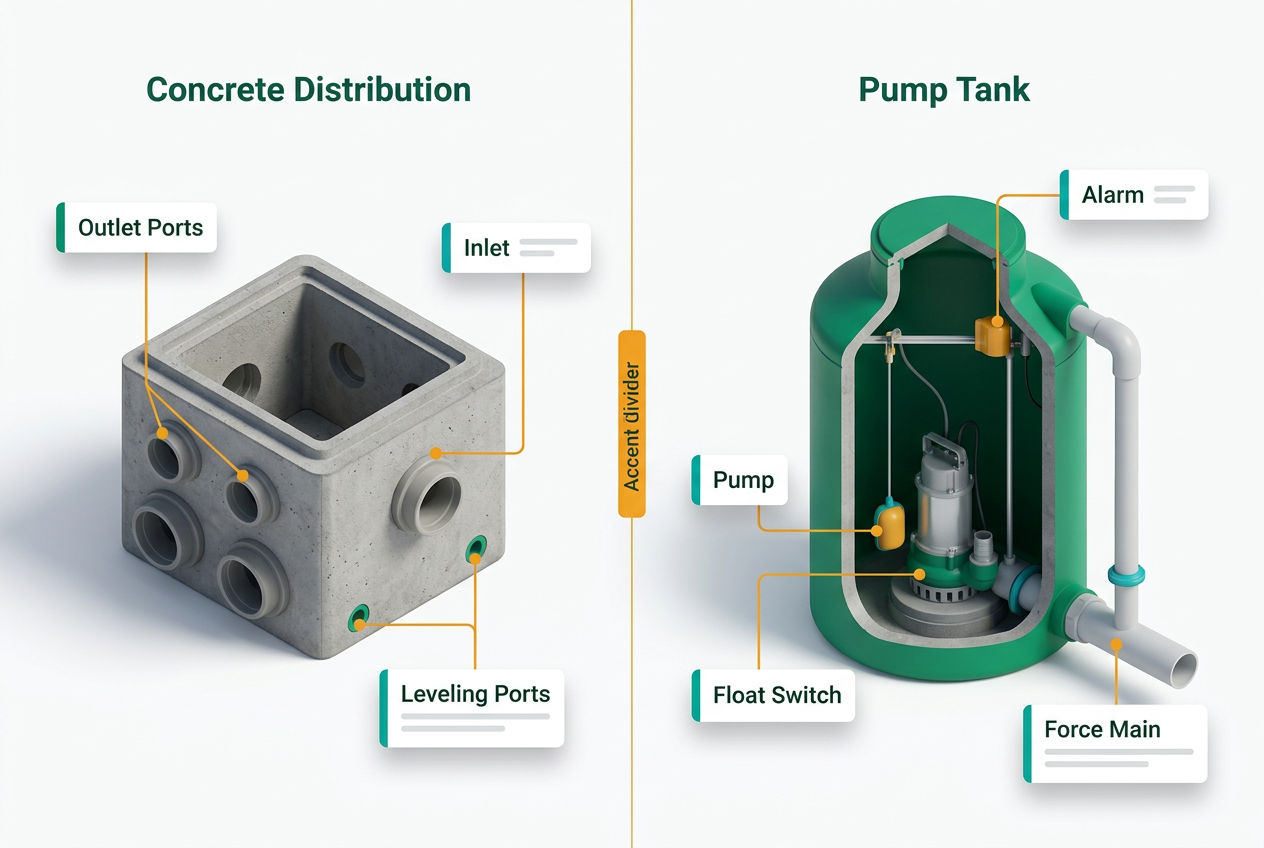
You need a distribution box if gravity can carry effluent from the tank to the drainfield. You need a pump tank if the drainfield sits uphill, is far away, or requires pressure dosing. According to UGA Extension, a D-box sits between the tank and the drain lines and sends wastewater to several lines in the drainfield.
Gravity Distribution
- Distribution box (D-box): A small concrete or plastic box with one inlet and several outlets.
- Flow equalizers or speed levelers: Small inserts that balance flow if the box settles slightly out of level.
- Solid pipe from the tank to the D-box and from the D-box to each lateral.
A D-box that settles out of level sends more water down some trenches than others, which can overload them. Our septic distribution box guide explains how to level and check it.
Pumped Distribution
A pump system adds several parts:
- Pump tank (dosing chamber): A second tank after the septic tank.
- Effluent pump: Sized for the vertical lift and pipe distance.
- Float switches: These turn the pump on and off and trigger the alarm.
- High-water alarm: A light and buzzer that warn you before an overflow.
- Control panel and dedicated electrical circuit.
- Check valve and pressure line.
The EPA's SepticSmart guide says systems with mechanical parts generally need inspection once a year. A typical household system needs inspection at least every three years. Learn more in our septic pump tank guide.
What Size Pipe Is Used for a Septic Drainfield?
Conventional pipe-and-gravel drainfields use perforated pipe laid in washed rock. UGA Extension's design diagram shows 4-inch perforated PVC pipe surrounded by washed rock, covered with geotextile fabric, and topped with at least 6 inches of backfill. Pressure-dosed and drip systems use small-diameter pressurized lines, so your design sets the final size.
Drainfield materials list:
- 4-inch perforated PVC pipe, with the holes facing down.
- Washed drain rock. It must be clean, because fine dust clogs the soil underneath. Our leach field gravel guide covers sizing.
- Geotextile fabric over the rock so soil doesn't wash into it.
- Backfill soil, at least 6 inches per UGA Extension. Your code may require more.
- Inspection ports at trench ends to check for standing water.
- End caps.
The gravelless option. Plastic leaching chambers, such as Infiltrator Water Technologies' Quick4 line, replace both the pipe and the gravel. They make sense where good rock is expensive or the site is hard for dump trucks to reach. States size chamber fields under their own rules, so check yours before you price either option.
Which Extra Parts Do Alternative Systems Need?
Alternative systems need extra parts because the soil can't treat wastewater on its own. That happens with high water tables, clay, shallow bedrock, or nitrogen-sensitive coastlines. HomeGuide puts alternative systems at $4,000–$15,000 and engineered systems at $15,000–$50,000+. The added parts explain much of that jump.
- Mound systems: The EPA describes these as an option for shallow soil, high groundwater or shallow bedrock. Effluent flows to a pump chamber and is pumped to a drainfield trench inside a constructed sand mound in prescribed doses, and HomeGuide notes the mound uses a specific sand fill material. See our mound septic systems guide.
- Aerobic treatment units (ATUs): These add an aerator that injects oxygen into a treatment tank, electrical controls and, in some systems, a pretreatment tank and a disinfection step (chlorine or UV), according to the EPA and HomeGuide. In Texas, 30 TAC §285.7 requires an initial two-year service policy with a licensed maintenance provider for systems like these.
- Drip distribution: This adds a dose tank and pump, small-diameter pressurized drip lines with emitters, and controls. Texas rules (30 TAC §285.33) also require a filter that catches particles larger than 100 microns and a way to flush the lines.
- Nitrogen-reducing units: Maryland requires Best Available Technology (BAT) for nitrogen removal on septic systems in the Chesapeake Bay Critical Area (COMAR 26.04.02.07). On Cape Cod, Massachusetts Title 5 (310 CMR 15.000) amendments that took effect July 7, 2023 require owners in designated Nitrogen Sensitive Areas to upgrade to Best Available Nitrogen Reducing Technology unless their town obtains a watershed permit. These units add treatment components beyond a standard tank.
Every pump, blower or controller is another part that can fail and another line on the annual service bill.
Who Can Buy and Install Septic System Parts in Your State?

DIY Septic Blueprint
Thinking about building it yourself?
The complete, plain-English plan to size, permit and install your own septic system — designed for homeowners, not contractors. Skip the $15,000–$25,000 quotes and do it right the first time.
Get the DIY Blueprint — $67 →Instant download · 8 modules + 3 bonus guides · 60-day money-back guaranteeA homeowner can generally buy septic system parts, but installation rules vary by state. Florida registers septic tank contractors through its Department of Environmental Protection under Part III of Chapter 489, Florida Statutes. Texas delegates permitting to local permitting authorities, including county "authorized agents," under 30 TAC 285. Texas also lets the owner of a single-family home install a system on their own property without an installer license, as long as a licensed site evaluator or professional engineer does the site evaluation and the permitting authority's rules are met (TCEQ; 30 TAC §30.244).
Get design approval before you buy anything. An approved design fixes tank size, field size and material type. Parts bought too early may not match what the inspector signs off on. Our septic permit guide covers the steps.
Season matters too. In northern states, frozen ground can push installs and final inspections into spring, so order parts once the design is approved, not the week the ground thaws.
How Much of a Septic Quote Goes to Parts?
The tank is usually a smaller share of a septic quote than people expect. HomeGuide puts installation labor at nearly 50% of the total cost of installing a system. Here is our worked example for a 3-bedroom conventional gravity system with a $7,500 quote:
| Line item | Example cost | Share of $7,500 |
|---|---|---|
| 1,000-gal concrete tank, delivered and set | $1,500 | 20% |
| Excavation and labor | $2,800 | 37% |
| Drain rock, pipe, fabric, D-box | $1,600 | 21% |
| Risers, lids, effluent filter, sewer pipe | $500 | 7% |
| Permit, perc test and design | $1,100 | 15% |
| Total | $7,500 | 100% |
SepticTankHub estimates for illustration, built from HomeGuide's ranges. They are not a quote, and your local prices will differ.
If one bid is $2,000 lower than the others, use the checklist below to find the missing part. Gaps to look for are no effluent filter, no risers, or less drain rock than the design calls for. For current local ranges, see our septic installation cost guide.
Beyond the examples above, this article doesn't list exact part prices. They swing widely by region, tank material and fuel costs, so a written local quote is more reliable than any national figure.
What Belongs on a Printable Septic System Parts List?
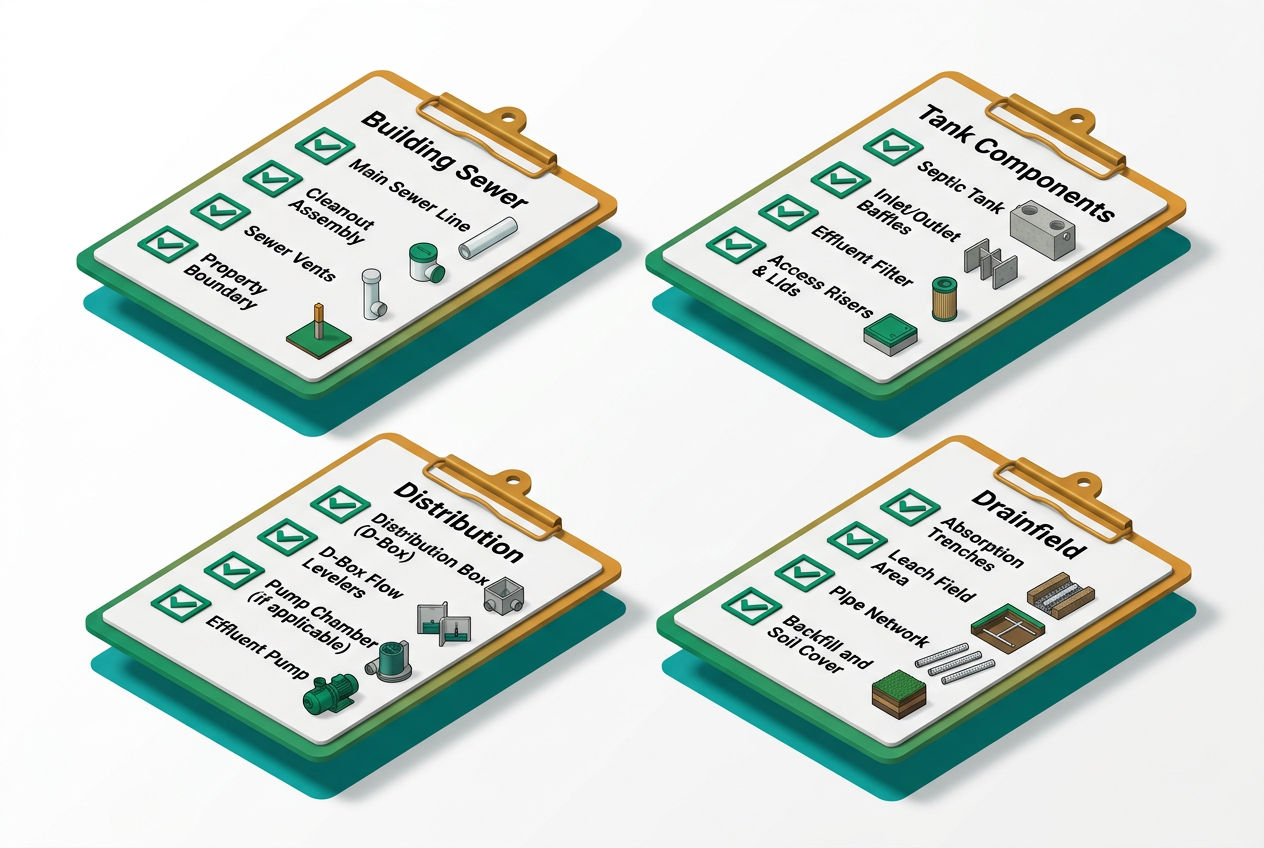
A printable septic system parts list should name every component from the house to the drainfield, so you can tick items off at the supply yard or line them up against a contractor's quote. Use the checklist below. Cross out sections your design doesn't call for.
Building sewer
- Solid PVC sewer pipe (Schedule 40 or SDR-35, diameter and grade per code)
- Long-sweep fittings
- Cleanout(s)
- Bedding sand or fine gravel
- Insulation (cold climates)
Septic tank
- Tank (concrete, poly or fiberglass), sized to bedroom count
- Inlet tee or baffle
- Outlet tee or baffle
- Effluent filter
- Risers to grade
- Locking or screw-down lids
- Inspection ports
Distribution (gravity)
- Distribution box
- Flow equalizers
- Solid pipe to the D-box and laterals
Distribution (pumped)
- Pump tank
- Effluent pump
- Float switches
- High-water alarm
- Control panel and dedicated circuit
- Check valve and pressure line
Drainfield
- 4" perforated PVC pipe or leaching chambers
- Washed drain rock (skip if using chambers)
- Geotextile fabric
- Inspection ports
- End caps
- Backfill soil
Alternative system add-ons (if specified)
- Mound fill sand (per design)
- ATU aerator and disinfection unit
- Drip tubing, filter and flush valves
- Nitrogen-reducing treatment unit
Buying a home that already has a system? Pair this septic tank and system checklist with our home inspection checklist, and ask for a separate septic inspection.
Frequently Asked Questions
What is on a septic system materials list?
A septic system materials list covers everything from the house to the drainfield:
- Solid sewer pipe and a cleanout
- A septic tank with inlet and outlet tees
- An effluent filter
- Risers and locking lids
- A distribution box or a pump tank with floats and an alarm
- 4-inch perforated pipe or plastic chambers
- Washed drain rock, geotextile fabric, inspection ports, end caps and backfill
Alternative systems add items like blowers, drip tubing or mound sand. The approved design from your health department is the final authority on quantities and specs. Avoid buying from a generic list before the design is stamped, because tank size and drainfield length depend on your perc test and bedroom count. Our septic permit guide explains when that approval happens.
How much do septic tank parts cost compared to a full septic system?
The tank is a minority of the total. HomeGuide puts a 1,000-gallon tank at $1,000–$1,500 and a complete conventional install at $3,500–$8,500. By our estimate, small parts such as tees, an effluent filter and risers add a few hundred dollars. HomeGuide puts labor alone at nearly 50% of the cost of installing a system, and engineering, permits and inspections at $1,000–$1,500. In our $7,500 example quote, the tank is about 20% of the total. Alternative systems shift the math: HomeGuide lists alternative systems at $4,000–$15,000 and engineered systems at $15,000–$50,000+. For local figures, see our septic installation cost guide, and get at least three written quotes that list parts line by line.
What size septic tank does a 3-bedroom house need?
It depends on your state's code. Minnesota requires at least 1,000 gallons for homes with three or fewer bedrooms, and 50% more if a garbage disposal is installed or planned. Florida sizes tanks by estimated daily flow, and its minimum for a 3-bedroom home of 1,201 to 2,250 square feet is 900 gallons. UGA Extension notes that the average 3-bedroom, 2-bathroom home will often have a 1,000-gallon tank. Codes size tanks by bedrooms rather than occupants because bedrooms predict how many people could live there later. If you plan to add a bedroom, ask whether you should size up now. Upsizing during installation costs far less than replacing a tank later. Confirm the exact minimum with your county health department, or check our septic tank size chart for common ranges.
Can I buy septic system parts myself?
Usually, yes. Supply yards and online retailers sell tanks, pipe, filters and chambers to the public. Installing them is a different matter, and the rules vary by state. Florida registers septic tank contractors through its Department of Environmental Protection under Part III of Chapter 489, Florida Statutes. Texas lets the owner of a single-family home install a system on their own property without an installer license, but a licensed site evaluator or professional engineer must do the site evaluation, the permitting authority's rules still apply, and anyone you pay to help must be a licensed installer. Buying parts before the design is approved risks a mismatch with what the inspector requires. If you hire out the work, ask whether your installer will accept and warranty owner-supplied parts. Our DIY septic system guide covers which states allow homeowner installs.
Which septic parts need replacing most often?
Mechanical and access parts are the usual candidates. Effluent pumps, float switches, alarms and ATU blowers are mechanical or electrical parts that eventually wear out, which is why the EPA says systems with them generally need inspection once a year. Effluent filters need cleaning at every pumping. Concrete parts can corrode; UGA Extension notes that acids can corrode concrete tanks and distribution boxes. Lids can crack under mower and vehicle traffic. The tank and drainfield last the longest when the system is pumped on schedule, which the EPA puts at every three to five years for most households. If you need a pro for repairs or replacement, use our septic installation service directory.
Shopping for a packaged kit instead of single parts? Our guide to septic system kits explains what a kit includes and what it leaves out.
Sources & Methodology
This parts list was compiled from federal, extension and state regulatory sources. Costs come from HomeGuide's published ranges and are rounded; the worked example and any figure labeled as our estimate are SepticTankHub estimates. Local prices vary.
- U.S. EPA, How Septic Systems Work and Types of Septic Systems: epa.gov/septic/how-your-septic-system-works, epa.gov/septic/types-septic-systems
- U.S. EPA, A Homeowners' Guide to Septic Systems (SepticSmart): epa.gov PDF
- U.S. EPA, Frequent Questions on Septic Systems: epa.gov/septic/frequent-questions-septic-systems
- University of Georgia Extension, A Beginner's Guide to Septic Systems (B1421): fieldreport.caes.uga.edu
- Minnesota Rules 7080.1930 (septic tank capacity): revisor.mn.gov
- Florida Administrative Code, Rule 62-6.008 (formerly 64E-6.008), Standards for Onsite Sewage Treatment and Disposal Systems: law.cornell.edu
- Florida DEP, Septic Tank Contractor Registration (Chapter 489, Part III, F.S.): floridadep.gov
- Texas Administrative Code, Title 30, Chapter 285 (On-Site Sewage Facilities), §285.7 and §285.33, and §30.244 (installer license exemptions): §285.7, §285.33, §30.244; TCEQ, OSSF permits: tceq.texas.gov
- Maryland COMAR 26.04.02.07 (BAT in the Critical Area); Anne Arundel County Department of Health, BAT requirements: aahealth.org
- Massachusetts 310 CMR 15.000 (Title 5), 2023 Nitrogen Sensitive Area amendments, as summarized by the National Law Review (July 27, 2023): natlawreview.com
- HomeGuide, septic tank system cost guide (accessed November 2026): homeguide.com
- SepticSolutions.com, Polylok PL-122 effluent filter listing (checked November 2026)
Limitations: This guide covers residential systems in the U.S. It doesn't replace a site-specific design. No part on this list fixes a system that was sized or sited wrong.
Free download
Not ready for the Blueprint? Start free.
Grab the free DIY Septic Planning Kit — the permit-first checklist, perc-test cheat sheet, and sizing tables that keep your build from getting red-tagged.
Was this article helpful?
Frequently Asked Questions
Recommended Resources
📖 Related Articles
- DIY Septic System: How to Build Your Own (Step-by-Step)
- Septic Pipe Slope: The Right Fall From House to Tank to Drain Field
- Concrete vs Plastic Septic Tanks: Which Is Better?
- Septic Tank Sizes & Dimensions Chart (by Bedrooms)
- Septic Effluent Filters: Do You Need One?
- How to Install Septic Tank Risers: Riser Kit Guide
- What Is a Distribution Box in a Septic System?
- Septic Pump Tank: How a Septic System With a Pump Works, Costs & Installs
- Gravel for a Leach Field: Size, Depth & How Much You Need
- Mound Septic System: $10K–$25K Cost & How It Works (2026)
🔧 Services
Find Septic Professionals Near You
Compare licensed, verified septic companies by area — top county markets and cities below, or browse all 50 states.
County markets
Popular cities
