
Quick Answer
By the SepticTankHub Editorial Team. Sources are listed at the end.
A septic system kit is a bundle of parts for a conventional gravity system. It usually includes the tank plus some mix of risers, lids, an effluent filter, a distribution box and drain field chambers or pipe. Permits, perc tests, design, excavation and inspection are never included.
At a Glance
- A septic system kit covers parts only. It never replaces a permit, a soil or perc test, an approved design, excavation or a final inspection.
- Materials run about $1,500–$5,000 (SepticTankHub estimate). HomeAdvisor's figures put a professionally installed system at $8,017 on average, with most homeowners paying $3,593–$12,463.
- Expect to need a septic permit for a kit install. North Carolina and Florida, for example, require permits and inspections, while Texas exempts some homes on 10 acres or more. Your county health department sets the exact rules.
- Kits fit conventional gravity sites. HomeAdvisor notes that mound systems are often necessary where the water table is high, the soil is shallow or bedrock is close to the surface, and a gravity kit won't build one.
- Buy the kit only after your site passes a perc test and your design is approved.
Picture a pallet landing on your rural lot. It holds a tank-and-drain-field bundle you ordered online. A week later, the county tells you the soil failed the perc test and you need a mound system. What do you do with a 1,250-gallon tank and a stack of chambers you can't use? That's why the order of operations below matters more than any price comparison.
What Comes in a Complete Septic System Kit?
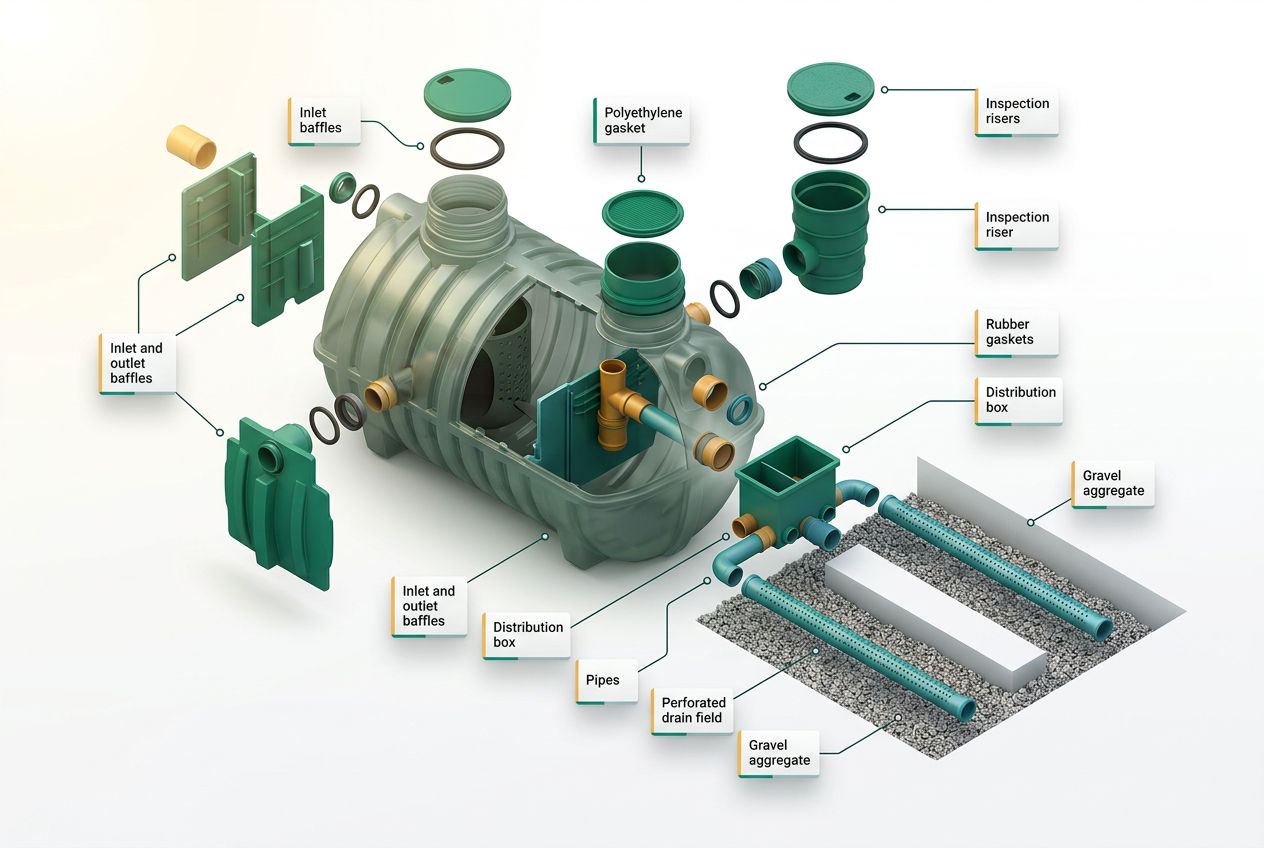
What a "kit" contains depends on the seller. A full bundle can include:
- A polyethylene or concrete tank with inlet and outlet fittings.
- Drain field chambers or pipe.
- A distribution box (D-box).
- Risers and lids.
- An effluent filter.
Some listings sell the tank alone and offer everything else as add-ons. Tank Superstore, for example, sells a pre-plumbed 1,000-gallon tank with optional riser and cover kits, an optional effluent filter, a 7- or 9-hole distribution box, and drain field chambers in packs of 10, 20, 30 or 40. No kit is permit-ready on its own.
Here's what each part does:
- The tank. Many kits use a poly (plastic) tank. Norwesco, for example, makes 1,000- and 1,250-gallon models in standard and low-profile shapes. Its 1,000-gallon low-profile tank is listed at 51 inches tall, against 63 inches for the standard model, which helps where you can't dig as deep. Our plastic septic tank guide covers the trade-offs.
- Leach field chambers or perforated pipe. Chamber products, such as Infiltrator Water Technologies' Quick4 line, replace the gravel-and-pipe trench. The EPA describes typical leaching chambers as "gravelless systems." Our guide to what a drain field is explains how the field treats effluent.
- Distribution box. The D-box splits effluent across your leach laterals. Match the number of outlets to the number of lines in your design.
- Risers and lids. These bring tank access up to grade. Septic Solutions' complete riser packages, for example, include risers, adapter rings, lids, sealant and hardware.
- Effluent filter. This sits at the tank outlet. HomeAdvisor notes that the filter keeps solids from entering your leach field.
What a Septic Kit Covers vs. What You Still Pay For
| Line Item | In the Kit? | Typical Cost |
|---|---|---|
| Tank, pipe, D-box, risers | Usually | $1,500–$5,000 total (SepticTankHub estimate) |
| Septic permit | No | $450–$2,300 |
| Perc / soil test | No | $700–$2,000 |
| Excavation | No | $1,500–$6,300 |
| Design and inspection | No | Varies by county |
Sources: The materials range is a SepticTankHub estimate from our DIY septic system guide. The permit, perc test and excavation ranges are HomeAdvisor figures (updated June 20, 2026) as reported by The Cost Blueprint.
How Much Does a DIY Septic System Kit Really Cost?
A DIY septic system kit and its related materials run about $1,500–$5,000 (SepticTankHub estimate), which covers only part of the bill. Using HomeAdvisor's ranges, permits, perc testing and excavation add another $2,650–$10,600. Once you total everything, a DIY install can cost close to what a contractor charges for a conventional system.
Worked example (SepticTankHub illustration): a 3-bedroom house on a good gravity site
| Item | Cost |
|---|---|
| Kit and materials | $3,000 |
| Permit | $1,000 |
| Perc test | $1,200 |
| Excavation (hired out) | $2,500 |
| Subtotal | $7,700 |
That subtotal comes before gravel, fill, equipment rental or your own time.
HomeAdvisor's average installed cost is $8,017. In this example, doing the work yourself saves $317, or about 4%. In exchange, you carry the risk if the inspector rejects the work.
Now add a two-day mini-excavator rental. At an assumed $400 per day (a SepticTankHub assumption, not a quote), that's $800. The DIY total becomes $8,500, which is $483 more than the HomeAdvisor average.
Excavation is the biggest variable. The math only favors DIY if you own an excavator or know someone who runs one. For more detail, see our DIY vs. professional septic cost breakdown and our full septic system installation cost guide.
Can I Legally Install My Own Septic System?
You can legally install your own septic system in some places, but plan on needing a permit either way. Rules differ by state, so here are two examples.
North Carolina regulates septic systems under its wastewater rules, 15A NCAC 18E. The state's contractor-certification law (G.S. 90A-72) exempts a person who installs a single septic tank with a gravity-fed gravel trench system on land they own, for their own use. You still need permits from the county health department:
- An Improvement Permit and a Construction Authorization before work starts.
- An Operation Permit before the system goes into use.
The exemption's wording covers a gravel trench system for the owner's own use. Ask your county whether it applies to a chamber kit, a rental cabin or a second home. Our North Carolina septic regulations page covers the permit process.
Texas takes a different approach. TCEQ rules (30 TAC 285.3) exempt a single-family home on a tract of 10 acres or more from permits and inspections. The system must still meet state standards, and some Texas counties require a permit anyway.
Call your county health department before you buy anything, and ask three questions:
- Can a homeowner install a system on this property?
- Who has to design it, and who has to sign off on the design?
- Does the inspector need to see the tank and laterals before backfill?
Our septic system permit requirements guide walks through the paperwork. If you're unsure where the legal line falls, read up on septic work without a license.

What Size Septic Tank Kit Do You Need?
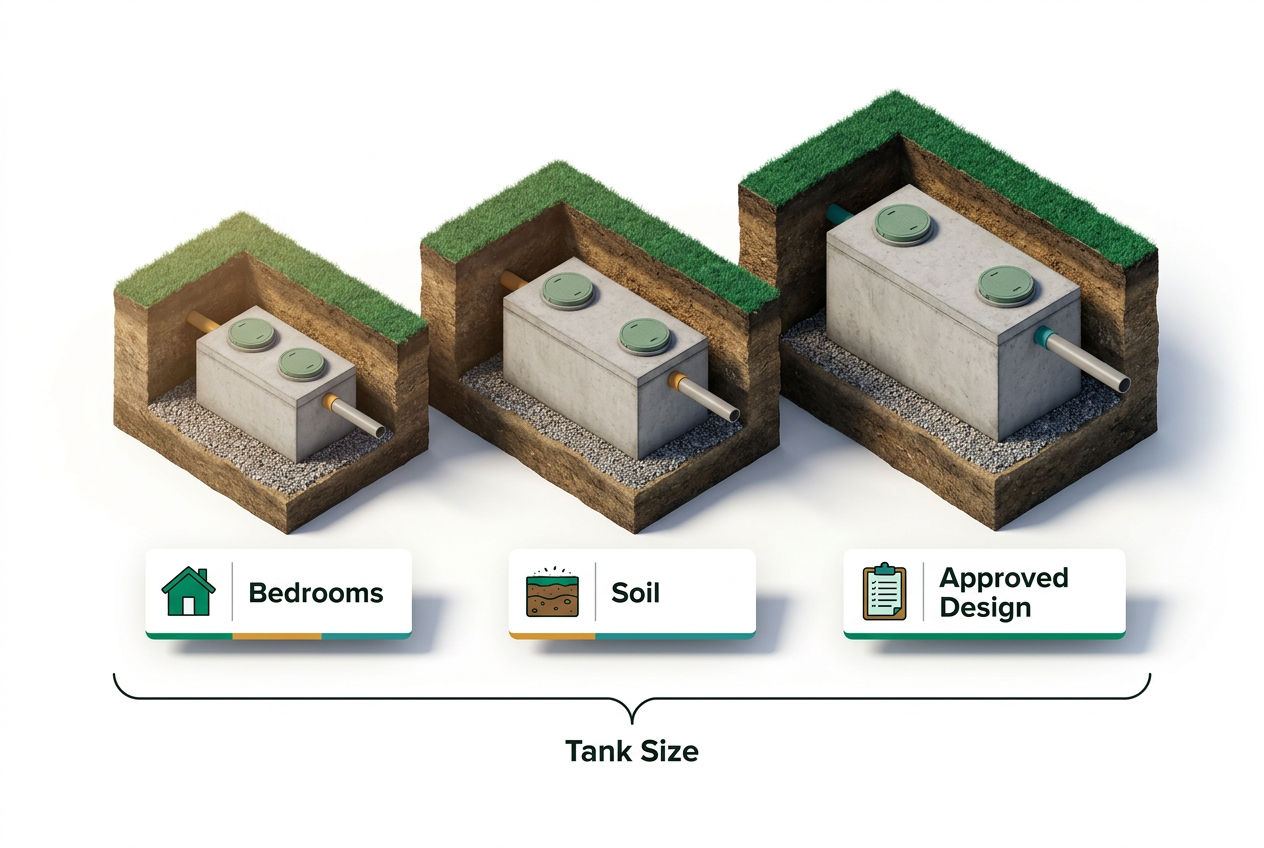
The right septic tank kit size depends on your bedroom count and your state code. Nebraska Extension's septic tank design guide, for example, gives 1,000 gallons as the minimum for a three-bedroom house and 1,250 gallons for four bedrooms, plus 250 gallons for a whirlpool tub. Your state may set different numbers.
Codes size by bedrooms, not by how many people live there today, so the tank can handle a future owner. A 2-person household in a 4-bedroom house is still sized for 4 bedrooms.
A 500-gallon kit is cheaper, but it falls below the 1,000-gallon minimum that Nebraska Extension gives for any septic tank. Check whether your state allows a tank that small at all before you order. Our septic tank size chart lists state rules.
When Does a Septic System Kit Make Sense?
DIY Septic Blueprint
Thinking about building it yourself?
The complete, plain-English plan to size, permit and install your own septic system — designed for homeowners, not contractors. Skip the $15,000–$25,000 quotes and do it right the first time.
Get the DIY Blueprint — $67 →Instant download · 8 modules + 3 bonus guides · 60-day money-back guaranteeA septic system kit makes sense when three things are true:
- Your site passes a perc test for a conventional gravity system.
- Your county allows owner installs.
- You can handle heavy excavation safely.
A gravity kit doesn't fit a site that fails the perc test, has a high water table or needs a pump to reach the field. Those sites need a different design with components a gravity kit doesn't include.
Kits are built for conventional gravity systems. According to HomeAdvisor figures (as reported by The Cost Blueprint), the system types cost:
| System Type | Typical Cost |
|---|---|
| Conventional (gravity) | $3,000–$8,000 |
| Sand filter | $7,000–$18,000 |
| Mound | $10,000–$20,000 |
| Aerobic treatment unit (ATU) | $10,000–$20,000 |
If your perc test pushes you toward one of the other types, a gravity kit becomes parts you can't use. Follow this order: perc test first, design approval second, purchase third. Our perc test guide explains what the tester looks for.
Which soils and climates rule out a gravity kit?
HomeAdvisor notes that mound systems are often necessary in areas with high water tables, shallow soil depth or shallow bedrock. Slow-draining clay can also fail a perc test. If that describes your lot, start with our guide to a septic system for clay soil.
Cold climates matter too. Your design sets how deep the tank and pipes go, and it may call for insulation. The University of Minnesota's septic program notes that buryable foam board, 1 to 3 inches thick, can be placed over a tank to insulate it.
How long does a kit install take?
Plan on 1–3 months from start to finish (SepticTankHub estimate), because the soil test, design review and permit come before any digging. Ask your health department for its current permit turnaround.
In northern states, frozen ground can stop digging for the winter. If you plan to dig in May, apply in winter.
How Do You Buy the Right Septic System Kit?
Buy the septic system kit that matches your approved design line for line. Your permit sets the tank size, the field type and the layout, and the kit has to match all of them.
Before you check out, confirm these points:
- Tank volume and compartments match the permit.
- The tank is approved in your state. Some states publish approved-tank lists. North Carolina, Virginia and Georgia all do, and some retailer listings state whether a tank is IAPMO-certified.
- The chamber or pipe length covers the total linear feet in your design.
- Shipping and offloading are priced in. Ask whether the driver will unload, or whether you need equipment on site.
- A local precast concrete tank might cost less once freight is counted. Get a quote before you pay to ship a poly kit across the country.
Can you split the work with a contractor?
Yes. Some owners buy the materials themselves and hire out the excavation and setting. That keeps the riskiest steps (trenching, tank placement and grading) in experienced hands, while you may save some money on parts.
Get 2–3 local quotes for both the full install and the excavation-only job. Our septic installation service page can connect you with installers.
What Maintenance Does a Kit-Built System Need?
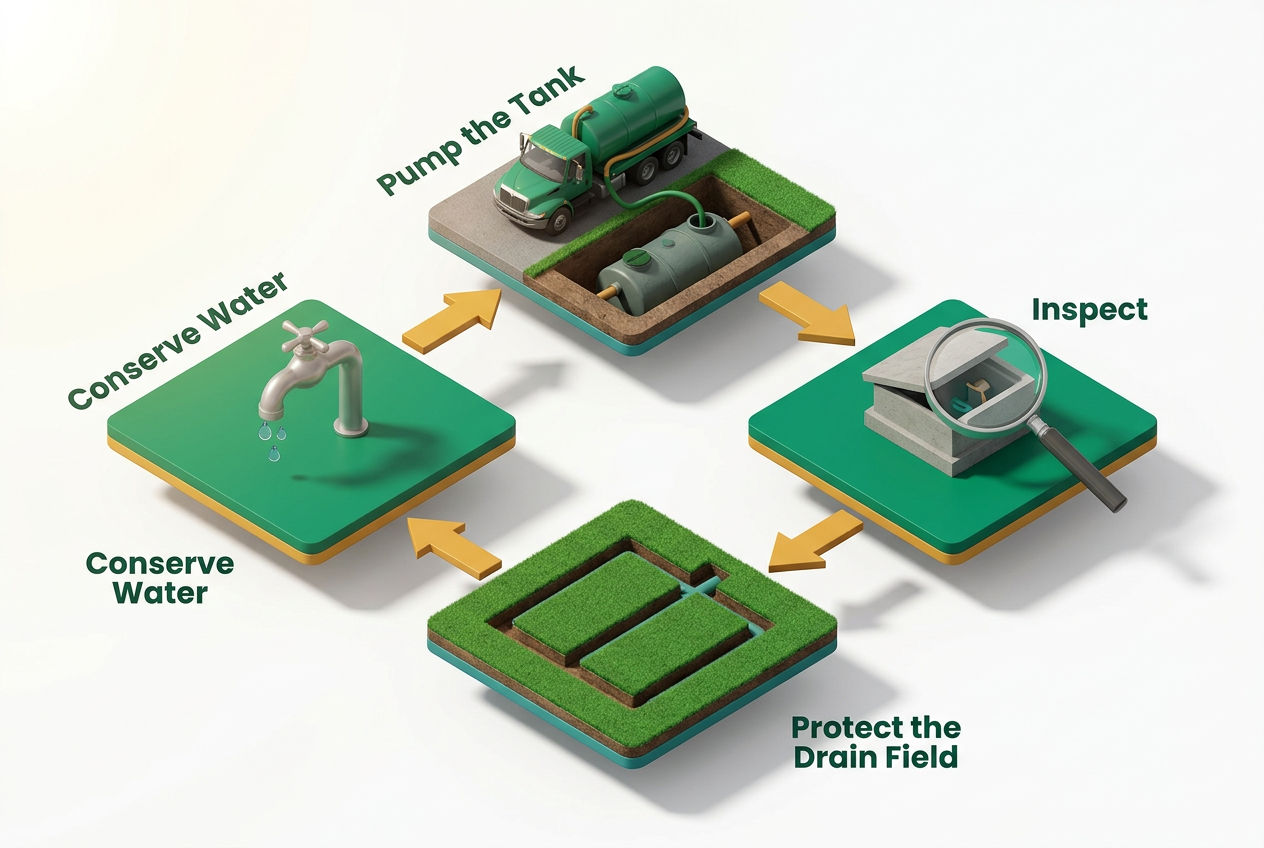
A kit-built system needs the same care as any conventional system. The EPA's SepticSmart guidance says:
- The average household system should be inspected at least every 3 years by a septic service professional.
- Household tanks are typically pumped every 3–5 years.
Have the effluent filter checked and cleaned when the tank is serviced. The EPA also says not to park or drive on your drain field, and to plant trees an appropriate distance from it. Our septic tank maintenance guide has a full schedule.
What Are the Limits of This Guide?
This guide uses national cost ranges and published sources. It is not based on hands-on installation by our team, and it is not a quote. Regional prices vary a lot, and rural labor and permit fees can sit well outside these ranges.
Septic rules also differ by state and county. North Carolina's and Texas's rules don't apply anywhere else. Treat every figure here as a planning estimate, and rely on your county health department and a licensed designer for final decisions.
Frequently Asked Questions
Does a complete septic system kit include the drain field?
It depends on the seller, and it never includes the trench work. One online retailer, Tank Superstore, sells a pre-plumbed 1,000-gallon tank with optional add-ons: riser and cover kits, an effluent filter, a 7- or 9-hole distribution box, and drain field chambers in packs of 10 to 40. Other listings are tank-only. Gravel, fill and the digging are always on you. Read the parts list and compare the chamber count or pipe length to the linear footage on your approved design. If your design calls for 300 feet of trench and the kit covers 200, you'll pay to make up the shortfall. A kit's field parts also assume a conventional gravity layout. If your permit specifies a mound, pressure distribution or drip system, the included chambers won't match the design.
Is a DIY septic system kit cheaper than hiring a pro?
Sometimes, but the margin can be thin. Materials run about $1,500–$5,000 (SepticTankHub estimate). In our worked example for a 3-bedroom house, adding a permit, a perc test and hired excavation brings the total to about $7,700, close to HomeAdvisor's $8,017 average for a professionally installed system. Add an excavator rental and the DIY total can pass that average. DIY pays off mainly when you already have equipment and excavation experience, and when your county allows owner installs. A failed inspection that means reopening trenches can cost more than the savings. Get local quotes before you decide.
What size septic tank kit do I need for a 3-bedroom house?
Your state code sets the minimum, so check it first. Nebraska Extension's septic tank design guide, for example, gives 1,000 gallons as the minimum for a three-bedroom house and 1,250 gallons for four bedrooms, and adds 250 gallons for a whirlpool tub. Tanks are sized by bedroom count, not by how many people live there now, so a couple in a 3-bedroom house still needs a 3-bedroom tank. Check your state's numbers on our septic tank size chart and confirm the size on your permit before you order, because a tank smaller than the permit calls for won't pass review.
Do I need a permit to install a septic tank kit?
Plan on it. A kit never replaces a permit, a soil or perc test, an approved design or an inspection. North Carolina, for example, requires an Improvement Permit and a Construction Authorization before work starts and an Operation Permit before the system is used. Florida requires an inspection before a system repair is covered. Texas is a notable exception: TCEQ rules exempt a single-family home on a tract of 10 acres or more from permits and inspections, but the system must still meet state standards, and some Texas counties require a permit anyway. Unpermitted work can lead to enforcement action and can surface when you sell the home. Call your county health department first.
Sources & Methodology
- U.S. EPA, SepticSmart, "How to Care for Your Septic System": epa.gov/septic/how-care-your-septic-system. Inspection and pumping intervals, drain field care.
- U.S. EPA, Decentralized Systems Technology Fact Sheet: Septic Tank Leaching Chamber (EPA 832-F-00-044, 2000): epa.gov PDF. Chambers as gravelless systems.
- HomeAdvisor septic system installation cost data (updated June 20, 2026), as reported by The Cost Blueprint. Average and typical installed cost, permit, perc test and excavation ranges, and system-type ranges. HomeAdvisor's own septic installation page (homeadvisor.com) is the source for the mound-system site conditions, and its septic repair page (homeadvisor.com) for the effluent filter's role.
- North Carolina 15A NCAC 18E and G.S. 90A-72 (NC General Assembly): permit sequence and the owner-installer exemption from contractor certification.
- Texas Commission on Environmental Quality, 30 TAC 285.3: law.cornell.edu. The 10-acre exemption.
- Florida Administrative Code 62-6.003: law.cornell.edu. Inspection of repairs before covering.
- University of Nebraska–Lincoln Extension, "Septic Tank Design": water.unl.edu. Tank sizes by bedroom.
- University of Minnesota Onsite Sewage Treatment Program, "Seasonal care": septic.umn.edu/seasonal-care. Foam insulation over tanks.
- Tank Superstore 1,000-gallon pre-plumbed tank listing (tank-superstore.com) and Septic Solutions complete riser packages (septicsolutions.com), checked November 2026. Example kit contents. Norwesco dealer listings (Snyder Industries and Barr Plastics stores) for tank sizes and dimensions. State approved-component lists from NC DHHS, the Virginia Department of Health and the Georgia Department of Public Health.
- SepticTankHub, DIY septic system guide. Materials cost estimate.
The worked example uses midpoint figures from these sources and is a SepticTankHub illustration. The excavator rental rate is a SepticTankHub assumption. Figures are national planning estimates, not local quotes.
Free download
Not ready for the Blueprint? Start free.
Grab the free DIY Septic Planning Kit — the permit-first checklist, perc-test cheat sheet, and sizing tables that keep your build from getting red-tagged.
Was this article helpful?
Frequently Asked Questions
Recommended Resources
📖 Related Articles
- Plastic Septic Tanks: Sizes, Prices, Pros & Cons
- What Is a Drain Field? (And How Does It Work?)
- DIY Septic System: How to Build Your Own (Step-by-Step)
- DIY Septic vs Professional: Which Is Better?
- Septic System Permit Cost & State Requirements (2026 Guide)
- Can You Do Your Own Septic Work Without a License?
- Septic System Regulations in North Carolina (2026 Guide)
- Septic Tank Sizes & Dimensions Chart (by Bedrooms)
- Perc Test (Percolation Test): What It Is & How It Works
- Septic System for Clay Soil: The Options That Actually Pass
- The Complete Septic Tank Maintenance Guide
🔧 Services
Find Septic Professionals Near You
Compare licensed, verified septic companies by area — top county markets and cities below, or browse all 50 states.
County markets
Popular cities
