
Quick Answer
A septic system for camper use is any permitted way of handling RV black and gray water on private land. You have five main choices: tie into the house system, install a dedicated RV septic tank and drain field, use a sealed holding tank that a licensed hauler pumps, haul waste to a dump station, or use a composting toilet with an approved gray-water method. Your local health department decides which of these you're allowed to use.
By the Editorial Team. Checked against Oregon DEQ's RV wastewater fact sheet, Colorado's OWTS program page (Regulation 43), the University of Arizona Cooperative Extension, and Klamath, Rush and Henry County documents.
Key Takeaways
- A camper septic hookup to your house system is not automatically legal. Klamath County, Oregon, says you cannot dump RV wastewater into a house system, and Oregon DEQ requires authorization for any RV septic connection.
- Oregon DEQ says RV wastewater is generally stronger than other domestic wastewater.
- A dedicated RV pad septic system usually needs a soil test, a permit and a design flow approval.
- Holding tanks skip the drain field but need frequent pump-outs. In our full-time worked example, pumping runs about $8,700–$17,400 a year (SepticTankHub estimate).
- The University of Arizona Extension advises enzyme- or bacteria-based RV tank products and warns that formaldehyde can kill septic bacteria.
You might need one while living in a fifth-wheel on new acreage as the house goes up, or for a guest camper pad for visiting family. In both cases, your county's rules on where the sewer hose can go will shape the choice more than your budget will.
This article is general information, not legal advice. Your county and state ordinances control what you can do. We have not inspected your site. Soil, setbacks and local code can rule out any option below.
Can You Hook a Camper Up to Your House Septic System?
Sometimes, but only with permission. According to the Klamath County On-Site FAQ, you cannot dump RV wastewater into a septic system permitted for your house, because it is a change in use and RV wastewater is stronger than household wastewater. The same FAQ allows an RV hookup to the septic tank while you build a home only with a Temporary Use Permit from the Planning Department. Oregon DEQ's RV fact sheet lists authorization from DEQ or the county onsite program as the way to connect an RV to a new or existing septic system.
Oregon DEQ also warns that RV wastewater is generally stronger than other domestic wastewater, and that the chemicals used to treat it can harm a septic system.
Your house system was permitted for a set design flow, measured in gallons per day. Our guide to sizing a septic system explains how that number is set. A tie-in adds both flow and solids. If the tank and drain field are already near capacity, you shorten their life.
If your county allows a tie-in, it may involve:
- An RV sewer inlet with a capped cleanout at the pad.
- A buried line sloped to meet your plumbing code, running to the tank's inlet side and never into the outlet baffle.
- An inspection before backfill.
Our RV septic vs house septic breakdown covers the plumbing side of a tie-in. It also explains why the two waste streams behave differently.
What Are Your Real Options for a Septic System for a Camper?
There are five realistic paths:
- Tie into the house system.
- Install a dedicated RV septic tank and drain field.
- Use a sealed holding tank that gets pumped.
- Haul waste to a dump station.
- Use a composting toilet with a permitted gray-water method.
Oregon DEQ's RV fact sheet lists four approved methods: a sewer connection where allowed, an authorized dump station, a licensed pumper emptying your RV holding tanks, or an authorized connection to a new or existing septic system. Other states and counties set their own rules, and whether a composting toilet is allowed depends on local rules.
| Option | SepticTankHub Estimate | Permit Needed? | Best For |
|---|---|---|---|
| House tie-in | $300–$2,000+ | Yes, usually | Spare system capacity |
| Dedicated tank + field | $3,000–$10,000 | Yes, plus soil test | Long-term RV pad |
| Holding tank | $1,500–$5,000 + pumping | Yes, usually | Failed perc, short term |
| Dump station | $0–$300 | No install | Weekend use |
| Composting + gray water | $1,000–$2,500 | Varies | Off-grid, dry climates |
Sources: Permit options come from Oregon DEQ's RV fact sheet and the Klamath County On-Site FAQ. Cost ranges are SepticTankHub estimates that vary widely by region. Get local quotes.
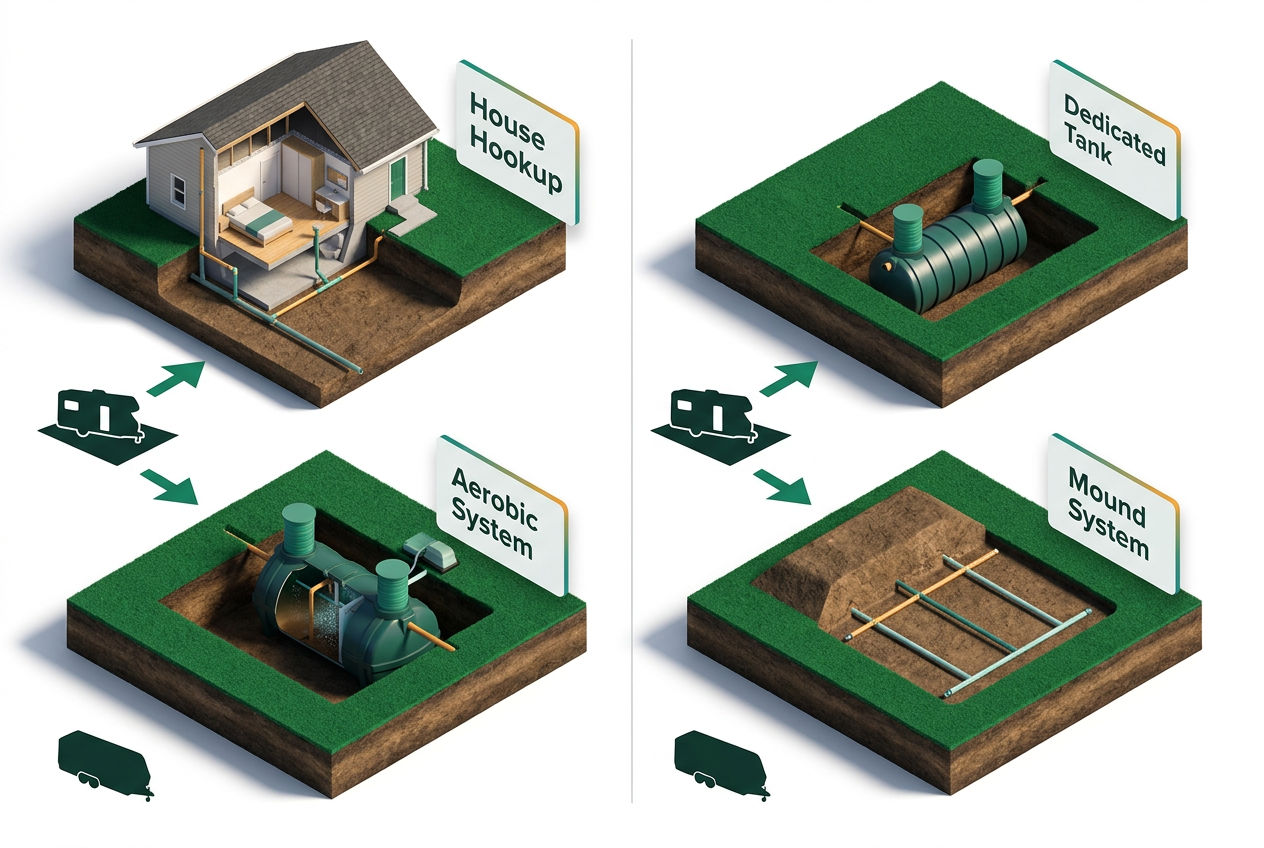
Option 1: Tie Into the House System
If it's allowed, this is the cheapest option because the tank and drain field already exist. You pay for trenching, pipe and a permit amendment. Capacity is the limit. If your tank and drain field were sized only for the house, there may be little room left for a full-time RV, so check your permit's design flow.
Option 2: A Dedicated RV Septic Tank and Drain Field
This is a small, standalone onsite wastewater treatment system (OWTS) that serves only the pad. Your state and county set the minimum tank size; in Oregon, onsite systems fall under the OAR 340-071 rules. Before you buy a small camper septic tank, read our 500-gallon septic tank guide, because your county may not approve a tank that size.
This route needs a perc test, a site plan and a design approval. It costs the most up front, but it handles long-term use best.
Option 3: A Sealed Holding Tank
A septic holding tank has no outlet and no drain field. Waste sits in the tank until a pumper truck hauls it away.
- Alarm. A high-level float switch with an audible alarm warns you before the tank overflows. Ask whether your county requires one.
- When it fits. It can be a fallback when clay soil fails the perc test or the water table is too high, where your county permits holding tanks.
- Limits. It stores waste but does not treat it. In our full-time worked example below, one year of pumping costs more than SepticTankHub's estimated install cost.
Option 4: A Dump Station or Portable Tote
This option needs no install and no septic permit. You drive the RV to an authorized dump station, or hire a licensed pumper to empty its tanks on site; Oregon DEQ lists both. Check your state's rules before you haul waste in a portable tote. Oregon DEQ says hauling RV wastewater in a portable or temporary holding tank requires a pumper license under OAR 340-071-0600.
It works for weekend campers. If you live on the pad full time, the hauling quickly becomes a chore. A private "RV dump station on property" is really a holding tank or septic inlet, so it falls under Options 1–3 and needs the same permits.
Option 5: A Composting Toilet Plus a Gray-Water Plan
A composting toilet eliminates black water entirely. You still produce gray water from showers and dishes. Oregon, for example, treats gray water as sewage, and Oregon DEQ says it cannot be discharged to the ground surface. This option only works where your health department approves a gray-water method.
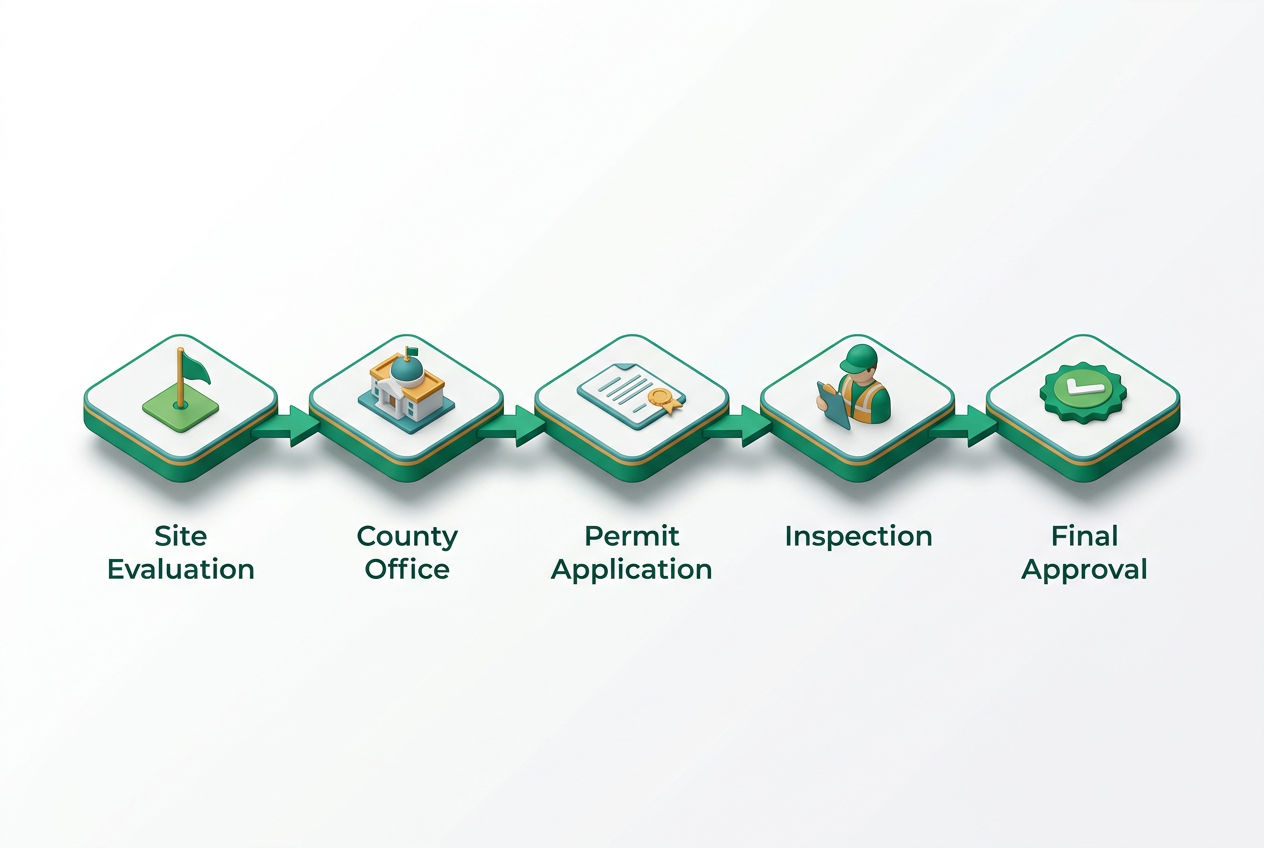
Do You Need a Permit for a Septic System for a Camper?
Usually, yes. In the places we checked, a new system or an RV connection needs approval: Oregon DEQ requires authorization from DEQ or the county to connect an RV to a septic system, Colorado's counties permit smaller systems, and Rush and Henry counties in Indiana charge septic permit fees. Expect to deal with three things:
- The physical change to the system.
- The system's approved design flow.
- Zoning rules for living in an RV.
Fees vary by county. According to the Rush County Health Department's permit process, a new residential septic permit in Rush County, Indiana, costs $250, with a $30 renewal. In neighboring Henry County, the Henry County Health Department lists a soil test by a certified soil consultant as the first step, needs the results with your application, and charges $225 for a new-construction permit.
Rules vary widely by state:
- Oregon. Oregon DEQ says counties and cities generally allow temporary RV living during construction of a primary dwelling or after a natural disaster, and that occupying an RV on private residential property requires local authorization. In Klamath County, that means a Temporary Use Permit.
- Colorado. According to Colorado's OWTS program page, systems are governed by Regulation 43, local counties permit systems with flows of 2,000 gallons per day or less, and larger systems go through the state's design review process.
- Elsewhere. Zoning can limit or prohibit living in an RV regardless of your septic system, so check with your planning office.
A well-built septic system won't help if zoning prohibits anyone from living in the camper. Call both the planning office and the health department before you buy a tank. Our septic permit requirements article lists the questions to ask.
What Size RV Septic Tank Do You Need?
Your health department sets the official tank size based on design flow, so ask before you buy. A larger tank holds more settled solids, which lengthens the time between pumpings.
RV black and gray tank sizes vary by model, so check your RV's spec sheet. Under full-time use, a small tank fills with solids faster than a larger one.
Worked example: Two people live full time in a camper and use an assumed 40 gallons of water each per day (80 gallons total). Pump-out prices use SepticTankHub's estimate of $300–$600 per visit.
| Setup | How it plays out |
|---|---|
| Sealed 1,000-gallon holding tank | 1,000 ÷ 80 = about 12.5 days to fill, or roughly 29 pump-outs a year. At $300–$600 per pump-out, that's about $8,700–$17,400 annually. |
| 1,000-gallon septic tank + drain field | Liquid leaves through the drain field daily. Only settled solids build up, so pumping is periodic, based on measured sludge levels, at an estimated $300–$600 per visit. |
| Same couple, light use (20 gal/person/day) | A holding tank fills in about 25 days, or roughly 15 pump-outs a year, which is about $4,500–$9,000 annually. |
Over five years of full-time use, the holding tank costs about $43,500–$87,000 in pumping alone at those estimated prices. SepticTankHub's $3,000–$10,000 estimate for a dedicated system is less than one year of that pumping. On these numbers, a holding tank makes the most financial sense for short stays or when the soil rules out a drain field.
Our septic tank size chart shows how counties scale tank size to bedrooms and daily flow.
How Much Does an RV Septic System Cost?

DIY Septic Blueprint
Thinking about building it yourself?
The complete, plain-English plan to size, permit and install your own septic system — designed for homeowners, not contractors. Skip the $15,000–$25,000 quotes and do it right the first time.
Get the DIY Blueprint — $67 →Instant download · 8 modules + 3 bonus guides · 60-day money-back guaranteeSepticTankHub estimates roughly $3,000–$10,000 for a dedicated RV septic system with a drain field, $1,500–$5,000 for a holding tank plus pumping, and $300–$2,000+ for a permitted house tie-in. The main cost drivers are:
- Soil. Poor soil can force an engineered design such as a mound, which costs far more. See our mound septic system guide.
- Tank material. Concrete, polyethylene and fiberglass are priced differently, and your county may limit which tank types it approves.
- Distance and access. Long trench runs and rocky ground add excavation time.
- Fees. Rush County, Indiana, charges $250 for a new septic permit, and Henry County, Indiana, charges $225 for new construction. Other places charge different amounts.
For a line-by-line breakdown of tanks, excavation and drain fields, see our septic installation cost guide. Get at least two local quotes, because regional pricing varies more than any national average suggests.
A limitation to keep in mind: These cost ranges are SepticTankHub estimates, not quotes from installs we priced ourselves. Only the county fees come from published documents, and local prices can differ widely in high-cost or remote areas.
What Tank Treatments Are Safe for an RV Septic System?
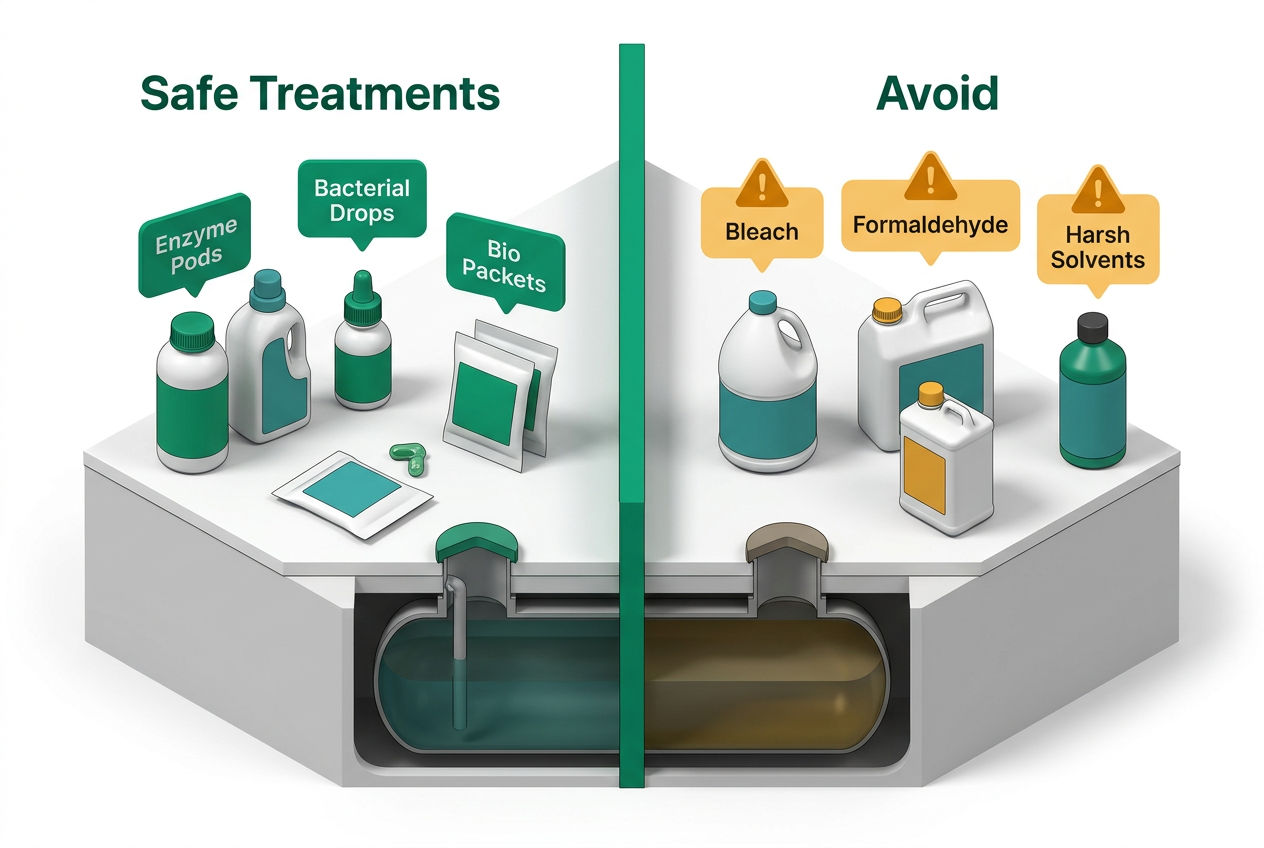
The University of Arizona Cooperative Extension advises using only enzyme-based or bacteria-based RV holding-tank products. It warns that RV wastewater treated with chemicals such as formaldehyde can kill the bacteria in a septic system and ultimately cause the system to fail.
When tank bacteria are knocked back, solids break down more slowly and the scum layer thickens. Untreated solids then move toward the drain field, where they can clog the soil. By the time you see slow drains or wet spots, the repair is expensive.
Also follow these habits:
- Dump black water first, then flush the hose with gray water.
- Use RV or septic-safe toilet paper.
- Keep grease and wipes out of both tanks.
Our RV black tank treatment guide compares common products.
How Do Soil and Climate Affect Your RV Pad Septic Options?
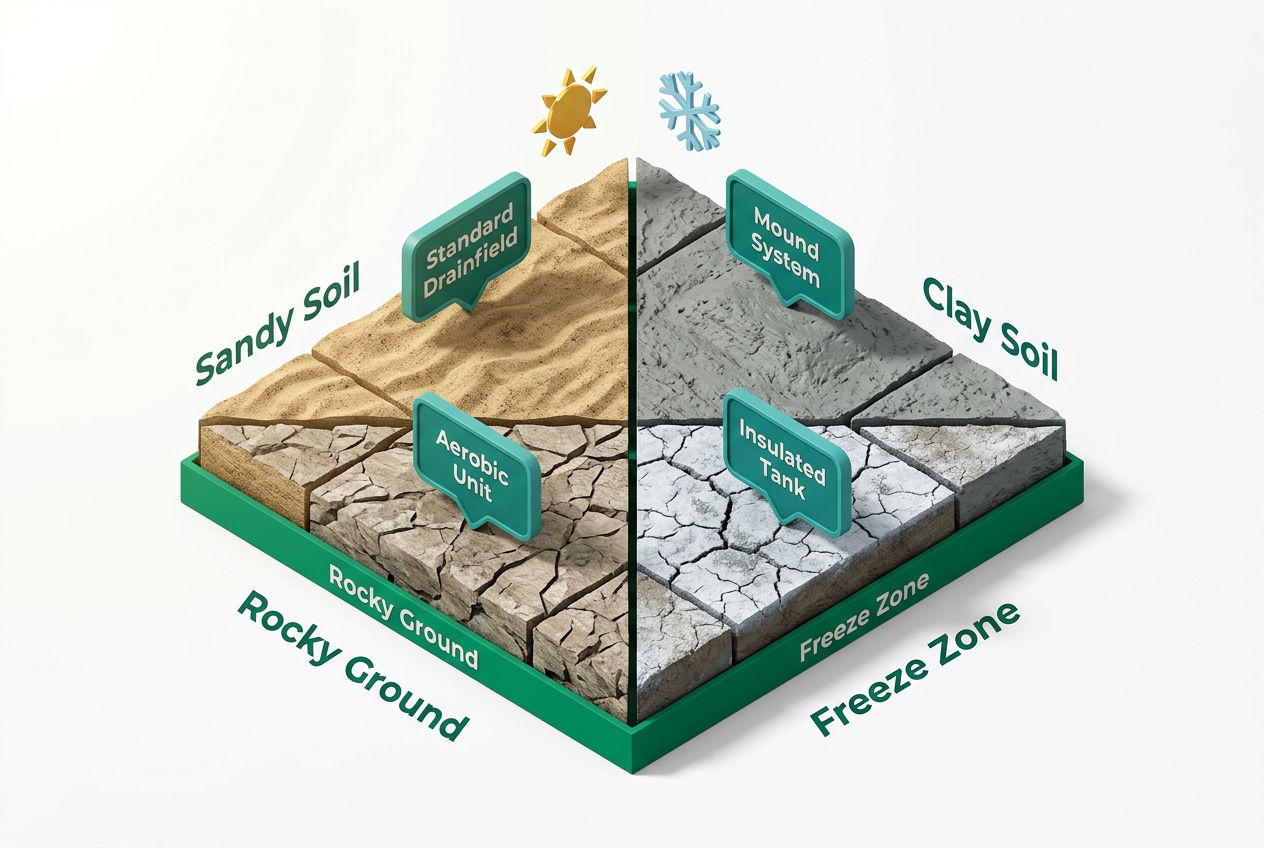
Soil decides whether a drain field can work, and climate decides how you protect the lines. Clay, shallow bedrock and high groundwater can fail a perc test. When that happens, your choices narrow to a mound, a holding tank or hauling.
In cold regions, shallow RV lines and inlets freeze. Bury lines below the frost line where possible, insulate the riser, and avoid leaving a sewer hose connected with the valve open. Our guide to freezing septic pipes covers prevention and thawing.
Seasonal tips:
- Pump the tank before you winterize the camper.
- File permits in the fall so you're first in line for spring installs.
- Schedule soil tests when the ground isn't saturated or frozen, and ask whether your county tests in winter.
Can You Install an RV Septic System Yourself?
Some states allow homeowners to install their own system. Rules on permits, approved designs, inspections and licensed installers vary by state and county. Our DIY septic system guide explains where owner-installs are allowed and what inspectors look for.
If your county requires a licensed installer, or your site needs an engineered design, our septic installation services page explains how to get a site evaluation and quote.
Frequently Asked Questions
Can I put an RV septic tank on my property?
Usually yes, if your county issues a permit and your soil passes a perc test. A dedicated camper septic tank and drain field is the most durable setup for a long-term RV pad. Your health department sets the tank size based on design flow. You'll typically need a site plan, setbacks from wells, property lines and water, and an inspection before backfill. Zoning is a separate question. Klamath County, Oregon, for example, allows camping in an RV while you build a home only with a Temporary Use Permit, and otherwise limits camping to 21 days. Call both the planning office and the health department before you buy anything, and ask which permit type covers an RV pad.
Is it legal to dump RV waste into my house septic system?
It depends on your state and county. Klamath County, Oregon, says you cannot dump RV wastewater into a septic system permitted for your house, because that is a change in use and RV wastewater is stronger than household wastewater. Oregon DEQ allows an RV connection to a new or existing septic system only with authorization from DEQ or the county onsite program. Even where a connection is approved, a full-time RV can push your system past its approved design flow, which can overload the drain field. Before you connect anything, ask your health department for your system's permitted gallons per day and whether an RV connection requires an amendment. A licensed septic inspector can also check how much spare capacity the tank and field actually have.
How often does an RV holding tank need pumping?
It depends on tank size and water use. In our worked example, two people using 40 gallons each per day fill a 1,000-gallon holding tank in about 12.5 days, which means roughly 29 pump-outs a year. At lighter use of 20 gallons each per day, the same tank lasts about 25 days, or roughly 15 pump-outs a year. Water-saving fixtures, low-flow showers and doing laundry off-site stretch the interval. Install a high-level alarm so you're warned before the tank overflows, and set up a recurring schedule with a licensed hauler. Pumping is the main ongoing cost of a holding tank.
How much does an RV septic system cost per year to run?
A dedicated septic tank and drain field is cheap to run. Expect periodic pumping, which SepticTankHub estimates at $300–$600 per visit; how often depends on measured sludge levels. A holding tank costs far more. In our base-case example of two full-time users at 80 gallons per day, about 29 pump-outs a year at that estimated price adds up to roughly $8,700–$17,400 annually. At the light-use rate of about 15 pump-outs a year, the cost drops to roughly $4,500–$9,000. Dump station trips cost little or nothing but take time. In that example, SepticTankHub's estimated cost for a permitted drain field is less than one year of holding-tank pumping.
Can I use a composting toilet instead of a septic system for my camper?
Sometimes, if your county approves both the toilet and a gray-water method. A composting toilet eliminates black water, but you still produce gray water from your sink, shower and dishes, and that water needs a legal destination. Some states, including Oregon, treat gray water as sewage, and Oregon DEQ says it cannot be discharged to the ground surface. Oregon DEQ's RV fact sheet does not list composting toilets among its four approved methods, so whether one is allowed depends on local rules. SepticTankHub estimates this setup at roughly $1,000–$2,500, and it fits best on off-grid pads in dry climates. Ask your county whether a composting toilet is approved and what gray-water disposal it accepts before you plan around this option.
What happens if I dump RV waste into a septic system without a permit?
You would be operating outside your permit, and you risk damaging the system. Your house system was permitted for a set design flow in gallons per day, and an RV tie-in adds both flow and solids. If the tank and drain field are already near capacity, the extra load shortens their life. Oregon DEQ also warns that RV wastewater is generally stronger than other domestic wastewater and that the chemicals used to treat it can harm a septic system. Klamath County, Oregon, for example, says you cannot dump RV wastewater into a septic system permitted for a house, because it is a change in use, and Oregon DEQ requires authorization from DEQ or the county onsite program for any RV connection. Ask your health department for your permitted gallons per day and whether you need an amendment before connecting anything.
Can I install a septic system for a camper if my soil fails the perc test?
Yes, but your options narrow to a mound, a holding tank or hauling. An engineered design such as a mound may be permitted depending on your state and county rules, though it costs far more than a standard drain field. A sealed holding tank needs no drain field and can be a fallback when clay soil or a high water table causes a perc test failure, where your county permits holding tanks. It stores waste until a licensed pumper hauls it away, and a high-level alarm warns you before it overflows. The drawback is cost: in our worked example, two full-time users fill a 1,000-gallon tank about every 12.5 days, or roughly $8,700–$17,400 a year in pumping at SepticTankHub's estimated pump-out prices. Hauling to a dump station needs no install and works best for weekend use.
Sources & Methodology
- Klamath County, OR – On-Site Wastewater FAQ: RV discharge rules and the Temporary Use Permit requirement.
- Oregon DEQ – Guidance for Siting Recreational Vehicles and Wastewater Disposal (fact sheet): approved RV wastewater disposal methods, RV wastewater strength, the portable-tank pumper-license rule (OAR 340-071-0600), gray water, and temporary RV occupancy.
- Colorado Department of Public Health & Environment – On-site wastewater treatment systems: Regulation 43 and local versus state permitting thresholds (2,000 gpd).
- University of Arizona Cooperative Extension – RV Holding-tank Treatments and Deodorizers in Septic Systems (AZ1233): formaldehyde and enzyme- or bacteria-based products.
- U.S. EPA – Why Maintain Your Septic System: additives are not necessary for a properly functioning system.
- Rush County, IN Health Department – Residential Onsite Septic Permit Process: the $250 permit fee and $30 renewal.
- Henry County, IN Health Department – Septic Systems: the certified soil consultant test step and the $225 new-construction permit fee.
Methodology: We reviewed the state and county documents listed above and compared their rules on RV discharge, permits and sizing. The worked example uses stated assumptions for water use and pump-out prices, so you can substitute your own figures. Cost ranges are SepticTankHub estimates, not quotes we obtained. We did not inspect any site, and local code always overrides this guide.
Free download
Not ready for the Blueprint? Start free.
Grab the free DIY Septic Planning Kit — the permit-first checklist, perc-test cheat sheet, and sizing tables that keep your build from getting red-tagged.
Was this article helpful?
Frequently Asked Questions
Recommended Resources
📖 Related Articles
- What Is a Drain Field? (And How Does It Work?)
- RV Septic vs House Septic: Key Differences Explained
- 500-Gallon Septic Tank: Dimensions, Uses & When It's Too Small
- Perc Test (Percolation Test): What It Is & How It Works
- Septic Holding Tank: Cost, Sizes, Rules & Holding Tank vs. Septic System
- Composting Toilets: The Complete Guide (How They Work + Best Models)
- Septic System Permit Cost & State Requirements (2026 Guide)
- Septic Tank Sizes & Dimensions Chart (by Bedrooms)
- The Best RV Black Tank Treatments (and How to Use Them)
- DIY Septic System: How to Build Your Own (Step-by-Step)
- Mound Septic System: $10K–$25K Cost & How It Works (2026)
- Freezing Pipes and Septic: How to Prevent Winter Damage
- What Size Septic System Do I Need?
🔧 Services
Find Septic Professionals Near You
Compare licensed, verified septic companies by area — top county markets and cities below, or browse all 50 states.
County markets
Popular cities
