
Quick Answer
No, not all septic tanks have a leach field. A leach field — also called a drain field or soil absorption field — is the dispersal method used in conventional septic systems. Properties with high water tables, rocky soil, small lots, or poor percolation often require alternative systems such as mound systems, aerobic treatment units, drip irrigation systems, or holding tanks instead.
Key Takeaways
- A leach field is a component of a conventional septic system — not every septic setup has one.
- Soil percolation, water table depth, lot size, and local regulations determine which dispersal method your property requires.
- Common alternatives include mound systems, aerobic treatment units (ATUs), drip irrigation systems, and holding tanks.
- Leach fields last 25–30 years with proper maintenance. Replacement costs run $5,000–$20,000+.
- If you don't know what type of system your property has, a licensed inspector can tell you before it becomes an emergency.
What Is the Difference Between a Septic Tank and a Leach Field?
A septic tank and a leach field are two separate components that work together in a conventional septic system. The tank is a buried, watertight container — typically 1,000 to 1,500 gallons of concrete, fiberglass, or polyethylene — that receives all wastewater from your home. Inside, solids settle to the bottom as sludge, grease and lighter materials float as a scum layer, and the clarified liquid in the middle (called septic tank effluent) exits through an outlet baffle.
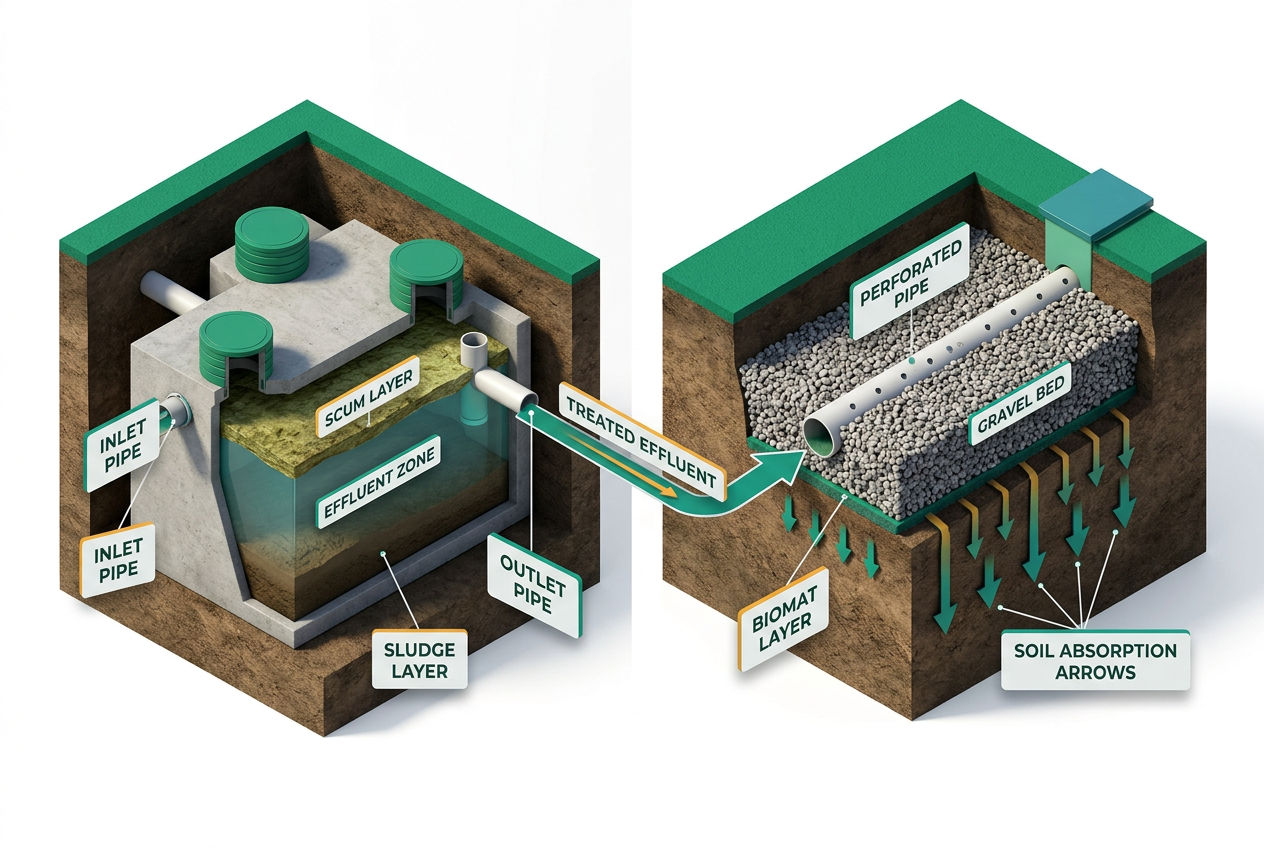
That effluent has to go somewhere. In a conventional system, it flows through a distribution box and into the leach field — a network of perforated pipes or leach field chambers laid in gravel-filled trenches, typically 18 to 36 inches deep. The effluent slowly seeps out of those perforations and filters down through the soil, where bacteria break down remaining contaminants before the water reaches groundwater.
The tank handles the separation. The drain field handles the dispersal. They're a team — but not every team looks the same.
Can a Septic System Work Without a Leach Field?
Yes, absolutely. When soil conditions or site constraints make a conventional leach field impossible or impractical, permitted alternative systems handle effluent dispersal differently. The goal is always the same — safely treat and disperse wastewater — but the method changes based on what the land allows.
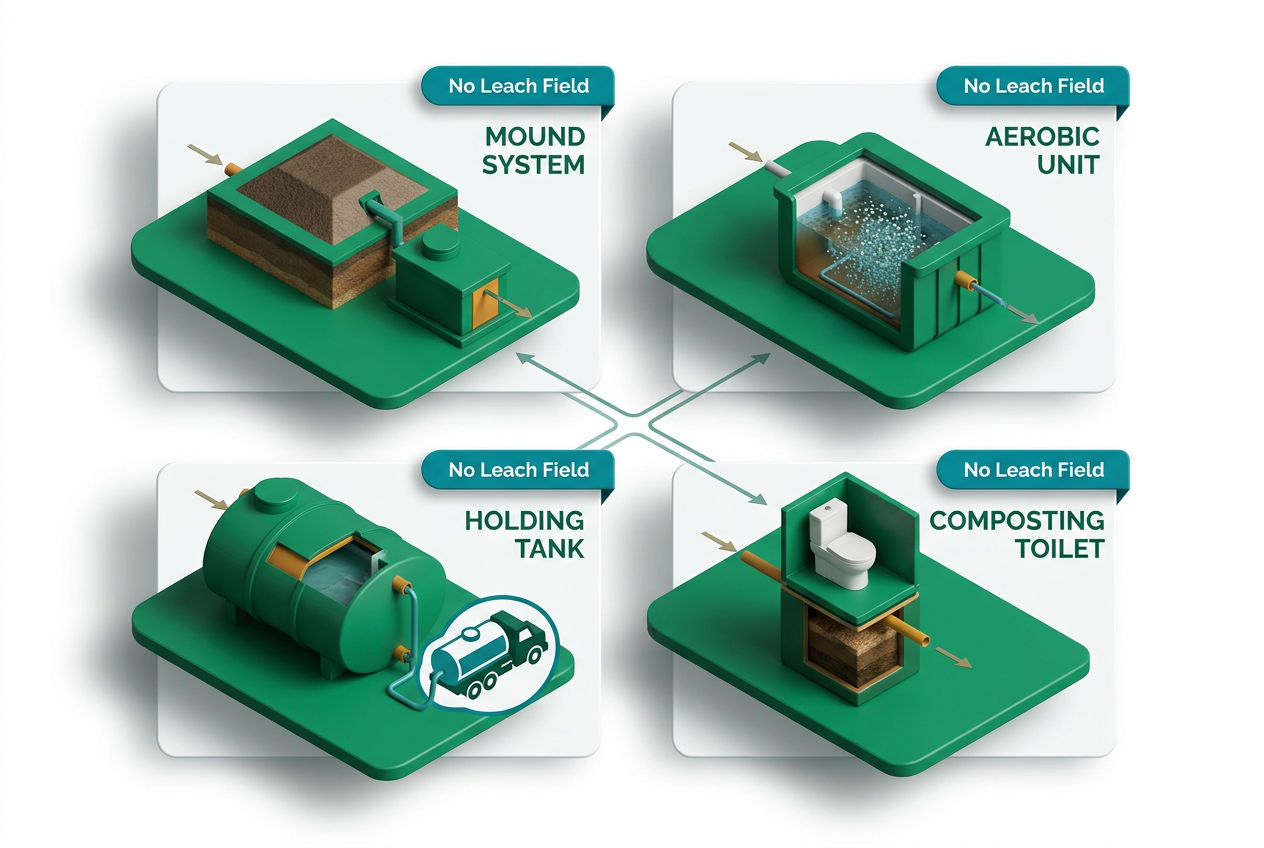
Here's a look at the most common types of septic systems that operate without a traditional leach field:
Mound Systems
A mound system is essentially a raised leach field built above the native soil, using imported sand fill as the treatment medium. It's the go-to solution when the soil absorption field can't be buried at the standard depth — usually because there's less than 24 inches of suitable soil above a seasonal high water table or bedrock.
Picture a low, grass-covered berm in someone's backyard, maybe 2 feet tall and 30 feet wide. That's a mound system. Effluent is pumped from a pump chamber into a pressurized distribution network inside the mound. The sand filters the effluent before it disperses into the native soil below.
Mound systems are common in the Upper Midwest, New England, and the Pacific Northwest — anywhere shallow soils or high water tables are the norm. They work, but they cost more. Expect to pay 50–100% more than a conventional system, which often puts the total installation price at $15,000–$25,000 or higher depending on your region and lot conditions. For a deeper look, see our guide on mound septic systems.
Aerobic Treatment Units (ATUs)
An aerobic treatment unit introduces oxygen into the treatment process — a Hiblow HP-80 aerator compressor is one common component you'll see in these systems. That oxygen supercharges bacterial activity. According to the EPA and NSF International testing standards, ATUs reduce biological oxygen demand (BOD) by 85–95%, compared to roughly 50% for a conventional septic tank.
That higher-quality effluent means ATUs can often discharge to a smaller soil absorption area, a drip irrigation system, or even surface spray in some jurisdictions. They're widely used in Florida, Texas, and other states with high water tables or nutrient-sensitive water bodies. Florida's Department of Health regulates ATUs heavily and requires a maintenance contract with a licensed contractor in most cases. Our aerobic vs. anaerobic septic comparison breaks down the differences in more detail.
Drip Irrigation Septic Systems
A drip irrigation system delivers treated effluent through a network of small-diameter tubing buried just 6–12 inches below the surface — far shallower than a conventional leach field. Because the effluent is distributed in small, timed doses, the soil never gets overwhelmed. These systems require a pump, a timer, and often an ATU to pre-treat the effluent before distribution.
They're popular on properties where usable land area is limited, or where a conventional trench system can't meet required setbacks from wells or water bodies. Many coastal and lakefront properties nationwide rely on drip systems specifically because setback requirements from water bodies — often 100 feet or more — leave no room for traditional leach laterals.
Holding Tanks
A holding tank is exactly what it sounds like: a sealed tank with no dispersal component at all. Wastewater goes in, nothing comes out until a pump truck comes and hauls it away. These are the last resort — used on properties where no dispersal method is feasible, or as a temporary solution pending a permanent system.
Holding tanks are expensive to maintain long-term because you're paying for pump-outs every few weeks depending on household usage. They're also subject to strict permit requirements in most states. Think of them as a stopgap, not a lifestyle.
Why Do Some Homes Not Have a Leach Field?
The short answer: the land won't allow it. Three factors determine whether your property can support a conventional soil absorption field.
1. Soil percolation. Before any septic permit is issued, most counties require a perc test — a standardized measurement of how fast water moves through your soil. If water drains too fast (sandy or gravelly soils) or too slowly (heavy clay), the soil can't properly filter effluent. In regions with dense clay soils — parts of the Pacific Northwest and mountain states — perc test failure rates of 20–30% are not unusual, which is why alternative systems are the norm rather than the exception there.
2. Water table depth. Most jurisdictions require at least 24 inches of suitable soil between the bottom of your leach field trenches and the seasonal high water table. In Florida, coastal Georgia, and much of the Midwest during wet springs, water tables can sit just inches below the surface. There's simply no room. This is also why heavy rain events can temporarily overwhelm even well-designed systems — when the water table rises, the soil's capacity to absorb effluent shrinks.
3. Lot size and setbacks. A conventional leach field needs space. State and county codes typically require 50–100 feet of separation between the field and a drinking water well, plus setbacks from property lines, structures, and water bodies. On a small lot or a narrow lakefront parcel, you simply can't fit a code-compliant drain field. Our septic system setback requirements guide covers the specifics by state.
How Do I Know If My Property Has a Leach Field?
Start with your county health department. Most counties have records of every permitted septic system, including as-built drawings that show the tank location, the distribution box, and the drain field layout. Many of these are now searchable online — search your county name plus "septic permit records" or "OSE records."
On the ground, a conventional leach field usually shows up as a series of parallel slightly raised or depressed soil lines, often 3–4 feet wide and 50–100 feet long, running away from the septic tank. The grass over a healthy leach field is often greener and lusher than surrounding areas because the system is essentially slow-irrigating the soil.
Our guide on how to find your drain field walks through exactly how to locate and identify your system without digging.
If you're buying a home with a septic system, get a professional septic inspection before you close. An inspector will probe the soil, check the tank baffle condition, and verify whether a leach field exists and what condition it's in. A good inspection runs $300–$600 — cheap insurance against a $15,000 surprise.
What Happens If a Leach Field Fails?
This is the question that turns a curious homeowner into someone who urgently needs a contractor.
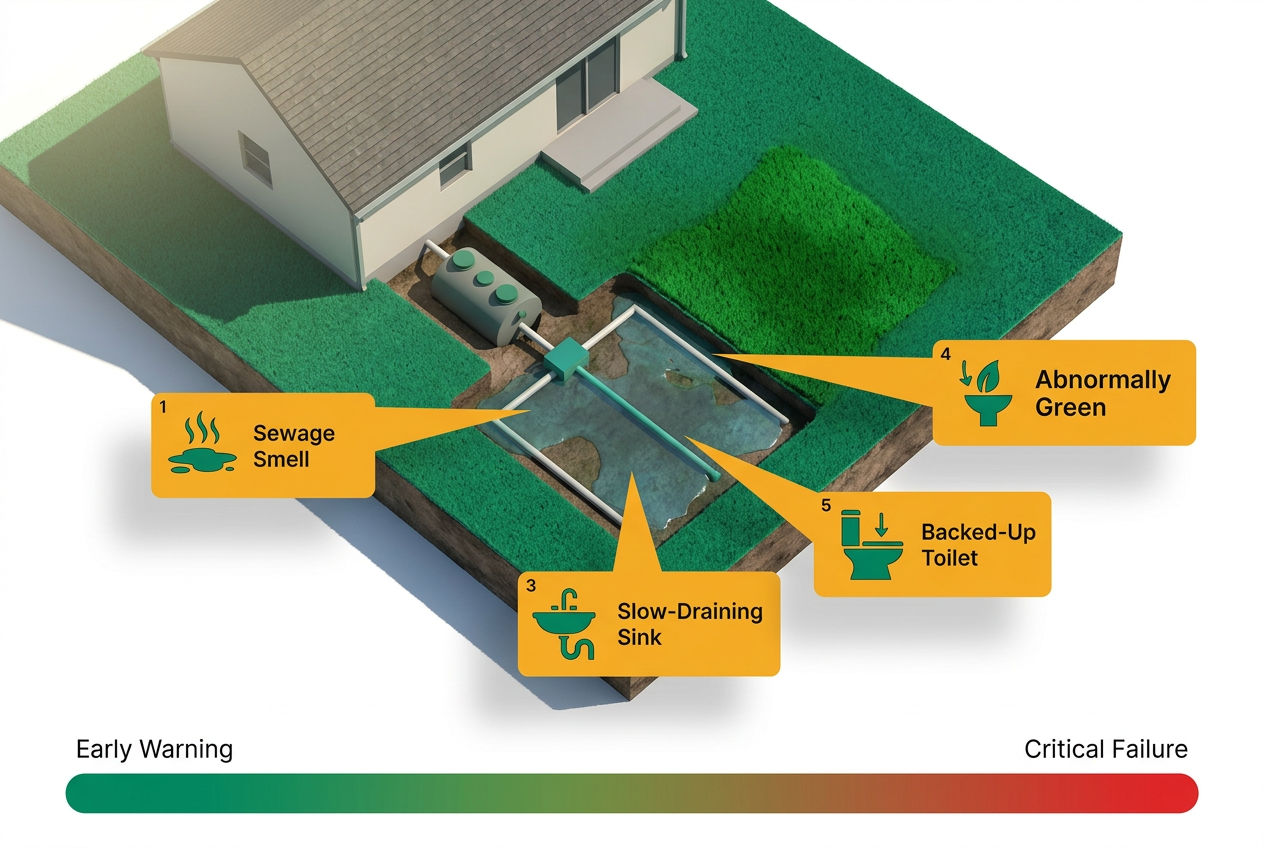
Picture this: you're selling your home and the buyer's inspector says your drain field is failing. Or you walk outside in March after a wet week and there's sewage surfacing near the back fence. Both scenarios mean the same thing — your leach field has lost its capacity to absorb effluent.
The most common cause is a biomat: a layer of anaerobic bacteria and organic material that builds up on the soil surface in the leach field trenches over time, sealing them off. Once a mature biomat forms, effluent has nowhere to go. Solids reaching the field — usually because the septic tank wasn't pumped regularly enough, or an effluent filter like a Polylok PL-122 wasn't installed or maintained — accelerate biomat formation dramatically.
For cost context, leach field repair or leach field rejuvenation can run $1,500–$5,000 depending on the method and how much of the field is affected. Full drain field replacement typically costs $5,000–$20,000+, with significant regional variation. See our drain field replacement cost guide for current regional pricing data.
The EPA recommends pumping a 1,000-gallon tank serving a four-person household every 3–5 years. Skip a few pump cycles and you're gambling with your field's lifespan. Check our septic tank maintenance guide for the full maintenance schedule.
Want to know the signs your drain field is already failing before it becomes a crisis? Wet spots in the yard over the field, slow drains throughout the house, and sewage odors near the tank or field are the three red flags to watch for.
How Long Does a Leach Field Last?
A well-maintained leach field typically lasts 25–30 years, according to EPA guidance and industry standards from NAWT (National Association of Wastewater Technicians). Some last longer. Many fail earlier — because of neglect, hydraulic overload from too many people using a system designed for fewer, or physical damage from vehicles driving over the field.
Drain field depth matters for longevity too. Trenches laid too shallow in northern climates can freeze. In Minnesota, frost lines reach 42–60 inches in a hard winter, and while tanks buried at proper depth rarely freeze, the distribution lines feeding the field are vulnerable. A frozen distribution box means sewage backup in February — not a good time to find a contractor.
The single biggest factor in leach field longevity? Regular pump-outs. A tank that's allowed to overflow solids into the field will destroy it. There's no shortcut around that.
Septic System Comparison: Which Systems Use a Leach Field?
| System Type | Uses Leach Field? | Best For | Approx. Install Cost |
|---|---|---|---|
| Conventional | Yes | Deep soils, good perc | $5,000–$12,000 |
| Chamber System | Yes (modified) | Limited gravel areas | $6,000–$15,000 |
| Mound System | No (raised bed) | High water table, shallow soil | $12,000–$25,000+ |
| Aerobic (ATU) | Sometimes reduced | Poor perc, sensitive areas | $10,000–$20,000 |
| Drip Irrigation | No | Small lots, high-quality effluent | $10,000–$18,000 |
| Holding Tank | No | Temporary or no-dispersal sites | $3,000–$7,000 + pumping |
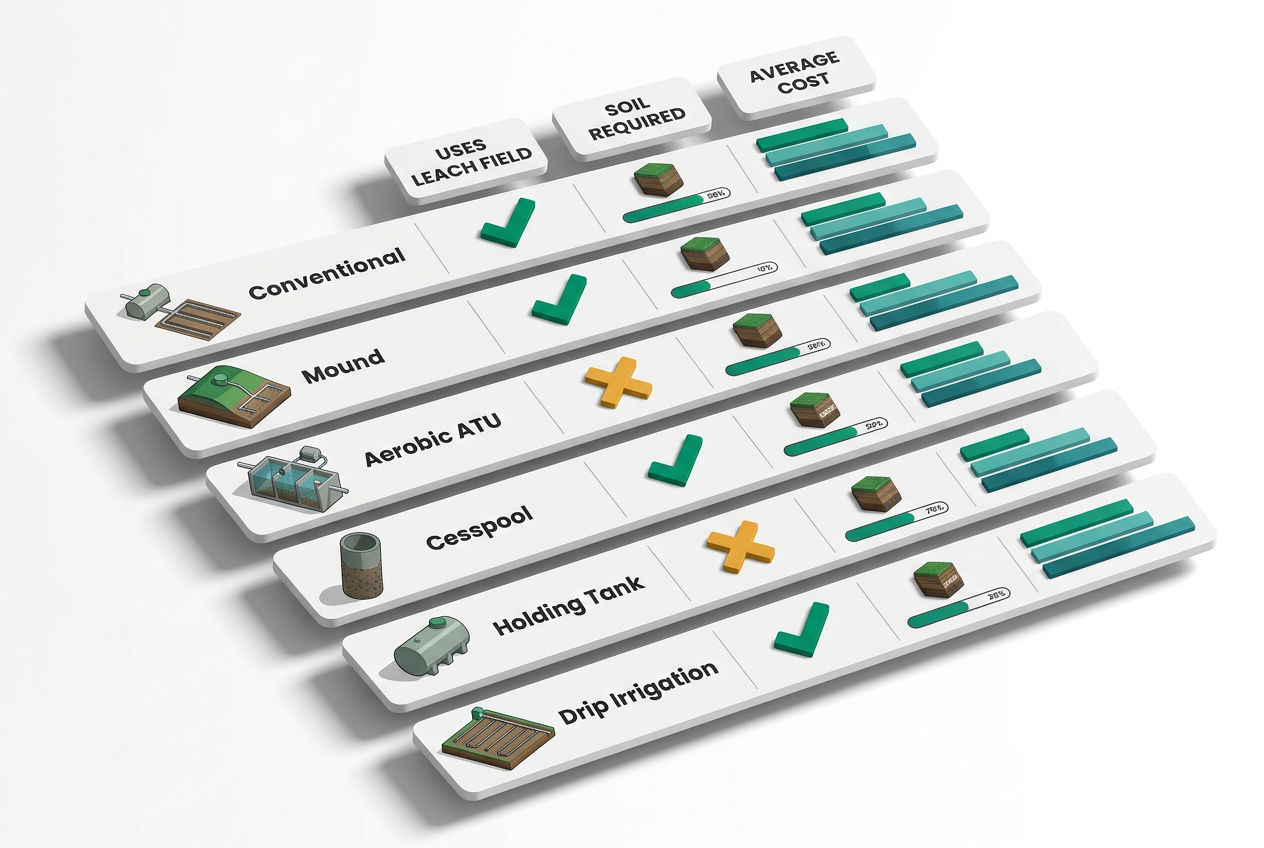
Sources: EPA Septic Systems Overview; NOWRA industry cost benchmarks; contractor data compiled by SepticTankHub.com, 2025.
Finding the Right System for Your Property
If you're not sure what type of system you have — or you're buying a property and want to know before you're on the hook for repairs — the fastest path is a licensed septic professional in your area. County health department records are a good starting point, but an on-site inspection tells you what the paperwork doesn't: current condition, capacity relative to your household, and whether the system meets current code.
The cost of understanding your system now is always less than the cost of discovering a failure later. A septic inspection runs $300–$600 in most markets. An emergency repair call after a backup? That starts at $500 and goes up fast.
Find a licensed septic contractor near you through the SepticTankHub directory to get quotes on inspections, system evaluations, or any needed repairs.
Sources & Methodology
-
U.S. Environmental Protection Agency — Septic Systems Overview (epa.gov): Primary source for system prevalence data (approximately 20% of U.S. homes), pump-out frequency recommendations, and effluent treatment benchmarks. Used for conventional system specifications and ATU treatment efficiency comparisons.
-
NSF International — Standard 40 for Residential Wastewater Treatment Systems (nsf.org): Referenced for ATU treatment efficiency data (85–95% BOD reduction). NSF Standard 40 is the primary certification benchmark for aerobic treatment units sold in the U.S.
-
National Association of Wastewater Technicians (NAWT) (nawt.org): Industry standards for leach field lifespan, inspection protocols, and maintenance frequency benchmarks.
-
National Onsite Wastewater Recycling Association (NOWRA) (nowra.org): Alternative system cost benchmarks and mound system design guidance used for cost comparison data.
-
State Health Departments — Florida DOH, Washington DOH, Maine DEP: Referenced for regional regulatory requirements, alternative system permit structures, and contractor licensing requirements. Regulations cited reflect publicly available state-level onsite wastewater program guidance as of 2025.
Free download
Not ready for the Handbook? Start with the free Fridge Card.
The Do / Don’t card the whole family can see, plus the Survival Kit: emergency flowchart, warning-sign decoder and pump-schedule card. One printable PDF.
Was this article helpful?
Frequently Asked Questions
Recommended Resources
📖 Related Articles
- Leach Field Chambers: A Side-by-Side Comparison
- What Is a Drain Field? (And How Does It Work?)
- Types of Septic Systems: Complete Comparison Guide
- Mound Septic System: $10K–$25K Cost & How It Works (2026)
- Aerobic vs Anaerobic Septic Systems: How They Compare
- Perc Test (Percolation Test): What It Is & How It Works
- Heavy Rain and Septic Systems: What Happens and What to Do
- Septic System Setback Requirements: How Far From the House?
- How to Find Your Septic Drain Field
- Septic Tank Biomat: What It Is and When It's a Problem
- Leach Field Rejuvenation: The Complete Guide
- The Complete Septic Tank Maintenance Guide
- Signs Your Drain Field Is Failing (And What to Do)
- How Deep Should a Drain Field Be?
💰 Cost Guides
🔧 Services
Find Septic Professionals Near You
Compare licensed, verified septic companies by area — top county markets and cities below, or browse all 50 states.
County markets
Popular cities
