
Quick Answer
A septic business plan is a written document that maps out every major decision before you spend a dollar—what services you'll offer, what equipment you need, who your customers are, how much money you'll make, and how you'll comply with state licensing requirements. Done right, it's the difference between a sustainable operation and an expensive mistake.
Key Takeaways
- Septic business startup costs range from $30,000 to $250,000+ depending on service mix and whether you buy used or new equipment
- A solo operator running one pumper truck can generate $150,000–$400,000 in annual revenue
- Profit margins on pumping-focused operations typically run 30–50%
- Licensing is state-by-state—there is no federal standard; check your state's environmental or health agency
- A strong plan helps you qualify for SBA 7(a) loans (up to $5 million) and USDA Rural Development financing
Is a Septic Business Profitable?
A septic pumping and service business can be highly profitable, with operating margins of 30–50% for well-run single-truck operations. The U.S. septic tank servicing market generates roughly $4–5 billion annually. About 21 million American homes rely on septic systems—and the EPA recommends pumping every 3–5 years—which creates steady, predictable demand. Industry growth runs at 3–5% CAGR, driven by rural housing expansion and aging infrastructure.
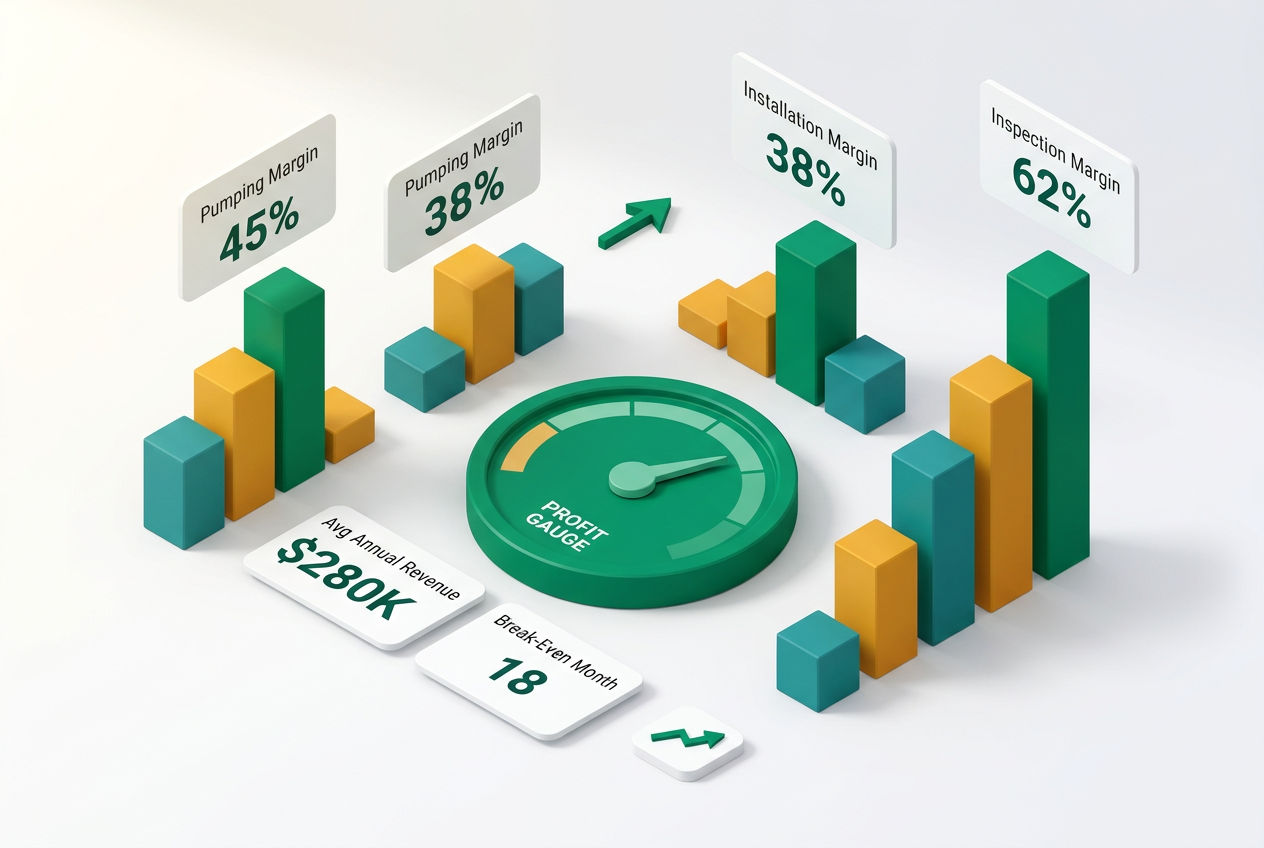
That kind of recurring demand is the backbone of the business model. Every tank you pump today is a scheduled customer again in three to five years. Build a route of 400–600 loyal customers and you have a business with genuine staying power.
For a deeper look at real-world margins and revenue, see our analysis of whether a septic business is profitable.
How Much Does It Cost to Start a Septic Business?
Startup costs for a septic business range from roughly $30,000 for a bare-bones used-truck operation to $250,000+ for a full-service company with new equipment and installation capabilities.
Here's where the money actually goes:
| Expense Item | Low Estimate | High Estimate | Notes |
|---|---|---|---|
| Used pumper truck (2,000-gal) | $15,000 | $50,000 | Most common entry point |
| New pumper truck (3,000-gal) | $80,000 | $200,000+ | Peterbilt/Freightliner chassis |
| Jetter/inspection equipment | $5,000 | $25,000 | Camera inspection adds revenue |
| Insurance (GL + commercial auto) | $3,000/yr | $8,000/yr | Per year, not one-time |
| Licensing and permit fees | $500 | $5,000 | Varies by state |
Source: NOWRA industry benchmarks; SBA Small Business Resource Guide; operator interviews
A realistic entry scenario: you buy a used 2,000-gallon vacuum truck for $28,000, pay $4,200 for insurance, spend $1,800 on licensing and permits, set aside $6,000 for operating capital, and launch for around $40,000–$45,000 total. That's a real number. Not glamorous, but achievable.
For a full breakdown, read our septic business startup costs guide.
You can also check the septic pump truck cost breakdown if you're still deciding between used and new.
What Licenses Do You Need to Run a Septic Business?
There is no national septic contractor license. Every state sets its own requirements through the department of health, environmental quality, or natural resources.
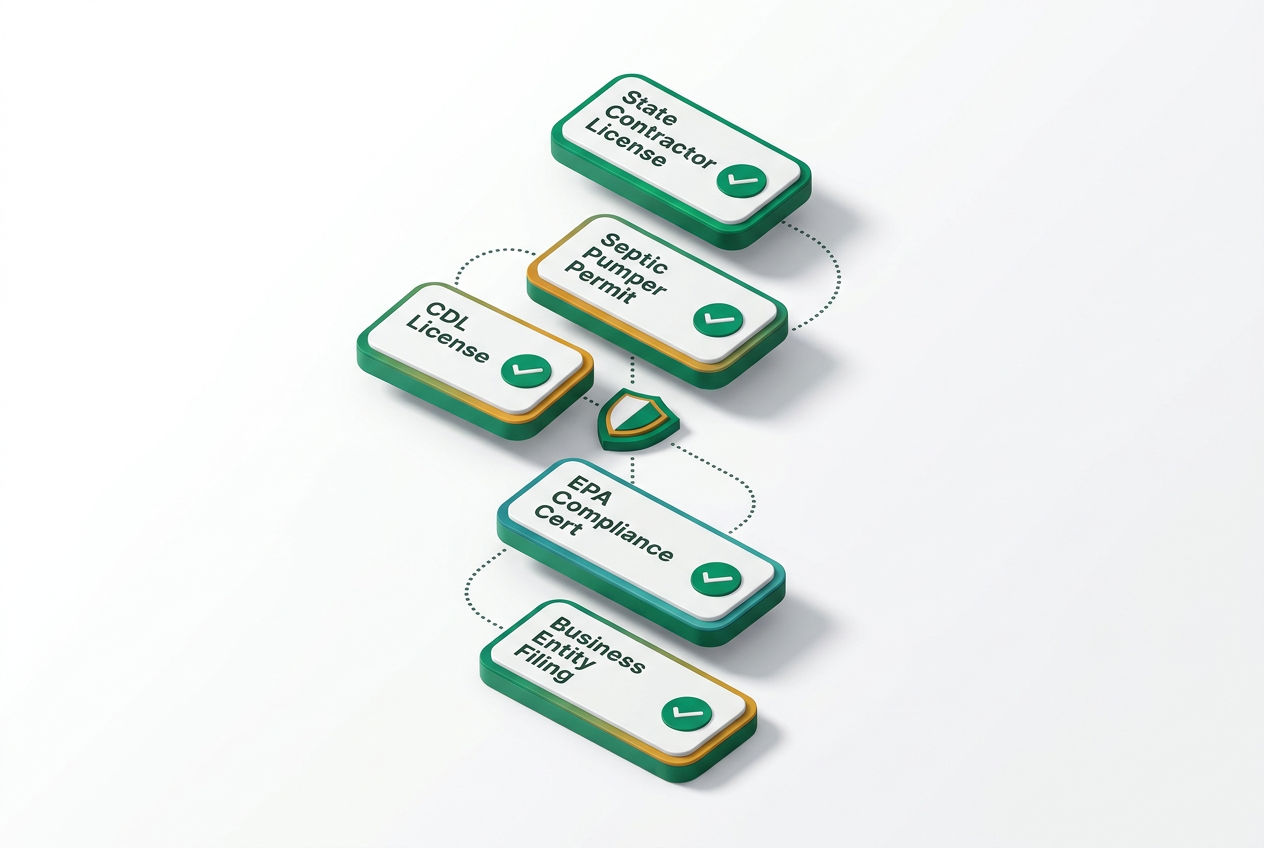
A few concrete examples:
- Florida requires a Registered Septic Tank Contractor (RSTC) license issued through the Department of Health. Applicants must pass a written exam and carry liability insurance.
- Texas delegates oversight to the Texas Commission on Environmental Quality (TCEQ), with county-level Designated Representatives managing local permits.
- Massachusetts enforces Title 5 regulations, which require licensed inspectors and installers. The inspection market here is particularly strong—Title 5 mandates an inspection at point of sale.
- California involves Regional Water Quality Control Board (RWQCB) oversight with additional local county permits, creating one of the higher-barrier regulatory environments in the country.
Plan for $500–$5,000 in initial licensing costs, plus exam fees and continuing education in states that require it. Budget another 3–6 months for the process—some states have long approval timelines.
Our septic business license requirements guide covers state-by-state requirements in detail.
How Do I Write a Business Plan for a Septic Company?
A complete septic business plan has seven core sections. Here's how to build each one:
1. Executive Summary
Write this last. It's a one-page snapshot of your business—what you do, where you operate, who owns it, and why it will succeed. If you're seeking an SBA loan, this is the page a loan officer reads first. Keep it tight.
2. Company Description and Service Offerings
Define exactly what services you'll provide at launch and which you'll add later. Don't try to do everything day one.
Common service tiers:
- Entry: Septic pumping only ($300–$600 per job average)
- Growth: Add septic inspections ($150–$400 per inspection) and camera inspection
- Mature: Add system installation ($3,000–$15,000+ per job) and grease trap cleaning
Most operators start with pumping and add inspection capability within year two. Installation is a different business model—heavier equipment, more employees, larger jobs. Don't conflate the two in your startup plan.
3. Market Analysis
This section answers: who are your customers, how many are there, and who else is competing for them?
Run the numbers for your target county:
- Pull U.S. Census data or county health records for the number of permitted septic systems
- Estimate pump-out demand: if there are 8,000 systems and each gets pumped every 4 years, that's 2,000 jobs per year in your market
- Identify existing competitors, their service radius, and their pricing (call them as a mystery shopper)
A 25–50 mile service radius is standard for a solo operator. Beyond that, windshield time kills your per-day job count.
For context on market demand, see how often septic tanks need pumping.
4. Operations Plan
This is the mechanical heart of your plan. Cover:
- Equipment: Truck specs (tank capacity 1,500–4,000 gallons, chassis make, vacuum pump type), hose lengths, hand tools, safety gear
- Disposal: Where does the septage go? You need a septage receiving facility—a wastewater treatment plant or licensed land application site. Availability varies by county. This is the single most overlooked planning item for new operators.
- Staffing: Solo operator? One helper? A CDL driver?
- Scheduling: Most established operators run 8–12 jobs per day to hit breakeven on a single truck. At $400 average per job and 10 jobs per day, that's $4,000 gross per day before fuel, disposal fees, and payroll.
- Maintenance reserve: Budget $0.15–$0.20 per mile for truck maintenance. A pumper truck putting on 40,000 miles per year needs $6,000–$8,000 set aside just for maintenance.
5. Legal Structure and Licensing
Choose your entity type before you open a business bank account. Most small septic operators start as an LLC for liability protection. An S-Corp election may save you self-employment tax once revenue exceeds roughly $80,000—talk to a CPA.
Document every license and permit you need:
- State contractor license
- Business operating license (city/county)
- Commercial driver's license (CDL) if your truck exceeds 26,001 lbs GVWR
- EPA and state environmental compliance for septage disposal
- DOT number for commercial vehicles crossing state lines
6. Marketing and Customer Acquisition Plan
Organic customer acquisition for a local septic company costs $50–$200 per new customer. Here's what actually works:
- Google Business Profile: Free. Critical. Every search for "septic pumping near me" runs through Google Maps. Claim and optimize your profile before you take a single job.
- SepticTankHub.com directory listing: Puts your business in front of homeowners actively searching for local septic service. List your septic business here to start capturing leads.
- Yard signs at job sites: Old-school, effective, nearly free.
- Referral relationships: Real estate agents, home inspectors, and plumbers are your best referral sources. A real estate agent who refers three buyers per year is worth $5,000–$15,000 in annual revenue.
- Direct mail to new construction subdivisions: Particularly effective in the Southeast where new septic permits are common.
7. Financial Projections
This is the section lenders actually read. Build a 3-year projection with three scenarios: conservative, base, and optimistic.
Sample Year 1 Base Case (solo operator, 1 used truck):
- Revenue: 180 pump-out jobs/month × $375 average × 12 months = $810,000 (this is aggressive for Year 1—adjust to 6–8 jobs/day at launch)
- Realistic Year 1: 5 jobs/day × 250 working days × $375 = $468,750 gross revenue
- Direct costs (fuel, disposal, supplies): ~30% = $140,625
- Insurance, licensing, maintenance: ~$18,000
- Net operating income: ~$310,000 before owner compensation and debt service
That's a healthy business. But it assumes consistent bookings from day one, which takes 6–12 months to build. Your plan should show that ramp-up honestly.
For a detailed look at the financial side, see our septic pumping business startup guide.
How Do Septic Companies Find Customers?
Septic Business Blueprint
Thinking about starting your own septic business?
The complete, plain-English playbook to start (or buy), license and grow a profitable septic business — the models, the money math, trucks, disposal, insurance, pricing and how to land your first customers.
Get the Blueprint — $297 →Instant access · 12-chapter playbook + 6-piece toolkit · 60-day money-back guaranteeRepeat business and referrals drive most established septic routes. A well-run septic business operates on a recurring revenue model—you pump the same tank every 3–5 years, creating a natural customer retention cycle without ongoing marketing spend.
For new operators building a route from scratch:
- Service contracts: Offer annual maintenance agreements that include one pump-out and an effluent filter inspection. Customers pay upfront, you get predictable cash flow. Pricing typically runs $350–$500/year for residential.
- Real estate inspection volume: In Massachusetts (Title 5), Vermont, and other states with pre-sale inspection requirements, partnering with real estate agents drives consistent inspection revenue at $150–$400 per inspection.
- Seasonal promotions: Spring is peak season. Run a pre-summer pump-out promotion in March or April. In northern states, fall pre-freeze pump-outs are another strong promotional window.
How Do You Finance a Septic Business?
The SBA 7(a) loan program is the most common financing vehicle for septic startups. Loan limits reach $5 million, though most new operators borrow $50,000–$150,000 for equipment and working capital. The SBA microloan program averages around $13,000 and works well for very early-stage operators who need a used truck and basic supplies.
Other options:
- USDA Rural Development Business Loans: Available in rural counties, sometimes with lower rates than SBA (visit rd.usda.gov for current programs)
- Equipment financing: Many truck dealers and equipment lenders offer direct financing on pumper trucks—rates typically 6–12% depending on credit
- Seller financing: If you're acquiring an existing route, the seller may carry a note. This is common in route acquisitions. See our guide on buying a septic business for how route acquisitions work.
Regardless of financing source, lenders want to see 3–6 months of operating capital in reserve. Build that into your plan—not as an afterthought.
What Equipment Do You Need to Start a Septic Business?
The pumper truck is your primary asset. Most entry-level operators buy a used truck with a 1,500–2,500 gallon vacuum tank. A Peterbilt or Freightliner chassis with a mounted VAC-CON or Keith Huber pump unit is typical in the U.S. market.
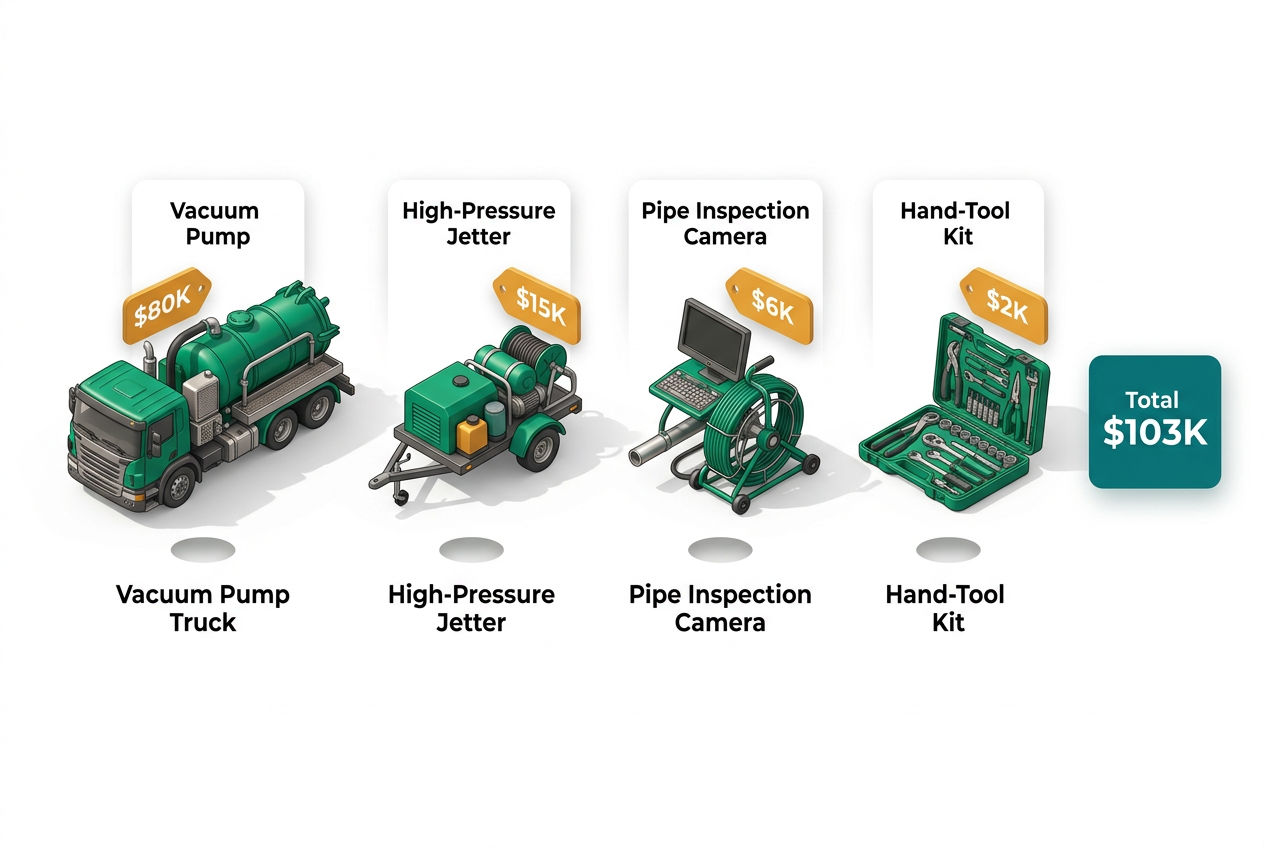
Beyond the truck:
- Hose: 4-inch suction hose in 10-foot sections (carry 50–100 feet minimum)
- Hand tools: Sludge judge (for measuring tank levels before pumping), lid hooks, probe bars
- Safety: H2S gas monitor, gloves, eye protection—non-negotiable
- Camera inspection system: A used RIDGID SeeSnake or Envirosight unit ($5,000–$15,000) adds inspection revenue without requiring a second truck
For a full breakdown of truck types and specs, see our septic truck guide and vacuum truck guide.
Revenue Diversification: Adjacent Services Worth Adding
A pumping-only business is solid. A pumping-plus business is more resilient. Consider these add-ons:
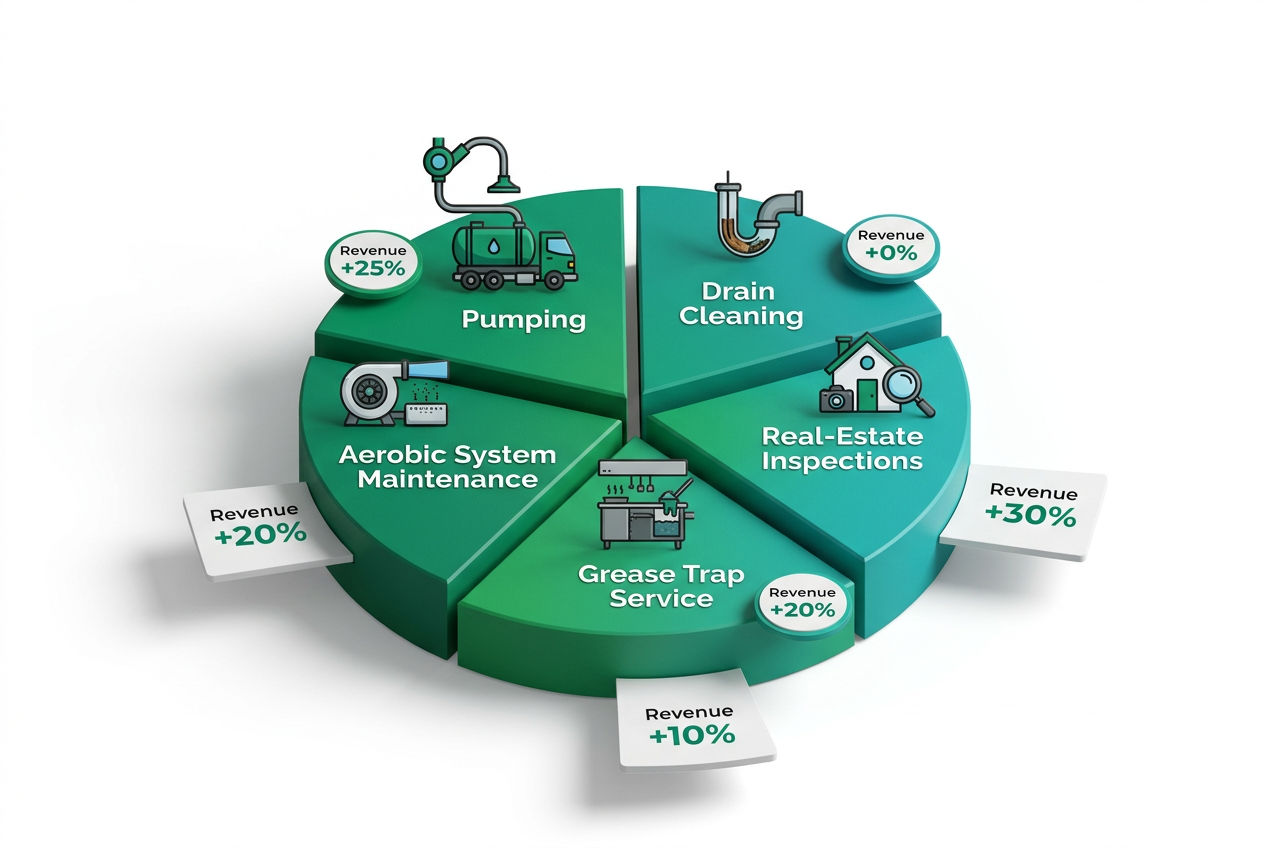
- Grease trap cleaning: Restaurants need quarterly grease trap service. The equipment overlap with septic pumping is significant. Read our grease trap business startup guide for specifics.
- Portable restroom rental: Event season fills revenue gaps nicely. A fleet of 20 units renting at $100–$175/unit/week generates meaningful passive income. Our porta-potty business guide covers the launch process.
- Drain cleaning: A trailer-mounted jetter fills slow winter days with drain and lateral cleaning jobs.
The seasonal pattern matters: spring and fall are peak for pumping in most markets, summer is strong for installations, and winter creates the cash flow gap you need to plan around. Budget a 2–3 month operating reserve specifically for the January–February slow period in northern markets.
For ongoing operational strategy beyond the startup phase, see our full guide on how to run a septic business.
Regional Considerations Your Plan Must Address
Where you operate shapes almost every number in your plan.
Southeast (Florida, Georgia, South Carolina): High septic density, year-round demand, strong new construction market. Florida's RSTC licensing is well-defined. Good market for new entrants.
Northeast (Massachusetts, Vermont, Maine): Strict state regulations create high inspection volume. Massachusetts Title 5 means every home sale triggers a septic inspection at $150–$400 per job. Competition is established but demand is consistent.
Texas: Massive rural septic market. TCEQ licensing is the framework, but county-level rules vary. Fast-growing suburban fringe around Dallas, Houston, and Austin is producing new septic permits steadily.
Midwest (Ohio, Indiana, Michigan): Strong rural market. Freeze season creates demand spikes in fall (pre-freeze pump-outs) and spring (post-freeze emergency calls).
One critical regional variable often missed in business plans: septage disposal site proximity. If the nearest receiving facility is 60 miles from your service area, your disposal cost per job increases significantly. Map your disposal options before you finalize pricing.
Sources & Methodology
- U.S. Environmental Protection Agency — Septic Systems: Data on the 21 million U.S. homes using onsite systems and recommended pumping frequencies. epa.gov/septic
- National Onsite Wastewater Recycling Association (NOWRA): Industry benchmarks for service pricing, operator revenue, and market size estimates. nowra.org
- U.S. Small Business Administration: SBA 7(a) loan program limits, microloan averages, and business plan guidance. sba.gov
- USDA Rural Development: Rural business loan programs and rates. rd.usda.gov
- State regulatory agencies: Florida DOH, Texas TCEQ, Massachusetts DEP Title 5, and California RWQCB — referenced for licensing framework accuracy.
Cost estimates reflect 2025–2026 market conditions and vary by region. Readers should obtain local supplier quotes and verify current licensing requirements with their state environmental or health agency before committing capital.
Was this article helpful?
Frequently Asked Questions
Recommended Resources
📖 Related Articles
- Is a Septic Business Profitable? Real Owner Salary & Margins
- Septic Business Startup Cost: 2026 Price Guide
- Septic Pump Truck: The Complete Guide
- Septic Business License: The Complete Guide
- How Often Should You Pump Your Septic Tank?
- Septic Pumping Business: The Complete Guide
- Buying a Septic Business: What to Look For and What to Pay
- Septic Truck: The Complete Guide
- Vacuum Truck: The Complete Guide
- How to Start a Grease-Trap Cleaning Business
- How to Start a Porta-Potty Rental Business
- How to Run a Septic Business: Operations, Pricing & Growth
Find Septic Professionals Near You
Compare licensed, verified septic companies by area — top county markets and cities below, or browse all 50 states.
County markets
Popular cities
