
Quick Answer
A septic pumping business collects liquid waste from residential and commercial septic tanks using a vacuum truck, then transports and disposes of it at an approved treatment facility. Startup costs range from $30,000 for a used rig to $250,000+ for a new truck and full setup. Established solo operators gross $150,000–$400,000 per year with net margins of 20–35%.
Key Takeaways
- A single vacuum truck operator can complete 6–12 pump-outs per day, charging $300–$600 per job
- Startup costs range from $30,000 (used truck, minimal overhead) to $250,000+ (new equipment, full business setup)
- Licensing requirements vary by state — some require a waste hauler license through the state EPA, others delegate to county health departments
- The U.S. septic pumping industry generates ~$5.5 billion annually and grows at 3–4% per year
- Maintenance contracts and service agreements are the fastest way to stabilize seasonal revenue swings
Is a Septic Pumping Business Profitable?
A septic pumping business is profitable for operators who manage routes efficiently and lock in recurring maintenance contracts. The EPA estimates 21 million U.S. homes rely on septic systems — all of them need pumping every 3–5 years. That's a built-in, non-optional customer base.
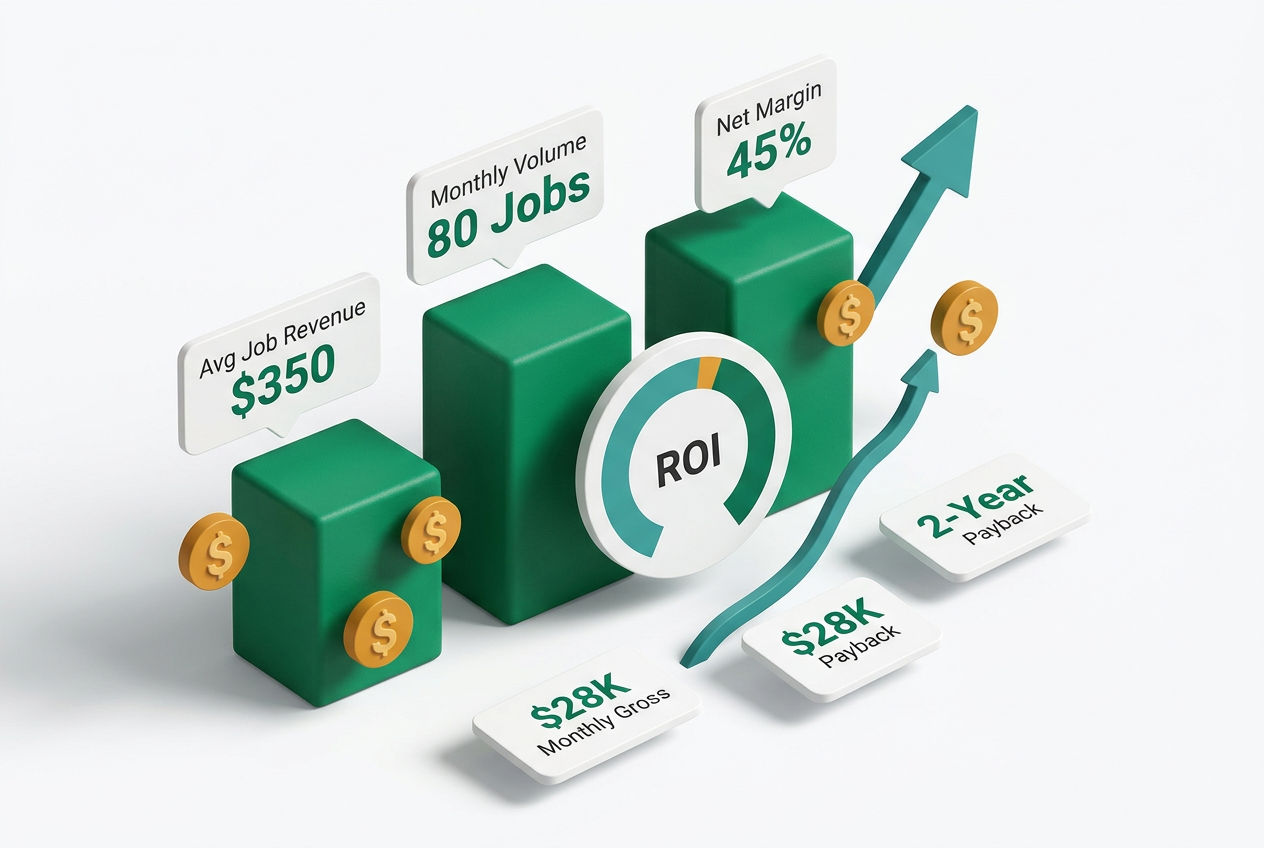
Net margins for established operators run 20–35%, which beats most trades businesses.
Here's what a realistic single-truck day looks like:
- 8 jobs × $375 average ticket = $3,000 gross
- Fuel, disposal fees (~$0.06/gallon × 3,000 gallons = $180), labor: ~$500
- Daily net before overhead: ~$2,320
Annualized across 220 working days, that's roughly $510,000 gross and $200,000+ net — before you account for slower winter months or route gaps. Most solo operators in their first two years land closer to $150,000–$250,000 gross, with break-even typically hitting at the 12–24 month mark.
The business isn't glamorous. But it's recession-resistant. Septic systems fail during recessions too. If anything, homeowners defer replacement and pump more frequently instead.
Want the full profitability breakdown? Our guide on whether a septic business is profitable runs the numbers in detail.
How Much Does It Cost to Start a Septic Pumping Business?
Startup costs depend almost entirely on your equipment decision — new vs. used vacuum truck. Everything else is manageable.
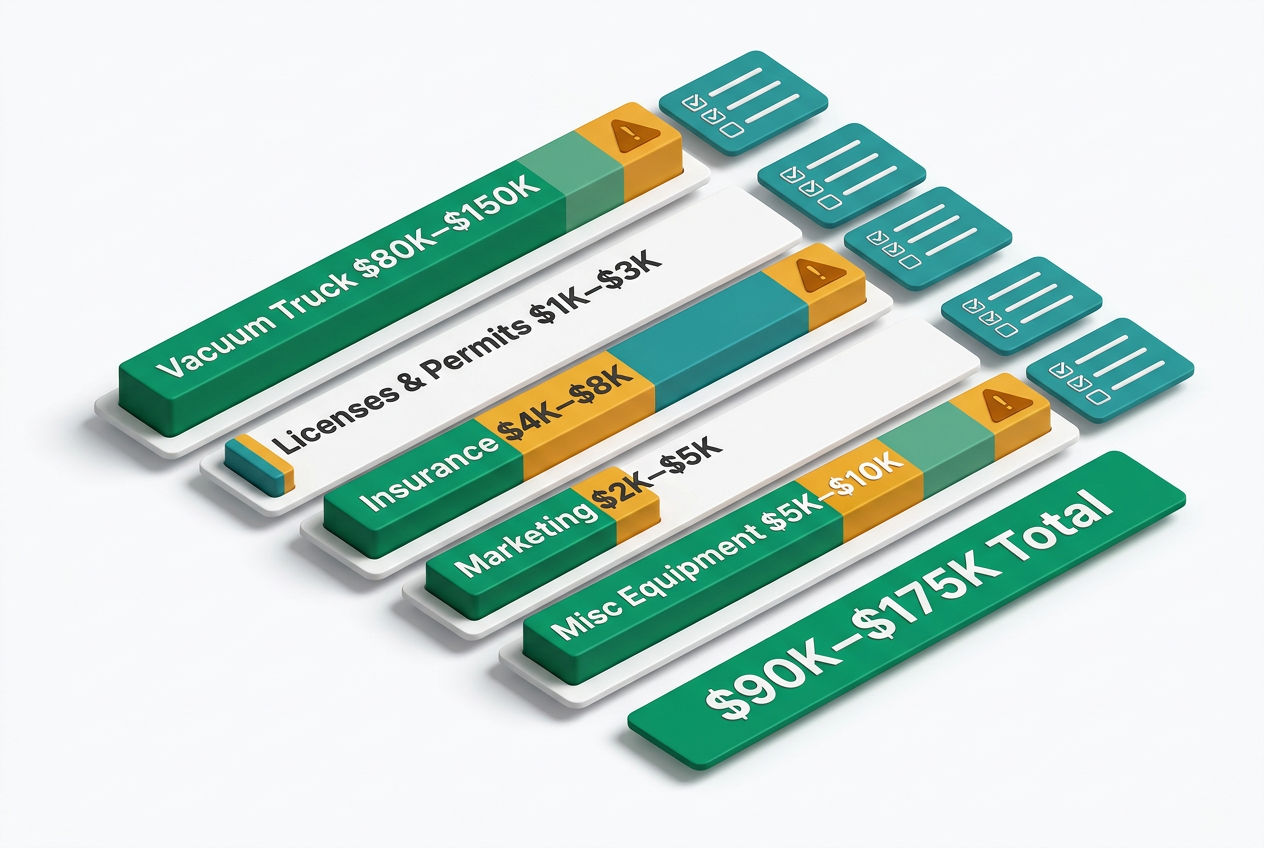
Here's a realistic breakdown:
| Expense | Low Estimate | High Estimate |
|---|---|---|
| Used vacuum/pumper truck | $15,000 | $50,000 |
| New vacuum truck | $80,000 | $200,000+ |
| Licensing & permits | $500 | $5,000 |
| Insurance (GL + commercial auto) | $3,000/yr | $8,000/yr |
| Field service software | $600/yr | $2,400/yr |
| Waste disposal setup/deposits | $500 | $2,000 |
| Total (used truck scenario) | $30,000 | $75,000 |
| Total (new truck scenario) | $100,000 | $250,000+ |
Source: IBISWorld Septic Tank & Related Services Industry Report (2024); operator cost estimates aggregated from NOWRA (National Onsite Wastewater Recycling Association) member surveys
Most first-time operators buy a used truck in the 2,500–4,000 gallon tank capacity range. A 2,500-gallon unit from a retiring operator can run $18,000–$35,000 and handle 2–3 residential pump-outs before requiring a disposal run. A new Satellite Industries or GapVax unit with a 4,000-gallon tank runs $120,000–$180,000 but comes with warranties and modern pump systems.
Worked example — break-even on a used truck purchase: Say you buy a used 3,000-gallon pumper for $28,000 and spend $7,000 on licensing, insurance deposit, and initial supplies — total capital outlay of $35,000. At an average ticket of $350 and a 65% gross margin after fuel and disposal fees, each job contributes roughly $227 toward overhead and profit. You need approximately 154 jobs to recover your startup investment. At 6 jobs per working day, 5 days per week, that's about 5–6 weeks of full operation to break even on equipment alone — before accounting for fixed monthly overhead like insurance premiums and software subscriptions. Most operators realistically reach equipment break-even within 3–5 months once routes ramp up.
One honest limitation: these projections assume consistent route density. Operators in rural areas with long drive times between jobs frequently see daily job counts drop to 4–5, which extends break-even to 9–12 months. If your service radius exceeds 25 miles from your disposal facility, model your numbers conservatively.
Our dedicated guide on septic pump truck costs covers specific makes, models, and used equipment red flags worth reading before you buy anything. For the full startup cost breakdown, including hidden expenses new operators miss, see septic business startup costs.
What Licenses Do You Need to Pump Septic Tanks?
Licensing requirements for a septic pumping business vary significantly by state — and sometimes by county within the same state. There is no single federal license. The EPA sets environmental standards for liquid waste disposal under the Clean Water Act and the Resource Conservation and Recovery Act (RCRA), but enforcement and operator certification falls to state agencies.
Here's how it breaks down across regions:
- Florida: Requires a Registered Septic Tank Contractor (RSTC) license through the Department of Health. Pumpers must also register each vehicle used for waste hauling.
- Texas: Delegates regulation to county-level Designated Representatives. Licensing complexity varies dramatically between Harris County and a rural West Texas county.
- Minnesota: The MPCA (Minnesota Pollution Control Agency) requires licensed pumpers to file disposal manifests with the county after every service call — creating a paper trail that protects operators and customers.
- Oregon: State DEQ oversees liquid waste hauler licensing. The Pacific Northwest has some of the strictest disposal site regulations in the country — approved tipping sites are limited, which can squeeze margins.
- Pennsylvania: DEP issues waste hauler permits, but local municipal requirements can add another layer.
Most states require at minimum:
- A business entity registration (LLC or corporation)
- A waste hauler or liquid waste transporter permit
- Commercial vehicle registration for your truck
- Proof of approved disposal facility agreements
Some states require a separate septic contractor license even if you're only pumping (not installing systems). Before spending a dollar on equipment, check your state health department and environmental agency websites. Our septic business license requirements guide maps this out state by state.
What Equipment Do You Need to Start a Septic Pumping Business?
The core of your business is the vacuum truck — a chassis-mounted pump system with a holding tank that creates suction to pull waste from a septic tank. Beyond the truck, your equipment list is shorter than you'd expect.
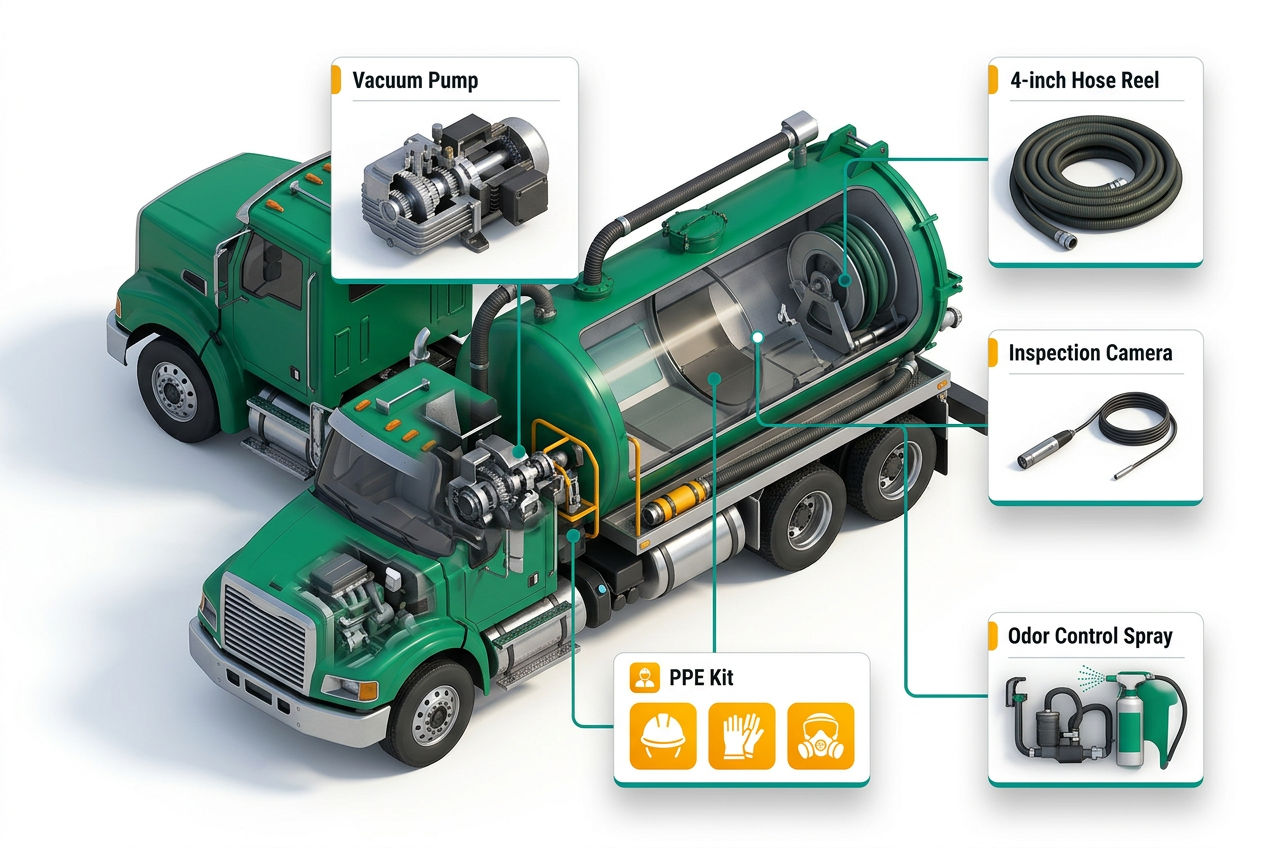
Essential Equipment:
- Vacuum/pumper truck (2,500–5,000 gallon tank capacity) — your biggest investment
- Vacuum hoses (3"–4" diameter, typically 50–100 feet of working hose)
- Hand tools: tank lid pullers, sludge judges for measuring tank depth, inspection mirrors
- Personal protective equipment: rubber gloves, Tyvek suits, face shields, rubber boots
- GPS and routing software — critical from day one for route efficiency
- Portable water supply — for rinsing after pump-outs
Optional but smart early additions:
- A sewer camera (lets you upsell drain field inspections and camera inspections)
- Effluent filter cleaning tools (Polylok PL-122 filters are common in residential systems)
- Portable riser installation kits — customers pay $150–$400 for riser installations, and you can do them while on-site
A sludge judge — a clear acrylic tube used to measure the sludge and scum layers in a tank — costs about $75 and tells you exactly what's in the tank before you pump. Customers appreciate operators who can explain what they're seeing. It builds trust and referrals fast.
Read our full septic truck guide and vacuum truck guide for detailed equipment specs and what to look for when buying used.
How Do You Build a Septic Service Route?
Route density determines profitability. A truck running 40 miles between jobs is losing money compared to one running 8 miles between 10 jobs in a tight service area. Route building is the operational make-or-break for a septic pumping business.
Start local, stay tight. Pick a radius you'll dominate — 15–20 miles from your disposal facility is ideal. Every mile past that eats profit.
Where your first customers come from:
- Real estate agents — they need septic inspections before closings
- Property management companies — they have multiple units on septic, all on different service cycles
- Google Business Profile — set it up the day you get your license; septic business tips for growth covers this in detail
- Door-knocking in rural subdivisions (uncomfortable but effective in the first 90 days)
- Referrals from plumbers and drain cleaning companies who don't pump
Maintenance contracts are your moat. A homeowner who signs a 3-year pumping agreement at $350 per service, scheduled automatically, is worth 4–5x a one-time customer. They don't shop around, they refer neighbors, and they smooth out your seasonal revenue dips.
Once you're booking 15+ jobs per week, field service management software like Jobber, ServiceTitan, or Service Fusion pays for itself. These platforms handle scheduling, invoicing, customer reminders, and route optimization. See our septic business software guide for a head-to-head comparison.
For the full operational playbook, the how to run a septic business guide is your next read.
Seasonal Patterns and How to Manage Them
Septic Business Blueprint
Thinking about starting your own septic business?
The complete, plain-English playbook to start (or buy), license and grow a profitable septic business — the models, the money math, trucks, disposal, insurance, pricing and how to land your first customers.
Get the Blueprint — $297 →Instant access · 12-chapter playbook + 6-piece toolkit · 60-day money-back guaranteeCold climates hit septic pumping businesses hard in winter. Frozen ground in Minnesota, Wisconsin, or Maine can make tank access impossible for weeks at a time. In northern states, December through February is survival mode for operators without a revenue plan.
Spring is your biggest season. Ground thaw reveals failed systems homeowners ignored all winter. Home sale inspection season drives calls. Smart operators pre-book spring appointments in February.
Summer is steady. Vacation homes and rental properties generate call volume. Aerobic treatment unit (ATU) maintenance contracts peak in summer — ATU systems like those from Orenco Systems or Norweco require quarterly service visits, giving you recurring revenue on top of pump-outs.
Fall is your second chance. Push pre-winter service reminders hard in September and October. A 1,000-gallon tank that's 70% full heading into winter is a system failure waiting to happen.
Winter — if you're in a cold climate, use the slow period to market aggressively, service commercial accounts that don't freeze (restaurants, car washes, grease traps), and pursue ATU service contracts that run year-round regardless of temperature.
How to Start a Septic Pumping Company: Step-by-Step
Starting a septic pumping company follows a predictable sequence. Operators who skip steps — usually licensing or disposal agreements — end up stalled after equipment purchase with no legal way to operate.
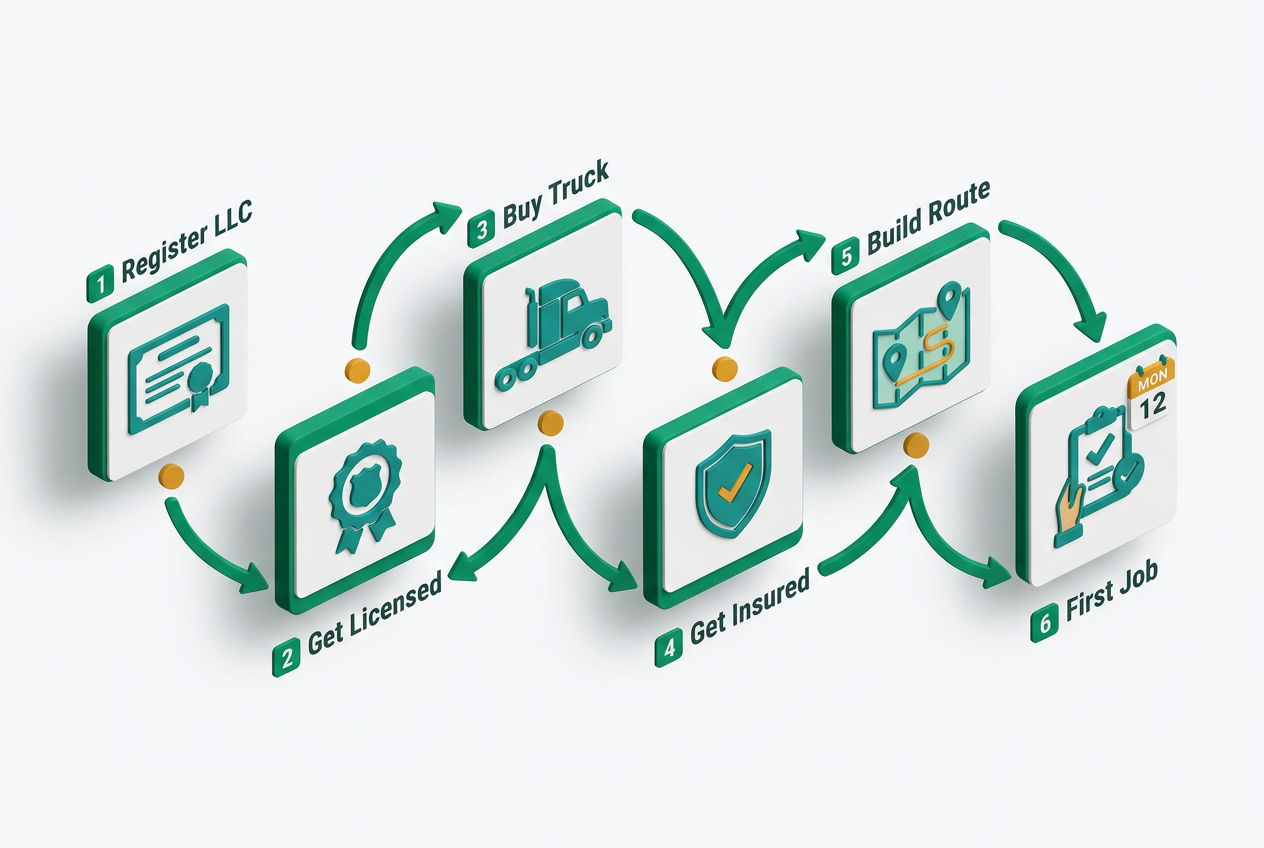
Step 1: Research your state and county licensing requirements Contact your state environmental agency and county health department before anything else. Determine whether your state requires a separate liquid waste hauler permit, a septic contractor license, or both. Some states — like Florida — require passing a written exam. Build your licensing timeline before buying equipment.
Step 2: Form your business entity Register an LLC in your state. Septic pumping carries real liability exposure — a spill, a damaged drain field, or a customer dispute can become expensive fast. Operating as a sole proprietor without an LLC is an unnecessary risk. File your EIN with the IRS, open a business bank account, and keep finances completely separate from day one.
Step 3: Secure a disposal facility agreement You cannot legally operate a septic pumping company without an approved site to dump waste. Contact your local wastewater treatment plant, municipal authority, or licensed biosolids facility. Some municipalities charge a per-gallon tipping fee ($0.04–$0.10/gallon is typical); others require a hauler registration. Get this agreement in writing before you buy your truck.
Step 4: Purchase your truck and equipment Buy a truck that matches your realistic first-year volume — a 2,500–3,000 gallon unit is appropriate for most new operators. Overspending on a 5,000-gallon unit before your route is built creates cash flow pressure with no operational benefit. Have a diesel mechanic inspect any used unit before purchase; pump rebuilds run $3,000–$8,000 and kill first-year margins.
Step 5: Get insured A septic pumping company needs at minimum: commercial auto insurance on the truck, general liability (minimum $1 million per occurrence), and pollution liability coverage. Standard GL policies exclude pollution events — a sewage spill that reaches a waterway is a pollution event. Carriers like Progressive Commercial, Markel, or specialty environmental insurers offer appropriate coverage. Budget $4,000–$9,000 annually for a complete package.
Step 6: Set up operations and start marketing Create your Google Business Profile the day you get your license. Set up a basic website with your service area, phone number, and a booking form. Start calling real estate agents and property managers in your area — these relationships drive early volume faster than any advertising spend.
Frequently Asked Questions
How do I start a septic pumping business from scratch?
Starting a septic pumping business from scratch means working through licensing, disposal agreements, and equipment in that order — not the reverse. Begin by contacting your state environmental agency and county health department to identify exactly which permits you need: most states require a liquid waste hauler permit, commercial vehicle registration for your truck, and proof of a disposal facility agreement. Form an LLC before you spend a dollar on equipment. Once licensing is mapped out, secure a written agreement with a licensed disposal facility — a wastewater treatment plant, municipal authority, or biosolids site that accepts septage. Only then should you purchase a vacuum truck. A used 2,500–3,000 gallon pumper in the $18,000–$35,000 range is the right starting point for most new operators. Pair it with general liability, commercial auto, and pollution liability insurance. Your first customers will come from real estate agents, property managers, and Google Business Profile — set that profile up the day you're licensed. Most operators reach their first paying job within 60–90 days of starting the licensing process if they work the steps sequentially.
Is a septic pumping company a good business to own?
A septic pumping company is one of the more durable small businesses in the trades sector, primarily because demand is non-discretionary. The EPA estimates 21 million U.S. homes depend on septic systems, and every one of them requires pumping every 3–5 years regardless of economic conditions. According to IBISWorld, the industry generates approximately $5.5 billion annually and has grown at 3–4% per year consistently. Established solo operators net $80,000–$180,000 per year after expenses on a single truck. The business does have honest limitations: startup capital requirements are significant ($30,000–$250,000 depending on equipment choices), licensing complexity varies considerably by state, and cold-climate operators face real seasonal revenue gaps from December through February. Disposal facility access is also a constraint in some regions — if approved tipping sites are scarce near you, margins compress. Operators who research their local market, secure disposal access early, and build maintenance contract portfolios typically find the business highly profitable within 18–24 months of launch.
What does it cost to start a septic tank pumping business?
The cost to start a septic tank pumping business ranges from approximately $30,000 on the low end to $250,000 or more for a fully equipped new-truck operation. The single largest variable is whether you buy a used or new vacuum truck. A used 2,500–3,500 gallon pumper from a retiring operator typically runs $18,000–$40,000; a new Satellite Industries or GapVax unit with a 4,000+ gallon tank runs $120,000–$180,000. Beyond the truck, budget $500–$5,000 for state and county licensing and permits, $3,000–$9,000 annually for insurance (general liability, commercial auto, and pollution liability), $500–$2,000 for disposal facility deposits and setup, and $600–$2,400 per year for field service software. Most operators also spend $1,000–$3,000 on initial supplies — hoses, hand tools, PPE, and a sludge judge. A realistic used-truck startup scenario totals $30,000–$75,000 in first-year capital. According to NOWRA member operator surveys, most new septic pumping businesses reach equipment break-even within 3–6 months of achieving full operating status with consistent routes.
What licenses and permits are needed to run a septic pumping business?
The licenses needed to run a septic pumping business depend on your state and sometimes your county, since there is no single federal license for liquid waste haulers. At a minimum, most states require a liquid waste transporter or waste hauler permit issued by the state environmental agency (such as Florida's Department of Health, Oregon's DEQ, or Minnesota's MPCA), commercial vehicle registration for your vacuum truck, and a written agreement with an approved disposal facility. Some states require passing a written examination and carrying a specific septic contractor license even if you are only pumping — not installing — systems. Florida's Registered Septic Tank Contractor (RSTC) license is one example; Minnesota requires pumpers to file a disposal manifest with the county after every service call under MPCA rules. A few states delegate regulation to county health departments entirely, meaning requirements can vary within the same state. Always verify with both your state environmental agency and your county health department before purchasing equipment, and obtain your disposal facility agreement in writing before applying for operating permits.
How much can a septic pumping business owner make?
A septic pumping business owner running a single truck can realistically earn $80,000–$180,000 net per year once routes are established, typically by year two of operation. Gross revenue for a productive solo operator ranges from $150,000 to $400,000 annually depending on service area density, average ticket price, and how many maintenance contracts are in place. Here is a concrete example: an operator completing 8 jobs per day at an average ticket of $375 grosses $3,000 daily. After fuel, disposal fees (approximately $180 for 3,000 gallons at $0.06/gallon), and labor, daily net before fixed overhead is approximately $2,320. Across 220 working days, that annualizes to roughly $510,000 gross and over $200,000 net — though first and second year operators with developing routes typically land closer to $150,000–$250,000 gross. Net margins for established septic pumping companies run 20–35%, which compares favorably to most trades businesses. Adding a second truck and driver roughly doubles revenue with lower marginal overhead.
What is the best software for managing a septic pumping company?
The best software for managing a septic pumping company depends on your operation size, but Jobber, ServiceTitan, and Service Fusion are the three platforms most consistently used by septic operators nationwide. Jobber is the most popular choice for solo operators and small crews — it handles scheduling, customer reminders, invoicing, and basic route optimization at a price point ($49–$149/month) that makes sense before your route is fully built. ServiceTitan is the most feature-rich option, with advanced dispatching, GPS fleet tracking, and detailed revenue reporting, but it is priced for operations running multiple trucks ($200–$400+/month) and requires a more significant setup investment. Service Fusion sits between the two — solid dispatching and invoicing features with flat-rate pricing that works well for 2–5 truck operations. All three platforms integrate with QuickBooks for accounting. At minimum, any septic pumping company running more than 15 jobs per week should be using dedicated field service software — manual scheduling and paper invoicing are the most common source of revenue leakage and customer communication failures in this industry.
Information in this guide reflects publicly available industry data from the EPA, IBISWorld, and NOWRA. Licensing requirements, disposal regulations, and insurance minimums change — always verify current requirements directly with your state environmental agency and county health department before starting operations.
Was this article helpful?
Frequently Asked Questions
Recommended Resources
📖 Related Articles
- Is a Septic Business Profitable? Real Owner Salary & Margins
- Septic Pump Truck: The Complete Guide
- Septic Business Startup Cost: 2026 Price Guide
- Septic Business License: The Complete Guide
- Septic Truck: The Complete Guide
- Vacuum Truck: The Complete Guide
- Septic Tank Business Tips: The Complete Guide
- The Best Septic Business Software (Scheduling, Routing & Billing)
- How to Run a Septic Business: Operations, Pricing & Growth
Find Septic Professionals Near You
Compare licensed, verified septic companies by area — top county markets and cities below, or browse all 50 states.
County markets
Popular cities
