
Quick Answer
A septic business license is a state-issued credential that legally authorizes contractors to install, pump, inspect, or design onsite wastewater treatment systems. There is no single federal septic license — requirements are set state by state, and sometimes county by county, with total licensing costs ranging from $500 to $3,000+ and timelines of 3–9 months.
Key Takeaways
- No federal septic license exists — requirements are entirely state-driven, sometimes county-driven
- Most states issue separate licenses for installers, pumpers, and designers
- Total licensing costs typically run $500–$3,000+, including exams, bonds, and fees
- Plan 3–9 months from application to legally operating — exams may only be offered 2–4 times per year
- Insurance and surety bonds are almost always required alongside your license
Starting a septic business is one of the more recession-proof moves in the trades. The EPA estimates roughly 21 million septic systems serve about 21% of U.S. homes, and every one of them needs service. The septic pumping business startup side alone feeds a market worth approximately $5.5 billion annually, according to IBISWorld. That demand doesn't slow down when the economy does — drains still back up in a recession.
But you cannot legally touch a septic system without the right credentials. And figuring out what those credentials are is genuinely confusing, because the answer is different in every state. This guide cuts through that confusion with specific numbers, real examples, and a clear path forward.
What Licenses Do You Need to Start a Septic Business?
Most states require at least one — and often two or three — distinct licenses to operate a septic business legally. The specific combination depends on what services you plan to offer.
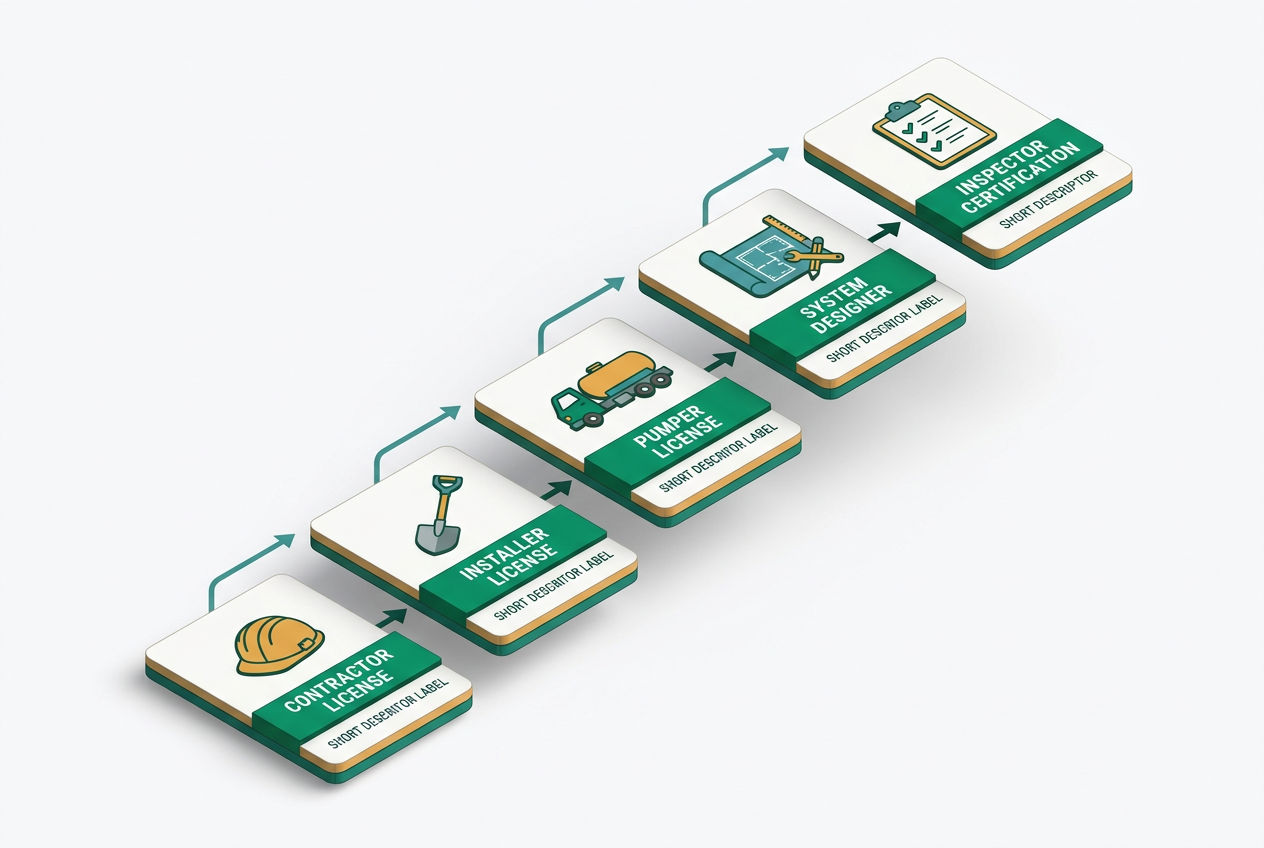
Septic system installer license (or septic contractor license): Required to physically install or repair septic tanks, drain fields, distribution boxes, and other onsite wastewater components. This is the core credential for a full-service septic company.
Septic pumper license: Required to pump and transport septage — the liquid and solid waste removed from tanks. Some states issue this as a separate credential from the installer license. If you're only pumping and not installing, this may be the only state-level license you need, though you'll still need a licensed disposal facility and often a vehicle permit.
Septic system design license: Required in many states before you can design or engineer a system layout, conduct soil evaluations, or interpret perc test results. This credential typically sits above the installer license in complexity.
Wastewater contractor license: Some states use this broader term to cover all onsite wastewater work under one umbrella. Others use it as a tiered classification system.
Beyond state licenses, you'll almost certainly need:
- A general business registration (LLC or sole proprietor) with your state
- A county health department septic permit for each individual job site
- A surety bond (typically $5,000–$25,000 depending on the state)
- General liability insurance ($500,000–$2 million coverage)
The full picture on how to start a septic business goes beyond licensing into equipment, pricing, and operations — but licensing is the non-negotiable first step.
Is There a Federal Septic Business License?
No. The EPA sets broad environmental policy around onsite wastewater treatment under the Clean Water Act, but it does not issue septic contractor licenses. There is no federal credential that authorizes you to work on septic systems anywhere in the country.
Licensing authority flows from state environmental or health agencies. In many states, county health departments add another layer on top. California is the most notable counterexample — there is no unified state-level septic contractor license. Septic work there falls under county regulation, meaning a contractor working in Los Angeles County operates under different rules than one working in Sacramento County, even on the same day.
This patchwork reality matters for multi-state operators. Septic license reciprocity between states is limited. Some states honor credentials from neighboring states; most don't. If you plan to operate across state lines, assume you'll need to pursue separate licensing in each state.
How Much Does a Septic Contractor License Cost?
Expect to spend $500–$3,000+ in total to get fully licensed, depending on your state and the license types you need. Here's how that breaks down:
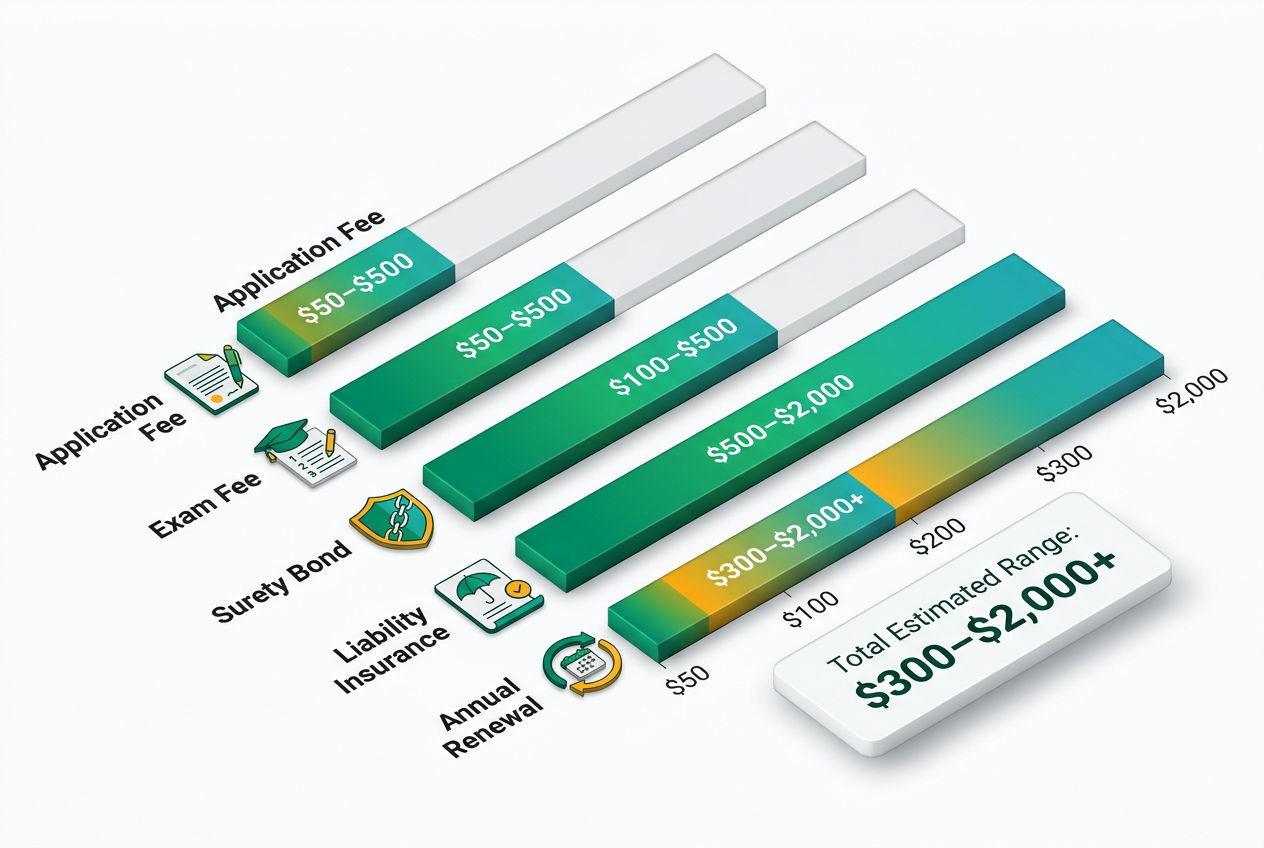
| Cost Category | Typical Range | Notes |
|---|---|---|
| Application fee | $50–$500 | Per license type; some states charge separately for each |
| Licensing exam | $75–$300 | Per exam; some states require multiple |
| Surety bond premium | $100–$500/yr | On a $5,000–$25,000 bond |
| General liability insurance | $1,200–$3,600/yr | $500K–$2M coverage |
| Annual renewal fee | $25–$250 | Plus continuing education costs |
Sources: National Association of Wastewater Technicians (NAWT), state health department fee schedules
Worked example: In Florida, a Registered Septic Tank Contractor (RSTC) license through the Department of Health requires a $100 application fee, a $150 exam fee, proof of a $5,000 surety bond, and general liability insurance of at least $1 million. Add in a business registration filing ($125 for an LLC) and your first year's bond premium ($150), and you're looking at roughly $525 in hard costs before equipment.
Texas is more expensive to enter. The TCEQ (Texas Commission on Environmental Quality) requires an Installer license with a $200 application fee, a $200 exam fee, and documentation of experience. Surety bond requirements at the county level can push bond amounts to $10,000 or more in larger counties, adding $200–$400/year in premiums.
For a complete breakdown of what launching a septic company costs beyond licensing, see the septic business startup costs guide.
How Long Does It Take to Get a Septic Business License?
The realistic timeline from decision to operating legally is 3–9 months. That range is wide because exam scheduling is often the bottleneck.
- Application processing: 2–12 weeks after submission, depending on state
- Exam preparation: 1–6 months, depending on your background and the exam's scope
- Exam scheduling: Some state septic licensing exams are offered only 2–4 times per year — miss the window and you wait months for the next one
- Background check and bond verification: Add 2–4 weeks in states that require these steps
The spring surge is real. License applications spike February through April as contractors plan for the busy season. If you're targeting a spring launch, start your application in the prior fall. Don't count on a January application getting you ready by May.
How Do State Septic Licensing Requirements Vary?
Dramatically. Here's a regional snapshot:
Florida: The Florida Department of Health issues Registered Septic Tank Contractor (RSTC) licenses. Contractors must pass a written exam, carry $1 million in liability coverage, and hold a $5,000 surety bond. Florida is a strong example of a well-structured state system — clear requirements, published exam schedules, and a public license lookup. See the Florida septic regulations page for full details.
Texas: The TCEQ oversees onsite sewage facility (OSSF) licensing. Texas has multiple license tiers — Installer I, Installer II, Designated Representative, and more — each with different experience and exam requirements. County-level health departments often add their own permit layers. The Texas septic regulations page covers the full TCEQ pathway.
Massachusetts: Massachusetts uses the Title 5 system, one of the most comprehensive and prescriptive onsite wastewater frameworks in the country. System inspectors and installers operate under separate credentials administered through MassDEP. The Title 5 exam is notoriously detailed. See Massachusetts septic regulations for specifics.
California: No statewide septic contractor license exists. Licensing is entirely county-driven. A contractor in Riverside County navigates different rules than one in Sonoma County. Most California septic contractors also hold a C-42 (Sanitation System) contractor license through the California Contractors State License Board — that's the closest thing to a unified credential. Read more at California septic regulations.
Minnesota: The MPCA (Minnesota Pollution Control Agency) oversees the Licensed Subsurface Sewage Treatment System (SSTS) program. Minnesota requires licensed inspectors to file disposal manifests after every pump-out — a documentation requirement that goes beyond most states. In northern Minnesota, frost lines reaching 60 inches affect installation timing and methods. More at Minnesota septic regulations.
How Do I Get a License to Pump Septic Tanks?

Septic Business Blueprint
Thinking about starting your own septic business?
The complete, plain-English playbook to start (or buy), license and grow a profitable septic business — the models, the money math, trucks, disposal, insurance, pricing and how to land your first customers.
Get the Blueprint — $297 →Instant access · 12-chapter playbook + 6-piece toolkit · 60-day money-back guaranteeThe pumper-specific path is generally faster and less expensive than the full installer track. Here's the typical sequence:
-
Verify your state's pumper license category. Some states (Florida, Minnesota) issue a distinct pumper or maintenance license. Others fold pumping under the general septic contractor license.
-
Meet the experience requirements. Many states require 1–2 years of documented work under a licensed contractor before you can sit for your own exam.
-
Get NAWT certified. The National Association of Wastewater Technicians (nawt.org) offers the Septic System Inspector certification and the Septic System Installer certification. Several states accept NAWT credentials as partial fulfillment of licensing requirements. The NAWT exam covers system components, effluent flow, tank baffles, pump chambers, float switches, and safe waste handling.
-
Apply for your state license and submit required documentation — proof of experience, proof of bond, insurance certificates, and the application fee.
-
Register your pumping vehicle. Many states require a separate vehicle or hauler registration distinct from your personal license.
The septic truck guide covers equipment requirements, including vacuum truck capacity specs, which matter for licensing in states that set minimum vehicle standards.
What's the Difference Between a Septic License and a Septic Permit?
This confuses nearly everyone entering the industry. Here's the clean distinction:
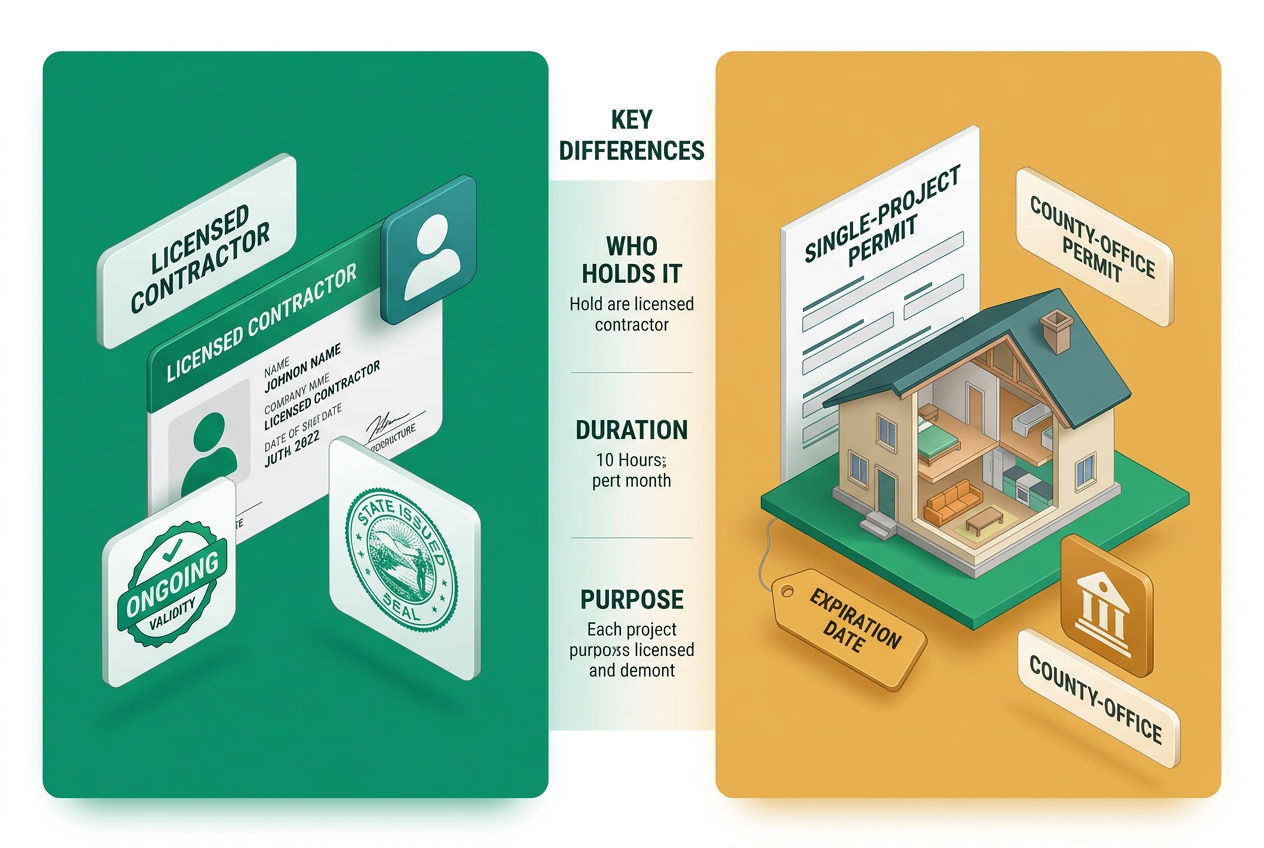
Your septic business license is your personal or company-level credential. It authorizes you to perform septic work in your state. You earn it once, renew it periodically, and it follows you from job to job.
A septic permit is a site-specific authorization issued by the local health department for a specific project at a specific address. Every new installation, major repair, or system modification typically requires its own permit — even if you've held your license for 20 years. The permit is tied to the property. Your license is tied to you.
You cannot pull a septic permit without a license. And having a license doesn't mean you can skip the permit. Both are required, and they operate independently.
For more on how site-level permitting works, the septic system permit requirements guide covers what homeowners and contractors need to know about local approval processes.
Can a Plumber Install a Septic System Without a Separate License?
Usually not. A standard plumbing license authorizes work on the interior water and drain systems inside a structure. Once you cross the foundation wall and start working on the onsite wastewater treatment system — tanks, drain fields, pump chambers, leach laterals — you're in septic territory.
Most states explicitly require a separate septic contractor license or onsite wastewater treatment license for this work, regardless of your plumbing credentials. There are exceptions: a few states allow licensed master plumbers to perform limited septic repairs without a separate credential. But those exceptions are narrow and jurisdiction-specific.
If you're a plumber considering expanding into septic, check your state's health department rules directly. Don't assume your plumbing license covers it. The septic work without license article explains the legal risks of operating without proper credentials — and the fines can be substantial.
Bonding, Insurance, and the Other Requirements Nobody Mentions
Licensing is just one piece of the compliance puzzle. Two other requirements — bonds and insurance — are almost always mandatory, and they're worth understanding before you budget.
Septic installer bond (surety bond): A septic installer bond protects the public if you fail to complete contracted work or cause damage. Bond amounts vary by state: $5,000 in Florida, up to $25,000 in some states with larger commercial requirements. The bond amount isn't what you pay — you pay a premium of roughly 1–3% of the bond value annually. A $10,000 bond costs around $100–$300 per year.
General liability insurance: Protects against third-party property damage or injury claims. Most states set minimum coverage at $500,000; many clients and municipalities require $1 million or $2 million. Septic contractors typically pay $1,200–$3,600 per year for a $1 million policy, depending on annual revenue and claims history.
Workers' compensation: Required in nearly every state once you hire employees. Thresholds vary — some states require it with even one employee; others have higher thresholds for small contractors.
These ongoing costs factor directly into your septic business plan and should be built into your pricing from day one.
Continuing Education and License Renewal
Getting licensed isn't a one-time event. Most state septic licenses require periodic renewal, typically every 1–2 years, along with proof of continuing education.
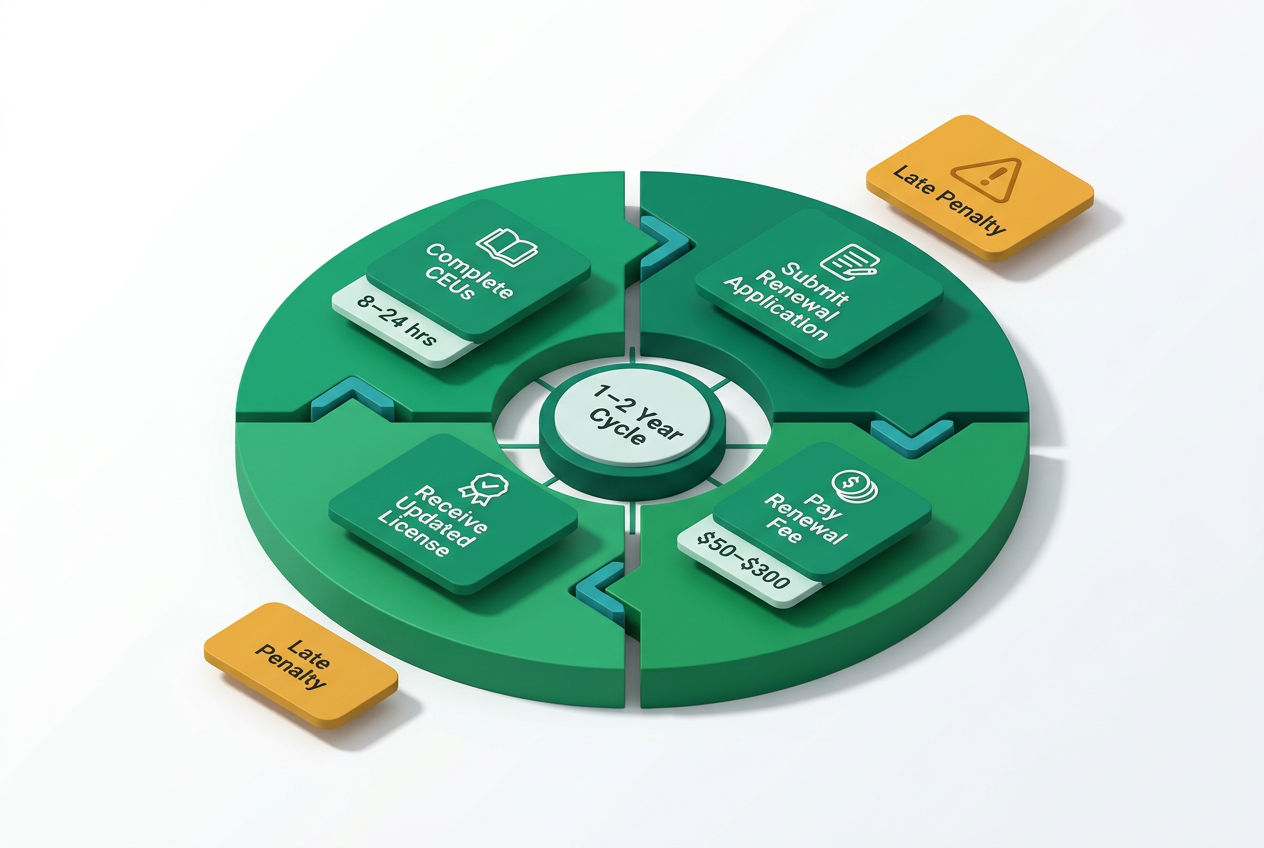
Continuing education requirements for septic contractor license renewal typically run 8–24 hours per renewal cycle, depending on the state and license type. Topics commonly covered include updated regulations, new system technologies (like aerobic treatment units or Infiltrator chamber systems), and safe waste handling procedures.
NAWT and NOWRA (nowra.org) both offer approved continuing education courses that satisfy requirements in multiple states. Some states require state-specific CE only; others accept nationally approved courses.
Mark your renewal deadlines. Many states set them at December 31, which means the fall and early winter are peak renewal periods. Letting your license lapse — even briefly — can mean ceasing operations until reinstatement is processed.
How to Run a Profitable Licensed Septic Business
Getting licensed is the starting line, not the finish. Once you're legally authorized to operate, the business side takes over. The how to run a septic business pillar guide covers scheduling, pricing, customer retention, and scaling — the operational reality that determines whether your licensed company actually makes money.
The is septic business profitable article runs the actual numbers on margins, service pricing, and what it takes to break even in year one.
And when you're ready to get your first customers, SepticTankHub.com connects licensed septic contractors with homeowners actively searching for service. Listing your business takes minutes.
Sources & Methodology
- U.S. Environmental Protection Agency (EPA): Onsite wastewater treatment data, including the 21 million septic systems figure and household percentage. epa.gov/septic
- National Association of Wastewater Technicians (NAWT): Certification program details, exam structure, and continuing education standards. nawt.org
- National Onsite Wastewater Recycling Association (NOWRA): Industry standards, continuing education resources, and state licensing summaries. nowra.org
- State health department fee schedules: Florida Department of Health, Texas TCEQ, Massachusetts DEP, Minnesota MPCA — referenced directly for cost and requirement data.
- IBISWorld: Septic services industry market size estimate (~$5.5 billion). Referenced for industry context; verify current figures at ibisworld.com.
Was this article helpful?
Frequently Asked Questions
Recommended Resources
📖 Related Articles
- Septic Pumping Business: The Complete Guide
- How to Start a Septic Tank Business (2026 Step-by-Step Guide)
- Septic Business Startup Cost: 2026 Price Guide
- Septic Truck: The Complete Guide
- Septic System Permit Cost & State Requirements (2026 Guide)
- Can You Do Your Own Septic Work Without a License?
- Septic Business Plan: The Complete Guide
- How to Run a Septic Business: Operations, Pricing & Growth
- Is a Septic Business Profitable? Real Owner Salary & Margins
Find Septic Professionals Near You
Compare licensed, verified septic companies by area — top county markets and cities below, or browse all 50 states.
County markets
Popular cities
