
Quick Answer
The total septic business startup cost ranges from $25,000 to $350,000+, depending on equipment choices and business scale. A solo owner-operator buying a used vacuum truck can launch for $25,000–$60,000. A mid-level independent with newer equipment and full insurance coverage runs $75,000–$150,000. A full-service company with new trucks, staff, and commercial space hits $150,000–$350,000 or more. The pumper truck alone accounts for 40–60% of total startup spend.
Key Takeaways
- A budget owner-operator startup using a used vacuum truck costs $25,000–$60,000 total
- Mid-level independent launches run $75,000–$150,000, including a newer truck and proper insurance
- Full-service company startups can hit $150,000–$350,000+ with new equipment and staff
- The pumper truck is your single largest expense — budget $15,000–$60,000 used or $80,000–$175,000 new
- Licensing requirements vary by state with no federal standard — Florida requires an RSTC license through the DOH; Texas delegates to county-level representatives
How Much Does It Cost to Start a Septic Business by Tier?
Most first-time owners underestimate total costs by 20–30% because they focus on the truck and forget insurance, permits, and the first three months of operating cash. Before you open a spreadsheet, know which tier you're planning for.
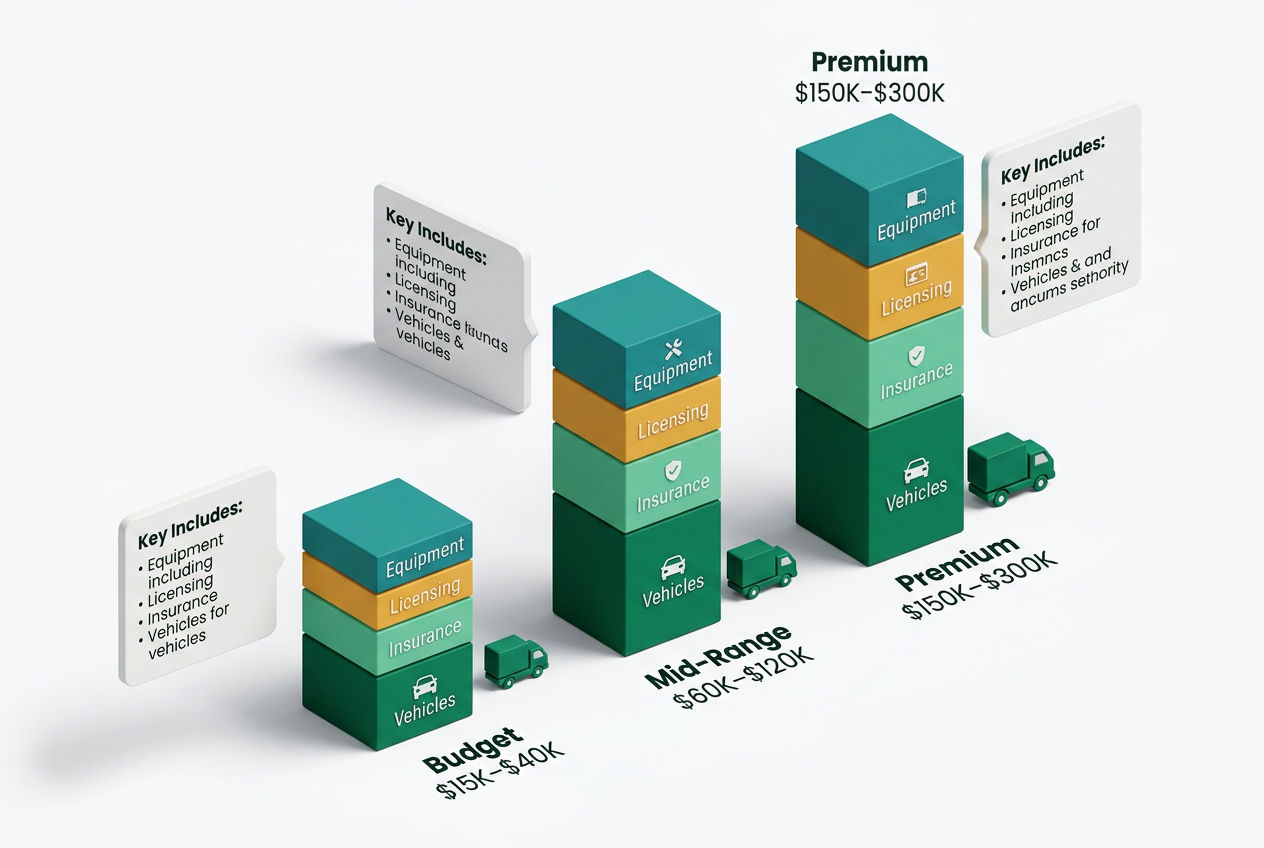
| Startup Tier | What's Included | Total Estimated Cost |
|---|---|---|
| Budget / Owner-Operator | Used pumper truck, basic insurance, LLC filing | $25,000–$60,000 |
| Mid-Level Independent | Newer used truck, inspection camera, full coverage | $75,000–$150,000 |
| Full-Service Launch | New truck, excavator, employees, commercial space | $150,000–$350,000+ |
| Franchise Route | Franchise fee + equipment + working capital | $50,000–$200,000 |
Source: Industry estimates compiled from NOWRA member surveys, equipment dealers, and SBA loan data. Costs reflect 2025–2026 market pricing.
What Equipment Do You Need to Start a Septic Business?
A septic pumping business at its core needs one thing: a vacuum truck capable of pulling sludge and scum from a tank. Everything else is secondary. But "secondary" doesn't mean cheap.
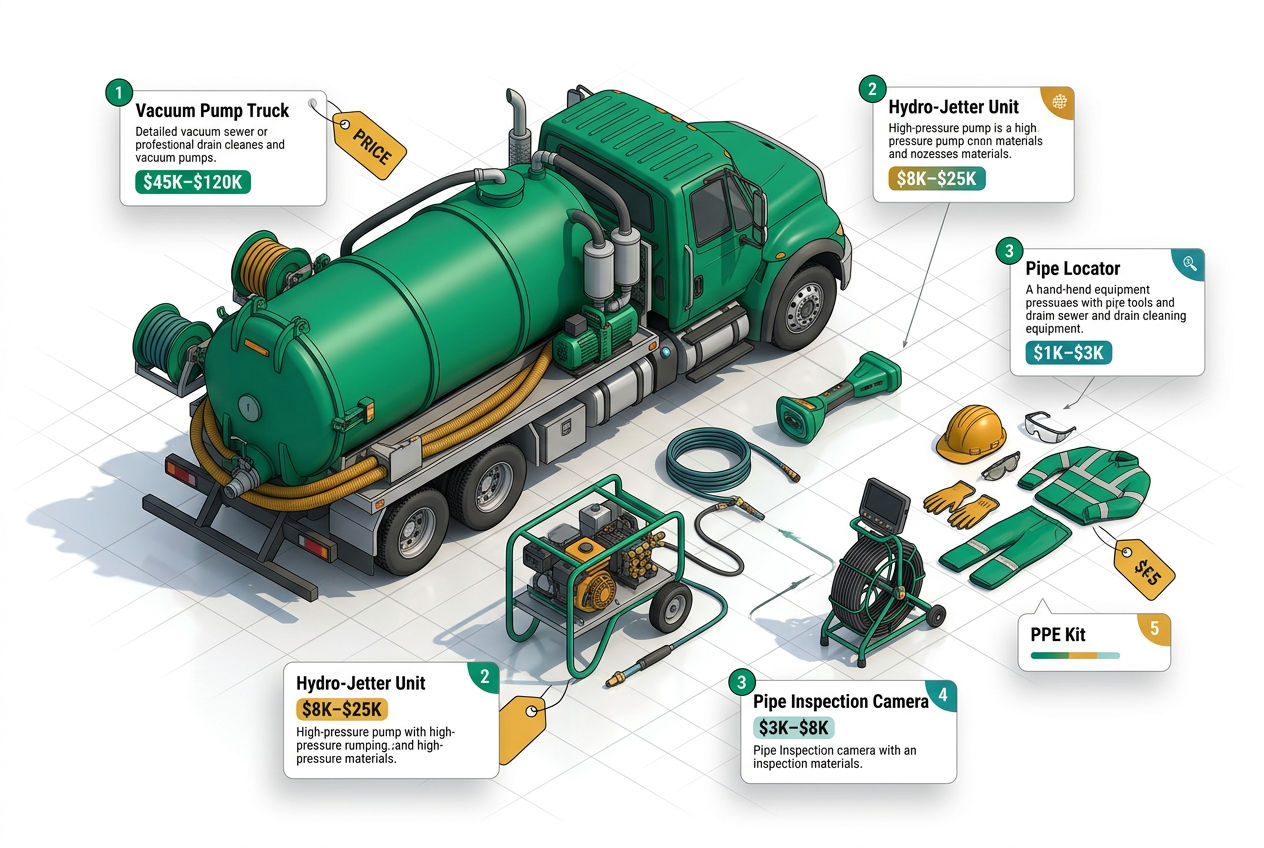
Vacuum / Pumper Truck
This is where your money goes. A used pumper truck — typically a 2,500–4,000 gallon capacity unit mounted on a medium-duty chassis like an International 4300 or Freightliner M2 — runs $15,000–$60,000 depending on age, tank condition, and pump hours. Many owner-operators start with a unit in the $25,000–$35,000 range, which gives you a functional truck without destroying your cash reserves on day one.
A new vacuum truck from manufacturers like Presvac, Conde, or Keith Huber starts around $80,000 and climbs past $175,000 for a heavy-duty tanker with a high-vacuum Jurop or National Vacuum Equipment pump system. New trucks come with warranties and better financing terms — but they're a significant bet for a business that hasn't generated a single invoice yet.
Read the full septic pump truck cost breakdown before you call a dealer. Knowing the right questions saves you thousands in negotiation.
Secondary Equipment Costs
Once you have a truck, here's what a growing operation typically adds:
- Jetter / hydro-jetting unit: $3,000–$20,000 (opens drain line cleaning as a service)
- CCTV camera inspection system: $5,000–$15,000 (adds septic inspection revenue)
- Mini excavator (purchase): $20,000–$55,000 (needed for installation and repair work)
- Sludge judge / probing equipment: $500–$2,500
- Safety gear and PPE per employee: $300–$800 (H2S monitors, gloves, coveralls, non-slip boots)
- Locating equipment: $500–$2,500
A solo pumping-only startup can skip the excavator entirely and subcontract installation work. Many operators rent a mini excavator at $400–$700/day when they need one rather than carrying the purchase cost.
How Much Does Licensing Cost for a Septic Business?
Licensing costs for a septic business typically run $400–$2,800 at startup, covering state contractor licensing, business entity formation, environmental permits, and a surety bond. There is no federal license for septic contractors — each state sets its own requirements, and some delegate further to county health departments.
- State septic contractor license fee: $50–$500
- LLC or business entity formation: $50–$500 (varies by state filing fees)
- EPA / state environmental permits: $100–$1,500
- Surety bond: $200–$800/year
Florida requires all septic contractors to hold a Registered Septic Tank Contractor (RSTC) license issued by the Department of Health. The exam covers system design, soil evaluation, and installation standards. Texas takes a different approach — regulation is handled at the county level through Authorized Agents, meaning requirements in Harris County (Houston) differ from those in rural Brewster County.
Some states require a written exam and field experience hours before licensure. Others require only registration and a bond. Check your state's specific septic regulations before assuming the process is quick. In states like Massachusetts and New Jersey, the approval timeline alone can stretch 60–90 days.
What Does Septic Contractor Insurance Cost?
A single-truck septic operation should budget $6,000–$15,000 per year for a full insurance stack. Septic work is physically hazardous and environmentally sensitive — that combination means premiums run higher than most standard trades businesses.
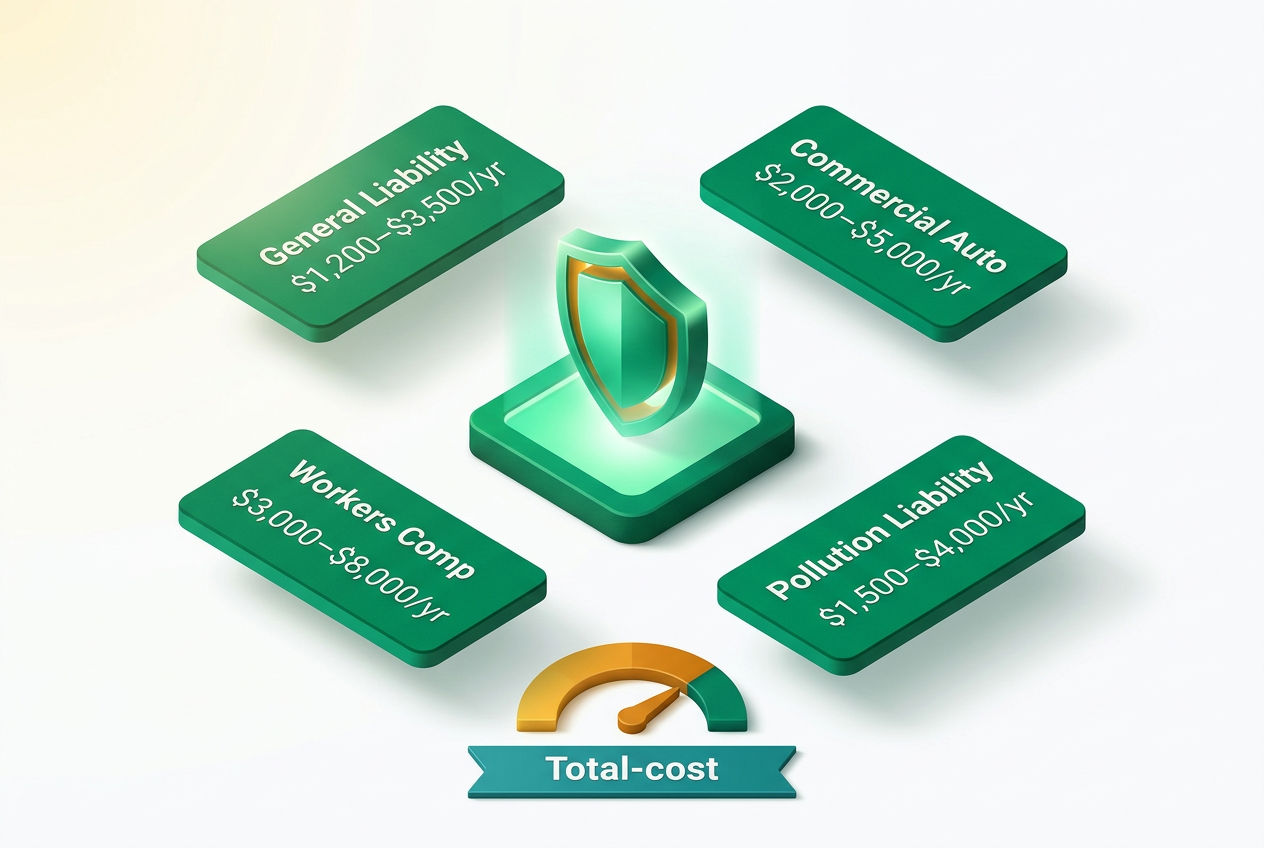
- General liability insurance: $1,200–$4,800/year (most lenders and municipal contracts require $1M minimum)
- Commercial auto insurance per truck: $2,400–$7,200/year
- Workers' compensation: Calculated as a percentage of payroll; rates for septic workers typically run 8–15% of gross wages depending on state
- Pollution / environmental liability: $1,500–$6,000/year
That pollution liability line surprises most new owners. Standard general liability explicitly excludes pollution events — and a vacuum hose blowout that spills raw effluent on a customer's lawn is classified as a pollution event in most states. If you're operating without environmental liability coverage, one incident can end your business before it really starts.
The Hidden Costs Most New Owners Miss
Here's where startup budgets consistently fall short. Equipment shows up on your quote sheet. These costs don't.
Working capital reserve: Plan for 3–6 months of operating expenses before revenue stabilizes. If your monthly overhead runs $8,000 (truck payment, insurance, fuel, phone), you need $24,000–$48,000 sitting in the bank. Banks and SBA lenders often require this reserve before approving a loan.
Waste disposal fees: After you pump a tank, that 2,500 gallons of septage has to go somewhere legal. According to the EPA, septage must be treated or disposed of in compliance with federal 40 CFR Part 503 biosolids regulations. Municipal treatment plant tipping fees typically run $0.03–$0.08 per gallon, which translates to $75–$200 per truck load. If you're running 5 loads a day, that's $375–$1,000 in disposal costs daily before you've paid for fuel.
Vehicle wrap and branding: $500–$3,000. Your truck is a moving billboard, and septic customers pay attention to professionalism.
Scheduling software: Septic business management software like Jobber, ServiceTitan, or FieldEdge runs $50–$300/month. You'll need it the moment you have more than 3–4 jobs a day.
Website and initial marketing: $500–$5,000 for a functional site; plan another $1,000–$3,000 for Google Business Profile setup, local SEO, and early advertising. Getting listed on a septic business directory immediately expands your visibility in markets you're already serving.
GPS fleet tracking: $25–$75/month per vehicle.
Is a Septic Business Profitable?
Yes — a solo owner-operator in a suburban market can clear $200,000–$290,000 in pre-tax net income annually, though rural operators with long drive times typically net significantly less. The margin ceiling is real, but so are the variables that compress it.
A solo operator charging $350–$500 per pump-out and completing 5–7 jobs per day in a dense suburban market can gross $350,000–$700,000 annually. After truck payments, insurance, fuel, disposal fees, and taxes, net margins for owner-operators typically land between 20–35%.
That's not guaranteed. Rural operators with long drive times between jobs might complete only 3–4 pump-outs daily, cutting gross revenue significantly. A detailed look at septic business profitability breaks down revenue scenarios by market type.
For reference, here's how the revenue math works for a solo operator:
- Average pump-out: $400 per job
- Jobs per day: 5
- Working days per year: 220 (accounting for winter slowdowns in northern states)
- Gross annual revenue: $440,000
- Operating costs (truck, insurance, fuel, disposal, software): ~$150,000–$180,000
- Pre-tax net: $260,000–$290,000
Real-world numbers typically fall 15–25% below this model. A new operator spending their first six months building a customer base might average 2–3 jobs per day rather than 5, cutting gross revenue to $176,000–$264,000 in year one. Break-even on a financed startup typically runs 18–36 months depending on how aggressively you market and how quickly you build a recurring customer base.
Franchise vs. Independent: Which Path Makes More Sense?

Septic Business Blueprint
Thinking about starting your own septic business?
The complete, plain-English playbook to start (or buy), license and grow a profitable septic business — the models, the money math, trucks, disposal, insurance, pricing and how to land your first customers.
Get the Blueprint — $297 →Instant access · 12-chapter playbook + 6-piece toolkit · 60-day money-back guaranteeSeptic franchise opportunities exist — companies like Mr. Rooter operate franchise models that include brand recognition, training, and a defined service territory. Franchise fees range from $30,000–$80,000 with total startup costs (including equipment) landing between $50,000–$200,000.
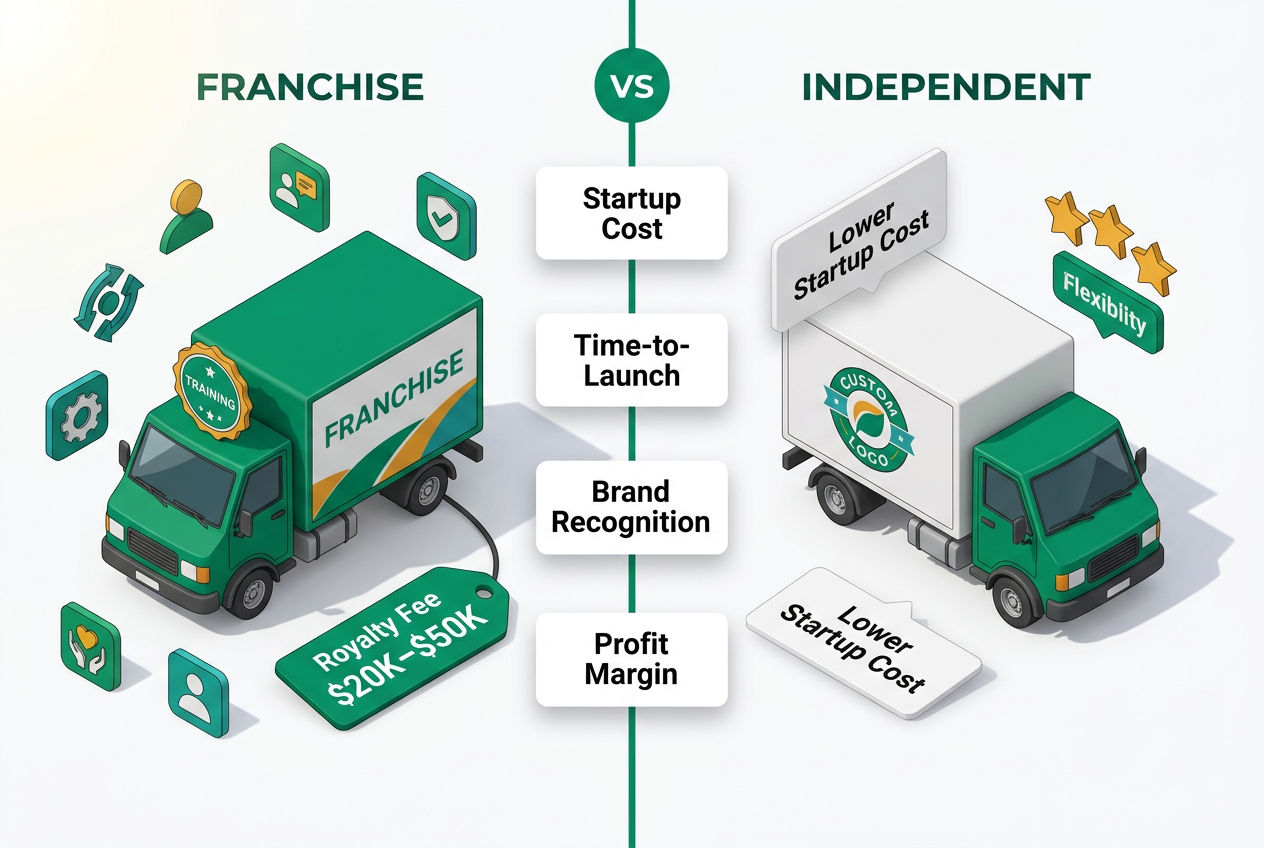
The franchise route trades margin for speed. You get marketing support, operational systems, and a recognizable name. You give up profit percentage (typically 5–8% of gross revenue as royalties) and operational independence.
Independent operators keep every dollar of margin but build everything themselves — brand, customer list, systems, and reputation. Most operators who started independent and stayed independent cite the royalty savings as decisive. If you're considering the franchise path, read the full guide to running a septic business to understand what systems you'd need to build on your own.
The independent path works best in markets with low existing competition and for operators who have prior trades experience. If you've never run a business before, the franchise training and support structure provides genuine operational structure during the first 12–18 months — particularly for job costing, customer retention, and compliance tracking.
How to Finance a Septic Business Startup?
The most common financing paths for a septic startup are SBA 7(a) loans, equipment financing through truck dealers, and USDA Rural Business Development Grants for markets in communities under 50,000 people (see rd.usda.gov for current program eligibility).
SBA 7(a) loans are the standard for full startup financing. Expect to need a credit score of 650+, a written business plan, and collateral (typically the truck itself). Loan amounts up to $500,000 are common for equipment-heavy startups, with repayment terms stretching 7–10 years on equipment and up to 25 years on real estate.
Equipment financing through dealers like Presvac or regional truck brokers often requires 10–20% down with the truck as collateral. Interest rates as of early 2026 are running 7–11% for used equipment loans.
Seller financing is underrated in this industry. Many retiring owner-operators will finance a truck purchase directly, especially if you agree to a short-term apprenticeship or route transition period. According to NAWT (National Association of Wastewater Technicians), seller-financed transitions are common in rural markets where the seller wants their customer base maintained.
Review the full septic pumping business startup guide and the septic business plan guide before meeting with a lender.
Regional Cost Variations Worth Knowing
Geography changes the cost to start a septic company in ways that don't show up in national averages.
Florida has the highest septic system density in the country — 2.6 million systems, more than any other state. That concentration creates intense competition in coastal counties but also predictable demand. Labor and disposal costs are moderate, but RSTC licensing requires passing a DOH exam that many applicants take 2–3 times before passing.
Texas is cost-favorable for startup — no state income tax, low LLC filing fees, and county-level licensing means you can sometimes be operational in 30–45 days. The challenge is geography: service areas in West Texas can span hundreds of miles between jobs, destroying your per-day job count.
Northeast states (Massachusetts, Connecticut, New Jersey) have the highest regulatory complexity and the longest licensing timelines — 60–90 days is standard. They also have the highest service rates, with pump-outs commonly running $450–$650 per job versus $275–$400 in the Southeast.
Midwest markets (Ohio, Indiana, Michigan) offer a balance of reasonable startup costs and stable demand, with low competition in rural counties that haven't been consolidated by regional operators yet.
When Should You Launch a Septic Business?
Spring is the best time to launch — specifically March through May in most U.S. markets. Demand picks up as frozen ground thaws, homeowners who deferred pumping through winter start calling, and real estate transactions (which often require septic inspections) accelerate.
Launching in October or November means your first 3–4 months of operations coincide with the slowest demand period in northern states. Unless you're in Florida or another warm-weather market, winter startup burns cash without building revenue.
Plan your launch for Q1 or Q2. Use the time now to research your state's septic regulations, line up your financing, and identify your disposal site before you're operational. A common mistake: operators secure the truck in January and discover their nearest approved septage receiving facility is 40 miles away — a logistics problem that should be solved before you pull your first tank.
Frequently Asked Questions
What is the cost to start a septic business from scratch?
The cost to start a septic business from scratch ranges from $25,000 to $350,000 depending on the scale of the operation. A bare-minimum owner-operator startup — used vacuum truck, basic liability insurance, LLC formation, and a few hundred in licensing fees — can launch for $25,000–$60,000. A mid-level operation adding a newer truck, inspection camera, full insurance coverage, and three months of working capital runs $75,000–$150,000. A full-service company with a new truck, excavator, employees, commercial space, and marketing budget realistically requires $150,000–$350,000 before the first pump-out. The single largest variable is the vacuum truck, which accounts for 40–60% of total startup spend. Most operators who underestimate costs do so because they price the truck accurately but forget disposal fees, working capital reserves, and pollution liability insurance — which together can add $30,000–$60,000 to year-one costs.
How much does septic pumping business startup cost compared to other trades?
Septic pumping startup costs run higher than most solo trade startups because the primary piece of equipment — a vacuum truck — costs $15,000–$175,000 depending on age and configuration. By comparison, a plumbing or HVAC solo startup might require $10,000–$30,000 in tools and a van. However, septic pumping generates revenue faster per job: a single pump-out at $350–$500 takes 30–60 minutes, while an HVAC repair call of similar duration may bill $150–$250. According to NOWRA member surveys, septic operators in suburban markets achieve gross margins of 20–35% at maturity, which is competitive with plumbing and superior to landscaping or cleaning services. The trade-off is the higher capital barrier to entry and the environmental liability exposure, which requires pollution liability insurance that most other trades don't need. Net: higher startup cost, but faster revenue per hour once operational.
What are the ongoing septic tank business startup costs after launch?
After launch, ongoing septic tank business startup costs typically run $6,000–$12,000 per month for a single-truck operation. The major recurring line items are truck payment ($1,500–$3,500/month on a financed used truck), commercial auto and general liability insurance ($500–$1,000/month), fuel ($800–$2,000/month depending on route density), septage disposal fees ($0.03–$0.08/gallon, typically $1,500–$4,000/month at moderate volume), and scheduling software ($50–$300/month). Workers' compensation and payroll taxes add 20–30% to labor costs if you hire. Maintenance reserves for the vacuum truck — pump rebuilds, hose replacements, chassis repairs — should be budgeted at $3,000–$8,000/year. Many operators are surprised that disposal fees are their second-largest variable cost after fuel. At 5 loads per day, five days a week, disposal alone can run $7,500–$20,000 per month, making proximity to an approved septage receiving facility a critical location decision before launch.
How much does it cost to open a septic company with employees?
Opening a septic company with employees adds $40,000–$80,000 per year per employee in fully-loaded labor costs. A single full-time pump truck driver earning $18–$24/hour will cost $37,000–$50,000 in base wages, plus workers' compensation insurance (8–15% of gross wages for septic workers), payroll taxes (approximately 7.65% employer FICA), and benefits if offered. For a two-person, one-truck operation, budget an additional $50,000–$65,000 in annual labor beyond what a solo operator would spend. The upside is significantly higher daily job completion — a two-person crew can typically run 7–10 pump-outs per day versus 4–6 solo. From a startup cost standpoint, launching with one employee versus launching solo adds roughly $15,000–$20,000 to your working capital requirement to cover payroll through the first 90 days before revenue stabilizes. Most first-year operators launch solo and hire once revenue exceeds $25,000/month consistently.
What licenses are needed to start a septic tank business?
Licenses needed to start a septic tank business vary significantly by state, but most operators need a state-issued septic contractor license, a business entity registration (LLC or corporation), an EPA or state-level septage management permit, and a surety bond. Florida requires the Registered Septic Tank Contractor (RSTC) license through the Department of Health — passing the exam typically requires 2–3 attempts for candidates without prior design experience. Texas regulates at the county level through Authorized Agents, so requirements in Harris County differ from those in rural West Texas counties. Massachusetts and New Jersey have the most complex licensing pathways, with approval timelines of 60–90 days even after all materials are submitted. Some states, including Ohio and Indiana, have relatively streamlined processes with lower exam requirements. Total licensing costs run $400–$2,800 at startup. Never assume licensing is simple — one operator who skipped the Massachusetts approval process and started working anyway faced a $15,000 fine and mandatory suspension.
Is a septic pumping business a good investment for a first-time business owner?
A septic pumping business is a viable first business for a first-time owner who has realistic expectations about startup capital, a clear plan for licensing, and a disposal site identified before buying a truck. The demand is structural — according to the EPA, roughly 21 million U.S. homes rely on septic systems, and every one requires pumping every 3–5 years. That creates predictable, recurring revenue that doesn't disappear in economic downturns. The challenges for first-time owners are capital intensity, regulatory complexity, and the physical demands of the work. A first-time owner with no trades background should seriously evaluate the franchise route — companies like Mr. Rooter provide operational systems and compliance support that take years to build independently. The honest limitation: most first-year operators earn significantly less than the theoretical ceiling, with year-one net income typically running 30–50% below a mature operator's numbers while they build their customer base and refine their routing efficiency.
Sources & Methodology
Costs in this guide reflect 2025–2026 market data compiled from the following sources:
- NOWRA (National Onsite Wastewater Recycling Association): Member survey data on equipment costs and operating margins. nowra.org
- NAWT (National Association of Wastewater Technicians): Licensing pathway documentation and regional compliance guides. nawt.org
- U.S. EPA: Septic system prevalence statistics (21 million households) and 40 CFR Part 503 biosolids/septage disposal regulations. epa.gov
- USDA Rural Development: Rural Business Development Grant program eligibility and funding ranges. rd.usda.gov
- SBA (Small Business Administration): 7(a) loan program requirements, credit standards, and equipment financing terms. sba.gov
Equipment pricing reflects dealer quotes from Presvac Systems, Conde vacuum equipment distributors, and used truck marketplaces including IronPlanet and TruckPaper as of Q4 2025. Insurance estimates sourced from commercial coverage quotes for single-truck septic operations in FL, TX, OH, and MA markets. Regional licensing timelines verified against state agency published schedules as of January 2026.
Was this article helpful?
Frequently Asked Questions
Recommended Resources
📖 Related Articles
- Septic Pump Truck: The Complete Guide
- Septic Business License: The Complete Guide
- The Best Septic Business Software (Scheduling, Routing & Billing)
- Is a Septic Business Profitable? Real Owner Salary & Margins
- How to Run a Septic Business: Operations, Pricing & Growth
- Septic Pumping Business: The Complete Guide
- Septic Business Plan: The Complete Guide
Find Septic Professionals Near You
Compare licensed, verified septic companies by area — top county markets and cities below, or browse all 50 states.
County markets
Popular cities
