
Quick Answer
These septic tank business tips cover what actually separates operators who build durable companies from those who burn out before year three: licensing traps to avoid, pricing math that holds up under real costs, and marketing channels that generate high-intent calls. People don't stop flushing toilets when the economy tanks. The EPA estimates roughly 21 million U.S. homes rely on private septic systems — and every single one of those tanks needs service every 3–5 years. That's a massive, repeat-customer market with predictable demand.
Key Takeaways
- The U.S. septic servicing industry generates an estimated $5–6 billion annually, with steady demand driven by 21 million septic-served homes.
- Startup costs range from $50,000 (used truck, solo operator) to $400,000+ for a fully equipped multi-truck operation.
- A single technician can complete 8–15 pump-outs per day at $300–$600 each — that's up to $9,000 in gross revenue per truck per day.
- Recurring maintenance contracts at $150–$300/household/year are the fastest path to predictable, year-round income.
- Licensing is state-administered — there is no single national septic contractor license. Check your state environmental agency before spending a dollar on equipment.
Is a Septic Tank Business Worth Starting?
A septic pumping business is worth starting if you can tolerate physical, sometimes unglamorous work, and you're willing to manage the operational complexity of routing, equipment maintenance, and state compliance.
The financial upside is real. An experienced solo operator running one vacuum truck can gross $150,000–$350,000 annually. Multi-truck operations with maintenance contracts routinely clear $500,000–$1M+.
The septic service industry is genuinely recession-resistant. During the 2008 financial crisis, septic businesses in rural and suburban markets held steady while construction-dependent trades collapsed. Homeowners can delay a kitchen remodel. They cannot delay a backed-up septic tank.
One honest limitation: this is not a passive business. Equipment breaks. Tanks are buried in inconvenient places. Regulations change. If you want to understand the full picture before committing, read our deep-dive on how to run a septic business — it's the operational companion to this guide.
What Licenses Do You Need to Start a Septic Tank Business?
Septic contractor licensing is administered at the state level — no single federal license covers the work. Requirements vary dramatically.
Florida requires all septic contractors to hold a Registered Septic Tank Contractor (RSTC) license through the Department of Health. Texas delegates much of the oversight to county-level Designated Representatives under TCEQ. Minnesota's MPCA requires licensed pumpers to file disposal manifests with the county after every service call.
Most states require at least one of the following:
- Septic contractor or installer license — issued by the state environmental or health agency
- Septage hauler permit — required to transport and dispose of waste
- Commercial driver's license (CDL) — required for vacuum trucks over 26,001 lbs GVWR
- General business license — city or county level
Licensing and permit fees typically run $500–$5,000 depending on state and license type. Some states also require a licensed operator to be on staff even if they're not the owner. Budget 3–6 months for the full credentialing process if you're starting from scratch.
For a complete breakdown by state, see our septic business license requirements guide.
How Much Does It Cost to Start a Septic Pumping Business?
Startup costs for a septic pumping business range from $50,000 for a bare-bones solo operation to $400,000 or more for a multi-truck launch with full equipment.

Here's where that money goes:
| Expense Category | Low Estimate | High Estimate | Notes |
|---|---|---|---|
| Used vacuum truck | $30,000 | $80,000 | 1,500–2,500 gal tank |
| New vacuum truck | $150,000 | $300,000+ | Larger capacity, warranty |
| Licensing & permits | $500 | $5,000 | State-dependent |
| Insurance (GL + auto) | $3,000/yr | $8,000/yr | Per truck |
| Inspection camera | $2,500 | $8,000 | Optional at launch |
| Field service software | $100/mo | $400/mo | Routing + invoicing |
| Marketing (year one) | $3,000 | $15,000 | Website, ads, directory |
Source: NOWRA industry data, SepticTankHub.com operator surveys, equipment dealer pricing 2024–2025.
The vacuum truck is your biggest decision. A used truck in the $30,000–$80,000 range gets you started, but you're buying someone else's maintenance history. A 2,500-gallon National Vacuum Equipment or Vac-Con unit with under 100,000 miles is a reasonable target. Budget $5,000–$15,000 for mechanical inspection and any needed repairs before your first service call.
For a full breakdown of startup expenses, see our septic business startup costs guide.
How Should You Price Septic Tank Services?
Price septic pump-outs based on tank size, drive time, and regional market rates — not just what competitors charge. A standard 1,000-gallon residential pump-out runs $300–$600 nationally. A 1,500-gallon tank bumps that to $400–$750. Pricing below your actual cost per truck-hour is the #1 financial mistake new operators make.
Here's a real example. Say you're operating in rural central Georgia. Your vacuum truck costs $180/day in fixed costs (depreciation, insurance, registration). Diesel runs $80–$120 per day at current prices. Factor in your own labor at $35/hour and you're looking at $375–$450 in daily fixed overhead before you turn a wrench. If you complete 10 pump-outs at $275 each, you gross $2,750. Net is tight. Raise your base price to $325–$350 and complete 12 jobs with optimized routing — now the math works.
Check our septic pumping cost guide to benchmark your rates against current regional averages before you set your price sheet.
Additional pricing benchmarks:
- Septic inspection fee: $150–$400 (basic visual to camera inspection)
- Drain field repair consultation: $200–$500
- Annual maintenance contract: $150–$300/household/year
- Emergency after-hours call: 1.5–2x standard rate
What Services Should a Septic Business Offer?
A septic pumping business anchored on pump-outs alone leaves money on the table. The smartest operators build a service menu that creates multiple touchpoints with the same customer.
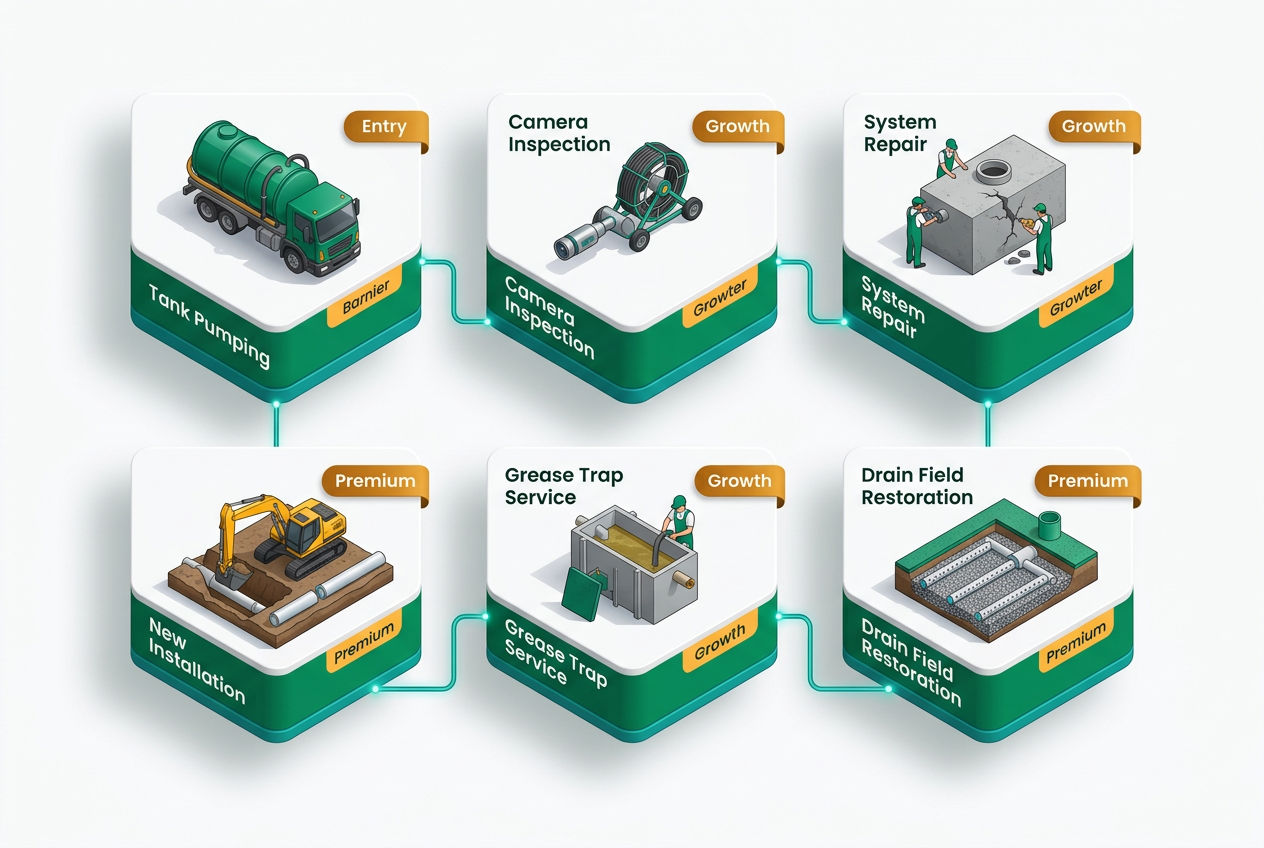
Consider these revenue streams:
Core services (launch with these):
- Septic tank pumping and cleaning
- Septic inspections for home buyers and sellers
- Routine maintenance visits (effluent filter cleaning, baffle inspection)
Add-on services (year 1–2):
- Septic drain field repair — coordinate with a licensed installer if you're not yet certified
- Grease trap pumping for local restaurants and commercial accounts
- Riser installation (converting buried lids to accessible risers adds $300–$600 per tank and makes future pump-outs faster for you)
Advanced services (year 2+):
- Septic system installation (requires additional licensing in most states)
- Aerobic treatment unit (ATU) maintenance contracts
- Camera inspections using push-camera equipment to assess line condition
Septic inspection services deserve special attention. In most markets, home sale inspections run $150–$400 and create natural upsell paths: the buyer finds out the effluent filter hasn't been cleaned in seven years, and you're right there to fix it. Real estate agent referral networks are one of the fastest ways to fill your schedule with inspection work.
How Do You Market a Septic Tank Business?
Local SEO and referral networks drive the majority of new customer calls for septic businesses. According to Google, 76% of local service searches result in a same-day contact — and septic calls are almost always urgent. If someone is searching "septic pumping near me," they need help now. You need to be visible.
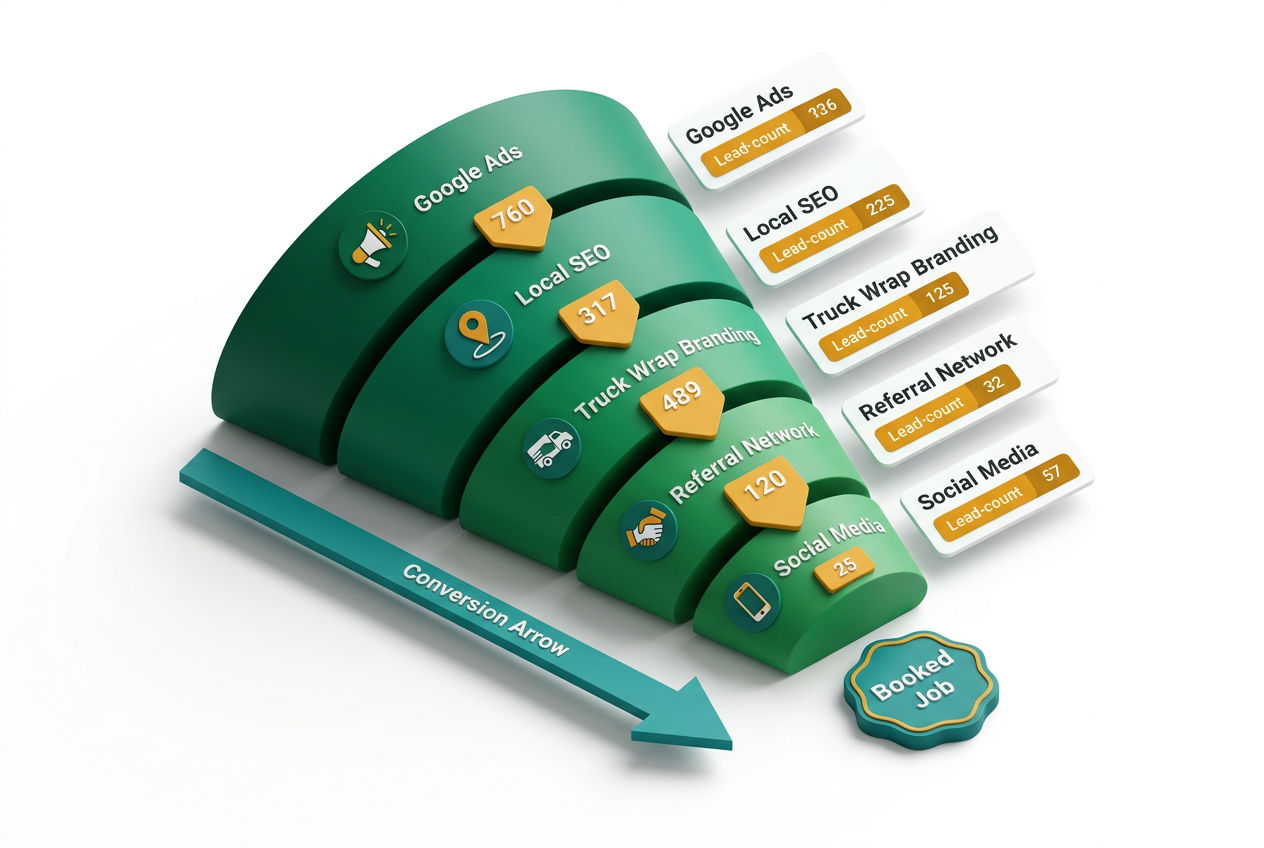
Start with these marketing priorities:
Google Business Profile (GBP) Claim and fully optimize your listing. Add photos of your truck and team. Collect reviews aggressively — businesses with 50+ Google reviews convert at significantly higher rates than those with fewer than 10. Ask every satisfied customer before you leave the property.
Google Local Services Ads (LSAs) LSAs show your business at the top of Google search results with a "Google Guaranteed" badge. Cost per lead in the trades runs $20–$80. For septic, expect the lower end in rural markets and the higher end in competitive suburban areas.
Online directory listings List your septic company on SepticTankHub.com to appear in front of homeowners actively searching for septic professionals in your service area. Directory leads are high-intent — these users are already in research or ready-to-hire mode.
Referral networks Build relationships with:
- Real estate agents (inspection referrals)
- Home inspectors (they find failing systems and need someone to call)
- Plumbers (they handle indoor issues; you handle what's underground)
- New construction contractors (installation and inspection work)
Maintenance contract outreach Door hangers and postcards in neighborhoods where you've already pumped tanks are surprisingly effective. You know the house has a septic system. You know when it was last serviced. A $199/year maintenance reminder program with a small discount converts better than cold outreach.
How Do You Manage Septic Business Operations Efficiently?

Septic Business Blueprint
Thinking about starting your own septic business?
The complete, plain-English playbook to start (or buy), license and grow a profitable septic business — the models, the money math, trucks, disposal, insurance, pricing and how to land your first customers.
Get the Blueprint — $297 →Instant access · 12-chapter playbook + 6-piece toolkit · 60-day money-back guaranteeRoute optimization is the quiet variable that determines whether a septic business is profitable or merely busy. A technician driving 45 minutes between jobs in a diesel vacuum truck burns $15–$20 in fuel per unnecessary leg — and loses a billable slot. Run tight routes or watch margins shrink.
Field service software Tools like ServiceTitan and Jobber are built for exactly this. They handle scheduling, customer records, invoicing, and route optimization in one platform. At $100–$400/month, the ROI shows up in your first week of optimized routing. See our septic business software guide for a full comparison.
Disposal site relationships Know your nearest septage disposal sites before you're operational. Call ahead, establish an account, and confirm their hours and per-gallon rates. Surprise disposal problems on day one are avoidable.
Preventive truck maintenance Vacuum trucks have two major failure points: the pump and the hose assembly. Build a weekly inspection checklist — seals, vacuum pump oil, hose connections, tank integrity. A pump failure mid-route costs $800–$2,500 in repairs plus a full day of lost revenue. The operators who run trucks past 200,000 miles without major downtime are religious about preventive maintenance schedules.
Employee documentation If you hire technicians, document their routes, job completions, and any customer notes per visit. State regulators sometimes audit disposal records going back 2–3 years. Incomplete records can trigger fines or license suspension.
For a detailed breakdown of what a vacuum truck costs to operate, see our septic pump truck cost guide.
How Do You Handle Seasonal Slowdowns in a Septic Business?
Seasonal cash flow is a real challenge for septic businesses in northern markets, but operators who plan for it treat winter as a revenue season rather than a dead zone.
Pre-winter push (September–October) In states like Minnesota, Wisconsin, and Michigan, smart operators market aggressively in September and October. Frozen ground makes pump-outs difficult or impossible by December. Position fall pump-outs as an urgent, seasonal service. Direct mail to past customers with a deadline-driven message ("Get pumped before the freeze") converts well in these markets.
Commercial accounts bridge the gap Restaurant grease traps need cleaning year-round. Municipal lift stations don't pause for snow. If you're relying entirely on residential pump-outs, you're exposed to a hard seasonal dip. Adding 10–15 commercial accounts stabilizes winter cash flow significantly.
Maintenance contracts as a revenue floor Two hundred households paying $200/year in annual maintenance contracts generates $40,000 in baseline revenue before you complete a single pump-out. That's the financial architecture that keeps trucks moving in January. Build the contract base during your first two years of operation and you've insulated yourself from most seasonal swings.
Use slow periods for capacity building Winter downtime is when operators who grow fastest are attending NAWT certification courses, researching state ATU licensing requirements, or negotiating better disposal contracts for spring. The operators who treat January as a planning month consistently outperform those who treat it as lost time.
What Are the Most Common Mistakes New Septic Operators Make?
The septic businesses that survive 10+ years share a few common traits. The ones that close in year two usually hit the same walls.
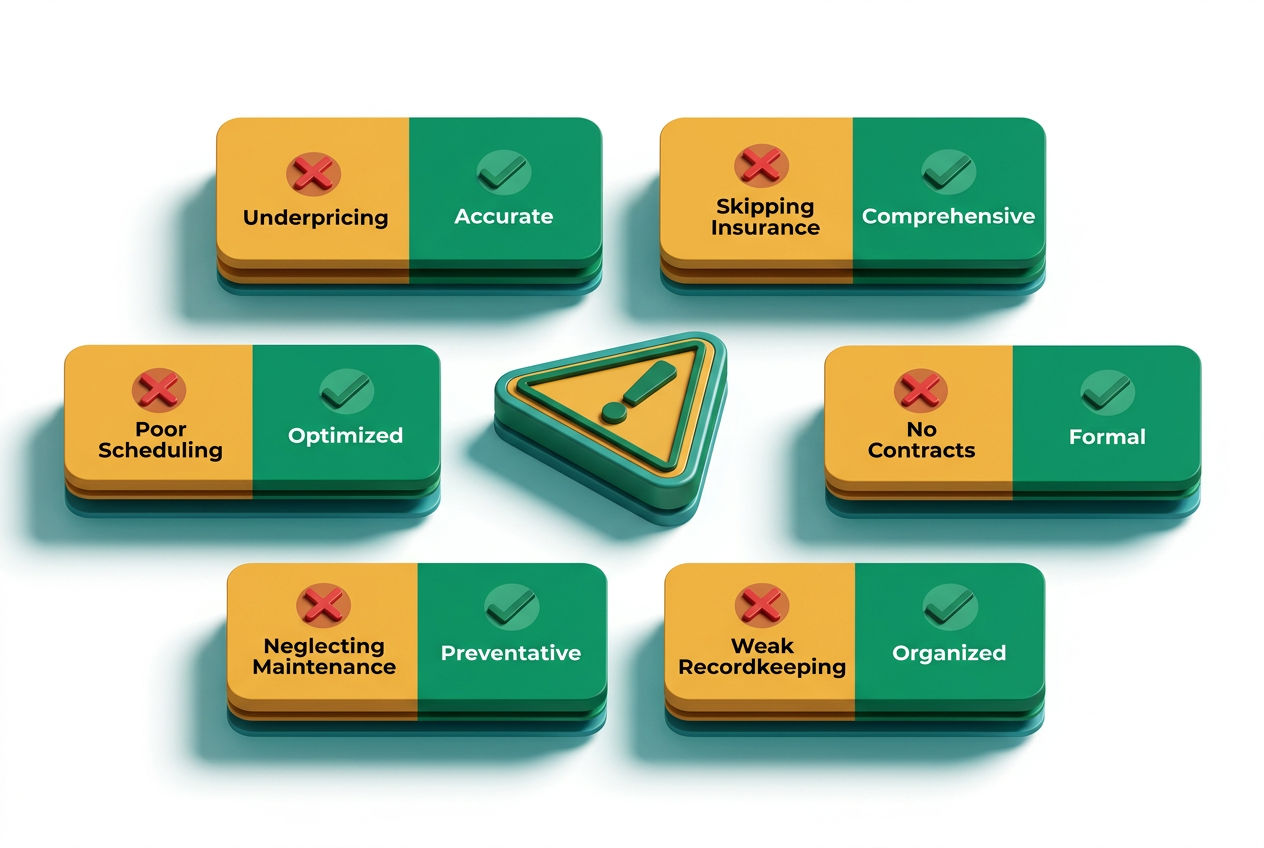
Underpricing at launch New operators look at what the established competitor charges and undercut by $30–$50 to win jobs. This works until the truck needs a $4,000 pump rebuild and the checking account is thin. Price to your actual cost structure from day one. Customers who hire you only because you're cheapest are not loyal customers.
Skipping the CDL A vacuum truck over 26,001 lbs GVWR requires a Commercial Driver's License. Some operators start with a lighter used unit specifically to avoid this requirement. Fine. But if you ever need to upgrade your tank capacity, you need to be CDL-ready. Budget the time and approximately $3,000–$5,000 for CDL training if you don't already have one.
Ignoring disposal compliance Every state regulates septage disposal. Dumping at an unlicensed site — even once, even unknowingly — can result in license revocation and environmental fines that end a business. Know your authorized disposal sites before you pump a single tank.
No maintenance contract strategy from the start Operators who wait until year two or three to build maintenance contracts spend years on a revenue treadmill — always hunting the next pump-out call. Build the contract base from month six onward. Start with the customers you've already served: they already trust you.
Going it alone on industry knowledge The National Association of Wastewater Technicians (NAWT, nawt.org) and the National Onsite Wastewater Recycling Association (NOWRA, nowra.org) both offer training, certification, and industry connection. NAWT membership starts at approximately $150/year. The technical knowledge and regulatory updates alone are worth it. Subscribe to your state environmental agency's newsletter as well — regulatory changes come without much warning and compliance failures are expensive.
For more on how to structure your business for long-term growth, see our guides on starting a septic pumping business, building a septic business plan, and buying an existing septic business if a startup from scratch isn't the right path.
Frequently Asked Questions About Starting a Septic Tank Business
How much money can you make with a septic tank business?
A solo operator running a single vacuum truck can realistically gross $150,000–$350,000 annually, depending on market density, service mix, and how tightly routes are optimized. At 10 pump-outs per day priced at $350 each, a five-day week produces roughly $7,000 in gross weekly revenue before fuel, disposal fees, and labor. Multi-truck septic tank companies with maintenance contracts in place routinely clear $500,000–$1M+ per year. The most durable income comes from layering recurring maintenance contracts — 200 households at $200/year adds $40,000 in predictable baseline revenue before a single on-demand call comes in. Profitability depends heavily on controlling your cost-per-truck-hour. Operators who calculate their true daily overhead — depreciation, insurance, fuel, labor — and price above it consistently outperform those who price based on what competitors charge.
Do you need a CDL to pump septic tanks?
Whether you need a Commercial Driver's License depends on the gross vehicle weight rating of your vacuum truck. Any truck over 26,001 lbs GVWR requires a CDL under federal DOT rules. Many starter vacuum trucks with 1,500-gallon tanks fall at or below this threshold, which is why some new operators launch without a CDL. However, if you plan to run a 2,500-gallon or larger unit — which is standard for an efficient multi-stop route — you will need a Class B CDL at minimum. CDL training runs approximately $3,000–$5,000 and takes 4–8 weeks depending on your state's testing schedule. Some septic tank business owners hire CDL-licensed drivers from the start and obtain their own license during the first operating year. Check your specific truck's GVWR on the door placard before assuming you're exempt from CDL requirements.
Is septic pumping a good business to start in a rural area?
Septic pumping is often a better business in rural and semi-rural areas than in dense urban markets. Rural homes are far more likely to rely on private septic systems — sometimes 60–80% of households in rural counties — compared to urban areas where municipal sewer infrastructure dominates. Lower competition, less traffic between jobs, and tight community referral networks all work in your favor outside of cities. The trade-off is drive time: rural routes cover more miles per job, which increases fuel costs and limits how many pump-outs you can complete per day. Operators in rural markets often compensate with slightly higher per-job pricing and stronger maintenance contract programs to reduce the churn of one-off calls. States with large rural populations — Texas, Georgia, Florida, the upper Midwest — consistently show strong demand for septic tank services with room for independent operators.
How many septic tank jobs can you do in a day?
An experienced septic tank technician running optimized routes can complete 8–15 pump-outs per day. The range depends on tank access (buried risers vs. exposed lids), drive time between stops, tank size, and whether the job requires any additional work like effluent filter cleaning or baffle inspection. In dense suburban markets where jobs are clustered within a 10-mile radius, 12–15 jobs per day is achievable. In rural markets with 20–30 minutes between stops, 8–10 is more realistic. New operators typically complete fewer jobs per day during the first 3–6 months while building route efficiency and speed. The single biggest lever for increasing daily job count is riser installation: when you convert buried tank lids to above-ground risers on existing accounts, future pump-outs take 20–30 minutes instead of 45–60. At scale, that time saving adds one to two extra jobs per day.
What is the best software for running a septic tank business?
The most widely used field service software platforms among septic tank companies are ServiceTitan and Jobber. ServiceTitan is the more powerful option for multi-truck operations — it handles scheduling, dispatching, route optimization, customer history, invoicing, and reporting in one system, but it carries a higher monthly cost and a steeper learning curve. Jobber is better suited for solo operators and small teams: it's more affordable, easier to set up, and covers the core needs of scheduling, customer management, and mobile invoicing. Both platforms integrate with QuickBooks for accounting. For septic-specific needs, look for software that can store tank size, last service date, and disposal site records per address — these details matter when regulators request service history. Our detailed septic business software comparison covers pricing, feature sets, and operator reviews side by side.
What septic tank business tips matter most in the first year?
The septic tank business tips that matter most in year one are: price to your actual cost structure before taking your first call, get your CDL and state hauler permit squared away before investing in equipment, and start building maintenance contracts with every customer you serve from month one. Operationally, invest in field service software from the start — routing and invoicing manually works until it doesn't, and switching systems mid-growth is painful. On the marketing side, claim your Google Business Profile immediately and ask every customer for a review before you leave the driveway. Join your state's septic contractor association and attend one NAWT or NOWRA event in your first year — the regulatory intelligence and referral network you build there are worth more than almost any advertising spend. The operators who make it past year three almost always have recurring contract revenue and a review-backed Google presence by month twelve.
Sources & Methodology
- U.S. EPA — Septic Systems Overview (epa.gov/septic): Source for the 21 million U.S. homes relying on private septic systems statistic.
- NOWRA (National Onsite Wastewater Recycling Association) (nowra.org): Industry market size estimates of $5–6 billion in annual septic service revenue.
- NAWT (National Association of Wastewater Technicians) (nawt.org): Certification program details, membership pricing, and technician training standards.
- SepticTankHub.com operator surveys, 2024–2025: Startup cost ranges, regional pricing benchmarks, and equipment pricing compiled from active septic business operators.
- Equipment dealer pricing, National Vacuum Equipment and Vac-Con, 2024–2025: Vacuum truck pricing ranges for used and new units.
Pricing data and regulatory requirements are reviewed periodically. Always verify current licensing requirements with your state environmental or health agency before starting operations.
This is a dirty business in the best possible way. The demand is built-in, the margins are real, and the competition thins out quickly once you establish a local reputation. Build the operational foundation right from the start — licensing, pricing, routes, contracts — and a septic tank business can generate dependable income for decades.
Was this article helpful?
Frequently Asked Questions
Recommended Resources
📖 Related Articles
- How to Run a Septic Business: Operations, Pricing & Growth
- Septic Business License: The Complete Guide
- Septic Business Startup Cost: 2026 Price Guide
- The Best Septic Business Software (Scheduling, Routing & Billing)
- Septic Pump Truck: The Complete Guide
- Septic Pumping Business: The Complete Guide
- Septic Business Plan: The Complete Guide
- Buying a Septic Business: What to Look For and What to Pay
💰 Cost Guides
🔧 Services
Find Septic Professionals Near You
Compare licensed, verified septic companies by area — top county markets and cities below, or browse all 50 states.
County markets
Popular cities
