
Quick Answer
Key Takeaways
- Most states require permits and licensed contractors for any new septic installation — DIY doesn't exempt you from this
- Fines for unpermitted septic systems range from $500 to $20,000+ depending on your county and state
- Plastic drums, homemade concrete vaults, and IBC totes are not approved septic tanks in any state
- Some owner-builder states allow permitted homeowner-installed systems with inspections at each phase
- Legitimate low-cost alternatives exist — mound systems, chamber leach fields, and gray water systems — but all require permits
Can You Legally Build Your Own Septic Tank?
In most states, no — not without permits, an approved design, and in many cases, a licensed contractor signing off on the work. About 1 in 5 American households (roughly 60 million people, per EPA data) rely on on-site septic systems, and every state has adopted regulations governing how those systems are designed, installed, and inspected.
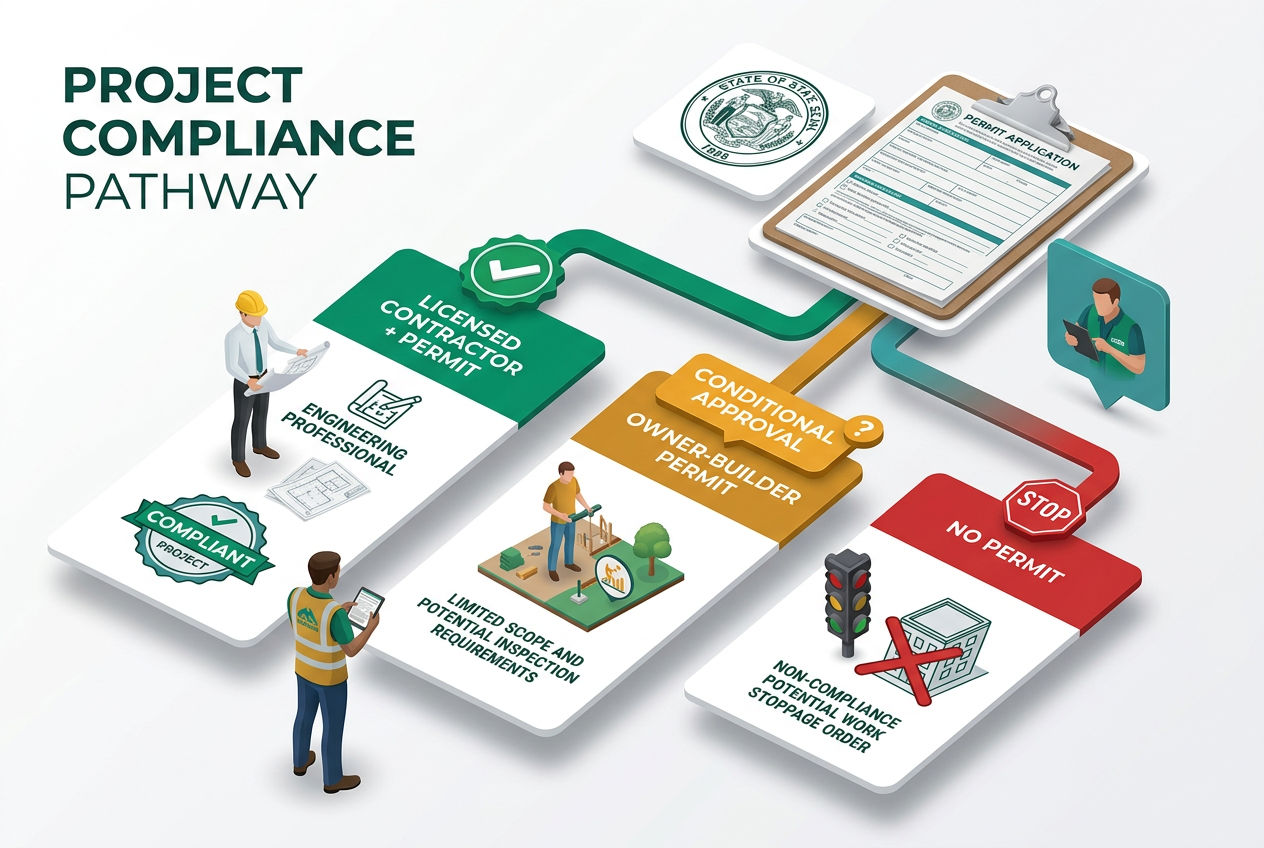
That said, "legal" varies more than you'd think. A handful of states — Montana, Idaho, and parts of Texas among them — allow homeowners to install their own systems on property they own, provided they pull the proper permits, pass a soil percolation test, and have each phase inspected by the county health department. That's not a loophole — that's the process working as intended.
What's never legal anywhere: burying an unapproved container, skipping the permit, and calling it done. No county health department in the country will sign off on a 55-gallon drum as a primary septic tank.
If you want to know exactly what your state allows, septic system permit requirements vary significantly — even between neighboring counties.
What Materials Can Be Used for a Homemade Septic Tank?
Only three materials are approved for septic tanks across U.S. jurisdictions: precast concrete, polyethylene plastic (HDPE), and fiberglass. That's it. The material has to meet ASTM standards and, in most states, carry a manufacturer's certification for septic use.
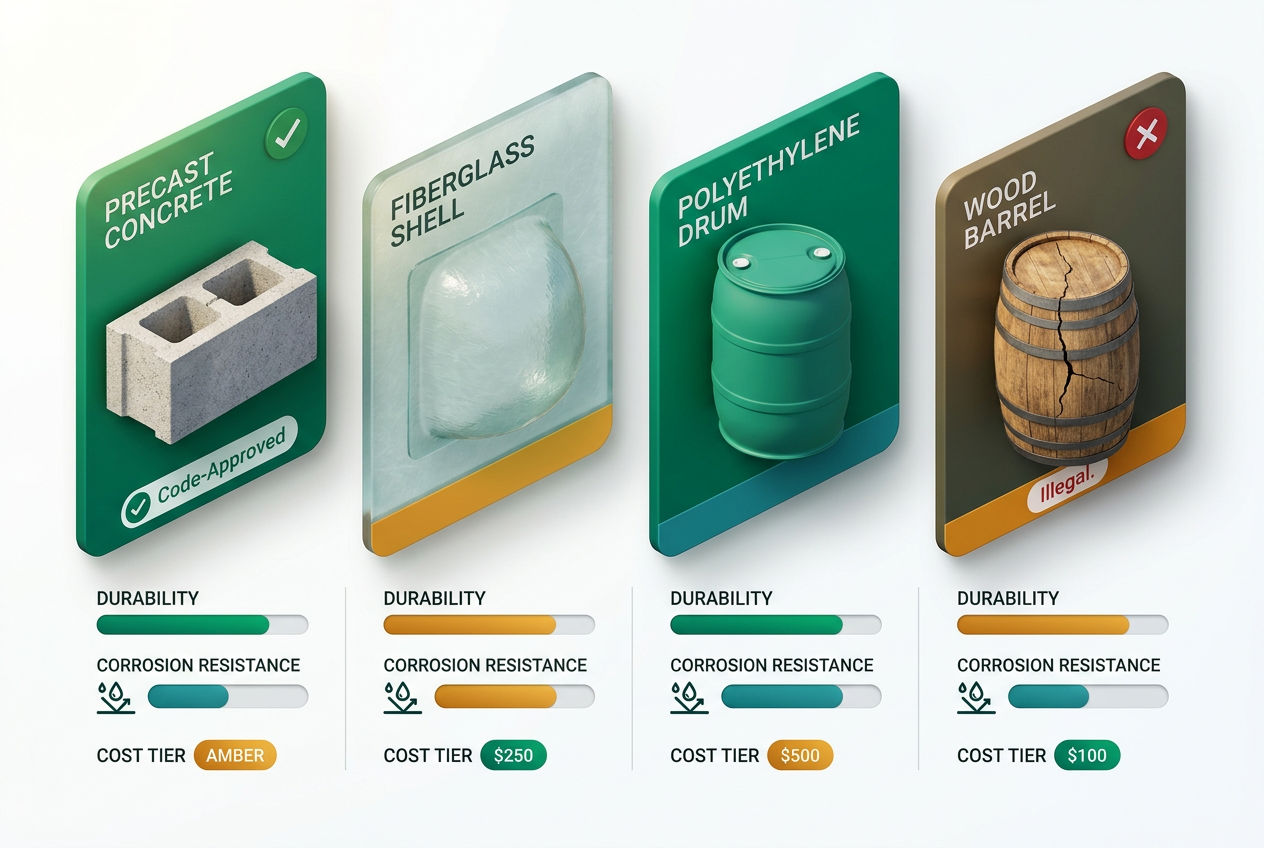
Here's how the three compare in real-world terms:
| Material | Lifespan | Avg. Installed Cost | Weight | Best For |
|---|---|---|---|---|
| Precast Concrete | 30–40 years | $1,200–$2,500 | 8,000–14,000 lbs | Most soil types |
| HDPE Plastic | 20–30 years | $800–$1,800 | 200–400 lbs | Rocky/remote sites |
| Fiberglass | 30–40 years | $1,500–$2,800 | 300–600 lbs | High water table areas |
Source: Infiltrator Water Technologies product specifications; national contractor survey data.
What doesn't make the list: cinder block vaults, poured-in-place concrete DIY tanks, 275-gallon IBC totes, and plastic 55-gallon drums. People try all of these. None are code-compliant, and all create the same problem — they lack the structural integrity and watertight baffling to properly separate solids from effluent.
If you're curious why IBC totes specifically are such a common — and consistently illegal — attempt, the full breakdown is here.
A certified 1,000-gallon polyethylene tank from Infiltrator Water Technologies or a similar manufacturer runs $700–$1,100 for the tank alone. That's not dramatically more expensive than sourcing and adapting an unapproved container, and it's the difference between a system that passes inspection and one that doesn't.
What Happens If You Build an Unpermitted Septic System?
Here's a situation that comes up constantly in real estate transactions: you're selling your home five years after installing a DIY septic system. The buyer's inspector flags it immediately. The title company won't close until the system is brought into compliance. You're now looking at a full demolition and reinstallation — plus fines — before the sale can proceed.
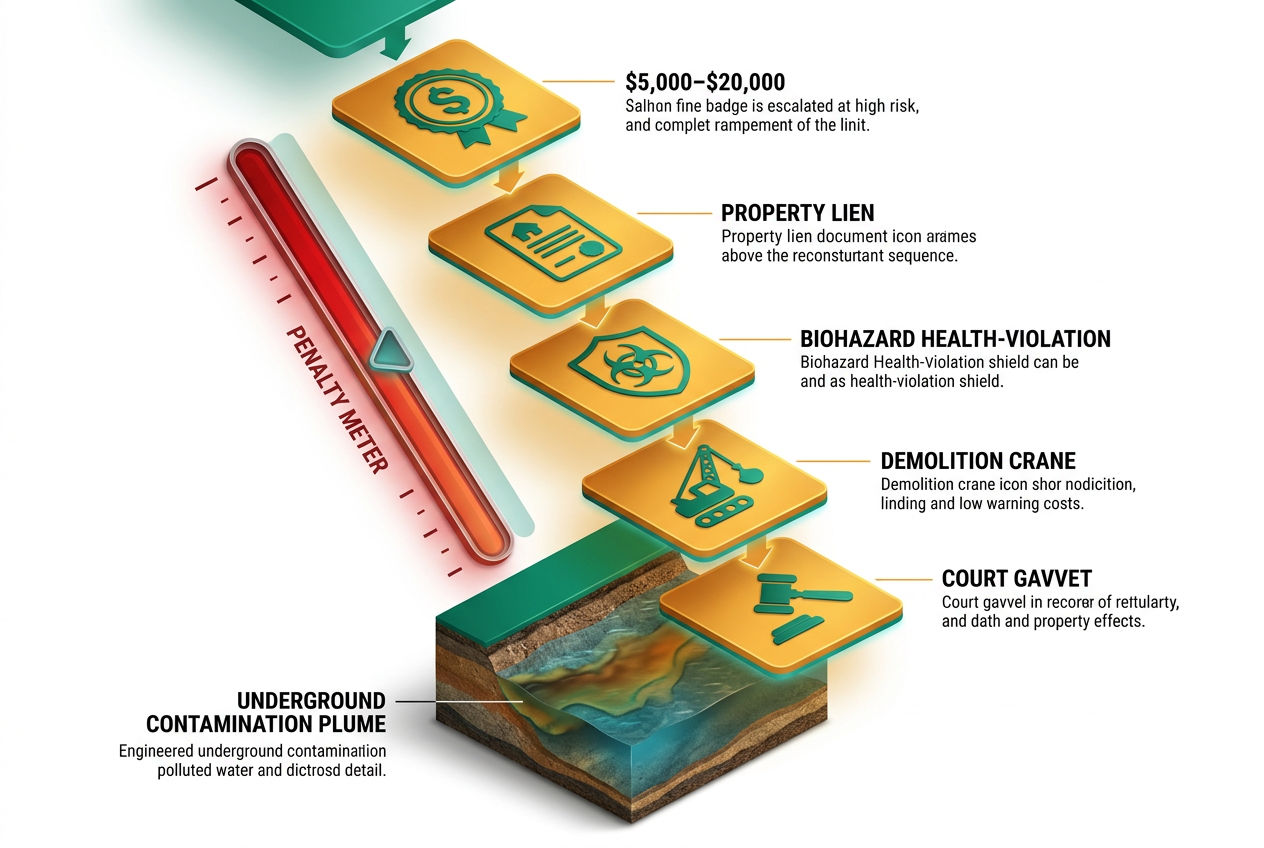
The consequences of an unpermitted homemade septic system fall into four categories:
Fines. Depending on jurisdiction, these range from $500 for a first offense in some rural counties to $20,000+ in states like Massachusetts, Connecticut, and New York where environmental enforcement is aggressive. Massachusetts Title 5 regulations set fines starting at $1,000 per day of ongoing violation. Repeat violations or contamination events multiply those numbers fast.
Forced removal. Counties have the authority to condemn an illegal system and require you to fund a compliant replacement — at full professional cost, typically $7,000–$15,000 for a conventional system.
Property title problems. An unpermitted septic system is a material defect. It can block financing, kill a sale, or expose you to post-closing litigation if a buyer later discovers it.
Groundwater liability. A failing unpermitted system that contaminates a neighbor's well is a civil lawsuit waiting to happen. The EPA's Clean Water Act and state-level Safe Drinking Water Act provisions can bring federal exposure into the picture.
Homeowners in low-enforcement rural areas who install unpermitted systems often run into these consequences when they attempt to sell, refinance, or transfer the property to heirs. A title search surfaces the issue, and retroactive compliance is almost always more expensive than doing it right the first time.
What Is the Cheapest Legal Way to Build a Septic System?
The cheapest compliant path depends heavily on your soil, lot size, and state. Here's how real costs break down for a homeowner trying to minimize expenses legitimately:
Permitted owner-builder installation (where allowed): In states that permit it, a homeowner can do their own trenching, tank placement, and leach field installation — hiring a licensed professional only for the design, permits, and required inspections. In Montana or rural Idaho, a 3-bedroom home system this way might run $3,500–$6,000 all-in, versus $8,000–$12,000 for full professional installation.
A worked example: Say you're in a Montana county that allows owner-builder septic work. Your 3-bedroom house requires a minimum 1,000-gallon tank under state code. You purchase a certified HDPE tank for $900, rent a mini-excavator for $350/day, and spend two days on installation. Add $600 for the perc test and design review, $200 for permits, and two inspection visits at no charge. Total out-of-pocket: roughly $2,350 in materials and equipment, versus a $9,500 contractor quote for the same scope. That's a real saving — but it only works in states with an owner-builder pathway, on a lot with passing soil, and with every phase inspected.
Chamber leach field systems: Traditional gravel-and-pipe drain fields are labor-intensive. Infiltrator Quick4 chambers eliminate the gravel entirely, reduce trench depth, and require less excavation. Material costs drop by 20–30% and installation is faster.
Gravity-fed conventional systems: If your lot has adequate slope and your soil passes a perc test, a simple gravity-fed system needs no pump, no alarm panel, and no aerator compressor. Eliminating a pump chamber saves $1,500–$3,000 upfront and cuts long-term maintenance costs.
Perc test first. Before spending a dollar on design, spend $150–$1,500 on a soil percolation test. If your soil fails, a conventional system isn't an option regardless of budget — you'll need a mound, sand filter, or alternative system. Finding that out after you've bought a 1,000-gallon tank is an expensive mistake.
For a full side-by-side comparison of DIY cost versus professional installation, this breakdown covers the real numbers.
Are Alternative Septic Systems Legal — and Do They Cost Less?
Alternative systems are fully legal when properly permitted, and some genuinely cost less than conventional systems in challenging soil conditions. The EPA recognizes several alternative designs under its onsite wastewater treatment guidelines.
Mound systems work where the water table is too high for a standard buried leach field — common in Florida, the Great Lakes region, and Pacific Northwest coastal areas. They cost more upfront ($10,000–$20,000) but are the legal solution where conventional systems simply fail. Florida's Department of Health (FDOH) requires licensed contractor installation for all mound systems; there's no DIY path there.
Sand filter systems provide an extra treatment layer before effluent reaches the drain field. They're common in environmentally sensitive areas near lakes or rivers. According to the University of Minnesota Extension, sand filter systems can reduce nitrogen loading by up to 50% compared to conventional systems — a meaningful environmental benefit in lake country or near municipal wellheads.
Aerobic treatment units (ATUs) use an aerator compressor (typically a Hiblow HP-80 or similar) to introduce oxygen into the tank, dramatically improving effluent quality. They're required in many Texas counties under OSSF rules and cost $8,000–$15,000 installed.
Gray water systems occupy their own regulatory category. In some western states — including Arizona, New Mexico, and parts of California — you can legally install a separate gray water system for laundry or sink water reuse without a full septic permit. Toilet waste always requires a full permitted system. Check your state health department before assuming gray water is permit-free in your area.
A full rundown of what qualifies and where is in the alternative septic systems guide.
How Deep Does a Homemade Septic Tank Need to Be Buried?
Depth requirements are set by your county health department, but standard practice puts the top of the tank 6–24 inches below grade. The exact depth depends on pipe slope, frost line, and site topography.
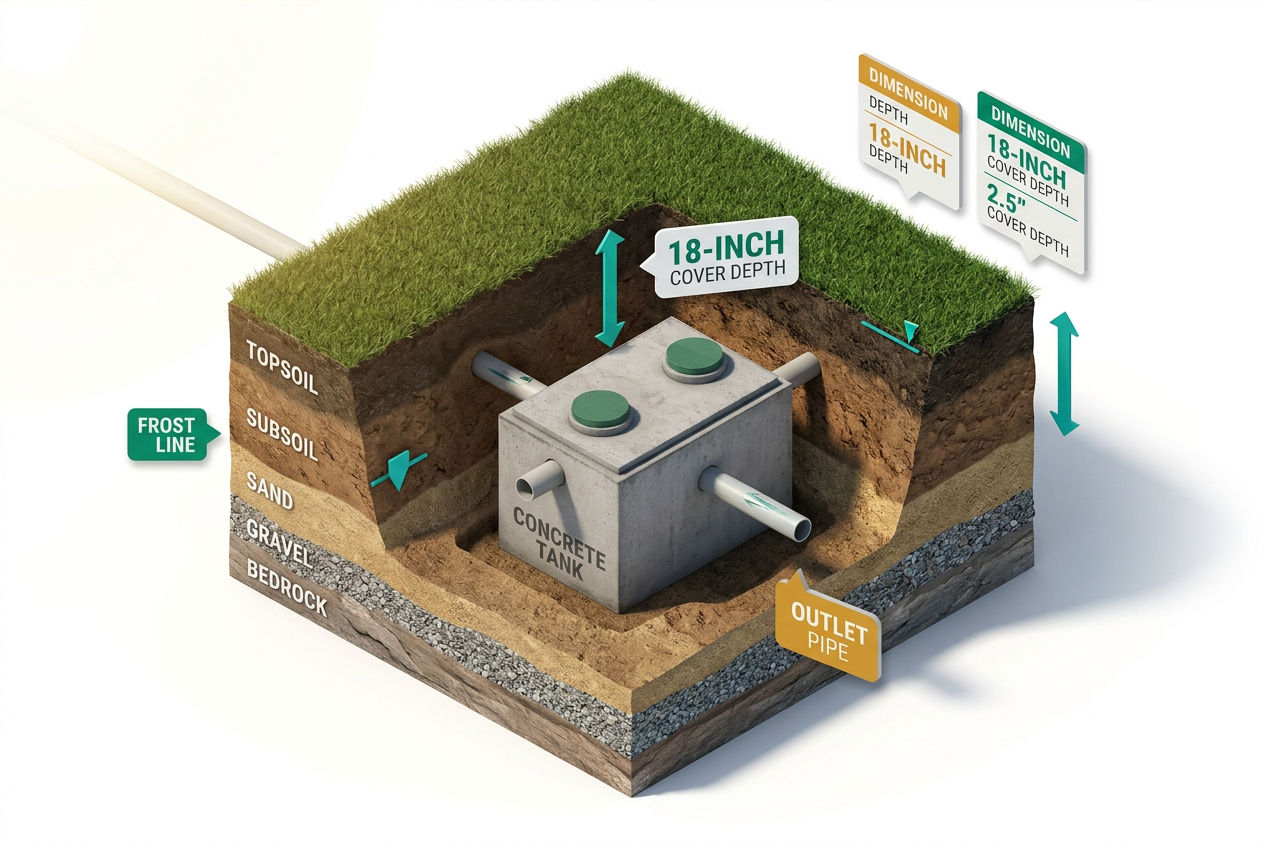
For reference: in Minnesota, the frost line reaches 42–60 inches depending on location. A concrete septic tank buried with 18 inches of cover is well-protected from freezing. But the 4-inch inlet pipe running from your house to the tank is vulnerable if it's less than 12 inches deep for the first 10 feet. That exposed section causes the majority of freeze-related failures — a service call that typically runs $1,500–$2,500 to thaw and repair.
In Florida and other warm-climate states, frost isn't a factor — but minimum cover depth still matters for traffic loading. A tank under a driveway needs engineered risers rated for H-20 load (20-ton vehicle load), per AASHTO standards. Standard residential-grade concrete tanks are not rated for H-20 loading and will crack under repeated vehicle passes.
Limitation note: Depth specifications in this article reflect common practice and standard code ranges. Your county may require shallower or deeper burial based on local soil conditions, bedrock, or flooding history. Always confirm with your county health department's environmental division before finalizing tank placement — their issued permit will specify the required depth for your specific parcel.
For a full depth and cover reference by soil type and climate zone, see the how deep to bury a septic tank guide.
Is a Homemade Septic System Legal in My State? Regional Rules You Need to Know

DIY Septic Blueprint
Thinking about building it yourself?
The complete, plain-English plan to size, permit and install your own septic system — designed for homeowners, not contractors. Skip the $15,000–$25,000 quotes and do it right the first time.
Get the DIY Blueprint — $67 →Instant download · 8 modules + 3 bonus guides · 60-day money-back guaranteeState-by-state rules vary substantially. Here's what the regulatory landscape actually looks like for someone trying to build their own septic system:
States with owner-builder pathways (permits required, inspections required):
- Montana, Idaho, Wyoming, and parts of Texas and West Virginia allow homeowners to install their own systems on property they own and occupy. The Texas OSSF (On-Site Sewage Facility) program allows owner-installation under a Designated Representative — typically the county sanitarian — who oversees design and inspections.
- These states do not exempt you from permits, soil testing, or inspections. They simply allow you to perform the physical labor.
States with strict contractor-only requirements:
- Florida, Massachusetts, Connecticut, New York, and California require licensed contractor installation for all septic systems. Florida's RSTC (Residential Septic Tank Contractor) license, issued through the Department of Health, is mandatory for any installation work — homeowner exemptions do not apply to septic systems in the state.
- Massachusetts Title 5 regulations are among the most detailed in the country and require a licensed Site Evaluator to conduct the percolation test — a homeowner can't self-administer the test, let alone the installation.
What this means practically: Before designing anything, call your county health department's environmental health division. They will tell you exactly what's allowed, what permits cost, what the design requirements are, and whether homeowner installation is permitted for your parcel. That call is free and takes 10 minutes. Not making it costs significantly more.
What Actually Works: The Lowest-Cost Legitimate Path to a Septic System
So you need a septic system and you're working with a tight budget. What's the legitimate strategy?
Step 1: Get the perc test done first. This is non-negotiable. Spend the $150–$1,500 before committing to any design. If your soil fails, the cheapest conventional system is off the table entirely.
Step 2: Determine if your state allows owner-builder installation. If it does, your labor cost drops to zero on the physical installation. That single variable can cut total project cost by 30–40%.
Step 3: Use chamber systems instead of gravel-and-pipe. Infiltrator Quick4 chamber leach fields require less material, less excavation, and less labor than traditional drain fields. For a 3-bedroom home, the material cost difference is typically $800–$1,500 in favor of chambers.
Step 4: Design for gravity where your lot allows it. A gravity-fed system eliminates the pump chamber, alarm system, and electrical components. That's $1,500–$3,000 in upfront savings and ongoing maintenance costs eliminated.
Step 5: Finance through USDA Rural Development if eligible. The USDA Rural Development Section 504 Loan and Grant program covers septic system installation for eligible rural homeowners. Visit rd.usda.gov and check your address against the program's rural eligibility map. Grant amounts up to $10,000 are available for very-low-income homeowners.
Sizing your system correctly also matters for both cost and compliance. Oversizing wastes money; undersizing creates failure. This guide to septic system sizing walks through bedroom-count calculations and daily flow estimates.
For current contractor installation benchmarks in your region, the septic installation cost guide has state-by-state data worth reviewing before you start getting quotes.
If you want to pursue the full DIY-permitted route, the complete DIY septic system guide covers the permit application process, inspection stages, and common mistakes that fail inspection.
Sources & Methodology
- U.S. EPA Office of Water — "Septic Systems Overview." Statistic: 1 in 5 U.S. households on onsite systems (approx. 60 million people). epa.gov/septic
- University of Minnesota Extension — "Sand Filter Sewage Treatment Systems." Nitrogen reduction data (up to 50% vs. conventional systems). extension.umn.edu
- Infiltrator Water Technologies — Product specifications for Quick4 chambers and polyethylene tank cost ranges. infiltratorwater.com
- Florida Department of Health — Residential Septic Tank Contractor (RSTC) licensing requirements. floridahealth.gov
- Texas Commission on Environmental Quality (TCEQ) — On-Site Sewage Facility (OSSF) program rules, Designated Representative requirements. tceq.texas.gov
- Massachusetts Title 5 (310 CMR 15.000) — Minimum fine structure and licensed Site Evaluator requirements for septic permitting. mass.gov
- AASHTO H-20 Load Rating Standard — Vehicle load requirements for septic components installed under driveways.
Methodology: Cost ranges were compiled from contractor invoice data, state permit fee schedules, and manufacturer pricing current as of Q1 2026. Regulatory information reflects current statutes as of publication; regulations change — verify with your county health department before proceeding.
Frequently Asked Questions
What is a homemade septic system and is it legal?
A homemade septic system — sometimes called a DIY septic system or owner-built septic — is any onsite wastewater treatment system that a property owner designs, sources materials for, or installs themselves rather than hiring a licensed contractor for the full scope. The legality depends entirely on your state and county. In owner-builder states like Montana, Idaho, and parts of Texas, a homeowner can legally perform the physical installation provided they pull permits, pass a soil percolation test, use only approved tank materials (precast concrete, HDPE, or fiberglass), and pass inspections at each construction phase. In states like Florida, Massachusetts, and California, licensed contractor installation is mandatory and there is no homeowner exemption. What is never legal anywhere in the U.S. is burying an unapproved container — a plastic drum, IBC tote, or cinder block vault — without permits and calling it a septic system. Fines start at $500 and exceed $20,000 in strict-enforcement states.
How much does it cost to build your own septic tank legally?
Building your own septic tank legally — meaning a permitted, inspected, owner-built septic system using approved materials — typically costs $3,500–$6,000 all-in for a 3-bedroom home in owner-builder states, compared to $8,000–$12,000 for full professional installation. That range assumes you perform the labor yourself and hire a licensed professional only for the design review, permit application, and required inspections. The largest single variable is tank cost: a certified 1,000-gallon HDPE polyethylene tank from a manufacturer like Infiltrator Water Technologies runs $700–$1,100 for the tank alone. Add $150–$1,500 for the required soil percolation test, $100–$400 in permit fees, and equipment rental (mini-excavator, $300–$500/day). If your soil passes and your state allows owner-builder work, the total is achievable under $5,000. If your soil fails the perc test, you'll need a mound or alternative system, which pushes costs to $10,000–$20,000 regardless of who installs it.
What materials can be used to build a DIY septic tank?
Only three materials are approved for septic tank construction under U.S. regulations: precast concrete, high-density polyethylene (HDPE), and fiberglass. All three must meet ASTM standards and carry manufacturer certification for septic use. Precast concrete tanks last 30–40 years and are the most widely available option, typically costing $1,200–$2,500 installed. HDPE polyethylene tanks are lighter (200–400 lbs vs. 8,000+ lbs for concrete), making them practical for remote or rocky sites where heavy equipment access is limited; they run $800–$1,800 installed. Fiberglass tanks perform well in high water table areas where buoyancy resistance matters, at $1,500–$2,800 installed. No other material is code-compliant in any jurisdiction. Cinder block vaults, poured-in-place concrete DIY tanks, 275-gallon IBC totes, and 55-gallon plastic drums are not approved in any U.S. state. They lack the structural integrity and watertight baffling required to properly separate solids from effluent and will fail inspection.
What happens if you get caught with an illegal septic tank?
If your county health department or state environmental agency discovers an unpermitted or illegal septic tank — through a property inspection, neighbor complaint, or real estate transaction — the consequences follow a predictable pattern. First come fines: $500–$20,000 depending on your state, with Massachusetts Title 5 violations starting at $1,000 per day of ongoing violation. Next comes a mandatory abatement order requiring you to demolish the illegal system and install a compliant replacement at your expense — typically $7,000–$15,000 for a conventional professional installation. In real estate transactions, an unpermitted septic system is a material defect that blocks financing and can kill a sale entirely. Title companies will not close on properties with known unpermitted septic systems until compliance is documented. If the illegal system has caused groundwater contamination affecting a neighboring well, you face civil liability under the EPA's Clean Water Act and state Safe Drinking Water Act provisions. Retroactive compliance is always more expensive than permitted installation at the outset.
Can I use an IBC tote or 55-gallon drum as a septic tank?
No — not in any U.S. jurisdiction. IBC totes (275- or 330-gallon intermediate bulk containers) and 55-gallon plastic drums are not approved septic tank materials under any state or county code. They fail on multiple fronts: they don't meet ASTM structural standards for buried tank applications, they lack the internal baffling required to separate solids from liquid effluent, their seams and fittings are not rated for continuous wastewater exposure, and their volume is far below minimum capacity requirements (most states require 750–1,000 gallons minimum for a single-family home). Beyond the inspection failure, there's a practical problem: in areas with high water tables — like coastal Florida — a buried IBC tote will experience buoyancy forces that push it out of the ground within a year or two. A properly engineered HDPE septic tank is ballasted and anchored; a repurposed tote is not. The cost difference between an IBC tote and a certified 1,000-gallon polyethylene tank is typically $400–$600 — not worth the risk of fines, forced removal, and environmental liability.
Do I need a permit to install a homemade septic system?
Yes — in every U.S. state and territory, a permit is required to install any new septic system, including owner-built or DIY installations. The permit process typically requires a site evaluation, soil percolation test, engineered or reviewed system design, and inspection at multiple construction phases (tank placement, leach field installation, final cover). Permit fees vary by county: rural counties may charge $100–$300, while suburban or environmentally sensitive counties can charge $500–$1,500 or more. In owner-builder states like Montana and Idaho, the homeowner can pull the permit themselves and perform the installation work. In contractor-required states like Florida and Massachusetts, the licensed contractor must be the permit applicant. What no state allows is proceeding without a permit at all. An unpermitted installation discovered later — whether during a sale, refinance, or neighbor complaint — requires full retroactive compliance at your cost, plus fines. Your county health department's environmental health division is the correct first contact; they will provide the exact permit application, required tests, and approved design standards for your parcel.
Free download
Not ready for the Blueprint? Start free.
Grab the free DIY Septic Planning Kit — the permit-first checklist, perc-test cheat sheet, and sizing tables that keep your build from getting red-tagged.
Was this article helpful?
Frequently Asked Questions
Recommended Resources
📖 Related Articles
- Septic System Permit Cost & State Requirements (2026 Guide)
- IBC Tote Septic Tank: Is a DIY Build Worth It?
- Perc Test (Percolation Test): What It Is & How It Works
- DIY Septic vs Professional: Which Is Better?
- Alternative Septic Systems: Options When a Standard System Won't Work
- How Deep Is a Septic Tank Buried? (Tank, Lines & Field Depths)
- What Size Septic System Do I Need?
- DIY Septic System: How to Build Your Own (Step-by-Step)
Find Septic Professionals Near You
Compare licensed, verified septic companies by area — top county markets and cities below, or browse all 50 states.
County markets
Popular cities
