
Quick Answer
Aerobic septic system installation is the permitted process of placing an aerobic treatment unit (ATU), wiring its aerator, and building a spray, drip or drain field disposal area. Who may do the work depends on your state. Angi puts the average aerobic system at $10,000–$20,000, and HomeGuide lists aerobic treatment units at $20,000–$40,000 or more.
Key Takeaways
- Angi puts aerobic septic systems at $10,000–$20,000. HomeGuide lists aerobic treatment units at $20,000–$40,000+.
- Expect a permit and a licensed site evaluation. Texas lets single-family homeowners install their own system on their own property; otherwise, hire a licensed installer.
- By our estimate, the physical install takes a few days. Soil testing, design and permits often add several weeks.
- Your ATU needs maintenance for life, according to the EPA. Texas requires an initial two-year service policy under 30 TAC §285.7, and Florida requires a maintenance contract under Rule 62-6.012.
- Texas rules allow spray (surface) application of treated, disinfected effluent. Your permit decides whether spray, drip or a drain field fits your site.
You may be reading about aerobic septic tank installation because a site evaluation called for an ATU. That can follow a failed perc test, a lot too small for a standard drain field, or an old system that gave out. If you're new to onsite wastewater, start with our complete septic system guide, which covers the main system types and how they work.
What Is an Aerobic Septic System and Why Would You Need One?
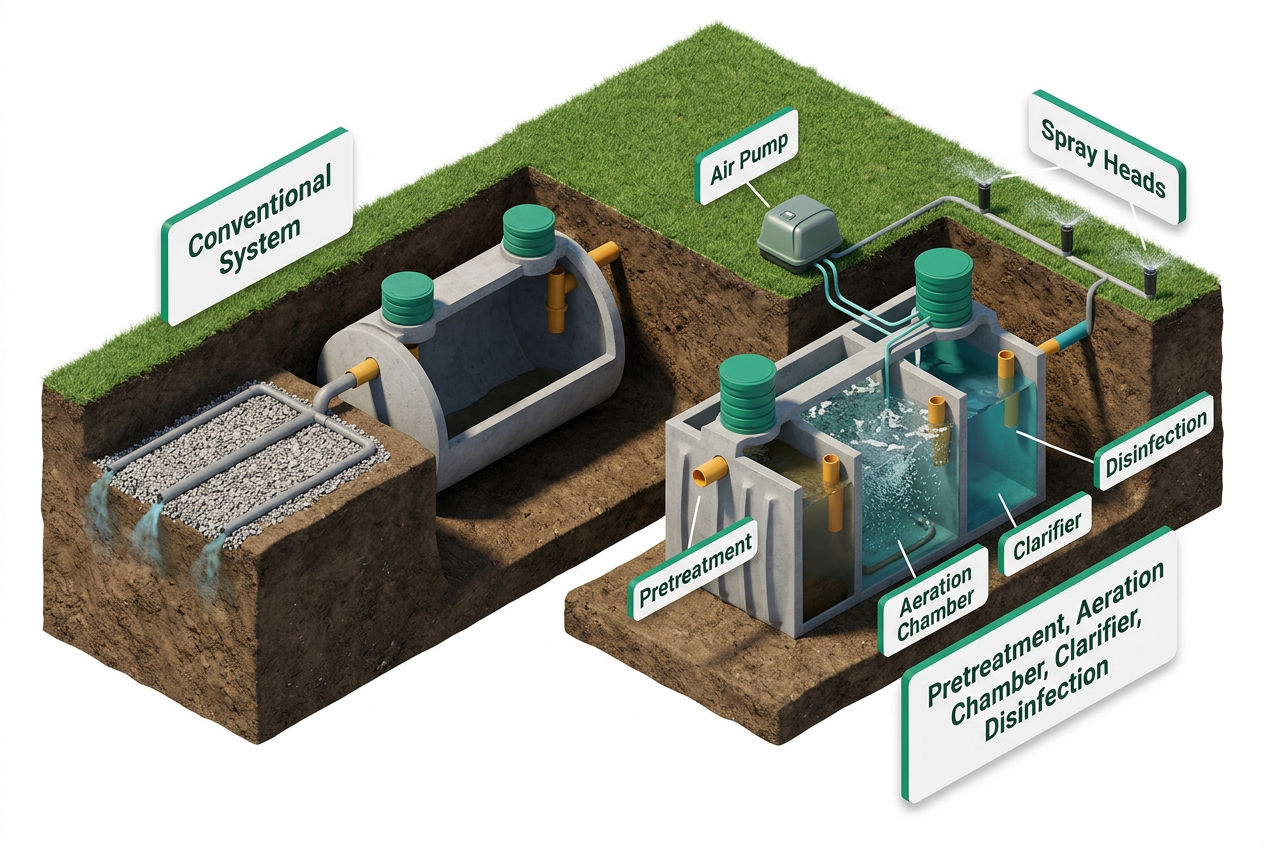
An aerobic septic system pumps air into wastewater so oxygen-loving bacteria can break it down. The U.S. EPA's Types of Septic Systems page says ATUs use many of the same processes as a municipal sewage plant, but on a smaller scale, and that the added oxygen increases bacterial activity and provides additional treatment. According to the EPA, they can be used on smaller lots, with inadequate soil, where the water table is too high, or near surface water that is sensitive to nutrients.
A conventional system lets waste settle in a tank and trickle into a drain field. That only works when the soil can finish the treatment. An ATU does more of the cleaning before the water ever reaches the ground.
Most units have three stages:
- Pretreatment (trash) tank: solids settle out here, just like in a regular septic tank.
- Aeration chamber: an air compressor (aerator) pushes air through diffusers so bacteria can digest organic matter.
- Clarifier: leftover solids settle, and clear effluent moves on. Spray systems send it through disinfection first, which Texas requires before surface application.
Residential brands include Norweco (Singulair), Jet, Clearstream and Hoot. Each publishes its own installation and service requirements. NSF/ANSI Standard 40 is the certification standard for residential units, and state codes reference it: Texas accepts treatment systems tested and listed by NSF International as Class I systems (30 TAC §285.32), and Florida's ATU rule adopts NSF/ANSI 40 Class I (Rule 62-6.012).
An ATU has downsides. The aerator needs electricity, an alarm panel sits on your house wall, and the EPA says regular lifetime maintenance should be expected. It can't rescue a lot with no room at all for disposal. And like any septic system, it can be clogged by what goes down the drain: the EPA warns never to flush cooking grease or oil, non-flushable wipes, paper towels or household chemicals. If you have a private well, setback distances between the disposal area and the wellhead matter too, so confirm them with your designer before the layout is final.
How Do You Install an Aerobic Septic System, Step by Step?
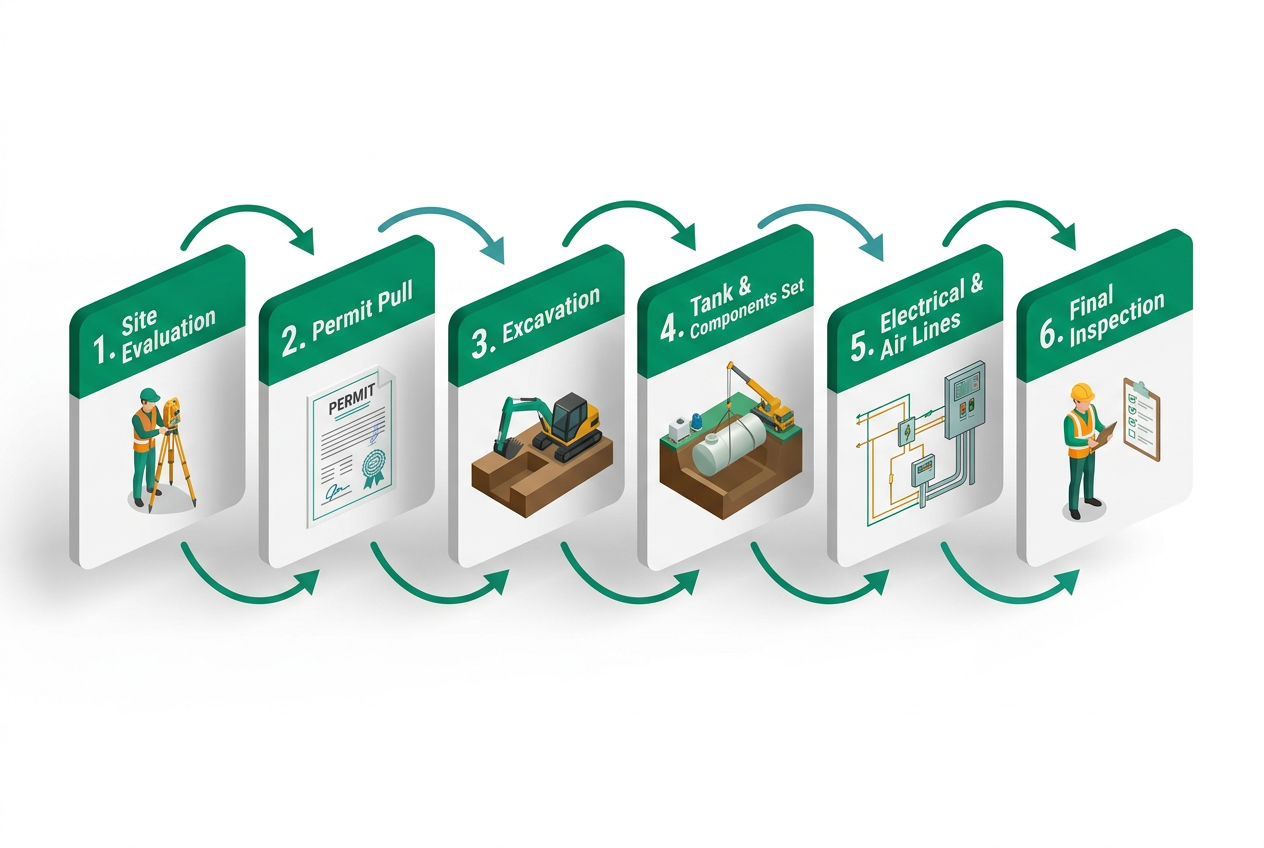
Installing an aerobic septic system takes eight stages: soil evaluation, design, permitting, excavation and tank placement, plumbing and electrical work, building the disposal area, regulator inspection, and startup with a maintenance agreement. Paperwork and approvals usually take longer than the construction itself.
A typical aerobic septic installation unfolds in this order:
- Site and soil evaluation. A licensed site evaluator or engineer runs a perc test or digs soil profile pits. They're checking for clay, rock, seasonal water tables and slope.
- Design and sizing. A designer or professional engineer sizes the system from the home's estimated daily flow. The EPA's 2002 Onsite Wastewater Treatment Systems Manual says codes typically specify design flows of 100 to 150 gallons per bedroom per day, but your state's code sets the exact number.
- Permit and plan approval. The design goes to your county or state permitting authority. In Texas, this is called an OSSF (on-site sewage facility) permit. Our septic system permit requirements guide explains what most applications need.
- Excavation and tank placement. The crew sets the ATU tanks on a level bed, following the manufacturer's instructions. Risers bring the lids up to grade for service access.
- Plumbing and electrical. The house sewer line connects to the pretreatment tank. An electrician runs power to the control panel, aerator and alarm.
- Disposal component. This means spray heads, subsurface drip lines or a drain field, depending on your permit.
- Inspection before backfill. The regulator checks tank placement, piping and wiring while everything is still exposed. Our guide to the septic inspection before backfill explains what inspectors look for.
- Startup and orientation. The installer starts the aerator, tests the alarm, shows you the panel and has you sign the maintenance agreement.
Give step 7 extra attention. An inspector who can't see the work can't approve it, so a crew that backfills before the inspection may have to dig everything back up at the contractor's or owner's expense. When you interview installers, ask how they schedule the pre-backfill inspection.
Who Can Install an Aerobic Septic System?
A licensed onsite wastewater installer usually does the work, and some states also let homeowners install their own system. Even where homeowners can, expect a permit, a licensed site evaluation, an inspection and ongoing maintenance requirements.
Licensing rules vary a lot by state. These examples show the range:
- Texas: The TCEQ licenses OSSF installers under 30 TAC Chapter 30, and the OSSF design and construction rules sit in 30 TAC Chapter 285. The owner of a single-family home may install a system on their own property without an installer license (30 TAC §30.244), as long as the property isn't being developed for sale or lease, a licensed site evaluator or professional engineer does the site evaluation, and the permitting authority's rules are met. Anyone the owner pays to help must be a licensed installer. Aerobic systems need an initial two-year service policy with a licensed maintenance provider under §285.7. Local permitting authorities, including county "authorized agents," handle permits. Confirm the current rules at tceq.texas.gov or in our Texas septic regulations guide.
- Florida: Septic tank contractors register with the Department of Environmental Protection under Part III of Chapter 489, Florida Statutes. Under Rule 62-6.012 of the Florida Administrative Code (formerly 64E-6), an ATU must have a current maintenance contract with an approved maintenance entity and be inspected at least twice a year.
- Manufacturer requirements: Ask whether the brand you choose requires its own installer training, and read the warranty terms before you buy. Texas's review of proprietary treatment systems includes an evaluation of the manufacturer's installer training program (30 TAC §285.32).
Whether you can do it yourself comes down to your state and county rules. Our DIY septic system guide covers what owners can legally handle and where they can't. Equipment rental, a failed inspection or rework can easily cost more than a licensed installer's labor. If you want a vetted crew, our septic installation service page connects you with licensed local installers.
How Much Does Aerobic Septic System Installation Cost?
Angi puts the average aerobic septic system at $10,000–$20,000. HomeGuide lists aerobic treatment units at $20,000–$40,000+, grouped with its engineered systems. For comparison, HomeGuide puts conventional gravity systems at $3,500–$8,500, so an aerobic system costs well above a conventional one.
| System Type | Typical Installed Cost | Source |
|---|---|---|
| Conventional gravity | $3,500–$8,500 | HomeGuide |
| Aerobic (average) | $10,000–$20,000 | Angi |
| Aerobic treatment unit (ATU) | $20,000–$40,000+ | HomeGuide |
Sources: Angi, aerobic septic systems; HomeGuide, septic tank system cost (accessed November 2026). Local prices vary.
Worked Example: Aerobic Septic System Install Cost for a 3-Bedroom Home in Central Texas
Here is how the numbers might add up for one scenario. Texas's wastewater usage table (30 TAC §285.91, Table III) estimates a 3-bedroom home under 2,500 square feet at 240 gallons per day with water-saving fixtures, or 300 gallons per day without. Table II of the same section sets a minimum treatment capacity for the ATU, and the designer specifies a unit rated at or above it.
The line items below are SepticTankHub estimates for illustration. They are not quotes:
- Site evaluation and design: about $800–$2,000
- County permit: a few hundred dollars (HomeGuide puts septic building permits at $250–$450; check your county's fee schedule)
- ATU tanks and aerator, installed: the largest share, about $6,000–$9,000
- Spray area, electrical and chlorinator: $1,500–$3,500
- Initial two-year service policy: ask whether it is included in the price
Low end: $800 + $300 + $6,000 + $1,500 = $8,600. High end: $2,000 + $500 + $9,000 + $3,500 = $15,000. By these estimates, the total for this house lands between about $8,600 and $15,000, which overlaps the lower half of Angi's range. Rock excavation, long pipe runs or higher regional labor rates push costs up; HomeGuide's ATU range runs to $40,000 or more.
Limitation: We haven't priced this exact job with a contractor. Treat these figures as a way to read and compare quotes, not as a budget. Always get itemized quotes from two or three installers. Our septic installation cost guide has more regional detail, and our septic tank pumping cost guide covers the recurring expense of pumping the pretreatment tank.
Ongoing costs to plan for: a maintenance contract (our rough estimate is $150–$500 a year, so confirm locally), chlorine tablets for spray systems, electricity for the aerator, and eventual aerator replacement. See our aerobic septic system maintenance guide for a full breakdown.
How Long Does an Aerobic Septic Installation Take?

DIY Septic Blueprint
Thinking about building it yourself?
The complete, plain-English plan to size, permit and install your own septic system — designed for homeowners, not contractors. Skip the $15,000–$25,000 quotes and do it right the first time.
Get the DIY Blueprint — $67 →Instant download · 8 modules + 3 bonus guides · 60-day money-back guaranteeSepticTankHub estimates that the physical aerobic septic installation takes about two to five working days once the crew arrives. The full process, from soil testing to final approval, can take several weeks to a few months. Delays come from design review, permit backlogs, wet weather and installer scheduling during busy spring and summer months.
Season and weather drive much of the schedule:
- Northern states: Frozen ground stops digging and perc testing. Plan soil work for spring through fall.
- Wet seasons: Saturated soil can't be tested accurately and can't be safely excavated. Heavy equipment also compacts wet ground, which hurts the disposal area.
- Permit backlogs: Busy counties may take weeks to review a design, especially in fast-growing areas.
- Inspection scheduling: The crew can't backfill until the inspector signs off, so a slow inspection calendar adds days.
If you're building a new home, start the septic process early. A building department may not issue a certificate of occupancy until the system is approved.
Spray, Drip or Drain Field: Which Disposal Method Fits Your Site?
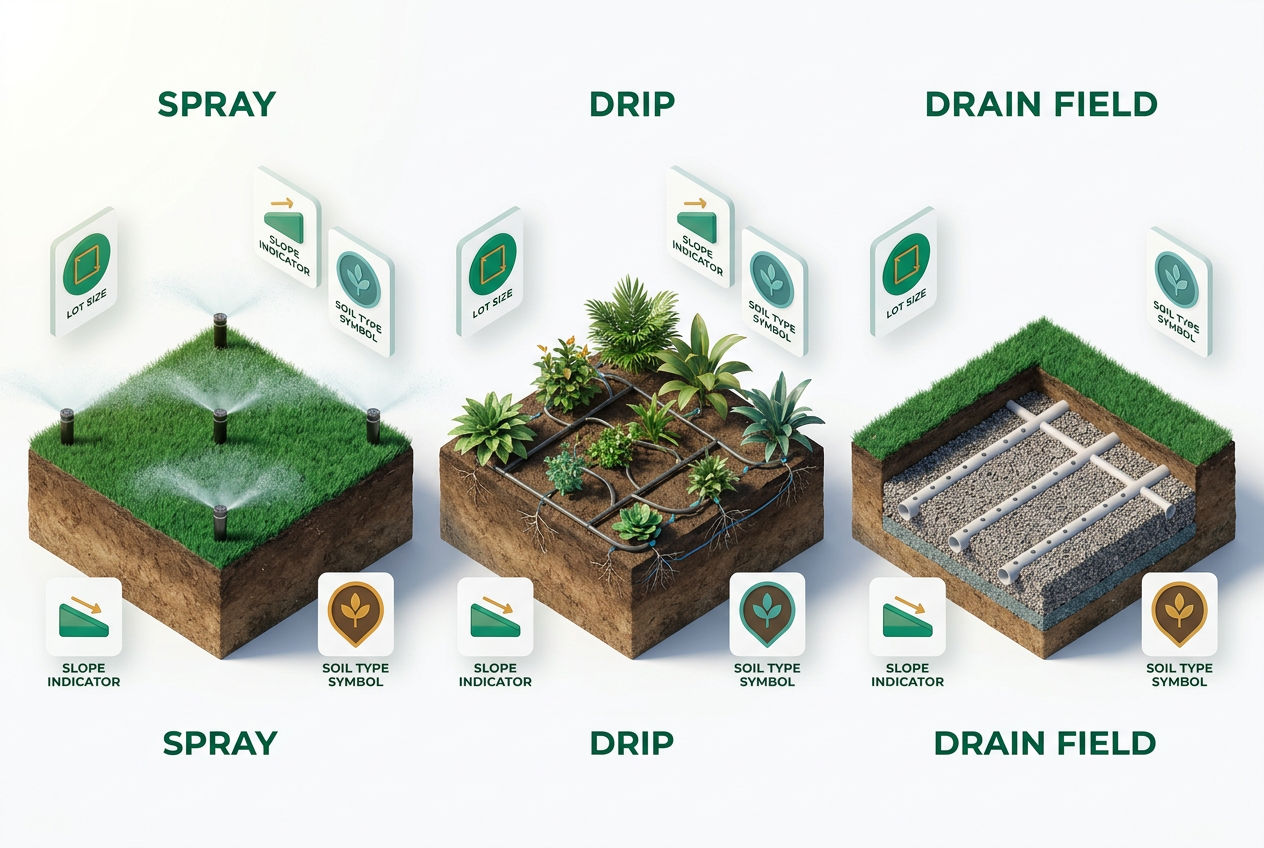
The best disposal method depends on your soil, climate and permit. Texas rules allow surface (spray) application of treated, disinfected effluent. Subsurface drip keeps effluent below ground. A drain field works where the soil can still absorb water.
- Spray irrigation: Treated effluent is disinfected and sprayed onto a vegetated area. Texas requires disinfection before surface application, and where the spray area is less than 20 feet from a property line, sprinklers must be timed to spray between midnight and 5:00 a.m. (30 TAC §285.33). Spray needs setbacks from property lines, wells and buildings, so ask your designer how it's handled where ground freezes.
- Subsurface drip: Small-diameter pressurized lines deliver effluent slowly through emitters. The EPA says drip laterals go into the top 6 to 12 inches of soil, and Texas requires them to be buried at least six inches deep. Drip systems need a dose tank and electrical power, which adds cost and maintenance, according to the EPA.
- Drain field: Depending on your state's sizing rules, ATU effluent may be dispersed in a trench or bed drain field.
Your designer will choose the method based on code, but ask about it. Spray heads limit where kids play and where you can plant, while drip lines limit deep digging.
What Maintenance Does an Aerobic System Need After Installation?
An aerobic system needs regular service by a qualified maintenance provider, aerator checks, chlorine refills for spray systems, and pumping of the pretreatment tank as needed. In Texas, maintenance reports are due at least once every four months under a maintenance contract, according to the TCEQ. Florida requires ATU inspections at least twice a year.
Typical maintenance tasks include:
- Checking the aerator, alarm and control panel
- Testing effluent quality where required
- Refilling chlorine tablets (spray systems)
- Pumping solids from the pretreatment tank as needed
- Filing service reports with the permitting authority
For general habits that protect any system, see our septic tank maintenance guide. Skipping service can lead to permit violations, odors and a failed disposal area that costs far more than the contract.

Frequently Asked Questions
How much does it cost to install an aerobic septic system?
Angi puts the average aerobic septic system at $10,000–$20,000. HomeGuide lists aerobic treatment units at $20,000–$40,000 or more, grouped with its engineered systems. The price typically covers soil evaluation, design, the permit, the ATU tanks and aerator, electrical work, and a spray, drip or drain field disposal area. In Texas, the owner must give the permitting authority a signed initial two-year service policy before the system is approved for use, so ask whether your quote includes it. By our estimates, a 3-bedroom home on a simple Central Texas lot would come to roughly $8,600–$15,000. Budget separately for ongoing costs: maintenance, chlorine tablets for spray systems, electricity for the aerator, and an eventual aerator replacement. Always compare at least two or three itemized quotes, because labor rates and soil conditions shift prices between regions.
How do you install an aerobic septic tank?
You install an aerobic septic tank in eight stages, and a licensed installer usually handles most of them. First, a site evaluator or engineer tests the soil with a perc test or profile pits. Next, a designer sizes the system from the home's estimated daily flow; the EPA's 2002 manual says codes typically specify 100 to 150 gallons per bedroom per day, and Texas uses its own table. The design then goes to the county or state permitting authority. After approval, the crew excavates, sets the pretreatment tank, aeration chamber and clarifier on a level bed, and adds risers for service access. An electrician runs power to the aerator, control panel and alarm. The crew then builds the spray, drip or drain field disposal area. Before backfilling, a regulator inspects the tanks, piping and wiring. Finally, the installer starts the aerator, tests the alarm and has you sign the required maintenance agreement.
Can I install an aerobic septic system myself?
In some states, yes. Texas lets the owner of a single-family home install a septic system on their own property without an installer license, if no part of the property will be developed for sale or lease and the permitting authority's rules are met. A licensed site evaluator or professional engineer must still do the site evaluation, and anyone you pay to help, such as a backhoe operator, must be a licensed installer. Florida registers septic tank contractors through its Department of Environmental Protection, so check with your county before planning an owner install there. Even where owner installation is allowed, expect a permit, an approved design, an inspection before backfill and a maintenance agreement. Doing it yourself also carries financial risk: a failed inspection can force you to dig everything back up, and equipment rental and rework can erase the savings. Read the manufacturer's warranty terms and check with your county health department before buying any equipment.
How long does it take to install an aerobic septic system?
SepticTankHub estimates that the physical installation of an aerobic septic system takes about two to five working days once the crew is on site. The complete process, from the first soil test to final approval, can take several weeks to a few months. Most of that time goes to paperwork rather than digging. Soil evaluation, system design, permit review and inspection scheduling all add days or weeks, and busy counties may have review backlogs. Weather matters too. Frozen ground in northern states stops excavation and perc testing, and saturated soil in wet seasons can't be tested accurately or dug safely. Spring and summer are busy months, so popular installers can be booked weeks ahead. If you're building a new home, start the septic process early, because a certificate of occupancy can depend on an approved system.
Do aerobic septic systems require a maintenance contract?
In many places, yes. In Texas, 30 TAC §285.7 requires an initial two-year service policy with a licensed maintenance provider, and the owner must file a signed copy with the permitting authority before the system is approved. After those two years, the owner of a single-family home may either maintain the system personally or sign a new contract, though some local authorities require homeowner training or don't allow owner maintenance. Florida's Rule 62-6.012 requires a current ATU maintenance contract with an approved maintenance entity, for at least two years at first and then renewals of at least one year, with inspections at least twice a year. A typical contract covers checks of the aerator, alarm and control panel and the service reports your permitting authority requires. Spray systems also need chlorine tablets, which may or may not be included. Our rough estimate for contracts is $150–$500 a year, but confirm local pricing. Letting a required contract lapse can put you out of compliance with your permit.
What disposal method is best for an aerobic septic system in a cold climate?
No single disposal method is best in every cold climate; your designer and permit make the call based on your soil and state rules. What differs is where the effluent goes. Spray irrigation applies treated, disinfected effluent to the ground surface, so ask your designer how your area handles spray where the ground freezes. Subsurface drip keeps effluent below ground: the EPA says drip laterals go into the top 6 to 12 inches of soil, and Texas requires them to be buried at least six inches deep. Drip also needs a dose tank and electrical power. A drain field disperses ATU effluent in trenches or beds where the soil can still absorb water. Cold weather affects the schedule too, because frozen ground stops digging and perc testing, so plan soil work for spring through fall.
What happens if a contractor backfills the tanks before the county inspection?
An inspector who can't see the tanks, piping and wiring can't approve them, so a crew that backfills before the inspection may have to dig the system back up, at the contractor's or homeowner's expense. That makes it one of the costliest mistakes in an aerobic septic installation. The pre-backfill inspection is step 7 of the eight-step process: the regulator checks tank placement, piping and wiring while everything is still exposed. The crew can't backfill until the inspector signs off, so a slow inspection calendar can add days to the schedule. When you interview installers, ask how they schedule the pre-backfill inspection, and confirm they won't cover the system before it receives official sign-off.
About This Article
Written by our editorial team, which researches onsite wastewater topics using state codes, EPA guidance and published cost data. We did not personally install the systems described, and cost figures come from published third-party data or are labeled as our estimates rather than our own job quotes. Regulations change, so verify current rules with your state agency or county health department before you sign a contract.
Sources & Methodology
- U.S. EPA, Types of Septic Systems (aerobic treatment units, drip distribution): epa.gov/septic/types-septic-systems
- U.S. EPA, Frequent Questions on Septic Systems (what not to flush, additives): epa.gov/septic/frequent-questions-septic-systems
- U.S. EPA, Onsite Wastewater Treatment Systems Manual, EPA/625/R-00/008 (2002).
- Texas Commission on Environmental Quality, 30 TAC Chapter 285 (On-Site Sewage Facilities): §285.7 maintenance, §285.32 treatment systems, §285.33 disposal systems, §285.91 Tables II and III (TCEQ RG-472 rules compilation); 30 TAC Chapter 30 (Occupational Licenses), §30.244 exemptions.
- TCEQ, OSSF permits and homeowner installation and OSSF maintenance.
- Florida Administrative Code, Rule 62-6.012 (aerobic treatment units; formerly Chapter 64E-6): law.cornell.edu; Florida DEP, Septic Tank Contractor Registration.
- NSF/ANSI Standard 40, Residential Onsite Sewage Treatment Systems.
- Angi, aerobic septic systems; HomeGuide, septic tank system cost (accessed November 2026).
Cost ranges reflect published Angi and HomeGuide data. The worked example uses SepticTankHub illustrative estimates and is not a contractor quote.
Free download
Not ready for the Blueprint? Start free.
Grab the free DIY Septic Planning Kit — the permit-first checklist, perc-test cheat sheet, and sizing tables that keep your build from getting red-tagged.
Was this article helpful?
Frequently Asked Questions
Recommended Resources
📖 Related Articles
- What Is a Drain Field? (And How Does It Work?)
- Perc Test (Percolation Test): What It Is & How It Works
- Septic System Permit Cost & State Requirements (2026 Guide)
- Drip Septic System: How Drip Dispersal Works, Cost & Design
- Septic Inspection Before Backfill: What the Inspector Checks (Checklist)
- DIY Septic System: How to Build Your Own (Step-by-Step)
- Aerobic Septic System Maintenance: The Complete Guide
- The Complete Septic Tank Maintenance Guide
- What Is a Septic System? How It Works (Visual Guide)
- Septic System Regulations in Texas (2026 Guide)
💰 Cost Guides
🔧 Services
Find Septic Professionals Near You
Compare licensed, verified septic companies by area — top county markets and cities below, or browse all 50 states.
County markets
Popular cities
