
Quick Answer
Sewage backup cleanup is one of the most urgent, unpleasant, and potentially dangerous situations a homeowner can face. Raw sewage carries Category 3 "black water" contaminants—the most hazardous classification under the IICRC S500 standard—including E. coli, Salmonella, Hepatitis A, Giardia, and Cryptosporidium. Acting fast and acting smart are the only two things that matter in the first hour.
Key Takeaways
- Raw sewage is classified as Category 3 black water—biohazardous to humans and pets
- The 24-hour window is critical: mold can begin growing within 24–48 hours of contamination
- Professional sewage backup cleanup costs $2,000–$10,000 for most residential cases; severe damage runs $25,000+
- Standard homeowners insurance typically excludes sewer and septic backups—only ~30% of homeowners carry the required endorsement
- Whether your backup stems from a septic tank overflow or a blocked municipal sewer line, the cleanup steps are nearly identical
What Do You Do Immediately After a Sewage Backup?
Stop. Don't grab a mop and start cleaning. Your first moves in the next 15 minutes determine whether this stays a $2,000 problem or becomes a $15,000 one.
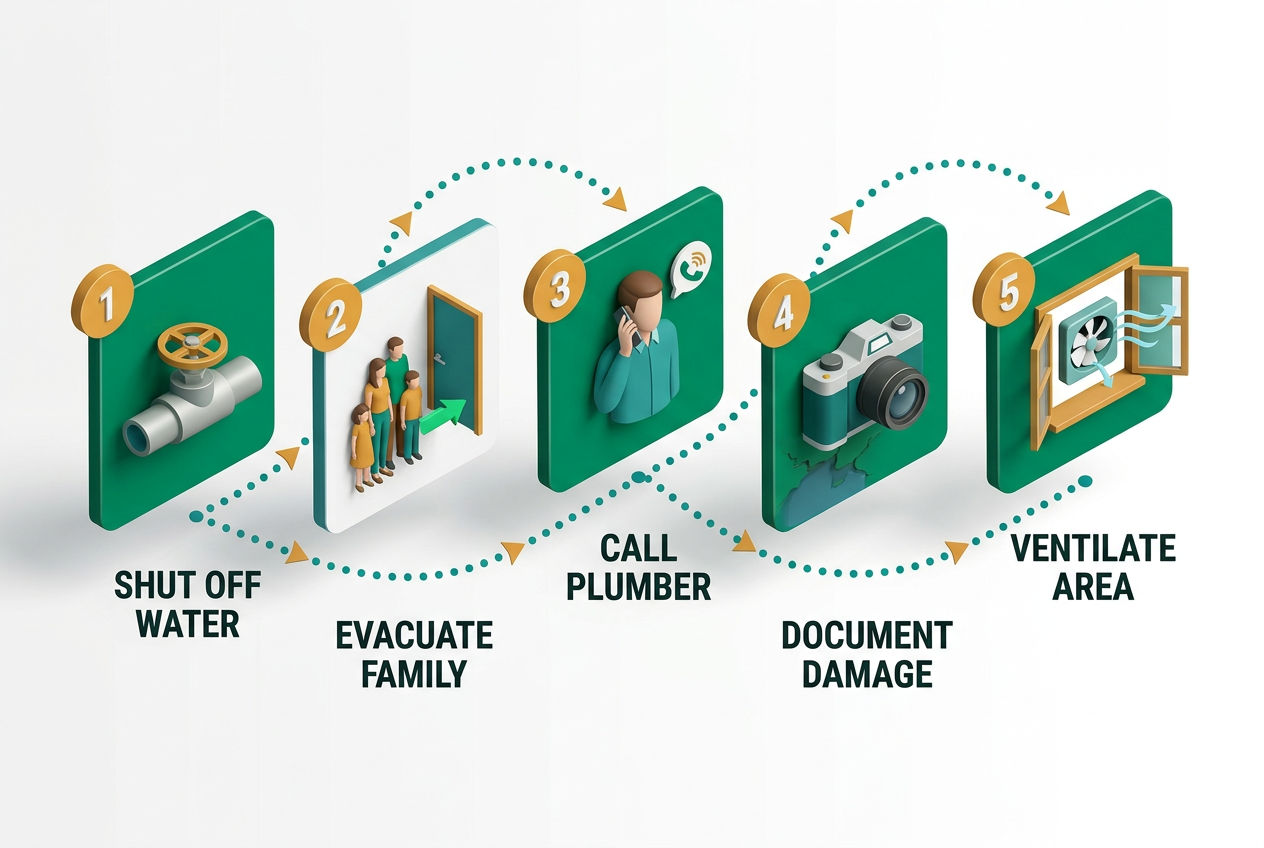
Right now, do these five things:
- Stop using all water in the house. Every flush, every faucet pushes more sewage into the backup. Shut it all down.
- Get people and pets out of the affected area. Sewage contamination is not a "hold your nose and deal with it" situation. Hepatitis A is real. So is Cryptosporidium.
- Turn off electricity to flooded areas. If your basement is backed up, don't wade into it. Flip the breaker first, or call your utility company.
- Open windows for ventilation. Hydrogen sulfide gas concentrations above 100 ppm are life-threatening. Below that, prolonged exposure still causes headaches, nausea, and respiratory irritation.
- Call a licensed emergency sewage cleanup company. Reputable firms arrive within 1–4 hours for emergency calls. The longer you wait, the deeper the contamination penetrates into drywall, subfloor, and insulation.
Don't touch sewage-contaminated materials without full PPE: N95 or P100 respirator, chemical-resistant gloves (nitrile or rubber, not latex), waterproof boots, and disposable coveralls. Skin exposure to raw sewage is a legitimate health risk, not an overreaction.
How Dangerous Is a Sewage Backup in Your Home?
Genuinely dangerous—not in a dramatic way, but in a "you could end up hospitalized" way if you're cavalier about it.
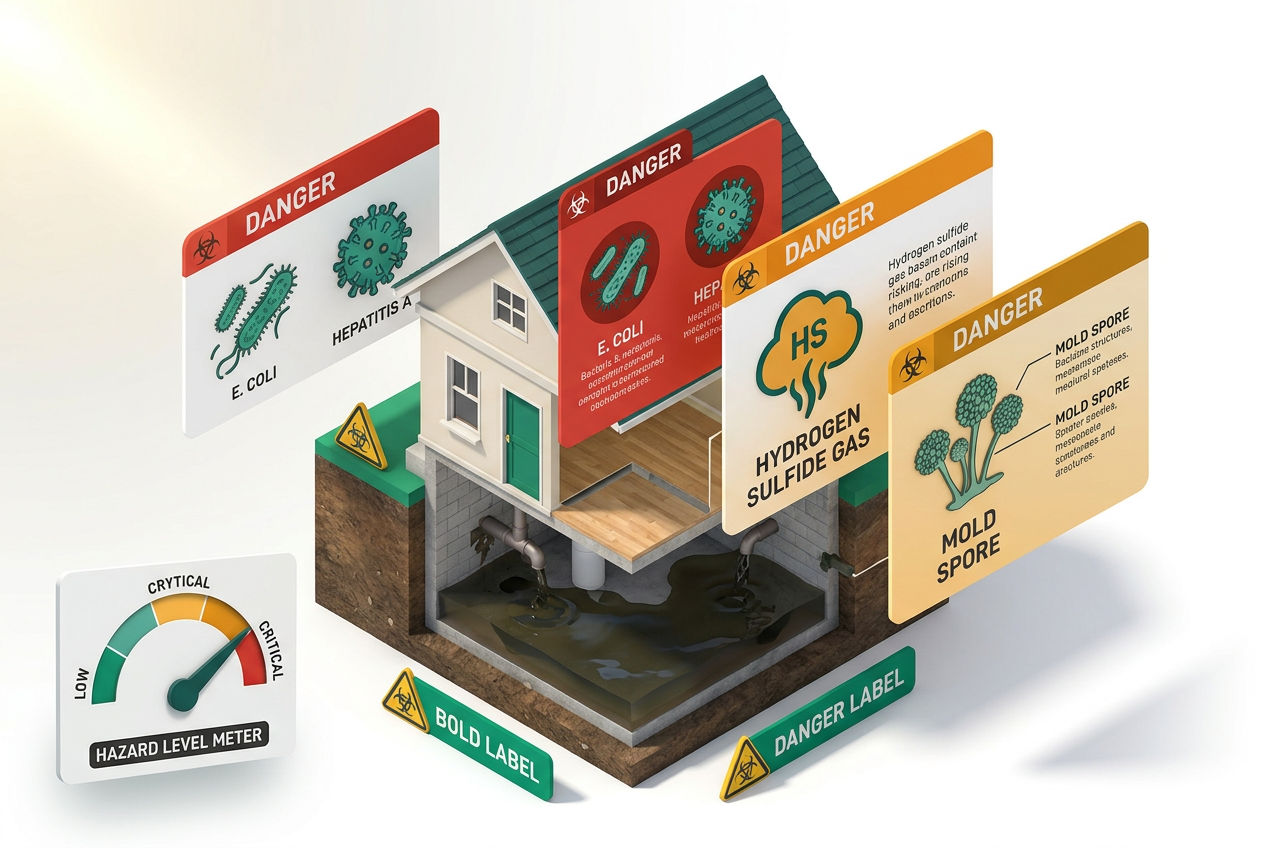
Raw sewage contains hundreds of pathogenic organisms. The CDC has documented sewage-related outbreaks of Norovirus, E. coli O157:H7, and Hepatitis A from far less exposure than a flooded basement. Children, elderly adults, pregnant women, and anyone immunocompromised face the highest risk.
Beyond pathogens, sewage water damage creates a mold problem within 24–48 hours on wet, porous materials. Aspergillus and Stachybotrys (black mold) colonize drywall, carpet padding, and wood framing fast in warm, humid conditions. What starts as a sewage spill turns into a mold remediation project that adds $1,500–$9,000 to your bill.
There's also the gas hazard. Enclosed basements trap hydrogen sulfide and methane released from decomposing sewage. Ventilate before you enter. If you smell rotten eggs and feel dizzy, leave immediately.
The IICRC S500 standard—the industry bible for water damage restoration—classifies sewage as Category 3 black water. That classification exists for a reason: it mandates professional protocols, specific PPE, and disposal procedures that go beyond what a shop vac and bleach can accomplish.
What Causes a Sewage Backup?
Understanding the cause matters because it determines what gets fixed after the cleanup. A backup that keeps happening isn't a cleaning problem—it's a system failure problem.
Common causes:
- Sewer line blockage: Grease buildup, paper products (yes, even "flushable" wipes—they're not), and debris clog the main lateral running from your house to the street or septic tank. This is the most common cause.
- Tree root intrusion: Willow, oak, and maple roots chase moisture into pipe joints. They're relentless. During summer growing season, roots can crack or completely block 4-inch sewer laterals.
- Septic tank backup: If your home uses a septic system, a full or failing tank pushes effluent back through the lowest drains in your home. An overfull 1,000-gallon tank serving a family of four—especially one that hasn't been pumped in 5+ years—is a classic culprit.
- Municipal system surcharge: During heavy rain events, combined sewer systems in older Northeast and Midwest cities overflow. Stormwater overwhelms the system and pushes sewage back through residential connections. Spring snowmelt is peak season for this in cities like Chicago, Detroit, and Cleveland.
- Drain field failure: If your septic drain field is saturated or failing, effluent has nowhere to go. You'll see wet spots in the yard before the backup reaches your house—but not always.
- Collapsed or broken pipe: Cast iron pipes installed before 1970 corrode from the inside out. PVC joints can shift with soil movement. A collapsed pipe creates an instant blockage.
Knowing your cause determines your next call. Septic backup? You need a pumper and possibly a septic system inspection. Municipal surcharge? You may be able to file a claim against the city. Broken pipe? That's a plumber or pipe relining company after cleanup.
Can You Clean Up a Sewage Backup Yourself?
Sometimes—but the threshold is smaller than most people think.
DIY is reasonable if:
- The affected area is under 10 square feet
- The backup involves only hard, non-porous surfaces (concrete, tile)
- The sewage exposure was brief (under 2 hours)
- You have proper PPE and access to a wet/dry shop vac rated for liquids
Call a professional when:
- Any carpet, drywall, wood subfloor, or insulation is affected
- The backup covers more than 10 square feet
- Materials have been wet for more than 24 hours
- Anyone in your household is immunocompromised, elderly, or pregnant
- The source of the backup is unknown
For legitimate DIY cleanup of a minor spill, the process involves pumping out standing water, bagging and disposing of all contaminated porous materials (they cannot be salvaged), scrubbing hard surfaces with a 1:10 bleach-to-water solution or an EPA-registered disinfectant like Lysol Professional Disinfectant or Benefect Decon 30, and drying the space completely with fans and a dehumidifier.
Hard surfaces need two disinfecting passes—once to clean, once to disinfect after drying. One wipe-down isn't enough.
How to Clean Up a Sewage Backup: Step-by-Step
Whether you're handling a minor spill yourself or managing a crew, the process follows the same sequence.
Step 1: Extract standing water. Professional companies use truck-mounted extraction units. DIY uses a wet/dry shop vac with a 5–15 gallon capacity—not a regular vacuum, not a mop bucket.
Step 2: Remove all contaminated porous materials. Carpet, carpet padding, drywall below the sewage line, insulation, and particle board cannot be disinfected. They go in heavy-duty contractor bags (6 mil or thicker), sealed and disposed of per your local municipality's guidelines.
Step 3: Clean all hard surfaces. Scrub concrete, tile, and plastic with a stiff brush and detergent first. Rinse thoroughly. Disinfection only works on clean surfaces—organic matter blocks the chemistry.
Step 4: Disinfect. Apply a 1:10 bleach solution (one part household bleach to 10 parts water) or an EPA-approved disinfectant. Allow 10 minutes of dwell time. Rinse and repeat on porous-adjacent surfaces like concrete.
Step 5: Dry aggressively. Mold doesn't care about your cleanup if surfaces stay wet. Industrial dehumidifiers pull 30–50 pints of water per day. Box fans pointed outward accelerate drying. Measure moisture in walls and subfloors with a moisture meter—you want readings below 15% for wood before closing up walls.
Step 6: Assess for hidden damage. Slow drains or gurgling sounds after cleanup signal the root cause hasn't been resolved.
Step 7: Schedule a root cause inspection. A backup that isn't diagnosed will happen again. If your system is septic-based, book a septic system inspection within 30 days.
Sewage Backup Cleanup Cost: What Should You Expect to Pay?
Professional sewage backup cleanup costs vary significantly by the size of the affected area, materials involved, and your region.
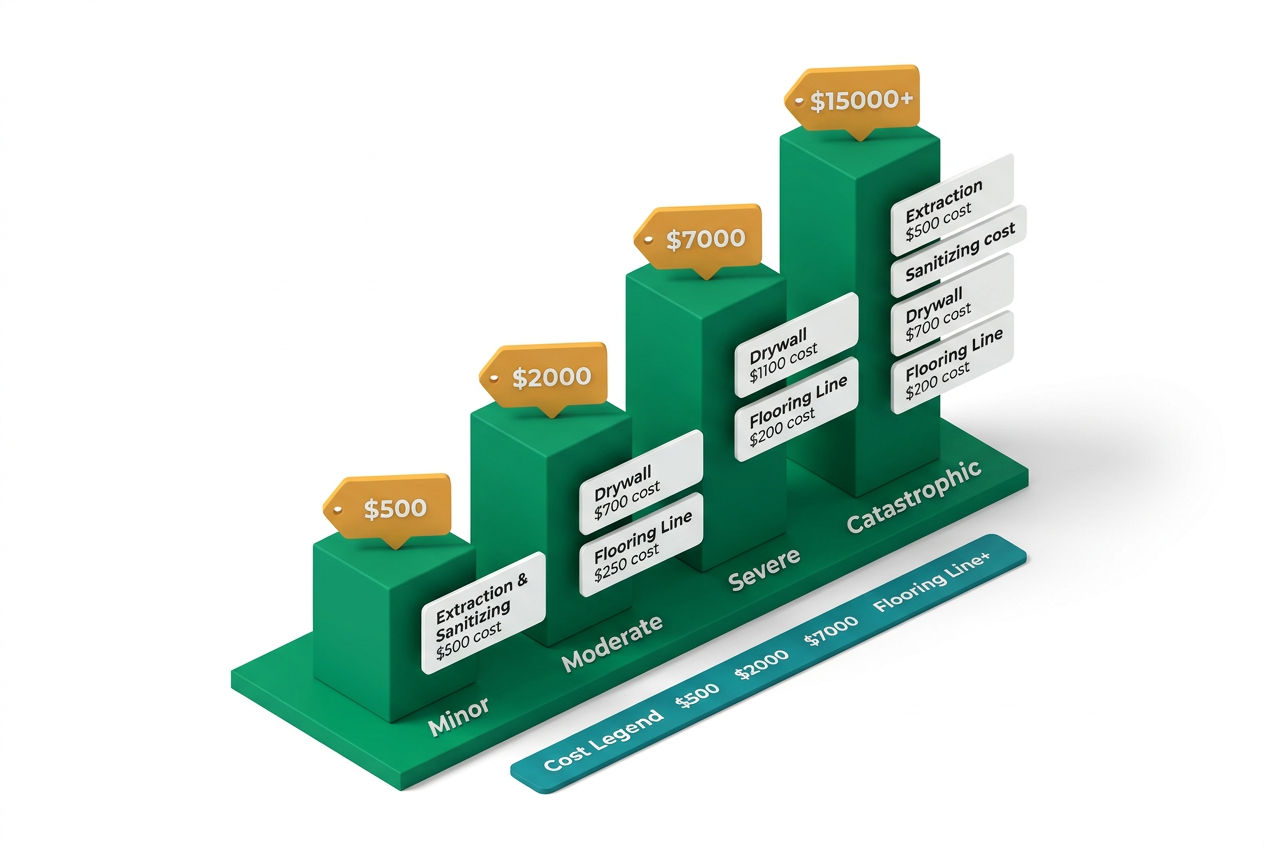
| Severity Level | Affected Area | Estimated Cost Range | What's Included |
|---|---|---|---|
| Minor | Under 25 sq ft, hard surfaces only | $500–$1,500 | Extraction, disinfection, drying |
| Moderate | 25–200 sq ft, some drywall/flooring | $2,000–$5,000 | Extraction, demo, disinfection, drying |
| Major | Full basement, structural materials | $5,000–$10,000 | Full demo, remediation, restoration start |
| Severe | Structural damage, mold present | $10,000–$25,000+ | Demolition, mold remediation, rebuild |
| Mold Add-On | Any size with delayed cleanup | +$1,500–$9,000 | Separate mold remediation scope |
Source: National cost data aggregated from IICRC-certified restoration contractors; ranges reflect 2024–2025 pricing across U.S. markets.
Line-item breakdown:
- Water extraction: $3–$7 per square foot
- Structural drying equipment rental: $200–$500/day for industrial units
- Contaminated material disposal: $300–$800 depending on volume
- Disinfection/antimicrobial treatment: $500–$1,500
- Sewer line repair or replacement (if needed): $3,000–$25,000 depending on trenchless vs. open-cut method
Regional note: Cleanup costs run 20–40% higher in metro markets like New York City, San Francisco, and Chicago compared to rural Midwestern and Southern markets. A moderate basement backup that costs $3,500 in rural Ohio might run $5,500 in suburban New Jersey. Always get three quotes, and check that each company holds IICRC certification.
For underlying septic system repair costs, see our septic repair cost guide.
Is Sewage Backup Covered by Homeowners Insurance?
Probably not—unless you added a specific endorsement. This surprises most homeowners after the fact.
Standard homeowners insurance policies explicitly exclude water damage caused by sewer or septic backup. The ISO HO-3 policy form—the most common in the U.S.—treats sewer backup as a separate peril requiring a separate rider.
Only about 30% of homeowners carry a sewer backup endorsement, according to insurance industry data. That endorsement typically adds $40–$200 per year to your premium and provides $5,000–$25,000 in coverage depending on the policy.
Without the endorsement, you're paying out of pocket. The only exceptions:
- Municipal negligence: If a city-maintained sewer surcharge caused the backup, you may be able to file a claim against the municipality. Success rates vary widely—cities in Ohio and Michigan have paid claims; others fight them. Document everything.
- Sudden and accidental damage: Some policies cover backup caused by a sudden pipe collapse elsewhere in the system, not just the sewer line. Read your declarations page carefully.
If your claim involves structural damage, sewage backup claims average $10,000–$20,000 according to insurance industry data—which makes that $40–$200 annual endorsement one of the best deals in home insurance.
For more on how insurance interacts with septic systems generally, see our guide to homeowners insurance and septic systems.
How Do You Prevent a Sewage Backup?
Most backups aren't random—they're the end result of a system that's been stressed for months or years.
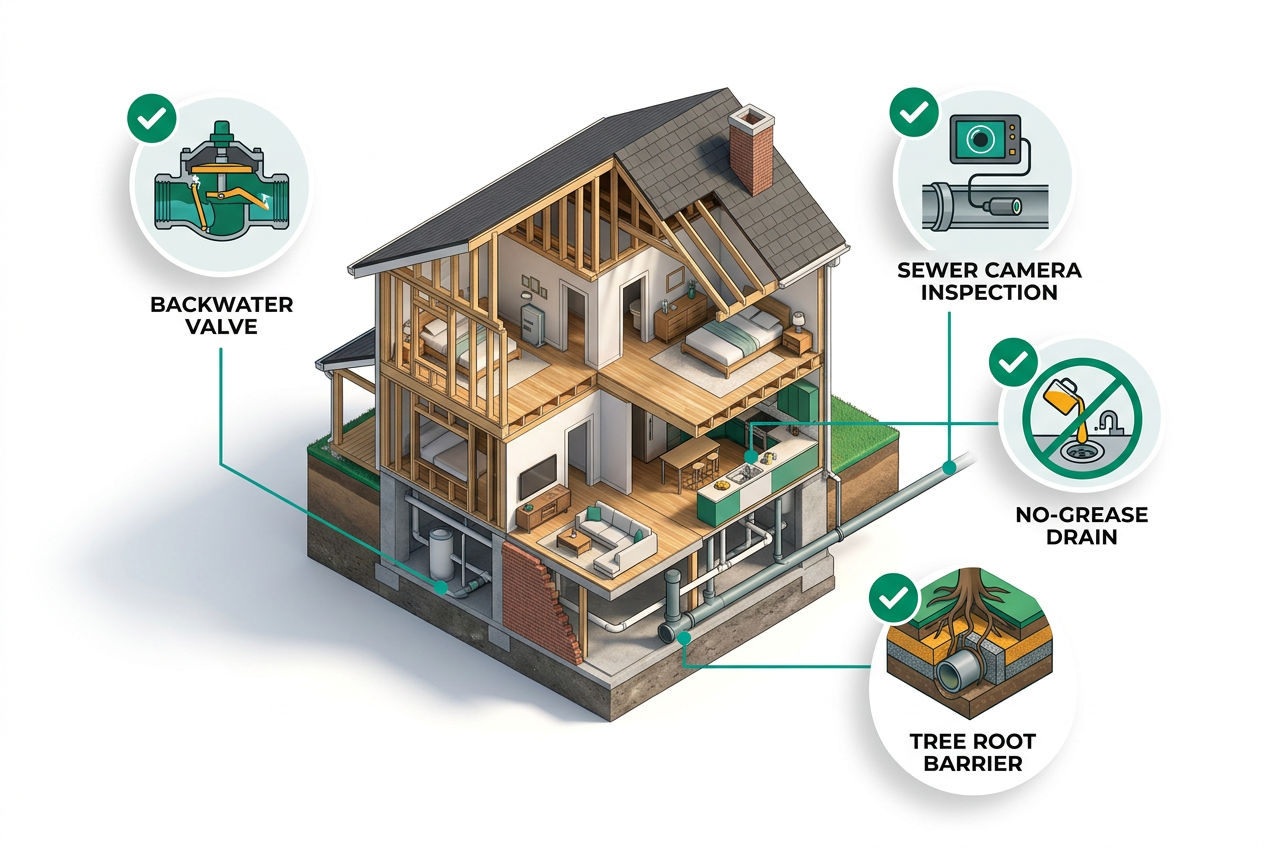
For septic system owners:
- Pump your tank on schedule. A 1,000-gallon tank serving four people needs pumping every 3–4 years. A 1,500-gallon tank can go 4–6 years. Skipping pumps until the tank is at 100% solids capacity is the most common path to a backup. See how often to pump your septic tank.
- Install an effluent filter (Polylok PL-122 is the industry standard) on your tank's outlet baffle. It catches solids before they reach your drain field and prevents premature field failure.
- Have your drain field inspected if it's over 20 years old. A saturated or biomat-clogged field is the second most common cause of septic-related backups.
- Don't flush anything that isn't human waste or toilet paper. Not "flushable" wipes. Not feminine hygiene products. Not cat litter.
For municipal sewer users:
- Install a backwater prevention valve (also called a backflow preventer) on your main sewer lateral. In cities with combined sewer systems, this is the single most effective physical barrier against surge backups. Installation runs $600–$2,000 and some municipalities offer rebates.
- Keep grease out of drains. A full cup of bacon grease poured down the sink every few weeks will eventually build a blockage in the lateral.
- Have your sewer lateral scoped with a camera every 10–15 years, especially if your home has mature trees overhead. A $150–$400 camera inspection can find root intrusion before it causes a backup.
For septic owners specifically, routine maintenance is the cheapest insurance you have. Our septic tank maintenance guide covers the full annual and multi-year schedule.
When Should You Call an Emergency Sewage Cleanup Professional?
Any backup that involves more than a small hard-surface spill warrants a professional call. The line is clear: if porous material is wet, if the area is larger than a bathroom, or if anyone in the home is vulnerable—pick up the phone.
Here's what a qualified emergency sewage cleanup company brings that you can't replicate with a hardware store run:
- Truck-mounted extraction: Pulls water at 10–20 times the rate of a shop vac
- Thermal imaging cameras: Finds moisture hidden inside walls and under flooring before it becomes mold
- Industrial dehumidifiers and air movers: Dries structural components in 3–5 days vs. the 2–3 weeks air drying takes
- IICRC-certified technicians: Trained in Category 3 black water protocols and proper disposal procedures
- Documentation for insurance: Moisture readings, photos, and scope of work reports that support your claim
Find an emergency septic service professional near you through the SepticTankHub directory. Filter by service type and read verified reviews before you call.
After cleanup, schedule a full septic system inspection to identify what caused the backup. Finding the root cause is the only way to prevent the next one.
Sources & Methodology
- U.S. Environmental Protection Agency — Septic Systems Overview (epa.gov/septic): Used for prevalence data on annual U.S. sewer backup rates and general septic system guidance.
- IICRC S500 Standard for Professional Water Damage Restoration: Industry-standard classification system for water damage categories (Category 1, 2, 3); used for black water classification and cleanup protocol references.
- Centers for Disease Control and Prevention (CDC) — Healthy Water, Sewage and Wastewater: Referenced for pathogen identification and health risk documentation associated with raw sewage exposure.
- National cost data from IICRC-certified restoration contractors: Cleanup cost ranges compiled from contractor pricing data across U.S. markets, 2024–2025.
- Insurance Information Institute: Referenced for homeowners insurance sewer backup endorsement prevalence statistics and average claim values.
Frequently Asked Questions
Q: Can I clean up a sewage backup myself?
A small sewage spill on a hard, non-porous surface—under 10 square feet, brief exposure, no porous materials affected—can be cleaned DIY with proper PPE: N95 respirator, rubber gloves, waterproof boots, and disposable coveralls. Use a wet/dry shop vac to extract water, bag all waste in 6-mil contractor bags, scrub surfaces with detergent, then disinfect with a 1:10 bleach-to-water solution with 10 minutes of contact time. Dry completely. If carpet, drywall, wood subfloor, or insulation is involved—stop. Those materials cannot be safely disinfected and must be removed. Anything larger than a bathroom-sized spill, or any backup that sat more than 24 hours, warrants a professional IICRC-certified biohazard cleanup company. The health risk from underestimating Category 3 black water contamination is real.
Q: How much does sewage water damage restoration cost?
Sewage water damage restoration costs $500–$25,000+ depending on severity. Minor spills on hard surfaces run $500–$1,500. A moderate backup affecting a portion of a basement—say 100 square feet with wet drywall and flooring—typically costs $2,000–$5,000. A full basement backup with structural material involvement runs $5,000–$10,000, and cases with delayed cleanup that develop mold can reach $25,000 or more once mold remediation is added. Professional water extraction runs $3–$7 per square foot. Industrial drying equipment adds $200–$500 per day. Material disposal, disinfection, and any sewer line repair are separate line items. Costs run 20–40% higher in major metro markets than in rural areas. Always get three quotes from IICRC-certified companies before committing to a scope of work.
Q: Is sewage backup covered by homeowners insurance?
Standard homeowners insurance policies do not cover sewage or septic backup—it's explicitly excluded in the ISO HO-3 policy form that most U.S. insurers use. Coverage requires a sewer backup endorsement (also called a rider or add-on), which costs $40–$200 per year and typically provides $5,000–$25,000 in coverage. Only about 30% of homeowners carry this endorsement, according to insurance industry data—which means most people facing a backup are paying entirely out of pocket. Exceptions exist: if a city-maintained sewer failure caused the backup, you may have a claim against the municipality, though success varies widely by city. Review your declarations page now, before a backup occurs. If you don't have the endorsement, adding it is one of the most cost-effective coverages available given that sewage backup claims average $10,000–$20,000 when structural damage is involved.
Q: What are the health risks of sewage backup in your home?
Raw sewage is classified as Category 3 black water under the IICRC S500 standard—the most hazardous water damage classification. It contains hundreds of pathogenic organisms including E. coli, Salmonella, Hepatitis A virus, Giardia, and Cryptosporidium. Direct skin contact, inhalation of contaminated aerosols, or contact with eyes and mucous membranes can cause gastrointestinal illness, hepatitis, and in severe cases, life-threatening infection. Children, elderly adults, pregnant women, and immunocompromised individuals face the highest risk. Beyond pathogens, sewage gas—primarily hydrogen sulfide—becomes dangerous at concentrations above 100 ppm in enclosed spaces, causing dizziness, respiratory distress, and at very high concentrations, rapid incapacitation. Mold poses an additional risk when cleanup is delayed beyond 24–48 hours. Never enter a sewage-flooded basement without full PPE and ventilation.
Q: How do you prevent a septic tank backup from happening again?
Preventing a septic tank backup comes down to regular pumping, protecting your drain field, and controlling what goes into your system. A 1,000-gallon tank serving a four-person household needs pumping every 3–4 years; a 1,500-gallon tank can go 4–6 years. Install a Polylok PL-122 effluent filter on your tank's outlet baffle to catch solids before they reach the drain field. Never flush anything except human waste and toilet paper—wipes, paper towels, and feminine hygiene products cause blockages even when labeled "flushable." Keep trees with aggressive root systems (willow, oak, maple) at least 30 feet from your tank and drain field lines. Have your drain field inspected if it's over 20 years old or showing signs of saturation. And if you're on municipal sewer, install a backwater prevention valve on your main lateral—it's the most effective physical barrier against storm-surge backups in cities with combined sewer systems.
Free download
Not ready for the Handbook? Start with the free Fridge Card.
The Do / Don’t card the whole family can see, plus the Survival Kit: emergency flowchart, warning-sign decoder and pump-schedule card. One printable PDF.
Was this article helpful?
Frequently Asked Questions
Recommended Resources
📖 Related Articles
- Septic Tank Overflow? Causes & How to Fix It
- Are Flushable Wipes Septic Safe?
- What Is a Septic System? How It Works (Visual Guide)
- Wet Spot in Yard Over Septic: What It Means & How to Fix It
- Slow Drains With Septic: Is It the Plumbing or the Tank?
- Septic Tank Gurgling Sounds: Causes and Fixes
- Does Homeowners Insurance Cover Septic Repairs? (2026 Guide)
- How Often Should You Pump Your Septic Tank?
- What Is a Drain Field? (And How Does It Work?)
- The Complete Septic Tank Maintenance Guide
💰 Cost Guides
🔧 Services
Find Septic Professionals Near You
Compare licensed, verified septic companies by area — top county markets and cities below, or browse all 50 states.
County markets
Popular cities
