
Quick Answer
Roughly 1 in 5 U.S. homes - more than 21 million properties according to EPA data - rely on a private septic system. On rural properties, that number climbs dramatically. And unlike a leaky faucet or a furnace on its last legs, a failing septic system isn't a $500 fix. It's a $5,000–$30,000 problem that can sink a deal, crater your finances, or sit invisibly underground until you're already holding the keys.
This checklist covers everything you need to check - documents, physical inspections, red flags, loan requirements, and seasonal traps - before you sign anything.
💡 Key Takeaways
- A full septic inspection with hydraulic load testing costs $300–$600 and is separate from a standard home inspection
- Septic systems last 20–30 years (conventional); inheriting an older system without records is a major financial risk
- Request pumping records, the as-built diagram, and permit history from the seller before closing
- A failing drain field can cost $3,500–$15,000+ to replace - and that's if a conventional repair is even possible
- Regulations vary by county; always verify local compliance through the county health department
What Does a Septic Inspection Before Buying Actually Cover?
A septic inspection before buying a home is a specialized evaluation of the entire onsite wastewater treatment system - not just the tank. A qualified inspector (look for NAWT-certified professionals through the National Association of Wastewater Technicians) will assess:
- Tank structure integrity
- Inlet and outlet baffles
- Effluent filter condition
- Distribution box functionality
- Drain field lateral performance
Inspection Depth and Cost
A basic visual inspection runs $100–$200. That gets you a cursory look. A full inspection - where the tank is pumped ($300–$600), the interior is examined, and a hydraulic load test is performed to stress the drain field - runs $300–$600 on top of the pump-out, depending on your region and system type. Budget $500–$1,000 total for a thorough pre-purchase evaluation on an unknown system. That's cheap insurance against a $20,000 drain field replacement.
⚠️ Warning: Don't rely on your general home inspector for this. Most general inspectors are not trained to evaluate septic systems beyond a basic visual check.
In Massachusetts, a Title 5 inspection by a licensed inspector is legally required at the time of sale. Most states don't mandate it - which means the burden falls on you to require it as a contingency.
Learn more about what the septic inspection process involves before you schedule one.
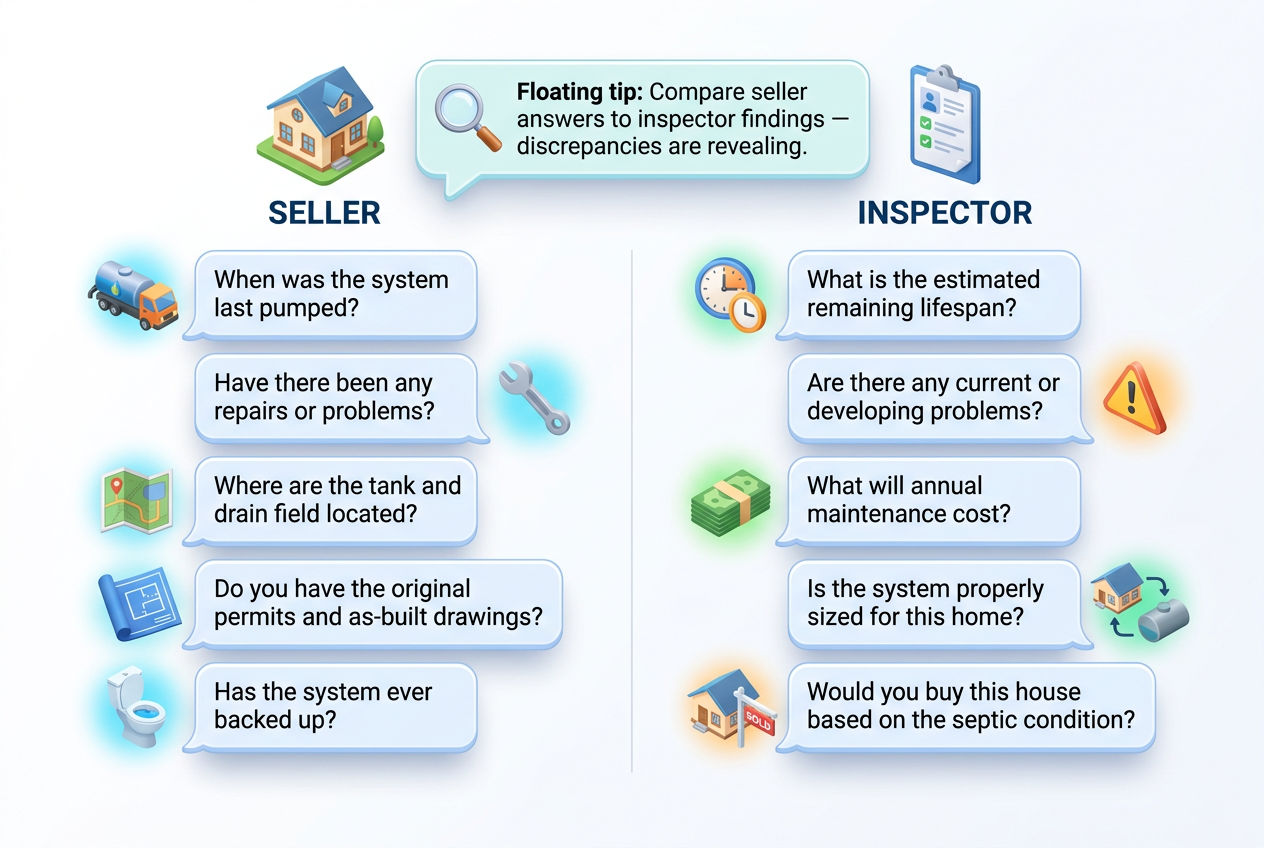
The Rural Property Septic Checklist: 7 Categories to Evaluate

Free download
Free: the Septic Fridge Card — what to flush, what never to.
The Do / Don’t card the whole family can see, plus the Survival Kit: emergency flowchart, warning-sign decoder and pump-schedule card. One printable PDF.
1. Documents to Request From the Seller
Before you ever set foot on the property, ask for these in writing:
- As-built diagram (record drawing): This shows exactly where the tank, distribution box, and drain field laterals are located. Without it, you're paying to locate them - and that adds time and cost to your inspection.
- Permit history: Was the system permitted when installed? Any additions (extra bedrooms, ADUs) should have associated permit updates. A system installed without permits is a code compliance headache.
- Pumping records: The EPA recommends pumping every 3–5 years. If the seller can't produce a single receipt in the past decade, that's a red flag. Ask for records from a licensed pumper - in many states, pumpers file disposal manifests with the county, so records are traceable.
- Repair history: Any major repairs, tank replacements, or drain field work should be disclosed. Some states legally require sellers to disclose known defects; others don't. Don't assume.
- Certificate of compliance (if applicable): States like Massachusetts require a passing Title 5 inspection. Other states may have similar transfer requirements at the county level.
✅ Pro Tip: Request these documents in your initial offer contingency language. If the seller can't produce them, that tells you something important about the system's maintenance history.
2. Septic Tank Condition
A 1,000-gallon concrete tank serving a 3-bedroom home is typical sizing - roughly 250–300 gallons per bedroom as a general rule. A 4-bedroom home usually needs a 1,250-gallon tank minimum. If the tank is undersized for the house's bedroom count, that's a problem.
What the Pumper Should Check:
- Concrete integrity: Cracks, root intrusion, and corroded baffles are all failure indicators. Steel tanks rust from the inside out and have a much shorter lifespan than concrete or fiberglass.
- Inlet and outlet baffles: These direct flow and prevent scum from escaping into the drain field. A missing or deteriorated outlet baffle is one of the most common causes of premature drain field failure.
- Effluent filter: Not all systems have them, but a Polylok PL-122 or similar filter at the outlet tee is a good sign - it means solids are being caught before reaching the drain field.
- Scum and sludge layers: A professional uses a sludge judge (a clear polycarbonate tube) to measure these. If combined scum and sludge exceed 30–33% of tank capacity, it needed pumping months ago.
3. Drain Field Condition
The drain field is where systems fail - and where replacement gets expensive. A conventional drain field replacement runs $3,500–$15,000+. If the lot requires an engineered alternative (mound system, drip irrigation, aerobic treatment unit), costs can easily reach $20,000–$30,000+.
Physical Warning Signs to Look For:
Physically walk the drain field area yourself. Look for:
- Spongy or saturated ground: Soft, wet soil over the leach field lines suggests effluent is surfacing - a classic failure sign.
- Unusually lush, green grass: Counterintuitively, a strip of very green grass over the drain field compared to surrounding lawn can indicate the field is receiving too much liquid effluent, often because it's failing.
- Sewage odors: Any detectable odor over the drain field area is a red flag. Healthy drain fields don't smell.
- Visible inspection ports or distribution box: The distribution box (D-box) distributes effluent evenly across the laterals. Uneven distribution causes one lateral to fail prematurely while others sit unused.
For a deeper dive into how this component works, see our guide on what a drain field is and how it functions.
4. Septic System Age and Remaining Lifespan
A conventional septic system - concrete tank, gravity-fed drain field with perforated pipe in a gravel trench - lasts 20–30 years with proper maintenance. Alternative systems (aerobic treatment units, mound systems, drip-irrigation systems) typically last 15–20 years, and some components like aerator compressors (such as the Hiblow HP-80 used in aerobic systems) require replacement every 3–7 years.
📊 Quick Fact: A system installed in 1995 with no documented pumping history is a very different financial risk than a 2015 system with a clean service record.
Ask the seller directly: how old is the system? If records don't exist, an inspector may be able to estimate age from tank materials, baffle condition, and installation methods.
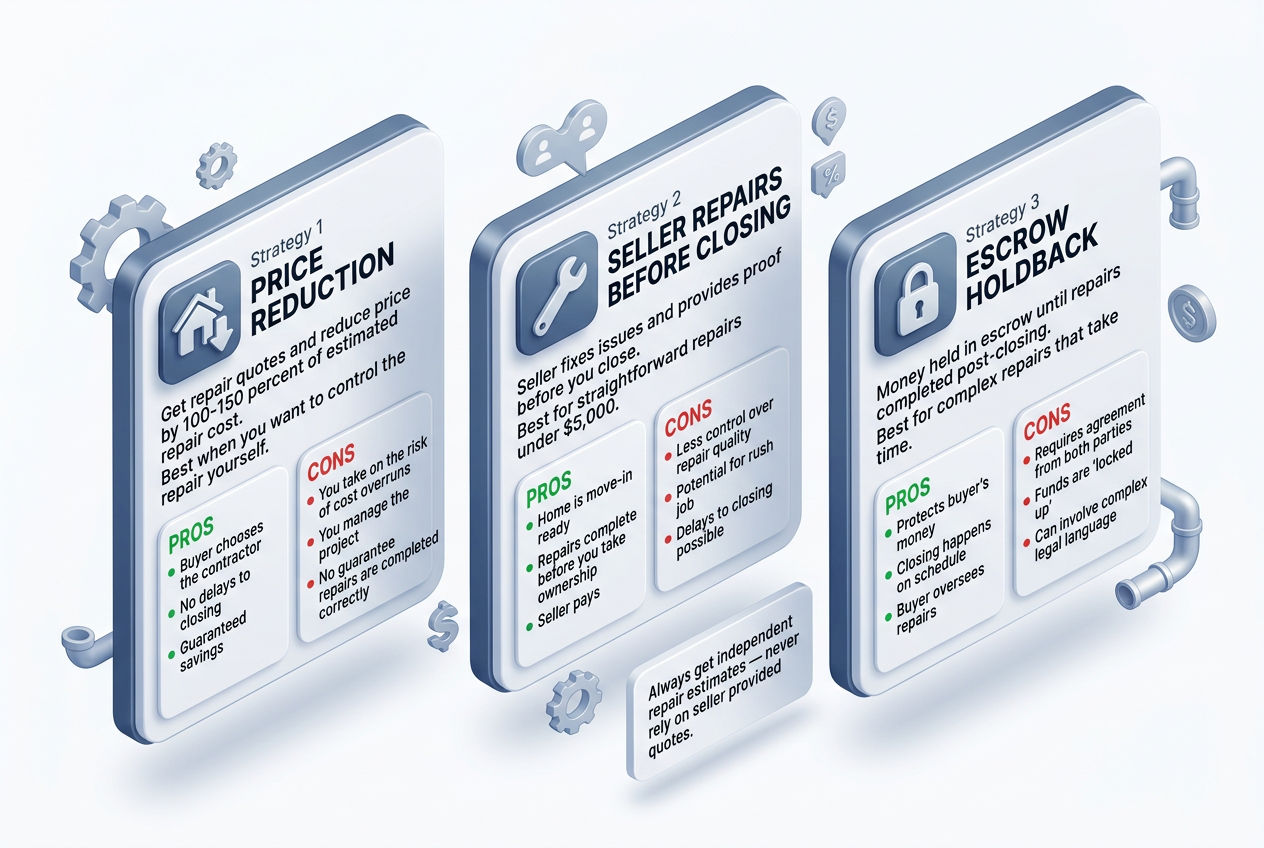
Factor remaining lifespan into your offer price. A system 5 years from end-of-life with replacement costs of $15,000+ has a calculable present value. Negotiate accordingly - buyers commonly receive $5,000–$15,000 in seller concessions when inspection reveals significant septic issues.
5. Percolation Testing and Soil Suitability
If you're buying vacant land or a property where the system needs to be installed (or replaced), you need a percolation test - sometimes called a perc test. This measures how quickly water absorbs into the soil, which determines what type of system the lot can support.
Soil Type Impact on System Design:
- Sandy soils: Perc fast - sometimes too fast, allowing inadequately treated effluent to pass through before proper treatment occurs.
- Clay-heavy soils: Common across much of the Midwest, perc slowly, which often rules out conventional gravity systems and points toward mound or pressure-dosed systems instead.
- Caliche soils: In parts of Arizona, New Mexico, and West Texas - a calcium carbonate hardpan layer - can make conventional installation nearly impossible.
⚠️ Warning: Your county health department issues perc test permits and often dictates the testing methodology. In some jurisdictions, tests must be performed by a licensed soil scientist or engineer. Don't skip this step on raw land - a failed perc test can make a parcel essentially unbuildable.
6. Well and Septic Setback Distances
On rural properties, you'll often be dealing with a private well alongside the septic system. The minimum horizontal setback between a septic tank and a well is typically 50 feet, but many jurisdictions require 75–100 feet or more. The drain field usually needs to be 100+ feet from any water source, and distances from property lines, structures, and waterways are regulated separately.
A system that doesn't meet current setback requirements may have been grandfathered in - or it may be a code violation. Either way, know what you're inheriting. Your county health department is the authoritative source on local setback rules. This is especially critical in mountain communities in Colorado, Montana, and Idaho, where lots are large but terrain constraints often force wells and septic systems into proximity.
For a broader understanding of how septic systems function alongside wells and other components, see what is a septic system. If the property requires both a new well and a new septic system, our guide on well and septic system costs breaks down what to budget for the combined project.
7. System Type: Know What You're Inheriting
Not all septic systems are created equal. The maintenance requirements - and repair costs - vary significantly by system type.
| System Type | Typical Lifespan | Maintenance Complexity | Replacement Cost Range |
|---|---|---|---|
| Conventional gravity | 20–30 years | Low | $5,000–$15,000 |
| Mound system | 15–25 years | Medium | $10,000–$20,000 |
| Aerobic treatment unit | 15–20 years | High (mechanical) | $10,000–$25,000 |
| Drip irrigation system | 15–20 years | High (mechanical) | $10,000–$30,000+ |
| Chamber system | 20–30 years | Low–Medium | $5,000–$20,000 |
Source: NOWRA (National Onsite Wastewater Recycling Association) system guidelines and regional contractor data
⚠️ Warning: Aerobic treatment units (ATUs) - common in Texas, where aerobic systems account for a large share of rural installations - require quarterly inspections by a licensed maintenance provider, ongoing chlorine tablet replenishment, and periodic aerator compressor replacement. An ATU that hasn't been serviced in two years is a liability, not a feature.
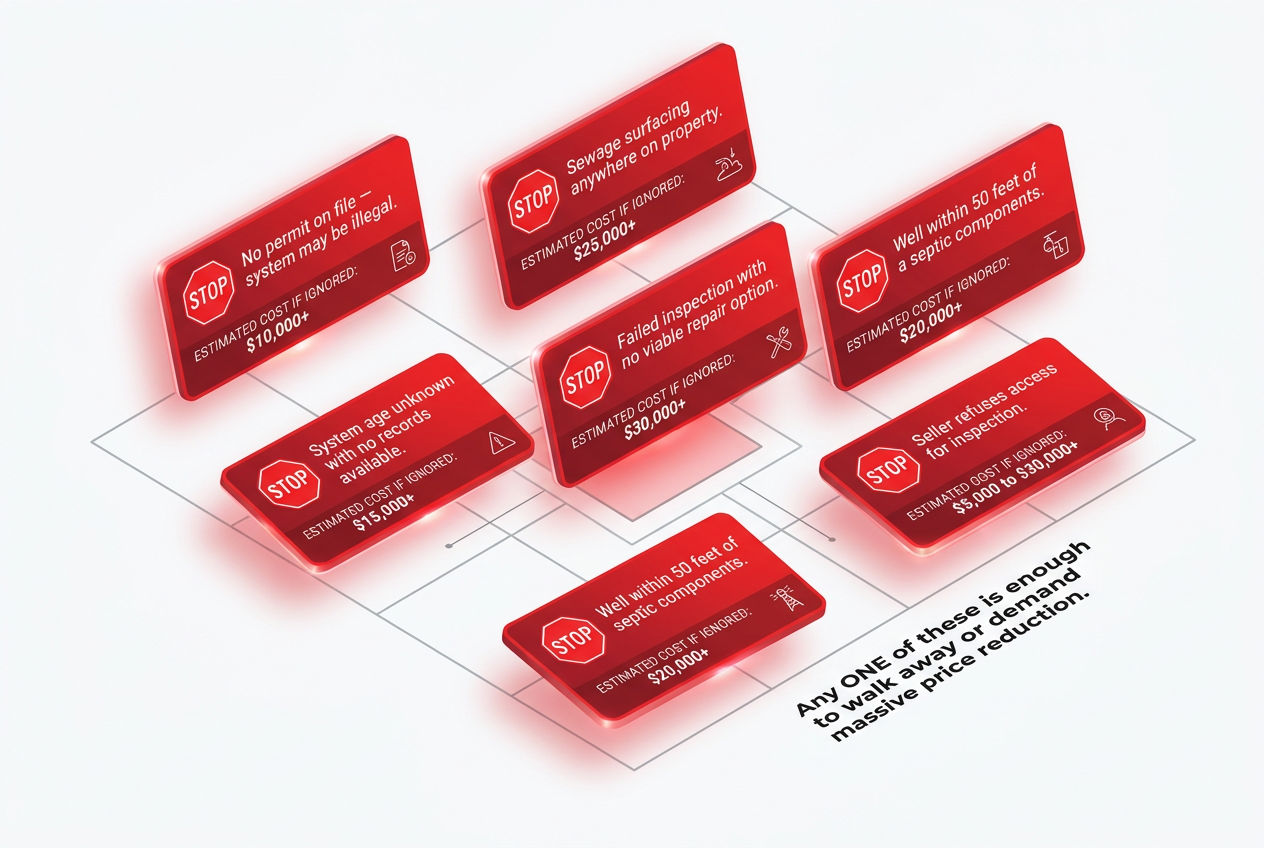
What Are the Red Flags on a Septic Inspection?
The clearest red flags are also the ones sellers are least likely to volunteer:
- No pumping records whatsoever. A system without maintenance records has been neglected. Period.
- Soft, wet, or odorous ground over the drain field. Effluent surfacing is an active failure.
- Missing or deteriorated outlet baffle. This accelerates drain field clogging.
- Sewage backup stains inside the tank lid or riser. Indicates previous backup events.
- Recent landscaping or fill over the drain field. Soil compaction from vehicles or heavy fill kills drain fields. So do trees with aggressive root systems planted nearby.
- System undersized for the home. A 1,000-gallon tank on a 5-bedroom home is insufficient by most sizing guidelines.
- Multiple repairs with no root-cause resolution. Patching symptoms without addressing the cause is a pattern worth digging into.
Can You Get a Mortgage With a Septic System?
Yes - but the requirements vary by loan type.
- FHA loans: The septic system must meet local health codes and be functional at the time of appraisal. The FHA also enforces a minimum 50-foot separation between the septic tank and any well.
- VA loans: Similar functionality requirements, and many VA lenders require a septic inspection before closing.
- Conventional loans (Fannie Mae/Freddie Mac): Generally don't mandate a septic inspection, but lenders can require one at their discretion - and a buyer would be unwise to waive it regardless.
✅ Pro Tip: If inspection reveals a failing system, some lenders will require repairs to be completed before closing. Others will allow an escrow holdback - funds withheld at closing to guarantee repairs are completed post-purchase. Your real estate attorney and lender should advise on which path applies to your transaction.
⚠️ Buying in Winter? The Seasonal Contingency Clause
If you're purchasing a rural property in a northern state between November and March, frozen ground creates a real inspection problem. Drain field evaluation, dye tests, and percolation tests may all be compromised or impossible when soil is frozen. Snow cover hides the visual signs that tip off an experienced inspector.
In states where frost lines reach 42–60 inches (Minnesota, Wisconsin, the Dakotas), a full drain field assessment in January is genuinely limited.
The Solution: Seasonal Contingency Protection
Include a seasonal contingency clause in your purchase agreement that requires a full septic inspection once the ground thaws, with the right to renegotiate or withdraw if the system fails.
⚠️ Warning: Summer buyers face the opposite trap: dry summer conditions can temporarily mask drain field saturation issues that become obvious in spring or after a heavy rain event. Ask the seller or neighbors directly whether the property has ever experienced soggy ground near the leach field after heavy rainfall.
How Much Does a Septic Inspection Cost Before Buying?
| Inspection Type | What's Included | Typical Cost Range |
|---|---|---|
| Basic visual inspection | Tank lid, visible access points, general assessment | $100–$200 |
| Full inspection + pump-out | Tank pumped, interior inspected, baffles checked, hydraulic load test | $500–$1,100 total |
A basic visual septic inspection runs $100–$200 and covers the tank lid, visible access points, and a general assessment. It's insufficient for a pre-purchase decision on an unknown system.
A full inspection - tank pumped, interior inspected, baffles checked, hydraulic load test conducted - typically costs $300–$600 for the inspection itself, plus $300–$600 for the pump-out. Total: $500–$1,100 depending on system type, tank size, and your region.
✅ Pro Tip: In some states, you can negotiate for the seller to pay for the inspection or provide a recently completed one. In Massachusetts, the seller legally bears the cost of the required Title 5 inspection. In most other states, it's negotiable.
For a full breakdown of inspection pricing by system type and region, see our septic inspection cost guide.
What Happens If the Septic System Fails After You Buy?
If you waived the inspection contingency and the system fails six months after closing, you own the problem. Repair costs for a failed conventional drain field run $3,500–$15,000+. Full system replacement - new tank, new drain field - runs $5,000–$30,000+. An engineered alternative system in poor soil can push $40,000+.
If the seller knew about the defect and concealed it, you may have legal recourse - but proving concealment is expensive and uncertain. Your best protection is a professional inspection before closing and a written contingency in your purchase agreement.
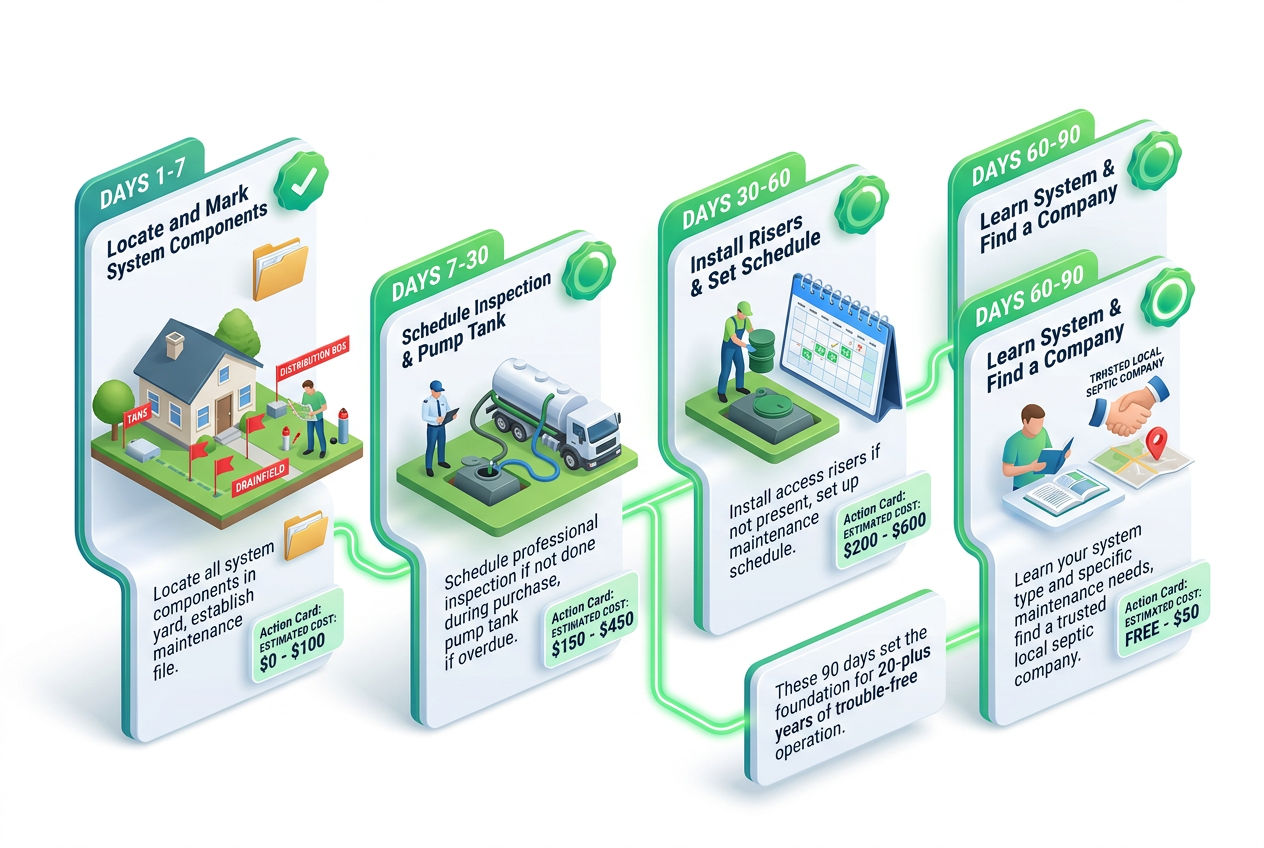
✅ Pro Tip: For buyers who've already closed: prioritize a professional septic inspection immediately if no records exist. Understanding what you have - and what it needs - is the starting point for everything else.
Related reading: homeowners insurance septic.
Sources & Methodology
- U.S. Environmental Protection Agency - Septic Systems: Primary source for septic system statistics (21 million+ U.S. homes), pumping frequency recommendations (3–5 years), and FHA setback requirements.
- National Association of Wastewater Technicians (NAWT): Inspector certification standards and inspection protocol guidelines.
- National Onsite Wastewater Recycling Association (NOWRA): System type lifespan and maintenance complexity benchmarks.
- Regional contractor pricing data: Replacement and inspection cost ranges sourced from multi-state contractor surveys and cross-referenced with regional service provider data on SepticTankHub.com.
- State health department transfer requirements: Massachusetts Title 5 requirements sourced from the Massachusetts Department of Environmental Protection. Texas septic regulations sourced from the Texas Commission on Environmental Quality.
Always verify current requirements with your county health department. Septic regulations are enforced at the county level and change frequently.
Find a certified septic inspector in your area: Use the SepticTankHub inspector directory to locate NAWT-certified professionals who know your local regulations and soil conditions.
Need help with your septic system? Browse local septic companies in Texas or Florida.
Was this article helpful?
Frequently Asked Questions
Recommended Resources
📖 Related Articles
🔧 Services
Find Septic Professionals Near You
Compare licensed, verified septic companies by area — top county markets and cities below, or browse all 50 states.
County markets
Popular cities
