
Quick Answer
A septic inspection for home buying is a professional evaluation of the tank, drain field, baffles, and connecting pipes before closing. It typically costs $300–$600 for a standard inspection and takes 2–4 hours. It's separate from a general home inspection and can reveal problems that cost $15,000–$30,000+ to fix.
💡 Key Takeaways
- A standard septic inspection costs $300–$600; a full camera and hydraulic load test runs $1,000–$1,500+
- Septic system replacement averages $20,000–$25,000 nationally - making the inspection one of the best $400 you'll ever spend
- Your general home inspector almost certainly is NOT qualified to evaluate a septic system - always hire a licensed septic professional
- Some states (New Jersey, Massachusetts, parts of Pennsylvania) legally require a point-of-sale septic inspection
- A failed inspection doesn't automatically kill the deal - it's a negotiation tool if you use it correctly
Why a Septic Inspection Is Non-Negotiable Before Closing
About 21% of U.S. households - roughly 60 million people - rely on septic systems rather than municipal sewer lines, according to the EPA. If you're buying a rural property or a home built before the 1980s, there's a real chance you're about to become one of them.
Here's the problem: septic systems are underground. A house can look immaculate on the surface while a failing drain field quietly saturates the yard below. Your general home inspector will walk across the lawn, maybe glance at the tank lid, and move on. That's not a criticism - drain fields and distribution boxes simply aren't within the scope of a standard home inspection.
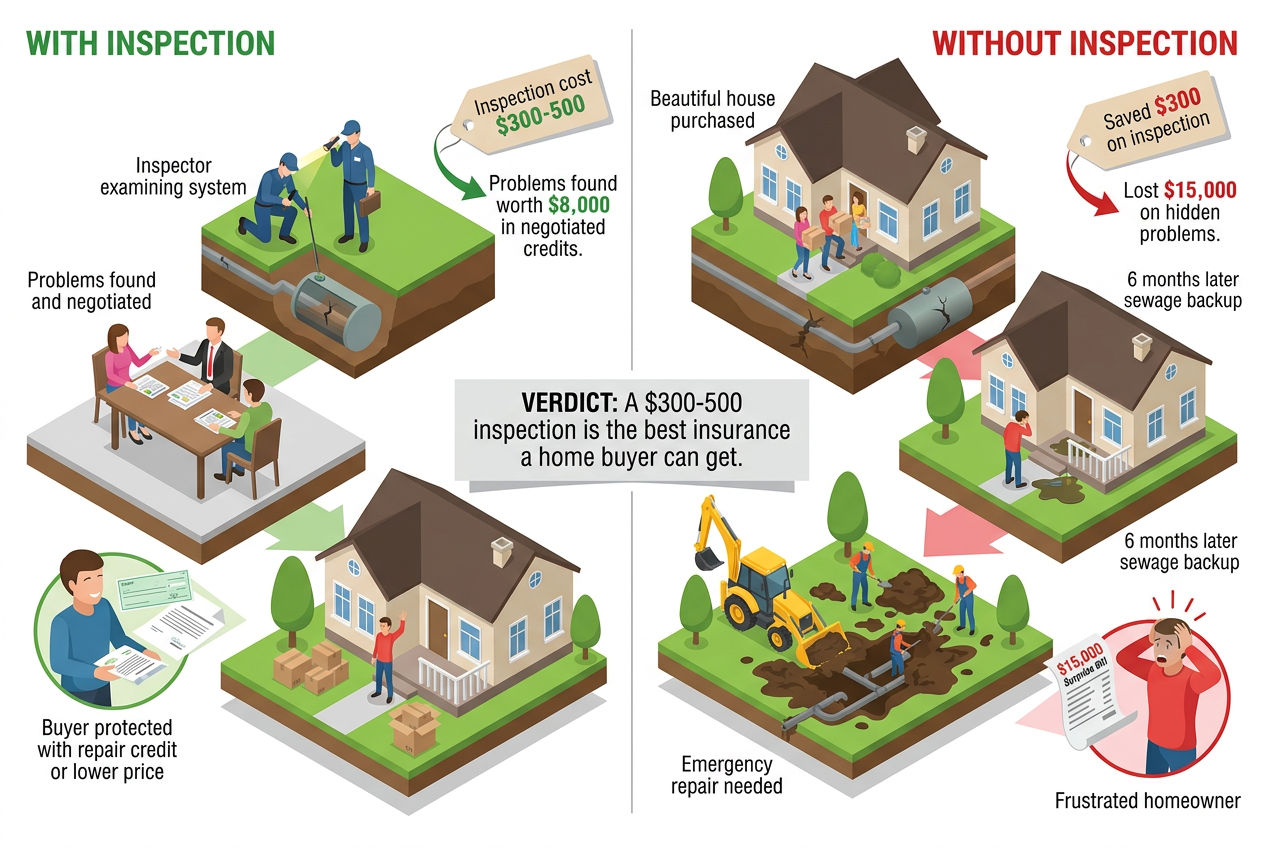
⚠️ Warning: That $300–$600 septic inspection is the only thing standing between you and a surprise $20,000+ repair bill.
Before you learn how often a septic system needs servicing, you need to know what you're buying.
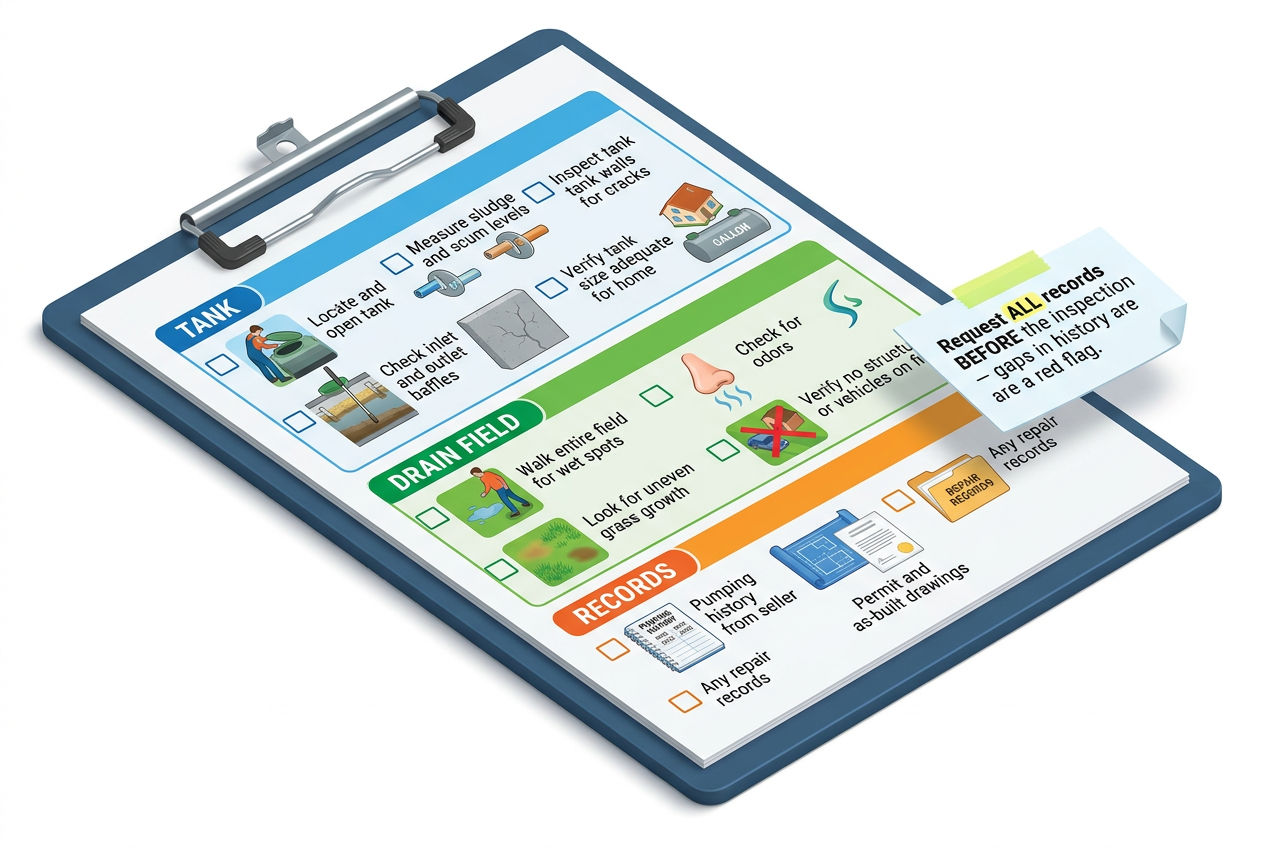
What Does a Septic Inspection Include?
A thorough septic inspection for a home purchase covers every accessible component of the system - from the point where your house's plumbing exits the foundation all the way to the drain field.
Tank Inspection Components
The inspector will evaluate:
- Tank location (using a probe or permit records)
- Tank material - concrete, fiberglass, or steel (steel tanks corrode and may fail in 15–20 years)
- Tank capacity relative to bedroom count (a 1,000-gallon tank is standard for a 3-bedroom home; 1,250–1,500 gallons for 4–5 bedrooms)
- Sludge and scum layer depth, measured with a sludge judge
- Inlet and outlet baffle condition - cracked or missing baffles allow solids to escape into the drain field
- Effluent filter condition (e.g., a Polylok PL-122 filter should be present at the outlet baffle and free of blockage)
- Signs of structural cracking, root intrusion, or flotation
Distribution System Evaluation
Critical checkpoints include:
- Distribution box (D-box) condition - cracked or tilted D-boxes cause uneven loading on the drain field
- Pump chamber and float switch operation (if the system has a pump)
- Condition of the outlet pipe from tank to field
Drain Field Assessment
Surface and subsurface checks:
- Visual inspection for wet spots, lush green patches, or odors above leach laterals
- Probe testing to check soil saturation
- Confirmation that setback distances from wells, property lines, and water features meet local code
Records Review
Documentation verification:
- Permit history and installation records
- Prior inspection reports
- Pumping history (a well-maintained system should have records showing pumping every 3–5 years)
✅ Pro Tip: If you want to understand the full system before the inspector arrives, our guide on what a septic system is and how it works gives you the foundation.
Types of Septic Inspections: Visual vs. Full
Not all inspections are created equal. The word "inspection" gets used loosely, and buyers sometimes pay for less than they think they're getting.
Visual/Limited Inspection ($150–$300)
The inspector opens the tank lid, looks inside, and checks what's visible. No pumping, no probing.
⚠️ Warning: This is the bare minimum - and honestly, not enough for a home purchase. You can't properly evaluate baffle condition or sludge depth without pumping.
Standard Inspection with Pumping ($300–$600)
This is the most common home-buyer inspection. The tank is pumped, which allows the inspector to visually examine all interior components - baffles, walls, inlet/outlet condition. The drain field gets a surface inspection. This is what most real estate contracts mean when they reference a "septic inspection."
Full Inspection with Camera and Hydraulic Load Test ($1,000–$1,500+)
This is the gold standard. A camera is run through the outlet pipe and into the distribution system. The inspector also runs a hydraulic load test - flushing large volumes of water while observing whether the system handles the load or backs up.
✅ Pro Tip: If the house is older than 20 years, the system has had past issues, or the seller is being evasive about records, this is the inspection you want.
One thing to clarify: a septic inspection is not the same as septic tank pumping. Pumping removes the contents of the tank. An inspection evaluates system health. The two often happen together during a home purchase, but pumping alone doesn't tell you whether your drain field is failing.
How Much Does a Septic Inspection Cost?
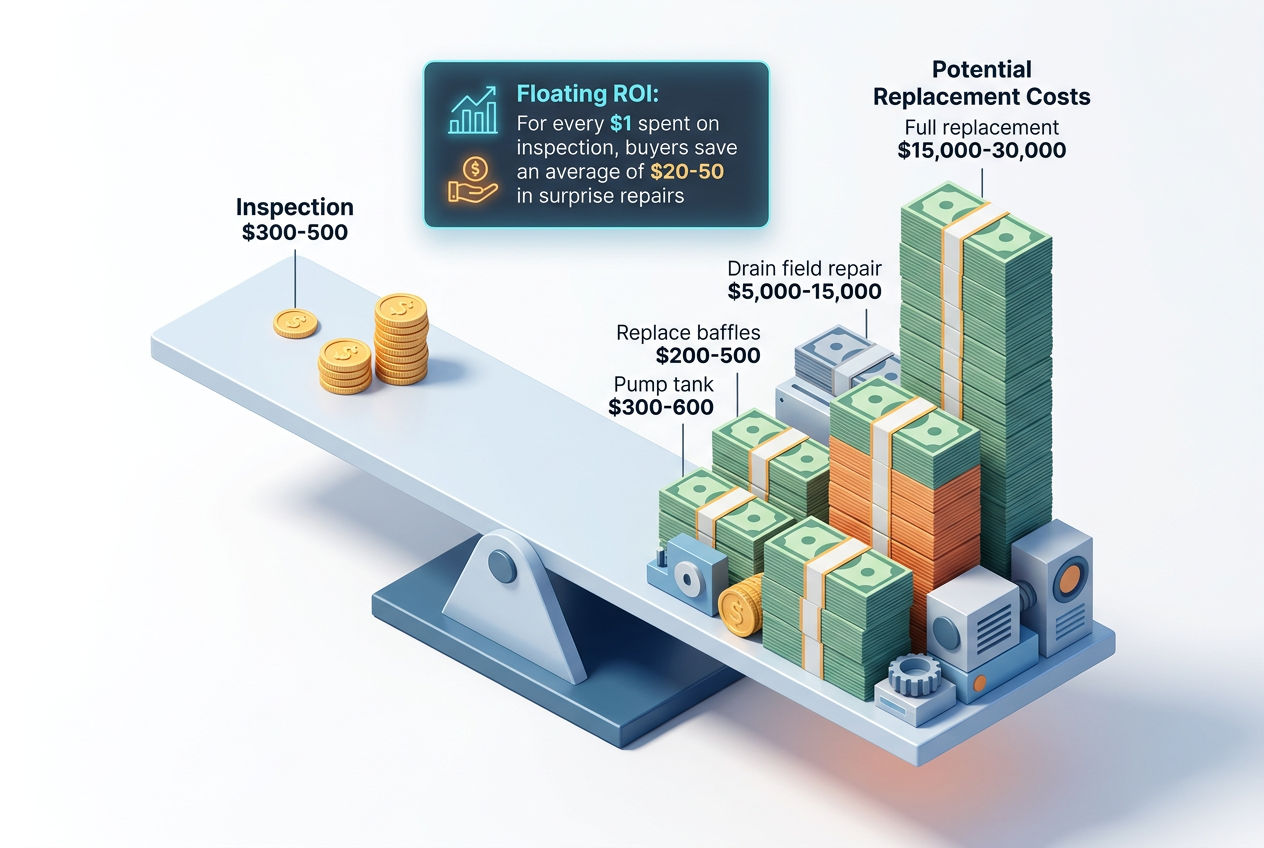
A standard septic inspection for a home purchase costs $300–$600 nationally. A full camera and hydraulic load inspection runs $1,000–$1,500 or more. These figures come from NAWT (National Association of Wastewater Technicians) contractor data and regional cost surveys.
Regional Cost Examples
Here's a real-world comparison: a standard inspection on a 1,000-gallon concrete tank in central Ohio might run $350–$450, including pumping. That same service in coastal Massachusetts - where regulations are stricter and inspectors must be licensed under Title 5 - often runs $500–$700. Add a camera inspection in the Pacific Northwest, where inspectors are checking against stringent environmental standards, and you can easily hit $1,200.
| Service | Typical Cost | Notes |
|---|---|---|
| Visual-only inspection | $150–$300 | Not recommended for home purchase |
| Standard inspection + pumping | $300–$600 | Most common for real estate transactions |
| Full camera + hydraulic load test | $1,000–$1,500+ | Recommended for older or suspect systems |
| Drain field repair | $5,000–$20,000 | Depends on extent and system type |
| Full system replacement | $15,000–$30,000+ | National average ~$20,000–$25,000 |
Sources: NAWT contractor cost surveys; EPA Septic Systems Overview; regional health department contractor fee schedules.
📊 Quick Fact: For a deeper breakdown, see our septic inspection cost guide.
Who Pays for the Septic Inspection - Buyer or Seller?
In most real estate transactions, the buyer pays for the septic inspection - just as the buyer typically pays for the general home inspection. You're paying to protect your own interests.
That said, some sellers in competitive markets or high-regulation states will order a pre-listing septic inspection to speed up the sale and demonstrate good faith. In New Jersey, Massachusetts, and parts of Pennsylvania, the seller is often responsible for the inspection because state law requires one before transfer of ownership.
When to Accept a Seller's Inspection
Negotiation matters here. If the seller has already paid for a recent inspection (within 6–12 months) and the report is clean, you might accept it. If that report was done by an inspector the seller hired and you have no way to verify independence, order your own.
💡 Key Takeaway: A few hundred dollars is nothing compared to the leverage a fresh inspection gives you.
Is a Septic Inspection Required for FHA or VA Loans?
This is one of the most anxious questions buyers ask - and the answer is more nuanced than most real estate agents admit.
FHA Loans
The FHA does not universally mandate a septic inspection. However, the FHA appraiser must note any visible evidence of septic problems. If the appraiser flags anything - sewage odors, wet spots near the drain field, visible tank damage - the lender will typically require a full inspection before closing. Many lenders in rural areas require one regardless of what the appraiser sees.
VA Loans
VA appraisers are required to ensure the septic system meets local health department standards. If the system is within 10 years of its expected end-of-life or shows any deficiencies, the VA will require a full inspection. Since a conventional system averages 25–30 years and a steel tank can fail in 15–20, this comes up more often than buyers expect.
State-Mandated Inspections
Several states mandate point-of-sale septic inspections regardless of loan type:
- New Jersey: Department of Environmental Protection requires inspection and certification
- Massachusetts: Title 5 regulations require inspection before property transfer
- Pennsylvania: Parts of the state enforce mandatory inspections
⚠️ Warning: Even if your lender and state don't require it, get the inspection anyway. Lender requirements are a floor, not a recommendation.
Questions to Ask the Seller About Their Septic System
Before the inspector ever shows up, push the seller's agent for documentation. Here's exactly what to ask for:
- When was the system last pumped? A responsible homeowner pumps every 3–5 years. No records is a red flag.
- What is the tank size and material? A 1,000-gallon concrete tank is very different from a 750-gallon steel one.
- How old is the system? Ask for the original permit and installation date.
- Has the system ever been repaired or had components replaced? Any D-box work, baffle replacement, or drain field repairs should be documented.
- Is there an effluent filter, and when was it last cleaned?
- What is the household size this system was designed for?
- Has the system ever backed up into the house or surfaced in the yard?
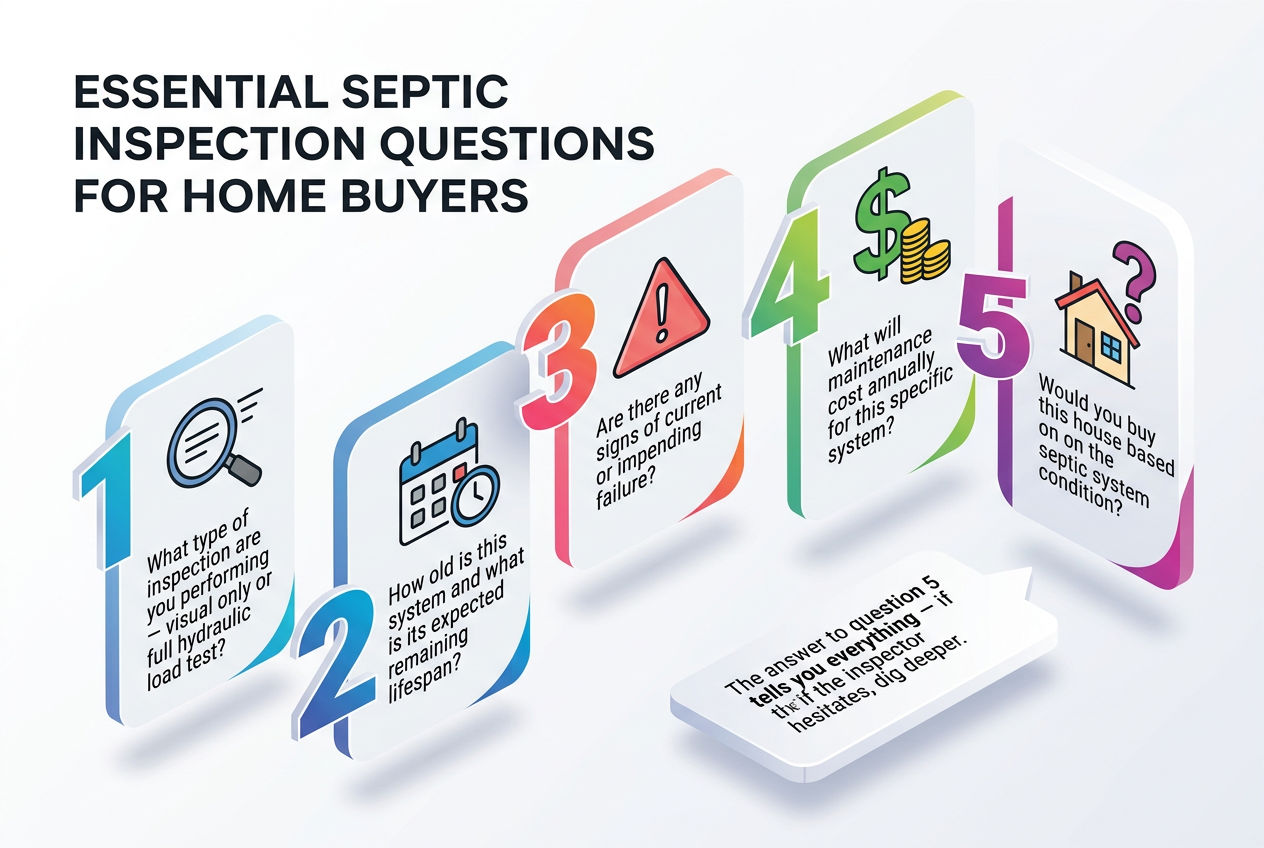
💡 Key Takeaway: If the seller can't answer these questions and has no records, that's not automatically a dealbreaker - older homes often have incomplete histories. But it means your inspector needs to be thorough, and you need the full camera inspection, not just a visual.
Our septic maintenance guide covers what good maintenance records should look like, so you know what "normal" looks like before you compare it to what you're seeing.
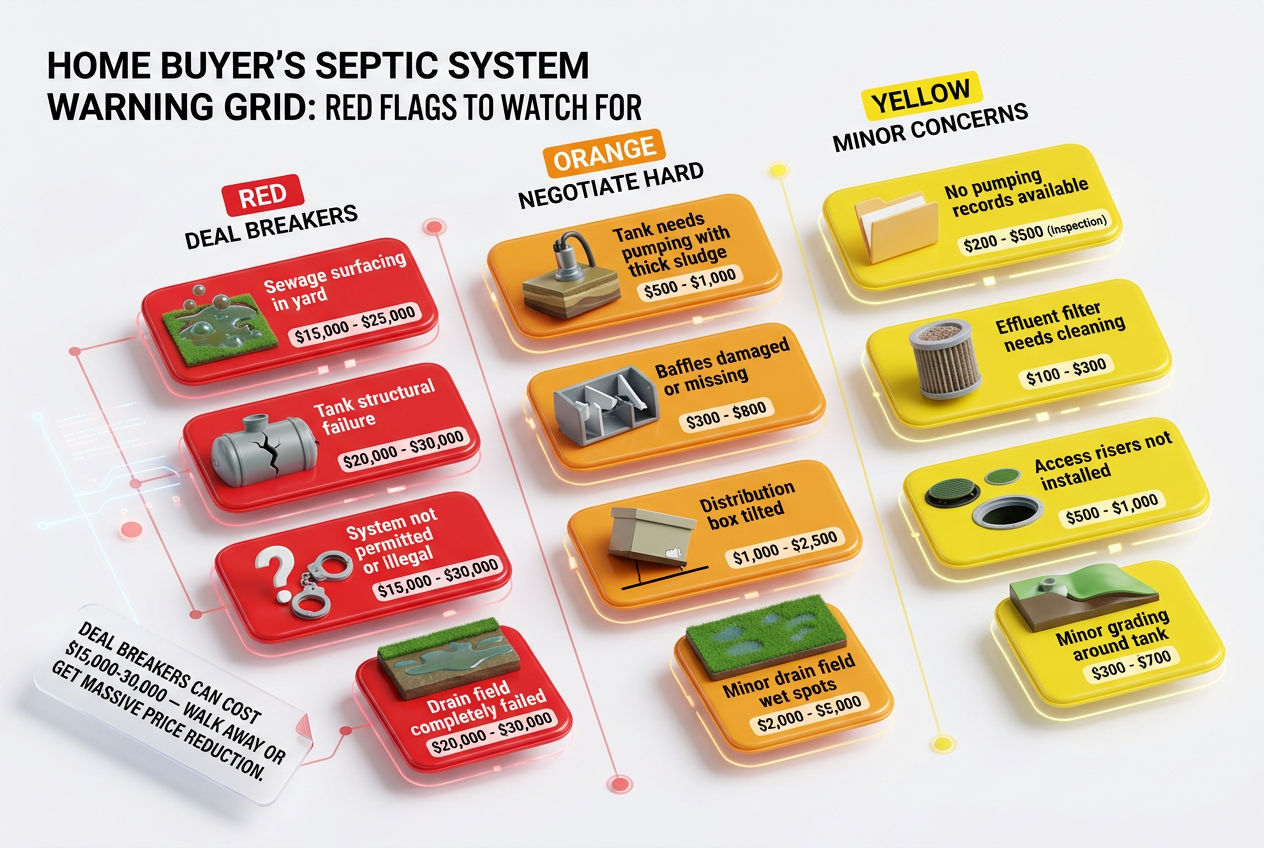
Red Flags: What a Failed Septic Inspection Means for Your Purchase
A failed septic inspection doesn't mean the deal is dead. Our guide on what to do if inspection fails covers your options in detail. It means you have information - and information is leverage.
Critical Findings to Watch For
Drain field failure - This is the costliest scenario. A saturated or failed drain field means effluent isn't being absorbed. Repair runs $5,000–$20,000. Full replacement of the leach field - which sometimes requires a completely new drain field location if the old one is unsalvageable - can hit $15,000–$30,000. Learn more about drain field problems and what they cost to fix.
Crushed or missing baffles - Outlet baffles direct effluent properly and prevent floating solids from entering the drain field. A missing or collapsed baffle accelerates drain field damage. Repair is relatively inexpensive ($200–$500) but suggests the system hasn't been maintained.
Steel tank corrosion - A steel tank approaching the end of its 15–20-year lifespan may have structural compromise that isn't visible until it's pumped. Replacement of just the tank runs $3,000–$7,000.
Conventional vs. alternative systems - If the property has an aerobic treatment unit (common in parts of Texas and the Southwest), a mound system, or a chamber system rather than a conventional gravity-fed drain field, maintenance costs and inspection requirements differ significantly. Our types of septic systems guide covers these differences.
Proximity violations - A drain field installed too close to a well, property line, or water feature may require relocation to meet current code - even if it was installed legally at the time.
⚠️ Warning: This is the kind of finding that can genuinely kill a deal.
How to Negotiate Septic Repairs in a Real Estate Transaction
Picture this: the inspection comes back showing a partially failing drain field. The repair estimate is $12,000. What do you do? Our detailed guide on negotiating repairs walks through each strategy step by step.
Four Realistic Options
1. Ask the seller to repair it before closing This works best in buyer's markets. Get the repair done by a licensed contractor, get a warranty, and verify with a post-repair inspection.
2. Negotiate a price reduction Get two or three contractor estimates. Then ask for a credit or reduction equal to the midpoint estimate plus 10–15% for your hassle. This is often cleaner than waiting for the seller to manage repairs.
3. Request a seller credit at closing Instead of a price reduction, some buyers prefer cash at closing to fund the repair themselves. This can sometimes be structured more favorably for both sides.
4. Walk away If the system requires full replacement at $25,000 and the seller won't negotiate, that's a legitimate reason to invoke a real estate contingency for septic and exit the contract.
✅ Pro Tip: Make sure your purchase agreement includes a septic inspection contingency before you schedule the inspection. Without one, a failed inspection leaves you in a difficult position legally.
Seasonal and Regional Factors That Affect Your Inspection
Timing your inspection matters more than most buyers realize.
Winter Inspections in Northern States
If you're buying in Minnesota, Wisconsin, or any northern state between November and March, frozen ground can hide drain field problems entirely. Snow cover masks wet spots. Frozen soil resists probing.
⚠️ Warning: An inspector doing a winter inspection in these states will tell you upfront that their findings are limited. Spring and summer inspections are significantly more revealing - and they catch drainage failures that only appear when the ground is saturated.
Rainy Season Advantages
Heavy rainfall works both ways. An inspection conducted immediately after several days of rain can reveal a marginal drain field that would look fine in dry conditions. If you're buying during rainy season in the Pacific Northwest or Southeast, that's actually useful - the system is under stress, and any weakness will show.
Regional Regulatory Variations
Regulations differ dramatically by region:
- Florida: High water tables create unique challenges - the state's Department of Health sets specific setback and elevation requirements that differ by county
- Texas: Regulation happens at the county level through Designated Representatives, not a central state agency
- California: Some counties require a percolation test (perc test) as part of any new system approval, which matters if you're considering a system replacement after purchase
💡 Key Takeaway: Always check with your local county health department in addition to hiring an inspector. Requirements in your specific county may be stricter than state minimums.
Your Septic Due Diligence Timeline
Use this timeline to stay on track from offer to closing:
When You Make the Offer
- Include a septic inspection contingency in the purchase agreement
- Request all available septic records from the seller
Within 3–5 Days of Accepted Offer
- Schedule your septic inspection - qualified inspectors book 1–2 weeks out; in peak buying season (March–August), allow 2–3 weeks
- Contact your local health department to pull any permit records on the property
At Least 10–14 Days Before Closing
- Complete the full septic inspection
- Review the report and get repair estimates for any flagged issues
- Begin negotiation with seller if repairs are needed
Before Closing
- Confirm any negotiated repairs are complete and re-inspected
- Verify the system meets local health department standards for transfer of ownership if your state requires certification
Free download
Free: the Septic Fridge Card — what to flush, what never to.
The Do / Don’t card the whole family can see, plus the Survival Kit: emergency flowchart, warning-sign decoder and pump-schedule card. One printable PDF.
✅ Pro Tip: Ready to find a qualified inspector in your area? Search for local septic companies to locate licensed professionals near you.
Learn more about our septic inspection services.
Related reading: homeowners insurance septic.
Sources & Methodology
1. U.S. Environmental Protection Agency - Septic Systems Overview Primary source for national statistics on septic system prevalence (21% of U.S. households) and general pumping frequency recommendations. epa.gov/septic
2. National Association of Wastewater Technicians (NAWT) Industry organization for septic inspection professionals. Referenced for inspector qualification standards and cost benchmarking. nawt.org
3. National Onsite Wastewater Recycling Association (NOWRA) Referenced for system type classifications and conventional vs. alternative system definitions. nowra.org
4. State Health Department Regulations New Jersey Department of Environmental Protection (Title 5 equivalent), Massachusetts DEP Title 5 regulations, and Florida Department of Health county-level requirements referenced for point-of-sale inspection mandates and regional standards.
5. Regional Contractor Cost Data Cost ranges derived from aggregated contractor pricing data across SepticTankHub's national directory, cross-referenced with NAWT regional surveys. All figures reflect 2024–2025 pricing.
Need help with your septic system? Browse local septic companies in Tennessee or Virginia.
Was this article helpful?
Frequently Asked Questions
Recommended Resources
📖 Related Articles
💰 Cost Guides
🔧 Services
Find Septic Professionals Near You
Compare licensed, verified septic companies by area — top county markets and cities below, or browse all 50 states.
County markets
Popular cities
