
Quick Answer
Septic pump replacement cost ranges from $500 to $2,500 or more in 2026, depending on the pump type, your region, and how accessible the pump chamber is. Most homeowners pay $800–$1,500 for a standard submersible effluent pump replacement, including parts and labor. Emergency calls, grinder pumps, or systems that haven't been maintained in a decade can push that number considerably higher.
Key Takeaways
- Most septic pump replacements cost $800–$1,500 for standard effluent pumps; grinder pumps run $1,500–$3,000+
- Labor typically accounts for 40–60% of the total job cost
- Septic pumps last 7–15 years on average — aerobic system pumps and grinder pumps often fall on the shorter end
- Emergency/after-hours service adds 20–50% to the base quote
- Float switch replacement ($50–$150) is a cheap fix often confused for full pump failure — get a diagnostic first
How Much Does It Cost to Replace a Septic Pump?
Replacing a septic pump costs $500 to $2,500 for most residential jobs in 2026. The parts alone — the pump unit itself — run $150 to $800 depending on the type. Labor adds $200 to $600 on top of that for a straightforward swap in an accessible pump chamber. Complex jobs involving electrical repairs, permit requirements, or deep burial can reach $3,000 or more.
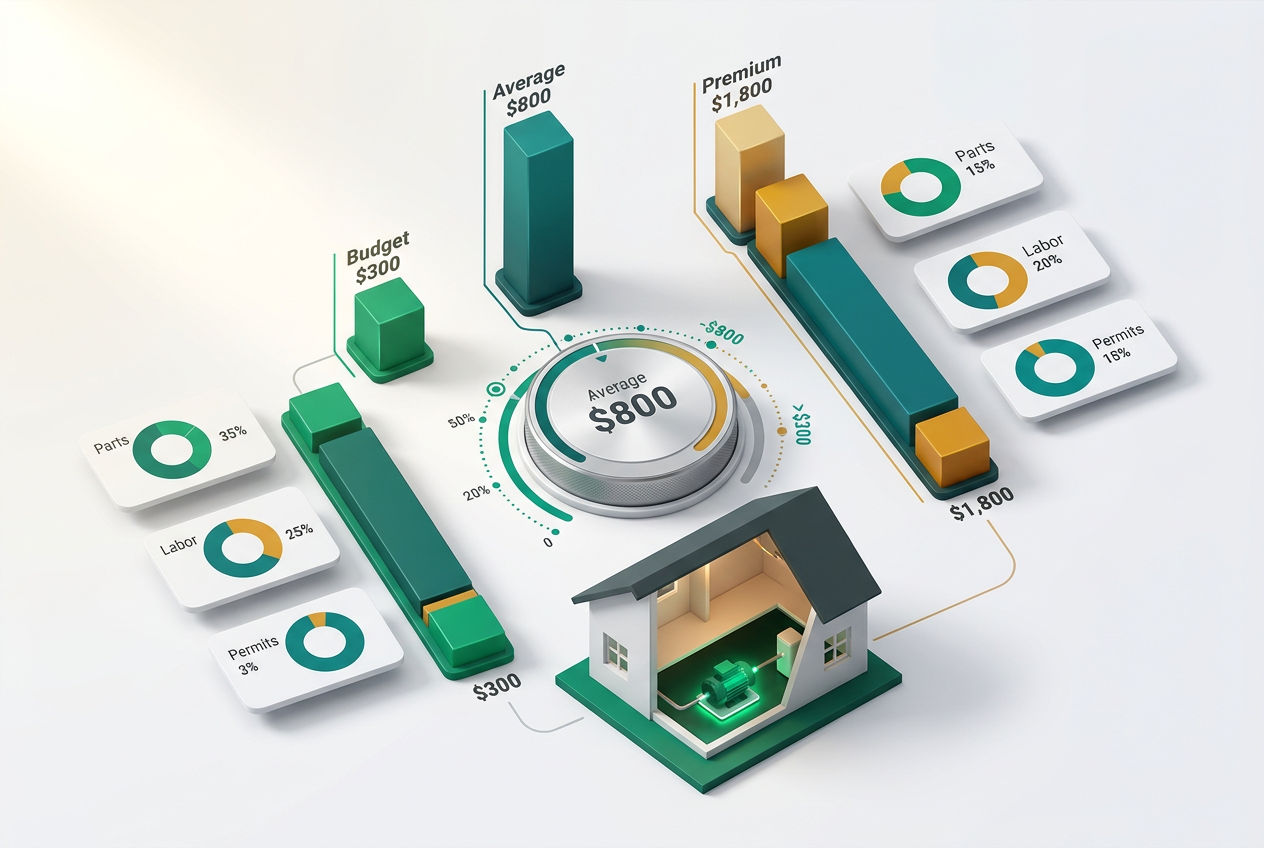
Here's the breakdown most contractors use:
- Pump unit (parts): $150–$800
- Labor (installation): $200–$600
- Diagnostic/inspection fee: $75–$200
- Float switch replacement: $50–$150
- Control panel replacement: $200–$500
- Permit (where required): $50–$200
- Electrical wiring/conduit repair: $100–$400
That diagnostic fee matters. A septic system inspection before any pump work can save you from replacing a $600 pump when a $75 float switch is actually the culprit. Don't skip it.
Septic Pump Replacement Cost by Pump Type
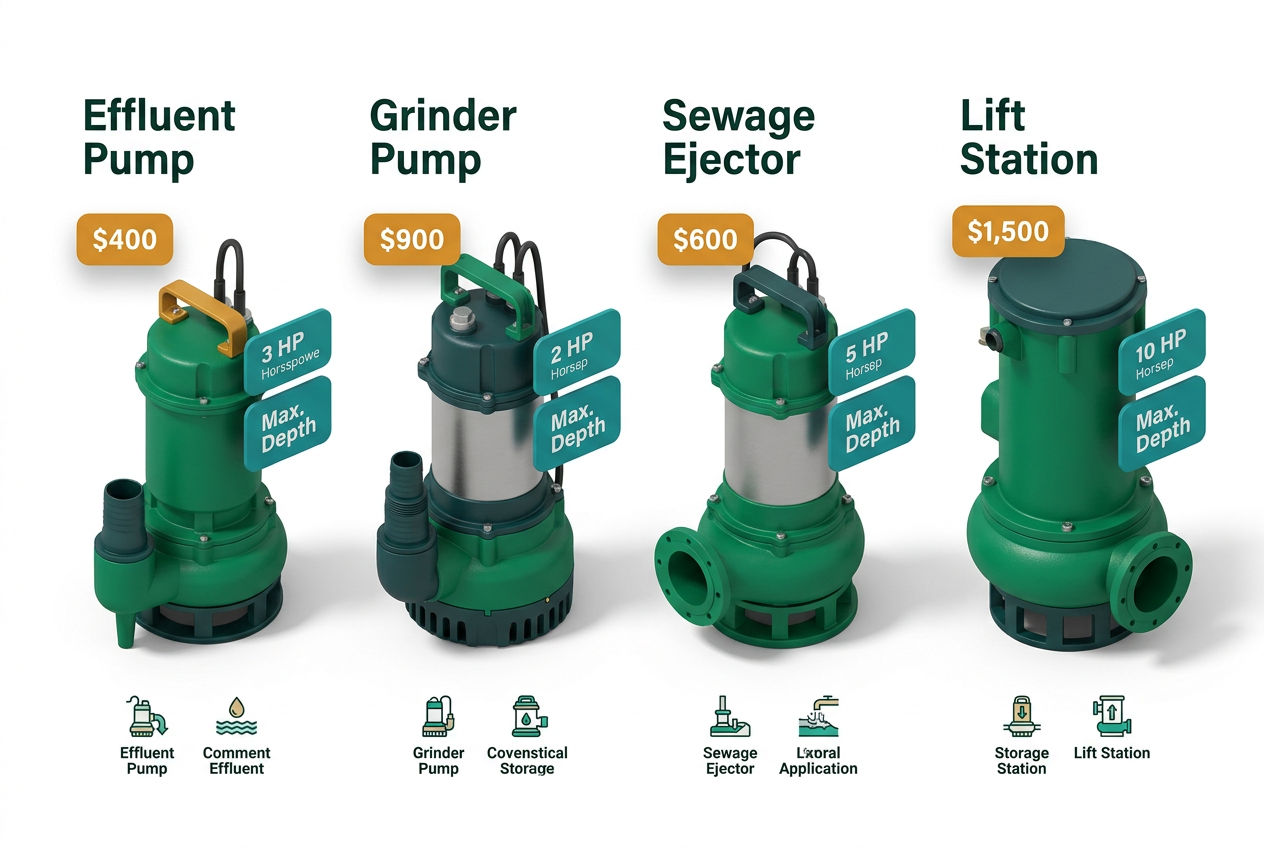
Not all septic pumps are created equal — and the type you have is the single biggest driver of your parts cost. Effluent pumps are the most common and the most affordable to replace. Grinder pumps are the most expensive. Aerobic system pumps fall somewhere in between, but they also require more specialized contractors in many states.
| Pump Type | Parts Cost | Total Replacement Cost |
|---|---|---|
| Effluent pump | $150–$400 | $500–$1,200 |
| Submersible sewage pump | $200–$500 | $700–$1,500 |
| Aerobic system pump | $300–$600 | $900–$1,800 |
| Grinder pump | $500–$1,200 | $1,500–$3,000+ |
| Dosing/timer pump | $200–$500 | $600–$1,400 |
Source: National contractor survey data compiled by NOWRA (nowra.org); regional averages vary. See regional notes below.
A standard effluent pump — the submersible unit sitting in your pump chamber that doses treated wastewater to a drain field or mound system — is what most homeowners are dealing with. Brands like Goulds, Liberty Pumps, and Zoeller are common replacements, with residential-grade units running $175–$350 at supply houses.
Grinder pumps are a different animal. They use hardened impellers to grind solid waste before pumping it uphill to a sewer connection or septic tank. If you're on a lift station or a low-pressure system, you likely have one. The motors are larger, parts are pricier, and installation takes longer. For a full comparison of pump types, the effluent pump vs. grinder pump guide breaks down the mechanical differences in plain terms.
Aerobic system pumps deserve a separate callout. These systems — common in Texas, Florida, and parts of the Southeast — use a spray head or drip irrigation to disperse treated effluent. The pump itself may be an effluent-style unit, but aerobic septic system maintenance requirements, specialized parts, and state licensing rules for aerobic contractors can drive labor costs higher than a conventional system. In Florida, for example, aerobic system contractors must hold a specific Registered Septic Tank Contractor (RSTC) license through the Department of Health.
What Factors Affect Septic Pump Replacement Cost?
The quote you get from a contractor isn't random. These are the variables that move the number up or down:
Pump type and horsepower. A ½ HP effluent pump costs less than a 2 HP grinder pump — in parts, labor, and electrical load. More motor means more everything.
Access to the pump chamber. If your pump chamber has a properly installed riser lid at grade level, the contractor can be in and out in two hours. If they're digging to find a buried concrete lid four feet down, add $150–$300 in labor before they've touched the pump.
Electrical condition. Old wiring, corroded conduit, or a failing control panel adds cost fast. Pump control panel replacement alone runs $200–$500. If the float switch wiring has deteriorated, add another $100–$200 for rewiring.
Emergency timing. Septic pumps fail at the worst times — holiday weekends, polar vortex events, the morning your in-laws arrive. After-hours emergency service typically adds 20–50% to the base quote. A job that runs $1,000 on a Tuesday afternoon can hit $1,400 on a Sunday morning.
Permit requirements. Some counties require a permit to replace a pump. Oregon and Washington state are known for strict permitting on any septic component replacement — add $50–$200 and sometimes a mandatory inspection. In rural Texas counties, you may face no permit requirement at all.
Regional labor rates. A septic contractor in suburban New Jersey charges more per hour than one in rural Indiana. See the regional breakdown below.
System age and condition. If your septic pump troubleshooting reveals corroded hardware, a cracked pump chamber, or degraded pump discharge piping, those repairs stack on top of the pump replacement cost. This is why a diagnostic inspection upfront is money well spent.
How Do I Know If My Septic Pump Needs to Be Replaced?
Your system usually gives you warning before it quits entirely. Watch for these signs:

- Septic alarm going off — the high-water float has triggered, meaning the pump isn't moving effluent out of the chamber fast enough (or at all). This is the most common emergency trigger. See septic tank alarm troubleshooting for more detail.
- Sluggish drains throughout the house — not just one fixture, but slow drainage everywhere at once
- Gurgling sounds from toilets or drains after flushing. The septic tank gurgling guide covers causes in depth.
- Wet or unusually green grass over the pump chamber or drain field
- Sewage odors inside or outside the home
- Pump runs constantly but water level in the chamber doesn't drop
Not every alarm means a dead pump. Before you authorize a $1,000+ replacement, ask the contractor to check the float switch first. Float switches fail far more often than the pump motor itself, and replacing one costs $50–$150. A good contractor will run a diagnostic before quoting parts.
Pump Replacement vs. Pump Repair: When Does Replacement Make Sense?
As a general rule: if the repair cost exceeds 50% of the replacement cost, replace the pump. A motor rewind or impeller replacement on an older pump might cost $300–$500 in labor alone — and you're still running a pump that's already proven it fails.
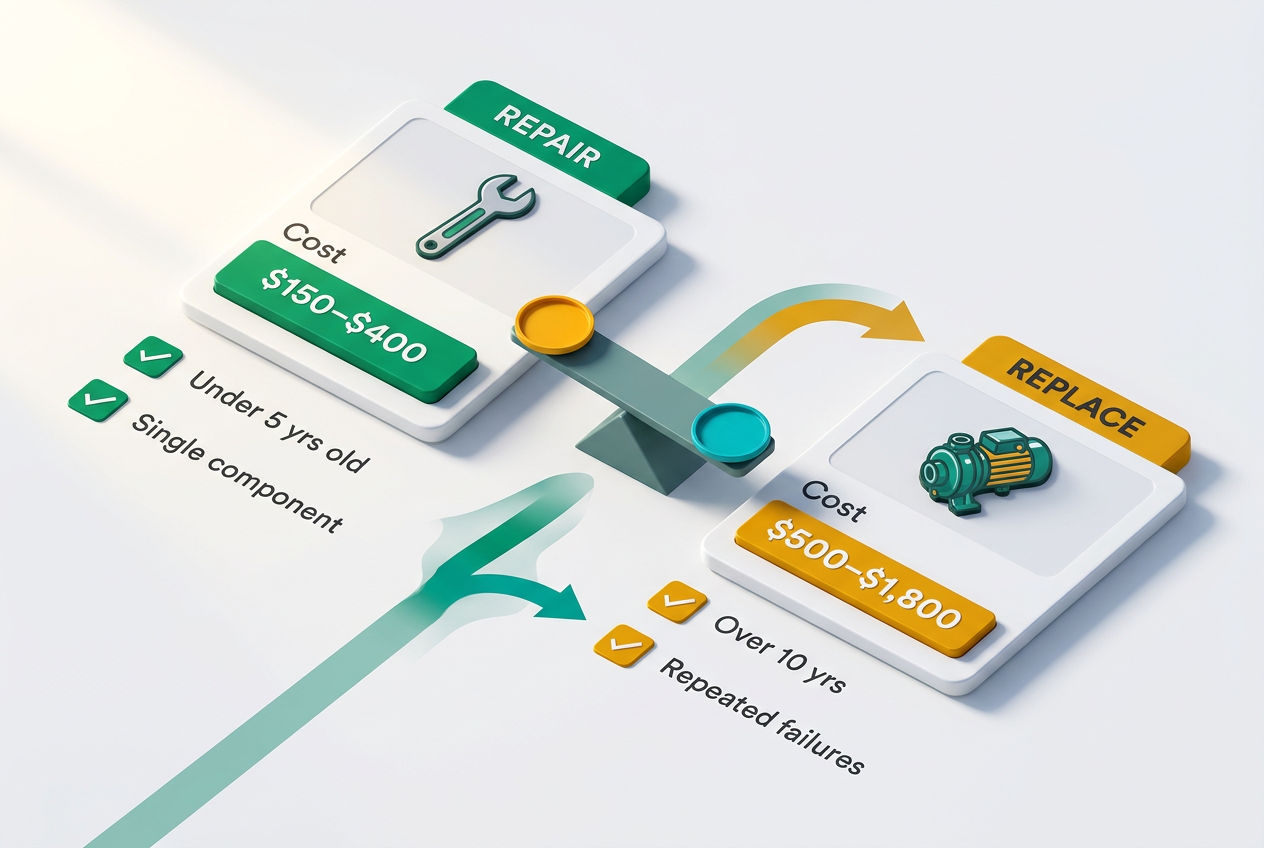
Scenario: Your 11-year-old effluent pump fails. A new pump costs $275 in parts plus $250 in labor — $525 total. A technician quotes $350 to attempt a motor repair with no guarantee. Replacement is the obvious call.
Compare that to a grinder pump that's only 4 years old. A $400 repair on a unit that cost $900 to install and has 8+ years of life left? That math works in favor of repair.
For more context on septic system repair decisions, the septic repair cost guide covers related repairs from baffle replacement to distribution box work.
Regional and Seasonal Price Variations
Where you live matters. Here's what homeowners typically pay by region for a standard effluent pump replacement:
- Northeast (NY, NJ, MA, CT): $1,100–$2,000. Dense regulation, licensed contractor requirements, and high labor rates push costs up. New York's DEC and New Jersey's DEP both maintain strict oversight of septic work.
- Southeast (FL, GA, SC): $800–$1,600. Large market, competitive pricing, but aerobic systems are prevalent — and aerobic pump replacements run higher.
- Midwest (OH, IN, IL, MI): $600–$1,200. Strong rural septic market, competitive contractor rates, minimal permitting in many counties.
- Mountain West (CO, MT, WY): $900–$1,800. Remote access surcharges and travel time add up fast in rural areas.
- Pacific Northwest (WA, OR): $1,000–$2,000+. Strict environmental permitting, high labor costs, and mandatory inspections in many jurisdictions.
- Texas/Southwest: $600–$1,400. Large market, competitive pricing, minimal regulation in rural counties.
When you schedule matters too. Fall (September–October) is the optimal window for proactive pump replacement. Demand is lower after summer's peak season, contractors have more scheduling availability, and you're not paying emergency winter rates. Replacing a pump you know is aging in October beats paying emergency rates in January when the ground is frozen solid and the contractor is billing portal-to-portal travel time.
Best Time to Replace a Septic Pump: Schedule proactive replacement in September or October. You'll get better contractor availability, standard (non-emergency) rates, and you'll beat the winter failure season when frozen ground and holiday demand push prices 20–50% higher.
Can I Replace a Septic Pump Myself?
Technically, yes — mechanically, a pump swap involves disconnecting a power cord, unscrewing a discharge pipe, pulling the old unit out, and dropping in a new one. Homeowners who are comfortable with basic plumbing and electricity have done it.
Practically, there are real obstacles:
- Permit and licensing requirements. Many states require a licensed septic contractor to perform any work on a permitted septic system. In Oregon and Washington, DIY pump replacement on a permitted system can void your system permit and create title issues if you sell the home.
- Electrical safety. Pump chambers are wet, confined spaces with 240-volt wiring. This is not the place to learn electrical work.
- Warranty implications. Most pump manufacturers require professional installation for the warranty to be valid.
- Misdiagnosis risk. If the real problem is a failing control panel, float switch, or pump chamber infiltration, you'll spend $400 on a new pump and still have the original problem.
If you're determined to explore DIY options, the DIY septic system guide covers what's legally and practically feasible by system type. For most homeowners, the risk-adjusted math favors hiring a licensed septic contractor.
Does Homeowners Insurance Cover Septic Pump Replacement?
Usually not — but sometimes, partially. Standard homeowners insurance policies treat septic systems as "structures" and typically exclude wear-and-tear failures. If your pump burns out after 12 years of normal use, that's maintenance, not a covered loss.
Where insurance may pay: sudden and accidental damage. If a power surge fries your pump control panel, or a contractor working on your property damages the pump chamber, you may have a claim. Some insurers offer equipment breakdown endorsements as add-ons that cover mechanical failure — worth asking your agent about if your system is aging.
Separately, some state programs offer low-interest loans or grants for septic repairs. The USDA Rural Development program (rd.usda.gov) offers grants and loans to low-income rural homeowners for septic system repairs — including pump replacement — under the Section 504 Home Repair program. It's worth a phone call if cost is a serious barrier.
For a full breakdown of coverage scenarios, see the homeowners insurance and septic systems guide.
How to Get an Accurate Quote (And Spot a Bad One)
Getting three quotes before authorizing pump replacement is standard practice. Here's what a good quote includes:
- Itemized parts cost (pump model and horsepower specified)
- Labor rate or flat-fee breakdown
- Diagnostic/inspection fee (and whether it applies toward the job)
- Permit fee (if applicable in your county)
- Warranty on parts and labor
Red flags in a septic pump quote:
- No site visit before quoting — legitimate contractors don't price pump replacements over the phone without knowing your system
- Pressure to replace the entire pump without testing the float switch first
- No mention of permit requirements in a jurisdiction that requires them
- No written quote or vague "time and materials" language with no cap
Use SepticTankHub's directory to find a licensed septic contractor in your area and request competitive quotes from verified professionals.
How Long Does a Septic Pump Last?
Most septic pumps last 7–15 years, but several factors compress or extend that range significantly:
- Effluent pumps in well-maintained systems: 10–15 years
- Grinder pumps with heavy use: 7–12 years
- Aerobic system spray/drip pumps: 7–10 years (more frequent cycling shortens motor life)
What shortens pump life: running dry (low liquid level in the chamber), voltage fluctuations, heavy solids entering the pump chamber due to missed tank pumping, and debris passing through a damaged effluent filter.
For conventional systems, keeping up with regular septic tank pumping — typically every 3–5 years for a 1,000-gallon tank serving a 4-person household per EPA guidance (epa.gov/septic) — directly extends pump life by reducing the solids load reaching the pump chamber.
The septic pump guide covers pump mechanics, sizing, and maintenance schedules in full detail if you want to go deeper on any of this.
Sources & Methodology
1. U.S. Environmental Protection Agency — Septic Systems Guidance on pumping frequency, maintenance intervals, and system performance standards. epa.gov/septic
2. National Onsite Wastewater Recycling Association (NOWRA) Industry data on contractor pricing, pump types, and system maintenance practices. nowra.org
3. National Association of Wastewater Technicians (NAWT) Technician certification standards and field service benchmarks. nawt.org
4. USDA Rural Development — Section 504 Home Repair Program Federal assistance programs for low-income rural homeowners facing septic repair costs. rd.usda.gov
5. State health departments (Florida DOH, Oregon DEQ, Washington DOH) State-specific licensing requirements, permit rules, and contractor regulations referenced throughout this guide.
Cost ranges reflect national contractor data, regional labor surveys, and supply-house pricing current as of January 2026. Individual quotes will vary.
Free download
Not ready for the Handbook? Start with the free Fridge Card.
The Do / Don’t card the whole family can see, plus the Survival Kit: emergency flowchart, warning-sign decoder and pump-schedule card. One printable PDF.
Was this article helpful?
Frequently Asked Questions
Recommended Resources
📖 Related Articles
- What Is a Lift Station? How Sewage Lift Stations Work
- Effluent Pump: A Side-by-Side Comparison
- Aerobic Septic System Maintenance: The Complete Guide
- Septic Pump Replacement? Causes & How to Fix It
- Septic Tank Alarm Going Off? What It Means and What to Do
- Septic Tank Gurgling Sounds: Causes and Fixes
- DIY Septic System: How to Build Your Own (Step-by-Step)
- Does Homeowners Insurance Cover Septic Repairs? (2026 Guide)
- Septic Pumps Explained: Types, Costs & When You Need One
💰 Cost Guides
🔧 Services
Find Septic Professionals Near You
Compare licensed, verified septic companies by area — top county markets and cities below, or browse all 50 states.
County markets
Popular cities
