
Quick Answer
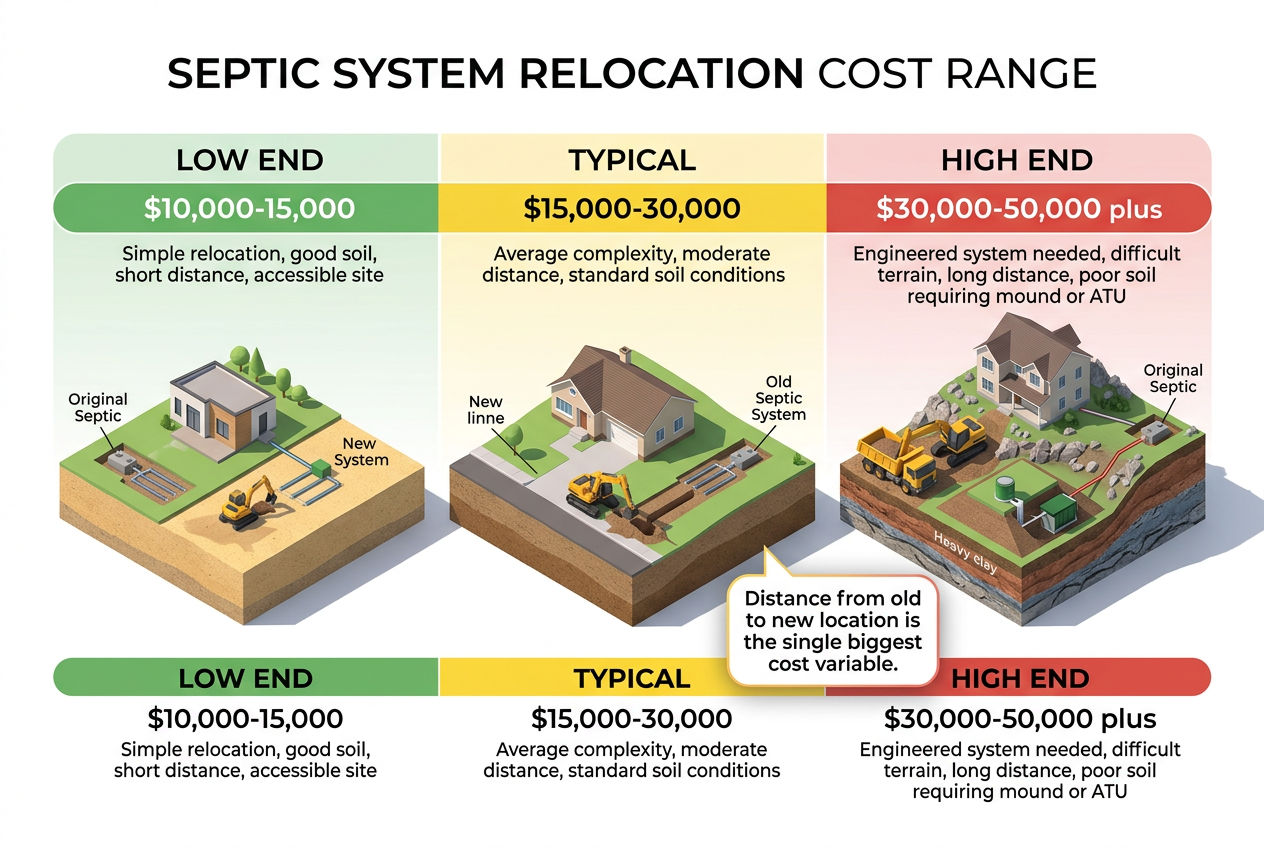
Moving a septic system costs between $5,000 and $30,000 for most homeowners, with complex relocations reaching $50,000 or more. The biggest variable is usually whether you need a new drain field - that single component can add $2,000 to $15,000 to your total.
💡 Key Takeaways
- Most septic system relocations cost $5,000–$30,000; simple tank-only moves start around $3,000
- The drain field is almost always the most expensive component to relocate - expect $2,000–$15,000 for leach field work alone
- You will need permits everywhere in the U.S. - budget $200–$2,500 and 2–8 weeks for approval
- Decommissioning the old system is a required (and often overlooked) cost: $500–$3,000
- Relocation frequently costs 20–50% more than installing a brand-new equivalent system
Picture this: you're finally building that garage addition you've been planning for three years. The contractor pulls the site plan, points to a spot on your property, and says, "Your septic tank is right here." That's when the real planning begins.
Or maybe your health department sent a notice. Your drain field is too close to the property line under new setback rules, and it has to move. Either way, you're facing a project that most homeowners have no mental framework for - because septic relocation almost never comes up until it has to.
This guide covers what it actually costs, why the numbers vary so much, and how to figure out whether moving your system even makes sense.
Can You Move a Septic Tank to a Different Location on Your Property?
Yes - but it's not as simple as digging it up and dropping it somewhere else. A septic system relocation is a permitted construction project that requires soil evaluation, engineering design, health department approval, and licensed contractors. You can't just move the tank 30 feet and call it done.
Here's what makes it more complicated than most people expect: your septic system isn't just a tank. It's a tank connected to a drain field (also called a leach field), which is a network of perforated pipes buried in gravel-filled trenches that filters wastewater through the soil. When you relocate the system, you often have to establish a completely new drain field at the new location - because the existing soil at the old location has already been saturated and conditioned by years of use.
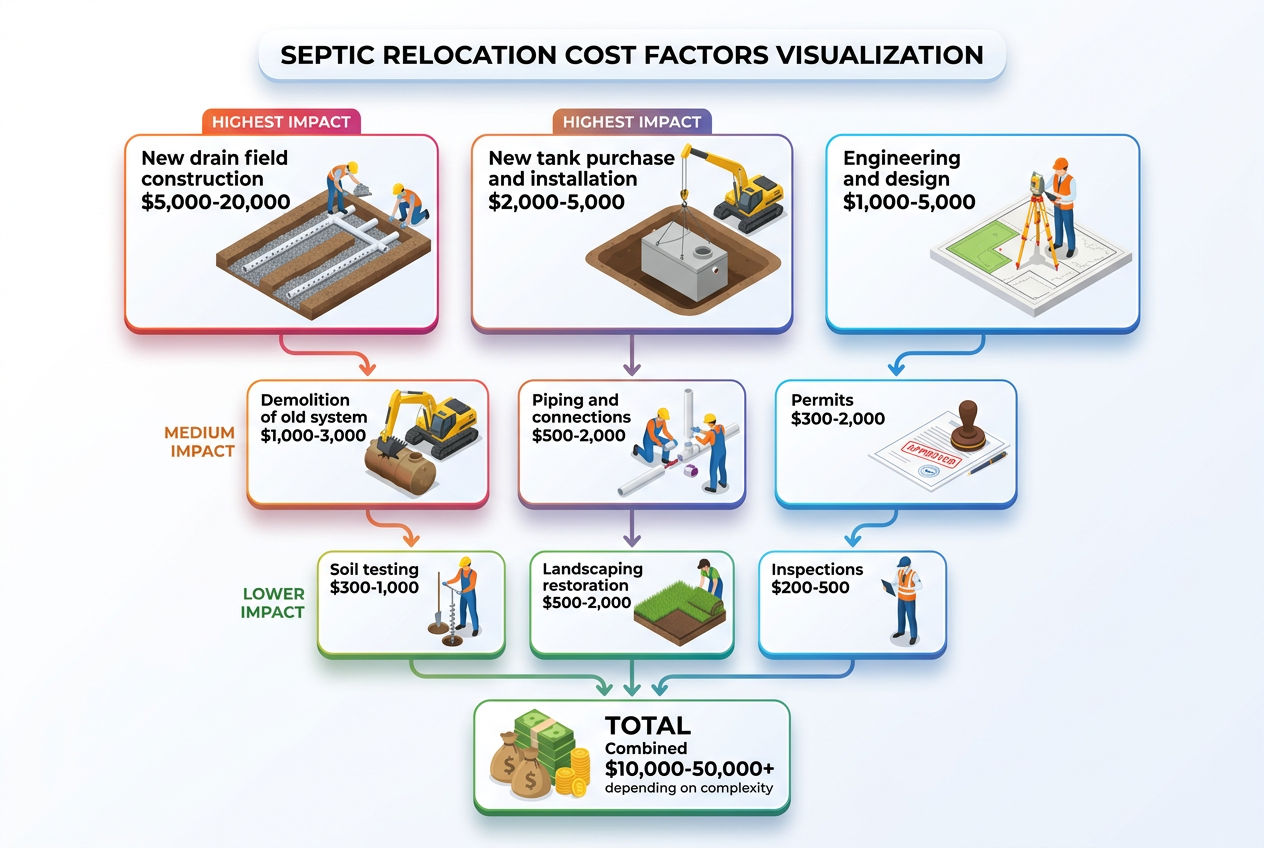
📊 Quick Fact: The drain field represents 40–60% of total relocation costs in most projects - far more than the tank itself.
That's why the cost range is so wide. Moving a 1,000-gallon concrete tank 50 feet might cost $5,000–$8,000. Moving the same tank plus installing a new 3-bedroom drain field at the new location could easily run $18,000–$25,000.
What's the Full Cost to Relocate a Septic System?
A full septic system relocation involves multiple separate cost components. Here's the honest breakdown.
| Component | Typical Cost Range |
|---|---|
| Site evaluation & perc test | $500 – $2,500 |
| Engineering / system design | $500 – $3,000 |
| Permits (health dept. / county) | $200 – $2,500 |
| Excavation and labor | $1,500 – $10,000 |
| New septic tank (if required) | $800 – $5,000 |
| New drain field installation | $2,000 – $15,000+ |
| Decommissioning old system | $500 – $3,000 |
| Pipe runs / plumbing connections | $500 – $3,000 |
| Lift station or pump (if needed) | $800 – $4,000 |
| Final inspection fee | $100 – $500 |
| Landscaping / site restoration | $500 – $3,000 |
Sources: NOWRA member contractor surveys; state health department fee schedules; SepticTankHub.com contractor data
⚠️ Warning: The numbers that surprise people most are the ones they didn't know existed - decommissioning the old tank, the perc test, and the engineering fee. These aren't optional; they're required by virtually every health department before work can begin or be approved.
Free download
Free: the Septic Fridge Card — what to flush, what never to.
The Do / Don’t card the whole family can see, plus the Survival Kit: emergency flowchart, warning-sign decoder and pump-schedule card. One printable PDF.

What Are the Biggest Cost Drivers?
System Type
A conventional gravity-fed system with a 1,000-gallon concrete tank and standard leach laterals is the cheapest to relocate. Move up to a mound system, a pressure distribution system, or an aerobic treatment unit (ATU), and costs climb fast.
An aerobic treatment unit - the kind with an air compressor like a Hiblow HP-80, a pump chamber, and a spray irrigation field - involves:
- More mechanical components
- More electrical work
- More regulatory scrutiny
- Ongoing maintenance contracts
Relocating one of these can run $20,000–$40,000 without breaking a sweat.
For a full explanation of how these systems differ, see our guide on types of septic systems.
Distance of the Move
Moving a tank 20 feet costs far less than moving it 200 feet. Longer pipe runs mean more excavation, more PVC, and sometimes a lift station if gravity flow can't be maintained. Every extra foot of 4-inch Schedule 40 pipe adds labor and materials. A lift station alone adds $800–$4,000 to the project.
Soil Conditions at the New Location
This is the factor most homeowners overlook. Before any permit is issued, a licensed soil evaluator has to confirm that the proposed new location can support a drain field. If the soil is clay-heavy, has a high water table, or sits above bedrock, you may be looking at an engineered alternative system - and that changes everything.
Favorable soil: Sandy or loamy soil drains well and keeps costs lower.
Problem soil: Clay soil in Ohio or Indiana often requires oversized drain fields or chamber systems (like Infiltrator Water Technologies Quick4 chambers) to achieve adequate treatment. Rocky terrain in the Mountain West can mean jackhammering before any excavation begins.
Accessibility
Can an excavator physically get to the proposed new location? If you're on a tight suburban lot with a fence, a landscaped hillside, and a detached garage in the way, equipment access alone can add $2,000–$5,000 in extra labor and workarounds.
Do You Need a Permit to Relocate a Septic System?
Yes - in every state. There are no exceptions. Relocating a septic system without a permit is illegal, and unpermitted work creates massive liability when you sell the property. The EPA's guidance on septic systems is clear that all onsite wastewater systems must meet local health department standards.
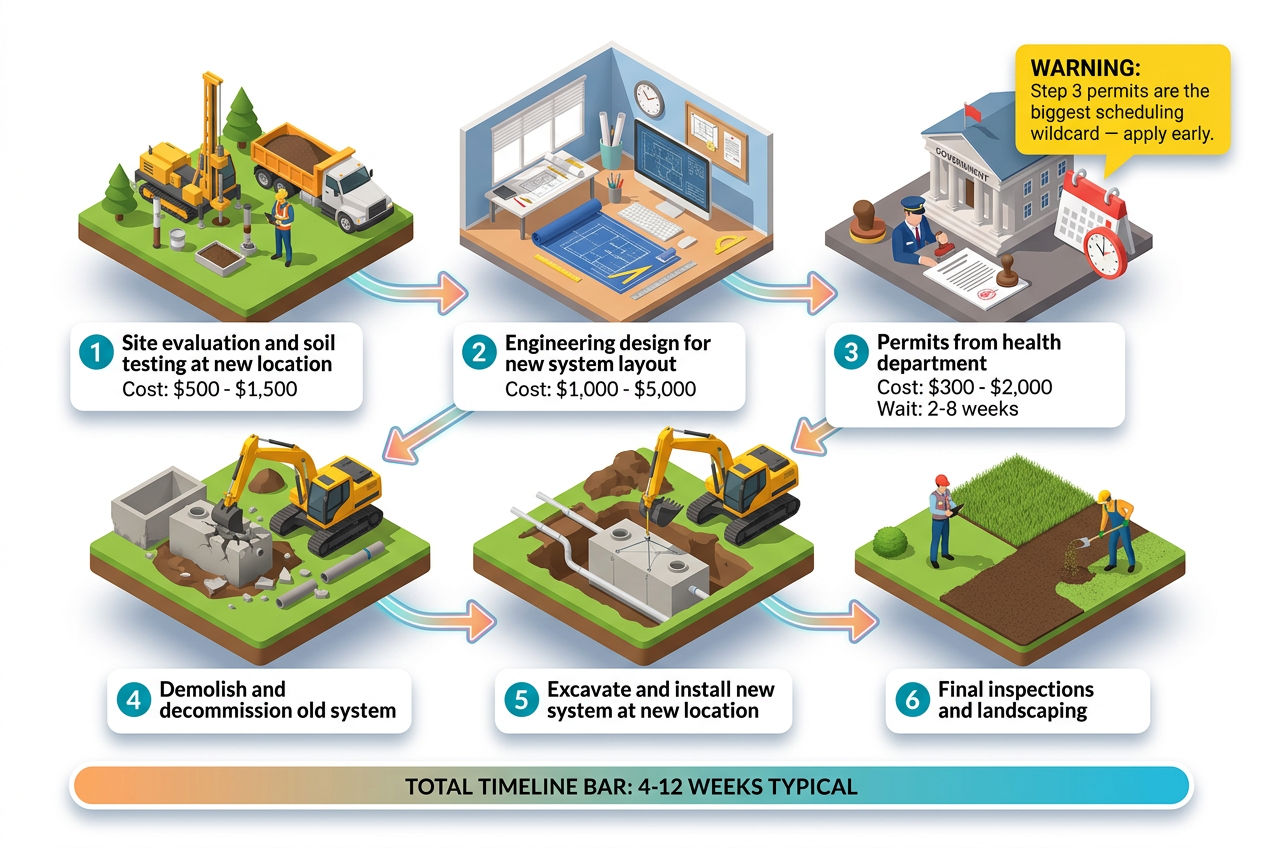
The Permit Process (5 Required Steps)
- Site evaluation - a licensed evaluator (often a soil scientist or licensed septic designer) assesses the proposed new location
- Perc test - a soil percolation test confirms drainage rates, required for system sizing
- System design - a licensed septic designer or PE-certified engineer submits a design to the health department
- Permit issuance - county or municipal health department reviews and approves
- Inspections - mid-construction and final inspections are required before backfill
Permit fees range from $200 in rural counties to $2,500 in tightly regulated jurisdictions. The permitting timeline is typically 2–8 weeks, though Massachusetts Title 5 regulations - among the strictest in the country - can push that to 12+ weeks.
✅ Pro Tip: Florida requires all contractors to hold a Registered Septic Tank Contractor (RSTC) license through the Department of Health. Texas delegates permitting authority to county-level Designated Representatives, so requirements vary significantly county to county.
Budget 1–3 months for the full project from application to final inspection approval.
For state-specific requirements, your county health department's environmental health division is the authoritative source. You can also explore our septic system testing and inspection resources for guidance on what inspectors look for.
What Happens to the Old Septic Tank?
You can't just abandon it. Decommissioning the old system is a legal requirement in most states, and skipping it creates safety hazards - an empty buried tank can collapse, creating a dangerous sinkhole.
Decommissioning Requirements
Proper decommissioning typically involves:
- Pumping the remaining sludge and effluent (required before any other work - see septic pumping costs for what this runs)
- Crushing or filling the tank - concrete tanks are often crushed in place; fiberglass or poly tanks may be removed
- Abandoning the drain field - old laterals are usually left in place but the inlet is capped
- Health department inspection of the decommissioned site
Expect to pay $500–$3,000 for proper decommissioning. In some jurisdictions, a county inspector must witness the process before you can backfill.
Is It Cheaper to Move a Septic System or Install a Brand-New One?
This question deserves a straight answer: relocation typically costs 20–50% more than an equivalent new installation.
A conventional septic system installation for a 3-bedroom home - 1,000-gallon tank plus drain field - runs $3,500–$10,000 nationally. That same project as a relocation costs more because you're paying for decommissioning the old system, dual-site excavation, and the added complexity of working around an existing structure.
Real-World Example: Suburban Ohio Project
- New conventional system installation: $8,000–$12,000
- Full relocation of existing conventional system: $13,000–$20,000
- Difference: roughly $5,000–$8,000 extra for the relocation
💡 Key Takeaway: That gap often tips the scales toward full replacement, especially if your existing tank is aging. A 30-year-old concrete tank with cracked baffles isn't worth moving - replace it while you're already excavating.
Our septic installation cost guide covers new system pricing in detail.
The relocation-vs-replacement question gets more complex if you have a failing drain field or a system showing signs of age. Talk to two or three licensed contractors before committing either way.

How Far Can You Move a Septic System?
There's no universal answer - setback requirements vary by state and county. But here's the practical framework.
Typical Minimum Setback Distances
Most health departments establish minimum setback distances from:
- Property lines: typically 5–15 feet for the tank, 10–25 feet for the drain field
- Water supply wells: 50–100 feet is common; some states require 150 feet
- Surface water (streams, ponds, wetlands): 25–100 feet depending on jurisdiction
- Structures / foundations: 5–25 feet
Gravity Flow Limits
The move distance also determines whether gravity flow is feasible. Septic pipes need a minimum slope of 1/8 inch per foot (1% grade) to move wastewater by gravity. If you're moving the system uphill or more than 100 feet from the house, a lift station with a pump chamber and float switches becomes necessary - that adds $800–$4,000.
Simple move: 20–50 feet on a level lot is straightforward.
Complex move: 150+ feet to clear a well setback on uneven terrain is a fundamentally different project.
How Does Location Affect the Cost to Move a Septic System?
Regional cost variation is real and significant. A project that costs $10,000 in rural Alabama might run $28,000 in Connecticut - same scope, dramatically different price.
Regional Cost Breakdown
| Region | Typical Cost Range | Key Factors |
|---|---|---|
| Northeast (NY, NJ, CT, MA, PA) | $10,000–$35,000 | Rocky terrain, strict regulations, high labor rates, short construction season, Massachusetts Title 5 requirements |
| Southeast (FL, GA, SC, NC) | $6,000–$18,000 | Sandy coastal soils favorable, high water tables in coastal Florida may require mound systems |
| Midwest (OH, IN, MI, MN) | $5,000–$20,000 | Clay soils common, often require larger or engineered drain fields |
| Pacific Northwest (WA, OR) | $10,000–$30,000 | Heavy rainfall keeps water tables high, strict environmental regulations near surface water |
| California | $15,000–$50,000+ | Highest labor costs, most complex permitting, environmental review requirements |
| Southwest (AZ, NM, TX) | $5,000–$18,000 | Dry soils help, but caliche (hardpan calcite layer) complicates excavation |
📊 Quick Fact: Minnesota's MPCA requires licensed pumpers to file disposal manifests, adding a compliance layer even to decommissioning work.
When Does Relocating a Septic System Actually Make Sense?
The Most Common Reasons
The most common reasons homeowners go through this process:
- Home addition or accessory dwelling unit - new construction footprint conflicts with the existing system
- Regulatory compliance - updated setback rules or a failed inspection require repositioning
- Property subdivision or sale - a boundary change puts the system on the wrong parcel
- Well installation - a new drinking water well must be a minimum distance from the septic system
- Persistent system failures - when the current location has repeatedly failed drain fields due to poor soil or site conditions
✅ Pro Tip: Not every conflict requires a full relocation. Sometimes septic system repair or a partial drain field fix resolves the issue at lower cost. Get a licensed septic inspection before committing to a full relocation - an inspector may identify options you haven't considered.
What's the Best Time of Year to Relocate a Septic System?
Timing matters more than most people realize.
Optimal Window: Late Summer Through Early Fall
Late summer through early fall (August–October) is the sweet spot:
- Soil is dry and firm
- Water tables are at their annual low
- Contractors have more scheduling flexibility than peak summer
- Better pricing and faster permit turnarounds than in June or July
Problem Seasons
Spring (March–May) is problematic:
- High water tables from snowmelt and spring rain
- Delayed perc tests
- Complicated excavation
- Drain field installation sometimes impossible until the soil dries out
Winter in northern states can push excavation costs up 20–40% due to frozen ground. In Minnesota, the frost line reaches 42–60 inches, which makes winter septic work expensive and sometimes impossible.
💡 Key Takeaway: Southern states (Texas, Florida, Georgia) don't face the same freeze constraints and may actually see mild off-season discounts from contractors filling schedule gaps.
If your project isn't urgent, plan it for September. If it is urgent - contact a licensed contractor in your area and ask about their current timeline before assuming spring work is feasible.
How to Get an Accurate Quote
Three Things Make a Septic Relocation Quote Accurate
- A site visit - any contractor quoting this project without walking your property and looking at both the existing system and proposed new location is guessing
- Soil test results - the perc test determines system size, which determines cost; quotes given before soil testing are estimates at best
- Permit confirmation - a good contractor will verify local requirements before quoting, not after
What to Ask For
Get at least three quotes. Ask each contractor specifically what's included:
- Decommissioning
- Permits
- Landscaping restoration
- Final inspection
All should be line items. If a quote seems low, ask what's excluded.
Find a licensed septic contractor in your area through the SepticTankHub directory - all listed contractors are verified and licensed in their states.
Learn more about our septic repair services.
Related reading: septic tank maintenance guide.
Sources & Methodology
- U.S. Environmental Protection Agency: EPA Septic Systems overview: referenced for permitting requirements and onsite wastewater treatment standards
- National Onsite Wastewater Recycling Association (NOWRA) - nowra.org: referenced for industry cost benchmarks and contractor practice standards.
- State health department fee schedules: Florida DOH, Massachusetts DEP, Minnesota MPCA: referenced for regional permit costs and licensing requirements.
- SepticTankHub.com contractor network data - aggregated cost ranges from licensed contractors across 12 states, 2024–2025
- Infiltrator Water Technologies product specifications - referenced for chamber system sizing guidance.
Need help with your septic system? Browse local septic companies in Tennessee or Virginia.
Was this article helpful?
Frequently Asked Questions
Recommended Resources
📖 Related Articles
💰 Cost Guides
🔧 Services
Find Septic Professionals Near You
Compare licensed, verified septic companies by area — top county markets and cities below, or browse all 50 states.
County markets
Popular cities
