
Quick Answer
Septic system repair is possible as a DIY project for minor fixes like effluent filter cleaning, baffle replacement, and riser installation - typically costing $50–$500. Major repairs including drain field work, tank cracks, and pump replacement require a licensed professional and often a permit, with costs ranging from $800 to $15,000+.
💡 Key Takeaways
- Minor septic repairs (filter cleaning, baffle swaps, riser installation) are realistic DIY jobs for a handy homeowner
- Drain field repair, tank replacement, and pump installation almost always require a licensed contractor - and a permit
- National average septic repair cost runs $1,500–$5,000; drain field work alone can hit $15,000+
- Unpermitted septic work can result in fines of $500–$10,000+ depending on your state or county
- Preventive septic tank maintenance is almost always cheaper than emergency repair
How Do You Know Your Septic System Needs Repair?
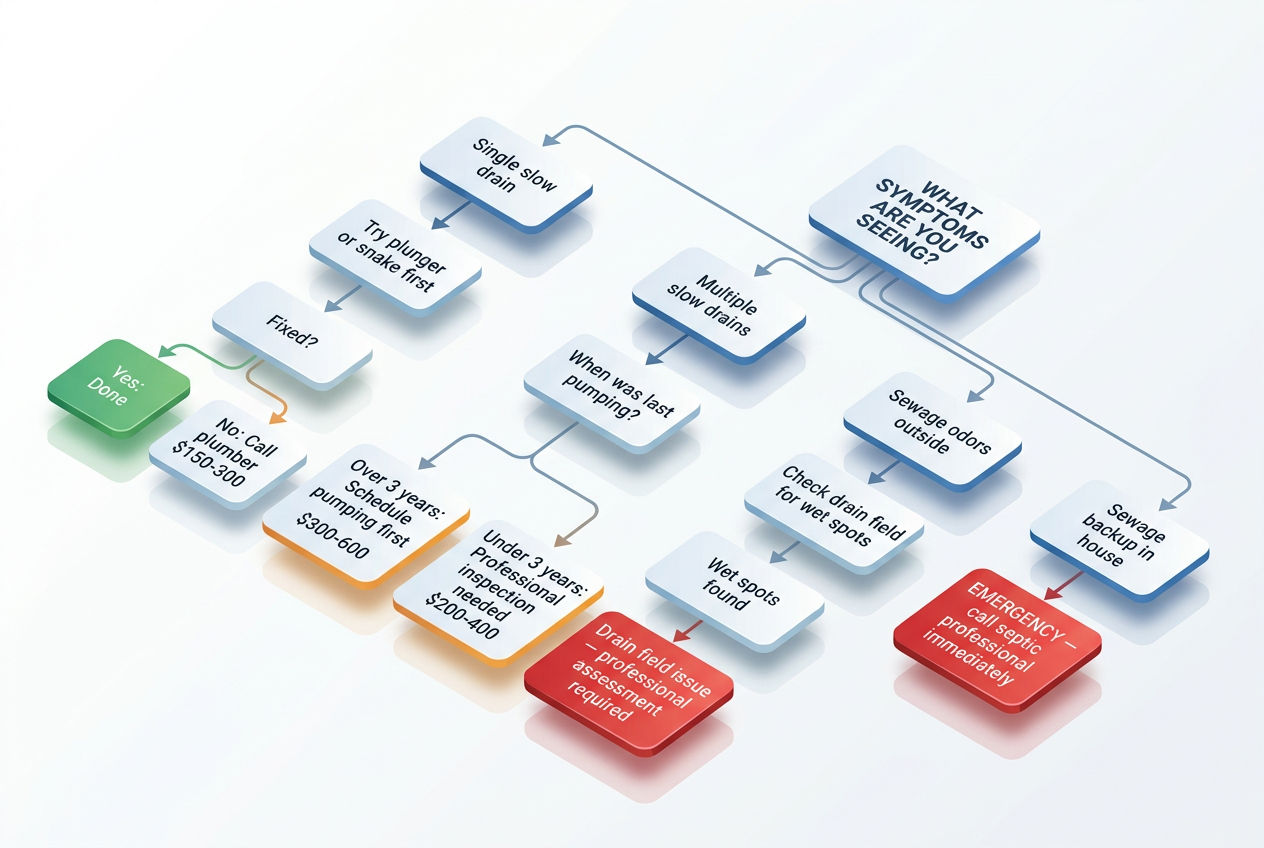
Your septic system rarely fails without warning. The EPA estimates more than 10% of septic systems experience backups or failures each year - and most of those homeowners noticed something off for weeks before the problem became a crisis.
Watch for these warning signs of septic system problems:
- Slow drains throughout the house - not just one fixture, but multiple
- Gurgling sounds from toilets or drains when you run water elsewhere
- Sewage odors inside the home or near the tank and drain field area
- Wet, spongy ground or unusually lush green grass over the drain field
- Sewage backup into tubs or floor drains - this is an emergency
- Algae blooms in nearby ponds or ditches (a sign of effluent surfacing)
⚠️ Warning: If you're seeing two or more of these symptoms together, your system is telling you something urgent. Don't wait for a full backup.
A septic system inspection by a licensed inspector ($100–$300 nationally) is the fastest way to confirm what you're dealing with before spending money on repairs. Learn more about what to look for when your septic system is backing up.
📊 Quick Fact: Spring is the peak season for septic system problems. Frozen ground thaws, saturated soil limits drain field absorption, and systems that were stressed all winter reveal their weaknesses.
If you've had a hard winter, a spring inspection is worth every dollar.
Free download
Free: the Septic Fridge Card — what to flush, what never to.
The Do / Don’t card the whole family can see, plus the Survival Kit: emergency flowchart, warning-sign decoder and pump-schedule card. One printable PDF.
What Are the Most Common Septic System Repairs?
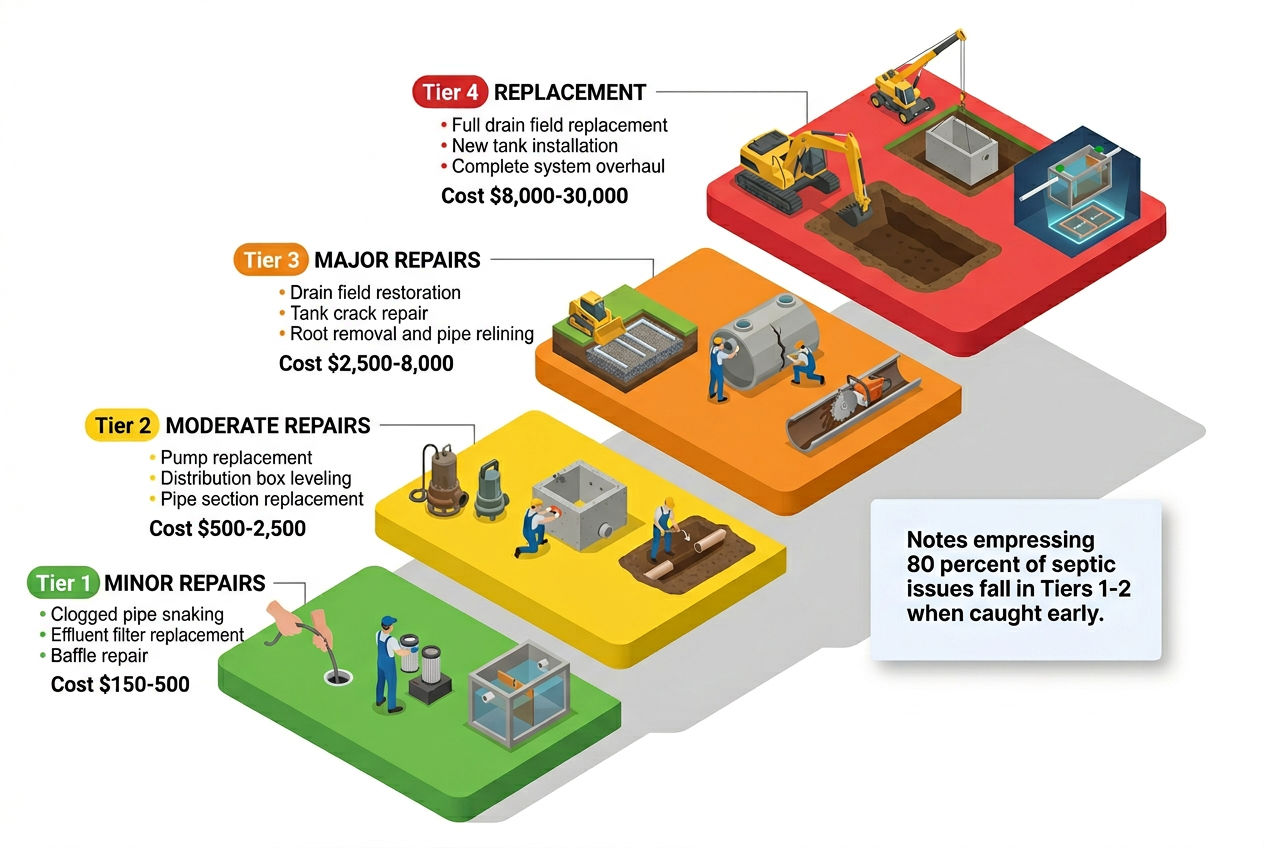
Most septic system repairs fall into one of six categories. Understanding what each involves - and what it costs - is the first step toward deciding whether to grab your tools or pick up the phone.
Effluent Filter Cleaning or Replacement
The effluent filter sits in the outlet baffle of your tank and catches solids before they reach the drain field. Commonly a Polylok PL-122 or Zabel A1800 series, it's one of the most important components most homeowners have never heard of.
Cleaning it is genuinely DIY-friendly. You pull the filter out, hose it off into the tank opening, and reinstall it. Takes 20 minutes. A replacement filter costs $30–$90 at most home improvement stores. If you're already paying for a pump-out, ask the technician to clean it - they should do this as standard practice.
✅ Pro Tip: A clogged effluent filter causes slow drains and can mimic drain field failure. This is the first thing to check.
Baffle Repair or Replacement
Concrete baffles inside older tanks rot away over decades, especially in systems with high hydrogen sulfide levels. The inlet baffle controls how waste enters the tank; the outlet baffle prevents scum from reaching the drain field. Both matter.
Replacing a septic baffle is doable for a confident DIYer with the right access:
- Plastic replacement baffles (sanitary tees or Polylok baffle replacements) cost $10–$40
- The work requires opening the tank lid and working near raw sewage
- You must understand exactly where the baffle sits relative to the water line
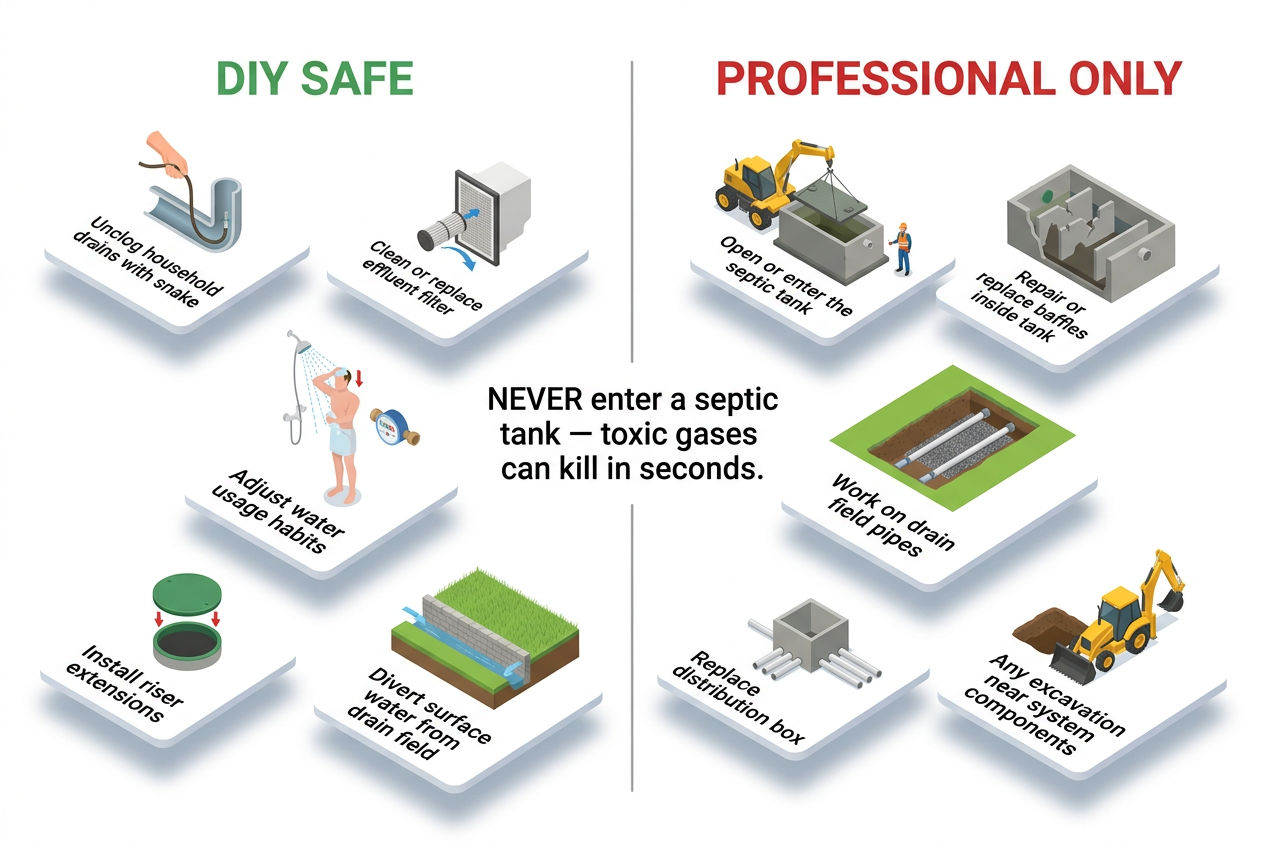
⚠️ Warning: If the tank requires confined-space entry, stop - that's a professional job due to lethal hydrogen sulfide gas.
Septic Pump Replacement
In systems with a pump chamber (common in aerobic systems and mound systems), the effluent pump moves treated wastewater to the drain field or surface irrigation. When that pump fails, the system backs up fast.
| Component | Cost |
|---|---|
| Pump (Goulds WE05H or Liberty SumpJet equivalent) | $200–$600 |
| Professional installation (total) | $800–$2,500 |
⚠️ Warning: In most jurisdictions, replacing a submersible pump in a septic system requires a licensed contractor and a permit. A few states allow homeowner-performed pump swaps on their own primary residence - but verify this with your county health department before you start.
Tank Crack and Leak Repair
Septic tank leak repair depends heavily on what's cracking. A hairline crack in a concrete lid? Sometimes patchable with hydraulic cement ($20–$60 for materials). A structural crack in the tank walls or floor? That's a different conversation entirely.
Structural cracks allow:
- Groundwater to infiltrate (diluting the tank and overloading the drain field)
- Raw sewage to leach into soil
Neither is a DIY fix. A licensed contractor will assess whether the tank can be repaired with epoxy injection or whether full tank replacement is necessary. Tank replacement for a standard 1,000-gallon concrete tank runs $3,000–$8,000 installed, and higher for 1,500-gallon or aerobic systems.
Septic Drain Field Repair or Replacement
Drain field problems are the most serious - and the most expensive - category of septic system repairs. A failing drain field doesn't just mean slow drains. It means untreated effluent surfacing in your yard or backing up into your home.
📊 Quick Fact: A failed drain field can reduce property value by 10–25%, according to real estate appraisers who specialize in rural properties.
Picture this: you're selling your home and the buyer's inspector finds saturated soil, hydrogen sulfide odors, and visible effluent near the leach field. The deal dies on the spot.
Septic drain field repair options include:
| Repair Option | Typical Cost | Expected Benefit |
|---|---|---|
| Aeration/jetting of clogged leach laterals | $1,500–$4,000 | Extends life 3–7 years |
| Partial replacement of failed laterals | $2,000–$7,000 | Repairs specific problem areas |
| Full drain field replacement | $3,500–$15,000+ | Complete system restoration |
⚠️ Warning: Drain field work always requires permits. In most states, it also requires a soil evaluation (perc test) and a licensed septic contractor. There are no legal DIY workarounds here.
For a deeper breakdown of drain field costs, see our drain field replacement cost guide.
Full System Replacement
Sometimes repair isn't enough. If the tank is structurally compromised, the drain field is completely saturated, or the system pre-dates modern codes (many pre-1980 steel tanks have already hit their 15–20 year lifespan), full replacement is the only option.
Septic system replacement cost ranges from $5,000 for a basic conventional system to $20,000+ for a mound, aerobic, or drip-irrigation system on a challenging lot. This is always a licensed contractor job. Always.
Which Septic Repairs Can You Do Yourself?
Here's an honest assessment. Not everything labeled "too dangerous" by contractors actually is - but some DIY repairs can turn a $400 fix into a $10,000 disaster. Use this framework:
| Repair Type | DIY Possible? | Typical DIY Cost | Permit Required? |
|---|---|---|---|
| Effluent filter cleaning | ✅ Yes | $0–$90 | No |
| Effluent filter replacement | ✅ Yes | $30–$90 | No |
| Inlet/outlet baffle replacement | ⚠️ Maybe | $10–$100 | Sometimes |
| Riser lid installation | ✅ Yes | $50–$300 | Rarely |
| Bacterial additive treatment | ✅ Yes | $20–$60 | No |
| Pump replacement | ❌ Usually not | N/A | Usually yes |
| Tank crack repair (hairline) | ⚠️ Maybe | $20–$80 | Sometimes |
| Tank crack repair (structural) | ❌ No | N/A | Yes |
| Drain field repair/replacement | ❌ No | N/A | Yes |
| Full system replacement | ❌ No | N/A | Yes |
Sources: EPA Septic Systems guidance (epa.gov/septic); NOWRA (nowra.org); state health department permit databases
✅ Pro Tip: Products like Rid-X add beneficial bacteria, but peer-reviewed research - including studies from the University of Arkansas Cooperative Extension - shows bacterial additives don't eliminate the need for pumping and cannot reverse an already-failing drain field. They're a supplement to proper pumping schedules, not a substitute.
When Should You Call a Septic Professional?
Some decisions aren't really decisions. These situations require a licensed pro - no exceptions:
Call a professional when:
- Sewage is backing up into your home (emergency - call same day)
- You see effluent surfacing in your yard
- The system serves a rental property, commercial property, or any property other than your primary residence
- Drain field work of any kind is needed
- You need to excavate
- The tank requires structural repair
- Your county or state requires a permit for the work (which is most states for anything beyond basic maintenance)
The Permit Issue Is Real
Most states and counties require permits for any septic work beyond routine maintenance. Fines for unpermitted septic work range from $500 in some rural counties to $10,000+ in states like Florida and California. Beyond the fine, unpermitted work can prevent you from selling your home - a title search often turns up septic work that was never permitted and inspected.
📊 Quick Fact: Florida requires all septic contractors to hold a Registered Septic Tank Contractor (RSTC) license through the Department of Health. Texas delegates permitting to county-level Designated Representatives, meaning rules vary county by county.
Before starting any repair beyond cleaning a filter, call your county health department and ask two questions: "Is a permit required?" and "Who is licensed to do this work?"
For aerobic septic system repair specifically, the bar is even higher. Aerobic systems include air compressors (like the Hiblow HP-80), chlorination equipment, and float switches - components that interact with surface water. Most states mandate licensed service contracts for aerobic systems, and quarterly inspections are often legally required.
Septic System Repair Cost: DIY vs. Professional
A 1,000-gallon conventional septic system serving a family of four in suburban Ohio might need a new effluent filter - a $45 DIY fix. That same family, if they ignore a slow drain for a year, might find themselves replacing a saturated drain field for $8,000–$12,000. The math on preventive maintenance is not subtle.
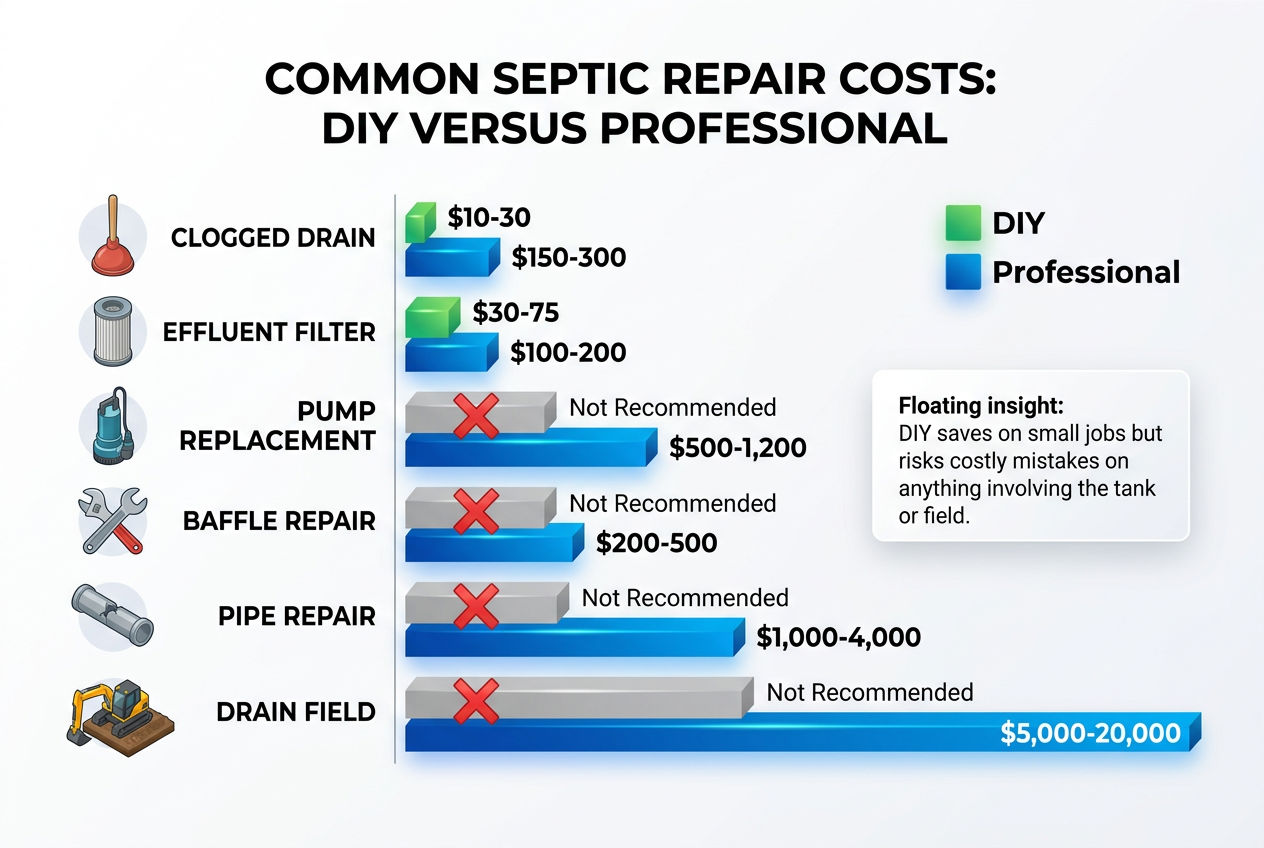
Here's how costs break down nationally:
| Repair | DIY Cost | Professional Cost |
|---|---|---|
| Effluent filter cleaning | $0 (during pump-out) | $50–$150 added to pump-out |
| Baffle replacement | $10–$100 | $150–$500 |
| Riser installation | $50–$300 | $200–$600 |
| Septic pump replacement | Not recommended | $800–$2,500 |
| Tank crack repair | $20–$80 (minor only) | $500–$3,000 |
| Drain field repair | Not legal in most states | $1,500–$7,000 |
| Drain field replacement | Not legal | $3,500–$15,000+ |
| Full system replacement | Not legal | $5,000–$20,000+ |
National cost data based on HomeAdvisor/Angi 2024 aggregated service data and EPA guidance.
A Real-World Example Worth Walking Through
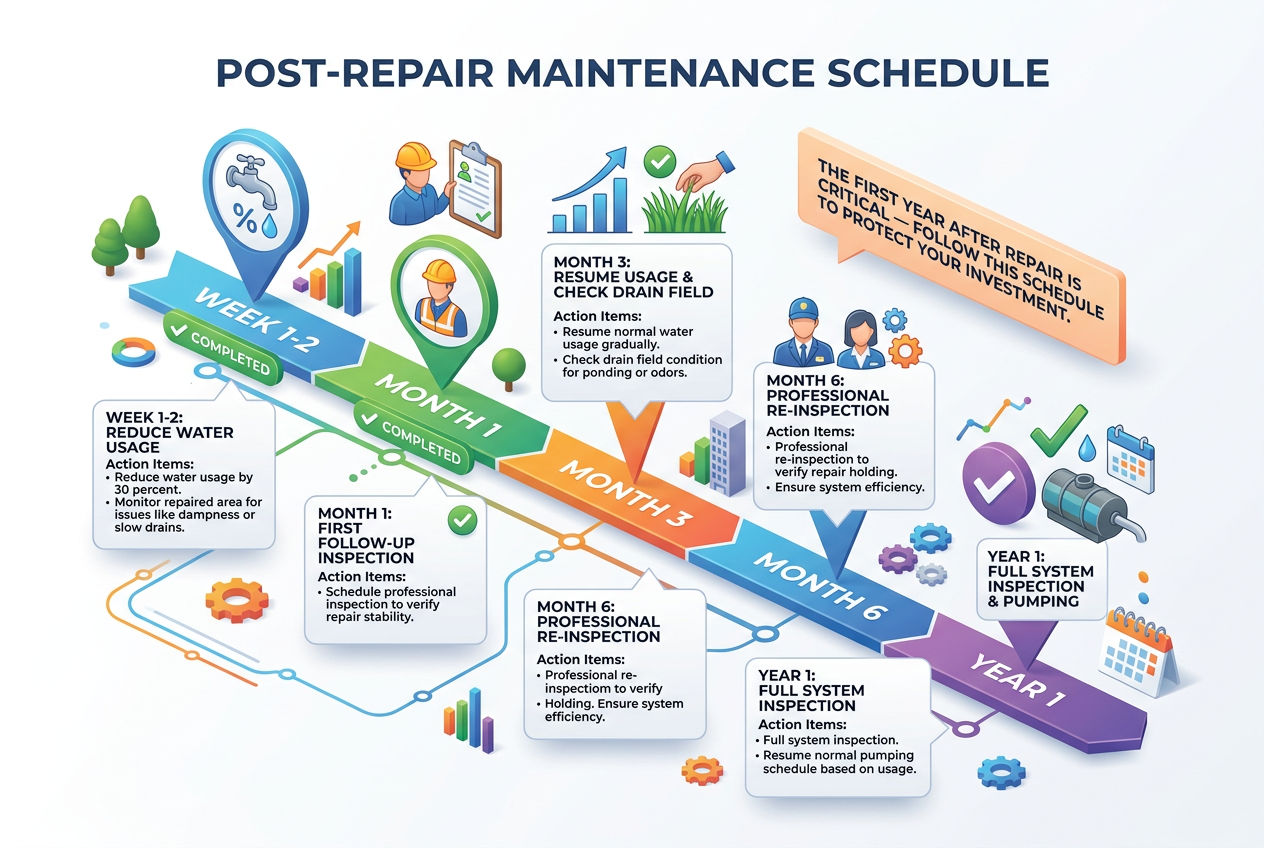
A homeowner in central Florida calls a contractor after noticing wet spots near the drain field. The contractor finds a clogged effluent filter (missed during the last pump-out) and a single saturated lateral. Total repair: $2,800. Had they cleaned the effluent filter every 1–3 years as recommended, the lateral might never have clogged. The filter itself? $45 and twenty minutes.
For a full breakdown of what septic repairs cost by type and region, see our septic repair cost guide.
⚠️ Warning: Winter repairs add another cost layer. In northern states - Minnesota, Michigan, Wisconsin - emergency repairs in January or February when ground is frozen can run 2–3x normal rates because of the excavation difficulty. If your system is showing any signs of stress heading into fall, schedule repairs in September or October.
How to Find a Qualified Septic Repair Professional
Not all septic contractors are equal. Here's what to verify before anyone digs up your yard:
- License: Confirm their license number with your state health department or licensing board. Don't take their word for it.
- Insurance: General liability and workers' comp. If they don't carry it, you're liable if something goes wrong on your property.
- Local knowledge: Septic permit requirements and soil conditions vary significantly by county. A contractor who works your county regularly knows the inspectors, the codes, and the soil quirks.
- Written estimate: Get at least two, ideally three. A $3,000 spread between contractors on the same drain field repair is common.
- References: Ask for two or three recent jobs in your area. Call them.
Find a qualified septic company in your area. You can search by state and service type - and every listed contractor has been verified for licensing.
How Do You Prevent Costly Septic Repairs?
The signs of septic system failure almost always show up before the system actually fails. Staying ahead of problems costs a fraction of emergency repairs.
Maintenance checklist that actually works:
- Pump every 3–5 years for a 1,000-gallon tank serving 4 people. Add a garbage disposal and that drops to every 2 years. See how often to pump your septic tank for size- and household-specific schedules.
- Clean the effluent filter every 1–3 years, or annually if you have high solid loads
- Schedule a septic system inspection every 3–5 years - more often for systems older than 20 years
- Watch what goes down the drain - fats, oils, wipes (even "flushable" ones), and medications stress your system biology
- Protect the drain field - no parking, no planting trees within 30 feet, no heavy equipment over the leach laterals
- Know your system type - conventional, aerobic, mound, and chamber systems have different maintenance schedules
💡 Key Takeaway: The EPA (epa.gov/septic) recommends all homeowners maintain a septic system record that includes the tank size, last pump date, drain field location, and any repairs performed. If you don't have one, start now. You'll need it when you sell.
Read our guide on how to choose a septic service company for a detailed vetting checklist.
Learn more about our septic repair services.
Related reading: septic system installation process.
Sources & Methodology
This article draws on the following primary sources:
- U.S. Environmental Protection Agency (EPA) - Septic Systems Overview: Used for system failure statistics, recommended pump frequency, and groundwater contamination risk data.
- National Onsite Wastewater Recycling Association (NOWRA): Referenced for contractor licensing standards and system-type repair guidance.
- HomeAdvisor / Angi 2024 Cost Data: Aggregated national contractor pricing data for repair cost ranges.
- University of Arkansas Cooperative Extension: Referenced for independent research on bacterial additive efficacy.
- Florida Department of Health / Texas Commission on Environmental Quality: Referenced for state-specific licensing and permit requirement examples.
Cost ranges reflect national averages and vary significantly by region, system type, soil conditions, and contractor rates. Always obtain local estimates.
Need help with your septic system? Browse local septic companies in Indiana or Alabama.
Was this article helpful?
Frequently Asked Questions
Recommended Resources
📖 Related Articles
💰 Cost Guides
🔧 Services
Find Septic Professionals Near You
Compare licensed, verified septic companies by area — top county markets and cities below, or browse all 50 states.
County markets
Popular cities
