
Quick Answer
Pumping a septic tank typically takes 20 to 45 minutes of active pumping time, depending on tank size and sludge buildup. The total appointment - including locating the tank, setup, inspection, and cleanup - usually runs 1 to 3 hours. A standard 1,000-gallon residential tank in good condition with an accessible riser can be completed in as little as 30 minutes start to finish.
💡 Key Takeaways
- Active pumping takes 20–45 minutes; the full appointment runs 1–3 hours
- Tank size is the single biggest factor - a 2,000-gallon tank takes roughly twice as long as a 750-gallon tank
- A buried lid with no riser can add 20–60 minutes before pumping even starts
- Fall is the best season to schedule - lower demand, easier access, and you beat winter
- Bundling a septic tank inspection with your pump-out adds 15–30 minutes but can save thousands in early catch repairs
| Tank Size | Active Pumping Time | Total Appointment Time |
|---|---|---|
| 750 gal | 15–20 min | 45 min – 1.5 hrs |
| 1,000 gal | 20–30 min | 1 – 2 hrs |
| 1,500 gal | 30–45 min | 1.5 – 2.5 hrs |
| 2,000+ gal | 45–60+ min | 2 – 3+ hrs |
Source: Industry averages based on NAWT (National Association of Wastewater Technicians) field data and regional septic service providers.
What Actually Happens During a Septic Pump-Out?
Most homeowners picture a truck pulling up, sticking a hose in the ground, and being done in ten minutes. The reality involves more steps - and understanding them helps you set realistic expectations for your septic pumping appointment.
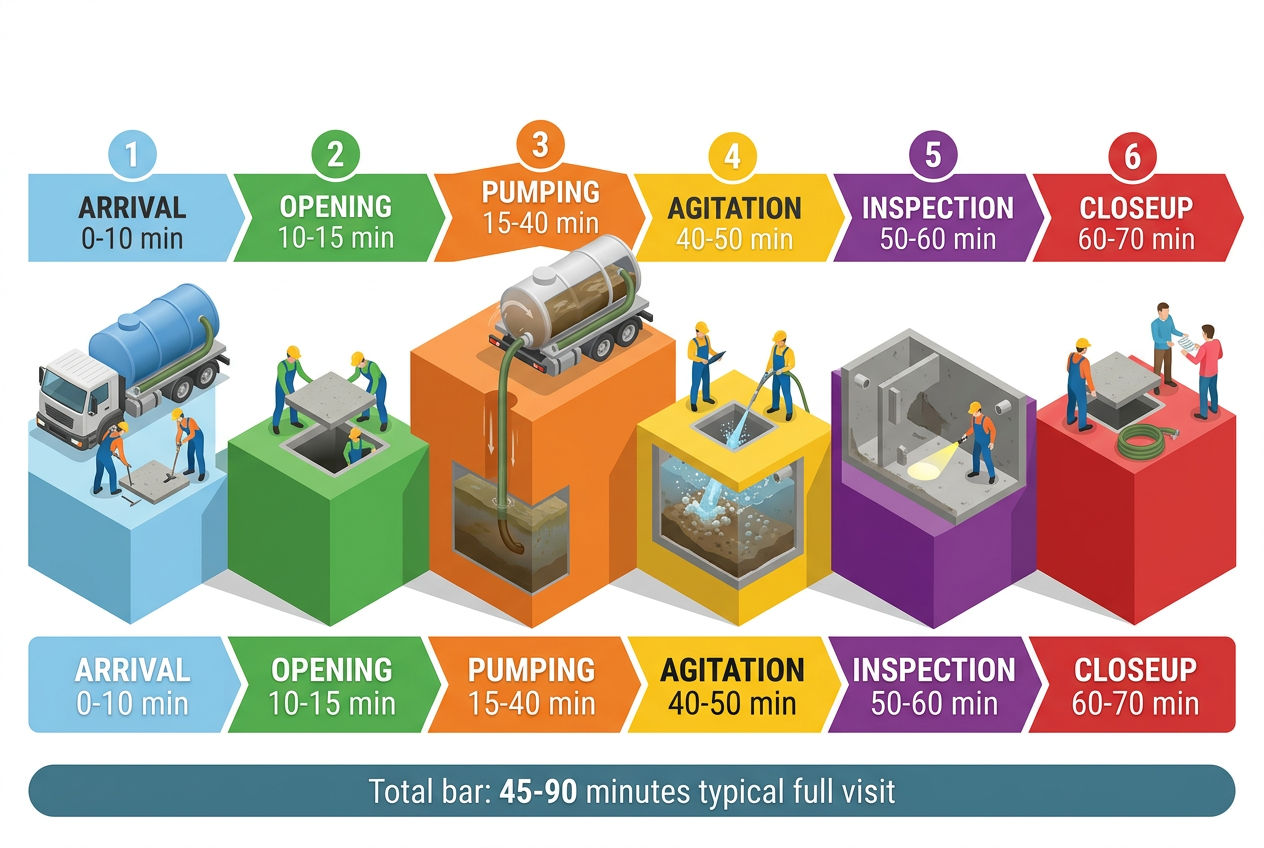
Here's how the typical septic tank pumping process breaks down from start to finish:
Step-by-Step Breakdown
1. Arrival and setup (5–10 minutes)
The technician parks the vacuum truck - usually a 2,500–4,000 gallon unit - and assesses access. They'll check where your tank is located relative to the truck to plan hose routing.
2. Locating and uncovering the tank (0–60 minutes)
This is the wildcard. If you have a riser (the plastic or concrete collar that brings the lid to ground level), the tech walks straight to it. If the lid is buried - which is common on systems installed before the 1990s - they have to probe the yard, check old records, or use a locating tool. Digging by hand or with a small shovel to reach a buried concrete lid adds 20–45 minutes and sometimes a sore back for both of you.
3. Opening the access lid (2–5 minutes)
Cast-iron or concrete lids require a pry bar and some muscle. Modern riser lids pop off in seconds.
4. Inserting the hose and pumping (20–45 minutes)
The vacuum truck's hose - typically 4 inches in diameter - goes into the tank and pulls out the sludge, scum, and liquid contents simultaneously. The tech will work the hose around to break up compacted sludge at the bottom. A 1,000-gallon tank that's been pumped on schedule clears in about 20–25 minutes. One that hasn't seen a pump truck in 12 years? Budget 35–40 minutes for the same size tank.
5. Checking sludge and scum layers and inspection (5–15 minutes)
After pumping, a good technician doesn't just pack up. They inspect the inlet and outlet baffles, check for cracks in the tank walls, and look at the condition of the effluent filter (such as a Polylok PL-122 or Zabel A1800) if one is installed. This is also when they check flow from the house and watch the drain field / leach field for any signs of backflow - which would indicate serious trouble downstream.
6. Closing the tank and cleanup (5–10 minutes)
The lid goes back on, any excavated soil gets replaced, and the area is cleaned up.
7. Paperwork, payment, and recommendations (5–10 minutes)
Most states require pumpers to document the service. Minnesota's Pollution Control Agency (MPCA), for example, requires licensed pumpers to file disposal manifests with the county after every pump-out. Your tech should give you a written record of findings and recommendations.
Free download
Free: the Septic Fridge Card — what to flush, what never to.
The Do / Don’t card the whole family can see, plus the Survival Kit: emergency flowchart, warning-sign decoder and pump-schedule card. One printable PDF.
What Makes Septic Pump-Out Time Vary So Much?
Tank Size Is the Starting Point
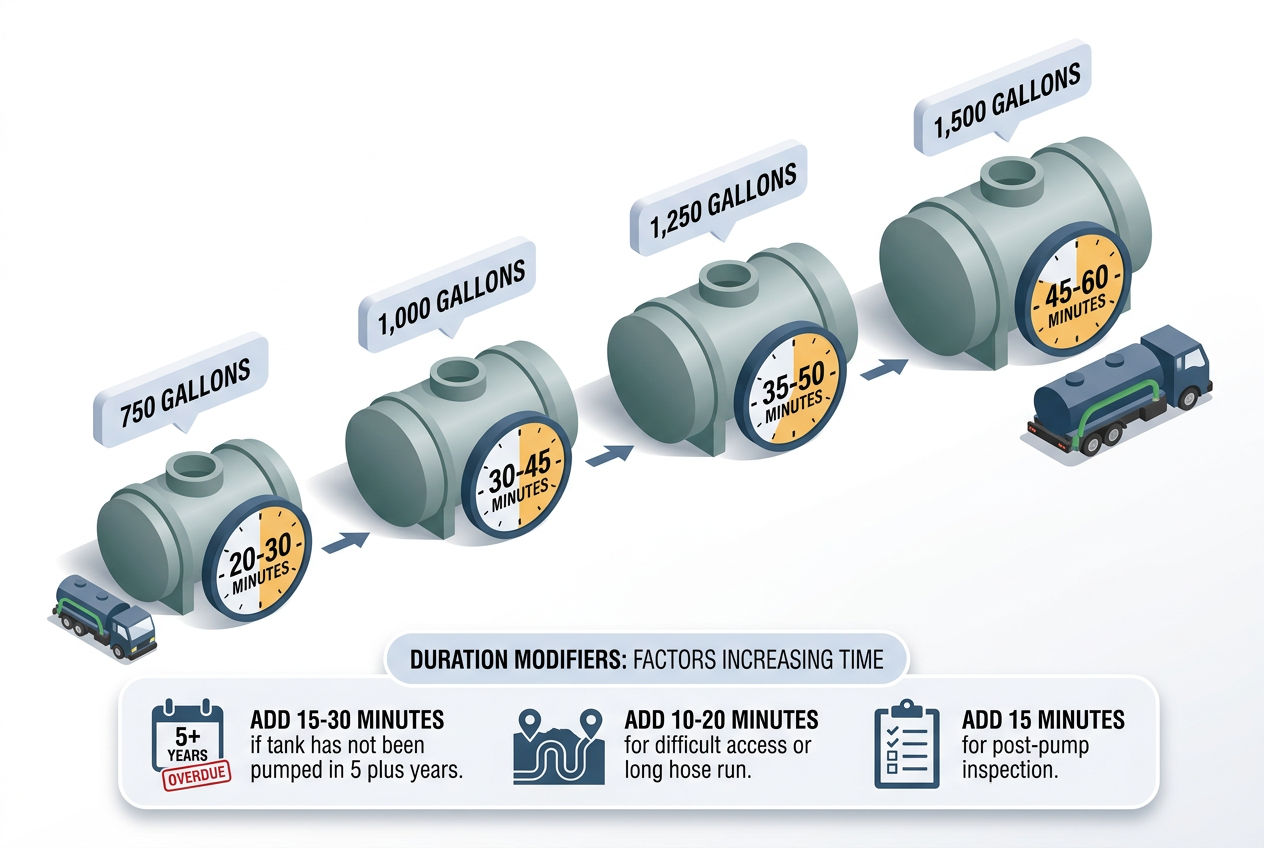
The biggest driver of how long septic pumping takes is simply how many gallons need to move through that hose. The EPA estimates that roughly 21 million U.S. households rely on septic systems, and most residential tanks fall between 1,000 and 1,500 gallons. Here's how size maps to pumping time:
- 750-gallon tank: ~15–20 minutes of active pumping. Common in older homes, small cottages, or 1–2 person households.
- 1,000-gallon tank: ~20–30 minutes. The most common residential size for a 3–4 person household.
- 1,250-gallon tank: ~25–35 minutes. Often found in larger homes built after 2000.
- 1,500-gallon tank: ~30–45 minutes. Standard for 4–6 person households or homes with garbage disposals.
- 2,000+ gallon tank: ~45–60+ minutes. Commercial properties, large homes, or multi-tank systems.
📊 Quick Fact: A family of four generates roughly 400 gallons of wastewater per day according to EPA estimates. That math is exactly why how often you pump your septic tank matters - the longer you wait, the more compacted the sludge layers become and the longer the job takes.
The Access Problem: Risers vs. Buried Lids
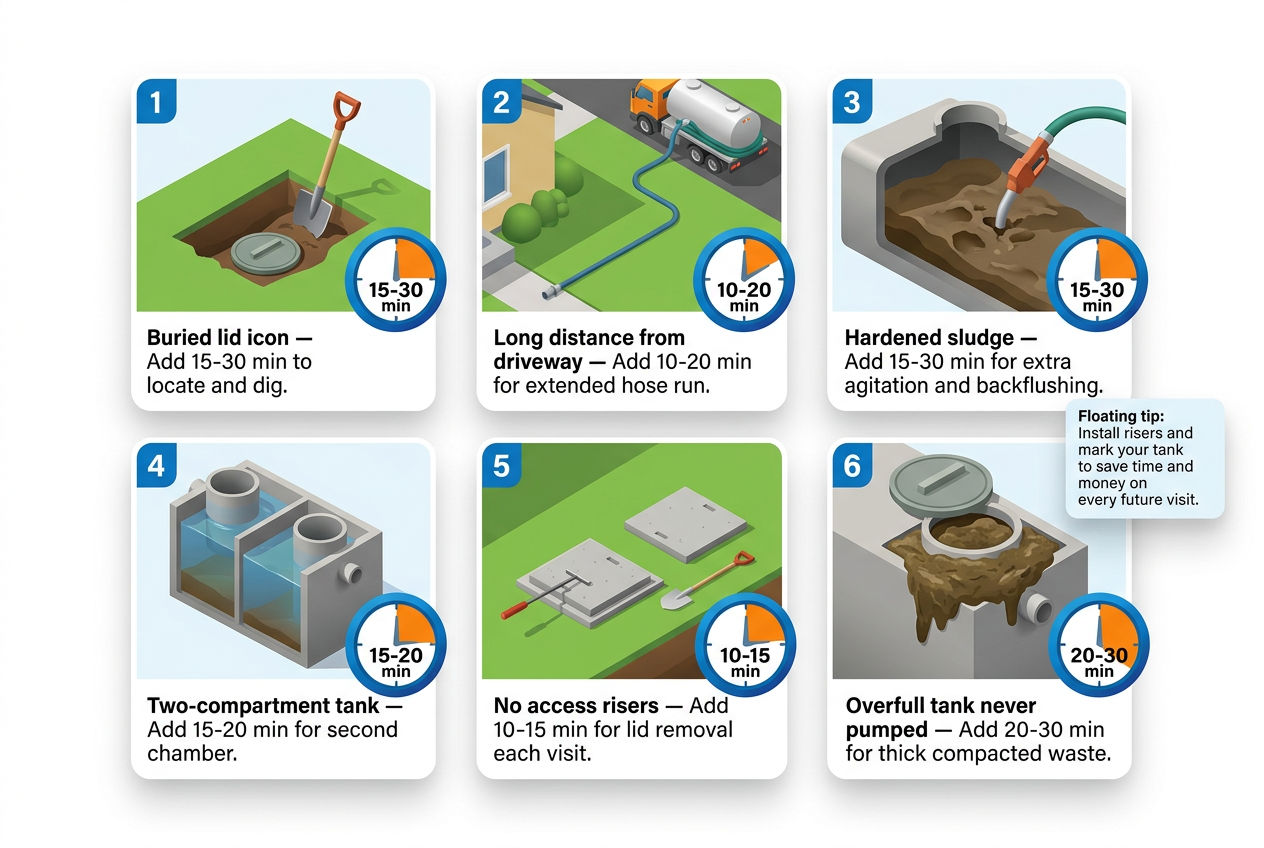
Nothing adds time to a septic service call faster than a buried lid. If your tank was installed in the 1970s or 80s, there's a good chance the concrete lid sits 6–18 inches underground with no riser.
Locating that lid can add 15–60 minutes depending on whether the tech has a map, a tank-locating tool, or just a probe rod and patience. Digging to expose a buried lid adds another 20–45 minutes.
✅ Pro Tip: Some companies will install a riser during the same visit - typically a Polylok or Infiltrator Water Technologies unit - which takes 30–60 additional minutes but saves all that time on every future visit. It's worth asking your provider about this option. You can read more about what a septic tank riser is and whether your system needs one.
How Long Since the Last Pump-Out?
The EPA recommends pumping every 3–5 years for most households. When that schedule slips - say, a tank that hasn't been serviced in 10+ years - the sludge layer at the bottom becomes dense and compacted. That adds 15–30 minutes to the pumping time as the technician works to break it up and draw it out. In extreme cases, the tech may need to add water to the tank to re-suspend the solids.
Bundled Inspection Services
Many septic service companies offer a septic tank inspection bundled with the pump-out. This adds 15–30 minutes but gives you a professional assessment of your baffles, tank walls, and drain field condition.
⚠️ Warning: If you're buying or selling a home, this isn't optional - it's essential. Catching a cracked baffle wall early costs $150–400 to repair. Missing it can lead to drain field problems that run $3,000–$15,000 to fix.
Distance from Truck to Tank
Vacuum trucks have hose limits. Most carry 100–150 feet of 4-inch hose. When your tank sits far from where the truck can park - across a long driveway, behind a garage, or on a slope - the tech has to run more hose, which reduces suction efficiency and slows the pump-out. Some companies carry extension hoses; others charge extra for difficult access.
How Do Seasons Affect Septic Pump-Out Time?

Spring and Summer: Longer Waits, Not Longer Jobs
Spring (March–May) is peak season for septic pumping. Snow melt and rain remind homeowners their system exists, and phone lines at septic companies get busy fast. Booking lead times of 1–3 weeks are common. The pump-out itself doesn't take longer, but getting an appointment does.
Summer brings a second surge in rural and lake-country areas - vacation homes and seasonal cabins all need service, and rural providers are stretched thin. Schedule early or expect to wait.
Fall: The Best Time to Book
Septic professionals consistently recommend fall (September–November) as the ideal time to pump. Demand is lower, appointment slots are easier to get, and you're setting your system up before winter stress. If you're in a northern state and haven't pumped in the last 3 years, booking in October is a smart move.
Winter: Frozen Ground Means Serious Time Additions
In cold-climate states like Minnesota, Wisconsin, Michigan, and upstate New York, winter pumping is a different experience. Frozen ground makes locating and accessing buried lids significantly harder - adding 1–2 hours in the worst cases. Some companies charge a premium for winter service or decline it entirely when frost lines are deep.
📊 Quick Fact: Minnesota's frost line reaches 42–60 inches in severe winters, which is why many homeowners in northern states treat fall pumping as a non-negotiable annual ritual.
If you do need winter service, read our guide on septic tank pumping in winter before you call.
Can I Be Home During the Pump-Out?
Yes, and you should be. Being present lets you ask questions, get a direct verbal assessment of your system's condition, and confirm the technician actually inspected the baffles. You don't need to hover, but being available when they're done is smart.
You can absolutely use your home's other spaces freely during the appointment - just avoid running large water loads like laundry or dishwasher cycles, which can push water into the tank and make the tech's job harder.
✅ Pro Tip: Can you use water during the pump-out itself? Technically yes, but it's better to wait. Running water while the hose is in the tank just adds to the volume being removed and can stir up solids that were settling. Tell your household to hold off on showers and laundry for the 30–45 minutes the pumping is active.
How Do You Know When Your Septic Tank Needs Pumping?
You shouldn't wait for symptoms - by that point, you're already behind. But if your system is overdue, you'll often notice:
- Slow drains throughout the house (not just one fixture)
- Gurgling sounds in the pipes
- Wet soggy patches over the drain field
- Sewage odors inside or near the tank
A full breakdown of signs your septic tank needs pumping can help you catch problems before they become emergencies.
Recommended Pumping Intervals
For most households, the EPA's guidance is straightforward: pump every 3–5 years. Here's how household size affects that timeline:
| Household Profile | Tank Size | Recommended Interval |
|---|---|---|
| 1–2 people | 1,500 gal | 5–7 years |
| 3–4 people | 1,000 gal | 3–4 years |
| 4–6 people | 1,500 gal | 3–4 years |
| Any size with garbage disposal | Any | Every 2 years |
⚠️ Warning: Add a garbage disposal and drop that interval to every 2 years - ground food waste dramatically accelerates sludge accumulation.
A 2-person household with a 1,500-gallon tank? You might stretch to 6–7 years safely, but have a technician use a sludge judge (a clear tube used to measure sludge depth) at the 5-year mark to verify.
What Does Septic Pumping Cost?
Nationally, most homeowners pay $300–$600 for a standard residential pump-out. A 1,000-gallon tank in Central Florida typically runs $275–$375. The same tank in rural Minnesota runs $350–$500 because of longer drive times and seasonal access complications. Tank size, local labor rates, and any add-on services like riser installation or inspection all affect the final number.
For a detailed breakdown by region and tank size, see our septic pumping cost guide.
How to Speed Up Your Next Pump-Out Appointment
You can't make the vacuum truck work faster, but you can eliminate the time-wasters:
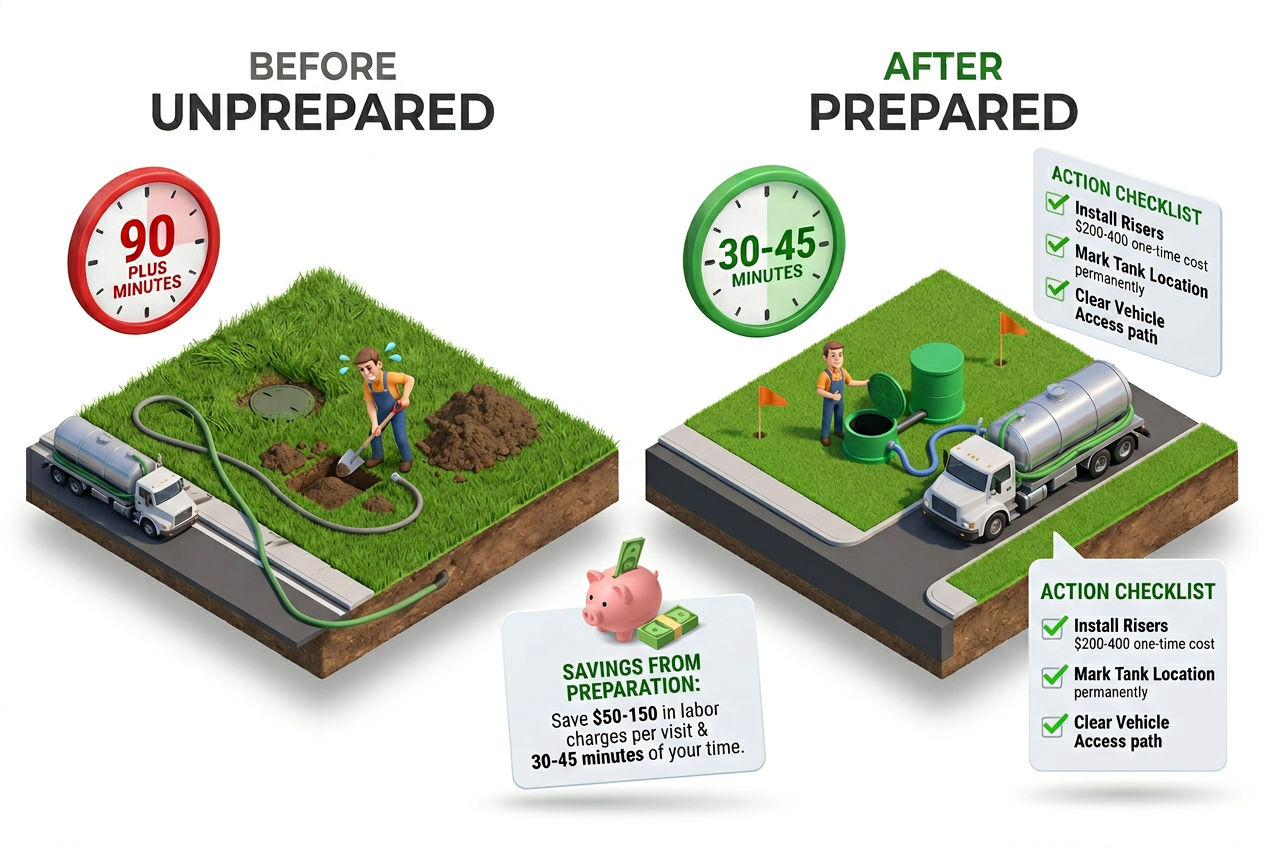
- Know where your tank is. Sketch a rough diagram or drop a pin on your phone. Even approximate measurements from the house foundation help.
- Install a riser if you don't have one. Ask your pumper about adding one during this visit.
- Keep records. Know your tank size and when it was last pumped. This information is on your permit, often filed with the county health department.
- Clear the area. Move lawn furniture, garden hoses, or vehicles that block truck access before the crew arrives.
- Book in fall. You'll wait less and the ground will cooperate.
For more on keeping your system in shape between service visits, the septic system maintenance guide covers what you can - and can't - do on your own.
Ready to schedule? Find a licensed septic pumper near you on SepticTankHub.
Learn more about our septic pumping services.
Related reading: septic system smell.
Sources & Methodology
- U.S. Environmental Protection Agency (EPA) - Septic Systems Overview: Source for recommended pumping frequency (3–5 years), estimated U.S. household septic usage (21 million), and daily wastewater generation figures.
- National Association of Wastewater Technicians (NAWT): Industry benchmarks for pumping durations and inspection protocols referenced throughout.
- Minnesota Pollution Control Agency (MPCA): Source for disposal manifest filing requirements and frost-line depth data for cold-climate reference.
- Polylok, Inc. / Infiltrator Water Technologies: Product specifications for effluent filters (PL-122) and riser systems referenced in equipment context.
- Regional septic service provider data: Cost ranges and appointment duration estimates derived from aggregated service provider data across Southeast, Midwest, and Northeast U.S. markets.
Need help with your septic system? Browse local septic companies in Colorado or Minnesota.
Was this article helpful?
Frequently Asked Questions
Recommended Resources
📖 Related Articles
- What to Expect When Getting Your Septic Tank Pumped
- How Are Septic Tanks Pumped? The Complete Process
- How Often Should You Pump Your Septic Tank?
- What Is a Septic System? How It Works (Visual Guide)
- What Is a Drain Field? (And How Does It Work?)
- Should You Pump Your Septic Tank Before Winter?
- 8 Signs Your Septic Tank Needs to Be Pumped
- The Complete Septic Tank Maintenance Guide
💰 Cost Guides
Find Septic Professionals Near You
Compare licensed, verified septic companies by area — top county markets and cities below, or browse all 50 states.
County markets
Popular cities
