
Quick Answer
OxiClean is generally safe for septic systems when used in normal household quantities. Its active ingredient — sodium percarbonate — breaks down into water, oxygen, and soda ash within hours of dissolving. At typical laundry doses, those byproducts do not harm the bacterial colonies your septic tank depends on. Large, concentrated single-event use is a different story.
Key Takeaways
- OxiClean's active ingredient (sodium percarbonate) biodegrades into non-toxic byproducts within hours
- Standard laundry doses (1–2 scoops per load) are considered safe for septic systems by most university extension services
- OxiClean does NOT carry an official "septic safe" certification — no such EPA label exists for cleaning products
- Chlorine bleach is far more destructive to septic bacteria than oxygen bleach; a single ¼-cup dose of chlorine bleach can significantly reduce bacterial populations
- The real risk isn't one load of laundry — it's accumulated heavy chemical use, high water volume, and not keeping up with regular pumping
Is OxiClean Safe for Septic Systems?
Yes — with normal use. OxiClean Versatile Stain Remover is the product line most homeowners on septic systems should reach for, and at 1–2 scoops per laundry load used a few times per week, it sits well within the range that university extension programs consider acceptable. The concern isn't the chemistry so much as the quantity: oxygen bleach breaks down into harmless byproducts quickly, but dumping large concentrations at once can temporarily stress bacterial colonies that your tank depends on for waste processing. For most households doing normal laundry, OxiClean is not the threat.
What's Actually in OxiClean?
OxiClean's workhorse ingredient is sodium percarbonate, which makes up roughly 50–60% of the formula. The rest is mostly soda ash (sodium carbonate) with small amounts of surfactants depending on the product line.
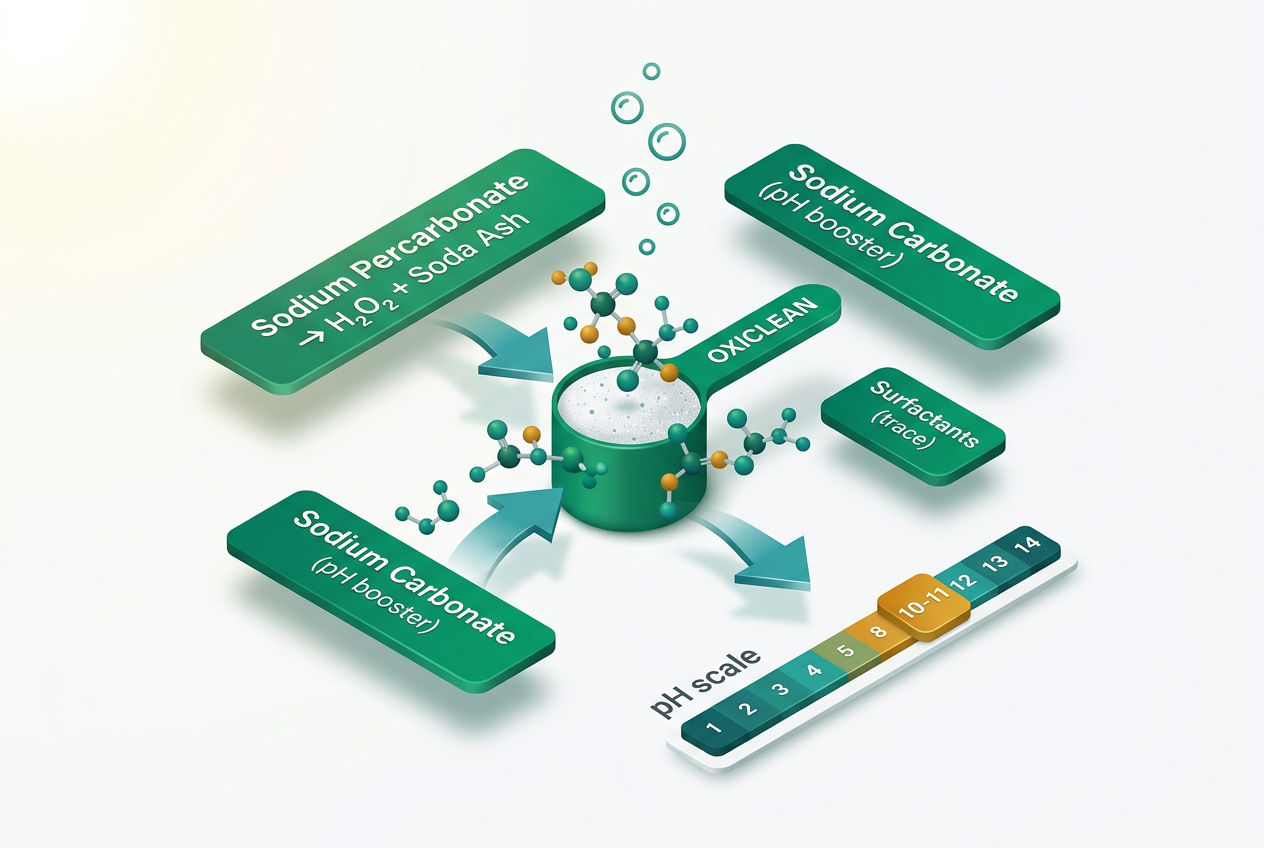
Here's what happens the moment sodium percarbonate hits water: it splits into hydrogen peroxide and soda ash. The hydrogen peroxide does the stain-lifting work. Then, within a few hours, both compounds break down further — the hydrogen peroxide releases oxygen and becomes water, while the soda ash dissolves harmlessly.
By the time your laundry water reaches the septic tank, you're essentially sending in heavily diluted, partially degraded byproducts. Not a concentrated chemical bomb.
That said, the dissolved solution has a pH of roughly 10–11. Your septic tank prefers a pH between 6.5 and 7.5 for optimal bacterial activity. A couple loads of laundry won't shift the tank's overall pH meaningfully — the volume is too small relative to the tank's liquid capacity. But if you're running eight loads a day and pre-soaking items in large OxiClean concentrations? That's when cumulative impact becomes a real question worth asking.
For a deeper look at what's happening inside your tank, our guide on what is a septic system walks through the full breakdown process.
Does OxiClean Kill the Bacteria in a Septic Tank?
No — at normal use levels, OxiClean does not kill the bacteria in a healthy septic tank. A functioning 1,000-gallon tank contains billions of anaerobic bacteria per gallon. Those colonies handle enormous processing loads daily — breaking down solids, managing waste chemistry, and keeping effluent quality acceptable before it reaches the drain field. A couple scoops of oxygen-based cleaner diluted through 70–100 gallons of daily household wastewater per person simply isn't going to disrupt that at scale.
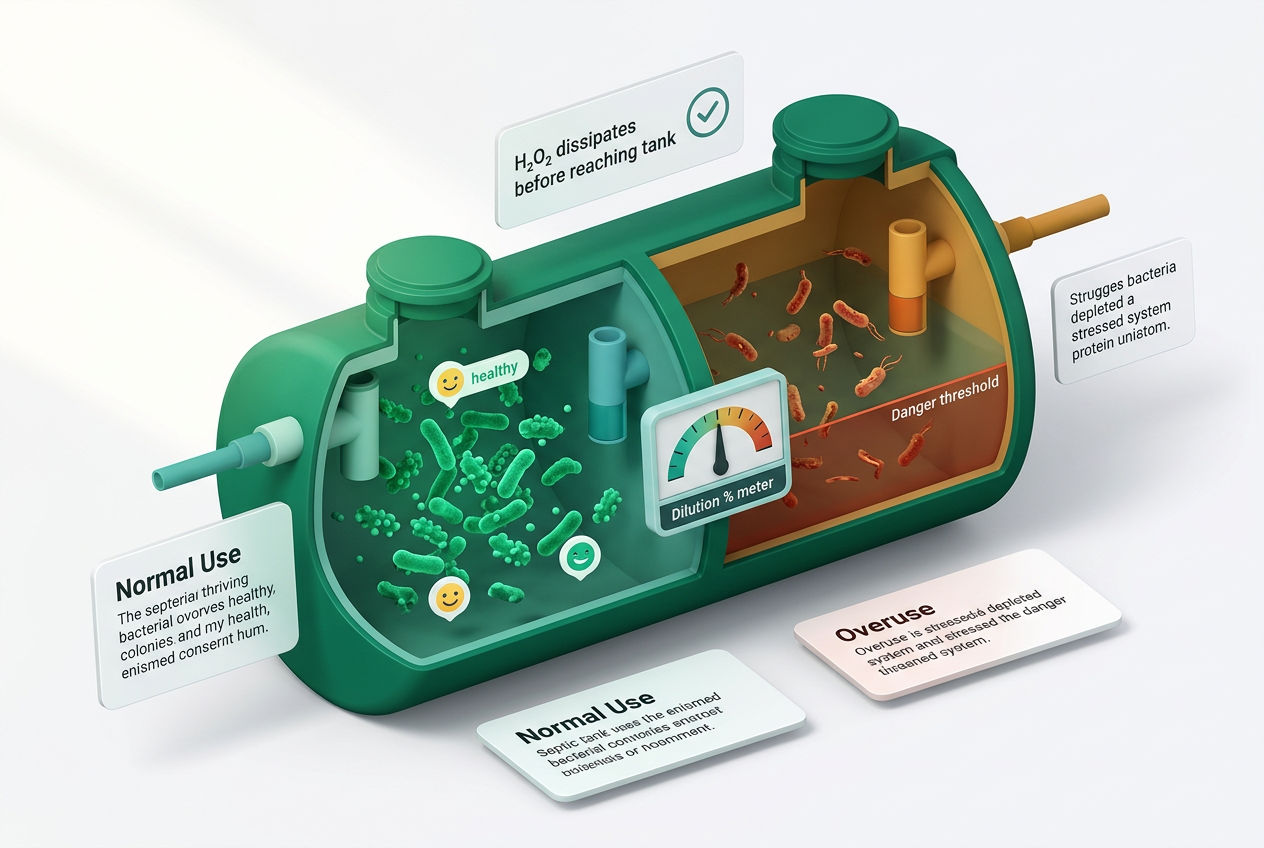
The bacteria story changes when you introduce genuinely harmful ingredients. Triclosan (found in some antibacterial soaps), quaternary ammonium compounds (common in disinfectant sprays), formaldehyde, and methylene chloride are the real enemies of septic biology. These compounds are specifically designed to kill microorganisms — and they don't discriminate between the bacteria on your countertop and the ones in your tank doing critical work.
OxiClean doesn't contain any of those. It's an oxidizer, not an antibacterial agent. If you're curious about what really does damage septic bacteria, our breakdown of what kills septic bacteria is worth a read.
Is Oxygen Bleach Better Than Chlorine Bleach for Septic Systems?
Yes — by a significant margin. Chlorine bleach (sodium hypochlorite) is genuinely dangerous to septic systems. University extension services and the EPA both flag it as a product to use sparingly. According to guidance from North Carolina State University's extension program, as little as ¼ cup of chlorine bleach poured directly or concentrated into wastewater can significantly reduce septic bacteria populations. Do that regularly — daily toilet bowl cleaning with straight bleach, weekly drain treatments — and you can crash the biological activity in your tank badly enough to cause sluggish treatment, solids backup, and eventual drain field stress.
Oxygen bleach (OxiClean's category) doesn't work the same way. It oxidizes stains rather than poisoning microbial life. The EPA's septic system guidance at epa.gov/septic identifies chlorine-based products as a concern but does not list oxygen bleach-based products in the same high-risk category.
For a side-by-side look at bleach and your system, see is bleach safe for septic systems.
How Much OxiClean Is Safe to Use with a Septic Tank?
There's no universally certified "safe dose" because no federal agency certifies cleaning products as septic-safe. OxiClean (made by Church & Dwight) does not carry a septic safety certification on its packaging. No such EPA label exists for cleaning products. Anyone who tells you otherwise is either misinformed or selling something.
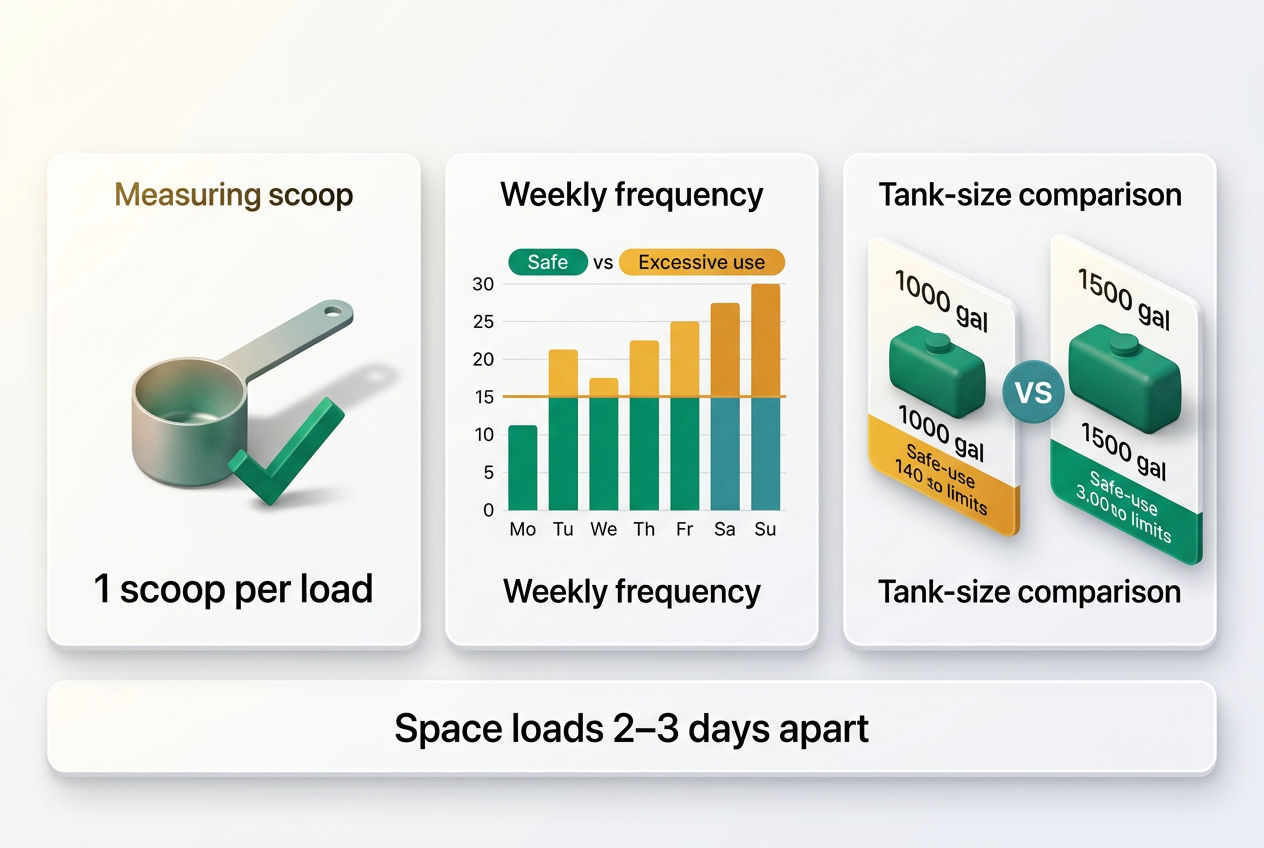
What we do have is practical guidance from university cooperative extension programs. The general consensus — consistent with advice from Iowa State University Extension and similar programs — is that 1–2 scoops of OxiClean per laundry load, used 2–4 times per week, falls well within safe use for a normally functioning septic system.
Consider the dilution math: the average household generates 70–100 gallons of wastewater per person per day. A family of four sends 280–400 gallons through the system daily. Two scoops of OxiClean dissolved in a 25-gallon wash cycle gets diluted down to trace concentrations well before it reaches the baffle wall of your tank.
What's NOT safe:
- Dumping a full container of OxiClean into a drain at once (common "drain deodorizing" advice floating around online)
- Pre-soaking large loads in concentrated OxiClean solution and draining them all at once
- Combining OxiClean heavy use with other chemical stressors on the same day
The dose is what matters. One scoop in a laundry load is a controlled, diluted exposure. Pouring a canister down a drain is a very different event for your tank's biology.
OxiClean Product Lines: Are They All the Same?
Not quite. The OxiClean brand covers several distinct formulas, and they're not identical.
| Product | Primary Ingredients | Septic Concern Level | Notes |
|---|---|---|---|
| OxiClean Versatile Stain Remover | Sodium percarbonate, soda ash | Low | Safest option; minimal additives |
| OxiClean White Revive | Sodium percarbonate, optical brighteners | Low–Moderate | Brighteners are not biodegradable |
| OxiClean Laundry Detergent | Surfactants, sodium percarbonate | Low–Moderate | Surfactant load varies by formula |
| OxiClean Max Force Spray | Surfactants, solvents | Moderate | Use sparingly; solvent content higher |
| OxiClean Carpet Spray | Surfactants, fragrance | Not applicable | Not entering drain system directly |
Source: Church & Dwight product safety data sheets; septic concern levels based on ingredient analysis and university extension guidance.
The OxiClean Versatile Stain Remover — the big white tub most people picture — is the least problematic for septic use. OxiClean White Revive contains optical brighteners, which are synthetic compounds that don't biodegrade easily and can accumulate in the environment over time. They're not acutely toxic to septic bacteria, but they're not ideal either. Use it occasionally rather than as your daily detergent.
What Laundry Products Should You Avoid with a Septic System?
OxiClean isn't the main threat. Here's what actually causes damage:
Avoid or minimize:
- Antibacterial detergents containing triclosan or triclocarban — these are specifically designed to kill bacteria
- Chlorine bleach — even small amounts used consistently degrade bacterial populations in the tank
- Phosphate-heavy detergents — phosphates are largely banned in laundry products in the U.S. now, but older products or some imported brands still contain them; phosphates disrupt the drain field's soil chemistry
- Quaternary ammonium compounds ("quats") — found in many fabric softeners and disinfectant rinses; highly toxic to septic microorganisms
- Non-biodegradable surfactants — these coat the inlet baffle and can interfere with the scum layer's natural separation
The safest laundry routine for a septic system is a phosphate-free, fragrance-free, biodegradable liquid detergent in moderate quantities. Our guide to septic safe laundry detergent covers specific product recommendations.
For a broader view of what goes into your system, see our complete septic safe cleaning products guide — that's the central resource for this topic.
What Cleaning Products Are Safe for Septic Systems?
Stick to products that are biodegradable, phosphate-free, free of antibacterial agents, and low in surfactant concentration.
Generally safe:
- Oxygen bleach (OxiClean Versatile, similar sodium percarbonate products)
- Plain white vinegar — see is vinegar safe for septic systems
- Borax in moderate quantities — see is borax safe for septic tanks
- Biodegradable liquid dish soaps (Dr. Bronner's, Seventh Generation Free & Clear)
- Enzyme-based drain treatments
Use sparingly or avoid:
- Chlorine bleach
- Antibacterial soaps and detergents
- Chemical drain cleaners — see septic safe drain cleaner for alternatives
- Products with quats or synthetic fragrance compounds
The cleaning product question is actually less important than the volume question. How many loads of laundry you run — and whether you spread them across the week or pile them into one day — affects your system more than which brand of oxygen bleach you buy. Our guide on how many loads of laundry are safe for a septic system covers that calculation in detail.
Does Your Laundry Routine Affect Septic Tank Pumping Frequency?
Free download
Free: the Septic Fridge Card — what to flush, what never to.
The Do / Don’t card the whole family can see, plus the Survival Kit: emergency flowchart, warning-sign decoder and pump-schedule card. One printable PDF.
Yes — and the relationship is more direct than most homeowners expect. Septic tanks need pumping when solids accumulate to roughly 30–50% of tank capacity. Aggressive chemical use doesn't speed up solids accumulation directly, but it does reduce the biological efficiency that helps break those solids down.
A household of four using a normal laundry routine — 8–10 loads per week, standard detergent and occasional OxiClean — should expect a pumping interval of roughly 3–4 years on a 1,000-gallon tank. Add a garbage disposal to that picture and you're looking at every 2–3 years, because food solids load the tank significantly faster.
If you're running a household that does 12+ loads per week, uses OxiClean heavily, and occasionally blasts drains with chemical cleaners, you may want to schedule pumping every 2–3 years regardless. The cost of an extra pump-out every few years — typically $300–$425 in suburban markets, $450–$650 in rural areas like northern New England — is trivial compared to a failed drain field.
See our septic pumping cost guide for regional pricing and what to expect from a service visit.
Should You Worry About Seasonal Changes and OxiClean Use?
Probably not from the OxiClean side — but seasonal patterns do affect septic system performance in ways that indirectly matter. In northern climates, soil temperatures drop significantly through winter, which slows microbial activity in both the tank and the drain field. A system running at reduced biological efficiency during a cold snap is marginally more sensitive to chemical inputs than the same system in July.
This doesn't mean you need to stop using OxiClean in January. It means winter is a bad time to run high-volume laundry days and dose drains with chemical treatments simultaneously. Spring is also worth noting: freeze-thaw cycles can temporarily saturate drain fields, reducing their capacity to accept effluent. If your drain field is recovering from a wet spring, keeping chemical loads low for a few weeks is a reasonable precaution.
Summer and fall are typically the lowest-risk periods for septic systems — soil conditions favor drainage, biological activity is high, and tanks process solids efficiently. That's when a heavy cleaning project using more OxiClean than usual is least likely to cause problems.
How Do You Know If Your Septic System Is Under Stress?
Watch for these six warning signs that bacterial activity may be compromised or your system is being overtaxed:
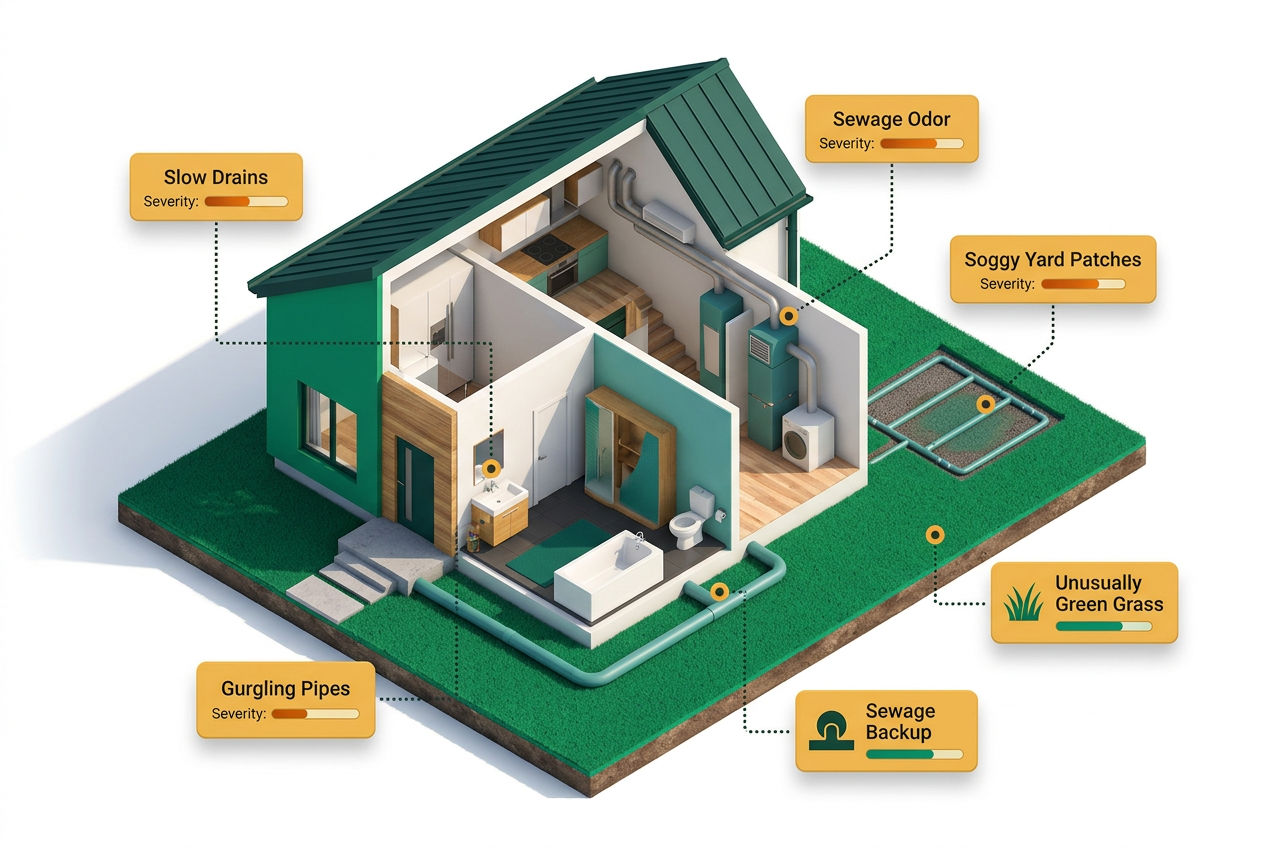
- Slow drains throughout the house — not just one fixture, but multiple
- Gurgling sounds from toilets or drains when water drains elsewhere
- Sewage odor near the drain field or around the tank lid
- Wet or spongy ground over the drain field when it hasn't rained
- Unusually green or lush grass directly over drain field lines — effluent is surfacing
- Sewage backup into the lowest fixtures in the house
Any one of these warrants a call to a professional. Multiple symptoms appearing together is an urgent situation — don't wait to see if it resolves. Our septic inspection page explains what a diagnostic visit covers and what inspectors look for.
Is It Safe to Use OxiClean in a Washing Machine Connected to a Septic Tank?
Yes — using OxiClean in a washing machine connected to a septic system is safe at standard doses. The washing machine actually provides helpful dilution: a standard top-load cycle uses 20–30 gallons of water, while a high-efficiency front-loader uses 10–15 gallons. Either way, your 1–2 scoops of OxiClean are dissolved through significant water volume before they even leave the machine.
The one washing machine habit that does create septic stress isn't detergent choice — it's running all your laundry on a single day. Six to eight loads back-to-back on a Saturday floods the tank with wastewater faster than the system can process it, pushing partially treated effluent toward the drain field. Spreading loads across three or four days solves that problem entirely and costs nothing.
Keeping Your Septic System Healthy Long-Term
What actually protects a septic system over years and decades? Three things, in order of importance:
1. Regular pumping. Every 3–5 years for most households. If you have a garbage disposal or a large household, every 2–3 years. Skipping pump-outs is the single most common cause of premature drain field failure.
2. Water volume management. Distribute laundry across the week. Fix running toilets immediately — a toilet running 24 hours adds hundreds of gallons to your daily load. Install water-efficient fixtures if you're on an older system.
3. Chemical discipline. Stop using chlorine bleach as a drain treatment. Switch to enzyme-based drain maintenance products. Use antibacterial soaps only when genuinely needed, not as a default hand soap. These changes matter far more than which brand of oxygen bleach you buy.
OxiClean in normal laundry quantities occupies a very small part of the risk picture. The damage that actually sends homeowners to the drain field replacement estimate — which runs $5,000–$15,000 depending on system type and regional soil conditions — comes from years of neglect, chemical accumulation, and missed pump-outs compounding into a failure. Address those three priorities and your choice of stain remover becomes a minor variable.
Frequently Asked Questions
Is OxiClean laundry detergent septic safe?
OxiClean Laundry Detergent is safe for septic systems when used at the recommended dose — typically one scoop per load. The formula combines sodium percarbonate with surfactants. The percarbonate breaks down into water, oxygen, and soda ash quickly after entering your system. The surfactants are the ingredient worth watching: they vary by specific formula, but OxiClean's laundry detergent uses concentrations low enough that normal laundry use doesn't threaten bacterial colonies in a healthy tank.
Where people run into trouble is using laundry detergent and other chemical products heavily on the same day — running six loads while also cleaning drains with bleach, for instance. The compounding effect matters more than any single product. If you're doing two to four loads per week with OxiClean Laundry Detergent and maintaining a normal pump-out schedule, your septic system is not at meaningful risk from this product. For product comparisons, see our septic safe laundry detergent guide.
Is OxiClean Versatile Stain Remover safe for septic tanks?
OxiClean Versatile Stain Remover is the safest OxiClean product for septic tank use — and it's the one most households should default to. Its formula is straightforward: sodium percarbonate and soda ash, with minimal additives. Sodium percarbonate dissolves in water to form hydrogen peroxide and soda ash, both of which break down into harmless byproducts within hours. By the time that chemistry reaches your tank, you're dealing with trace concentrations of water, oxygen, and dissolved salts — nothing that disrupts anaerobic bacterial activity at normal laundry doses.
University extension guidance consistently places products in this ingredient category in the acceptable range for septic use. Church & Dwight, OxiClean's manufacturer, does not carry a formal septic-safe certification — no such EPA label exists for cleaning products — but the ingredient profile holds up to scrutiny. Use one to two scoops per load, spread your laundry across the week rather than batching it, and this product poses no meaningful risk to a properly maintained septic system.
Is OxiClean White Revive septic safe?
OxiClean White Revive is usable with septic systems but warrants more caution than the standard Versatile formula. The difference is optical brighteners — synthetic fluorescent compounds added to make whites appear brighter under UV light. These brighteners are not biodegradable. They don't break down in your septic tank the way sodium percarbonate does, and they can accumulate over time in the drain field environment.
That said, optical brighteners are not acutely toxic to septic bacteria at laundry-dose concentrations. They won't crash your tank's biological activity the way chlorine bleach can. The concern is chronic accumulation rather than acute damage. If you use White Revive occasionally — for periodic whitening of linens or towels — the impact on your system is negligible. Using it as your primary laundry product every week introduces a steady stream of non-biodegradable compounds that are better kept out of the drain field environment. For routine laundry on septic, stick with the standard Versatile Stain Remover.
Can you use oxygen bleach with a septic tank?
Yes — oxygen bleach is compatible with septic tanks at household use levels, and it's considerably safer than chlorine bleach. Oxygen bleach products like OxiClean work by releasing hydrogen peroxide when dissolved in water. That peroxide oxidizes stains and then breaks down into water and oxygen — both harmless to the anaerobic bacteria your septic tank depends on. Chlorine bleach, by contrast, releases sodium hypochlorite, which is specifically toxic to microorganisms. Even a quarter cup of chlorine bleach concentrated in wastewater can measurably reduce septic bacteria populations, according to North Carolina State University's extension guidance.
Oxygen bleach doesn't carry that risk profile. The EPA's septic system guidelines flag chlorine-based products as a concern but do not categorize oxygen bleach products the same way. For septic households that need a laundry booster or stain treatment, oxygen bleach is the correct category to choose. The dose still matters — large concentrated dumps are a different situation than standard laundry use — but routine washing with oxygen bleach products is not a threat to a healthy septic system.
Does OxiClean harm septic tank bacteria?
At standard laundry doses, OxiClean does not meaningfully harm septic tank bacteria. A healthy 1,000-gallon tank contains billions of anaerobic bacteria capable of processing substantial chemical variation in incoming wastewater. One to two scoops of OxiClean dissolved through a full wash cycle and then diluted into hundreds of gallons of daily household wastewater doesn't reach concentrations that threaten those populations.
The products that genuinely harm septic bacteria are antibacterial agents containing triclosan or triclocarban, quaternary ammonium compounds found in many disinfectant products, and chlorine bleach used regularly in drain cleaning or toilet treatment. OxiClean contains none of these. It's an oxidizing agent, not an antimicrobial — a meaningful distinction. If you've been using OxiClean regularly and notice signs of septic stress like slow drains, gurgling, or drain field odor, the cause is almost certainly not the OxiClean. Look first at chlorine bleach use, antibacterial soap habits, water volume, and pump-out history.
What laundry detergent is safe for septic systems?
The safest laundry detergents for septic systems share four characteristics: phosphate-free, biodegradable surfactants, no antibacterial agents (no triclosan or triclocarban), and low fragrance load. Liquid detergents generally outperform powders for septic use because powders can contain fillers — sodium sulfate, clay compounds — that add unnecessary solids to the tank.
Specific products that meet these criteria include Seventh Generation Free & Clear, ECOS liquid detergent, and Arm & Hammer Sensitive Skin. OxiClean Versatile Stain Remover used as a laundry booster alongside a mild biodegradable detergent is a reasonable combination. What to avoid: anything labeled "antibacterial," any product containing quaternary ammonium compounds or quats (check the label), and chlorine bleach as a laundry additive. Volume matters as much as chemistry — spreading four to five loads across the week rather than running them all on one day protects your system more than any single product choice. Our septic safe laundry detergent guide covers specific brand recommendations in detail.
Sources & Methodology
Sources consulted:
- U.S. Environmental Protection Agency — Septic System Owner's Guide: epa.gov/septic
- North Carolina State University Cooperative Extension — Household Chemicals and Septic Systems
- Iowa State University Extension and Outreach — Caring for Your Septic System
- Church & Dwight Co. — OxiClean Product Safety Data Sheets (sodium percarbonate, OxiClean Versatile Stain Remover, OxiClean White Revive)
- University of Minnesota Extension — Protecting Your Septic System
Methodology note: Septic concern levels assigned in the product comparison table reflect ingredient analysis cross-referenced against university extension guidance on compounds known to affect septic biological activity. No independent laboratory testing was conducted. Pumping frequency estimates are based on standard industry guidelines and will vary based on tank size, household occupancy, water use habits, and local soil conditions. Regional pumping cost figures reflect 2024–2025 service estimates from multiple markets and should be verified with local providers.
Was this article helpful?
Frequently Asked Questions
Recommended Resources
📖 Related Articles
- What Is a Septic System? How It Works (Visual Guide)
- What Kills Septic Tank Bacteria? (14 Things to Avoid)
- Is Bleach Safe for Septic Systems?
- The Best Septic-Safe Laundry Detergents
- Septic-Safe Cleaning Products: The Complete List (Safe vs. Avoid)
- Is Vinegar Safe for Septic Systems?
- Is Borax Safe for Septic Tanks?
- The Best Septic-Safe Drain Cleaners (and What to Never Pour In)
- How Many Loads of Laundry Can You Do With a Septic System?
💰 Cost Guides
🔧 Services
Find Septic Professionals Near You
Compare licensed, verified septic companies by area — top county markets and cities below, or browse all 50 states.
County markets
Popular cities
