
Quick Answer
A full septic tank shows specific warning signs: every drain in the house slows down at once, sewage odors appear near the tank or drain field, toilets gurgle when flushed, and standing water develops in the yard above the system. These symptoms differ from a simple pipe clog, which typically affects only one fixture. Identifying the correct problem saves you from paying for the wrong fix.
Key Takeaways
- A full tank affects all drains equally — a clog affects only one fixture or branch
- Sewage odors outdoors near the tank point to a full tank; odors at a single fixture point to a clog
- A normally functioning tank is always full of liquid — the issue is sludge buildup reducing capacity
- Pumping costs $300-$600 and solves a full tank; drain snaking costs $150-$300 and solves a clog
- If your tank was pumped within the last year and symptoms return, the problem is likely drain field failure, not a full tank
Something is wrong with your plumbing. Drains are slow, there's an odd smell, or the toilet isn't flushing properly. Before you call a plumber for a $150 drain snaking or a septic company for a $400 pump out, it's worth spending five minutes diagnosing the actual problem. A full septic tank, a clogged pipe, and a failing drain field all produce overlapping symptoms — but the fixes and costs are very different.
This guide walks you through the diagnostic process so you know exactly what's happening and who to call.
Find a licensed septic professional in your area on SepticTankHub.com
What Does "Full" Actually Mean for a Septic Tank?
Before diagnosing symptoms, you need to understand that a working septic tank is always full of liquid — and that's by design. Your septic system works by continuously receiving wastewater, settling solids to the bottom (sludge) and letting grease float to the top (scum), then releasing clarified liquid (effluent) into the drain field through the outlet pipe.
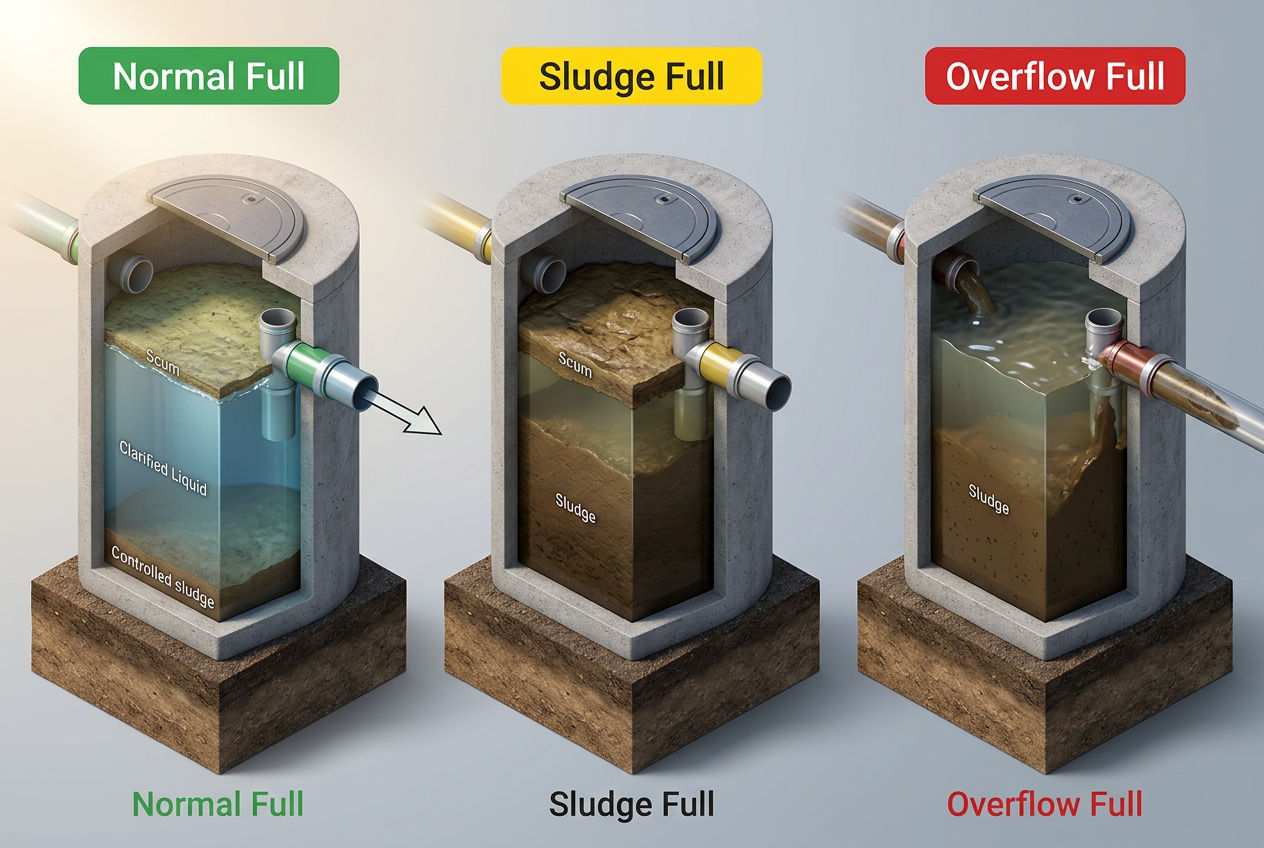
There are three types of "full" that mean very different things:
Normal full — the tank is filled with liquid to the outlet pipe level. Wastewater flows in, effluent flows out. The system is working correctly. This is what happens within days of pumping — the tank refills with liquid, which is completely normal. See our article on why your tank is full after pumping for more detail.
Sludge full — the sludge and scum layers have accumulated so much that they're taking up more than one-third of the tank volume. The tank can't settle solids effectively, and partially treated wastewater (with suspended solids) starts flowing to the drain field. You may or may not see symptoms yet, but damage is happening. This is when routine pumping is overdue.
Overflow full — the tank can't accept more wastewater. This happens when the outlet is blocked (by sludge, a damaged baffle, or tree roots), the drain field is saturated and can't accept effluent, or the inlet pipe is clogged. Wastewater has nowhere to go, so it backs up into the house or surfaces in the yard. This is the emergency scenario.
Key Insight: Most homeowners who think their tank is "full" are actually dealing with an outlet blockage or drain field saturation — not simply an overfilled tank. Pumping solves the immediate backup, but if the underlying cause isn't addressed, the problem returns within weeks.
What Are the 7 Signs of a Full Septic Tank?
These symptoms indicate your septic tank has reached capacity or your system is struggling to process wastewater. The more signs you notice simultaneously, the more likely the tank needs immediate attention.
1. All drains are slow at the same time. This is the hallmark symptom of a full tank. When every sink, shower, and tub in the house drains slowly — not just one — it means the tank can't accept wastewater at a normal rate. A single slow drain is usually a pipe clog. Multiple slow drains across different rooms means the tank or drain field is the bottleneck. See our slow drains and septic guide for a full diagnostic flowchart.
2. Toilets flush weakly or gurgle. A full tank creates back-pressure in the sewer line. When you flush, air trapped in the pipes gets pushed around, creating a gurgling sound in toilets, sinks, and floor drains. If your toilet won't flush properly and plunging doesn't help, the tank is likely the cause. Our septic tank gurgling guide covers this in detail.
3. Sewage odors in the yard. When the tank is overfull or the drain field is saturated, gases escape through the soil surface. You'll smell hydrogen sulfide (rotten eggs) near the tank area, around vent pipes, or over the drain field. Indoor odors from drains and toilets are a related but separate symptom — see our septic system smell guide for distinguishing causes.
4. Standing water or soggy ground over the drain field. Effluent that can't percolate into saturated soil rises to the surface. Wet, spongy ground over the drain field — especially when it hasn't rained — is a serious warning sign. This indicates either a full tank pushing solids into the drain field or drain field failure itself.
5. Sewage backup in the lowest drain. Wastewater backs up through the lowest point in your plumbing first — usually a basement floor drain, laundry sink, or ground-floor shower. This is the most urgent symptom. Stop using water immediately and call for an emergency pump out.
6. Lush, unusually green grass over the tank or drain field. A system releasing excess nutrients into the surrounding soil acts as unintentional fertilizer. If a strip of your lawn is noticeably greener, taller, or thicker than the rest — especially directly over the septic components — the system is leaking effluent into the shallow soil.
7. High sludge reading on measurement. If you can access your tank lid and have a sludge judge (a measuring stick), insert it into the tank. When the combined sludge and scum layers exceed one-third of the total tank depth, it's time to pump. Septic professionals do this check on every service call.
| Symptom | Full Tank | Pipe Clog | Drain Field Failure |
|---|---|---|---|
| All drains slow simultaneously | ✅ | ❌ | ✅ |
| Single fixture slow/blocked | ❌ | ✅ | ❌ |
| Sewage odor outdoors | ✅ | ❌ | ✅ |
| Sewage odor at one fixture | ❌ | ✅ | ❌ |
| Standing water in yard | Sometimes | ❌ | ✅ |
| Backup in lowest drain | ✅ | ✅ (if on main line) | ✅ |
| Green grass over system | ✅ | ❌ | ✅ |
Source: EPA septic system failure indicators and SepticTankHub.com diagnostic data
Common Mistake: Assuming slow drains always mean the septic tank is full. In about 30% of service calls, the actual problem is a pipe clog between the house and the tank — not the tank itself. A septic professional can camera the line and check the tank level to give you a definitive answer before pumping.

How Do You Diagnose the Problem: Full Tank vs. Clog vs. Drain Field?
Running through a simple diagnostic process saves you from paying for the wrong service. Here's how to narrow down the cause:
Test 1: Count the affected fixtures. If only one drain is slow, run water in other fixtures throughout the house. If everything else drains normally, you have a localized clog — call a plumber for drain snaking ($150-$300). If multiple fixtures across different branches are affected, proceed to Test 2.
Test 2: Check the cleanout. If you have an exterior sewer cleanout (a capped pipe at ground level near the house), open it carefully. If wastewater is standing in the cleanout pipe, the blockage is between the cleanout and the tank (or the tank is full). If the cleanout is empty and draining freely, the problem is between the house plumbing and the cleanout — a house-side clog.
Test 3: Look at the yard. Walk the area over your tank and drain field. Wet spots, spongy ground, or surfacing water — especially without recent rain — indicate drain field saturation. If the yard is dry and normal, the problem is likely confined to the tank itself.
Test 4: Consider the timeline. When was your tank last pumped? If it's been 3+ years, a full tank is the most likely cause. If the tank was pumped recently (within the past year) and symptoms have returned, the problem is almost certainly not sludge buildup — it's an outlet blockage, damaged baffle, or drain field issue.
Based on your diagnostic results, here's who to call:
| Diagnosis | Who to Call | Expected Cost |
|---|---|---|
| Full tank (overdue for pumping) | Septic pumping company | $300-$600 |
| Pipe clog (house to tank) | Plumber or septic company | $150-$300 |
| Outlet baffle blockage | Septic repair company | $200-$500 |
| Drain field failure | Septic contractor | $2,000-$15,000 |
| Multiple issues | Septic inspector (full evaluation) | $300-$500 |

What Should You Do When Your Tank Is Full?
Once you've determined the tank is full, here's the action plan in order of urgency:
Immediate: Reduce water use in the house. Stop running the dishwasher, doing laundry, and taking long showers. Every gallon of water that enters the sewer line adds pressure to an already overloaded system. If sewage has backed up into the house, stop all water use completely.
Within 24 hours: Schedule a septic tank pump out. Most pumping companies can respond within 1-2 business days for routine full tanks. If sewage is backing into the house or surfacing in the yard, tell the dispatcher it's an emergency — many companies offer same-day emergency service for an additional $150-$300.
During the pump out: Ask the technician to check the inlet and outlet baffles while the tank is empty. A damaged outlet baffle lets sludge flow directly into the drain field — this is a common cause of premature drain field failure and costs only $200-$400 to repair if caught early. Also ask them to note the sludge depth percentage, so you can calibrate your pumping schedule going forward.
After pumping: Establish a regular pumping schedule based on your household size and tank capacity. Our guide on how often to pump your septic tank has frequency tables for every combination. Most families need pumping every 3-5 years.
Pro Tip: Ask the pumping company to measure the scum and sludge layers before they pump. If sludge filled more than 50% of the tank, you're pumping too infrequently. If it was less than 25%, you may be pumping more often than necessary. Adjusting your interval by even one year saves $300-$600 over a decade.

How to Prevent Your Septic Tank From Getting Too Full
Prevention costs nothing and extends the time between pump outs. These habits directly slow sludge accumulation:
Spread water use across the day. Running the dishwasher, washing machine, and shower back-to-back floods the tank with more water than it can settle effectively. Solids that should sink get pushed toward the outlet. Space high-water activities across different days when possible.
Keep non-biodegradable items out of drains. Wipes (even "flushable" ones), feminine hygiene products, condoms, dental floss, and cooking grease don't break down in the tank. They accumulate in the scum layer and accelerate fill-up. Only toilet paper and human waste should enter the system.
Fix running toilets and leaky faucets. A running toilet can waste 200 gallons per day — that's the equivalent of adding an extra person to your household's water load. This unnecessary volume pushes effluent through the tank faster than bacteria can treat it.
Avoid garbage disposals if possible. Food waste sent through a garbage disposal adds 50% more solids to the tank. If you have a disposal and a septic system, use it sparingly and expect to pump more frequently. Your pumping interval with a disposal is roughly half what it would be without one.
Don't use chemical drain cleaners. Products like Drano contain sodium hydroxide and bleach that kill the anaerobic bacteria in your tank. These bacteria are what break down sludge. Killing them means faster sludge accumulation and more frequent (and expensive) pump outs. For a complete list of what's safe, check our septic tank maintenance guide.
For a full rundown of signs that it's time to schedule your next service, see 8 signs your septic tank needs pumping.
When Is a "Full" Tank Actually a Bigger Problem?
Sometimes a full tank is just a tank that needs pumping. Other times, the full tank is a symptom of a larger system failure. Here's how to tell the difference:
Just needs pumping: The tank hasn't been serviced in 3+ years, symptoms appeared gradually over weeks or months, the yard looks normal, and this is the first time you've had issues. Schedule a pump out, establish a regular schedule, and move on.
Possible drain field failure: The tank was pumped recently but symptoms returned quickly (within months), standing water or odors are present over the drain field, or the pumping technician noted solids in the outlet area. This points to a drain field that can't absorb effluent — a repair costing $2,000-$15,000. Get a full septic inspection before pumping again.
Possible tank damage: The technician finds cracked baffles, holes in the tank walls, or a collapsed inlet/outlet. Concrete tanks can deteriorate from hydrogen sulfide corrosion after 30+ years. Tank repairs run $500-$2,000; full replacement runs $3,000-$8,000.
Possible root intrusion: Tree roots enter septic pipes through joints and cracks, creating blockages that mimic a full tank. If you have large trees within 30 feet of the system, root intrusion is worth investigating. A sewer camera inspection ($200-$400) confirms or rules this out.
The septic system backing up guide covers these failure scenarios in more depth, including estimated repair costs for each.
Common Mistake: Pumping the tank repeatedly to mask a drain field problem. If you're pumping every 6-12 months instead of every 3-5 years, the tank isn't the problem — the drain field is rejecting effluent, and each pump cycle is a $400 band-aid that doesn't fix anything. Get a professional inspection to diagnose the real issue before spending more on pumping.

Sources & Methodology
EPA — How to Care for Your Septic System — Federal guidelines on septic system maintenance, warning signs, and failure prevention
EPA — Homeowner's Guide to Septic Systems — Overview of how septic systems work, common problems, and diagnostic approaches for homeowners
University of Minnesota Extension — Septic System Maintenance — Research-based pumping frequency tables and system monitoring methods
National Onsite Wastewater Recycling Association (NOWRA) — Professional diagnostic standards for septic system evaluation and troubleshooting
SepticTankHub.com Internal Data — Diagnostic patterns and repair cost data compiled from 4,200+ listed septic service companies
Free download
Not ready for the Handbook? Start with the free Fridge Card.
The Do / Don’t card the whole family can see, plus the Survival Kit: emergency flowchart, warning-sign decoder and pump-schedule card. One printable PDF.
Was this article helpful?
Frequently Asked Questions
Recommended Resources
📖 Related Articles
- 8 Signs Your Septic Tank Needs to Be Pumped
- Septic Tank Full After Just Pumped: Why and What to Do
- Septic System Backing Up? Causes & Emergency Steps
- Slow Drains With Septic: Is It the Plumbing or the Tank?
- Toilet Won't Flush With Septic: Troubleshooting Guide
- Septic Tank Gurgling Sounds: Causes and Fixes
- Why Does My Septic System Smell? Causes & Fixes
- How Often Should You Pump Your Septic Tank?
- Signs Your Drain Field Is Failing (And What to Do)
- What Is a Septic System? How It Works (Visual Guide)
- Septic Tank Pump Out: What to Expect & How Much It Costs (2026)
💰 Cost Guides
Find Septic Professionals Near You
Compare licensed, verified septic companies by area — top county markets and cities below, or browse all 50 states.
County markets
Popular cities
