
Quick Answer
Gravelless leach field pipe eliminates the need for stone aggregate in septic drain field trenches. Instead of burying perforated pipe in 12-36 inches of washed gravel, gravelless systems use engineered alternatives — geotextile-wrapped pipe, plastic chambers, or synthetic aggregate bundles — that provide the same effluent distribution and storage. These systems cost $8-$20 per linear foot installed and remove the single biggest logistical headache of conventional drain field construction: hauling and placing 10-30 tons of stone.
Key Takeaways
- Gravelless systems replace the stone aggregate bed with engineered alternatives that perform equally
- Three main products: EZflow (geotextile wrap), chambers (Infiltrator/ADS), and synthetic aggregate
- Cost per foot is higher ($8-$20 vs $3-$8), but eliminating gravel saves $1,500-$4,000 on total project
- Installation is 30-50% faster than conventional gravel systems
- Approved in most states but check local code — some counties restrict gravelless systems
Anyone who's watched a conventional drain field go in knows the gravel situation: multiple truckloads of washed stone, a loader or skid steer to place it, and hours of careful leveling before a single foot of pipe is laid. Gravel is heavy, expensive to deliver, and takes up most of the installation time. Gravelless leach field systems solve all three problems while delivering comparable treatment performance.
If you're planning a new septic system or replacing a failed drain field, gravelless pipe is worth evaluating alongside conventional options. This guide covers the three main types, what each costs, and how to determine if your site is a good fit.
Find a licensed drain field installer in your area on SepticTankHub.com
Why Go Gravelless? The Problem With Conventional Gravel
Conventional drain fields use perforated PVC pipe surrounded by 12-36 inches of washed stone in each trench. The gravel serves two functions: it creates void space for effluent storage, and it distributes effluent evenly across the trench bottom for absorption into the soil.
The problem is that gravel creates significant logistical and cost burdens:
Weight and delivery. A typical 3-bedroom drain field requires 10-30 tons of washed stone. That's 2-5 dump truck loads at $30-$50 per ton delivered. If your property has limited access (narrow driveway, soft ground, landscaping obstacles), gravel delivery becomes a major challenge.
Installation labor. Placing gravel to a uniform depth with the correct slope takes time and precision. A typical gravel-based field takes 2-3 days of equipment and labor time just for gravel handling.
Settling and migration. Over decades, gravel can settle unevenly, compact from soil pressure above, or migrate into surrounding soil — especially in soft or silty conditions. This changes the pipe slope and distribution pattern, reducing field performance.
Fines contamination. If gravel isn't properly washed, fine particles fill the void spaces between stones, reducing storage capacity and absorption. Many field failures attributed to "bad soil" are actually caused by contaminated gravel.
Gravelless systems eliminate all four problems while matching or exceeding the performance of properly installed conventional systems.
Key Insight: The gravel in a conventional drain field isn't there for filtration — the soil does all the filtering. Gravel exists only for structural support (keeping the pipe in place) and void space (storing effluent between doses). Any material that provides these two functions can replace gravel, and several engineered products do it better.
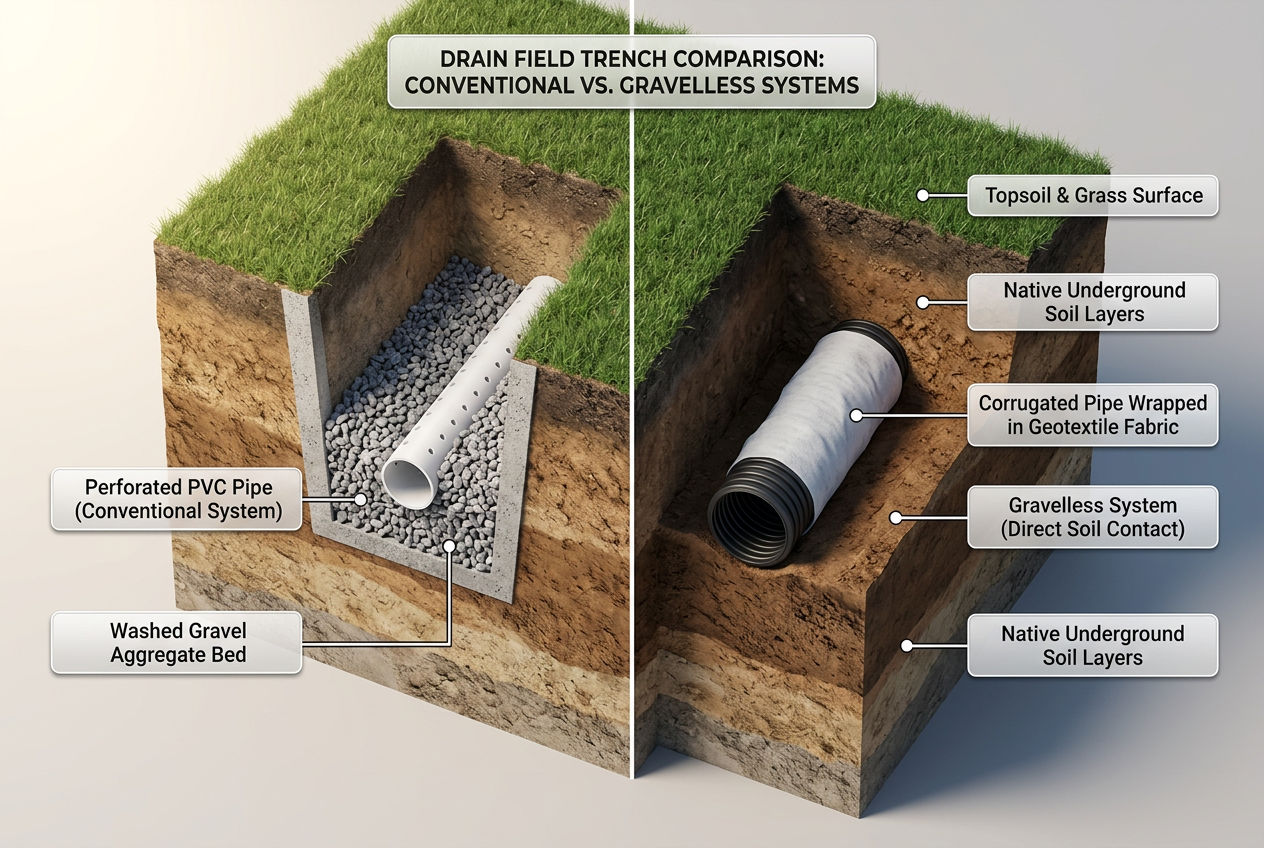
What Are the 3 Types of Gravelless Leach Field Pipe?
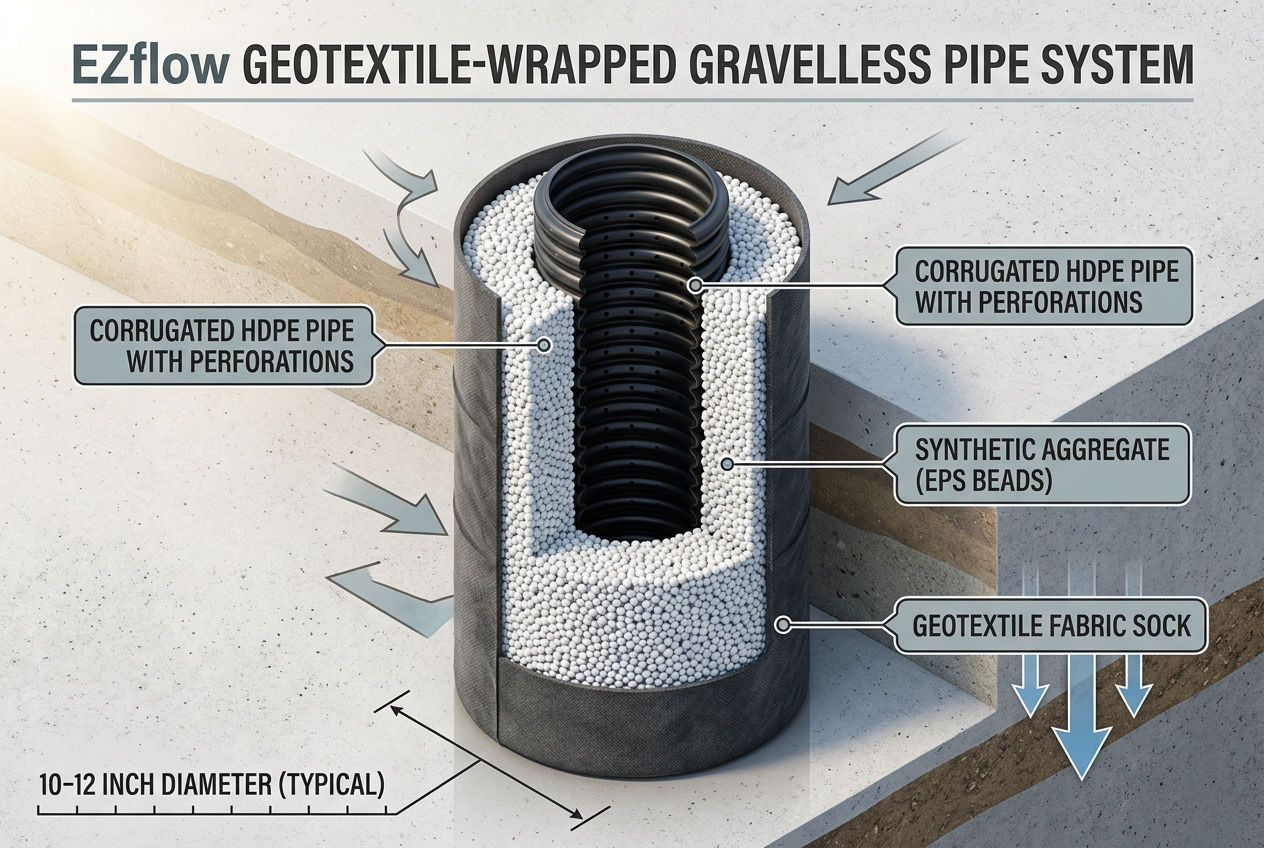
Type 1: Geotextile-Wrapped Pipe (EZflow, StormTech)
A corrugated HDPE pipe surrounded by a cylindrical cage of polystyrene aggregate, all wrapped in a geotextile fabric sock. The synthetic aggregate provides void space while the fabric prevents soil from entering the system. EZflow is the most common brand in this category.
How it works: Effluent enters the corrugated pipe through perforations, flows into the surrounding synthetic aggregate (which acts like gravel), and seeps through the geotextile into the native soil. The fabric also serves as a biomat growth surface, similar to the gravel-soil interface in conventional systems.
Cost: $8-$15 per linear foot installed
Dimensions: 10-12 inch diameter bundles in 10-foot sections. Standard trench width as narrow as 10 inches — less than half the width needed for conventional gravel trenches.
Pros: Lightest option (one person can carry a 10-foot section), narrowest trench width, fastest installation, no heavy equipment needed for placement.
Cons: Geotextile can clog in fine silt or clay soils, not ideal for very high water tables (limited storage volume compared to chambers), shorter proven track record than gravel (20+ years vs 40+ years).
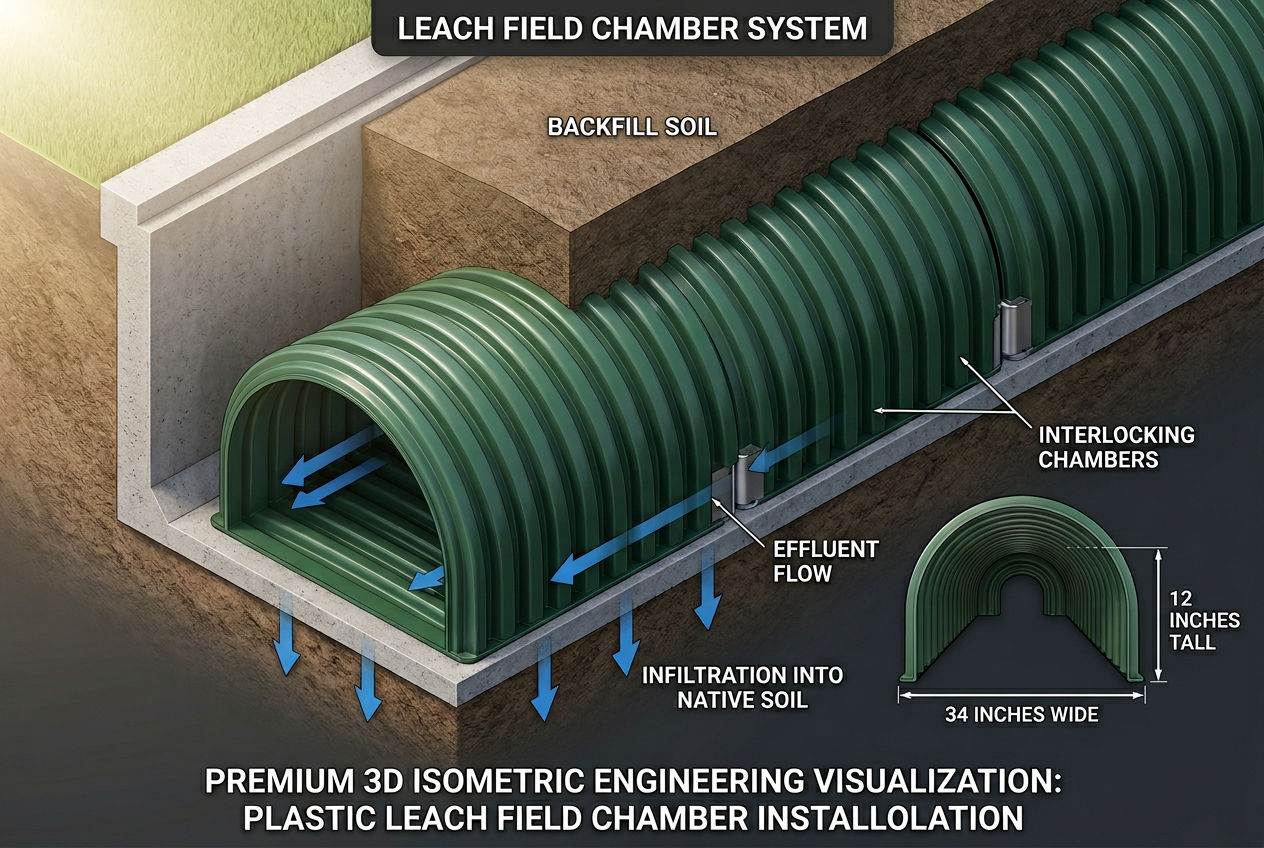
Type 2: Leach Field Chambers (Infiltrator, ADS Arc)
Large arched plastic chambers with an open bottom that sit directly on the trench floor. Chambers interlock end-to-end to create continuous runs. No gravel, no pipe — the chamber itself is the distribution system.
How it works: Effluent enters through an inlet at one end of the chamber run and flows along the bottom, spreading across the entire trench area through the open bottom. The arch shape creates a large internal void for effluent storage during peak loading. As in our field lines guide, chambers provide approximately 40% more void space than an equivalent gravel bed.
Cost: $10-$20 per linear foot installed
Dimensions: Typically 34 inches wide, 12 inches tall, in 4-foot sections. Standard and high-capacity models available.
Pros: Most storage volume of any gravelless option, widely approved across the U.S., no gravel and no fabric to clog, easy to inspect through end caps, strong track record (30+ years).
Cons: Higher per-foot cost, requires careful backfill to prevent chamber collapse (no driving equipment over trenches until backfill is complete), chambers can float in extremely high water tables without anchoring.
Pro Tip: Chambers are often the safest gravelless choice for homeowners who want confidence in long-term performance. They have the longest track record of any gravelless product, the fewest failure modes (no fabric to clog), and the broadest code acceptance. If your county approves them, they're hard to beat.
Type 3: Synthetic Aggregate (Lightweight Fill)
Recycled polystyrene or expanded clay aggregate that replaces washed stone in conventional trench designs. The perforated PVC pipe sits in the lightweight fill material instead of gravel. Some products come in mesh bundles (like CULTEC's ContractorPak); others are loose-fill poured into the trench.
How it works: The synthetic aggregate functions identically to gravel — providing structural support for the pipe and void space for effluent storage — but at a fraction of the weight. A cubic foot of polystyrene aggregate weighs 1-2 pounds compared to 100+ pounds for the same volume of stone.
Cost: $10-$18 per linear foot installed (material + pipe + labor)
Pros: Extremely lightweight, can be placed by hand without heavy equipment, works with standard perforated PVC pipe design, similar void space ratio to gravel.
Cons: Can shift or float during high water events if not properly contained, less structurally rigid than gravel (requires geotextile liner on trench sides), limited brand availability in some regions.
How Do Gravelless Systems Compare to Conventional Gravel?
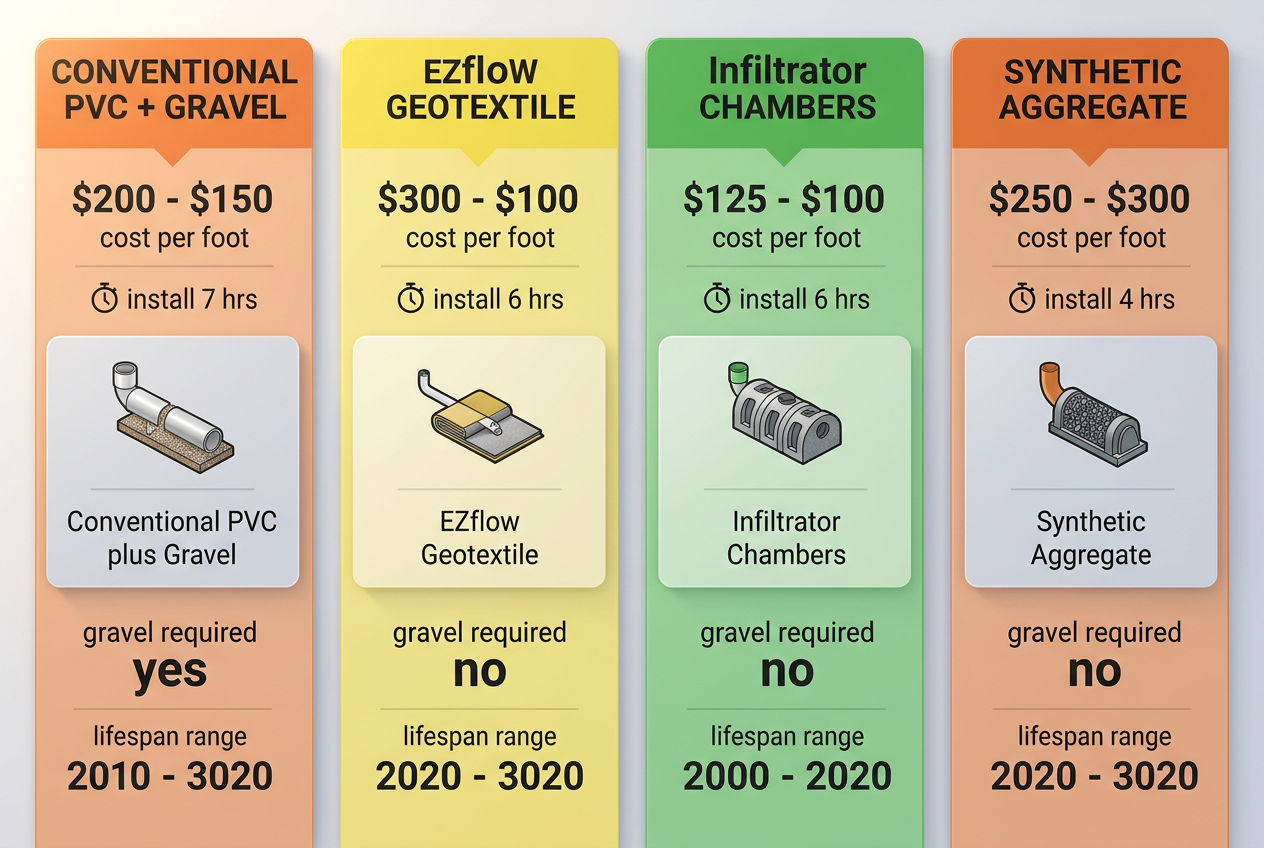
| Factor | Conventional (PVC + Gravel) | Geotextile Pipe (EZflow) | Chambers (Infiltrator) | Synthetic Aggregate |
|---|---|---|---|---|
| Cost per foot installed | $3-$8 | $8-$15 | $10-$20 | $10-$18 |
| Gravel required | 10-30 tons | None | None | None |
| Installation time (3-BR home) | 2-3 days | 1-1.5 days | 1-1.5 days | 1.5-2 days |
| Heavy equipment needed | Yes (loader/skid steer) | No | Minimal (backfill only) | No |
| Minimum trench width | 24-36 inches | 10-12 inches | 34 inches | 24-36 inches |
| Void space for storage | ~30% of trench volume | ~25% | ~40% | ~30% |
| Expected lifespan | 25-40 years | 20-30 years | 25-40 years | 20-30 years |
| Code acceptance | Universal | Most states | Most states | Limited |
Source: Manufacturer specifications, University of Minnesota Extension research, and SepticTankHub.com installer data
Common Mistake: Comparing only the per-foot pipe cost and concluding that gravelless is more expensive. The total project cost — including gravel purchase, delivery, and placement labor — often makes gravelless systems equal or cheaper. Get itemized quotes for both options from your installer to compare true total costs.

DIY Septic Blueprint
Thinking about building it yourself?
The complete, plain-English plan to size, permit and install your own septic system — designed for homeowners, not contractors. Skip the $15,000–$25,000 quotes and do it right the first time.
Get the DIY Blueprint — $67 →Instant download · 8 modules + 3 bonus guides · 60-day money-back guaranteeWhen Is Gravelless Pipe the Right Choice?
Gravelless systems aren't always the best option. Here's where they shine and where conventional gravel still wins:
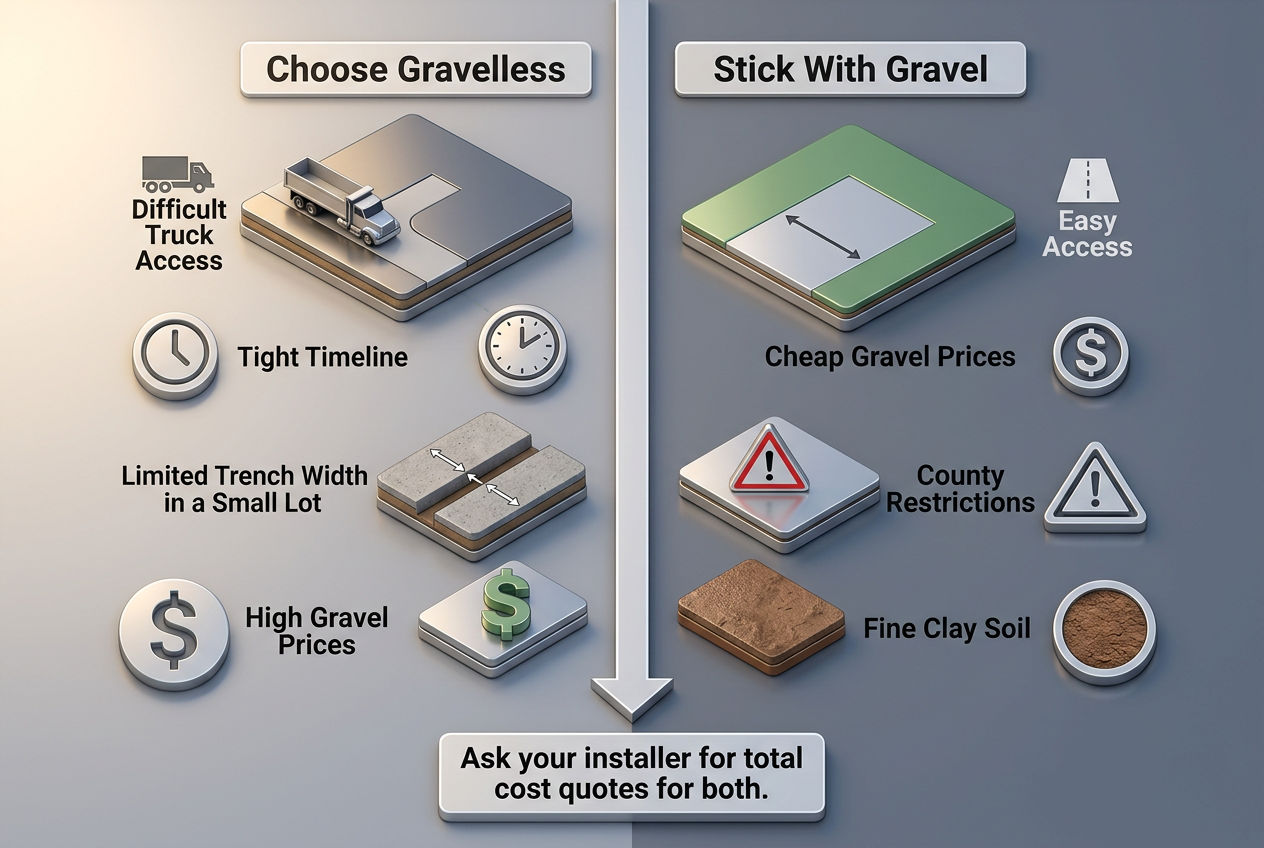
Gravelless is ideal when: the property has difficult truck access (gravel delivery impractical), the installation timeline is tight (gravelless installs 30-50% faster), you're on a lot where trench width is limited, or gravel prices are high in your area ($40+/ton delivered).
Stick with conventional gravel when: your site has easy access and gravel is cheap ($20-$30/ton), your county doesn't approve gravelless products, you're in very fine silt or clay soil where geotextile fabrics tend to clog, or you want the longest possible lifespan with the most proven track record.
Ask your designer or inspector about: which specific gravelless products your county approves, whether your soil type is compatible with geotextile-based systems, and whether the total installed cost actually saves money compared to a conventional system on your specific site.
For a broader comparison of all field line types and their applications, including drip distribution and standard PVC, see our field lines guide.
Sources & Methodology
EPA — Types of Septic Systems — Federal overview of alternative distribution methods including gravelless technologies
University of Minnesota Extension — Alternative Drainfield Technologies — Research-based performance comparisons of gravelless vs conventional drain field systems
Infiltrator Water Technologies — Quick4 Plus Chamber System — Manufacturer specifications and design manuals for chamber-based gravelless systems
NDS/ADS — EZflow Geosynthetic Aggregate System — Product specifications and installation guidelines for geotextile-wrapped gravelless pipe
SepticTankHub.com Internal Data — Gravelless system adoption rates and cost data from 4,200+ listed septic companies
Free download
Not ready for the Blueprint? Start free.
Grab the free DIY Septic Planning Kit — the permit-first checklist, perc-test cheat sheet, and sizing tables that keep your build from getting red-tagged.
Was this article helpful?
Frequently Asked Questions
Recommended Resources
📖 Related Articles
- What Is a Drain Field? (And How Does It Work?)
- Septic Field Lines: Types, Cost & How They Work (2026 Guide)
- How Deep Should a Drain Field Be?
- Septic System Diagram: How Every Part Works (Labeled Guide)
- Types of Septic Systems: Complete Comparison Guide
- Septic Drain Field Help: Troubleshooting Guide for Homeowners
- Signs Your Drain Field Is Failing (And What to Do)
- Perc Test (Percolation Test): What It Is & How It Works
- What to Expect During Septic System Installation
- Septic Tank Biomat: What It Is and When It's a Problem
💰 Cost Guides
🔧 Services
Find Septic Professionals Near You
Compare licensed, verified septic companies by area — top county markets and cities below, or browse all 50 states.
County markets
Popular cities
